
Independent writer
Fifty Years of Ministerial Government: Honouring Our Past, Embracing Our Present and Preparing for Our Destiny


An Editorial by Dr. Alicia Swann
In the days following our most recent national celebration, I have observed conversations filled with strong opinions and emotions. Some have expressed pride and gratitude, while others have questioned our flag, Constitution, identity, political system and future.
After listening, I feel compelled to share my thoughts—not to dismiss anyone’s feelings or deepen division, but to offer historical clarity and, most importantly, hope.
The concerns of Turks and Caicos Islanders are valid. Many are worried about the protection of our land and identity, opportunities for our children and whether our people will continue to have a meaningful place in the country our ancestors built. These concerns deserve honest discussion, factual information, prayerful reflection and responsible planning.
However, as the Turks and Caicos Islands commemorates fifty years of Ministerial Government and celebrates National Flag Day, we must remember that this occasion is not about the current administration, one political party or any individual leader.
Governments come and go, but the story of a people remains.
This celebration belongs to our ancestors—the true visionaries, pioneers and nation-builders who paved the way for us. It belongs to the salt rakers who laboured beneath the blazing sun, the fishermen who braved dangerous seas, the farmers, teachers, mothers, pastors and citizens who built communities and demanded a voice in their homeland.
Many never lived to enjoy the progress their sacrifices helped to create. Yet because they endured, we inherited a country filled with possibilities.
A Political Journey That Began Long Before 1976
Long before European colonisation, these islands were inhabited by the Lucayan-Taíno people. Following European arrival, Indigenous communities suffered enslavement, forced removal and disease.
From the seventeenth century, Bermudian salt rakers developed our natural salt ponds. Enslaved Africans provided much of the labour sustaining the salt and plantation economies, and their descendants became central to the formation of the Turks and Caicos Islander people.
Britain’s influence developed through colonial expansion and competition with Spain and France. At different stages, the islands were administered through The Bahamas and Jamaica.
Dissatisfaction with decisions made under Bahamian administration contributed to our separation from The Bahamas in 1848 and the establishment of a local Legislative Board. In 1873, TCI became a dependency of the British colony of Jamaica. Local elections were abolished and were not restored until the 1959 Constitution—approximately eighty-six years later.
When Jamaica gained independence in 1962, TCI remained under Britain. From 1965 until Bahamian independence in 1973, the Governor of The Bahamas also served as Governor of TCI. We then received our own resident Governor and continued our constitutional journey.
Haiti never governed the Turks and Caicos Islands, but it holds an important place in our regional history. Following its independence in 1804, Haiti became a powerful symbol of freedom from slavery. Historical records indicate that enslaved people escaped from these islands to freedom in Haiti during the 1820s. In later generations, Haitians, Jamaicans, Bahamians and other Caribbean people contributed to our churches, public service, construction, education, hospitality and economy.
Our history is connected to the wider Caribbean, but our identity remains distinctly Turks and Caicos Islander.
The Significance of 1976
The 1976 Constitution provided for a Chief Minister and other Ministers with responsibility for important areas of government. The Honourable James Alexander George Smith “JAGS” McCartney became our first Chief Minister.
JAGS represented more than a political party. He represented a national awakening—the belief that Turks and Caicos Islanders deserved dignity, representation and a meaningful voice in the management of their homeland.
Ministerial Government was not the achievement of one person alone. It was made possible by generations of representatives, civil servants, community organisers, clergy, educators, workers and citizens who believed our people were capable of shaping their destiny.
The fifty years that followed were not without difficulty. We experienced controversy, constitutional change and interruptions to elected government. Yet representative government returned, our institutions developed and our people continued moving forward.
This anniversary does not suggest that everything has been perfect. It demonstrates that our democracy and our people have endured.
Never Forget Our Resilience
Our ancestors survived slavery, colonial administration, poverty, migration, isolation, political interruption and devastating hurricanes. From an economy once dependent upon salt, sisal and fishing, we built one of the world’s most recognised tourism destinations.
Generations of Turks and Caicos Islanders travelled to neighbouring countries seeking opportunities unavailable at home. Some were not always welcomed or treated as equals. Today, people from many of those same countries come to our shores hoping to work, live and create better futures.
This should not inspire hatred or prejudice. Those who come lawfully and contribute positively deserve dignity and respect. However, it should remind us how far we have come and why we must never surrender our identity or rightful place within our country.
Hospitality and patriotism are not opposites. We can welcome others without losing ourselves.
Scripture reminds us:
“But if any provide not for his own, and specially for those of his own house, he hath denied the faith.”
—1 Timothy 5:8
Caring for our own does not mean mistreating others. It means ensuring that Turks and Caicos Islanders are educated, protected and empowered to participate meaningfully in the development of their homeland.
Government has an important responsibility, but nation-building requires more than government. Parents must teach our values, businesses must create opportunities, citizens must respect the law and young people must prepare themselves to lead.
Pride in Where We Are
Until such time as we become an independent and sovereign nation, we must thank God for where we are today.
There is nothing wrong with celebrating our constitutional progress, embracing our present flag or respecting our existing institutions. Doing so does not prevent us from desiring further advancement.
We cannot know where we are going unless we understand where we are now and how we arrived here. Our present flag represents our identity, history and constitutional relationship with Britain. It should be treated with dignity and respect.
Embracing the present is not abandoning the future; it is the pathway towards building it. We celebrate not because the journey is complete, but because God has brought us a mighty long way.
Passports, Citizenship and Our Future
Today, we remain a British Overseas Territory. Although the passport associated with our territory may identify the Turks and Caicos Islands, it is not a sovereign TCI passport issued under the authority of an independent Turks and Caicos nation. It exists within the British nationality system and derives its legal authority from the United Kingdom.
British Overseas Territories citizenship, British citizenship and Turks and Caicos Islander status are connected but legally distinct. None presently represents citizenship issued by a sovereign TCI nation.
This should not cause us to disrespect the passport or constitutional position we hold. Instead, it should encourage us to think responsibly about our future.
If we envision sovereignty, we must eventually determine who would become a citizen of an independent TCI, whether dual citizenship would be permitted and what rights and responsibilities citizenship would carry. We must also consider how to protect our limited land, create pathways to ownership and help Islanders build generational wealth.
Our immigration system must welcome lawful contribution and respect human dignity while protecting the country’s long-term interests and enforcing its laws fairly.
These complex questions must not be decided through hostility, secrecy, political favour or temporary emotion. They require public education, research and consultation involving every inhabited island, our diaspora, elders, young people, churches, businesses, experts, Parliament, relevant institutions and the United Kingdom Government.
After proper preparation and national consultation, the people—not merely a government—should ultimately determine our political future through a clear and credible referendum.
Preparing for Our Destiny
I envision a future in which the Turks and Caicos Islands advances beyond its present constitutional position, governs its own destiny and may one day raise the sovereign flag of an independent nation.
Is it possible? Yes.
Would it require sacrifice, disciplined planning and strong institutions? Absolutely.
Would it require God-fearing leaders with integrity who place the country above personal and political interests? Without question.
“When the righteous are in authority, the people rejoice: but when the wicked beareth rule, the people mourn.”
—Proverbs 29:2
Independence without integrity would merely replace one form of dependency with another. Sovereignty must be supported by ethical leadership, economic stability, an independent judiciary, effective border protection, disaster preparedness and an educated population.
Preparation does not mean declaring independence tomorrow. It means beginning the research, civic education, institution-building and national consultation today.
“Write the vision, and make it plain upon tables, that he may run that readeth it.”
—Habakkuk 2:2
Preparing the Next Generation
We must ensure that our children know the history of the Turks and Caicos Islands and understand the sacrifices that paved the way for them.
A generation that does not know its history may inherit a country without understanding its value.
Our history must be taught in our homes, schools, churches and communities. Our children should never have to depend entirely upon outsiders to explain who they are or where they came from.
We must also stop gatekeeping knowledge. Whatever wisdom, education, experience or influence God has given us was not given for our benefit alone. It was entrusted to us so that we may mentor and guide those coming behind us.
True leadership does not conceal knowledge to protect a position. It shares knowledge to prepare a successor.
Let us give our children more than possessions. Let us give them identity, history, wisdom, confidence and a country they are prepared to protect and lead.
We Have What It Takes
We are a small country, but smallness does not mean incapability. Our ancestors created communities with almost nothing and survived circumstances far more difficult than those we face today.
We can honour our present flag without surrendering our future. We can welcome others without losing ourselves. We can celebrate how far we have come while preparing responsibly for where we wish to go.
This is the true meaning of the anniversary: a celebration of our ancestors, constitutional progress, national resilience and continuing right to determine our destiny.
Our ancestors paved the way. We must now possess the courage, discipline, unity and faith to continue the journey.
Dr. Alicia Swann
Proud Turks and Caicos Islander, Civic Leader and Advocate

Bahamas News
Rosewood Exuma: A precedent-setting case for environmental law and future development in The Bahamas
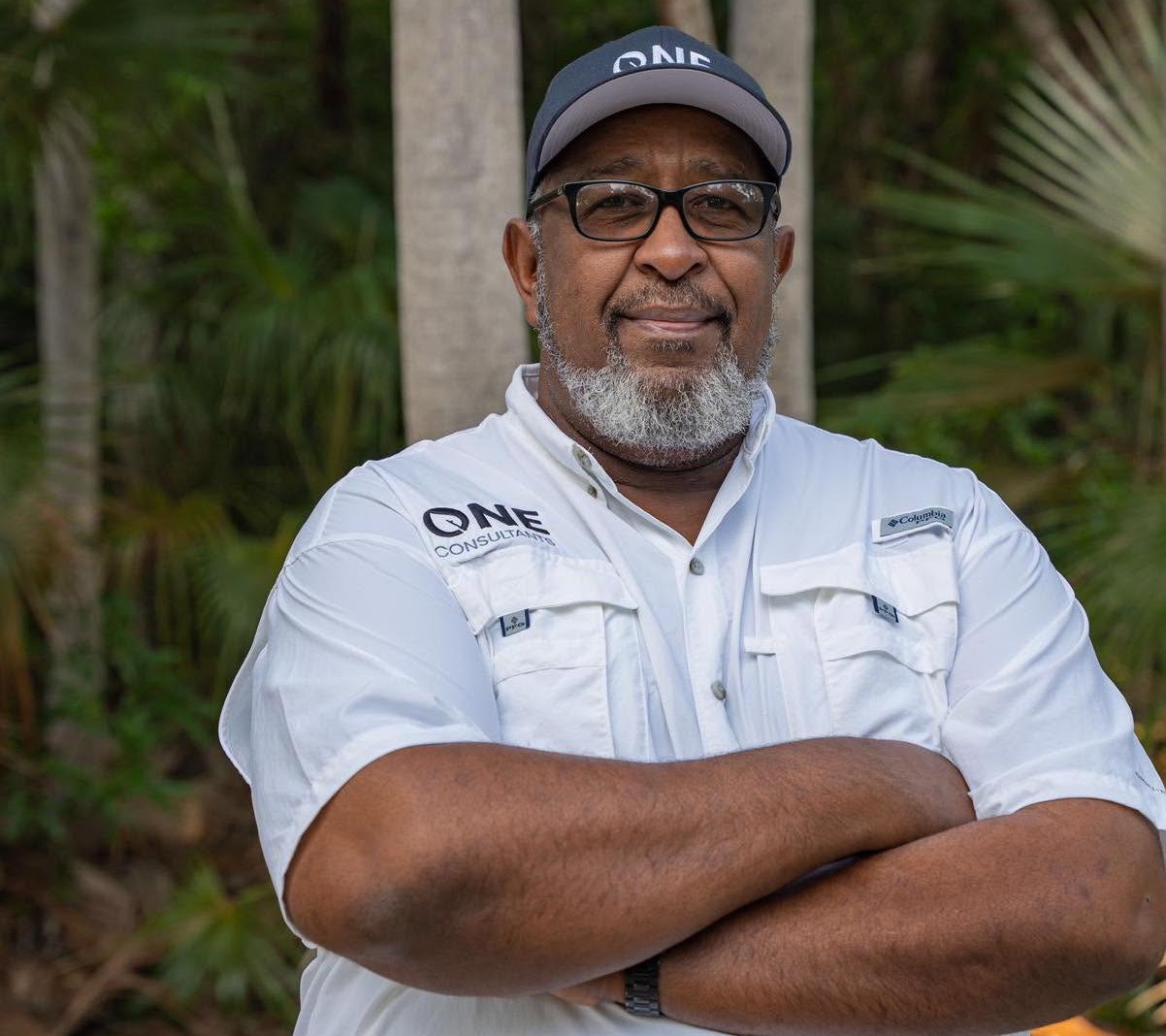
By Eric Carey, ONE Consultants, former Executive Director of the Bahamas National Trust.
We are facing an extraordinarily important moment in judicial history in The Bahamas as we await a decision on the trial of allegations in the Yntegra group’s Rosewood Exuma project.
As former Minister of the Environment, Romauld Ferreira, put it in the Supreme Court last week: “A lot is at stake…a great deal of what will be considered in this case sets the stage for what’s to come for future development in the country.”
In the trial of the judicial review of government approvals given to Yntegra for their Rosewood Exuma resort this week, we’ve heard technical arguments about failure to make key environmental documents like Yntegra’s Environmental Impact Assessment and Environmental Management Plan available to the public, failure of key documents to assess some of the most controversial aspects of the project, an unlawful consultation process, and a failure to conduct further consultation following major changes to the development.
Lawyers for Turtlegrass described how there was a “salami slicing” of the project into chunks as a way to circumvent the approvals process and disguise its full impact from public scrutiny. Only certain portions came before the public and key stakeholders like Turtlegrass and Over Yonder Cay for scrutiny, while some of the most controversial aspects did not. This is particularly problematic given what is at stake – the dredging of a beautiful Exuma bay, the North Bay, to transform it into an industrial shipping channel, complete with an enormous seawall, dock, back-of-house facilities and other industrial infrastructure.
It is unfortunate that it has had to come to this – an expensive judicial review process that calls out the government for falling down on its duties to protect the environment and follow the law – but it is important and the broader implications should not be overlooked. When Justice Leif Farquharson rules on this case, he’ll set a precedent that could echo in The Bahamas for years to come, one that answers the question: are the 2019 environmental laws that Ferreira took to parliament after many years of advocacy by environmentalists toothless tigers that are just for decoration – or are they capable of protecting the environment that we all depend on and the rights of those affected by projects to have a genuine say in them?
What is curious is that at the same time as these points are being raised in court as part of the judicial review, we are seeing personal attacks about Bob Coughlin – the person spearheading this legal action and test of environmental laws – by online trolls. Coughlin, an Exuma resident for almost a decade, has long been established as an environmental advocate and a passionate philanthropist – one who has donated almost $4 million to causes in The Bahamas since 2018, including millions to the organisation I once led, the Bahamas National Trust.
For reasons one can only speculate about, these trolls have been trying to make out all sorts of absurd things: that his legal action in support of environmental protection is a petty dispute born out of fears of competition. That Coughlin no longer even wants to pursue his eco-tourism project, when the reality is that he was forced to put it on hold because of the destructive environmental plans that are in dispute. That he is the only one who has an issue with this Rosewood Exuma resort, when in fact, neighbouring resort, Over Yonder Cay – one of the top rated resorts in the Caribbean – as well as the Save Exuma Alliance – consisting of most of the local islands and businesses in the Exuma area, and thousands of petition signers have expressed their concern with the project – over 9,000 to date. Most ironically, they claim, wrongly, that Coughlin received crown land for personal use, when in fact it is Yntegra who received crown land while having no development track record, when Coughlin instead bought his lease on Sampson Cay from a private owner.
The timing of these claims, in the week of the trial, suggest a patronising and cynical attempt to distract from the gravity of the case being heard, what it represents, and how important this decision is. With their simplistic, jingoistic and factually-dubious references to crown land, white foreigners, and the like – it’s not hard to imagine that those involved are engaged in a ploy to push the buttons of Bahamians who they apparently believe can be too easily distracted into ignoring the real issue here: that the government, has – in the words of those in the Supreme Court this week – “run roughshod” over environmental laws with its approvals for Yntegra’s Rosewood Exuma project and that this is truly a landmark case and the decision will have a long-lasting impact on future development. This is at a time when foreign direct investment (FDI) inflows into the Bahamian economy are forecast to increase by as much as two thirds over the next two years, according to the Inter-American Development Bank (IDB).
So I call on my fellow Bahamians to stay focused. This is not a story about one man – it is a story about the future we want for our country and whether we are willing to sacrifice our ability to demand environmental accountability in all developments moving forward. There is too much at stake to be thrown off the track by trolls.
As Ferreira says of the judicial review that now awaits Justice Leif Farquharson’s judgement: “This is the first set of litigation, serious litigation, that takes a deep dive into the Environmental Planning and Protection Act and the environmental impact assessment regulations…There’s a lot at stake here.”
Independent writer
Born Here, Raised Here, but Still Unable to Vote: Is this a Conundrum for TCI Electorate?
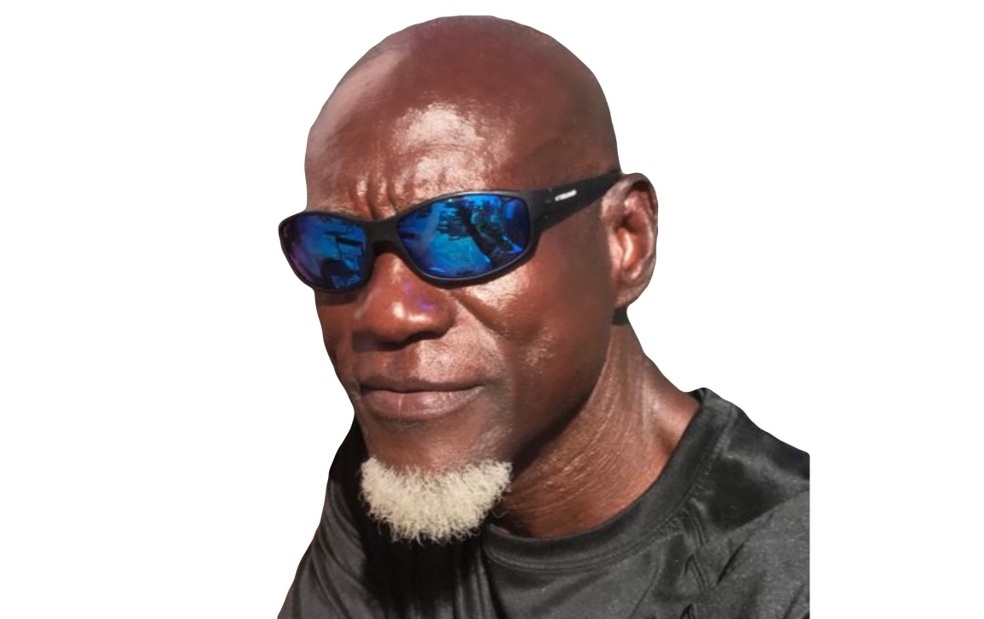
By Ed Forbes
The Turks and Caicos Islands faces a growing demographic and democratic question that can no longer be ignored: What happens to young people born and raised here who reach adulthood without qualifying for Turks and Caicos Islander Status, and what does this mean for our country’s future?
This is not simply an immigration issue. It concerns population growth, national identity, political representation and the future relationship between the people who call these Islands home and the system that determines who can participate in our democracy.
Consider a young person born in TCI, educated in our schools, raised in our communities and now working, paying taxes and contributing to the economy. At 18, that person may hold British Overseas Territories Citizenship (BOTC) but still lack Islander Status and, consequently, the eligibility required to register as an elector.
Section 55 of the Turks and Caicos Islands Constitution Order 2011 establishes the qualifications for voter registration, including the requirement to be a Turks and Caicos Islander. Being born here, growing up here or holding BOTC citizenship does not automatically satisfy that requirement.
Of course, birth in the Islands does not automatically confer Islander Status. The law provides different routes based on parental status, nationality, residence and other qualifying circumstances. We must respect those laws while asking whether they adequately address the realities of a population that has changed considerably over the past two decades.
The numbers make this discussion increasingly urgent.
According to Government population estimates, the TCI population grew from approximately 33,500 in 2011 to 47,674 in 2022. The Government’s 2025 projection placed it at approximately 52,299. That represents projected growth of roughly 56 per cent between 2011 and 2025.
Published demographic information has also suggested that fewer than one in four residents holds Islander Status. A separate comparison of the 2022 population estimate and the 2023 registered-elector list placed registered electors at approximately 19 per cent of the population.
These figures measure different things and come from different years. They should not be confused with the percentage of eligible voters who actually cast ballots. Nevertheless, they raise an important question: How will our electorate evolve as the population continues to grow?
We should not assume that every non-Islander resident is eligible for status, or that everyone without status was born here. Equally, we cannot ignore young people who may have spent their entire lives in these Islands yet remain outside the electorate because they cannot satisfy the existing requirements.
This situation did not begin yesterday. Children born here 15 or 20 years ago are now adults. Some may qualify under existing provisions but need assistance navigating the application process. Others may have no available route under current legislation. We need reliable figures to understand the scale of each group.
With the next general election roughly two and a half years away, the time to act is now.
The Government should not wait until an election is approaching to discover how many people may qualify to register, how many remain excluded and whether legislative changes are needed. Islander Status applications and potential legislative reforms can involve lengthy processes. Any necessary changes require legal examination, consultation and sufficient time for implementation.
I propose that the Government work with the Islander Status Commission, immigration authorities and the Elections Department to conduct a comprehensive review of TCI-born adults who do not hold Islander Status. The review should establish how many qualify under existing provisions, how many have been refused or cannot apply, and the specific legal barriers involved.
Where a lawful pathway already exists, the Government should make it clear and accessible. Where genuine gaps remain, it should consult the public on whether a defined pathway should be established for qualifying individuals born, educated and lawfully raised here, with appropriate safeguards.
This is not a call to grant status indiscriminately or disregard immigration controls. It is a call to examine the consequences of our existing framework and determine whether it serves the long-term interests of the Turks and Caicos Islands.
Let’s face it, a growing migrant population, an ageing Islander community and successive generations of young people whose electoral eligibility may be restricted present questions that deserve serious, evidence-based consideration.
We cannot change the past, but we can decide whether to confront this issue today or leave it for another generation. I strongly believe, voting eligibility is more than a right; it is a pathway to inclusion and a stake in our country’s future.
The question is no longer whether this deserves public discussion. It is whether we are prepared to begin in time to make informed decisions before the next election and beyond.
The clock is ticking. Let us establish the facts, examine the law and find a fair, lawful and sustainable way forward.

“PNP Healthcare Ministers Carrying on Tradition”
By Randy Ewing
There are several areas that are critical to the everyday quality of life and standard of living in any civilized country: healthcare, economic development, adequate infrastructure, public safety, and education. Yet, as Sabrina Green highlighted in her recent article, there remains a troubling reality in the Turks and Caicos Islands: too often, our own people—particularly qualified Turks and Caicos Islanders—are marginalized when decisions are being made about the future of our country.
I want to focus specifically on healthcare.
Under the current PNP administration, several ministers have held responsibility for the healthcare portfolio, including Hon. Jay Saunders, Hon. Shawn Malcolm, and now Hon. Kyle Knowles, who is also my cousin.
I am not writing this because I expect anything to be handed to me. I am writing as a Turks and Caicos Islander and as a healthcare professional who has spent more than 26 years working in the healthcare industry.
My efforts to offer my expertise to the government were never motivated by money, political ambition, or the expectation of special treatment. They were motivated by something much simpler: giving back to the country that produced me.
I am from the soil.
I am from Blue Hills, Providenciales. I know our people. I know our culture. I understand our eating habits, the history and circumstances behind those habits, the foods that are locally available, and the realities that many families face when healthier food choices are more expensive or less accessible.
Professionally, I bring more than two decades of healthcare leadership and consulting experience. I hold an MBA with a concentration in Health Administration. I am a Lean Six Sigma Black Belt with a healthcare concentration and a change-management specialist with healthcare experience. Over the course of my career, I have held leadership positions and worked with organizations including Memorial Hospital, Aetna Health, and Blue Cross Blue Shield, as well as within the U.S. federal government. I have also provided consulting services to healthcare organizations, municipalities, cities, states, and organizations throughout the Caribbean.
I share this not to boast about my credentials, but to make a simple point:
There are Turks and Caicos Islanders who have spent decades acquiring knowledge and expertise that could be valuable to the development of our country.
Why aren’t we listening to them?
I understand that the government has engaged outside consultants to provide advice and expertise. There is certainly a place for specialized external expertise. But I believe we must also ask an equally important question: What measurable improvements have these investments produced for the people of the Turks and Caicos Islands?
Our healthcare challenges remain.
Our people continue to face serious health issues. People still have to travel overseas to obtain medical treatment. Families continue to worry about whether the healthcare system will be there when they need it. And many residents remain concerned about whether they are receiving the quality, accessibility, and affordability of healthcare they deserve.
So I ask our leaders: Where are the measurable outcomes?
Where is the long-term strategy?
What is the plan for developing sustainable healthcare capacity within the Turks and Caicos Islands?
And, perhaps most importantly, why aren’t more qualified Turks and Caicos Islanders being brought to the table?
This is not an argument against outside expertise. It is an argument for including our own people alongside it.
We know our communities in ways that an outside consultant cannot immediately know. We understand our history. We understand our culture. We understand the socioeconomic realities that influence health. We understand what people eat, what they can afford, what resources are available locally, and the barriers that prevent people from living healthier lives.
That knowledge matters.
Healthcare policy cannot exist only on paper. It has to work for the people who actually live here.
As the Turks and Caicos Islands continue to grow and prosper economically, we must also ask whether that prosperity is translating into better health outcomes and a better quality of life for our people.
Economic growth means little if our people cannot access adequate healthcare.
Infrastructure means little if our healthcare infrastructure cannot meet the needs of our population.
And progress means little if our people continue to believe that they must leave their own country to receive the care they need.
Minister Knowles, I respectfully ask you—and every minister and policymaker responsible for healthcare—to listen to the Turks and Caicos Islanders who have spent decades developing expertise in healthcare.
Listen to the professionals who have returned home with knowledge.
Listen to the people who understand our communities.
Listen to those who are offering their expertise not because they want something from the country, but because they want to give something back to it.
I have made that offer.
My experience, my education, and my professional knowledge are not simply credentials on a résumé. They represent more than 26 years of learning, leading, solving problems, and working to improve healthcare systems.
And I believe that expertise should have a place in the conversation about the future of healthcare in my homeland.
The Turks and Caicos Islands belong to all of us.
Our healthcare system belongs to all of us.
And our people deserve a healthcare system designed around their needs, informed by evidence, strengthened by expertise, and built with meaningful participation from the very people who call these islands home.
It is time to stop asking whether our people are qualified enough to contribute.
It is time to start asking what we are losing by not listening to them.
Our people deserve better.
And those of us who have the knowledge, experience, and willingness to help should not stop offering it.
Marvin Martin, MBA, LBBH, CMS
(STOCK PHOTO)





-
 News5 days ago
Imagine Turks & Caicos Represented in UK Parliament; New Report Favours It
-
 News1 week ago
Invest TCI Strengthens Regional Investment Connections at Caribbean Investment Forum 2026 in Barbados
-
 Bahamas News5 days ago
Bahamas Issues Cybersecurity Alert Over Akira Ransomware Threat
-
 Bahamas News1 week ago
Rosewood Exuma: A precedent-setting case for environmental law and future development in The Bahamas
-
 Bahamas News1 week ago
Energy Minister Delivers Electrifying Keynote Opening Address at CAREC 2026
-
 News5 days ago
BermudAir Launches Service to the Turks and Caicos Islands on October 26th, Expanding Air Connectivity Ahead of Winter Season
-

 News6 days ago
Crown Land Unit Leads Multi-Agency Enforcement Exercise in Five Cays
-
 News2 days ago
Multi-Agency Enforcement Exercise Targets Illegal Occupation of Crown Land in Five Cays