
Bahamas News
Flamingo Gardens Centre’s backyard farm is ‘the gift that keeps on giving’

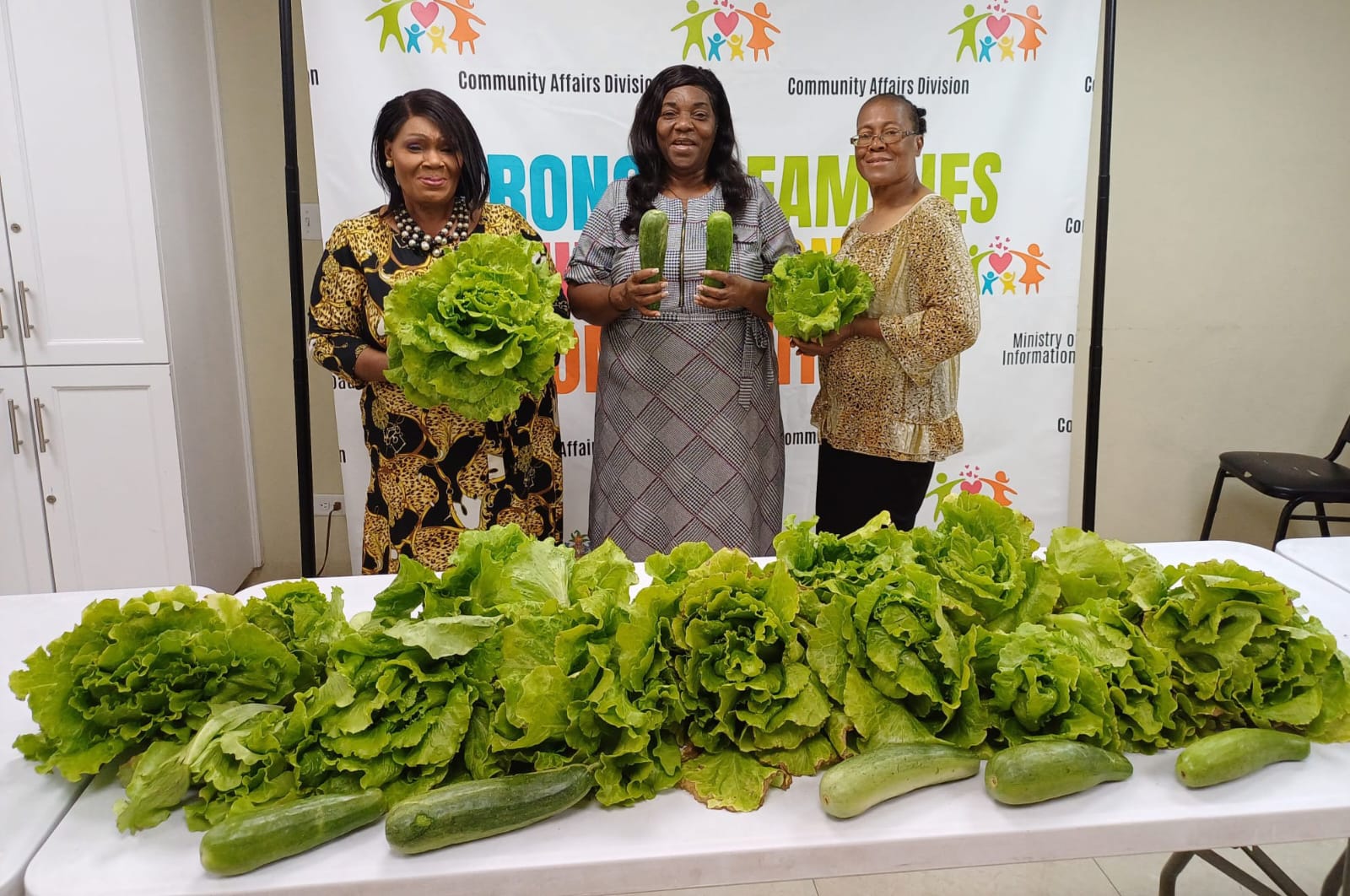
NASSAU, The Bahamas – Officials at the Flamingo Gardens Family Life Centre are putting their money where their mouths are when it comes to the Centre’s backyard farming initiative.
Almost one year after its launch in September, 2024 as part of the Empowerment Hour Programme, the Centre has planted and harvested a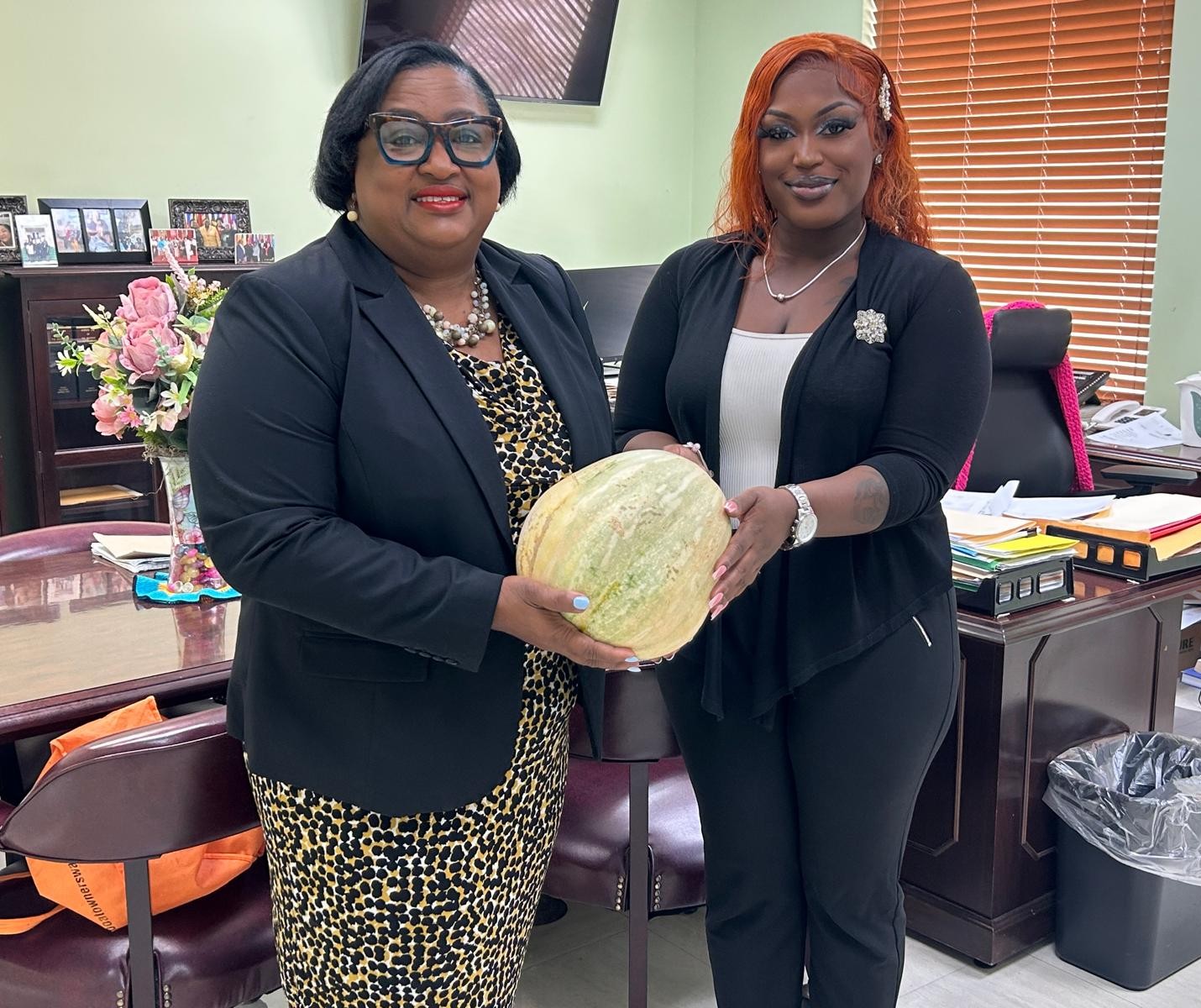 range of vegetables from lettuce, to chili peppers, lemon cucumbers, Asian melons, and more recently pumpkins, including a 28.2 pounder, to showcase how families can not only feed themselves, but also supplement their incomes through the sale of their produce, while ultimately helping to protect the environment. A similar programme was launched at the Nassau Village Community Centre.
(The Empowerment Hour Programme, and all other programmes hosted at the Flamingo Gardens Family Life Centre, are facilitated by the Community Affairs Division of the Department of Social Services, Ministry of Social Services, Information and Broadcasting.)
Lisa Bowleg, the Officer-in-Charge of the Community Affairs Division, said the Centre’s collaboration with the Department of Agriculture, and specifically Mr. Danrey Sweeting, on the implementation of the backyard farming initiative, has been “fruitful.”
“I would say that we have been very successful as a group in turning the backyard space at the centre into a positive showcase of the potential of backyard farming,” Bowleg said. “The Department of Agriculture came in at the initial stages and shared tips and tools of how we could have a successful programme, and then they came in and showed us how to make that happen.
“From that period to now, we have had several harvests, and the consideration was that as we continue to grow and harvest, and teach and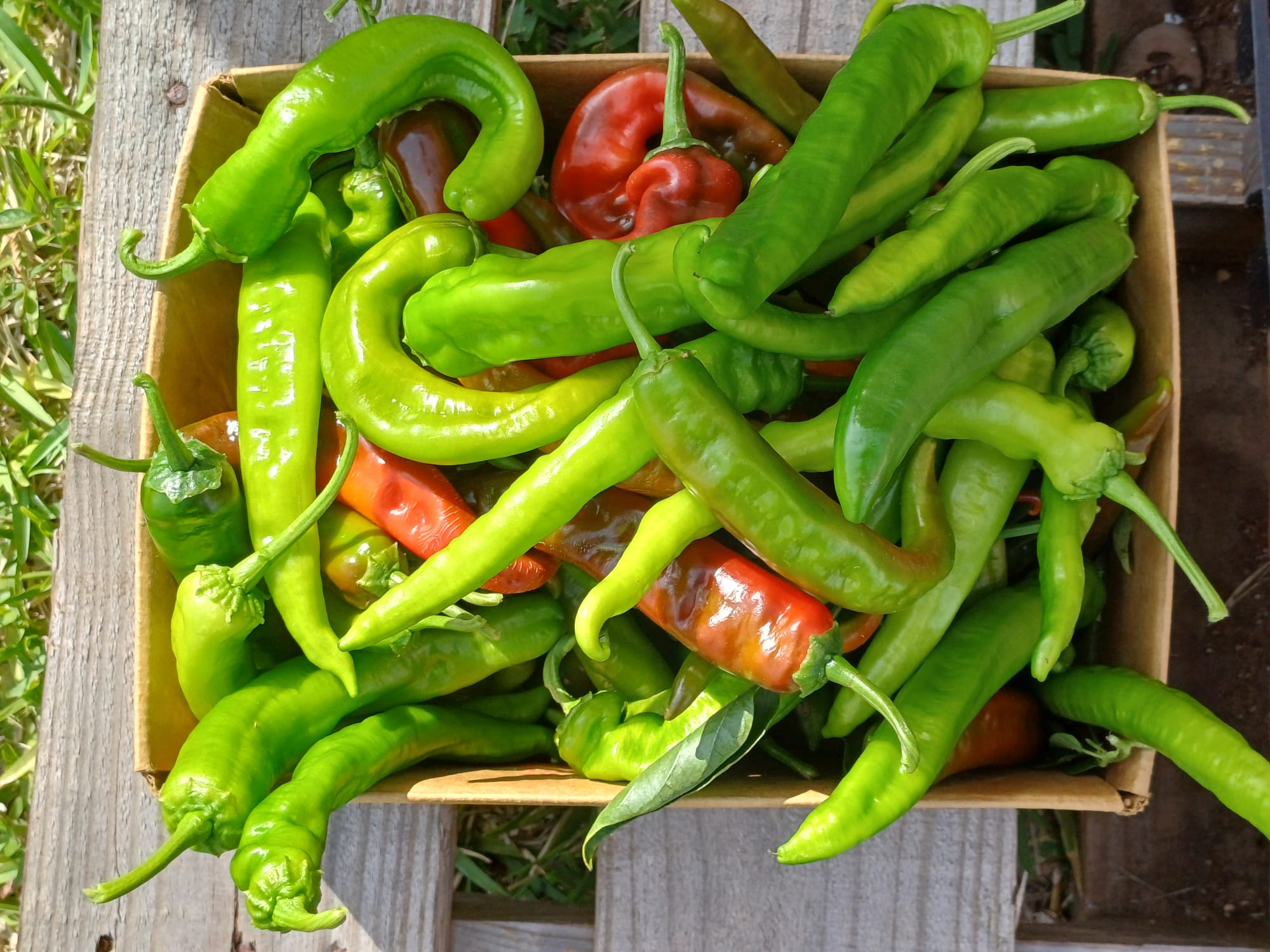 make persons within the community more and more aware of the possibilities of backyard farming even within a limited space, that we also continue to give back.” Bowleg said the Centre has been privileged to share its harvests with various individuals, families and institutions in the community free of charge. Beneficiaries have included residents of the two Senior Citizens Homes.
“The ability to share something out of our garden with our senior citizens that they can enjoy — whether it is a pumpkin soup, or a piece of roasted pumpkin, or boiled pumpkin is a blessing,” Bowleg continued. “What we are doing at the Flamingo Gardens Family Life Centre with the Empowerment Hour Programme, and more specifically with the Backyard Farming Initiative, is showing people that this is indeed possible and that it does not matter how young or old you are; whether you are able-bodied or whether you are differently-abled, that there is indeed a way to feed ourselves, to sustain ourselves and our family and also be able to share with other persons in the community.”
An avid backyard farmer who practices what she preaches, Bowleg said she views backyard farming as “the gift that keeps on giving.”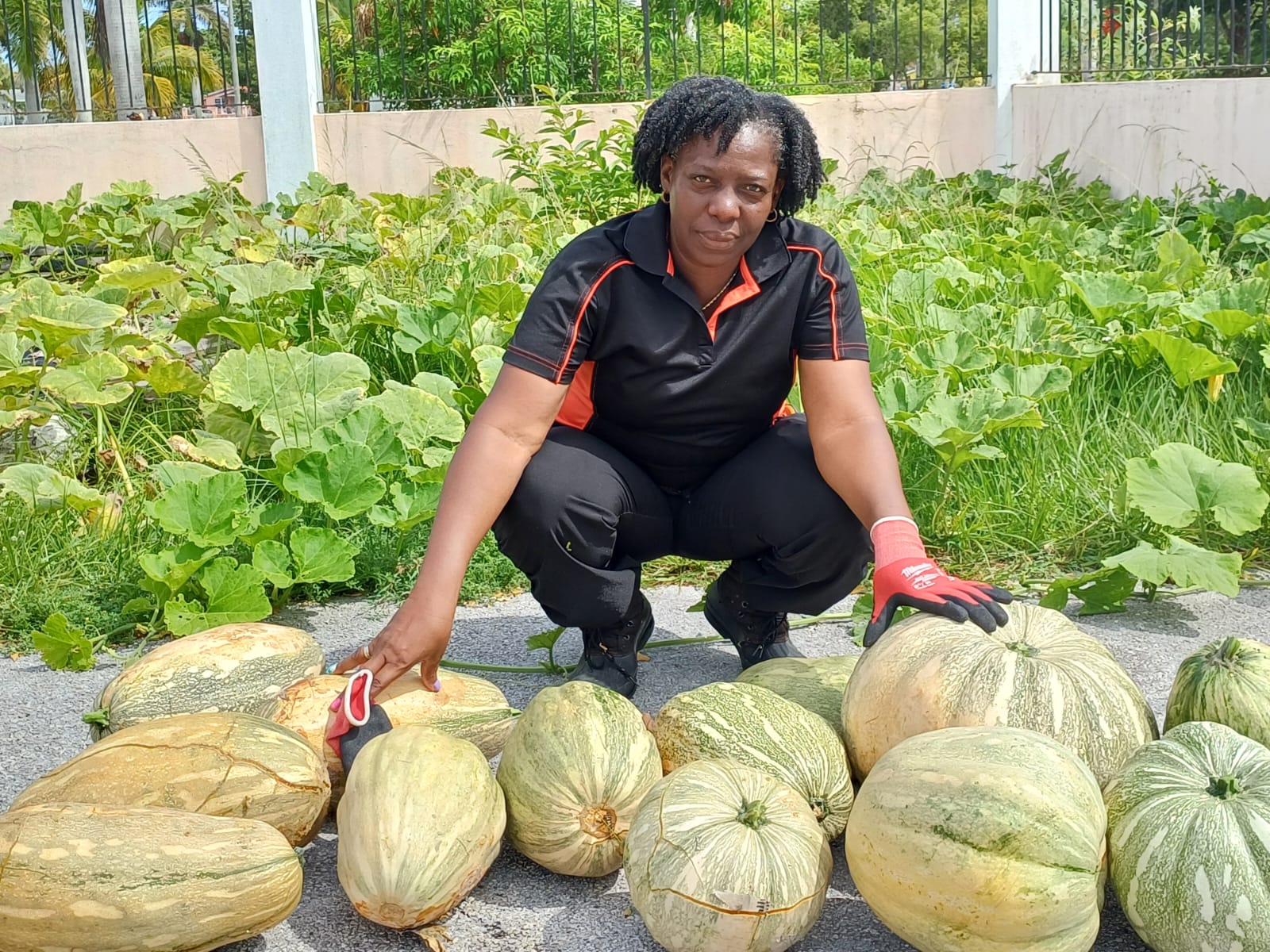 “One of the persons we distributed the pumpkins to operates a Soup Kitchen free of charge on a monthly basis and so being able to assist her means that she can continue to share with others. The Soup Kitchen at the Good News Seventh-Day Adventist Church, a community partner of the Family Life Centre, has also been a recipient (and) so we are not just talking about passing on something where it stops, it’s the gift that keeps on giving because as we give to them, they are giving to others.”
Initially launched as a means of getting adult residents of the community to appreciate the many benefits associated with backyard farming, the Programme was recently extended to participants of the Centre’s annual Camp Climate Action where they were provided with instruction on how to re-use and recycle old tires, pots and pans, and cups and bottles within which to grow their fruits, vegetables and various herbs. Seventy children participated in the Camp that also focused on climate change and its impacts on communities and children; hurricane preparedness (packing a proper disaster supply kit); food security (food insecurity is a fall-out from climate change); backyard farming, and preserving the environment (plant life, marine life, animal life).
Bowleg said Camp Climate Action provided facilitators and presenters with the opportunity to teach a young generation of Bahamians about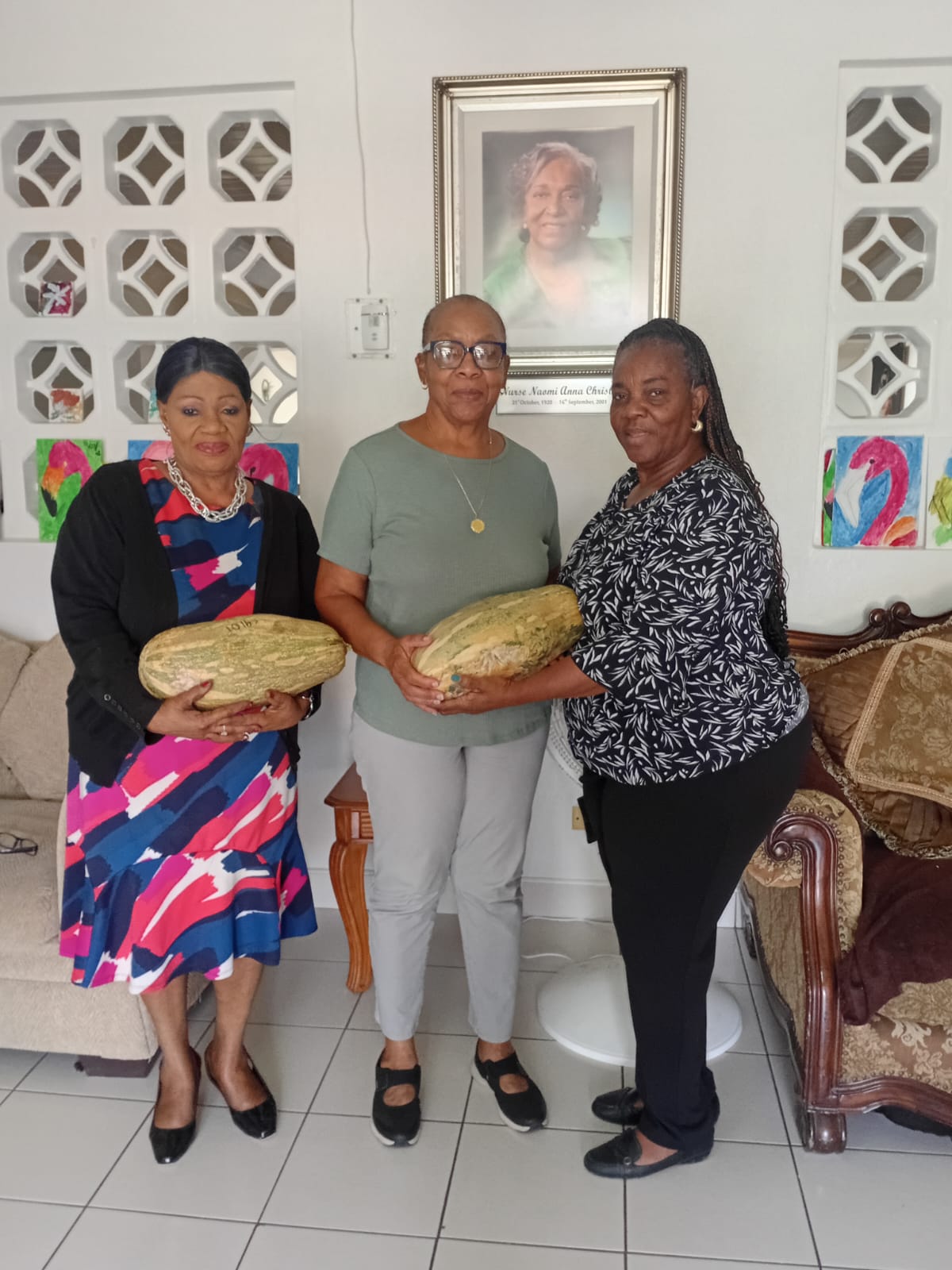 the things they can do to help preserve and sustain our environment at an early age. Campers were also taught how to make compost from organic materials like yard waste (dry leaves, etcetera) and food scraps (peels from fruits and vegetables including bananas, oranges, potatoes, apples, etcetera). The compost is then added to the soil to improve its properties. She said the garden at the Flamingo Gardens Family Life Centre, is “proof positive” about the attributes of backyard farming. “More people need to understand that there are many opportunities to grow their own fruits, vegetables and herbs – organically — no matter how small their yard space may be. Additionally, herbs such as basil, rosemary, thyme, cilantro, etcetera, can all be grown and harvested in various sized containers in kitchens which eliminates the need for yard space. Backyard farming is a wonderful initiative that not only helps with food security, but also the economic, social and physical and mental health benefits of persons who participate in it.”

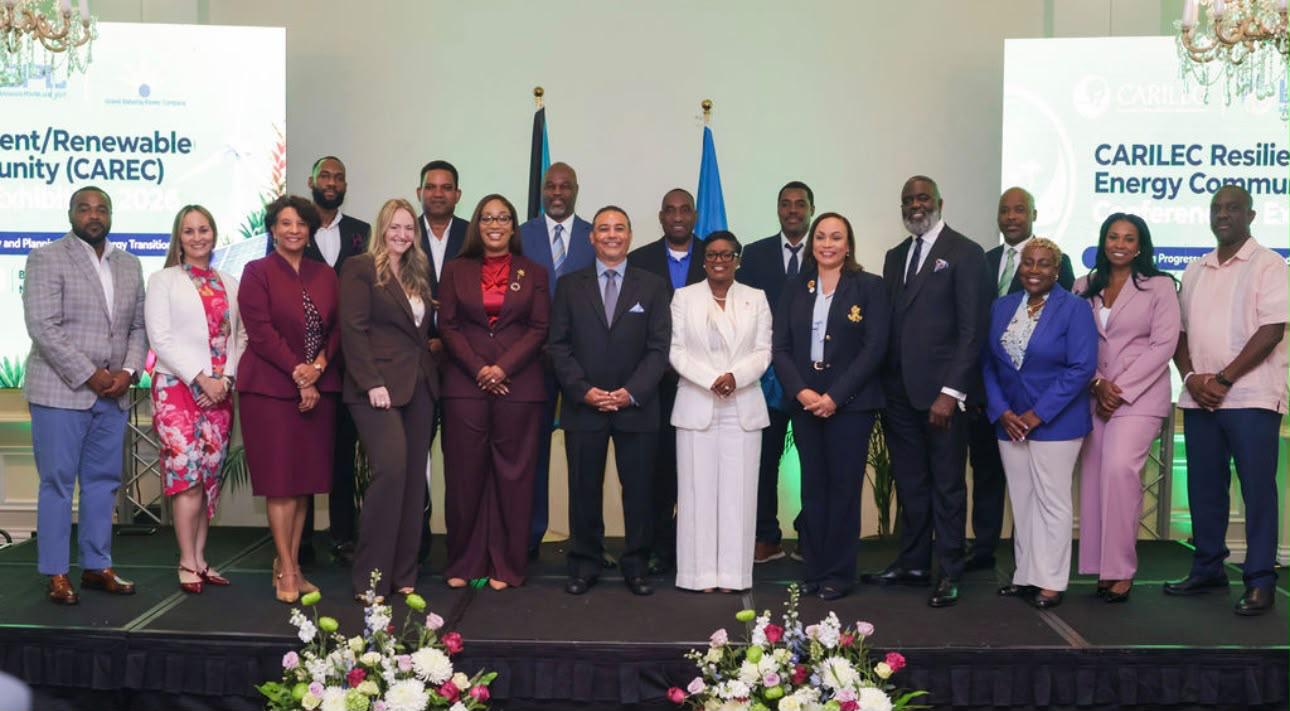
NASSAU, The Bahamas – The Bahamas’ Minister of Energy, Utilities and Aviation, The Honourable JoBeth Coleby-Davis, delivered an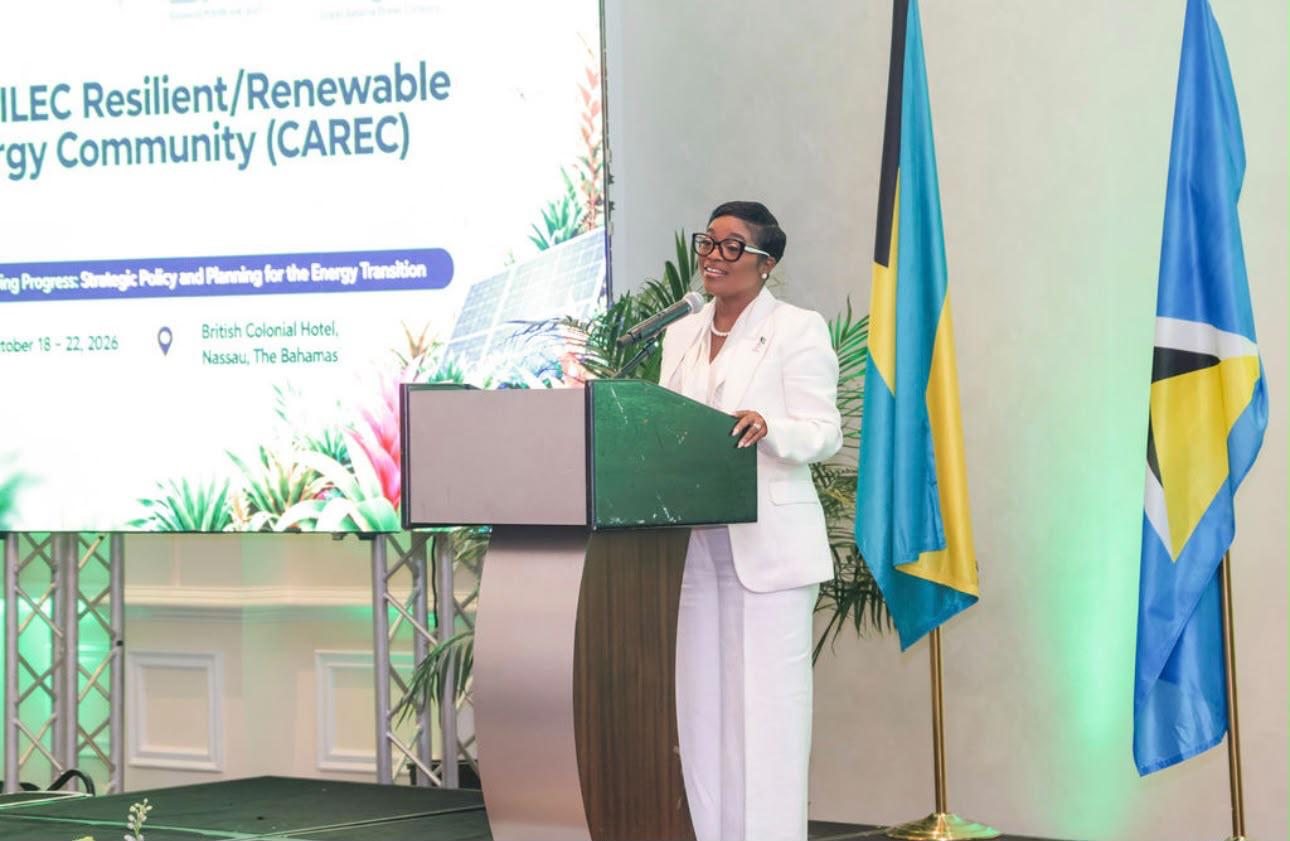 electrifying address during the opening ceremony of the 2026 CARILEC Resilient/Renewable Energy Community (CAREC) Conference and Exhibition, being held October 18–22, 2026, at the British Colonial Hotel in Nassau, The Bahamas.
Under the theme “Empowering Progress: Strategic Policy and Planning for the Energy Transition,” the event draws more than 200 industry leaders, policymakers, regulators, and energy professionals committed to advancing practical strategies for sustainable and reliable Caribbean power systems through renewable energy and emerging technologies.
During her address, titled “The New Energy Era: Transforming Policy into Progress,” Minister Coleby-Davis reminded attendees that The Bahamas’ national motto, “Forward, Upward, Onward, Together,” aptly describes what the region’s energy transition demands.
“Empowering Progress speaks directly to our national motto. Not waiting for progress, but creating the conditions that allow progress to happen. Meaningful progress, however, does not occur by accident. It requires vision, sound policy, strategic planning, strong institutions, and the determination to turn decisions into results,” said Minister Coleby-Davis.
Participants acknowledged that small island developing states share similar pressures, compounded by geographical challenges, small electricity markets, ageing infrastructure, geopolitical influences, and the growing threat of severe weather.
Tasked with ushering in a new energy era across the islands while addressing the challenges posed by The Bahamas’ unique archipelagic composition, Minister Coleby-Davis said, “Every island needs a different answer, but the same logic. As an archipelagic nation, we must provide electricity across many islands, each with its own demand and infrastructure needs. Our strategy, therefore, must be national in direction, but responsive to individual communities.”
Restating her Ministry’s three core messages—that energy is an economic and security priority, technology must be viewed as a tool to support strong institutional leadership, and natural gas should be considered a bridge, not a destination—Minister Coleby-Davis reiterated that “progress must now be reflected in functioning infrastructure, effective institutions, and better electricity services: from policy commitments to coordinated implementation, and from fragmented investment decisions to long-term planning.”
Organised by CARILEC and co-hosted by Bahamas Power and Light (BPL) and Grand Bahama Power Company (GBPC), the annual Conference and Exhibition brings together the Caribbean energy community to advance practical solutions to the region’s most pressing energy challenges and accelerate progress towards more resilient, reliable, and sustainable power systems.
Bahamas News
Rosewood Exuma: A precedent-setting case for environmental law and future development in The Bahamas
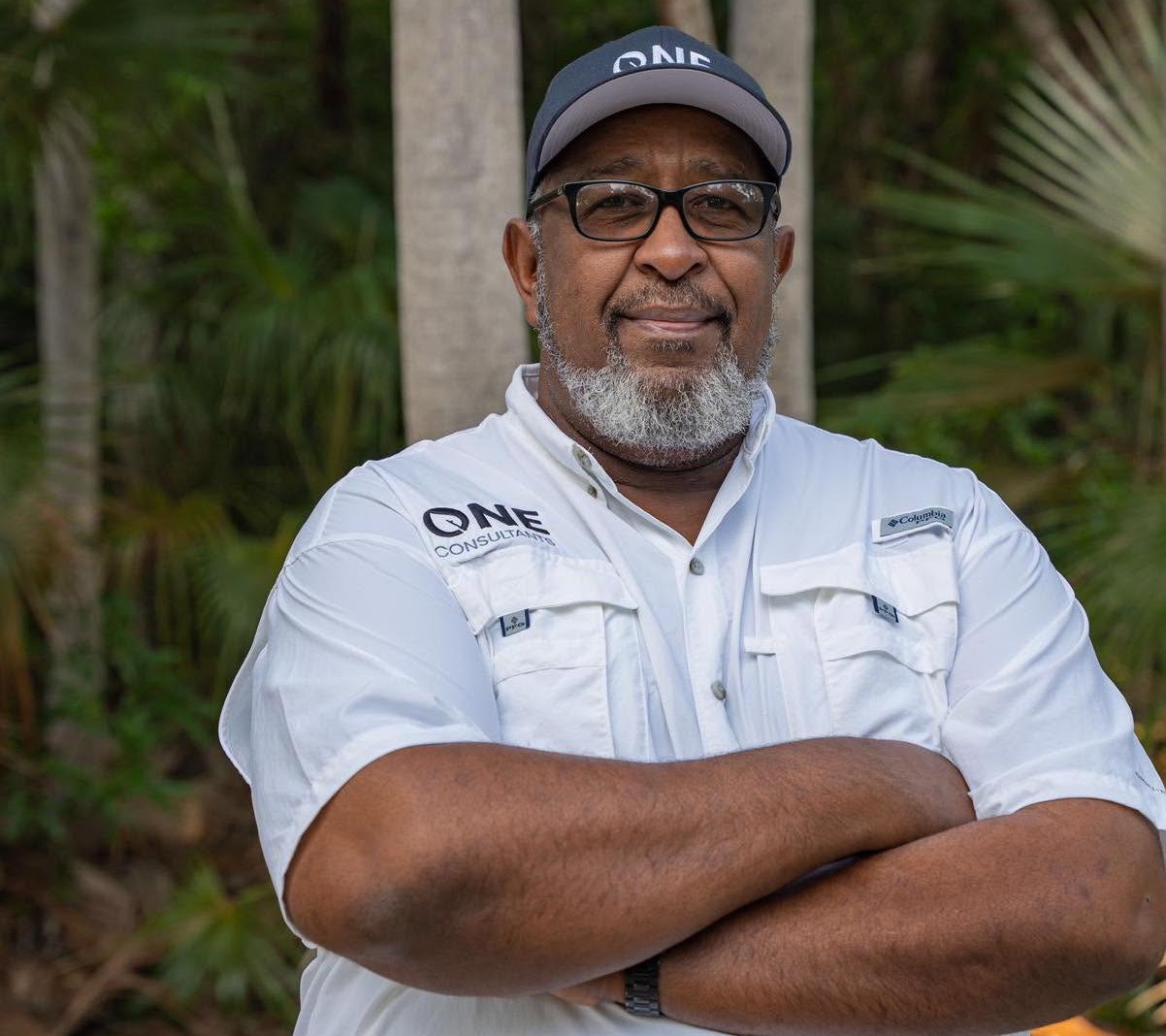
By Eric Carey, ONE Consultants, former Executive Director of the Bahamas National Trust.
We are facing an extraordinarily important moment in judicial history in The Bahamas as we await a decision on the trial of allegations in the Yntegra group’s Rosewood Exuma project.
As former Minister of the Environment, Romauld Ferreira, put it in the Supreme Court last week: “A lot is at stake…a great deal of what will be considered in this case sets the stage for what’s to come for future development in the country.”
In the trial of the judicial review of government approvals given to Yntegra for their Rosewood Exuma resort this week, we’ve heard technical arguments about failure to make key environmental documents like Yntegra’s Environmental Impact Assessment and Environmental Management Plan available to the public, failure of key documents to assess some of the most controversial aspects of the project, an unlawful consultation process, and a failure to conduct further consultation following major changes to the development.
Lawyers for Turtlegrass described how there was a “salami slicing” of the project into chunks as a way to circumvent the approvals process and disguise its full impact from public scrutiny. Only certain portions came before the public and key stakeholders like Turtlegrass and Over Yonder Cay for scrutiny, while some of the most controversial aspects did not. This is particularly problematic given what is at stake – the dredging of a beautiful Exuma bay, the North Bay, to transform it into an industrial shipping channel, complete with an enormous seawall, dock, back-of-house facilities and other industrial infrastructure.
It is unfortunate that it has had to come to this – an expensive judicial review process that calls out the government for falling down on its duties to protect the environment and follow the law – but it is important and the broader implications should not be overlooked. When Justice Leif Farquharson rules on this case, he’ll set a precedent that could echo in The Bahamas for years to come, one that answers the question: are the 2019 environmental laws that Ferreira took to parliament after many years of advocacy by environmentalists toothless tigers that are just for decoration – or are they capable of protecting the environment that we all depend on and the rights of those affected by projects to have a genuine say in them?
What is curious is that at the same time as these points are being raised in court as part of the judicial review, we are seeing personal attacks about Bob Coughlin – the person spearheading this legal action and test of environmental laws – by online trolls. Coughlin, an Exuma resident for almost a decade, has long been established as an environmental advocate and a passionate philanthropist – one who has donated almost $4 million to causes in The Bahamas since 2018, including millions to the organisation I once led, the Bahamas National Trust.
For reasons one can only speculate about, these trolls have been trying to make out all sorts of absurd things: that his legal action in support of environmental protection is a petty dispute born out of fears of competition. That Coughlin no longer even wants to pursue his eco-tourism project, when the reality is that he was forced to put it on hold because of the destructive environmental plans that are in dispute. That he is the only one who has an issue with this Rosewood Exuma resort, when in fact, neighbouring resort, Over Yonder Cay – one of the top rated resorts in the Caribbean – as well as the Save Exuma Alliance – consisting of most of the local islands and businesses in the Exuma area, and thousands of petition signers have expressed their concern with the project – over 9,000 to date. Most ironically, they claim, wrongly, that Coughlin received crown land for personal use, when in fact it is Yntegra who received crown land while having no development track record, when Coughlin instead bought his lease on Sampson Cay from a private owner.
The timing of these claims, in the week of the trial, suggest a patronising and cynical attempt to distract from the gravity of the case being heard, what it represents, and how important this decision is. With their simplistic, jingoistic and factually-dubious references to crown land, white foreigners, and the like – it’s not hard to imagine that those involved are engaged in a ploy to push the buttons of Bahamians who they apparently believe can be too easily distracted into ignoring the real issue here: that the government, has – in the words of those in the Supreme Court this week – “run roughshod” over environmental laws with its approvals for Yntegra’s Rosewood Exuma project and that this is truly a landmark case and the decision will have a long-lasting impact on future development. This is at a time when foreign direct investment (FDI) inflows into the Bahamian economy are forecast to increase by as much as two thirds over the next two years, according to the Inter-American Development Bank (IDB).
So I call on my fellow Bahamians to stay focused. This is not a story about one man – it is a story about the future we want for our country and whether we are willing to sacrifice our ability to demand environmental accountability in all developments moving forward. There is too much at stake to be thrown off the track by trolls.
As Ferreira says of the judicial review that now awaits Justice Leif Farquharson’s judgement: “This is the first set of litigation, serious litigation, that takes a deep dive into the Environmental Planning and Protection Act and the environmental impact assessment regulations…There’s a lot at stake here.”
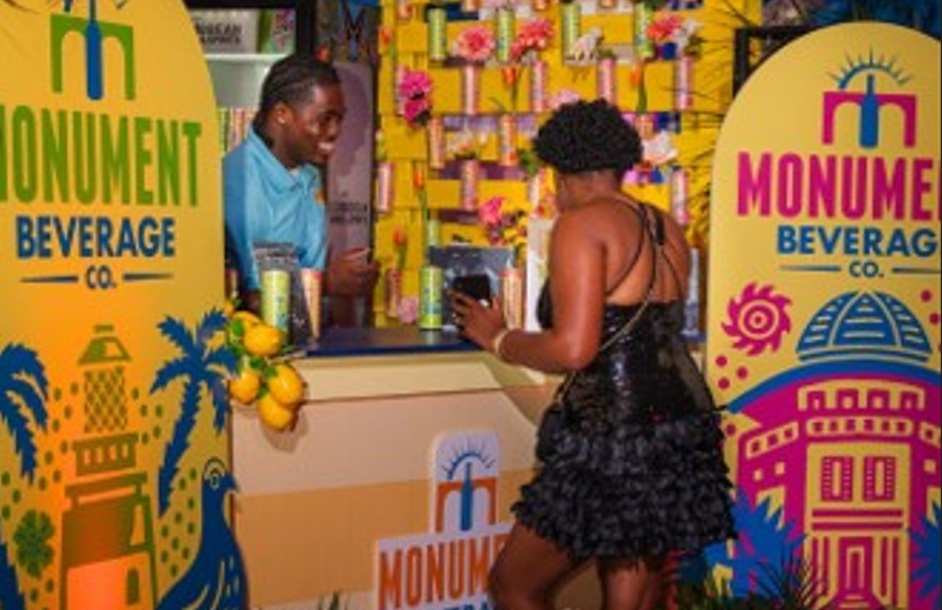
NASSAU, Bahamas — Caribbean Wines & Spirits (CWS), The Bahamas’ leading wine and spirits distributor, proudly supported Paradise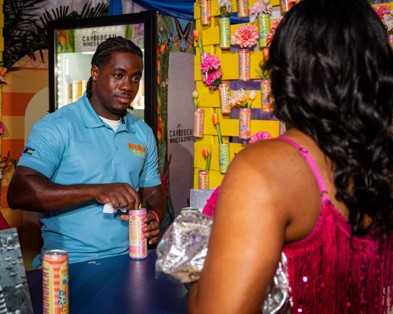 Plates, Hands for Hunger annual fundraiser with a flavorful offering of its newest product, Monument Beverage Co.
Monument, which launched this July and is available across six major islands, made its Paradise Plates debut. Guests enjoyed three bold flavors: Peach Passion, Ginger-Lime and Melon Fizz as they socialized throughout the evening.
Monument brand ambassadors engaged guests with knowledge on the ready-to-drink beverage’s unique taste and look. Many attendees were delighted to learn that Monument is 100% Bahamian-made and owned and enjoyed seeing the various national landmarks on the packaging.
The booth was adorned with vibrant brand colors, striped arches, tropical florals and a photo worthy backdrop featuring Monument cans filled with florals cascading down the wall.
At the end of the event, the entire Monument inventory had finished, making Monument’s Paradise Plates debut a huge success.
For more details on Caribbean Wines & Spirits, new products and specials, visit www.cwsbahamas.com today.





-

 Independent writer1 week ago
Born Here, Raised Here, but Still Unable to Vote: Is this a Conundrum for TCI Electorate?
-
 Bahamas News4 days ago
Rosewood Exuma: A precedent-setting case for environmental law and future development in The Bahamas
-

 Bahamas News1 week ago
Monument Supports Hands for Hunger With Paradise Plates Debut
-

 Bahamas News1 week ago
Schweppes ‘the Art of Mixology’ Dazzles at Paradise Plates with Nemiroff Vodka
-
 Bahamas News3 days ago
Energy Minister Delivers Electrifying Keynote Opening Address at CAREC 2026
-
 News3 days ago
Invest TCI Strengthens Regional Investment Connections at Caribbean Investment Forum 2026 in Barbados
-
 News14 hours ago
Crown Land Unit Leads Multi-Agency Enforcement Exercise in Five Cays