
News
UN Peacekeeping Ministerial in Berlin Brings New Commitments to Strengthen Peacekeeping Operations

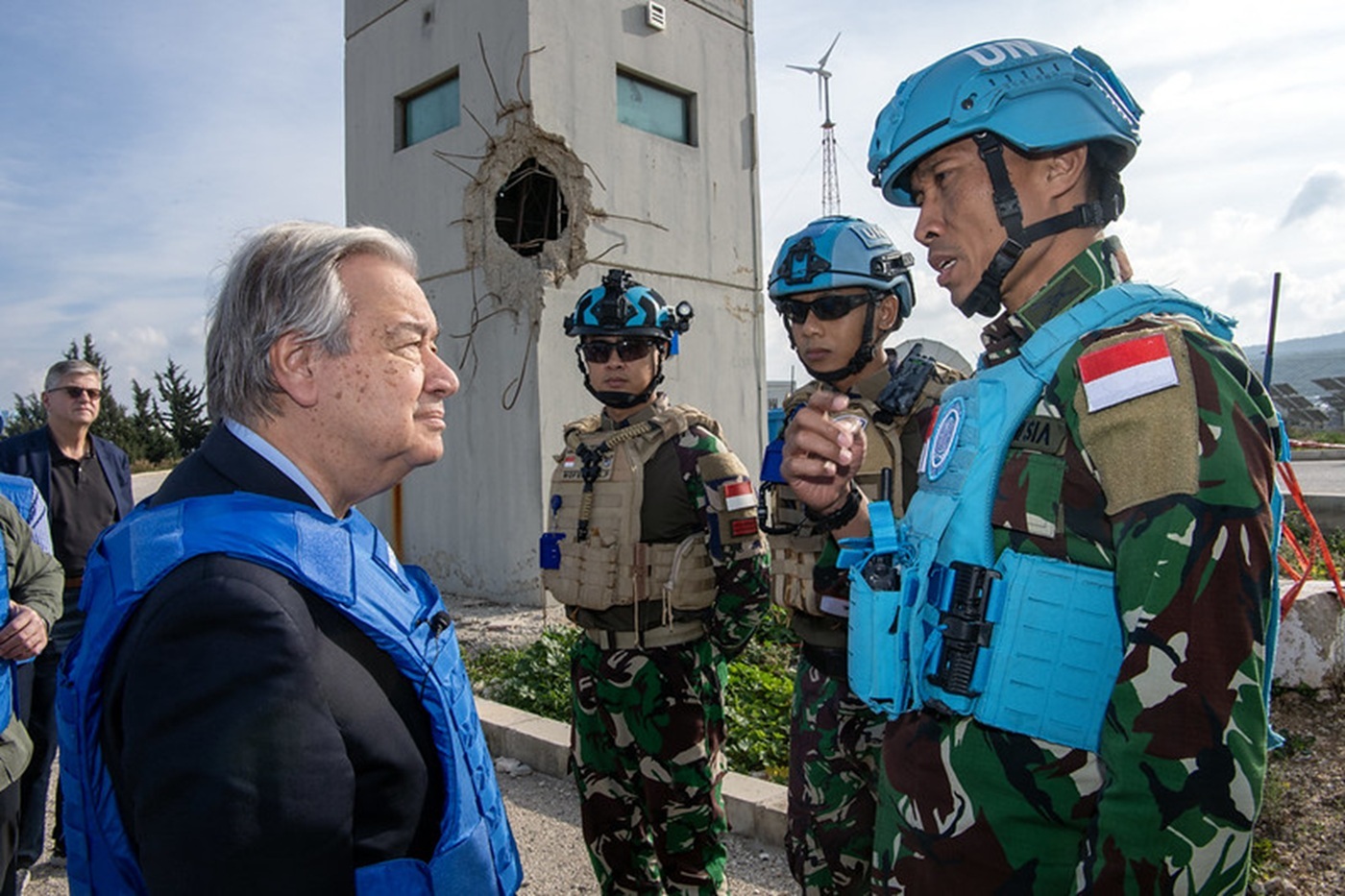
Berlin, Germany, 14 May 2025 – The United Nations Peacekeeping Ministerial 2025 Berlin concluded today. More than 130 Member States and international partners – over a thousand participants in total – came together to reaffirm their support for UN peacekeeping and to announce concrete pledges aimed at enhancing the effectiveness and adaptability of peace operations in the face of evolving global challenges.
Hosted by the Government of Germany, the two-day high-level meeting marked a significant milestone in the ongoing efforts to strengthen Member State support and help shape the future of UN Peacekeeping. The Ministerial focused on the Future of Peacekeeping, reflecting the need for innovative approaches to address complex conflicts, leverage emerging technologies, and address threats such as mis- and disinformation.
“In trouble spots around the world, Blue Helmets can mean the difference between life and death. Now more than ever, the world needs the United Nations. And the United Nations needs peacekeeping that is fully equipped for today’s realities and tomorrow’s challenges,” said United Nations Secretary-General António Guterres in his opening remarks.
“We welcome Member States’ political statements of support for peacekeeping as well as their pledges of military and police capabilities, new partnerships and technological support. This meeting is also about something more fundamental: the future of peacekeeping itself,” he added.
“In an interconnected world, no nation can achieve peace and security for its citizens on its own. In the past two days, more than 130 UN member states have come together in Berlin, determined to make progress towards this goal together. We all agree that setting up strong and effective peacekeeping missions is our joint responsibility. We want to tailor future missions to the exact needs of the host countries and increase their acceptance and effectiveness. This is the way forward in a world in which peacekeeping is more important now than ever before, but where the challenges are greater than at any time in the past. The participants have lived up to this challenge by making many very significant contributions. Germany’s support for the UN and its peacekeeping missions remains unwavering. We are committed to standing up for international peace and security,” said Johann Wadephul, Minister of Foreign Affairs of the Federal Republic of Germany.
Meanwhile, announcing his country’s pledged contributions worth 82 million Euros to UN Peacekeeping, Boris Pistorius, Minister of Defence of the Federal Republic of Germany, said: “I am grateful to all partners, who have come to Berlin to make significant pledges to ensure efficient global Peacekeeping Missions. Germany continues to be a steadfast supporter of UN Peacekeeping and has pledged contributions worth 82 million Euros. In addition, we will continue our support to missions and partners with training and equipment. Our goal was to focus on new and innovative pledges, ranging from renewable energy technologies to medical transport drones to the protection from improvised explosive devices. We remain committed to supporting the three UN Peacekeeping Missions that the German Armed Forces currently deploy to in South Sudan, Lebanon and Western Sahara.”
Key outcomes:
A total of 74 Member States made pledges including:
- Pledges of military and police units
53 Member States pledged uniformed capabilities, including 88 military and police units, as well as various critical capabilities, airlift, individual experts, staff officers and individual police officers.
- Specialized training
59 Member States pledged specialized trainings on critical issues such as peacekeeping-intelligence, protection of civilians, gender and the prevention of sexual exploitation and abuse.
- Technological advancements and data-driven approaches
18 Member States made pledges related to technological advancements and data-driven approaches to improve mission effectiveness. - Women, Peace and Security
38 Member States made pledges to further implement the Women, Peace and Security agenda, including gender-responsive peacekeeping and women in peacekeeping. - Safety and Security
16 Member States pledged capabilities and projects to enhance the safety and security of peacekeepers.
- Conduct and accountability
Eleven Member States made pledges related to the conduct and accountability of peacekeepers and UN Peacekeeping’s fight against sexual exploitation and abuse. This response includes targeted contributions to the Trust Fund for victims.
- Strategic Communications and information integrity
Eight Member States made pledges to support the UN’s Strategic Communications efforts and contribute resources to strengthen information integrity.














Providenciales, Turks and Caicos Islands: The Crown Land Unit, with coordination and support from the Informal Settlements Unit (ISU), conducted a multi-agency enforcement exercise in the Five Cays area on Thursday, September 17, 2026, as part of ongoing efforts to address the illegal occupation and unauthorised use of Crown land.
The exercise brought together representatives from the Crown Land Unit, ISU and the Turks and Caicos Islands Border Force. Security for the exercise was provided by the Royal Turks and Caicos Islands Police Force. Inspections were conducted across several parcels of Crown land throughout Five Cays, where instances of illegal occupation and unauthorised use had been identified.
During the exercise, a total of forty (40) Section 22 Notices of Unauthorised Occupation were served in accordance with the provisions of the Crown Land Ordinance. The notices related to various forms of unauthorised occupation and use of Crown land, including incomplete structures, shipping containers, derelict vehicles, trailer chassis, building materials and other items.
Where persons were not present, notices were affixed to the relevant structures or items. The exercise forms part of the Crown Land Unit’s continuing efforts to prevent squatting and encroachment on Crown land and to ensure that identified instances of unauthorised occupation are appropriately addressed.
The Government of the Turks and Caicos Islands reminds the public that Crown land must not be occupied, developed or otherwise used without lawful authority.
The Crown Land Unit, supported by the ISU and its other partner agencies, will continue to identify and address instances of illegal occupation of Crown land across the Turks and Caicos Islands. Persons affected by notices issued during enforcement exercises are encouraged to comply with the requirements outlined and to seek guidance from the relevant authorities where necessary.
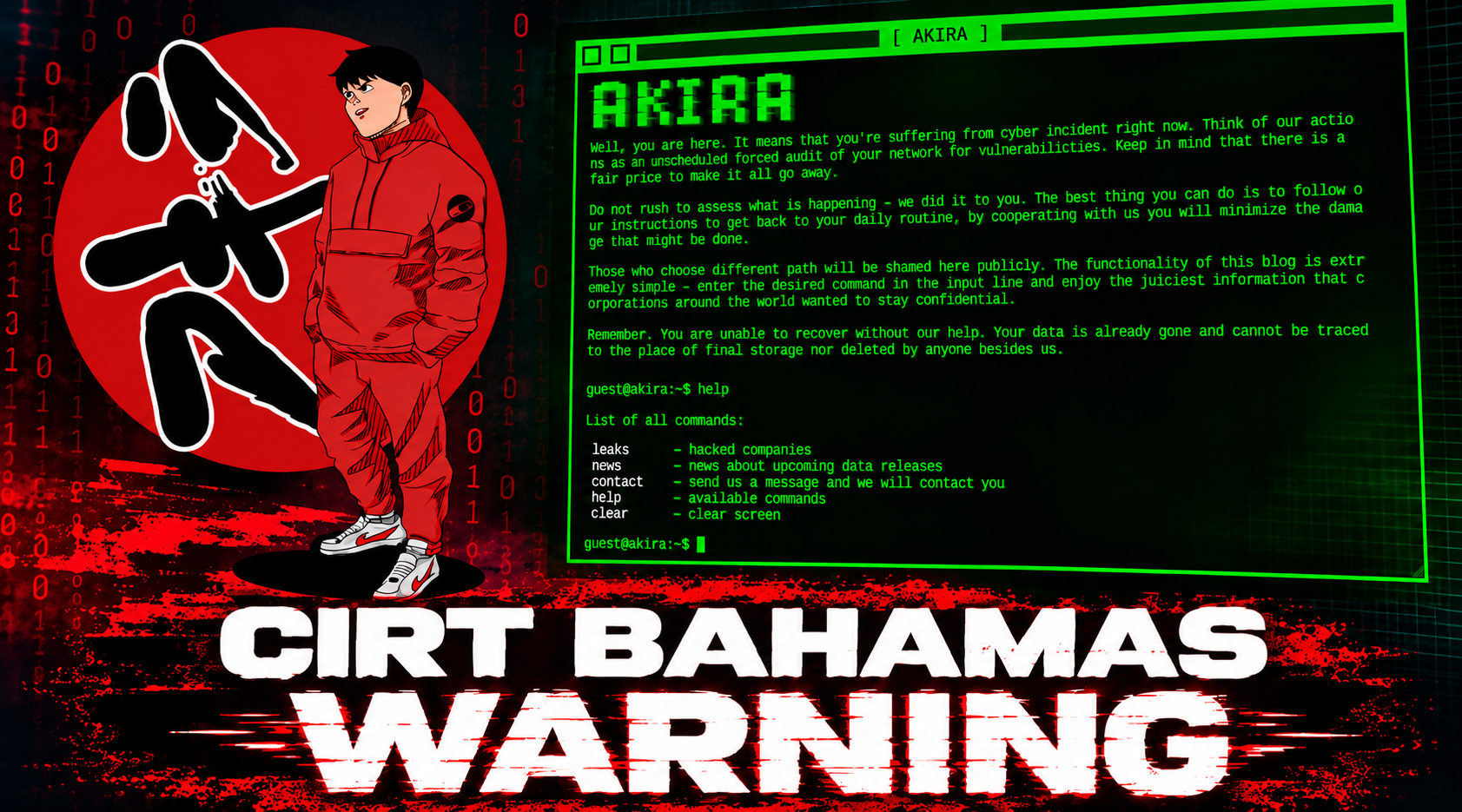
Nassau, The Bahamas, October 22, 2026 — The National Computer Incident Response Team of The Bahamas (CIRT-BS) has issued a cybersecurity advisory warning businesses, government institutions and other organisations about the growing threat posed by Akira ransomware, a cybercriminal operation capable of stealing sensitive information, disrupting networks and demanding ransom payments.
Active since March 2023, Akira operates through a Ransomware-as-a-Service model, with affiliates exploiting weaknesses in computer networks to gain unauthorised access.
Once inside, attackers can steal confidential data, disable recovery systems and encrypt files, preventing organisations from accessing critical information.
Particularly concerning is Akira’s use of double extortion, threatening to publish stolen information unless victims pay. Some attacks involve data theft without encryption.
The October 22 advisory identifies vulnerabilities involving Cisco and SonicWall firewalls, VPN services, Microsoft Remote Desktop Protocol, Veeam backup systems and outdated Windows and Linux operating systems. VMware ESXi and Nutanix AHV environments are also potential targets.
Attackers may exploit unpatched software, stolen login credentials and inadequately secured remote-access applications, including AnyDesk and RustDesk.
Warning signs include unexpected administrator accounts, unusual remote logins, unauthorised software installations, suspicious backup activity, mass file changes and ransom notes.
CIRT-BS recommends immediate security updates, multifactor authentication, restricted remote access, stronger network monitoring and secure backups maintained separately from operational systems.
Organisations should also remove unnecessary internet exposure of remote desktop services, limit administrative privileges and regularly test backup restoration.
The advisory does not identify any confirmed Akira attack against a Bahamian organisation but highlights vulnerabilities that could expose institutions to serious financial and operational disruption.
Cybersecurity incidents can be reported to CIRT-BS at soc@cirt.bs or through its official website.
News
BermudAir Launches Service to the Turks and Caicos Islands on October 26th, Expanding Air Connectivity Ahead of Winter Season

Providenciales, Turks and Caicos Islands (October 22nd, 2026) – The Turks and Caicos Islands welcomes BermudAir as the airline begins its service to the destination on Monday, October 26th, marking the start of a wider expansion that will connect us with additional cities across the United States, Canada and the Caribbean.
BermudAir’s service will begin with a new nonstop service between Fort Lauderdale, Florida, and Providenciales. The flight will depart from the Howard Hamilton International Airport at 8 am on Monday morning and arrives at 7.40 pm. Aboard the inaugural flight will be a delegation from the Turks and Caicos Islands led by Experience Turks and Caicos and the Turks and Caicos Islands Airports Authority (TCIAA), and will include Deputy Governor, Her Excellency Anya Williams, Minister of Tourism, Hon. Zhavargo Jolly, as well s representatives of the Turks and Caicos Hotel and Tourism Association (TCHTA), the board of the Turks and Caicos Islands Tourism Authority, Invest TC and local media.
BermudAir will operate the Fort Lauderdale–Providenciales route three times weekly, on Mondays, Wednesdays and Fridays, through May 3rd, 2027. making it easier for business travellers with the schedule offering the potential for same-day return trips. The airline is also launching nonstop service between Fort Lauderdale and Belize City, Belize, on the same schedule, offering travellers in South Florida direct access to both destinations.
The new service introduces BermudAir’s premium leisure inflight experience to the Turks and Caicos Islands. Flights will operate on Embraer E190 aircraft configured without middle seats, giving every passenger a window or aisle seat, alongside complimentary snacks and beverages.
Minister of Tourism, the Honourable Zhavargo Jolly, welcomed the airline’s arrival, noting the importance of expanding airlift to support the continued development of the destination’s tourism industry.
“Air connectivity remains one of the most important factors in the continued development of our tourism industry. BermudAir’s expansion represents an opportunity to strengthen our connections with key international markets while opening new doors for our sister islands. I am particularly encouraged by the planned direct service between Newark and South Caicos, which speaks directly to our vision of expanding tourism opportunities across the Turks and Caicos Islands. Our objective is to ensure that improved connectivity translates into greater economic activity, stronger local businesses and more opportunities for Turks and Caicos Islanders to participate in and benefit from tourism.” said Minister Jolly.
Commenting on the significance of the new route for the country’s development, the Honourable Arlington Musgrove, Minister of Physical Planning and Infrastructure Development (PPID), stated: “The introduction of BermudAir’s new service is a testament to the continued growth and development of our aviation sector. The Ministry of Physical Planning and Infrastructure Development, alongside the Turks and Caicos Islands Airports Authority, remains dedicated to enhancing our airport infrastructure to accommodate increased airlift. We are committed to working to ensure that our facilities provide a seamless, world-class experience for all incoming passengers and we warmly welcome BermudAir to our shores.”
The Fort Lauderdale launch is the first of several new services BermudAir plans to introduce to the Turks and Caicos Islands for the 2026– 2027 winter season. Additional connections to Providenciales are scheduled from:
- Bermuda to TCI and Grand Cayman: Beginning December 18th, 2026
- Anguilla: Beginning December 19th, 2026
- Boston, Massachusetts: Beginning December 19th, 2026
- Toronto, Canada: Beginning December 19th, 2026
- Raleigh-Durham, North Carolina: Beginning December 20th, 2026
- Newark, New Jersey to South Caicos: Beginning December 20th, 2026
- St. Petersburg/Tampa, Florida: Beginning December 21st, 2026
- Baltimore-Washington: Beginning December 24th, 2026
The expansion will give travellers more options for reaching the destination during the winter travel season, while broadening access from established and developing source markets. The additional routes also create opportunities for tourism stakeholders to reach new audiences and encourage visitors to explore more of the islands.
For flight schedules and bookings, visit www.flybermudair.com.





-

 News5 days ago
Imagine Turks & Caicos Represented in UK Parliament; New Report Favours It
-

 News1 week ago
Invest TCI Strengthens Regional Investment Connections at Caribbean Investment Forum 2026 in Barbados
-

 Bahamas News5 days ago
Bahamas Issues Cybersecurity Alert Over Akira Ransomware Threat
-

 Bahamas News1 week ago
Rosewood Exuma: A precedent-setting case for environmental law and future development in The Bahamas
-

 Bahamas News1 week ago
Energy Minister Delivers Electrifying Keynote Opening Address at CAREC 2026
-

 News5 days ago
BermudAir Launches Service to the Turks and Caicos Islands on October 26th, Expanding Air Connectivity Ahead of Winter Season
-

 News6 days ago
Crown Land Unit Leads Multi-Agency Enforcement Exercise in Five Cays
-

 News2 days ago
Multi-Agency Enforcement Exercise Targets Illegal Occupation of Crown Land in Five Cays