
Bahamas News
PM Davis terms Grand Lucayan Redevelopment HOA Signing Ceremony a ‘Pivotal Day for the People of Grand Bahama


By Eric Rose
Bahamas Information Service
FREEPORT, Grand Bahama, The Bahamas – During his Official Remarks at the Grand Lucayan Redevelopment Heads of Agreement Signing Ceremony, on May 15, 2025, Prime Minister and Minister of Finance the Hon. Philip Davis said that the day would long be remembered as “pivotal for the people of Grand Bahama”.
“It’s time to turn the page on hardship, to leave heartbreak behind,” he said. “It’s a time for renewal, a time for new opportunities, a time for new beginnings.”
Among the many special guests and senior government officials present at the ceremony, held at the Grand Lucayan Convention Centre, were Deputy Prime Minister and Minister of Tourism, Investments and Aviation the Hon. Chester Cooper; Minister of Education and Technical & Vocational Training the Hon. Glenys Hanna Martin; Minister for Grand Bahama the Hon. Ginger Moxey and several Cabinet Ministers; members of the Diplomatic Corps, clergy and uniformed branches; various stakeholders and Grand Bahama residents.
The prime minister said, “As many of you know, I had the pleasure of living in Grand Bahama very early in my career, which gave me the opportunity to form lifelong friendships and a strong connection to this very special place. It also gave me the opportunity to understand the potential of Grand Bahama to create a fulfilling life.”
After speaking about his personal ties to Grand Bahama, Prime Minister Davis pointed out that leadership is about “what you leave behind”.
“I intend to leave behind real results for the people of Grand Bahama – jobs, infrastructure, healthcare, opportunity, and most of all, dignity,” he stated.
“That’s what matters. That’s what lasts.”
Prime Minister Davis noted that the Grand Lucayan redevelopment was “very ambitious, and rightly so”.
He said: “At the heart of this redevelopment is an integrated resort village that will create jobs, restore confidence, and give Grand Bahama the momentum it deserves. That means three new hotel buildings, a full-scale cruise resort, a revitalized 25,000-square-foot casino, a Greg Norman-designed golf course, over-the-water cabanas, beach clubs, family attractions, water parks, retail spaces, restaurants, music venues, and a 16-slip mega-yacht marina. This is no small undertaking.”
“This is an $827 million investment – and perhaps much more – the kind of scale that has the power to shift the local economy, create opportunity at every level, and change lives for the better,” Prime Minister Davis added. “More than 1,300 jobs will be created during construction, and 1,750 permanent jobs when the development is fully up and running.”
Prime Minister Davis stated that thousands of Bahamians will have an opportunity to earn, to grow, and to build a future for themselves and their families, right there at home.
He said: “We’ve said clearly: Bahamians must be at the centre of this. At least 80% of these jobs must go to our people. That’s not just a condition — it’s a conviction. Because we know the skill is here. The talent is here. The work ethic is here. What’s been missing is opportunity; but no longer.”
“You see, we’re not here to make promises, Prime Minister Davis continued. “We’re here to make progress – enduring progress. The kind of progress that can lift up entire communities on Grand Bahama.”
Prime Minister Davis said that what they were building of the Grand Lucayan was not a stand-alone project: it was part of a “wider, more connected vision for Grand Bahama”.
He said: “A vision that recognises that true development doesn’t happen in silos. It happens when the key pieces fit together – when infrastructure supports industry, when tourism supports small business development, when investment supports people’s ability to live, and work, and thrive – right here at home.”
Prime Minister Davis stated that was why his government was focused on delivering a broader transformation. “We are moving ahead with a new, modern airport that matches the scale of Grand Bahama’s ambitions,” he announced. “We’re also supporting the Carnival port development, a critical piece in making Grand Bahama a leading cruise destination again. Thousands of passengers, new spending in the local economy, and fresh opportunities for Bahamian entrepreneurs across transport, food, crafts, and tour services.”
Prime Minister Davis pointed out that the Grand Bahama Shipyard was also a part of that strategy.
“Already one of the most important industrial assets in the country, the Grand Bahama Shipyard is receiving attention and investment to ensure it continues to grow as a hub for technical jobs, skilled trades, and export-led services,” he said. “This is what a modern economy looks like. It’s not built on one pillar — it’s built on a strong foundation that supports tourism, transport, manufacturing, and innovation.”
Prime Minister Davis added: “And don’t forget – we are building a new hospital, because the people of this island deserve modern, reliable healthcare, without having to fly to Nassau for basic services. We are investing in roads and water systems. We are helping small businesses. We are pushing for more training, more job readiness, and more chances for young people to stay and succeed right here, which is being led by your own Minister of Grand Bahama Ginger Moxey. And, yes, we are starting up new developments like this one, because we know that jobs are the foundation for any economy, a path to dignity and self-reliance.
“That is the kind of holistic vision Grand Bahama deserves. And that is the vision we are delivering.”
Prime Minister Davis thanked Mr. Steve Sirang, CEO of Concord Wilshire Capital, and the entire development team.
“You brought your heart, proposal, and a sense of belief in Grand Bahama’s future, and you’ve committed to working alongside us to make that future real,” he said. “I thank you for that.”
Prime Minister Davis added: “I’d also like to thank Curt Hollingsworth, our Consul General out of Miami who introduced Steve to Grand Bahama, and later to me. To the Deputy Prime Minister, you have been central in our redevelopment of Grand Bahama and it’s your tireless efforts towards, what I call, the launching pad that have helped get us to where we are today.”
He continued by thanking Minister Moxey.
“Your determination to see this island rise again has never wavered, and it shows in the outcome we celebrate today, along with Parliamentary Secretary Kingsley Smith,” Prime Minister Davis said. “There’s no doubt that Grand Bahama is in good hands and its future is bright.”
He continued: “And to the Director of Investments Phylicia Woods Hanna – words can hardly express our appreciation for the amount of hours spent, the tireless effort made, to pull this across the line. We thank you.” He also thanked Attorney General Ryan Pinder; Chairman of Lucayan Renewal Holdings Ltd., Julian Russell and its board members; and all the public officers across government who worked behind the scenes.
“We are building a better future for our country and this island,” Prime Minister Davis stated.
He added: “My friends: Let us remind ourselves, no one project can fix everything. Making sure the economy includes everyone who wants to be included is going to take a lot of hard work.
“We all need to pull in the same direction; so allow me to invite you on board. No matter where you stand politically – I ask you to join in building a better Grand Bahama.”
Prime Minister Davis continued: “This is a moment that should unite all Bahamians.
“A moment when Grand Bahamians can stop waiting and start building. A moment for those who kept going, who kept believing – to see that their faith was not in vain. Let us move forward together – with great purpose, with gratitude, and with the people at the centre of it all.
“Let this moment be the turning point. The moment Grand Bahama turned the page and started its most auspicious chapter.
“Friends: Let’s get to work, and let us work together. May God bless Grand Bahama; and may God bless the Commonwealth of The Bahamas.”
PHOTO CAPTION
Prime Minister and Minister of Finance the Hon. Philip Davis speaks, during his Official Remarks at the Grand Lucayan Redevelopment Heads of Agreement Signing Ceremony, on May 15, 2025. Among the many special guests and senior government officials present at the ceremony held at the Grand Lucayan Convention Centre were Deputy Prime Minister and Minister of Tourism, Investments and Aviation the Hon. Chester Cooper; Minister of Education and Technical & Vocational Training the Hon. Glenys Hanna Martin; Minister for Grand Bahama the Hon. Ginger Moxey and several Cabinet Ministers; members of the Diplomatic Corps, clergy and uniformed branches; various stakeholders and Grand Bahama residents. (BIS Photos/Eric Rose. Drone Photography Courtesy of Eric Rose)


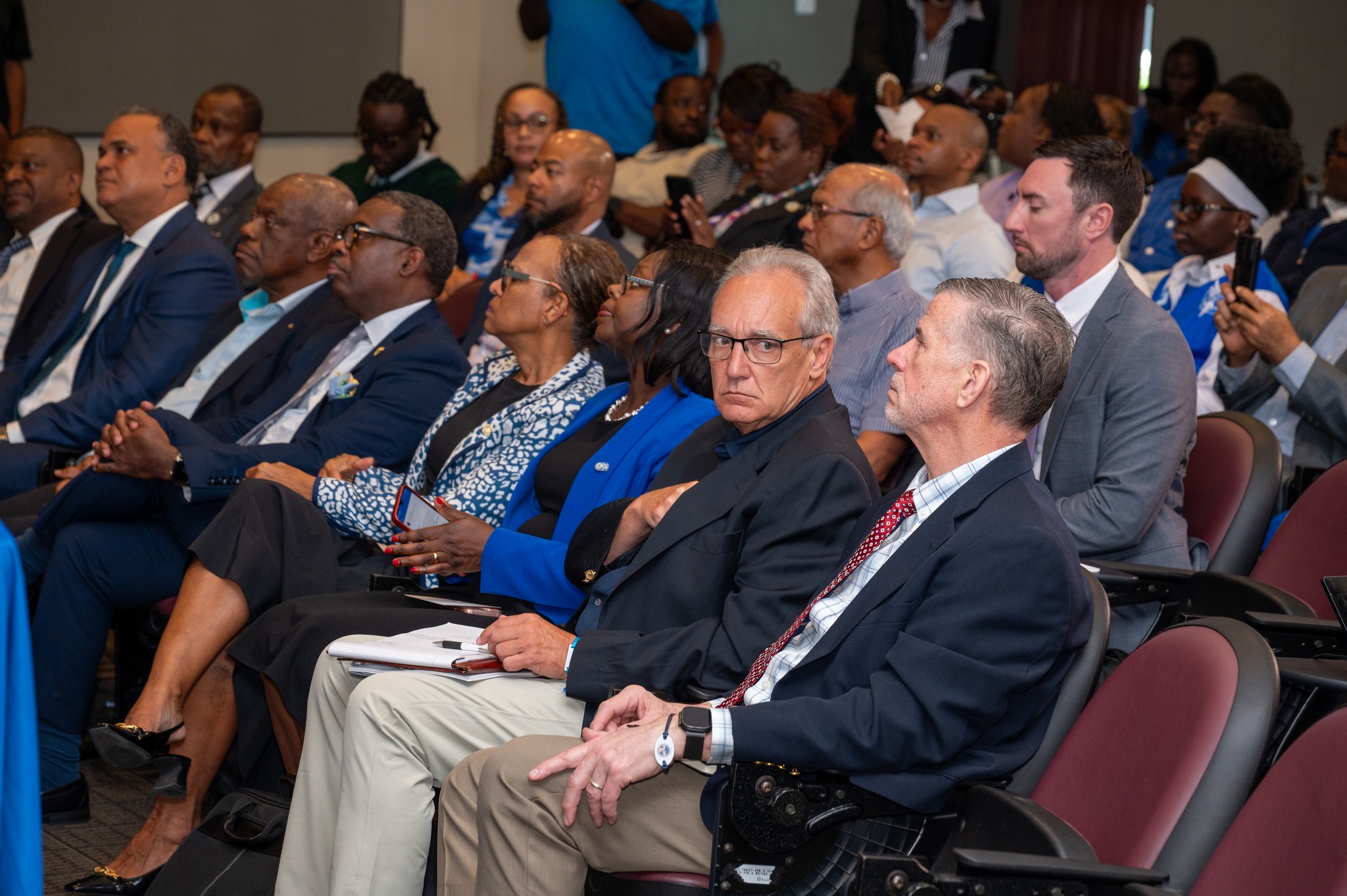
Nassau, THE BAHAMAS – From pressures on the independence of the US Federal Reserve and relations with China to the instability facing the global economic landscape and how it all impacts The Bahamas’ economy and prospects, Tuesday’s Central Banking Series hosted by University of The Bahamas (UB) in partnership with the Global Interdependence Center (GIC) peeled back the layers of the most critical factors impacting the world’s economic landscape.
At the one-day summit, top economic strategists, policymakers, academics, and economists gave frank and considered insights on the range of opportunities and challenges. In facilitating the high-level talks, UB’s Government and Public Policy Institute (GPPI) continues to provide the platform for evidence-based dialogue on public policy and reform.
“By convening world-class thinkers, policymakers, and practitioners here in Nassau, we affirm that The Bahamas is not solely a subject of global economic forces, but also a participant in the conversations that shape them,” said UB President Dr. Robert Blaine, III.
In his remarks, Minister of Economic Affairs Senator the Honourable Michael Halkitis acknowledged the ripple effects of financial shifts which put pressure on the Bahamian economy, yet he acknowledged that the economy is on the rise. He expressed confidence in the country’s readiness to adapt, citing a deep talent pool and expanding foreign and domestic investments.
“What makes this period particularly significant is the breadth of investment activity across sectors,” said Minister Halkitis, a UB alumnus. “Tourism development remains strong, but it is not the sole driver of growth. Investments are expanding into renewable energy, maritime services, digital infrastructure, agriculture, logistics and the blue and green economies.”
Economist and Former President and CEO of the Federal Reserve of Richmond, Dr. Jeffrey Lacker offered a sobering view on the independence of the US Federal Reserve, a topic that has attracted much national and international in the face of blistering pronouncements by US President Donald Trump.
Dr. Lacker said the Federal Reserve’s choice of monetary policy instrument and setting of the overnight interest rate that it controls should be “free of executive branch and congressional meddling.”
“And by meddling, what I mean is overtly expressed policy direction, opinions about where policies should go, expressed in a way that carries with it the implied threat of adverse consequences to either the individual or the institution, either in the form of legislative changes or some sort of political harassment,” he said.
“The value of insulating day-to-day, meeting-to-meeting monetary policy from pressure from elected officials with an eye on their next election is widely recognized. Neglecting that pressure, caving into that pressure is a road to short-termism, or short-term stimulus at the cost of inflation later on.”
Other pertinent conversations at the summit focused on digital initiatives for financial inclusion, monetary and fiscal policies and strategies in The Bahamas, and the impact of AI on macroeconomic conditions. There was also a special presentation on the history and value of gold. Students from Government High School were among the audience members gaining knowledge from experts.
“When we determined the theme for this year, being Challenges and Opportunities in a Dynamic Global Environment, we did not know what was going to evolve in recent times,” said GPPI Executive Director Zhivargo Laing, referring to the war that the US and Israel initiated against Iran. “So I would like to think that maybe there was a little bit of insight that was taking place during the course of our discussions. But we are here again for the third time with our partners at the GIC to entertain a deep discussion on just what are those challenges and opportunities in this very dynamic environment in which we find ourselves.”

Nassau, The Bahamas — The People’s Republic of China, in the span of two decades, has transformed itself into an economic superpower the world can scarcely function without. This was one of the perspectives that added context to crucial conversations about the US-China outlook at the Central Banking Summit held at University of The Bahamas (UB) on Tuesday.
“China has gone from being, conceptually, a non-economy. It has gone from being a $2 trillion economy in 2000; today it is a $20 trillion economy. There has never been growth like that anywhere on the planet,” said Michael Drury, chief economist, McVean Trading.
In the Caribbean region and for The Bahamas, China has become both a critical link in the global supply chain and, at times, a financial partner when the price tag of major infrastructure projects proves difficult to carry alone.
During the summit, facilitated by UB’s Government and Public Policy Institute (GPPI) in partnership with the Global Interdependence Center (GIC), the outlook on US-China relations and how the world will be impacted was a key topic of discussion.
Drury appeared on a panel with Zhivargo Laing, Executive Director of UB’s GPPI. Both gave insight into China’s rapid economic rise and its growing influence over global manufacturing and trade.
“The wish was that China would become a capitalist democracy, and it was on its way there until President Xi Jinping took control of the country in 2012. [Xi] is a Marxist. When you are a Marxist, you believe capitalism will destroy itself,” Drury explained.
Drury, who also serves as an executive and assistant program director with the GlC, noted that the statistics surrounding China’s meteoric manufacturing expansion often evoke strong reactions when presented to audiences across the US.
“The solution for the United States in freeing itself from China’s manufacturing dominance is to find somewhere it can produce goods without depending on China. There is no such place on earth. China produces 30 percent of all manufactured goods,” he said.
The discussion also examined recent efforts by the US to reclaim manufacturing capacity and reverse trends Washington believes could compromise national security.
“The spoken goal of wanting to return manufacturing to the United States essentially means restoring enough production capacity to support national defence,” Drury explained. “The auto industry built the bombers and tanks during World War II. If you don’t have an auto industry, you don’t have an industry you can flip into national defence production.”
For The Bahamas, the geopolitical dynamics has become increasingly challenging to navigate with the latest example being the proposed specialty hospital project for which the Government of The Bahamas has secured Chinese financial backing. In response, the US, through its newly appointed ambassador, has publicly encouraged The Bahamas to reconsider the arrangement.
Laing, former Minister of Economic Affairs and a UB graduate, offered this contextual view: that The Bahamas understands the importance of maintaining strong relationships with both global powers.
“If we were going to have concerns about any country being overly influential in The Bahamas, it would be the United States of America. Why? Eighty-plus percent of our tourism comes from the United States. We have one of the only U.S. pre-clearance facilities in the world. There are substantial American investments in The Bahamas. Our currency is pegged to the United States. And if we ever needed help in this country, we have no doubt who we would turn to,” Laing said.
Laing noted that the influence of the United States extends beyond economics and geopolitics into the cultural and personal realms.
“We love to go to the United States. We go for education, healthcare, and socializing. But for practical reasons, we also nurture relationships with countries around the world. The Bahamas is not a war state.”
As competition between the two global giants intensifies, Laing offered this advice for policymakers navigating the geopolitical landscape.
“It will continue to be very competitive between these two giants, and if I were advising policymakers in The Bahamas, I would say: keep hugging your friends and shaking the hands of your associates.”
Bahamas News
Dredging Is Not Just About Size — It Is About What Is Being Destroyed, Warns Save Exuma Alliance Regarding Yntegra’s Proposed Rosewood Resort
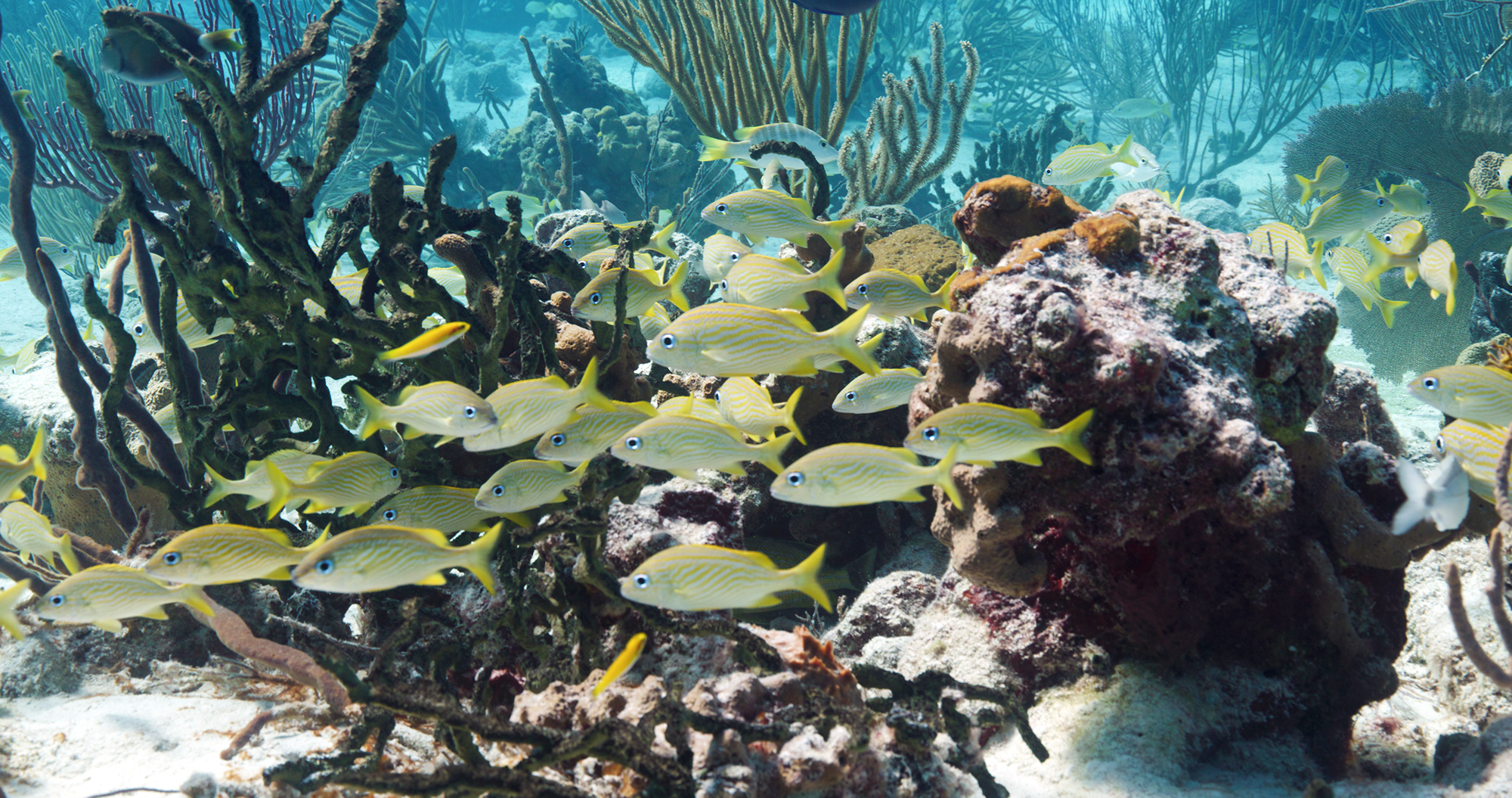
Save Exuma Alliance (SEA) — a coalition of Central Exuma business owners, tour operators and residents — has warned that the issue of dredging in the North Bay of Sampson Cay, Exuma, is not just about the number of acres being dredged – but what exists within the proposed dredge area. SEA describes the site as an ecological treasure trove filled with seagrass, coral, turtles and abundant marine life.
This comes after foreign developer Yntegra agreed to reduce the scope of its dredging following government warnings that it would impact The Bahamas carbon credit status, which shows the importance of the marine habitat.
“It is easy to point to other developments and say they are dredging more, but that is not comparing like with like,” SEA said in response to comparisons made by Yntegra. “If one area is largely sand with little marine life, that is very different from what we have in North Bay. Anyone who has spent time there can tell you it is filled with turtles, fish, and — critically — the seagrass and coral that provide essential habitat.”
Miami-based investment group Yntegra is seeking to construct a large-scale Rosewood-branded resort on Sampson Cay. Since its announcement, the project has generated environmental, social and economic concerns among residents and business operators in Central Exuma.
The proposed development includes dredging in North Bay, construction of a substantial seawall that would alter natural water flow, more than 100 structures, two mega yacht marinas, and an industrial dock serviced by fuel and supply ships in an area currently used by swimmers. Opponents argue that the scale and design of Yntegra’s Rosewood Exuma project are incompatible with the fragile ecosystem and cultural character of the Central Exumas.
SEA noted that the government’s Climate Change Unit has also raised concerns about the environmental cost of dredging associated with Yntegra’s Rosewood Exuma project.
“The government has acknowledged that this is an area of significant importance,” SEA said. “While the financial implications are serious, for us here in Exuma this is about more than money. It underscores how valuable this marine ecosystem is — the seagrass, coral and marine life that make Exuma exceptional. This is what attracts visitors from around the world. We should not minimize the concern by comparing this bay to areas that do not have the same remarkable underwater ecosystem. It is simply not the same.”
Experienced boat captain Tito Baldwin also questioned the feasibility of the marine infrastructure proposed as part of this plan. He warned that the dredging currently outlined would not be sufficient to accommodate the vessels required to service the project.
“It’s going to have to be at least four times larger than what has been proposed,” Baldwin said. “As designed, it is beyond possibility.”
He explained that vessels supplying fuel, construction materials and provisions for a projected 300-person workforce would require significantly greater depth and maneuvering space.
“For supply vessels delivering hundreds of thousands of gallons of diesel, you’re looking at ships with a 10-foot draft,” Baldwin said. “To operate safely, you would need at least 13 feet of depth. That means dredging far deeper than what has been proposed. With currents running east and west in that area, you would also need a much wider turning basin to maneuver safely. As it stands, it would be extremely difficult, if not impossible.”
SEA is urging individuals concerned about the environmental impact of dredging connected to Yntegra’s Rosewood Exuma project to visit www.saveexumaalliance.org for more information. A petition calling for a halt to approvals is also available on the site, with more than 7,100 signatures collected to date.





-

 Bahamas News3 days ago
Economic and Financial Experts Assess US-China Relations; Offer Advice for The Bahamas
-
 Caribbean News1 week ago
Jamaica Joins Afreximbank Agreement, Strengthening Africa–Caribbean Partnership
-
 Bahamas News3 days ago
Experts Analyze Economic Landscape; Opportunities and Challenges
-
 Caribbean News3 days ago
Widow’s Testimony Recounts Night Haiti President Was Killed
-
 News3 days ago
Beaches Resorts Announces Grand Opening of Treasure Beach Village at Beaches Turks and Caicos
-

 News3 days ago
North and Middle Caicos Students receive educational material from Sandals Foundation and Beaches Turks and Caicos resort
-

 News3 days ago
Sandals Foundation Reading Road Trip with Canadian Broadcasters Creates Cultural Mix at Enid Capron Primary School
-

 Education3 days ago
Department of Education hosts 3rd Annual Local Studies Competition