
Finance
RECIPROCITY: 26 Caribbean Countries face US Tariffs; Guyana slapped with 38%













By Deandrea Hamilton
The Bahamas, June 9, 2026 – The Caribbean Development Bank’s annual gathering may have concluded in The Bahamas, but attention is already turning to Belize as leadership of the institution’s Board of Governors officially changed hands.
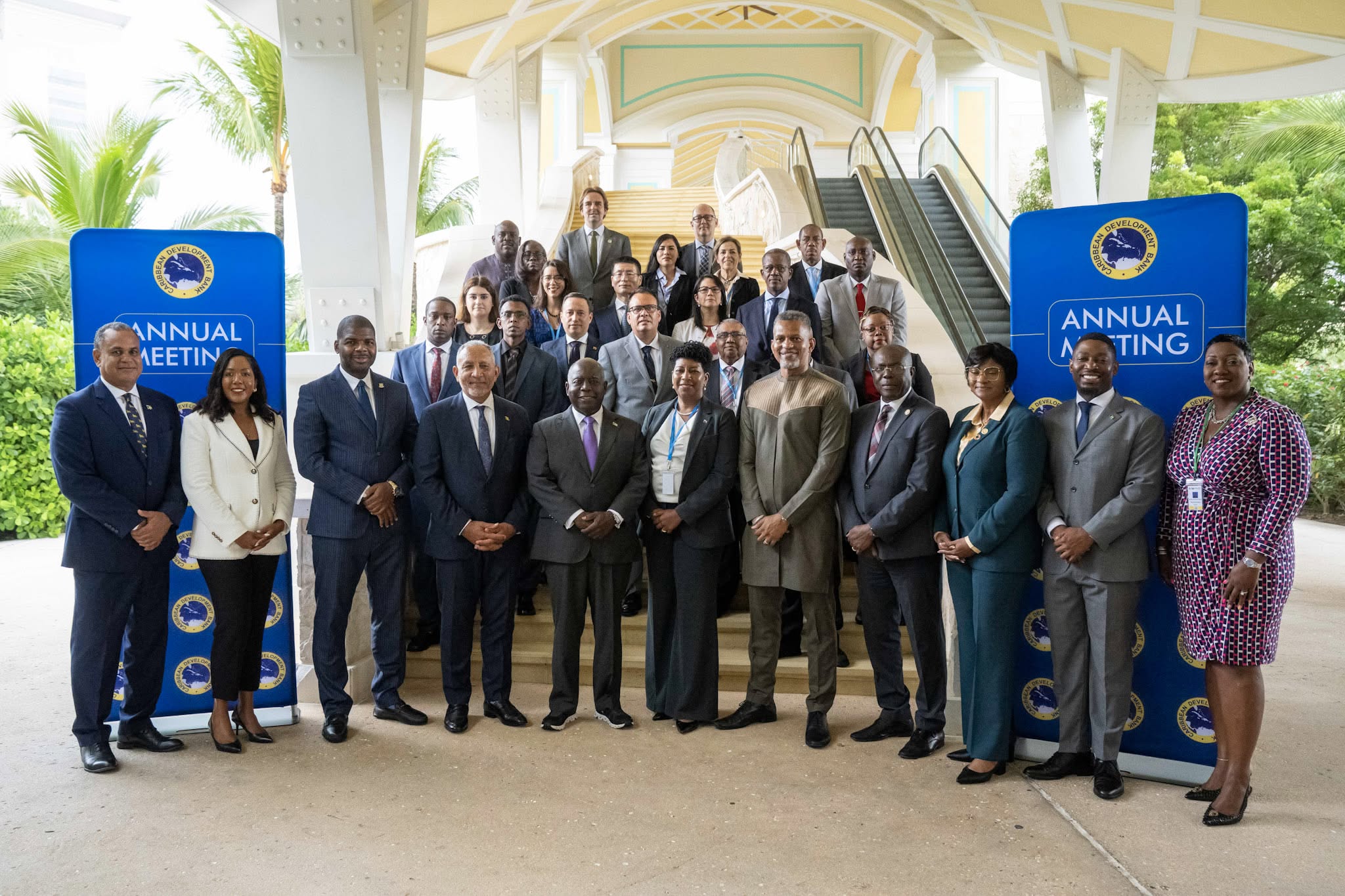
At the close of the 56th Annual Meeting in Nassau, outgoing Chairman and CDB Governor for The Bahamas, Michael Halkitis, formally transferred the chairmanship to Belize’s Dr. Hon. Osmond Martinez, continuing the Bank’s tradition of rotating leadership among its regional shareholders.
The handover capped a week of discussions focused on financing development in an increasingly uncertain global environment and strengthening the Caribbean’s ability to withstand economic and climate-related shocks.
One of the meeting’s most closely watched conversations centered on how multilateral development banks can better support vulnerable Small Island Developing States.
During the President’s Chat, titled Financing the Future: MDB Strategies for Uncertain Times, CDB President Daniel Best joined leaders from the OPEC Fund, the Central American Bank for Economic Integration and the Fund for Responding to Loss and Damage to discuss expanding development finance and building resilience.
OPEC Fund President Dr. Abdulhamid Alkhalifa emphasized that development institutions must move beyond responding to crises and instead help countries prepare for them.
“The real test is whether we can help countries move from strategy to implementation, and from implementation to results,” Alkhalifa said.
The discussions reflected a growing regional push for innovative financing solutions as Caribbean nations continue to confront climate vulnerability, infrastructure demands and economic uncertainty.
Beyond discussions on financing and resilience, the Annual Meeting also featured youth engagement activities, including the Youth FIRE Forum, where young Caribbean leaders participated in conversations about innovation, entrepreneurship, leadership and the future of regional development. Senior government officials, development professionals and youth delegates exchanged ideas on the challenges and opportunities facing the next generation, reinforcing a recurring message throughout the conference: that investments made today must ultimately improve opportunities for Caribbean youth tomorrow.
That theme was echoed by Bahamas Prime Minister Philip Davis, who used the opening ceremony to challenge regional leaders to invest in future generations.
“We must invest in the one asset that no agency can ever downgrade, and that no storm can ever wash away: the mind of a Caribbean child,” Davis told delegates.
With Belize now assuming the chairmanship, regional leaders say the focus remains on transforming ideas discussed in Nassau into tangible results for Caribbean people.
Angle by Deandrea Hamilton. Built with ChatGPT (AI). Magnetic Media — CAPTURING LIFE.

NASSAU, BAHAMAS — Regional policymakers, development financiers, economists and international partners are converging on Nassau this week as the Caribbean Development Bank (CDB) stages its 56th Annual Meeting at the Baha Mar Resort from June 1-5, 2026.
Held under the theme, “Forging the Caribbean’s Future: Strategic Solutions for Uncertain Times,” the gathering is expected to place The Bahamas at the center of discussions on some of the region’s most pressing challenges, from climate resilience and energy security to debt sustainability and economic growth.
At the launch of the annual meeting on March 19, CDB President Daniel Best underscored the importance of bringing together leaders from across the Caribbean and beyond at a time of global uncertainty.
“The Annual Meeting provides a strategic moment for the Caribbean, an opportunity for our leaders, governments, development institutions, private sector, youth, and international partners to come together to identify practical solutions that can help the Region navigate uncertainty while unlocking the opportunities that lie ahead,” Best said.
The conference host, newly named Bahamas Minister of Finance and Chairman of the CDB Board of Governors, Michael Halkitis, also emphasized the significance of the event during the March 19 launch ceremony.
“Today’s gathering marks more than the start of preparations for an important meeting. It represents the beginning of a renewed conversation about the future of the Caribbean, about our shared aspirations, our common challenges, and the partnerships that will shape the path forward for our region,” Halkitis said.
He added: “Hosting the 56th Annual Meeting of the Caribbean Development Bank here in Nassau provides an important opportunity to strengthen partnerships and advance meaningful dialogue on the future of the Caribbean.”
Over the five-day meeting, delegates will tackle major issues including energy transition and resilience, innovative debt solutions for Caribbean economies, and the impact of global economic shocks on regional development.
The programme features a number of high-level events including the Youth FIRE Forum, the William G. Demas Memorial Lecture, the President’s Chat titled Financing the Future: MDB Strategies for Uncertain Times, and a series of policy seminars examining climate finance, infrastructure, economic resilience and development lending.
Among the featured participants are CDB President Daniel Best, Finance Minister Michael Halkitis, senior officials from multilateral development banks, regional finance ministers, central bank governors, economists, development specialists and private-sector leaders. The President’s Chat is expected to bring together leaders of major multilateral development banks to discuss financing strategies for developing states facing mounting economic pressures.
The annual meeting also includes sessions branded “EDGE X by CDB: Analytics Unlocked,” which will explore the economic costs of traffic congestion in the Caribbean and how global crises continue to affect regional economies.
The CDB Annual Meeting traditionally attracts representatives from the Bank’s 28 member countries, including government ministers, senior public officials, development agencies, international financial institutions, youth delegates, academics and private-sector stakeholders. Hundreds of delegates are expected to participate in discussions that will help shape development priorities and financing strategies across the Caribbean in the years ahead.
Angle by Deandrea Hamilton. Built with ChatGPT (AI). Magnetic Media — CAPTURING LIFE.
Caribbean News
Butterfield Announces Agreement to Acquire Control of CIBC Caribbean in $1.8 Billion Transaction

Transaction unites two premier, full-service banking and wealth management platforms with complementary experience in international financial centers and attractive Caribbean markets to create a $29 billion financial institution
Hamilton, Bermuda and St. Michael, Barbados, May 28, 2026 – The Bank of N.T. Butterfield & Son Limited (“Butterfield”) (NYSE: NTB | BSX: NTB.BH) has entered into a definitive agreement to acquire CIBC’s 91.7% interest in CIBC Caribbean Bank Limited (“CIBC Caribbean”), a relationship bank with a longstanding history serving communities across the Caribbean, to create a leading banking and wealth management platform in international financial centers and attractive Caribbean markets, with approximately $29 billion in assets. The transaction brings together two complementary banks with deep roots and established relationships across their combined footprint with heightened capacity, greater diversification and scalable growth to drive long-term value for all stakeholders.
Butterfield and CIBC Caribbean’s expanded capabilities and scale are expected to provide enhanced corporate, personal and wealth management services across their combined client bases. Clients can expect greater ability to process cross-border payments, increased consumer and merchant banking capabilities, and continued investments in technology and digital banking infrastructure. Butterfield will maintain both organizations’ operational footprints, including CIBC Caribbean’s regional headquarters in Barbados, ensuring continuity for customers and employees. Butterfield is also committed to its and CIBC Caribbean’s philanthropic, financial education, and sustainability initiatives in each of their geographies, which will continue to provide outsized, tangible and mutually beneficial financial impacts for the combined company and its communities.
Michael Collins, Butterfield’s Chairman and Chief Executive Officer, said: “Since Butterfield’s 2016 listing on the NYSE, we have successfully grown and enhanced profitability through bank and trust acquisitions. This deal combines two storied and complementary banks, with significant local scale advantages and time-honored customer relationships in their respective core jurisdictions. The transaction will offer both scale and diversification to the benefit of all stakeholders, positioning Butterfield as a leading independent bank and wealth manager operating across international financial centers and attractive Caribbean markets. I look forward to welcoming our talented new colleagues and valued clients.”
Mark St. Hill, Chief Executive Officer of CIBC Caribbean, added: “For our clients, employees and communities, this combination brings together two organizations with shared values and a common focus on relationship banking, innovating and community impact. We look forward to building on our legacy as the region’s champion in financial services.”
Harry Culham, President and CEO, CIBC, commented: “The entire CIBC Caribbean team led by Mark St. Hill has built a strong, client-focused bank across the region, and we look forward to realizing the strategic benefits of this transaction to deliver more for all stakeholders.”
Transaction Details
The total consideration to be paid for CIBC Caribbean will be comprised of $1,091 million in cash and $703 million in Butterfield shares valued by reference to Butterfield’s 10-day NYSE VWAP of $55.66 as of May 27, 2026, for an aggregate purchase price of $1,794 million, or $1.14 per CIBC Caribbean share.
Under the terms of the agreement, which have been unanimously approved by the Board of Directors of Butterfield, Butterfield will acquire CIBC Investments (Cayman) Limited, the holding company for CIBC’s 91.7% interest in CIBC Caribbean. Butterfield will subsequently commence a mandatory take-over bid for the remaining 8.3% of total outstanding shares of CIBC Caribbean held by minority shareholders, with the objective of acquiring full ownership of CIBC Caribbean, subject to applicable law and regulatory requirements.
CIBC Caribbean’s minority shareholders will be offered equivalent economic terms as CIBC, and will also have the option to elect to receive up to 100% of their consideration in Butterfield shares, providing them with the opportunity to maintain the entirety of their investment in the combined organization, should they choose to do so. Houlihan Lokey, acting as financial advisor to the Special Committee of CIBC Caribbean’s Board of Directors, has provided an opinion to the Special Committee with respect to the fairness from a financial point of view of the consideration to be offered to CIBC Caribbean’s minority shareholders in the mandatory take-over bid. Assuming minority shareholders elect the same mix of cash and shares as CIBC, following completion of the take-over bid they would collectively own approximately 2% of Butterfield.
In connection with the transaction, Butterfield has obtained commitments for $700 million of Tier 2 capital-qualifying subordinated debt financing expected to be raised prior to closing. Following completion of the transaction, the combined company is expected to maintain capital levels significantly above applicable regulatory thresholds on a consolidated basis, with a pro forma Common Equity Tier 1 (CET1) ratio above 12%, and total capital above 19% at closing.
The transaction is expected to close in the first half of 2027, subject to receipt of Butterfield shareholder and regulatory approvals and the satisfaction of customary closing conditions. Following the transaction, Butterfield’s ordinary shares will continue to be listed on the New York Stock Exchange (NYSE) and the Bermuda Stock Exchange (BSX), and Butterfield intends to undertake additional secondary share listings on the Barbados Stock Exchange (BSE), the Bahamas International Securities Exchange (BISX), and the Trinidad & Tobago Stock Exchange (TTSE), subject to local listing and regulatory requirements.
Following completion of the transaction, CIBC will own an approximately 22% stake in the combined entity. Under the terms of Butterfield and CIBC’s shareholder agreement, CIBC will then initially have the right to appoint two directors to Butterfield’s Board. The shareholder agreement will also provide for certain lockup restrictions with respect to CIBC’s stake in Butterfield and include customary standstill obligations and registration rights.
The Bermuda Monetary Authority (BMA) will continue to serve as the consolidated regulatory supervisor of Butterfield across all of its locations. Butterfield will also collaborate with all relevant jurisdictional authorities to ensure continuity, market confidence, and access to high-quality financial services within each jurisdiction.
Financial Highlights
- Total purchase price of $1,794 million, or $1.14 per CIBC Caribbean share, representing 106% of CIBC Caribbean’s tangible book value as of January 31, 2026
- Consideration is 61% cash ($1,091 million) and 39% ($703 million) Butterfield shares
- Consideration per CIBC Caribbean share of $0.6918 in cash and 0.008008 in Butterfield shares based on the 10-day NYSE VWAP of $55.66 as of May 27, 2026
- Butterfield has obtained commitments for $700 million of Tier 2 capital-qualifying subordinated debt financing
- Pro forma Common Equity Tier 1 (CET1) ratio above 12%, and total capital above 19% at closing
- 12% expected accretion to GAAP EPS in year 1 with fully phased-in synergies, excluding integration costs
- 15% expected accretion to cash EPS in year 1 with fully phased-in synergies, excluding integration costs, rate marks and transaction-related amortization
- 10% expected accretion to Butterfield’s tangible book value per share
- Internal rate of return of 20%+
- Pre-tax cost savings expected to reach an annual run rate of approximately $49 million once fully phased in by 2030
Advisors
Barclays is serving as lead financial advisor to Butterfield, and Sullivan & Cromwell, Carey Olsen and Lex Caribbean are serving as legal advisors. BofA Securities is serving as financial advisor to Butterfield’s Board of Directors.
H/Advisors is serving as communications advisor to Butterfield.
Wachtell, Lipton, Rosen & Katz, Torys LLP and Chancery Chambers are serving as legal advisors to CIBC.
CIBC Capital Markets is serving as financial advisor to CIBC Caribbean, and Mayer Brown LLP is serving as legal advisor. Houlihan Lokey is serving as financial advisor to the Special Committee of CIBC Caribbean’s Board of Directors.
Finer Points Consultants is serving as communications advisor to CIBC Caribbean.
Investor Call
Butterfield will host a conference call for investors and analysts on Thursday, May 28, 2026 at 8:15 a.m. Eastern Time to discuss the transaction.
Dial-in information: +1 (844) 855 9501 (toll-free US) or +1 (412) 858 4603 (international)
Conference ID: Butterfield Group
Live audio webcast: A live audio webcast of the call can be accessed via Butterfield’s investor relations page on Butterfield’s website at https://www.butterfieldgroup.com/investor-relations/events-presentations
Replay: An audio replay of the call will be available at https://www.butterfieldgroup.com/investor-relations/events-presentations
Website
You can also learn more about today’s announcement at https://www.butterfieldgroup.com/future
Forward-Looking Statements
Certain of the statements made in this press release are forward-looking statements within the meaning of, and subject to the protections of, Section 27A of the Securities Act, as amended, and Section 21E of the Securities Exchange Act of 1934, as amended, and the safe harbor provisions of the U.S. Private Securities Litigation Reform Act of 1995. Forward-looking statements are not historical facts and include statements with respect to, among other things, our beliefs, plans, objectives, goals, expectations, anticipations, assumptions, estimates, intentions, and future performance, including, without limitation, statements regarding the proposed acquisition of CIBC Caribbean by Butterfield; the expected timing, structure, terms and completion of the proposed transaction; the expected form and mix of consideration, including the issuance of Butterfield ordinary shares; any acquisition of shares from minority shareholders of CIBC Caribbean or related compulsory acquisition, squeeze-out or similar process; the expected ownership, governance, management, capital, regulatory and operating profile of Butterfield following the proposed transaction; the expected financing of the proposed transaction, including the amount, terms and timing of the proposed subordinated debt financing; and the anticipated benefits of the proposed transaction, including expected scale, diversification, cost savings, synergies, earnings accretion, tangible book value per share accretion, capital generation, regulatory capital ratios, risk-weighted assets, liquidity, deposit mix, market position and other financial and operating impacts.
Forward-looking statements involve known and unknown risks, uncertainties and other factors, many of which are beyond Butterfield’s control, which may cause the actual results, performance, capital, ownership, financial condition or achievements of Butterfield to be materially different from future results, performance, capital, ownership, financial condition or achievements expressed or implied by such forward-looking statements. These risks and uncertainties include, among others: Butterfield’s ability to successfully complete the proposed acquisition of CIBC Caribbean on the anticipated terms or timeline or at all; Butterfield’s ability to realize the anticipated benefits of the proposed transaction in the expected timeframes or at all, including cost savings, synergies, capital and balance sheet optimization initiatives, earnings accretion, and tangible book value per share accretion; Butterfield’s ability to successfully integrate CIBC Caribbean’s businesses, operations, systems, controls, compliance programs, risk management framework, personnel and culture into those of Butterfield; the risk that such integration may be more difficult, time-consuming or costly than expected; the failure of any of the conditions to the proposed transaction to be satisfied or waived; the failure to obtain required shareholder, regulatory, governmental, securities exchange, exchange-control or other approvals, or delays in obtaining such approvals; the risk that such approvals may result in the imposition of conditions, restrictions or requirements that could adversely affect Butterfield, CIBC Caribbean or the expected benefits of the proposed transaction potentially materially or that any proposed conditions, restrictions or requirements or other actions of regulatory or governmental bodies or securities exchanges could delay or prevent the closing of the proposed transactions; the risk that any minority shareholder offer, compulsory acquisition, squeeze-out or similar process is delayed, not completed or completed on different terms than expected; revenues following the proposed transaction being lower than expected; operating costs, customer loss and business disruption, including difficulties in maintaining relationships with employees, customers, clients, depositors, vendors, suppliers, regulators and other business partners, being greater than expected; risks associated with the disruption of management’s attention from Butterfield’s ongoing business operations due to the proposed transaction; reputational risks and potential adverse reactions to the announcement, pendency or completion of the proposed transaction; the outcome of any legal, regulatory or shareholder proceedings, inquiries or investigations that may be instituted or arise in connection with the proposed transaction; the possibility that the proposed transaction may be more expensive to complete than anticipated, including as a result of unexpected transaction, integration, restructuring, financing, litigation, regulatory, tax, accounting or other costs; dilution caused by the issuance of additional Butterfield ordinary shares in connection with the proposed transaction; changes in Butterfield’s share price, interest rates, foreign exchange rates, capital markets or other market conditions that may affect the transaction financing or expected financial impacts of the proposed transaction; the risk that any subordinated debt or other transaction financing is not obtained on the expected terms, timing or at all; and the risk that assumptions underlying pro forma financial information, purchase accounting, credit marks, fair value marks, integration costs, cost savings, synergies, capital ratios, earnings accretion, tangible book value per share accretion, return metrics and other financial impacts prove to be inaccurate.
Other factors that may impact Butterfield’s future results, performance, financial condition or achievements include worldwide and regional economic conditions, including economic growth and general business conditions in Bermuda, the Cayman Islands, Barbados, The Bahamas, Turks and Caicos, Trinidad and Tobago, the broader Atlantic, Caribbean and other markets in which Butterfield or CIBC Caribbean operates; fluctuations in interest rates, inflation, monetary policy, foreign exchange rates, capital markets, tourism, real estate markets and sovereign credit ratings, including a decline in Bermuda’s sovereign credit rating; any sudden liquidity crisis; changes in customer behavior, including customer borrowing, repayment, investment and deposit practices; unfavorable developments concerning asset quality, credit quality, loan losses, non-performing loans, collateral values, loan concentrations, sovereign exposures, residential mortgage risk weighting, reserves, funding costs, liquidity and deposit flows; competitive product and pricing pressures; security risks, including cybersecurity, data privacy, fraud, financial crime, anti-money laundering and sanctions risks; the impact, extent and timing of technological changes, systems conversions and operational resilience initiatives; risks relating to the success of Butterfield’s updated systems and platforms; capital management activities; changes in laws, regulations, accounting standards, tax laws, regulatory capital or liquidity requirements and supervisory expectations; potential impacts of climate change, hurricanes and other natural disasters; compliance with regulatory requirements; and other factors.
Forward-looking statements can be identified by words such as “anticipate,” “assume,” “believe,” “estimate,” “expect,” “indicate,” “intend,” “may,” “plan,” “point to,” “predict,” “project,” “seek,” “target,” “potential,” “will,” “would,” “could,” “should,” “continue,” “contemplate” and other similar expressions, although not all forward-looking statements contain these identifying words. All statements other than statements of historical fact are statements that could be forward-looking statements.
All forward-looking statements in this disclosure are expressly qualified in their entirety by this cautionary notice, including, without limitation, those risks and uncertainties described in our SEC reports and filings, including under the caption “Risk Factors” in our most recent Annual Report on Form 20-F and in any subsequent reports furnished or filed with the Securities and Exchange Commission (“SEC”). Such reports are available upon request from Butterfield, or from the SEC including through the SEC’s website at https://www.sec.gov. Any forward-looking statements made by Butterfield are current views as at the date they are made. Except as otherwise required by law, Butterfield assumes no obligation and does not undertake to review, update, revise or correct any of the forward-looking statements included in this disclosure, whether as a result of new information, future events or other developments. You are cautioned not to place undue reliance on the forward-looking statements made by Butterfield in this disclosure. Comparisons of results for current and any prior periods are not intended to express any future trends or indications of future performance, and should only be viewed as historical data.





-

 Independent writer1 week ago
Born Here, Raised Here, but Still Unable to Vote: Is this a Conundrum for TCI Electorate?
-

 Bahamas News3 days ago
Rosewood Exuma: A precedent-setting case for environmental law and future development in The Bahamas
-

 Bahamas News7 days ago
Monument Supports Hands for Hunger With Paradise Plates Debut
-

 Bahamas News1 week ago
Schweppes ‘the Art of Mixology’ Dazzles at Paradise Plates with Nemiroff Vodka
-

 Bahamas News2 days ago
Energy Minister Delivers Electrifying Keynote Opening Address at CAREC 2026
-

 News2 days ago
Invest TCI Strengthens Regional Investment Connections at Caribbean Investment Forum 2026 in Barbados