
Bahamas News
Bahamas Tourism, on Track for Further Expansion


By LINDSAY THOMPSON
Bahamas Information Services
NASSAU, The Bahamas — Key indicators show that The Bahamas experienced unprecedented growth in tourism, particularly in the Family Islands over the past year, and is on track for further expansion.
This was revealed by the Deputy Prime Minister and Minister of Tourism, Investments and Aviation the Hon. Chester Cooper as he highlighted 2024 successes, and shared the 2025 Strategic Plan Update, during a press conference on Wednesday, February 5, 2025.
Held at the ministry’s conference room at the British Colonial, also present were Acting Permanent Secretary, Ministry of Tourism, Investments and Aviation, Lisa Adderley-Anderson; Latia Duncombe, Director-General, Tourism; Dr. Kenneth Romer, Deputy Director-General, Tourism and Director of Aviation; Dwight Gibson, Director, Tourism Development Corporation; and Anthony Bostwick, Consultant, Downtown Development.
Deputy Prime Minister Cooper reported that at the end of 2024, The Bahamas recorded a record-breaking 11.22 million overall in foreign air and sea arrivals, surpassing the previous year’s number by 16.2 percent and 2019 figures by 54.7 percent.
“This is the best year ever, exceeding 2023,” he said.
Out of that number, foreign air arrivals across all destinations exceeded 1.72 million, equaling arrivals recorded in 2023, and surpassing the 1.67 million foreign air arrivals recorded in 2019 by 3.3 percent.
“December 2024 was the best month ever in terms of arrivals with 1.15 million visitors, posting 14 percent ahead of 2023 and 62 percent ahead of 2019. There was an 8.7 percent growth in air arrivals in Grand Bahama, second only to Abaco with an 11.9 percent growth over 2023. This is cause for celebration given the devastation and heralded a return to pre-Dorian and pre-Covid levels. This is truly a remarkable rebound,” he said.
The above results are notwithstanding the interruptions of Hurricanes Milton, Oscar, and the USA elections, he added.
The 2024 Impact of Cruise Tourism Report by the Business Research and Economic Advisors as commissioned by the Florida-Caribbean Cruise Association has The Bahamas ranked as number one in the Caribbean and Latin America in terms of total economic benefit.
“These passenger and crew visits along with additional expenditures by the cruise lines generated a total of $654 million in cruise tourism expenditures in The Bahamas during the 2023/2024 cruise year compared to $405 million in 2018. This is a staggering 61 percent increase,” Mr. Cooper said, adding “Our estimates suggest that when we add direct employment, taxes and levies the overall benefit exceeds $1.25 billion with overall tourist spending in the $6 billion range.”
Notwithstanding this, he noted that the Government has engaged a study to further calculate and examine the economic benefit of the cruise business to the Bahamian economy.
“We were pleased to see the attractions of more than $10 billion of Foreign Direct Investments over the last two years with high-end brands like Montage, Rosewood, Six Senses, Montage, Rosewood, Park Hyatt, Bvglari and Four Seasons Residences.
“This is extremely positive for cementing our reputation as a premier luxury destination.”
He said Tourism is also optimistic of the contributions to be made by Celebration Key in Grand Bahama and the Royal Caribbean Club, which are new investments, slated to come on stream before the end of 2025.
Additionally, the ministry launched the ‘Home Sweet Home’ program which incentivizes vacation rental as a short-term boost to room availability.
“We are pleased to announce phase II of this program that offers grants of up to $10,000 and loans via the Bahamas Development Bank for qualified applicants,” Deputy Prime Minister Cooper said.
As a whole, the Islands of The Bahamas attracted foreign air arrivals services from 23 airlines and air carriers in 2024, representing direct route services from 34 international markets across the USA, Canada, London, France, Italy, Turks and Caicos, Cayman, Jamaica, Cuba, Haiti and Panama.
“While we continue to experience unprecedented growth overall, it should be noted that the largest percentage growth in overall foreign air arrivals, as well as increase in seat capacity, were experienced in our Family Islands,” he said.
Deputy Prime Minister Cooper further noted that Moody’s, Standard & Poor’s, and International Monetary Fund all praised the post-Covid recovery with the latter noting the “remarkable” recovery of the economy “buoyed by a strong increase in tourism.”
He thanked partners and stakeholders inclusive of airlines, hotels, promotion boards, executives and staff of the ministry and the “magnificent people” of The Bahamas who have embraced the mantra that “Tourism is Everybody’s Business.”
PHOTO CAPTION: Deputy Prime Minister and Minister of Tourism, Investments and Aviation the Hon I Chester Cooper gave a tourism update and projections during a press conference on Wednesday, February 5, 2025 at the ministry’s conference room at the British Colonial. Pictured from left are: Anthony Bostwick, Consultant, Downtown Development; Acting Permanent Secretary, Ministry of Tourism, Investments and Aviation, Lisa Adderley-Anderson; Deputy Prime Minister Cooper; Latia Duncombe, Director-General, Tourism; Dr. Kenneth Romer, Deputy Director-General, Tourism and Director of Aviation; and Dwight Gibson, Director, Tourism Development Corporation.
(BIS Photos/Kemuel Stubbs)

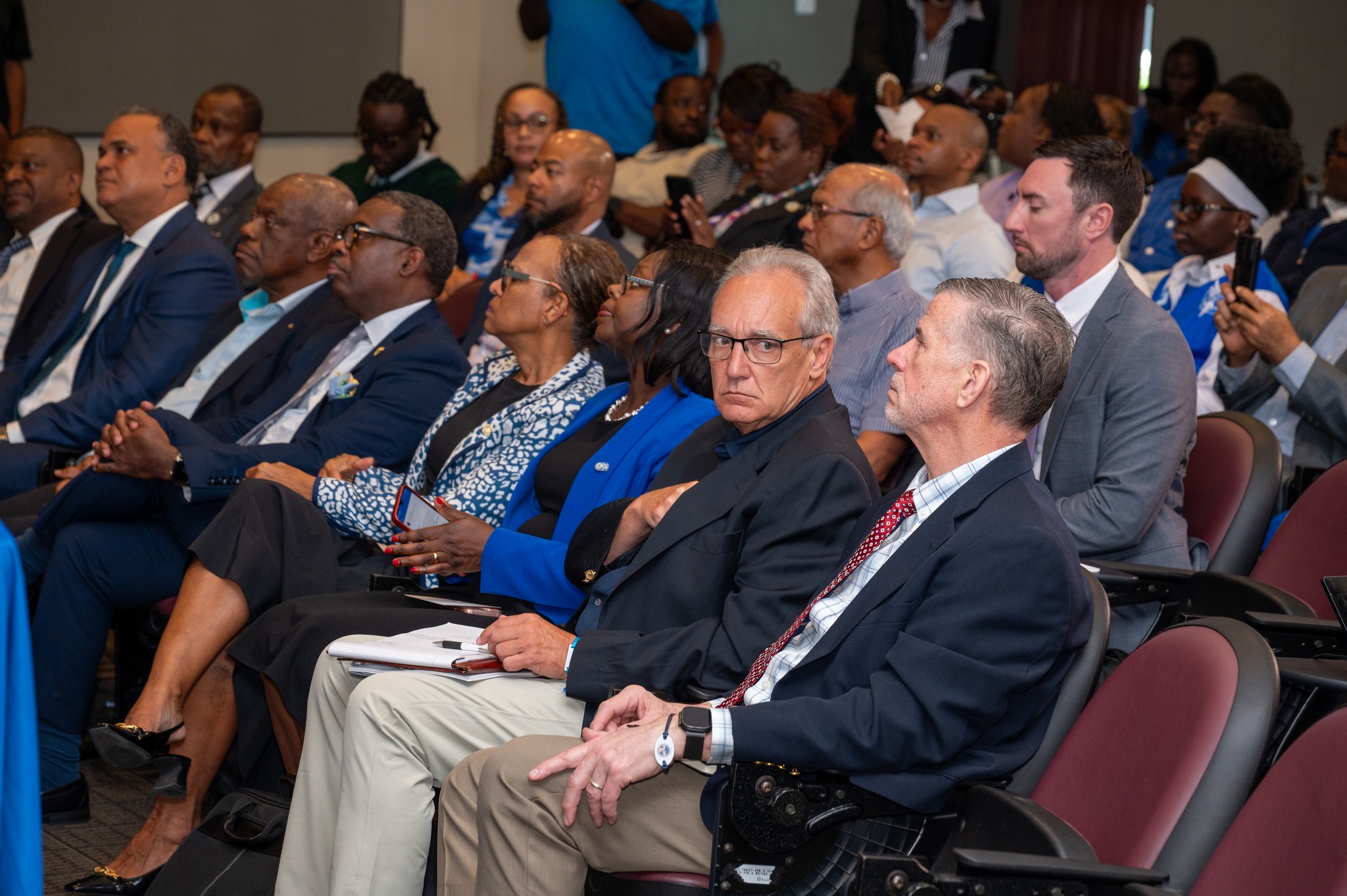
Nassau, THE BAHAMAS – From pressures on the independence of the US Federal Reserve and relations with China to the instability facing the global economic landscape and how it all impacts The Bahamas’ economy and prospects, Tuesday’s Central Banking Series hosted by University of The Bahamas (UB) in partnership with the Global Interdependence Center (GIC) peeled back the layers of the most critical factors impacting the world’s economic landscape.
At the one-day summit, top economic strategists, policymakers, academics, and economists gave frank and considered insights on the range of opportunities and challenges. In facilitating the high-level talks, UB’s Government and Public Policy Institute (GPPI) continues to provide the platform for evidence-based dialogue on public policy and reform.
“By convening world-class thinkers, policymakers, and practitioners here in Nassau, we affirm that The Bahamas is not solely a subject of global economic forces, but also a participant in the conversations that shape them,” said UB President Dr. Robert Blaine, III.
In his remarks, Minister of Economic Affairs Senator the Honourable Michael Halkitis acknowledged the ripple effects of financial shifts which put pressure on the Bahamian economy, yet he acknowledged that the economy is on the rise. He expressed confidence in the country’s readiness to adapt, citing a deep talent pool and expanding foreign and domestic investments.
“What makes this period particularly significant is the breadth of investment activity across sectors,” said Minister Halkitis, a UB alumnus. “Tourism development remains strong, but it is not the sole driver of growth. Investments are expanding into renewable energy, maritime services, digital infrastructure, agriculture, logistics and the blue and green economies.”
Economist and Former President and CEO of the Federal Reserve of Richmond, Dr. Jeffrey Lacker offered a sobering view on the independence of the US Federal Reserve, a topic that has attracted much national and international in the face of blistering pronouncements by US President Donald Trump.
Dr. Lacker said the Federal Reserve’s choice of monetary policy instrument and setting of the overnight interest rate that it controls should be “free of executive branch and congressional meddling.”
“And by meddling, what I mean is overtly expressed policy direction, opinions about where policies should go, expressed in a way that carries with it the implied threat of adverse consequences to either the individual or the institution, either in the form of legislative changes or some sort of political harassment,” he said.
“The value of insulating day-to-day, meeting-to-meeting monetary policy from pressure from elected officials with an eye on their next election is widely recognized. Neglecting that pressure, caving into that pressure is a road to short-termism, or short-term stimulus at the cost of inflation later on.”
Other pertinent conversations at the summit focused on digital initiatives for financial inclusion, monetary and fiscal policies and strategies in The Bahamas, and the impact of AI on macroeconomic conditions. There was also a special presentation on the history and value of gold. Students from Government High School were among the audience members gaining knowledge from experts.
“When we determined the theme for this year, being Challenges and Opportunities in a Dynamic Global Environment, we did not know what was going to evolve in recent times,” said GPPI Executive Director Zhivargo Laing, referring to the war that the US and Israel initiated against Iran. “So I would like to think that maybe there was a little bit of insight that was taking place during the course of our discussions. But we are here again for the third time with our partners at the GIC to entertain a deep discussion on just what are those challenges and opportunities in this very dynamic environment in which we find ourselves.”

Nassau, The Bahamas — The People’s Republic of China, in the span of two decades, has transformed itself into an economic superpower the world can scarcely function without. This was one of the perspectives that added context to crucial conversations about the US-China outlook at the Central Banking Summit held at University of The Bahamas (UB) on Tuesday.
“China has gone from being, conceptually, a non-economy. It has gone from being a $2 trillion economy in 2000; today it is a $20 trillion economy. There has never been growth like that anywhere on the planet,” said Michael Drury, chief economist, McVean Trading.
In the Caribbean region and for The Bahamas, China has become both a critical link in the global supply chain and, at times, a financial partner when the price tag of major infrastructure projects proves difficult to carry alone.
During the summit, facilitated by UB’s Government and Public Policy Institute (GPPI) in partnership with the Global Interdependence Center (GIC), the outlook on US-China relations and how the world will be impacted was a key topic of discussion.
Drury appeared on a panel with Zhivargo Laing, Executive Director of UB’s GPPI. Both gave insight into China’s rapid economic rise and its growing influence over global manufacturing and trade.
“The wish was that China would become a capitalist democracy, and it was on its way there until President Xi Jinping took control of the country in 2012. [Xi] is a Marxist. When you are a Marxist, you believe capitalism will destroy itself,” Drury explained.
Drury, who also serves as an executive and assistant program director with the GlC, noted that the statistics surrounding China’s meteoric manufacturing expansion often evoke strong reactions when presented to audiences across the US.
“The solution for the United States in freeing itself from China’s manufacturing dominance is to find somewhere it can produce goods without depending on China. There is no such place on earth. China produces 30 percent of all manufactured goods,” he said.
The discussion also examined recent efforts by the US to reclaim manufacturing capacity and reverse trends Washington believes could compromise national security.
“The spoken goal of wanting to return manufacturing to the United States essentially means restoring enough production capacity to support national defence,” Drury explained. “The auto industry built the bombers and tanks during World War II. If you don’t have an auto industry, you don’t have an industry you can flip into national defence production.”
For The Bahamas, the geopolitical dynamics has become increasingly challenging to navigate with the latest example being the proposed specialty hospital project for which the Government of The Bahamas has secured Chinese financial backing. In response, the US, through its newly appointed ambassador, has publicly encouraged The Bahamas to reconsider the arrangement.
Laing, former Minister of Economic Affairs and a UB graduate, offered this contextual view: that The Bahamas understands the importance of maintaining strong relationships with both global powers.
“If we were going to have concerns about any country being overly influential in The Bahamas, it would be the United States of America. Why? Eighty-plus percent of our tourism comes from the United States. We have one of the only U.S. pre-clearance facilities in the world. There are substantial American investments in The Bahamas. Our currency is pegged to the United States. And if we ever needed help in this country, we have no doubt who we would turn to,” Laing said.
Laing noted that the influence of the United States extends beyond economics and geopolitics into the cultural and personal realms.
“We love to go to the United States. We go for education, healthcare, and socializing. But for practical reasons, we also nurture relationships with countries around the world. The Bahamas is not a war state.”
As competition between the two global giants intensifies, Laing offered this advice for policymakers navigating the geopolitical landscape.
“It will continue to be very competitive between these two giants, and if I were advising policymakers in The Bahamas, I would say: keep hugging your friends and shaking the hands of your associates.”
Bahamas News
Dredging Is Not Just About Size — It Is About What Is Being Destroyed, Warns Save Exuma Alliance Regarding Yntegra’s Proposed Rosewood Resort
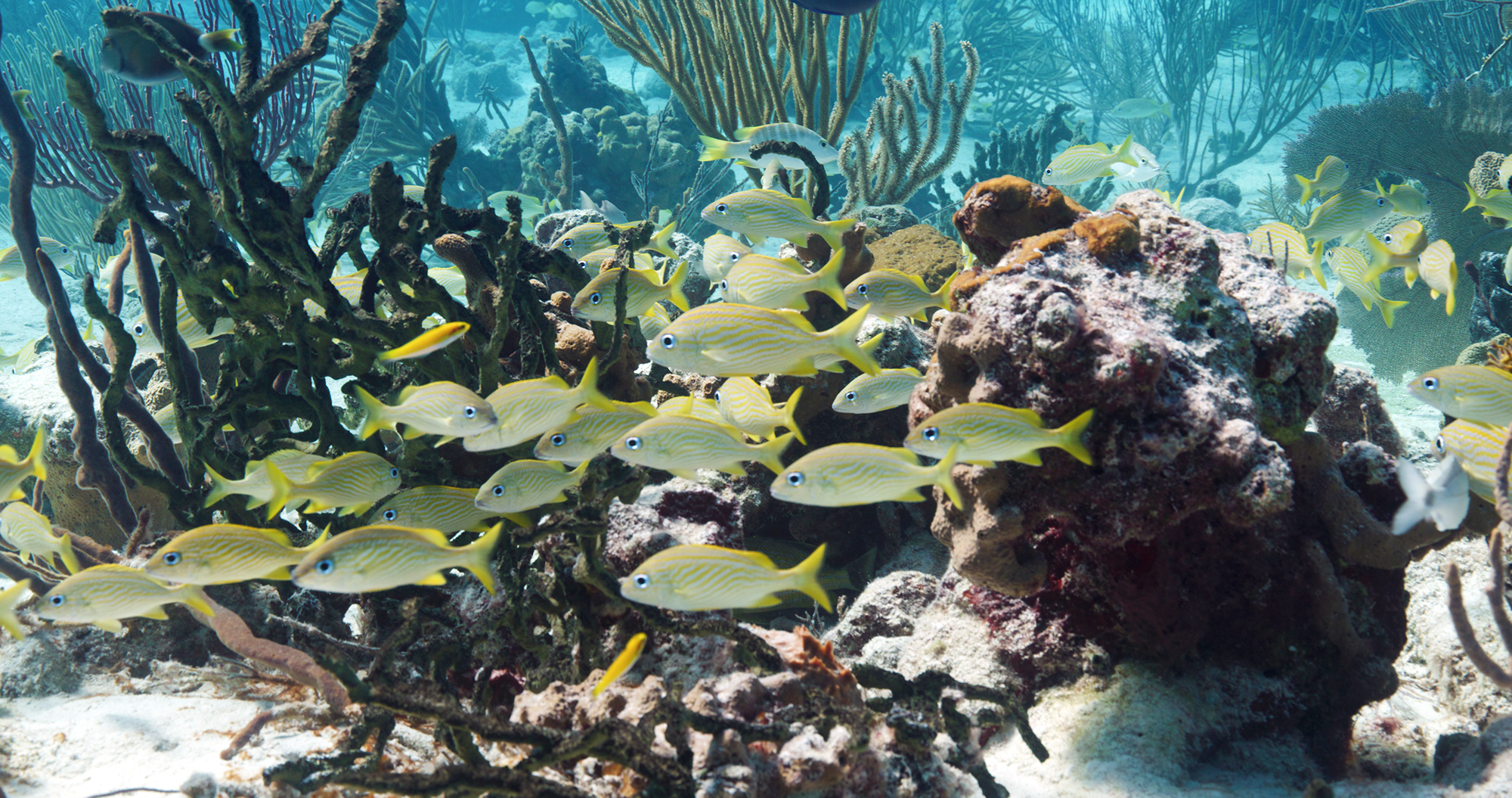
Save Exuma Alliance (SEA) — a coalition of Central Exuma business owners, tour operators and residents — has warned that the issue of dredging in the North Bay of Sampson Cay, Exuma, is not just about the number of acres being dredged – but what exists within the proposed dredge area. SEA describes the site as an ecological treasure trove filled with seagrass, coral, turtles and abundant marine life.
This comes after foreign developer Yntegra agreed to reduce the scope of its dredging following government warnings that it would impact The Bahamas carbon credit status, which shows the importance of the marine habitat.
“It is easy to point to other developments and say they are dredging more, but that is not comparing like with like,” SEA said in response to comparisons made by Yntegra. “If one area is largely sand with little marine life, that is very different from what we have in North Bay. Anyone who has spent time there can tell you it is filled with turtles, fish, and — critically — the seagrass and coral that provide essential habitat.”
Miami-based investment group Yntegra is seeking to construct a large-scale Rosewood-branded resort on Sampson Cay. Since its announcement, the project has generated environmental, social and economic concerns among residents and business operators in Central Exuma.
The proposed development includes dredging in North Bay, construction of a substantial seawall that would alter natural water flow, more than 100 structures, two mega yacht marinas, and an industrial dock serviced by fuel and supply ships in an area currently used by swimmers. Opponents argue that the scale and design of Yntegra’s Rosewood Exuma project are incompatible with the fragile ecosystem and cultural character of the Central Exumas.
SEA noted that the government’s Climate Change Unit has also raised concerns about the environmental cost of dredging associated with Yntegra’s Rosewood Exuma project.
“The government has acknowledged that this is an area of significant importance,” SEA said. “While the financial implications are serious, for us here in Exuma this is about more than money. It underscores how valuable this marine ecosystem is — the seagrass, coral and marine life that make Exuma exceptional. This is what attracts visitors from around the world. We should not minimize the concern by comparing this bay to areas that do not have the same remarkable underwater ecosystem. It is simply not the same.”
Experienced boat captain Tito Baldwin also questioned the feasibility of the marine infrastructure proposed as part of this plan. He warned that the dredging currently outlined would not be sufficient to accommodate the vessels required to service the project.
“It’s going to have to be at least four times larger than what has been proposed,” Baldwin said. “As designed, it is beyond possibility.”
He explained that vessels supplying fuel, construction materials and provisions for a projected 300-person workforce would require significantly greater depth and maneuvering space.
“For supply vessels delivering hundreds of thousands of gallons of diesel, you’re looking at ships with a 10-foot draft,” Baldwin said. “To operate safely, you would need at least 13 feet of depth. That means dredging far deeper than what has been proposed. With currents running east and west in that area, you would also need a much wider turning basin to maneuver safely. As it stands, it would be extremely difficult, if not impossible.”
SEA is urging individuals concerned about the environmental impact of dredging connected to Yntegra’s Rosewood Exuma project to visit www.saveexumaalliance.org for more information. A petition calling for a halt to approvals is also available on the site, with more than 7,100 signatures collected to date.





-

 Bahamas News2 days ago
Economic and Financial Experts Assess US-China Relations; Offer Advice for The Bahamas
-
 Caribbean News7 days ago
Jamaica Joins Afreximbank Agreement, Strengthening Africa–Caribbean Partnership
-
 Bahamas News2 days ago
Experts Analyze Economic Landscape; Opportunities and Challenges
-

 Caribbean News2 days ago
Widow’s Testimony Recounts Night Haiti President Was Killed
-
 News2 days ago
Beaches Resorts Announces Grand Opening of Treasure Beach Village at Beaches Turks and Caicos
-

 Education1 week ago
Message from Hon. Rachel M. Taylor, Minister of Education, Youth, Sports & Culture
-

 News2 days ago
North and Middle Caicos Students receive educational material from Sandals Foundation and Beaches Turks and Caicos resort
-

 Education2 days ago
Department of Education hosts 3rd Annual Local Studies Competition