
News
TCI 2024 Court Cases by the Numbers; the Road to Swift Justice


Deandrea Hamilton
Editor
Turks and Caicos, January 10, 2025 – The Chief Justice of the Turks and Caicos Islands in delivering her Opening of the Legal Year report and forecast, declared that the courts of the country are institutions of accountability and listed a need for adequate infrastructure, adequate funding and improved staffing as crucial in achieving swift justice.
“Our mandate is to provide access to quality justice through the provision of user-friendly court processes and procedures which provide unimpeded access to justice. We seek to do this by managing cases brought before the courts efficiently to achieve speedy outcomes,” said Hon Mabel Agyemang, CJ.
While she admits to falling short on some goals including making justice more accessible, citing particularly the need to get courts running more consistently in North Caicos and South Caicos and activating service kiosks, the CJ was firm on the goals for cutting through the caseload.
“Our strategic objectives, contained in a five-year Strategic Framework document (2020-2025), are: to achieve real, meaningful and sustainable judicial independence, infrastructural reform, to enhance access to justice and to improve the quality of our service through digital transformation and a strengthened court administration. In the past year, judges and magistrates demonstrated their resilience in their commitment to the delivery of justice, as they navigated what were sometimes challenging circumstances: from having to adapt to E Judiciary, to coping with security concerns related to the discharge of judicial duties, as well as navigating disruptions of work due to infrastructural difficulties.”
In 2024, 22 new appeals were filed. The Chief Justice informed that 17 appeals were “disposed of. They were made up of 4 criminal appeals and 18 were civil appeals.”
Two of these appeals were from the Labour Tribunal and were also settled.
Supreme Court criminal cases for 2024 started with a 68 case backlog from the previous year; 57 new cases including: “murder, rape, robbery, theft, assault occasioning grievous bodily harm, were filed.”
The court managed to conclude 78 of these cases, 47 remain pending and are at various stages in the criminal trial process.
There were 80 civil cases carried over from 2023 with a new 145 civil cases filed in 2024. The courts disposed of 83.
There were 64 family law cases, a combination of 20 from 2023 and 44 new matters filed in 2024.
Eighteen of these were concluded.
When it comes to the Special Investigation and Prosecution Team government corruption trials, the Chief Justice who is presiding over the matters said, “I am pleased to announce that the second of the two severed SIPT trials (Trial A), which was stalled for about a year, commenced in September 2024 with pre-trial matters.
The trial commenced on 2nd December 2024 and is ongoing.”
From The Magistrate’s Court, these are the statistics:
Criminal matters – 281; Traffic tickets – 2772; Immigration matters – 103; Civil claims – 349; National Insurance Board – 25; Care and Protection – 49; Custody – 19; Child support – 37; Adoption – 7; Protection Order – 54; and Access and visitation – 13.
The Magistrate Court Registry in Grand Turk had a total of 374 matters.
According to the report from the chief justice, the breakdown is as follows: Criminal matters – 97; Traffic tickets – 110; DECR matters – 25; Immigration matter – 1; Civil claims – 84; Care and Protection – 18; Custody – 8; Child support – 21; Adoption – 2; Protection Order – 7; and Access and visitation – 1.
The Magistrate’s Courts disposed of a total of 1435 cases which were made up of fines imposed, custodial sentences.
In the civil judgements which included family orders, probation orders, and dismissals/withdrawals, the breakdown of the figures are as follows:
Providenciales: 1068 of 3709 cases; Grand Turk disposed of 337 of 374 cases; North Caicos; 12 cases and South Caicos, 18 cases. 
In the Coroner’s Court, 120 deaths were reported or filed in 2024.
These were made up of: 9 cruise ship deaths; 46 suspected homicides; 4 undetermined causes of death; 43 deaths by natural causes and 20 deaths caused by accidents (industrial accidents, accidental drownings and motor vehicle collisions).
The total number of matters listed for 2024 were 165.
The report revealed that an impressive 143 matters were concluded in 2024.
Additionally, there were 84 Inquests opened last year in the new Coroner’s Court. More than half, 40, were concluded, “2 were closed since they were deemed natural deaths or deaths due to natural causes and 42 remain open.”
The backlog on the coroner’s court cases dated back five years. Chief Justice Agyemang informed that “of the matters filed between 2019 and 2024: One hundred and one (101) were formally discontinued. There was a 50% disposal rate in respect of opened Inquests that is, 50% of Inquests were closed. 100% disposal rate of deaths due to natural causes, and 3% disposal rate of suspected homicides.”
Forty-two cases made it to mediation and 11 were settled. Nine cases remain unsettled, four cases were withdrawn and there are 20 matters pending and scheduled for on-going mediation this year.

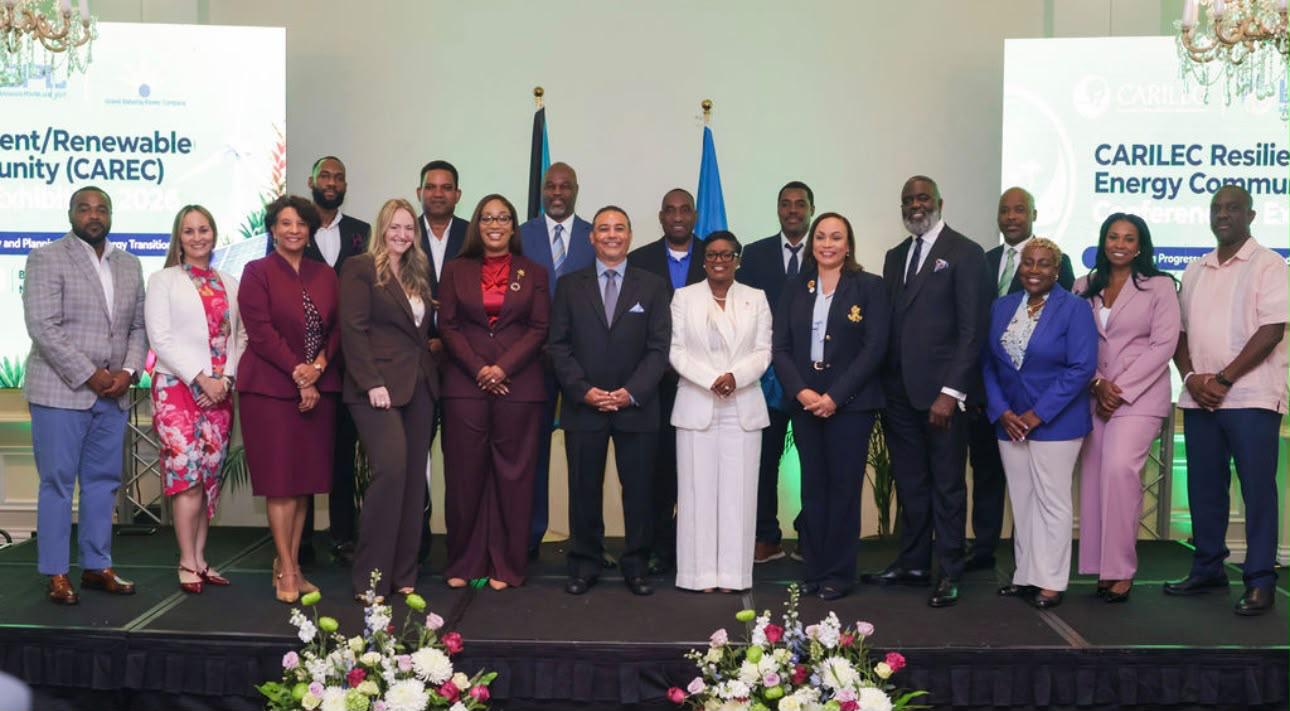
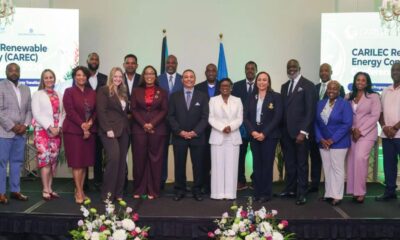
NASSAU, The Bahamas – The Bahamas’ Minister of Energy, Utilities and Aviation, The Honourable JoBeth Coleby-Davis, delivered an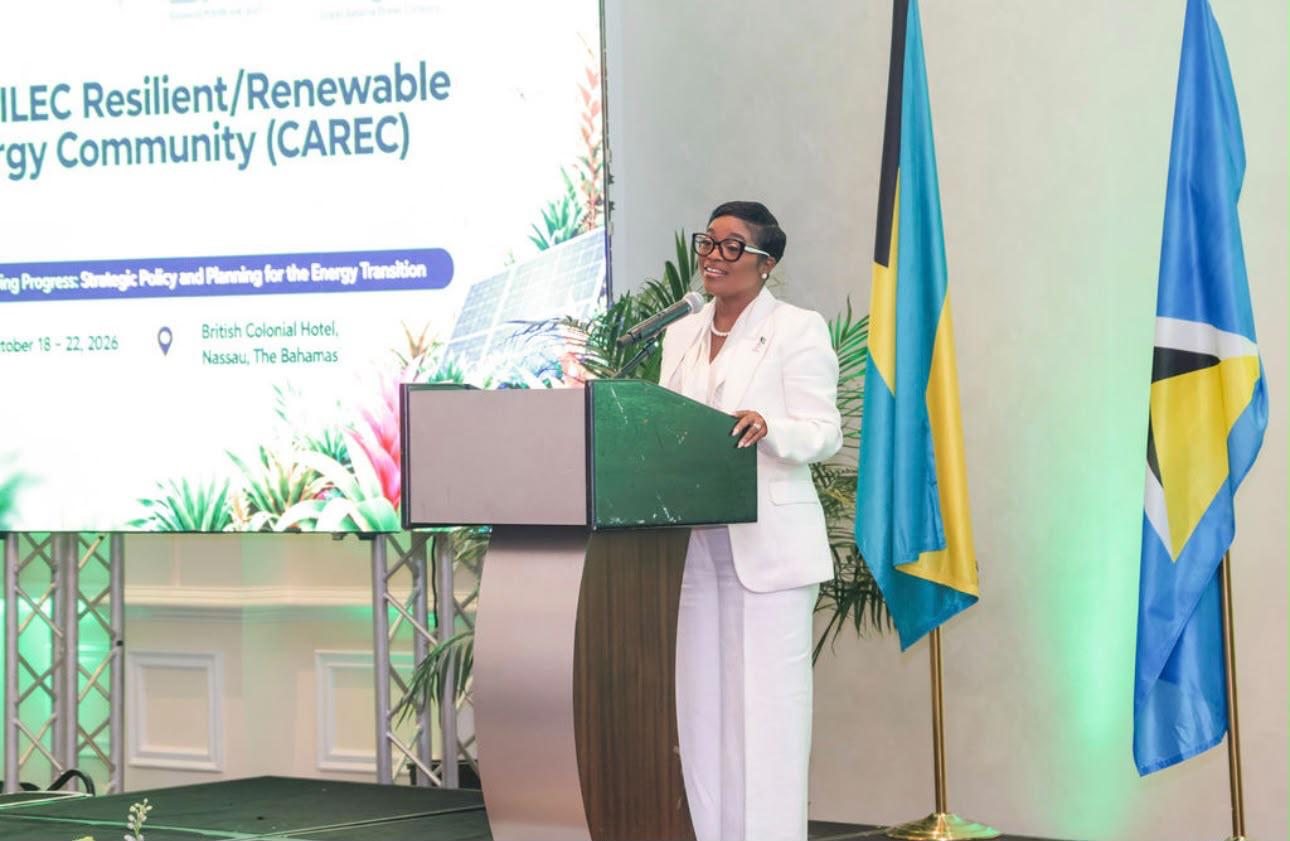 electrifying address during the opening ceremony of the 2026 CARILEC Resilient/Renewable Energy Community (CAREC) Conference and Exhibition, being held October 18–22, 2026, at the British Colonial Hotel in Nassau, The Bahamas.
Under the theme “Empowering Progress: Strategic Policy and Planning for the Energy Transition,” the event draws more than 200 industry leaders, policymakers, regulators, and energy professionals committed to advancing practical strategies for sustainable and reliable Caribbean power systems through renewable energy and emerging technologies.
During her address, titled “The New Energy Era: Transforming Policy into Progress,” Minister Coleby-Davis reminded attendees that The Bahamas’ national motto, “Forward, Upward, Onward, Together,” aptly describes what the region’s energy transition demands.
“Empowering Progress speaks directly to our national motto. Not waiting for progress, but creating the conditions that allow progress to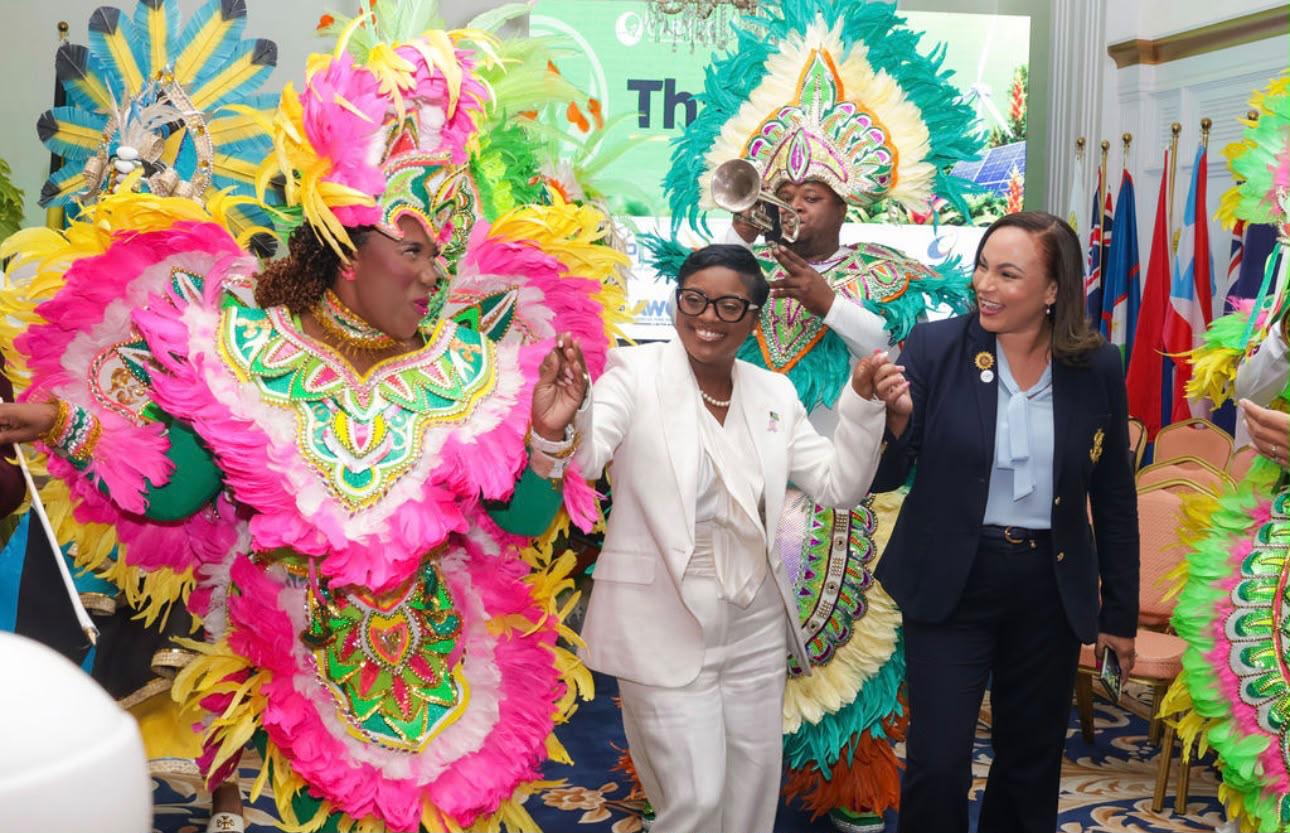 happen. Meaningful progress, however, does not occur by accident. It requires vision, sound policy, strategic planning, strong institutions, and the determination to turn decisions into results,” said Minister Coleby-Davis.
Participants acknowledged that small island developing states share similar pressures, compounded by geographical challenges, small electricity markets, ageing infrastructure, geopolitical influences, and the growing threat of severe weather.
Tasked with ushering in a new energy era across the islands while addressing the challenges posed by The Bahamas’ unique archipelagic composition, Minister Coleby-Davis said, “Every island needs a different answer, but the same logic. As an archipelagic nation, we must provide electricity across many islands, each with its own demand and infrastructure needs. Our strategy, therefore, must be national in direction, but responsive to individual communities.”
Restating her Ministry’s three core messages—that energy is an economic and security priority, technology must be viewed as a tool to support strong institutional leadership, and natural gas should be considered a bridge, not a destination—Minister Coleby-Davis reiterated that “progress must now be reflected in functioning infrastructure, effective institutions, and better electricity services: from policy commitments to coordinated implementation, and from fragmented investment decisions to long-term planning.”
Organised by CARILEC and co-hosted by Bahamas Power and Light (BPL) and Grand Bahama Power Company (GBPC), the annual Conference and Exhibition brings together the Caribbean energy community to advance practical solutions to the region’s most pressing energy challenges and accelerate progress towards more resilient, reliable, and sustainable power systems.
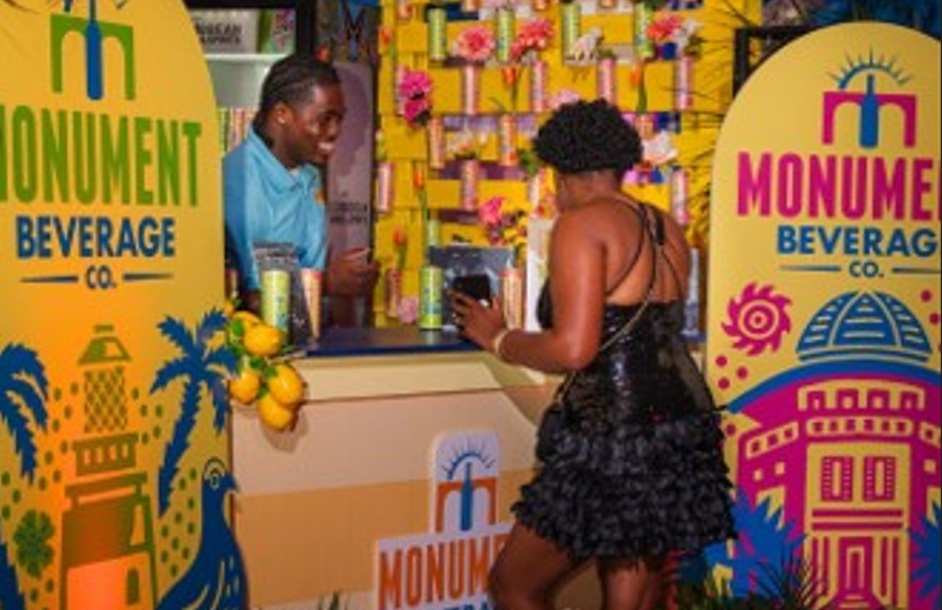
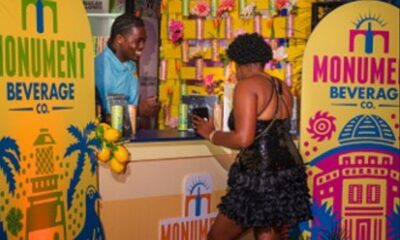
NASSAU, Bahamas — Caribbean Wines & Spirits (CWS), The Bahamas’ leading wine and spirits distributor, proudly supported Paradise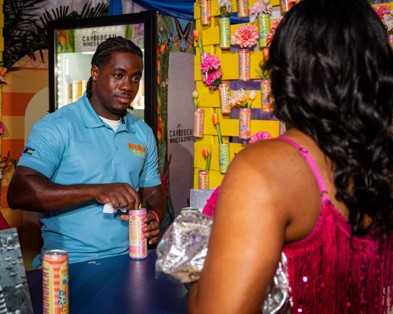 Plates, Hands for Hunger annual fundraiser with a flavorful offering of its newest product, Monument Beverage Co.
Monument, which launched this July and is available across six major islands, made its Paradise Plates debut. Guests enjoyed three bold flavors: Peach Passion, Ginger-Lime and Melon Fizz as they socialized throughout the evening.
Monument brand ambassadors engaged guests with knowledge on the ready-to-drink beverage’s unique taste and look. Many attendees were delighted to learn that Monument is 100% Bahamian-made and owned and enjoyed seeing the various national landmarks on the packaging.
The booth was adorned with vibrant brand colors, striped arches, tropical florals and a photo worthy backdrop featuring Monument cans filled with florals cascading down the wall.
At the end of the event, the entire Monument inventory had finished, making Monument’s Paradise Plates debut a huge success.
For more details on Caribbean Wines & Spirits, new products and specials, visit www.cwsbahamas.com today.
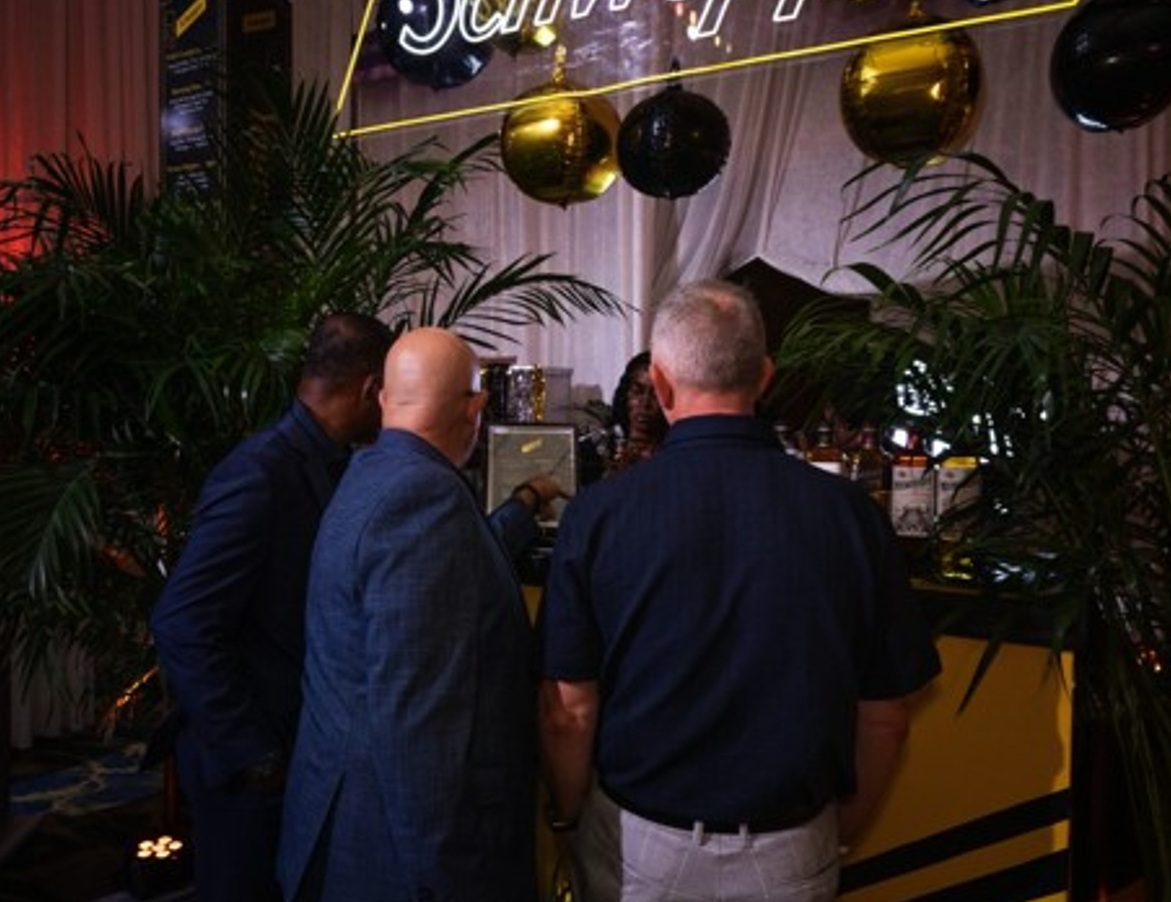
NASSAU, Bahamas — Schweppes, in collaboration with Nemiroff Vodka dazzled guests with handcrafted cocktails during Paradise Plates, Hands for Hunger’s annual fundraiser held at Atlantis’ Imperial Ballroom.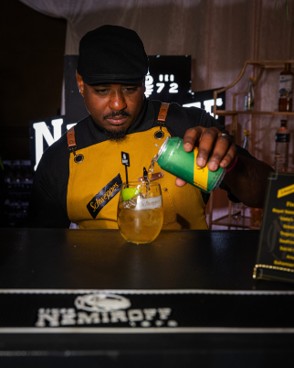
The evenings’ theme, 70’s: Paradise Disco, inspired bold and delicious sips from Schweppes and Nemiroff. The beautiful disco themed Schweppes booth, adorned with LED signs, lush greenery and hanging black and gold metallic orbs shined throughout the room.
Schweppes’ brand representatives and mixologists dressed in chic 70’s speakeasy attire engaged attendees throughout the night. Guests enjoyed receiving knowledge of each product and experiencing the vibrant energy of brand representatives.
Nemiroff Vodka, which is locally distributed by Caribbean Wines and Spirits (CWS), The Bahamas’ premier wines and spirits distributor; offered a unique variety of vodkas which made the perfect blend with Schweppes. Guests enjoyed, Nemiroff’s Honey Pepper, De Luxe, Burning Pear, Wild Cranberry, and Bold Orange vodkas throughout the night.
Fan favorite cocktails of the night were: the Wild Cranberry Tonic and the Bold Orange Fizz.
Following a positive response at Paradise Plates, CWS is offering Nemiroff and Schweppes specials at local liquor stores for the entire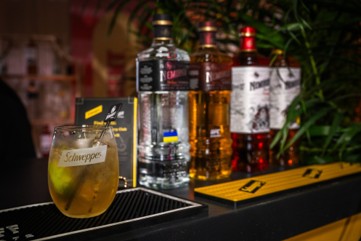 month. With the purchase of any 1-liter Nemiroff vodka, enjoy a complimentary three-pack of Schweppes mixers, to recreate the magic of Schweppes and Nemiroff.
Cara Douglas-Adderley, Senior Marketing Director for Caribbean Bottling (CBC), local producers and distributors of Coca-Cola and Dasani products and CWS shared the inspiration behind the Schweppes and Nemiroff promotion.
“We are thrilled to have paired Schweppes and Nemiroff for Paradise Plates this year, creating a premium cocktail experience for guests. After receiving such positive feedback, we wanted to extend that experience to consumers at home. Throughout October, consumers can visit their favorite watering hole, buy any 1-liter Nemiroff bottle and receive a free three-pack of Schweppes.”
Caribbean Bottling Company is proud to offer Schweppes, Coca-Cola’s premier mixer in collaboration with Caribbean Wines & Spirits and Nemiroff Vodka at Paradise Plates in support of Hands for Hunger’s mission.
For more information on CBC’s philanthropic work, new products and specials, visits www.cbcbahamas.com today.





-

 Independent writer1 week ago
Born Here, Raised Here, but Still Unable to Vote: Is this a Conundrum for TCI Electorate?
-
 Bahamas News2 days ago
Rosewood Exuma: A precedent-setting case for environmental law and future development in The Bahamas
-
 Bahamas News6 days ago
Monument Supports Hands for Hunger With Paradise Plates Debut
-

 Bahamas News1 week ago
Schweppes ‘the Art of Mixology’ Dazzles at Paradise Plates with Nemiroff Vodka
-
 Bahamas News1 day ago
Energy Minister Delivers Electrifying Keynote Opening Address at CAREC 2026