News
Over 2000 skipped 2021 Elections; Can new campaigns end Voter Apathy?


Deandrea Hamilton
Editor
Turks and Caicos, January 10, 2025 – There are 772 more people who have the power to help determine the next government of the Turks and Caicos Islands; which means there are 9,353 voters who can participate in the February 7, 2025 General Elections.
A nine percent increase which is commendable, but it still misses that long-standing, elusive target of getting to at least 10,000 registered electors.
There is considered debate around the level of apathy amongst voters in the TCI.
This unenthusiastic posture toward the political landscape of the Turks and Caicos became a significant topic of discussion and ultimately a deciding factor in the General Elections of 2021 where voter turnout sunk to under 77%.
It meant 2,121 people did not cast a vote or 25% of voters stayed away from the polls.
In the upcoming race, which has not only expanded the list of candidates from 15 to 19, giving each elector the power to decide upon ten members of the House of Assembly, there is a longer term for governance, now extended to five years.
In statistics published by the TCIG Elections Department, the figures from the previous election can be analysed and the Elector’s List for the upcoming poll can be accessed. The information is interesting and exposes that key in the February 7 run off, is voter turnout. The looming question being, can parties get people out to the polls?
We sized up each district for you.
For Electoral District 1 or Grand Turk North, voters dropped by four to 750.
For Electoral District 2 or Grand Turk South, voters dropped by 32, with 956 now on the register.
For Electoral District 3 or South Caicos, there has also been a dip with seven less voters; a total of 359.
For Electoral District 4 or North and Middle Caicos there has been a boost of 11 electors to 609.
For Electoral District 5 or Leeward and Long Bay, there are 50 more voters at 941 registered.
For Electoral District 6 or The Bight, a hefty 122 more voters took the list to 1,043 people.
For Electoral District 7 or Cheshire Hall & Richmond Hill, voters are up to 1,430 which is a hike of 125.
For Electoral District 8 or Blue Hills, the register has 81 more electors or 1,081 voters to decide the seat.
For Electoral District 9 or Five Cays & Chalk Sound, the boom in voters is biggest at 206 more for 1,345.
For Electoral District 10 or Wheeland, another spike with 142 added; 839 people eligible to cast a ballot.
As notices from the Elections Department, Integrity Commission and political parties begin to populate advertising and social media spaces, it is clear that the country’s main political rivals are in a fierce fight in the countdown to February 7.
Nomination Day is next Tuesday January 14. On that day, candidates will become official, political party endorsements secure and perhaps independents will step forward in an offer to serve in the nation’s parliament.
In February 2021, the Progressive National Party led by Washington Misick decimated the competition, taking all but one electoral district, capturing all five All Island seats.
Four years earlier, the Peoples’ Democratic Movement also enjoyed a landslide victory when voters rejected the team in yellow in order to elect the country’s first woman premier.
Analysts of the statistics and trends of Turks and Caicos general elections through the years can often surmise one thing; there is a high chance for voters to swing, sit out or slay the party of their choosing in the ballot booth.
If the last general election results are any indicator, the turnout exposed an electorate which was unenthusiastic about the vote. In all but two constituencies, the number of electors opting not to vote had the power to shift the popularity and possibly alter the election outcome.
Otis Morris, the winner for the PNP in ED1 had 123 more votes than his PDM contender but 153 people sat out of the vote. Overall voter participation, according to the Elections Department, was 79.71%.
Edwin Astwood, the lone PDM winner in ED2 had 117 more votes than his PNP challenger, but 213 people were a no-show at the polls. Voter participation was 76.95%.
South Caicos gave 81 more votes to John Malcolm of the PNP, one of the only races where even if all of the absent voters were to decide on his competition, the PNP would have still emerged victorious. The official results reflected that fifty-three electors did not vote for a turn out of 84.94%, one of the highest that day.
North and Middle Caicos gave 73 more votes to the incumbent, Arlington Musgrove. Eighty-five voters did not cast any ballot according to the final results. It was the constituency with the highest voter turnout at 85.79%.
Another victory which would have remained unchanged, even if all of the voters went with the PDM was in Leeward and Long Bay where three-time MP, Akierra Missick got 211 more votes and 182 did not show up at the polls in that district. Turn out in ED5 was 79.57%.
Electoral District 6, The Bight chose Matthew Stubbs, who secured 68 more votes than his PDM challenger. But a whopping 255 people did not show up to cast votes. One of the lower voter turnouts for the Turks and Caicos on February 19, 2021 at 72.31%.
ED7 is Cheshire Hall and Richmond Hill, the largest constituency by voter count. It was also a close race with very low voter turnout. Only 68.81% of voters came out which means 407 voters stayed away from the polls. The PNP’s Samuel Been won the district over the incumbent by 76 votes.
Blue Hills was also a loss for the PDM party, but there were only 15 votes that separated the candidates when Randy Howell was declared the winner. Still, when you consider voter turnout was dismal, 65.1% and the lowest in the islands, you begin to see how 349 voters missing the election could have made a difference in this race.
A big battle was for Five Cays and Chalk Sound. It was also a significant upset with the PNP’s Rachel Taylor securing 151 more votes when 76.29% of the electors turned out. A staggering 270 people decided not to participate in the ED9 run off.
The TCI’s tenth constituency is Wheeland, where counting went into the wee hours of the morning. Three votes separated the winner from the incumbent. The PNP pulled off an upset by getting three more votes than the PDM’s candidate. Voter turnout was at 77.91% and 154 people opted not to cast a ballot.
The General Election of 2021 bears a striking contrast to years previous in the Turks and Caicos, as elections before enjoyed far more robust participation of the Electorate, which is crucial in a nation where the people able to cast a vote make up only 20% of the population. It is true, these 9,353 registered voters make the choice with which some 37,000 others have to live.
When British Direct Rule ended and elections were called in November 2012, voters came out in strong numbers with nearly 88% voter turnout recorded for a Rufus Ewing-led PNP victory by one seat.
In 2016, when the PDM led by Sharlene Cartwright-Robinson celebrated a landslide victory with 10 seats of 15, there was a drop in voters, however the 80% participation remained impressive to many.
It is hoped that political parties can energize their bases or perhaps attract new support as they have already begun political rallies around the islands. While on many fronts it appears voter apathy is higher than ever, there is a possibility for a strong pitch which presents a compelling vision for the Turks and Caicos Islands.
Everyone we’ve spoken to, says somebody’s gotta bring it. So we return to the question, with which we started, can either of these parties or an independent candidate, inspire, ignite or rekindle a fire so hot that it gets voters from the sidelines to the poll lines come next month.













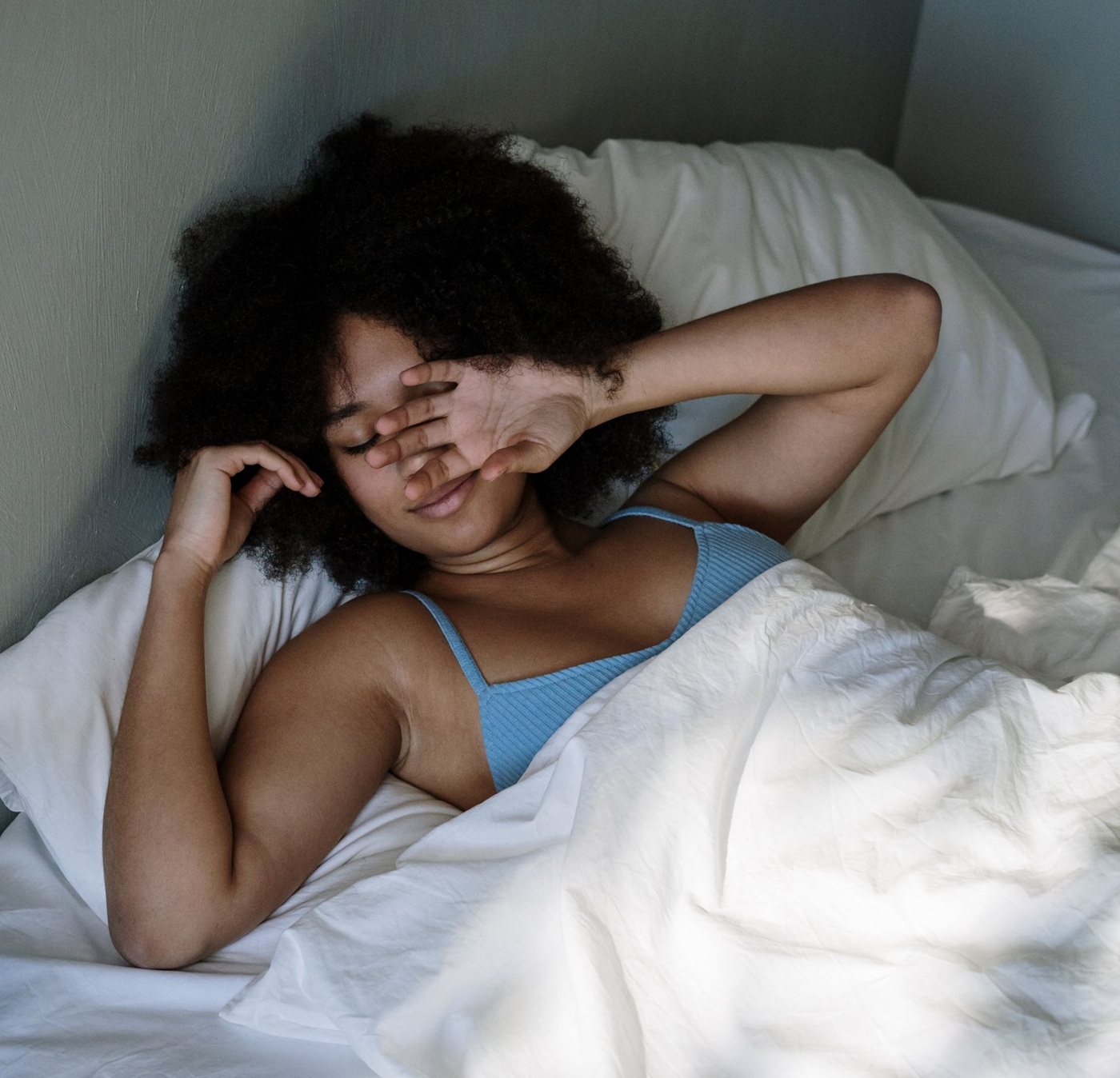
Head to bed in a bra to reduce breast pain, nipple irritation and stretch marks
When you think about sleeping in a bra, “comfort” probably isn’t the first word that comes to mind — it may not even make the Top 10. But is it bad to sleep with a bra on?
Breast surgical oncologist Margaret Thompson, MD, explains the upsides and downsides of wearing a bra while you snooze.
Should you sleep in a bra?
Several factors may affect your decision to wear a bra to bed, but Dr. Thompson emphasizes that the risk of breast cancer should not be one of them.
“There’s no evidence that wearing a bra while sleeping increases your risk for breast cancer,” she states. “It really comes down to comfort and personal preference.”
But there are also other health issues to consider. Dr. Thompson lays out the pros and cons of sleeping in a bra.
Pros: Why sleeping in a bra might be good for you
Should you wear a bra to bed? There are some benefits, especially if you’re recovering from surgery or breastfeeding.
Lessens breast pain
Having the support of a bra day and night may help relieve breast pain (mastalgia). That’s good news, because up to 70% of women in the United States deal with it at some point in their lives.
Common causes include:
- Hormonal changes, which often occur as part of your menstrual cycle
- Locally advanced breast cancer, including inflammatory breast cancer
- Lactation (producing milk), which may cause your breasts to ache
- Large breasts, which may strain breast ligaments and tissue
- Recent surgery related to your heart or breasts
- Underwires, especially if your bras are too tight
“When somebody reports breast pain, one of the first things we ask is whether they wear an underwire bra,” shares Dr. Thompson. “It can dig into your skin or breast tissue, leaving you sore and tender.”
A soft sleep bra can keep your breasts from shifting and causing discomfort while you snooze.
Protects lactating breasts
If you’re breastfeeding, you know all too well that your mammary glands don’t care if you’re trying to rest. Swollen or full breasts can be painful, especially as you move during sleep or change positions. Wearing a clean and supportive bra while sleeping:
- Holds nursing pads in place
- Keeps nipples dry and free from bacteria
- Reduces nipple chafing
- Supports the structure of your breasts
Make sure your sleep bra is supportive, but not too tight. Wearing a bra that’s too tight while breastfeeding can lower your milk production and possibly lead to clogged milk ducts and mastitis — inflammation of the breast tissue.
Prevents fungal infections
Everyone loves to be warm and cozy in bed. But do you know what else loves a warm environment? Fungus.
“There’s a lot of skin-on-skin contact underneath your breasts, especially if you have larger breasts,” notes Dr. Thompson. “If you’re also covered in blankets and sweating, it becomes a perfect environment for fungal or yeast infections.”
Wearing a bra to bed helps absorb moisture beneath your breasts and reduce friction. A camisole with a built-in shelf bra can also help.
Reduces nipple irritation
Friction is a common reason for nipple pain — ask any avid runner. You may not be running a marathon in your sleep, but your nipples can still get sore from rubbing against:
- Tight shirts, especially if they’re textured or have a graphic design that can be felt inside the shirt
- The fabric of your pajama top or sheets
- A sleep bra that’s too loose
Wearing a sleep bra can limit movement, easing nipple irritation.
Helps with recovery after surgery
It’s important to keep your breasts compressed after certain surgeries involving your chest. Restricting breast movement helps protect stitches and incisions. The added compression can also:
- Decrease fluid collection
- Minimize pain
- Hold gauze and drains in place
“Most cardiac and breast surgeons want you to wear a bra for some time after surgery, even while sleeping,” emphasizes Dr. Thompson. “Always follow their advice.”
Diminishes stretch marks
Stretch marks on breasts are common, especially if your breasts change size during pregnancy. Bras support your skin’s structure, which helps prevent stretch marks.
“There’s no proof that wearing a bra at any time of day will decrease breast sagginess,” Dr. Thompson clarifies. “But it may help decrease stretch marks.”
Cons: Why it’s bad to sleep with a bra on
Looking for a reason to sleep without strapping on a bra? Dr. Thompson points out a few potential disadvantages of sleeping in a bra.
Causes skin irritation and infection
A sleep bra can protect your skin from irritation and infection. But it can also cause those issues if it has an underwire or it’s:
- Dirty
- Too tight
- Too loose
Restricts circulation
“Bras that are too tight or contain underwires may cause you to wake up with some discomfort,” reiterates Dr. Thompson. “They can restrict your circulation while you sleep.”
Nobody wants to wake up to find that their bra left angry red indents in its wake. That’s why selection is key.
Tips for wearing a bra to bed
If you decide to sleep in a bra, choose one that’s comfortable and fits well — not too tight, not too loose. And be sure to replace your bras every six to 12 months, or whenever your breast size changes. Measure yourself or ask the fitter at your lingerie store or undergarments department for help finding the right size.
For the best experience with your sleep bra, Dr. Thompson recommends that you:
- Choose a gentle fabric. Avoid lace or scratchy fabrics that may be rough on your nipples. Choose a natural material like cotton or something silky and soft.
- Consider a shelf bra. Some camisoles and tank tops have a built-in shelf bra that may help you feel supported while sleeping.
- Skip the underwire. Underwire can restrict circulation and cause pain while you sleep.
- Wear a clean bra. Don’t wear a bra you’ve worn all day, and wash your sleep bras regularly — after every two or three wears.
Bottom line? If you choose to sleep in a bra, you want one that’s supportive and comfortable. If it interferes with your sleep, it’s not the right fit.

The Bahamas, August 27, 2026 – The Royal Bahamas Police Force wishes to inform members of the public that several individuals are scheduled to appear before the Magistrate’s Court on Thursday, 27th August 2026, at 12:00 noon.
The individuals and charges are as follows:
An 18-year-old female is scheduled to be arraigned on the following charges:
Three (3) counts of Murder
Three (3) counts of Attempted Murder
Three (3) counts of Possession of a Firearm with Intent to Endanger Life
Three (3) counts of Possession of an Unlicensed Firearm
Two (2) counts of Possession of Ammunition
Armed Robbery
Abetment to Armed Robbery
Stealing
Receiving
The charges stem from three separate shooting incidents and an armed robbery that occurred on Friday, 21st August 2026, and Saturday, 22nd August 2026.
The first shooting occurred in the area of Soldier Road and Baillou Hill Road, resulting in the death of a 51-year-old male.
The second shooting occurred in the area of Joe Farrington Road, resulting in the death of a 52-year-old male.
The third shooting occurred in the area of Gladstone Road, resulting in the death of a 36-year-old male.
The armed robbery occurred at a business establishment in the area of Carmichael Road and Baillou Hill Road.
A 21-year-old male is scheduled to be arraigned on one charge of:
- Murder
The charge stems from a shooting incident that occurred on Tuesday, 21st July 2026, in the area of Samson Street, Nassau Village, which resulted in the death of a 28-year-old male.
A 32-year-old male is scheduled to be arraigned on the following charges:
- Murder
- Attempted Murder
These charges stem from a shooting incident that occurred on Wednesday, 24th December 2025, in the area of Graham Drive, Yellow Elder, which resulted in the death of a 25-year-old male.
RBPF, PACD
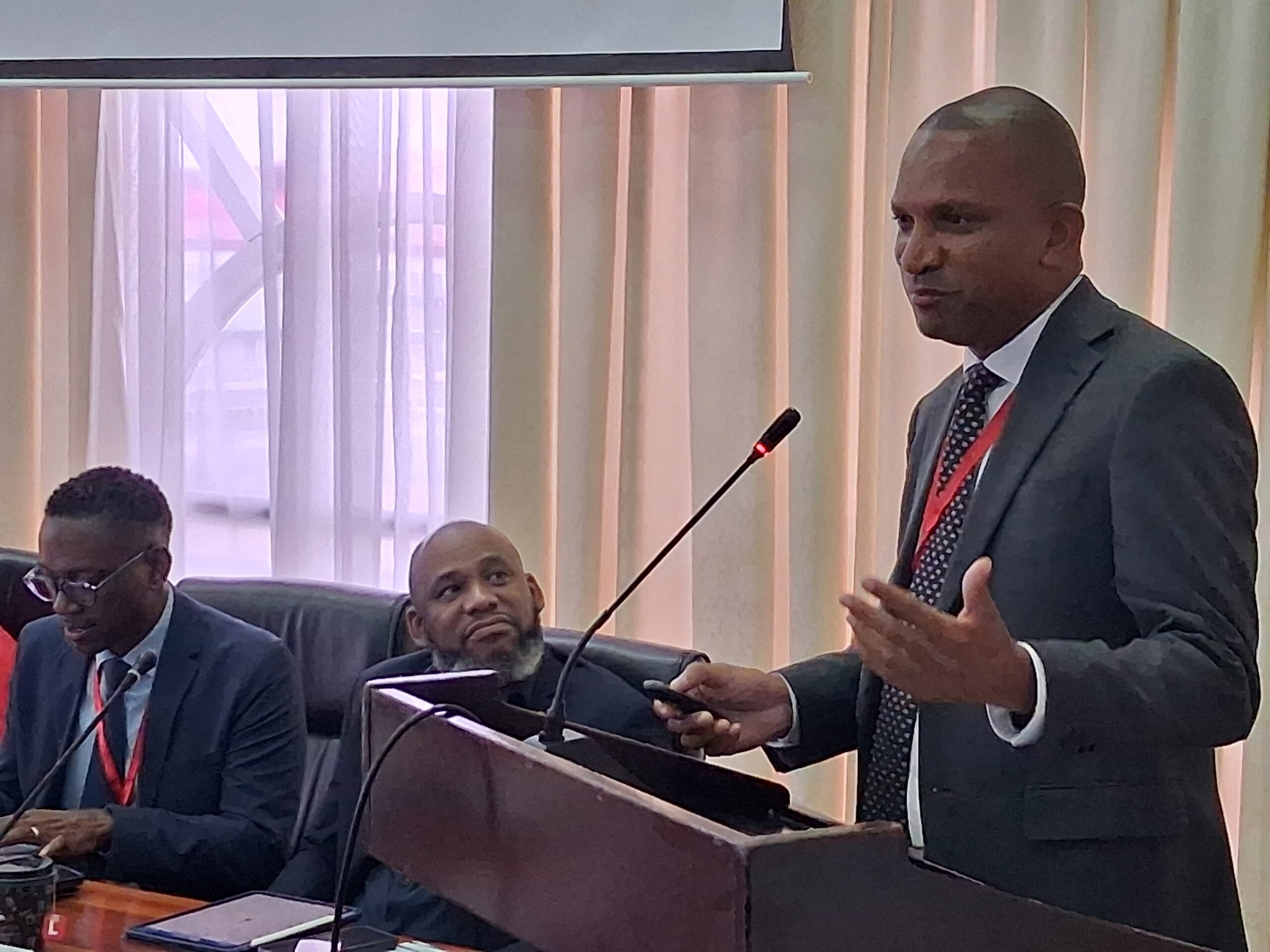
by Deandrea Hamilton | Editor
PROVIDENCIALES, TCI — In a country where government press conferences are virtually non-existent, ministers are often difficult for journalists to access and regular broadcast television news has disappeared, TCI Innovation, Technology and Energy Minister E. Jay Saunders has challenged Caribbean media to become “impossible to ignore.”
Speaking at the Caribbean Broadcasting Union gathering, Saunders argued that the Caribbean does not have a relevance problem but a “discoverability and positioning problem.”
Discoverability is precisely the issue in Saunders’ home country. Even Government’s own attempts at video news broadcasting have struggled against the realities of consistently producing a daily, weekly or even monthly newscast.
The difficulties confronting TCI media extend well beyond algorithms: limited advertising revenue, underfunding, shortages of trained professionals and insufficient human capacity leave newsrooms struggling for both staff and stamina.
Then there is the reality of operating in one of the region’s smallest societies. Politicians, journalists, advertisers, businesses and the subjects of stories often exist within the same tight economic and social circles. A controversial report that might create a ripple elsewhere can produce a tsunami in TCI, intensifying concerns among journalists about commercial and professional victimisation.
Saunders believes AI can help.
He urged Caribbean media to use the technology to transform one original story into television, radio, web, podcast, social and translated content without multiplying newsroom workload.
He also wants regional journalism structured so AI systems can find, understand and trust Caribbean sources, moving media beyond traditional SEO into Answer Engine Optimisation.
His ultimate message was emphatic: “Use AI not to make Caribbean media more artificial — but to make Caribbean voices more visible.”
For Turks and Caicos media, however, becoming visible may require more than technology. It requires an environment in which journalism can survive.
That last sentence is where I think we land the plane. It acknowledges that EJ actually has some us