
Government
Dr. Raven A. Saunders Attains Master’s Degree in Public Health


Public Service Times Spotlight
Turks and Caicos – Dr. Raven A. Saunders is a Grand Turk native and dedicated medical professional. She graduated from H.J. Robinson High School and the Turks and Caicos Islands Community College before earning a double major in Biology and Biochemistry from the University of Massachusetts Dartmouth. Dr. Saunders completed her Medical Degree at the University of the West Indies in 2018. She began her career as an intern at St. Ann’s Bay Hospital and later worked as a Senior Health Officer in Jamaica. After returning home in 2020, she served as Clinic Manager and Family Doctor at Omnicare and ACCU Diagnostics.
In February 2021, Dr. Saunders joined the COVID-19 response team and became Deputy Chief Medical Officer in July 2023. In her free time, she enjoys reading and watching films.
Dr. Saunders shared her academic journey and future plans with the Public Service Times.
Could you share a bit about your background, including where you’re from, your academic journey, current job title, and some of you hobbies?
I am a native of Grand Turk, a graduate of H.J. Robinson High School and the Turks and Caicos Islands Community College. I continued my studies at the University of Massachusetts Dartmouth, where I graduated with a double major of Bachelor of Science in Biology & Biochemistry with Magna Cum Laude. In 2018, I successfully completed medical school at the University of West Indies in Kingston, Jamaica. I was able to garner a wealth of medical experience as a medical intern at the St. Ann’s Bay Hospital, where I was trained in multiple disciplinaries. Then, I got to further enhance my skills by working as a Senior Health Officer in multiple clinics throughout the North East Regional Health Authority in Jamaica.
In 2020, I returned home and was initially working in the private sectors. I worked as the Clinic Manager and Family Doctor on Ambergris Cay for Omnicare and as the Family Doctor in Providenciales with ACCU Diagnostics. Both opportunities were extremely rewarding. However, in February 2021, I was delighted when I was offered a post with the COVID-19 response team at the Primary Health Care Grand Turk Clinic then appointed Medical Officer of the clinic. In July 2023, I became the Deputy Chief Medical Officer of the Turks and Caicos Islands.
Well, on most days, I’m a mild-mannered book reader and film buff. But in reality, I’m an undercover mystery solver. I constantly investigate obscure documentaries, analyze plot twists, and become way too invested in solving fictional crimes. My love of puzzles and mystery kept me pursuing medicine.
What inspired you to pursue a master’s degree, and how do you think it enhances your contributions with the Ministry of Health and Human Services?
My inspiration to pursue a master’s in public health came from a desire to address the systemic issues that affect health at a population level, particularly the health disparities that persist across different socioeconomic and demographic groups. Seeing the impacts of these inequities firsthand inspired me to gain the tools to create meaningful change and drive initiatives that reach people beyond traditional healthcare settings.
This degree enhances my contributions to the Ministry by providing a well-rounded understanding of public health policy, epidemiology, and health systems, allowing me to approach challenges with evidence-based strategies. Additionally, my studies have deepened my skills in program evaluation and data analysis, so I can assess current health initiatives’ effectiveness and identify improvement areas. This knowledge helps me propose solutions that are not only impactful but also sustainable, ensuring future health programs have long-term benefits for the populations they serve.
What is one key insight from your studies that you believe could significantly benefit the initiatives of the Ministry of Health and Human Services?
One important concept I learnt during my studies is the Stevens and Raftery’s model of healthcare needs assessment. This model attempts to achieve the greatest good for the most significant number by focusing resources where they achieve the most benefit for the patients. It intrinsically weaves the importance of need, supply and demand. The need is defined as the individual or population’s ability to benefit from healthcare. For instance, communities with high rates of chronic conditions like diabetes or heart disease have a greater need for preventive care, screening programs, and lifestyle interventions. Accurately assessing need is crucial for effective resource allocation, as it ensures that public health initiatives are targeted at the areas and populations where they are most beneficial.
The demand is the measure of what people want, and the supply is the health services currently provided to the country. Balancing need, supply, and demand is essential for creating an effective public health system. Misalignments, such as a high need for mental health services but limited supply or demand, can lead to gaps in care and worsen health disparities. Addressing these factors with coordinated strategies, data-driven resource allocation, and community engagement helps to build a resilient, responsive public health system that meets the Turks and Caicos Islands’ needs.
How do you plan to apply what you’ve learned to improve efficiencies or strategies within the Ministry?
Building on my earlier answer regarding health care needs assessment, the Ministry can benefit from an updated assessment. Our country is evolving and embracing different cultures, demographics and with this more diseases, especially non-communicable diseases. We need to leverage data analytics to optimize resource allocation and identify areas for improvement. By conducting needs assessments and using predictive analytics, we can pinpoint regions with higher disease burdens or resource shortages and proactively address these gaps. Additionally, implementing regular program evaluations will allow the Ministry to monitor effectiveness, adjust real-time strategies, and reallocate resources to maximize impact.
Applying health equity principles will guide the Ministry in designing programs that are accessible and culturally sensitive to underserved communities. Through partnerships with local organizations and community leaders, we can co-create interventions that address specific needs and resonate with those we serve. This approach builds trust and improves the uptake of public health services, ultimately improving program efficiency.
In what ways did your education challenge your prior assumptions, and how will you leverage this new perspective in your work?
My studies in public health opened my eyes to a proper understanding of how crucial epidemiological studies are to managing diseases, especially on a population-based level. As a doctor, you are programmed to treat the individual. Now, as someone in a leadership role, I want to implement policies that can help the country collectively. This cannot really be achieved without updated data on the overall public health profile.
Health surveys, chronic disease studies and updated disease statistics are key passions of mine that have formed after my studies. As a society, we cannot continue to implement programs or policies if we do not know what the society needs; are there even a demand for these programs; and can we properly supply and maintained these programs.
What advice would you offer to colleagues contemplating a similar path for their professional advancement?
My main takeaway for persons wishing to pursue healthcare or any professional advancement is “to embrace lifelong learning”. This path requires a mindset of continuous education. Be open to learning from various sources—colleagues, communities, and research. Also, not all knowledge is earned in institutions, the co-worker with multiple years of experience has multitudes of wisdom to share. Public health, for instance, spans across social sciences, epidemiology, policy, and more, so staying curious and adaptive is crucial.
How do you envision the evolution of the Ministry of Health and Human Services, and what role do you see yourself playing in that transformation?
Strengthening the Primary Healthcare services is what I envision for the Turks and Caicos Islands. Developing more robust healthcare facilities equipped with modern technology to ensure quality care throughout the islands. Improving our clinics can shift the focus from reactive to preventative healthcare through public awareness campaigns, regular health screenings, especially for cancers predominantly in our population, and vaccination programs. This approach would aim to decrease the burden of chronic diseases, particularly at the hospitals and the need for treatment abroad. Secondly, building communication with our public and private healthcare sectors to better enhance community engagement and health outcomes.

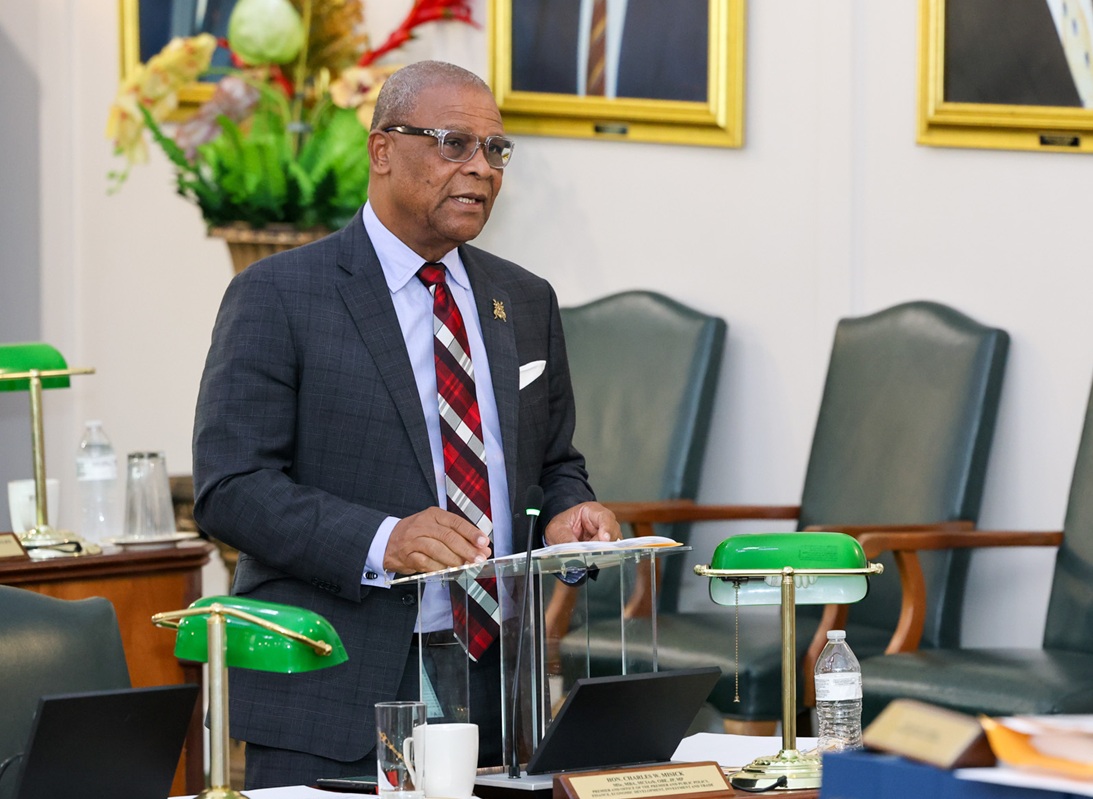
Turks and Caicos, March 18, 2026 – Despite securing significant constitutional reforms within the past year — including new powers that allow for a national referendum — Premier Charles Washington Misick made no mention of independence or any vote on the country’s political future during his 2026 State of the State Address, signalling what appears to be a continued strategy of building institutional strength before raising the question with the electorate.
The absence of any reference to a referendum stood out, particularly after the Turks and Caicos Islands successfully negotiated constitutional changes with the United Kingdom that expanded the authority of elected leaders and modernised the structure of Government.
Those reforms, which took effect last year, increased the size of Parliament, allowed for more Cabinet ministers, extended the life of a government from four to five years, and strengthened the role of elected officials in domestic affairs. The amendments also included provisions allowing for a referendum to be held on matters of national importance, a change widely viewed as giving the territory greater flexibility in determining its future political direction.
In his address, the Premier spoke of the reforms as moving the country toward “fuller self-government,” noting that the changes deliver a fully elected Parliament, widen delegated responsibility in external affairs and give elected leadership clearer authority and accountability to the people.
However, while the speech emphasised sovereignty, national security and stronger local institutions, it stopped short of any suggestion that the Government intends to call a referendum on independence or any other change in constitutional status.
Instead, the tone of the address suggested a focus on strengthening systems at home before considering further political steps.
The Premier outlined plans to expand the Police Force, strengthen the Border Force, increase the role of the Turks and Caicos Islands Regiment, modernise government through digital transformation, and improve immigration control through biometric border technology — all measures he said are necessary to secure the country’s future.
He also pointed to economic stability, infrastructure development and expanded investment as priorities, repeatedly framing the Government’s approach as one of building a stronger and more secure nation before taking on larger challenges.
The 2024 constitutional amendments, agreed between the Turks and Caicos Islands Government and the United Kingdom, formally expanded the number of elected members in the House of Assembly, increased the number of Ministers who may serve in Cabinet, extended the Parliamentary term to five years, strengthened Cabinet authority in domestic matters, and introduced provisions allowing for a referendum to be held on issues of national importance. The changes also widened delegated responsibility to local leaders in key areas of governance, marking one of the most significant steps toward greater self-government in recent decades.
The constitutional reforms achieved last year were seen by many observers as laying the groundwork for greater autonomy, and potentially future debate on independence, but the latest State of the State suggests the Government is moving cautiously.
For now, the message from the Premier appears clear: before any question of political status is put to the people, the country must first strengthen its institutions, its economy and its capacity to govern itself.
Angle by Deandrea Hamilton. Built with ChatGPT (AI). Magnetic Media — CAPTURING LIFE.
Government
$6M Digital Transformation Drive to expand E-Government, National ID and Biometric Borders
Turks and Caicos – A $6 million digital transformation programme launched after the 2024 government cyber breach is now driving a major push toward e-government in the Turks and Caicos Islands, with new systems planned for online payments, national digital identification and biometric border controls.
In his 2026 State of the State Address, Premier Charles Washington Misick said weaknesses exposed by the cyber-attack made it clear that government technology systems must be modernised to improve security, efficiency and public service delivery.
The Premier said the three-year digital agenda includes stronger network security, a redesigned government data system, new identity management tools and the creation of a National Security Operations Centre to monitor threats.
He told the country that modernising government services through digital transformation and e-governance is no longer optional but necessary for transparency, accountability and national progress.
One of the centrepieces of the plan is the National Digital ID Programme, which the Government says will modernise civil registration, establish a national population register and make it easier for residents to access public services while strengthening national security and election integrity.
The Premier also pointed to early success with the new E-Pay system, reporting that more than $1 million in government payments had already been made online within days of its launch in February, reducing long lines, paperwork and processing delays while improving transparency in public transactions.
Digital transformation is also extending to the country’s borders.
The Government confirmed that a multi-million-dollar Digital Borders Programme will introduce biometric screening and automated E-Gate technology at ports of entry, allowing citizens and low-risk travellers to move more quickly through immigration while giving authorities real-time access to identity and status information.
The move aligns with wider security standards being implemented across British Overseas Territories, where upgraded border technology is being introduced to strengthen immigration control and improve passenger processing.
Officials say the changes are part of a broader effort to create a more modern, secure and efficient public service, with additional digital systems planned across government departments over the next several years.
Angle by Deandrea Hamilton. Built with ChatGPT (AI). Magnetic Media — CAPTURING LIFE.





-

 News3 days ago
CARICOM – A Regional Club With Benefits; Turks & Caicos Wants In
-
 Government6 days ago
$6M Digital Transformation Drive to expand E-Government, National ID and Biometric Borders
-
 Uncategorized6 days ago
WHERE ARE THE LOCAL ARTISTS?
-
 News6 days ago
NATIONAL SECURITY SHIFT: PREMIER CONFIRMS REGIMENT EXPANSION
-
 Bahamas News6 days ago
Bahamas Warns Travellers as UN says Middle East Conflict May No Longer Be Contained
-

 Health5 days ago
Gut Health Linked to Lower Colorectal Cancer Risk According to Cleveland Clinic Dietitian
-
 News6 days ago
South Dock Expansion Milestone as UK Audit Highlights Importance of TCI Port Security
-
 News6 days ago
Statistics Authority Highlights Trade Data as Turks & Caicos Records $227M in Imports for Q4 2025