
Independent writer
Get that Christmas cooking right; tips for a tender & juicy Turkey!


Want your holiday Turkey to be tender, flavorful and juicy? Well here are some tips for the perfect bird!
- Choose the Right Turkey
- Fresh vs. Frozen: Fresh turkeys tend to be juicier, but a properly thawed frozen turkey works just as well.
- Size: Allow 1 to 1.5 pounds per person.
- Thaw Properly
- In the fridge: Allow 24 hours for every 4-5 pounds.
- In cold water: Submerge in cold water, changing the water every 30 minutes. Allow 30 minutes per pound.
- Brine for Moisture (Optional)
Brining infuses flavor and keeps the meat moist.
- Basic Brine: Combine water, salt, sugar, and herbs. Submerge the turkey in the brine and refrigerate for 12-24 hours.
- Prepare the Turkey
- Remove the giblets and neck from the cavity.
- Pat the turkey dry with paper towels.
- Season Generously
- Rub the turkey with butter or oil to help crisp the skin.

- Season inside and out with salt, pepper, and your favorite herbs (rosemary, thyme, sage).
- Add aromatics (onion, garlic, lemon, fresh herbs) inside the cavity for flavor.

- Use a Roasting Pan
- Place the turkey on a rack in a roasting pan to allow even cooking.
- Bake at the Right Temperature
- Preheat oven: 325°F (163°C) for slow roasting or 375°F (190°C) for faster roasting.
- Cover the breast with foil during the first half of cooking to prevent overbrowning.
- Use a Meat Thermometer
- Insert the thermometer into the thickest part of the breast and thigh without touching the bone.
- Remove the turkey when the breast reads 165°F (74°C) and the thigh reads 175°F (79°C).
- Basting
- Baste every 30-45 minutes with pan drippings, melted butter, or broth for added moisture.
- Let It Rest
- Rest the turkey for 20-30 minutes before carving to allow the juices to redistribute.
- Carve and Serve
- Use a sharp knife to carve the turkey, slicing against the grain for tender pieces.
Bonus Tips
- Avoid overcooking by checking the turkey’s temperature earlier than expected.
- Use a butter-soaked cheesecloth draped over the turkey for extra moisture and browning.
Enjoy your tender, juicy turkey!
Photo by Tastes Better from Scratch

Independent writer
Fifty Years of Ministerial Government: Honouring Our Past, Embracing Our Present and Preparing for Our Destiny

An Editorial by Dr. Alicia Swann
In the days following our most recent national celebration, I have observed conversations filled with strong opinions and emotions. Some have expressed pride and gratitude, while others have questioned our flag, Constitution, identity, political system and future.
After listening, I feel compelled to share my thoughts—not to dismiss anyone’s feelings or deepen division, but to offer historical clarity and, most importantly, hope.
The concerns of Turks and Caicos Islanders are valid. Many are worried about the protection of our land and identity, opportunities for our children and whether our people will continue to have a meaningful place in the country our ancestors built. These concerns deserve honest discussion, factual information, prayerful reflection and responsible planning.
However, as the Turks and Caicos Islands commemorates fifty years of Ministerial Government and celebrates National Flag Day, we must remember that this occasion is not about the current administration, one political party or any individual leader.
Governments come and go, but the story of a people remains.
This celebration belongs to our ancestors—the true visionaries, pioneers and nation-builders who paved the way for us. It belongs to the salt rakers who laboured beneath the blazing sun, the fishermen who braved dangerous seas, the farmers, teachers, mothers, pastors and citizens who built communities and demanded a voice in their homeland.
Many never lived to enjoy the progress their sacrifices helped to create. Yet because they endured, we inherited a country filled with possibilities.
A Political Journey That Began Long Before 1976
Long before European colonisation, these islands were inhabited by the Lucayan-Taíno people. Following European arrival, Indigenous communities suffered enslavement, forced removal and disease.
From the seventeenth century, Bermudian salt rakers developed our natural salt ponds. Enslaved Africans provided much of the labour sustaining the salt and plantation economies, and their descendants became central to the formation of the Turks and Caicos Islander people.
Britain’s influence developed through colonial expansion and competition with Spain and France. At different stages, the islands were administered through The Bahamas and Jamaica.
Dissatisfaction with decisions made under Bahamian administration contributed to our separation from The Bahamas in 1848 and the establishment of a local Legislative Board. In 1873, TCI became a dependency of the British colony of Jamaica. Local elections were abolished and were not restored until the 1959 Constitution—approximately eighty-six years later.
When Jamaica gained independence in 1962, TCI remained under Britain. From 1965 until Bahamian independence in 1973, the Governor of The Bahamas also served as Governor of TCI. We then received our own resident Governor and continued our constitutional journey.
Haiti never governed the Turks and Caicos Islands, but it holds an important place in our regional history. Following its independence in 1804, Haiti became a powerful symbol of freedom from slavery. Historical records indicate that enslaved people escaped from these islands to freedom in Haiti during the 1820s. In later generations, Haitians, Jamaicans, Bahamians and other Caribbean people contributed to our churches, public service, construction, education, hospitality and economy.
Our history is connected to the wider Caribbean, but our identity remains distinctly Turks and Caicos Islander.
The Significance of 1976
The 1976 Constitution provided for a Chief Minister and other Ministers with responsibility for important areas of government. The Honourable James Alexander George Smith “JAGS” McCartney became our first Chief Minister.
JAGS represented more than a political party. He represented a national awakening—the belief that Turks and Caicos Islanders deserved dignity, representation and a meaningful voice in the management of their homeland.
Ministerial Government was not the achievement of one person alone. It was made possible by generations of representatives, civil servants, community organisers, clergy, educators, workers and citizens who believed our people were capable of shaping their destiny.
The fifty years that followed were not without difficulty. We experienced controversy, constitutional change and interruptions to elected government. Yet representative government returned, our institutions developed and our people continued moving forward.
This anniversary does not suggest that everything has been perfect. It demonstrates that our democracy and our people have endured.
Never Forget Our Resilience
Our ancestors survived slavery, colonial administration, poverty, migration, isolation, political interruption and devastating hurricanes. From an economy once dependent upon salt, sisal and fishing, we built one of the world’s most recognised tourism destinations.
Generations of Turks and Caicos Islanders travelled to neighbouring countries seeking opportunities unavailable at home. Some were not always welcomed or treated as equals. Today, people from many of those same countries come to our shores hoping to work, live and create better futures.
This should not inspire hatred or prejudice. Those who come lawfully and contribute positively deserve dignity and respect. However, it should remind us how far we have come and why we must never surrender our identity or rightful place within our country.
Hospitality and patriotism are not opposites. We can welcome others without losing ourselves.
Scripture reminds us:
“But if any provide not for his own, and specially for those of his own house, he hath denied the faith.”
—1 Timothy 5:8
Caring for our own does not mean mistreating others. It means ensuring that Turks and Caicos Islanders are educated, protected and empowered to participate meaningfully in the development of their homeland.
Government has an important responsibility, but nation-building requires more than government. Parents must teach our values, businesses must create opportunities, citizens must respect the law and young people must prepare themselves to lead.
Pride in Where We Are
Until such time as we become an independent and sovereign nation, we must thank God for where we are today.
There is nothing wrong with celebrating our constitutional progress, embracing our present flag or respecting our existing institutions. Doing so does not prevent us from desiring further advancement.
We cannot know where we are going unless we understand where we are now and how we arrived here. Our present flag represents our identity, history and constitutional relationship with Britain. It should be treated with dignity and respect.
Embracing the present is not abandoning the future; it is the pathway towards building it. We celebrate not because the journey is complete, but because God has brought us a mighty long way.
Passports, Citizenship and Our Future
Today, we remain a British Overseas Territory. Although the passport associated with our territory may identify the Turks and Caicos Islands, it is not a sovereign TCI passport issued under the authority of an independent Turks and Caicos nation. It exists within the British nationality system and derives its legal authority from the United Kingdom.
British Overseas Territories citizenship, British citizenship and Turks and Caicos Islander status are connected but legally distinct. None presently represents citizenship issued by a sovereign TCI nation.
This should not cause us to disrespect the passport or constitutional position we hold. Instead, it should encourage us to think responsibly about our future.
If we envision sovereignty, we must eventually determine who would become a citizen of an independent TCI, whether dual citizenship would be permitted and what rights and responsibilities citizenship would carry. We must also consider how to protect our limited land, create pathways to ownership and help Islanders build generational wealth.
Our immigration system must welcome lawful contribution and respect human dignity while protecting the country’s long-term interests and enforcing its laws fairly.
These complex questions must not be decided through hostility, secrecy, political favour or temporary emotion. They require public education, research and consultation involving every inhabited island, our diaspora, elders, young people, churches, businesses, experts, Parliament, relevant institutions and the United Kingdom Government.
After proper preparation and national consultation, the people—not merely a government—should ultimately determine our political future through a clear and credible referendum.
Preparing for Our Destiny
I envision a future in which the Turks and Caicos Islands advances beyond its present constitutional position, governs its own destiny and may one day raise the sovereign flag of an independent nation.
Is it possible? Yes.
Would it require sacrifice, disciplined planning and strong institutions? Absolutely.
Would it require God-fearing leaders with integrity who place the country above personal and political interests? Without question.
“When the righteous are in authority, the people rejoice: but when the wicked beareth rule, the people mourn.”
—Proverbs 29:2
Independence without integrity would merely replace one form of dependency with another. Sovereignty must be supported by ethical leadership, economic stability, an independent judiciary, effective border protection, disaster preparedness and an educated population.
Preparation does not mean declaring independence tomorrow. It means beginning the research, civic education, institution-building and national consultation today.
“Write the vision, and make it plain upon tables, that he may run that readeth it.”
—Habakkuk 2:2
Preparing the Next Generation
We must ensure that our children know the history of the Turks and Caicos Islands and understand the sacrifices that paved the way for them.
A generation that does not know its history may inherit a country without understanding its value.
Our history must be taught in our homes, schools, churches and communities. Our children should never have to depend entirely upon outsiders to explain who they are or where they came from.
We must also stop gatekeeping knowledge. Whatever wisdom, education, experience or influence God has given us was not given for our benefit alone. It was entrusted to us so that we may mentor and guide those coming behind us.
True leadership does not conceal knowledge to protect a position. It shares knowledge to prepare a successor.
Let us give our children more than possessions. Let us give them identity, history, wisdom, confidence and a country they are prepared to protect and lead.
We Have What It Takes
We are a small country, but smallness does not mean incapability. Our ancestors created communities with almost nothing and survived circumstances far more difficult than those we face today.
We can honour our present flag without surrendering our future. We can welcome others without losing ourselves. We can celebrate how far we have come while preparing responsibly for where we wish to go.
This is the true meaning of the anniversary: a celebration of our ancestors, constitutional progress, national resilience and continuing right to determine our destiny.
Our ancestors paved the way. We must now possess the courage, discipline, unity and faith to continue the journey.
Dr. Alicia Swann
Proud Turks and Caicos Islander, Civic Leader and Advocate
Independent writer
A Second Chance Through Service: Is the TCI Regiment an Untapped Tool for Rehabilitation?
Ed Forbes
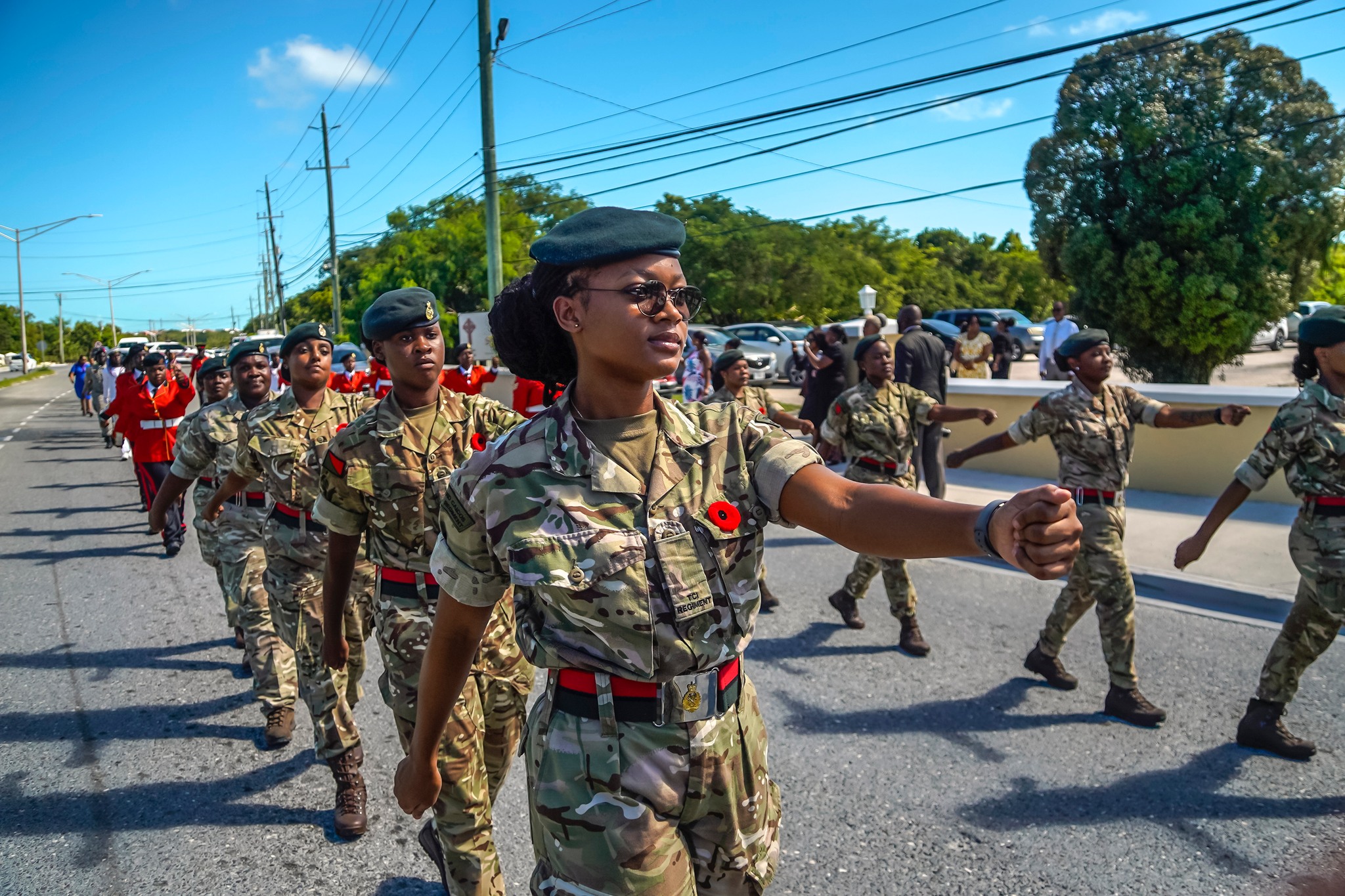
Turks and Caicos, September 3, 2026 – The Turks and Caicos Islands Regiment may be one of the most underutilized national assets in our fight against some of the social problems facing the Territory.
Established in 2020 with the support of then-Governor Nigel Dakin and the United Kingdom Ministry of Defence, the Regiment was created to strengthen national security while providing capabilities in disaster relief, humanitarian assistance and border protection.
But its role could potentially extend beyond traditional military responsibilities.
The qualities required of Regiment members—discipline, responsibility, teamwork, resilience and a sense of purpose—are also qualities that many troubled young people and individuals preparing to return to society after incarceration desperately need.
So perhaps it is time to ask: Could the TCI Regiment become part of our strategy for rehabilitation and reintegration?
We cannot arrest our way out of rising concerns about youth delinquency, gang recruitment and violent crime. Young people without employment, structure, opportunity or a sense of belonging can become vulnerable to gangs offering money, identity and acceptance.
For a young person who commits a relatively minor, non-violent offence, should incarceration always be the answer? Where legally appropriate and following proper risk assessment, could accountability sometimes be combined with an opportunity to change direction
That is where the Regiment could potentially play a role.
This should not mean turning the Regiment into a prison or creating a military “boot camp for bad kids.” Military-style boot camps alone have not been shown to reliably reduce reoffending. Discipline works best when combined with education, counselling, vocational training, mentoring and employment opportunities.
Rehabilitation Before Release:
The TCI already has the beginnings of a framework that could support such an initiative.
In February 2026, the Government announced the completion of its Parole Board Modernisation Project, designed to strengthen parole decision-making while supporting rehabilitation and successful reintegration into the community.
Rather than creating another standalone programme, Government could explore incorporating a Regiment-supported service component into the existing parole and rehabilitation system.
Imagine an inmate approaching the end of a sentence who has demonstrated good behaviour and is assessed as suitable for supervised reintegration.
Instead of simply opening the prison gate and expecting that person to succeed, preparation could begin months before release.
A structured programme could include physical training, discipline, leadership development, community service, vocational training and mentoring. Participants could assist with approved community projects, environmental restoration and disaster-preparedness activities while developing practical skills and a responsible daily routine.
The programme could continue for six to twelve months after release, with regular check-ins, employment assistance and clearly defined responsibilities.
The Regiment would not replace corrections, probation, counselling or other professionals. It would add another ingredient: service and accountability.
A Second Chance—With Responsibility
This is not about being soft on crime. It is about being smarter about rehabilitation.
Participants would have to show up, follow rules, complete training and demonstrate that they are prepared to accept responsibility for their future. Successful completion could become part of demonstrating readiness for full reintegration.
Employment would also be critical. Local businesses could provide apprenticeships, internships and second-chance employment.
Because rehabilitation without employment is incomplete.
The same philosophy could potentially apply to troubled youth. The Government is preparing to open a Juvenile Rehabilitation Facility for Boys later this year, with a focus on accountability, education, personal growth, family engagement and reintegration.
The Regiment should not replace the professionals responsible for juvenile rehabilitation, but its expertise in discipline, leadership, teamwork and service could become one component of a broader model.
Protecting the Future:
The objective should be simple: Stop creating tomorrow’s prisoners today.
If we can reach a teenager before gang recruitment becomes a way of life, we should.
If we can hold a young offender accountable without placing them in an environment that increases the likelihood of further offending, we should consider it.
And if someone has served their sentence, we should give them more than a release date and some cash. We should give them a plan, which could help reduce recidivism.
That plan could include housing, employment, education, counseling, family support, mentoring—and, where appropriate, structured service supported by the TCI Regiment.
The Turks and Caicos Islands is small enough that government agencies, the Regiment, schools, employers, courts, probation services and community organizations can work together.
The Regiment was created to protect the Turks and Caicos Islands. Protecting these islands should mean more than protecting our borders.
It should also mean protecting our communities, protecting vulnerable young people from gang recruitment and helping former offenders become productive members of society.
A prison sentence should not be our only answer to youthful mistakes, and the prison gate should not mark the end of rehabilitation. We must think much bigger.
The TCI Regiment has truly demonstrated its value in national defence, border protection and disaster response.
Perhaps it is time to explore whether its greatest contribution could extend even further:
Keep the service, but expand the mission, while helping to defend the future of the people it was created to serve.
PHOTO: FILE PHOTO
Independent writer
Questions & Concerns About Integrity at TCI Immigration Department and the Department of Labour / Employment Services

Independent Writer
Turks and Caicos, April 23, 2023
I would like to raise several concerns that many members of the public have noticed regarding activities within the Immigration and Labour Departments. These issues continue to surface, yet no one seems willing or able to address them openly.
There are important questions that deserve clear answers:
- Are there rules and guidelines that govern employees of the Immigration and Labour Departments regarding conflicts of interest?
The public needs to know what policies exist to prevent employees from using their positions for personal or financial gain. -
Can an Immigration or Labour Department employee legally own or operate a company that processes work permits?

If so, what safeguards are in place to ensure fairness and prevent abuse? -
What happens when paperwork from an employee’s private company appears on their own desk for review or approval?
This is a direct conflict of interest. How is this handled, and who ensures the process remains transparent? -
Who is responsible for policing these conflicts of interest?
When government workers operate private businesses that submit documents to the same department they work in, who is monitoring this behaviour? -
Should the Integrity Commission or compliance units be vetting not only Heads of Department but all staff members in sensitive areas?
Oversight should not stop at the top. Every employee with access to sensitive information or decision‑making authority should be held to the same standard. -
Is it okay for former Immigration employees allowed to walk into the department as if they still have authority—processing work permits, demanding special treatment, and behaving as though they still hold the keys?
Once someone leaves government employment, the privileges of that office should end.

These concerns represent only a small portion of what the public is seeing. We are expected to follow the rules, yet some individuals continue to bend or break them for personal benefit. Without accountability, there can be no order in our government departments.
Our island is small. People see what is happening, but too many remain silent. It is time to bring these issues to light so that real change can take place.





-

 Education1 week ago
Department of Education Concludes Four-Day TCI National Standards Secondary School Curriculum Implementation Training
-

 Independent writer5 days ago
Fifty Years of Ministerial Government: Honouring Our Past, Embracing Our Present and Preparing for Our Destiny
-
 News1 week ago
UNDER 40 DAYS: COMMITTEE FORMED—BUT WHO IS ON IT?
-

 Health4 days ago
Know the Possible Warning Signs of Prostate Cancer
-

 News1 week ago
Invest TCI Brings Entrepreneurs and Bankers to the Table
-

 News2 days ago
Liberty Business launches in Turks and Caicos Islands
-

 Education2 days ago
TCI Schools Invited to Participate in 2026 National Student Council Election