
Caribbean News
A CHAMPION FOR JAMAICA: TRAVEL ADVISORS IMMERSE IN “JAMAICA LOVE” DURING SANDALS® RESORTS’ LARGEST CARIBBEAN TRAVEL ADVISOR EVENT EVER


~ Weeklong “Sandals Jamaica Love Tour 2024” Celebrates Destination, Highlighting Connections Between Public and Private Sectors and Major Tourism Infrastructure Investment ~

Dr. The Most Honorable Andrew Holness, Prime Minister of Jamaica, gave the keynote speech at the Jamaica Love Showcase, where he shared plans for more seamless connectivity around the island via new bypasses and international airports.
MONTEGO BAY, JAMAICA – Family-owned and operated Sandals Resorts, the Caribbean’s most awarded luxury all-inclusive resort company, made an impressive case for its home country of Jamaica recently, welcoming nearly 1,000 attendees to its Jamaica Love Showcase, where Dr. The Most Honorable Andrew Holness, Prime Minister of Jamaica applauded the resort brand on its far-reaching impact, “Sandals represents the best example of Jamaica fulfilling its potential.” The prime minister in his keynote address also announced that new airports, roadways and other infrastructure will better connect the island for visitors.
The Jamaica Love Showcase is part of a week-long event from October 13-20 aptly named the “Sandals Jamaica Love Tour 2024,” and is immersing travel advisors and partners into the celebrated island’s beauty, safety and limitless opportunity, with a diverse itinerary that includes comprehensive Sandals Resorts and Beaches® Resorts tours, Island Routes excursions, Sandals Foundation activities, and exclusive networking events.
The Jamaica Love Showcase

Sandals Resorts International Executive Chairman, Adam Stewart, on stage at the Jamaica Love Showcase, where he thanked travel advisors and reaffirmed the brands’ commitment to their craft and to the Caribbean – a region with a bigger future anywhere on the planet.
Designed to demonstrate the crucial connections between public and private sectors that create the foundation for successful tourism, the unprecedented Jamaica Love Showcase welcomed hospitality executives, international media and more than 700 travel advisors to the Montego Bay Convention Center on October 16th. A vendor market of local artisans, music by the Silver Birds steel drum orchestra, and culinary displays reflecting signature dining experiences from across the resort portfolio set the tone for the Jamaica-centric event. Speakers from the highest echelons of government took the stage including Hon. Prime Minister Holness, US Ambassador to Jamaica N. Nick Perry, and Jamaica Minister of Tourism the Hon. Edmund Bartlett. Strategic partners, including executives from American Airlines, Air Canada Vacations, Travel Leaders, the Caribbean Hotel and Tourism Association (CHTA), the American Society of Travel Advisors (ASTA), and the Association of Canadian Travel Agencies (ACTA), also addressed the audience with compelling insights and a bright path forward for the destination. Adding to a dynamic lineup of speakers, two resonating thought leadership panels highlighted innovations in hospitality, sustainability, continued team member engagement and more.
“Jamaica’s tourism is everybody’s business, an intertwined ecosystem that brings farmers and taxicab drivers, travel advisors and prime ministers, fishers and pilots together as one,” said Sandals Resorts Executive Chairman Adam Stewart, who also serves as an Ambassador/Special Investment Envoy for Tourism for Jamaica. “The story of Sandals is the story of Jamaica… to always, together, work toward better. That is at the heart of our superbrand and forged in our homegrown values of hard work, exceeding expectations and trust in those who lift you up, who believe in you. That is the lasting legacy of my father, the late Gordon “Butch” Stewart, who taught me to cherish relationships with those who care as much as you do, who share your dreams of better and who will complement your gifts with their own,” said Stewart.

Jamaica Minister of Tourism the Hon. Edmund Bartlett, gave the closing speech at the Jamaica Love Showcase, where he acknowledged Travel Advisors as the island’s most important partners in making tourism the number one economic activity in Jamaica, enabling 11 consecutive quarters of economic growth.
A Lasting Relationship with Travel Advisors
Opening remarks were delivered by Gary C. Sadler, OD, Executive Vice President of Sales & Industry Relations at Unique Vacations, Inc. (UVI), an affiliate of the worldwide representative of Sandals Resorts and Beaches Resorts, who spoke about the importance of travel advisors in the brand’s success.
“Travel advisors are the single most effective tool in changing hearts and minds and most importantly, moving the needle,” said Sadler. “We know that informed advisors, prepared with firsthand knowledge and experience, are the ambassadors for this moment. They have the trust of their clients and this event was designed to empower them further, giving them the tools they need to promote Sandals Resorts and Beaches Resorts in Jamaica confidently and passionately.”
Following a group Reading Road Trip experience earlier in the week, Chairman’s Royal Club travel advisors attending the Jamaica Love Tour surprised their hosts with an $81,000 USD donation to the Sandals Foundation on the Jamaica Love Showcase stage.
Accuracy and Advocacy
One of the key themes woven throughout the conference was aligning perception with reality when it comes to the success of Jamaica and the safety of visitors in Jamaica.

Sandals Resorts’ Chief Experience Officer Jessica Shannon led discussions on the state and future of sustainability in the Caribbean, the company’s commitment to investing in its people, and the wider impact of its role in the island’s Linkages Council.
“There is only one Jamaica,” said Stewart. “Jamaica is having a moment. It’s an extraordinary moment. Our unemployment is at 4.5% right now. Our debt to GDP [ratio] has been cut in half… Our national reserves are 3x higher than they were while I was growing up. The Jamaica brand has never been bigger. Jamaica is a rockstar Caribbean island and has never hit harder.”
During his address, Hon. Prime Minister Holness ensured that his administration is working hard to reinforce that Jamaica’s brand is a safe, secure, sustainable, and seamless destination.
“There are so many things that are happening in Jamaica that have not yet made it into the consciousness of the world, so that Jamaica is properly placed and positioned in the minds of our tourists, visitors, and people who would want to do business with us,” said Hon. Prime Minister Holness. “Our friends in the tourism and travel industry who are here are very important partners in us achieving our goals. It’s important that when advisors bring visitors to Jamaica, it’s clear they are not just helping the hotels. The dollar of that visitor is making its way into the pocket of a family that will benefit, grow and develop.”
Major Tourism Infrastructure Unveiled

Gary C. Sadler, OD addresses a spirited group of Travel Advisors and industry partners as the master of ceremonies at the Jamaica Love Showcase in Montego Bay.
Received with great fanfare, Hon. Prime Minister Holness also announced the incredible investment the destination is making in the island’s infrastructure, most notably with a new international airport in Negril, a new terminal at Sangster International Airport in Montego Bay, improvements to the Norman Manley International Airport in Kingston, and building new roads on the southeastern coast to better connect the island, which will create an entirely new dimension of tourism in Jamaica.
Investment in Jamaica is Investment in the Future
Summarizing the impact of the day, Jamaica Minister of Tourism Hon. Edmund Bartlett was frank. “This is perhaps the single most immersive tourism, thought leadership summit, that Jamaica has ever had. And it is important that it happens now. And it is important that it is happening to the number one indigenous product of the Caribbean, Sandals Resorts International,” Minister Bartlett. “I felt what it means to regenerate, to reimagine, to reposition, to reconcile, and to create, in fact, the renaissance, that will move Sandals and Jamaica tourism to the next level.”

Travel Leaders’ Stephen McGillivray addresses the crowd during the Jamaica Love Showcase: “This is our opportunity to use our influence as professional advisors and deliver a message to our clients that Jamaica is a top choice for 2025 and beyond.”
Since Sandals Montego Bay opened its doors in 1981, the brand has continued to invest in Jamaica, developing programmes such as the Sandals Corporate University to uplift and prepare rising hospitality talent, to the Sandals Foundation, the brand’s philanthropic partner aimed at improving the lives of Caribbean communities where the brand operates — and, most importantly, Sandals’ expansive development and continued innovation in the hospitality space that keeps Jamaica one of the most visited destinations in the world.
“Always, we move toward better,” said Stewart. “This is Sandals 2.0 – a new chapter built on innovation, deeper connectivity, and the same commitment to excellence that’s always set us apart. Together, with our incredible partners and the community that inspires us, we’re continuing to build Brand Jamaica. This gathering is a testament to the connectivity between our organization, government and our travel partners in the private sector, demonstrating that together, we can affect significant and meaningful change in our beloved destination, recognizing Jamaica for its beauty, convenient accessibility, affordability, safety and endless possibilities. Jamaica is here and ready for you now.”

Sandals and Beaches Team Members perform for a group of 700 Travel Advisors at the Jamaica Love Showcase in Montego Bay on October 16th.

An array of local entertainers, including Jamaican singer-songwriter Christopher Martin, energized the crowd with performances and special surprises throughout the showcase.

By Deandrea Hamilton | Editor
September 28, 2026 – Wall Street initially flinched at the $3-billion handshake. But in a matter of days, it was smoother sailing.
Perhaps the bigger Caribbean business story is not what Sandals Resorts International is getting from the deal. It is who is writing the cheque — and what that says about what Gordon “Butch” Stewart built.
As reports of Royal Caribbean Group’s Sandals deal circulated Tuesday, RCL shares plunged 6.14 percent from Monday’s $250.25 close to $234.89, on sharply elevated trading.
When the agreement became official Wednesday — approximately $3 billion for a 50 percent equity interest in Sandals and Beaches Resorts — shares slipped another 1.95 percent to $230.30 and touched $222.22 intraday. Investors were digesting both the size of the investment and committed debt financing secured through Morgan Stanley.
But by Thursday, RCL rebounded 3.77 percent, with shares continuing their recovery Friday to finish the week around $243. Analysts were also looking ahead: JPMorgan reportedly raised its RCL price target from $345 to $394, while Citi placed the company on a 90-day positive catalyst watch.
And just who is RCL?
Royal Caribbean Group is a global vacation giant, publicly traded on the New York Stock Exchange with a market value of roughly $65 billion. Its portfolio includes Royal Caribbean International, Celebrity Cruises and Silversea, alongside private destinations and an expanding vacation platform.
So when a company of that scale commits $3 billion for only half of Sandals and Beaches Resorts, the transaction puts a striking financial marker on one of the Caribbean’s greatest home-grown hospitality success stories.
The deal, expected to close in early 2027, creates a 50-50 partnership with the Stewart family and takes Royal Caribbean deeper into the all-inclusive resort business.
Butch Stewart started Sandals in Jamaica in 1981 believing a Caribbean company could compete with the world’s best.
Forty-five years later, one of the world’s biggest vacation companies is prepared to pay $3 billion just to own half of what he built.
Now that’s the handshake that does more than seal a deal — it cements a legacy.
Caribbean News
Royal Caribbean Group and Sandals Resorts Announce Landmark Partnership to Accelerate Their Leading Vacation Experiences
Royal Caribbean Group Investment to Advance Sandals and Beaches’ Growth and Broaden the Group’s Vacation Portfolio
Montego Bay, Jamaica and Miami, September 24, 2026 – Royal Caribbean Group (NYSE: RCL) and Sandals Resorts today announced the signing of an agreement to form a partnership in the all-inclusive resort space with a 50% investment from Royal Caribbean Group. Building on Sandals and Beaches Resorts’ more than four decades of leadership in Caribbean hospitality, the joint venture will create new opportunities for continued resort growth while broadening the experiences across Royal Caribbean Group’s vacation platform.
The partnership brings together two of the travel industry’s most celebrated vacation companies, pairing Sandals and Beaches’ all-inclusive resort expertise with Royal Caribbean Group’s vacation platform, including industry-leading brands – Royal Caribbean, Celebrity Cruises and Silversea – a portfolio of private destinations, new river cruising offering, and an industry-first loyalty program. United in a shared history in the Caribbean and connected by a love for their communities, the companies will offer travelers an unparalleled collection of cruise, private destination and resort experiences, serving guests across more vacation occasions and establishing their undisputed leadership in Caribbean vacations.
The joint venture expands Royal Caribbean Group into an adjacent vacation category, growing its participation in the approximately $2 trillion global vacation market, and meets the growing global demand for Sandals and Beaches Resorts by accelerating their expansion. The partnership will include Sandals and Beaches’ collection of premier all-inclusive properties across the Caribbean, and the companies will explore opportunities to broaden distribution, deepen guest engagement, and make it easier for travelers to discover vacation experiences offered across both portfolios.
“For nearly 60 years, we’ve reimagined what a vacation can be, constantly expanding the ways we inspire our guests to explore, connect and create lifelong memories,” said Jason Liberty, Chairman and CEO, Royal Caribbean Group. “We have been building a vacation platform that brings joy to millions of people around the world and creates meaningful relationships that last with our guests. Our partnership with Sandals and Beaches Resorts is an important next step on that journey – bringing together two iconic leading vacation companies to further strengthen and grow one of the most admired resort portfolios in the world. The Stewart family has created powerful and beloved brands, and we are honored to build on that legacy. Together, we see tremendous opportunity to expand the reach of Sandals and Beaches Resorts and continue turning the vacation of a lifetime into a lifetime of vacations.”
“My father, Gordon ‘Butch’ Stewart, founded Sandals Resorts with the belief that a company built in the Caribbean could stand on the world stage alongside the most respected names in hospitality. Today is proof of how far that vision can go,” said Adam Stewart, Executive Chairman of Sandals Resorts and Beaches Resorts. “This partnership is the natural next step in building on that conviction. It gives us the ability to grow faster with a partner that shares our values of exceptional hospitality, long-term investment, and the power of enduring brands. Together, we will introduce more guests to Sandals and Beaches Resorts while creating even more extraordinary experiences for those who have made our resorts part of their lives for decades.” Stewart added, “As we continue to grow, we will remain true to what has always defined us: delivering authentic vacations that exceed expectations while creating opportunities for our team members, travel advisor partners and the communities we call home. The future has never been brighter, and I know this moment would make my father incredibly proud.”
The joint venture will be governed by a board under the shared leadership of Stewart and Liberty. Stewart will maintain a leadership role in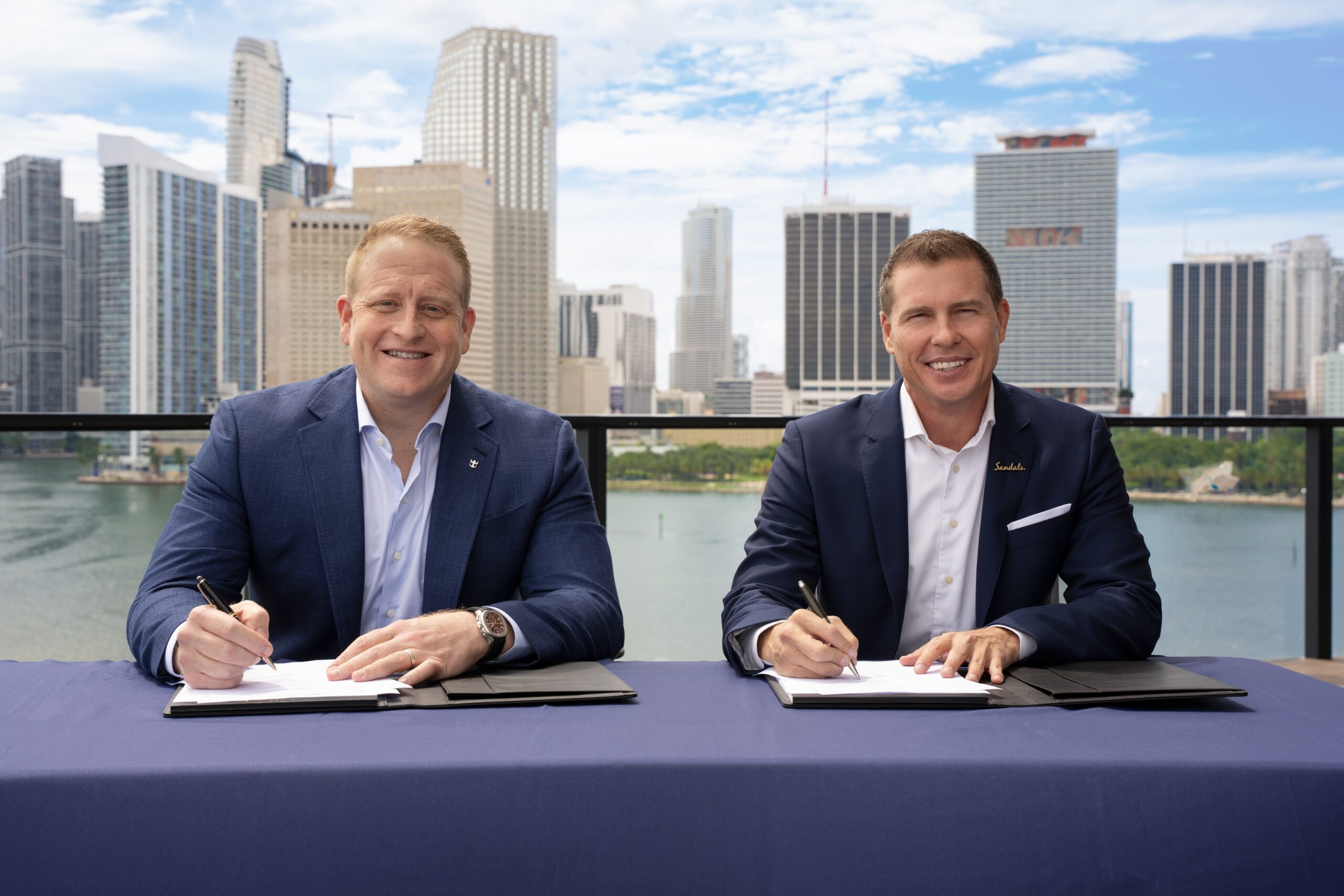 guiding the company’s long-term strategic growth as Executive Chairman of Sandals and Beaches Resorts. Existing reservations, loyalty programs, resort operations and cruise operations will continue as usual, with the partnership bringing additional resources to support future opportunities.
Under the terms of the agreement, Royal Caribbean Group will acquire a 50% equity interest in Sandals and Beaches Resorts for approximately $3 billion, representing a forward EBITDA multiple of approximately 10x. Royal Caribbean Group has secured committed debt financing from Morgan Stanley to fund the investment. The transaction is expected to close in early 2027, subject to customary approvals and closing conditions, and is expected to be accretive to earnings next year.
BofA Securities and PJT Partners acted as financial advisors, and Latham & Watkins and Jones Day acted as legal advisors to the Sandals Group. Perella Weinberg Partners and Morgan Stanley acted as financial advisors and Kirkland & Ellis LLP acted as legal advisor to Royal Caribbean Group.
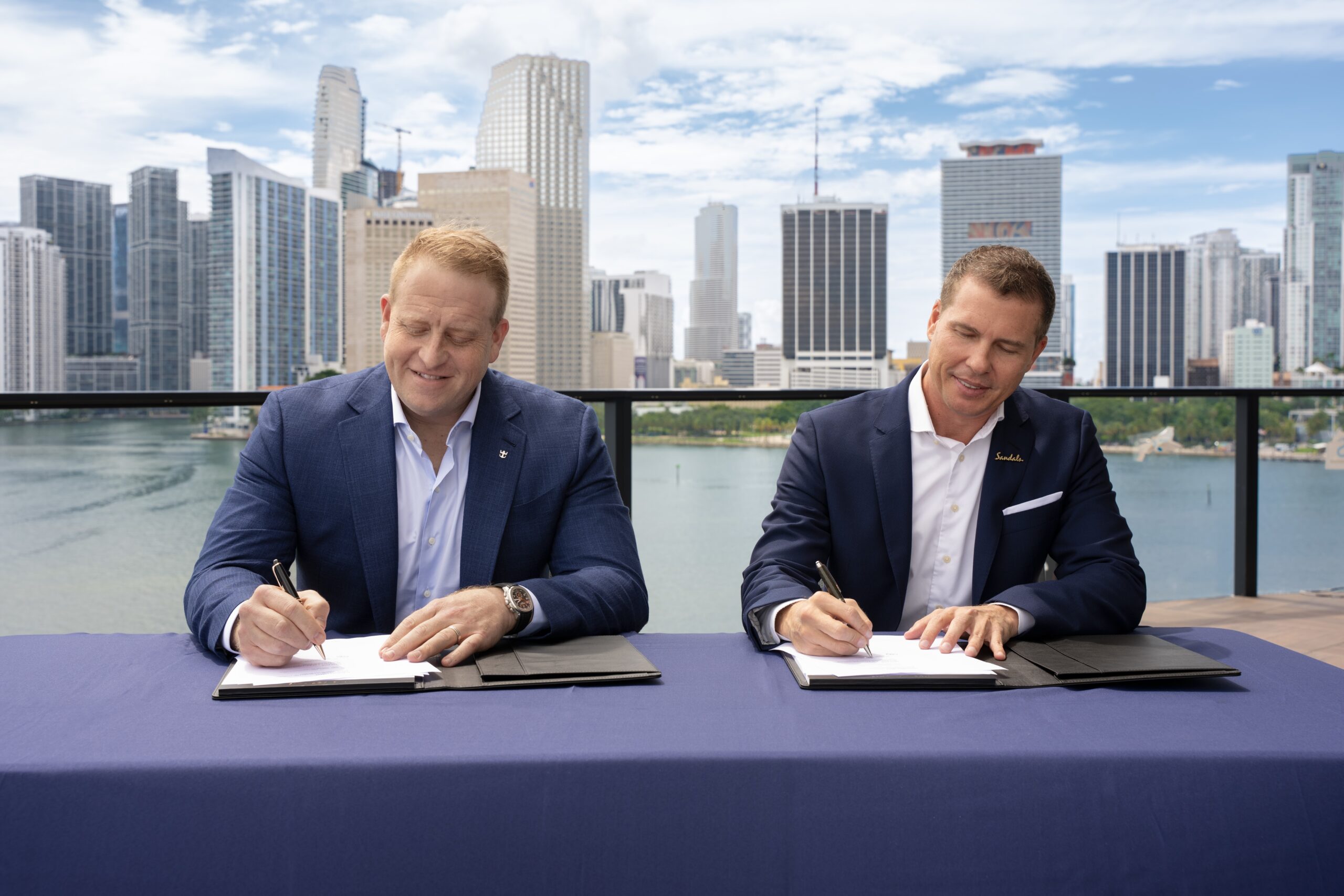
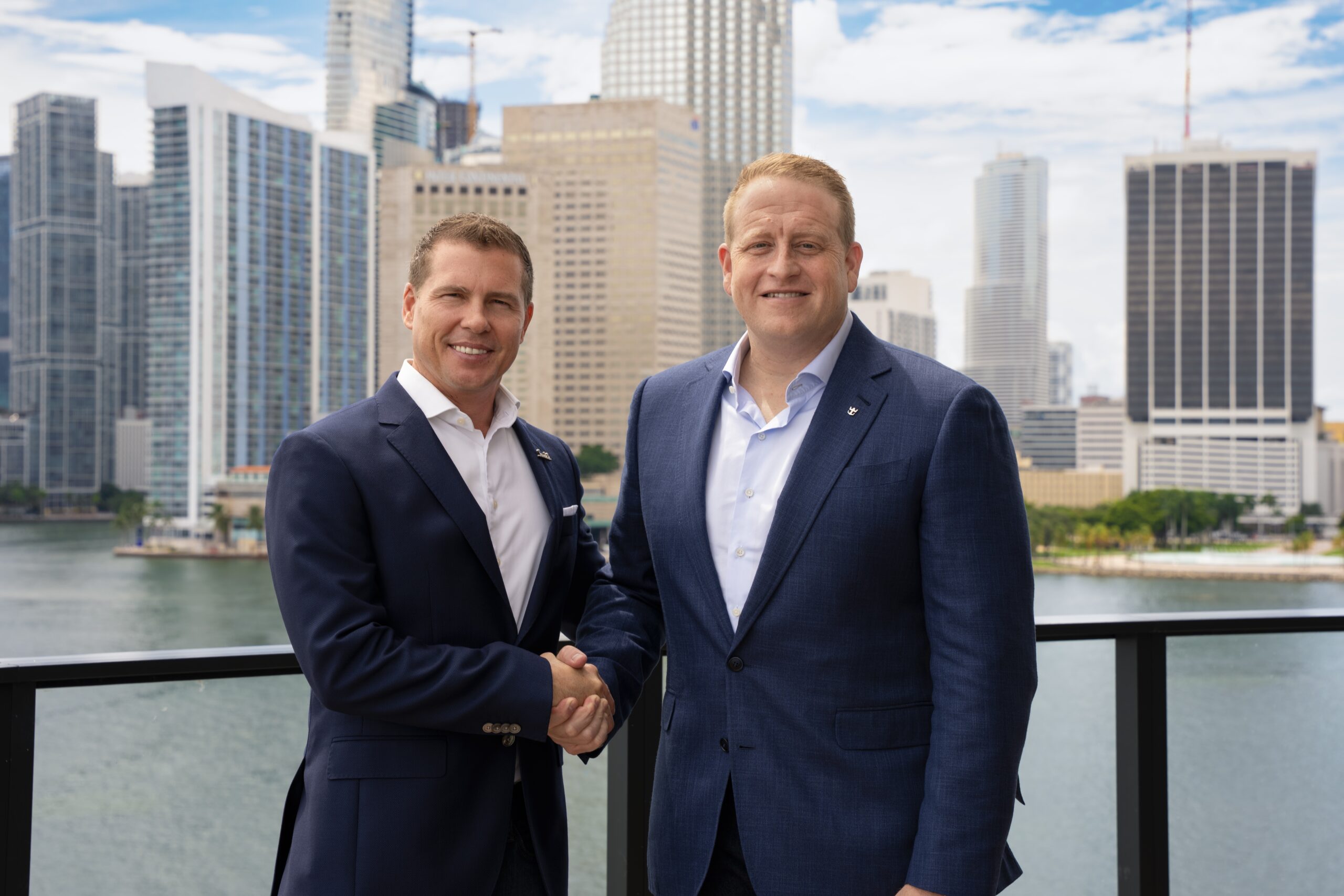
PHOTO CAPTION: Jason Liberty, Chairman and CEO of Royal Caribbean Group, and Adam Stewart, Executive Chairman of Sandals Resorts, mark the signing of an agreement to form a landmark partnership that expands Royal Caribbean Group into the all-inclusive resort space and supports the future growth of Sandals and Beaches Resorts. The signing took place at Royal Caribbean Group’s new headquarters in Miami, with the city’s skyline in the background.
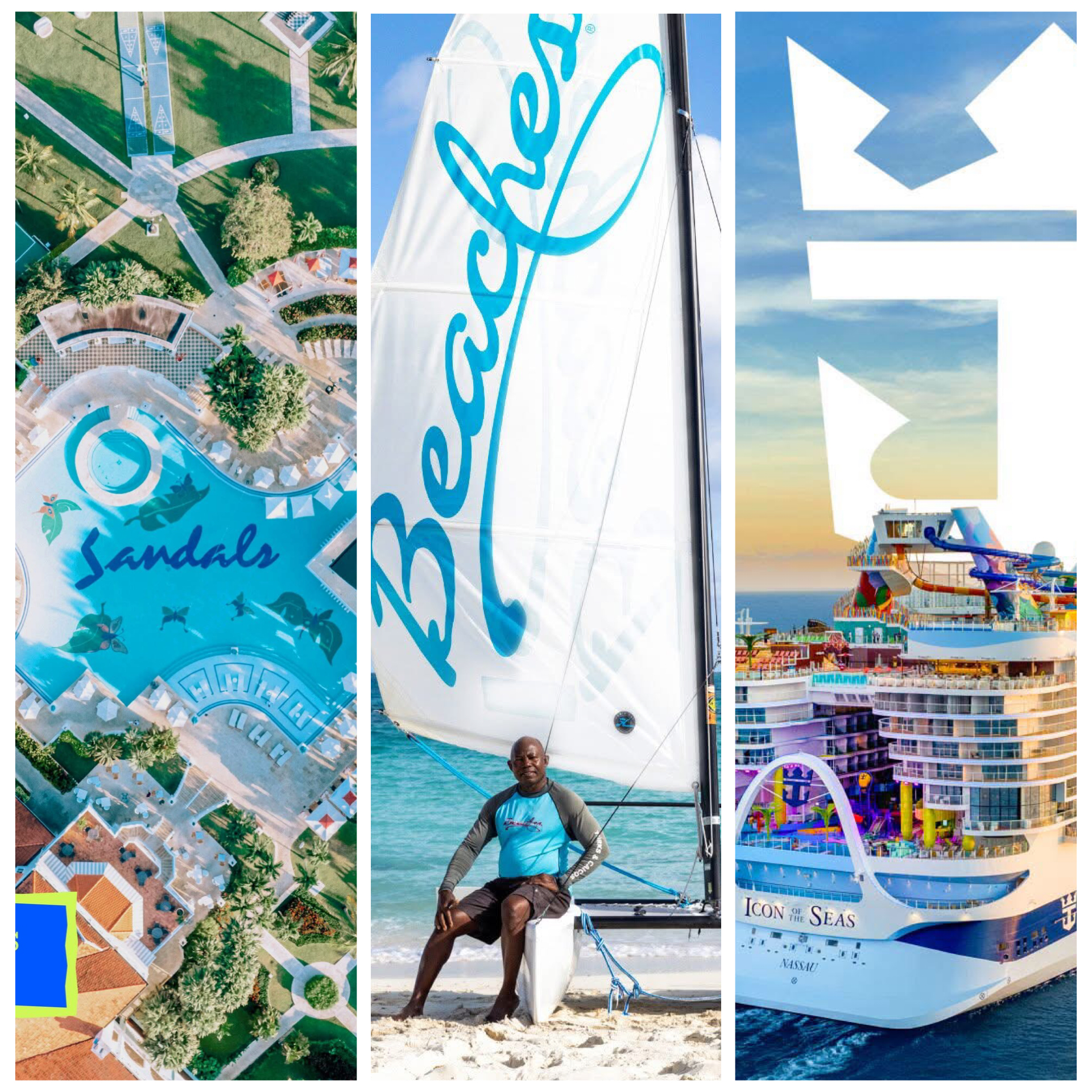
The Caribbean tourism deal first reported as a possibility on Tuesday is now a signed agreement. Royal Caribbean Group plans to pay approximately US$3 billion for a 50% stake in Sandals and Beaches Resorts, putting the value of the business at about US$6 billion. The purchase is expected to close in early 2027, subject to approvals.
Founded in Jamaica by the late Gordon “Butch” Stewart in 1981, the resort business has a presence across nine Caribbean destinations, including Jamaica, The Bahamas and Turks and Caicos. Sandals has described its workforce as nearly 20,000 people, most of them Caribbean nationals.
“My father, Gordon ‘Butch’ Stewart, founded Sandals Resorts with the belief that a company built in the Caribbean could stand on the world stage alongside the most respected names in hospitality,” said Adam Stewart in the announcement carried by PR Newswire. He will remain executive chairman, while the Stewart family retains a stake. The companies say existing reservations and resort operations will continue as usual.





-
 Bahamas News1 week ago
The Bahamas Reaffirms Support for Ukraine at International Conference in Toronto
-
 Bahamas News7 days ago
Walk for the Cure Every Saturday This October
-
 News6 days ago
Invest Turks and Caicos Officially Opened Caya Hico Collective, Grand Turk MSME Storefront
-
 Bahamas News1 week ago
‘Even Nygard didn’t try that’ – Supreme Court hears massive 400-foot seawall was added to Rosewod Exuma behind the public’s back
-

 Health1 week ago
TCI Hospital Marks Breast Cancer Awareness Month 2026 with “Know. Check. Act. Support.” Campaign
-

 Health1 week ago
What To Eat and Drink When You Have the Flu
-
 News1 week ago
Record-breaking eye care mission transforms vision for thousands in Providenciales
-
 News1 week ago
License Fee Coming November 1; goes from $0 to $125,000