
TCI News
Navigating the TCI Airport Conundrum: Seeking Sustainable Solutions













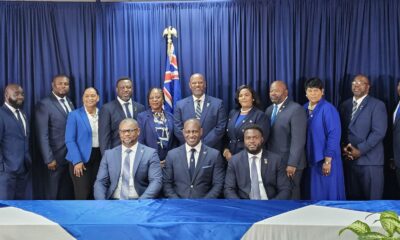


enabling digital transformation across key sectors and supporting enterprise customers
Providenciales, Turks and Caicos Islands (September 17, 2026) – Liberty Business has officially launched in the Turks and Caicos Islands, signalling the company’s continued transformation and strengthening its commitment to helping businesses navigate digital change, drive growth and build greater resilience.
The announcement was made during a special stakeholder event attended by government representatives, business leaders, industry partners, customers and members of the media, marking the next chapter in the company’s long-standing relationship with the Turks and Caicos Islands.
“Today represents far more than the introduction of a new name. It reflects our continued evolution as a business and our commitment to being a trusted technology partner for organisations navigating an increasingly digital economy,” said Susanna O’Sullivan, Vice President General Manager, Flow North Caribbean, Liberty Caribbean.
“Through Liberty Business, we are bringing together the strength and capabilities of Liberty Caribbean with local expertise to help businesses across the Turks and Caicos Islands connect, protect, innovate and grow. We want to be a partner that understands the ambitions of our customers and works alongside them to create meaningful business value.”
Liberty Caribbean is the operator of Flow, Liberty Business and BTC, serving customers across more than twenty markets in the region.
The launch of Liberty Business builds on the company’s long-standing presence in the Turks and Caicos Islands and its continued investment in communications infrastructure, technology and digital capabilities across the Caribbean.
Today, Liberty Caribbean operates one of the region’s most extensive communications networks, supported by approximately 50,000 kilometres of subsea and terrestrial fibre infrastructure, helping enable resilient, secure and high-performance connectivity across the region.
For businesses, the evolution comes at a time when technology is playing an increasingly important role in productivity, customer experience, cybersecurity, business continuity and growth.
“Businesses today need more than connectivity. They need technology solutions that can help them operate efficiently, protect their information, support their people and respond to change. We are excited to begin this next chapter with businesses in the Turks and Caicos Islands and to work together to build a smarter, stronger, more resilient and more connected digital future,” said O’Sullivan.
Liberty Business brings together an integrated portfolio of enterprise solutions, including advanced connectivity, cybersecurity, cloud services, data centre solutions, managed services, enterprise mobility and unified communications under a single brand dedicated to supporting the evolving needs of business customers.
Also speaking at the launch, Joanne Missick, Country Manager, Flow Turks and Caicos Islands, said the introduction of Liberty Business demonstrates the company’s commitment to evolving alongside the local business community.
“The Turks and Caicos Islands is a dynamic market with tremendous potential, and our businesses are increasingly embracing technology as an enabler of growth,” said Missick.
“From tourism and hospitality to financial services, real estate, construction, professional services and entrepreneurship, organisations are looking for ways to become more efficient, secure and resilient. Liberty Business gives us the opportunity to engage our customers differently – understanding their individual needs and helping them identify technology solutions that can support their ambitions.”
Missick added that the company’s approach is centred on building lasting relationships with businesses and providing solutions that address real-world challenges.
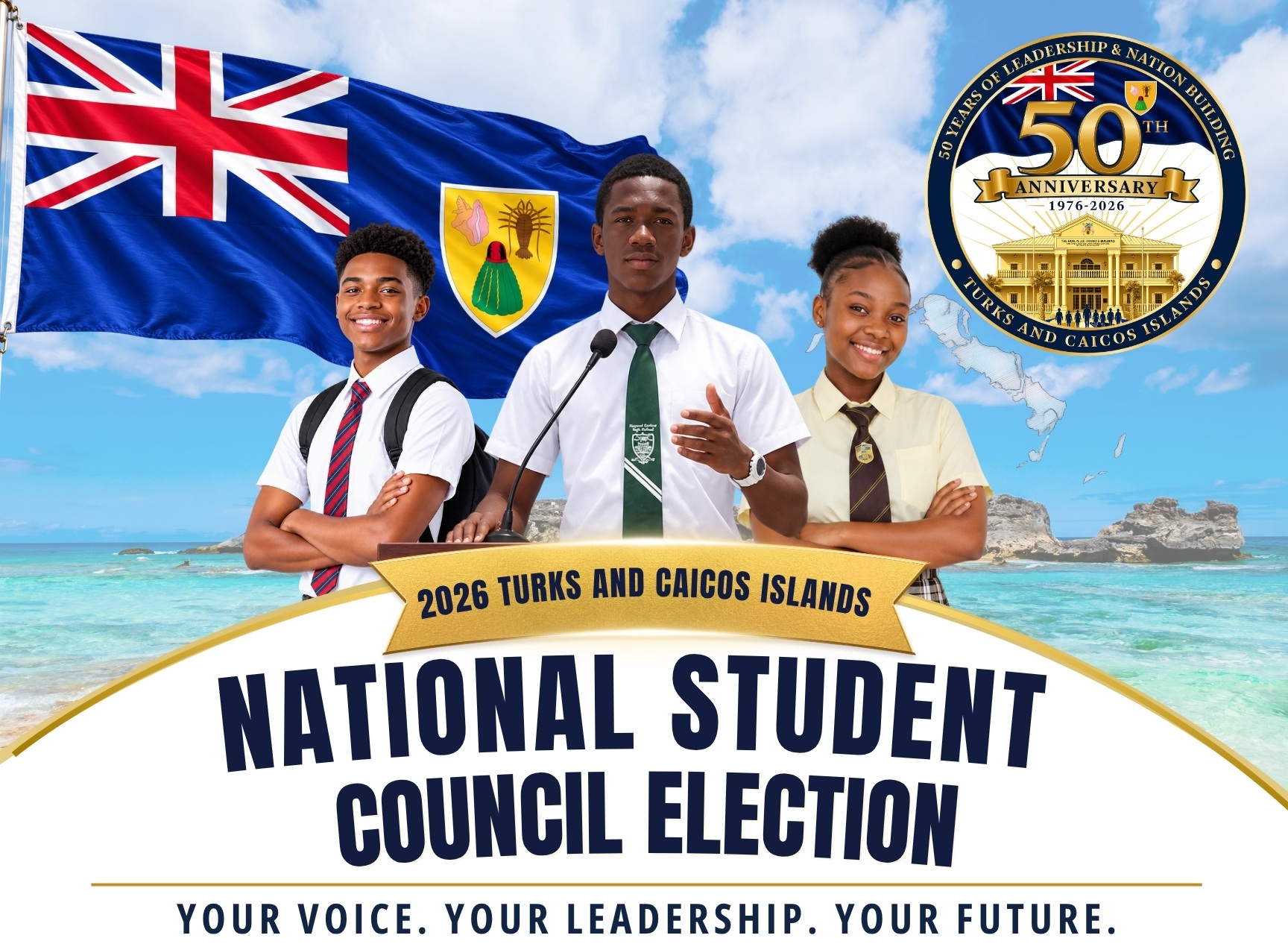
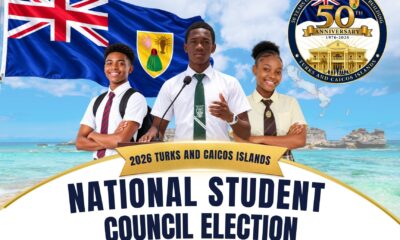
Providenciales, Turks and Caicos Islands – Thursday, 17 September 2026: The Ministry of Education, Youth, Sports and Culture has partnered with the Turks and Caicos Islands Elections Department to bring an exciting national election experience directly to high school students across the country with the launch of the 2026 National Student Council (NSC) Election.
Held under the theme “Your Voice. Your Country. Your Future.”, the initiative will give students from all 14 public and private high schools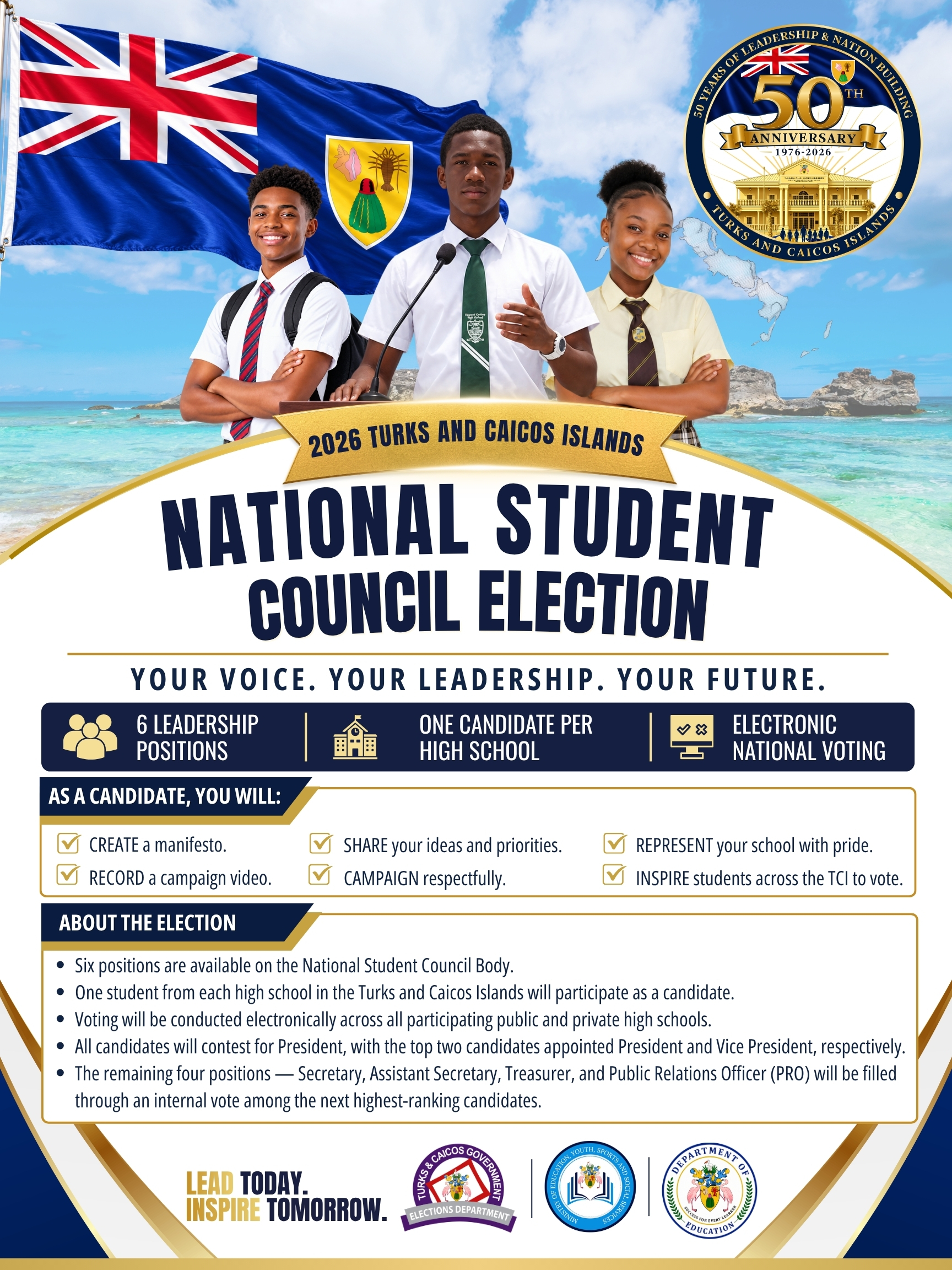 the chance to campaign, vote and compete for national student leadership positions, while gaining first-hand experience of the electoral process.
Minister of Education, Hon. Rachel Taylor, said the initiative gives young people a national platform to share their ideas and develop their leadership skills.
“Our young people have ideas, opinions and perspectives that deserve to be heard, and this election gives them a national platform to use their voices in a meaningful way. We want our students to step forward with confidence, share the issues that matter to them and experience what it means to lead and represent others.” She continued, “I am particularly excited to see students from schools across the Turks and Caicos Islands getting involved, supporting their candidates and participating in the voting process. I encourage every school to embrace this opportunity and help us create an experience that our students will learn from and enjoy.”
Each high school will nominate one student candidate to represent their school at the national level. Candidates will campaign for the positions of President and Vice President, sharing their ideas, priorities and plans with student voters across the Turks and Caicos Islands. Both positions will be decided by electronic vote among high school students across the country.
The remaining four positions on the six-member National Student Council: Secretary, Assistant Secretary, Treasurer and Public Relations Officer. will be determined through an internal vote among the top candidates following the national election.
The election will mirror several elements of the Turks and Caicos Islands’ electoral process. Candidates will choose a party name, colour and symbol, develop a manifesto and campaign slogan, and make their case to student voters. Their names, party information and symbols will appear on an electronic ballot, giving students the opportunity to experience the process as both candidates and voters.
Acting Elections Supervisor Willette Pratt stated that the timing of the initiative is particularly significant as the country continues its focus on civic awareness and youth participation.
“Coming on the heels of Constitution Day and as we prepare to celebrate National Youth Week this September, this is a timely opportunity to put civic education into practice. We want young people to understand that democracy is not only about casting a vote; it is about being informed, participating and understanding that their voice matters. We are excited to see our schools and students embrace the experience.”
Once students are selected and endorsed by their school, candidates must submit a completed Candidate Information Form, a Student Manifesto of no more than 250 words, and a 45- to 60-second Campaign Video PSA introducing themselves and outlining the issues and priorities they hope to champion.
Candidates are expected to campaign fairly and respectfully, focusing on ideas, student issues and their plans as aspiring student leaders. Personal attacks, bullying, false or misleading information, and offering gifts or incentives in exchange for votes are prohibited. Breaches of the campaign code of conduct may result in the loss of campaign privileges or disqualification.
For candidates, it is a chance to share their ideas and test their leadership skills on a national platform. For student voters, it is an opportunity to have a say in who represents them and experience the electoral process first-hand.
With candidate selection underway, the Elections Department and Ministry of Education are looking forward to seeing students step forward, bring their ideas to the campaign and, ultimately, seeing young voters across the country make their choice at the ballot.
The 2026 National Student Council Election is an opportunity for young people to do more than learn about leadership and democracy — it gives them the chance to take part. Your Voice. Your Country. Your Future.
Independent writer
Fifty Years of Ministerial Government: Honouring Our Past, Embracing Our Present and Preparing for Our Destiny


An Editorial by Dr. Alicia Swann
In the days following our most recent national celebration, I have observed conversations filled with strong opinions and emotions. Some have expressed pride and gratitude, while others have questioned our flag, Constitution, identity, political system and future.
After listening, I feel compelled to share my thoughts—not to dismiss anyone’s feelings or deepen division, but to offer historical clarity and, most importantly, hope.
The concerns of Turks and Caicos Islanders are valid. Many are worried about the protection of our land and identity, opportunities for our children and whether our people will continue to have a meaningful place in the country our ancestors built. These concerns deserve honest discussion, factual information, prayerful reflection and responsible planning.
However, as the Turks and Caicos Islands commemorates fifty years of Ministerial Government and celebrates National Flag Day, we must remember that this occasion is not about the current administration, one political party or any individual leader.
Governments come and go, but the story of a people remains.
This celebration belongs to our ancestors—the true visionaries, pioneers and nation-builders who paved the way for us. It belongs to the salt rakers who laboured beneath the blazing sun, the fishermen who braved dangerous seas, the farmers, teachers, mothers, pastors and citizens who built communities and demanded a voice in their homeland.
Many never lived to enjoy the progress their sacrifices helped to create. Yet because they endured, we inherited a country filled with possibilities.
A Political Journey That Began Long Before 1976
Long before European colonisation, these islands were inhabited by the Lucayan-Taíno people. Following European arrival, Indigenous communities suffered enslavement, forced removal and disease.
From the seventeenth century, Bermudian salt rakers developed our natural salt ponds. Enslaved Africans provided much of the labour sustaining the salt and plantation economies, and their descendants became central to the formation of the Turks and Caicos Islander people.
Britain’s influence developed through colonial expansion and competition with Spain and France. At different stages, the islands were administered through The Bahamas and Jamaica.
Dissatisfaction with decisions made under Bahamian administration contributed to our separation from The Bahamas in 1848 and the establishment of a local Legislative Board. In 1873, TCI became a dependency of the British colony of Jamaica. Local elections were abolished and were not restored until the 1959 Constitution—approximately eighty-six years later.
When Jamaica gained independence in 1962, TCI remained under Britain. From 1965 until Bahamian independence in 1973, the Governor of The Bahamas also served as Governor of TCI. We then received our own resident Governor and continued our constitutional journey.
Haiti never governed the Turks and Caicos Islands, but it holds an important place in our regional history. Following its independence in 1804, Haiti became a powerful symbol of freedom from slavery. Historical records indicate that enslaved people escaped from these islands to freedom in Haiti during the 1820s. In later generations, Haitians, Jamaicans, Bahamians and other Caribbean people contributed to our churches, public service, construction, education, hospitality and economy.
Our history is connected to the wider Caribbean, but our identity remains distinctly Turks and Caicos Islander.
The Significance of 1976
The 1976 Constitution provided for a Chief Minister and other Ministers with responsibility for important areas of government. The Honourable James Alexander George Smith “JAGS” McCartney became our first Chief Minister.
JAGS represented more than a political party. He represented a national awakening—the belief that Turks and Caicos Islanders deserved dignity, representation and a meaningful voice in the management of their homeland.
Ministerial Government was not the achievement of one person alone. It was made possible by generations of representatives, civil servants, community organisers, clergy, educators, workers and citizens who believed our people were capable of shaping their destiny.
The fifty years that followed were not without difficulty. We experienced controversy, constitutional change and interruptions to elected government. Yet representative government returned, our institutions developed and our people continued moving forward.
This anniversary does not suggest that everything has been perfect. It demonstrates that our democracy and our people have endured.
Never Forget Our Resilience
Our ancestors survived slavery, colonial administration, poverty, migration, isolation, political interruption and devastating hurricanes. From an economy once dependent upon salt, sisal and fishing, we built one of the world’s most recognised tourism destinations.
Generations of Turks and Caicos Islanders travelled to neighbouring countries seeking opportunities unavailable at home. Some were not always welcomed or treated as equals. Today, people from many of those same countries come to our shores hoping to work, live and create better futures.
This should not inspire hatred or prejudice. Those who come lawfully and contribute positively deserve dignity and respect. However, it should remind us how far we have come and why we must never surrender our identity or rightful place within our country.
Hospitality and patriotism are not opposites. We can welcome others without losing ourselves.
Scripture reminds us:
“But if any provide not for his own, and specially for those of his own house, he hath denied the faith.”
—1 Timothy 5:8
Caring for our own does not mean mistreating others. It means ensuring that Turks and Caicos Islanders are educated, protected and empowered to participate meaningfully in the development of their homeland.
Government has an important responsibility, but nation-building requires more than government. Parents must teach our values, businesses must create opportunities, citizens must respect the law and young people must prepare themselves to lead.
Pride in Where We Are
Until such time as we become an independent and sovereign nation, we must thank God for where we are today.
There is nothing wrong with celebrating our constitutional progress, embracing our present flag or respecting our existing institutions. Doing so does not prevent us from desiring further advancement.
We cannot know where we are going unless we understand where we are now and how we arrived here. Our present flag represents our identity, history and constitutional relationship with Britain. It should be treated with dignity and respect.
Embracing the present is not abandoning the future; it is the pathway towards building it. We celebrate not because the journey is complete, but because God has brought us a mighty long way.
Passports, Citizenship and Our Future
Today, we remain a British Overseas Territory. Although the passport associated with our territory may identify the Turks and Caicos Islands, it is not a sovereign TCI passport issued under the authority of an independent Turks and Caicos nation. It exists within the British nationality system and derives its legal authority from the United Kingdom.
British Overseas Territories citizenship, British citizenship and Turks and Caicos Islander status are connected but legally distinct. None presently represents citizenship issued by a sovereign TCI nation.
This should not cause us to disrespect the passport or constitutional position we hold. Instead, it should encourage us to think responsibly about our future.
If we envision sovereignty, we must eventually determine who would become a citizen of an independent TCI, whether dual citizenship would be permitted and what rights and responsibilities citizenship would carry. We must also consider how to protect our limited land, create pathways to ownership and help Islanders build generational wealth.
Our immigration system must welcome lawful contribution and respect human dignity while protecting the country’s long-term interests and enforcing its laws fairly.
These complex questions must not be decided through hostility, secrecy, political favour or temporary emotion. They require public education, research and consultation involving every inhabited island, our diaspora, elders, young people, churches, businesses, experts, Parliament, relevant institutions and the United Kingdom Government.
After proper preparation and national consultation, the people—not merely a government—should ultimately determine our political future through a clear and credible referendum.
Preparing for Our Destiny
I envision a future in which the Turks and Caicos Islands advances beyond its present constitutional position, governs its own destiny and may one day raise the sovereign flag of an independent nation.
Is it possible? Yes.
Would it require sacrifice, disciplined planning and strong institutions? Absolutely.
Would it require God-fearing leaders with integrity who place the country above personal and political interests? Without question.
“When the righteous are in authority, the people rejoice: but when the wicked beareth rule, the people mourn.”
—Proverbs 29:2
Independence without integrity would merely replace one form of dependency with another. Sovereignty must be supported by ethical leadership, economic stability, an independent judiciary, effective border protection, disaster preparedness and an educated population.
Preparation does not mean declaring independence tomorrow. It means beginning the research, civic education, institution-building and national consultation today.
“Write the vision, and make it plain upon tables, that he may run that readeth it.”
—Habakkuk 2:2
Preparing the Next Generation
We must ensure that our children know the history of the Turks and Caicos Islands and understand the sacrifices that paved the way for them.
A generation that does not know its history may inherit a country without understanding its value.
Our history must be taught in our homes, schools, churches and communities. Our children should never have to depend entirely upon outsiders to explain who they are or where they came from.
We must also stop gatekeeping knowledge. Whatever wisdom, education, experience or influence God has given us was not given for our benefit alone. It was entrusted to us so that we may mentor and guide those coming behind us.
True leadership does not conceal knowledge to protect a position. It shares knowledge to prepare a successor.
Let us give our children more than possessions. Let us give them identity, history, wisdom, confidence and a country they are prepared to protect and lead.
We Have What It Takes
We are a small country, but smallness does not mean incapability. Our ancestors created communities with almost nothing and survived circumstances far more difficult than those we face today.
We can honour our present flag without surrendering our future. We can welcome others without losing ourselves. We can celebrate how far we have come while preparing responsibly for where we wish to go.
This is the true meaning of the anniversary: a celebration of our ancestors, constitutional progress, national resilience and continuing right to determine our destiny.
Our ancestors paved the way. We must now possess the courage, discipline, unity and faith to continue the journey.
Dr. Alicia Swann
Proud Turks and Caicos Islander, Civic Leader and Advocate





-
 Education1 week ago
Department of Education Concludes Four-Day TCI National Standards Secondary School Curriculum Implementation Training
-

 Independent writer6 days ago
Fifty Years of Ministerial Government: Honouring Our Past, Embracing Our Present and Preparing for Our Destiny
-
 News1 week ago
UNDER 40 DAYS: COMMITTEE FORMED—BUT WHO IS ON IT?
-

 Health5 days ago
Know the Possible Warning Signs of Prostate Cancer
-

 News1 week ago
Invest TCI Brings Entrepreneurs and Bankers to the Table
-

 News3 days ago
Liberty Business launches in Turks and Caicos Islands
-
 Education3 days ago
TCI Schools Invited to Participate in 2026 National Student Council Election