
Health
What To Do When Someone With Alzheimer’s Disease Wanders


Prevention and preparation can help you keep your loved one safe
November 21, 2023 – The definition of wandering varies from context to context. Technically, wandering is an umbrella term for several different behaviors. This includes elopement (attempts to escape), repetitive pacing and becoming lost. According to neurologist, Jagan Pillai, MD, PhD, Assistant Professor, Neurology, Cleveland Clinic Lerner College of Medicine, most of the caregivers he works with think about wandering in terms of the latter — when someone becomes lost outside of the home, without their knowledge.
However you define it, wandering is a serious concern. It tends to occur in moderate to advanced stages of Alzheimer’s disease. According to the Alzheimer’s Association, 60% of people living with the disease will wander at least once. Most individuals who wander, wander repeatedly.
As you can imagine, wandering is incredibly dangerous. In fact, of individuals who aren’t found within the first 24 hours of their departure, 50% end up either severely injured or dead. That’s why it’s so important to take action to prevent wandering, and implement a plan for recovering a loved one if they go missing.
It’s worth noting that Alzheimer’s isn’t the only condition that can cause wandering. It also occurs in other neurodegenerative diseases like Parkinson’s disease, specific forms of dementia like Lewy body dementia and developmental disorders like autism spectrum disorder (ASD). While the advice below focuses on Alzheimer’s, it might be worth a read for others, too.
According to Dr. Pillai, as Alzheimer’s disease progresses, certain abilities degrade, like sequential planning and keeping track of a daily routine.
“People with Alzheimer’s may not perceive the outside world in the same way anymore,” he explains. “The way they perceive colors and distances might change, too, so they’re not able to make judgments about how far apart things are, or how one object relates to another.”
This combination makes it difficult for the person with dementia to figure out where they are — and what to do next.
Many people who wander are motivated by a goal of some sort. Some of the common motivations include a need to escape from what one perceives as an unfamiliar or unsafe setting, a desire for social interaction or simple restlessness.
It’s often impossible to determine why an individual is wandering because, as Dr. Pillai notes, a combination of these things can happen all at once. He offers an example of going to get the newspaper.
“They’ve done that a zillion times in their life,” he explains, “but as the disease progresses, there will be a point where they pick up the newspaper, and suddenly the world doesn’t seem the way it used to seem. They get confused and they take a wrong turn.”
Something as simple as changing weather might be enough to disorient a person with dementia. As Alzheimer’s disease affects both memory and sequential planning, it’s hard to know what triggers the behavior.
If you have a loved one with an Alzheimer’s diagnosis, you’ve likely heard of a common phenomenon called sundowning. The term refers to a number of symptoms — like irritation, confusion, agitation and depression — worsening over the course of the day. While most people experience sundowning after the sun goes down, as the name suggests, it can actually happen at other times of day, too.
About 20% of all people with Alzheimer’s disease experience sundowning.
While it’s true that sundowning can prompt nighttime wandering, Dr. Pillai doesn’t see it as often among his patients as the literature would lead us to expect.
“Wandering typically means the person is breaching the threshold between their home and the elements,” he explains, “and people don’t usually go outside as much at night, although they might be wandering inside the house.”
That said, when people do have a wandering episode after dark, it’s extremely dangerous.
Wandering is a sign of disease progression, so it tends not to happen out of the blue. Your loved one may be at risk of wandering if they start:
- Forgetting how to get to familiar places, both inside and outside the house.
- Talking about obligations from their past, like going to work or picking children up from school.
- Asking about the whereabouts of family members who’ve passed away.
- Expressing a desire to “go home” while at home.
- Getting disoriented or anxious in crowded or public spaces.
If you notice these behaviors, it’s time to implement your wandering safety plan.
If you have children, you’ve probably sat down with them at some point to create a fire safety plan. It’s important to do the same thing for wandering. Having a wandering safety plan allows you and any other people involved in your loved one’s care to prepare for an emergency long before it happens. Here are some things to consider for your safety plan:
- Get a medical identification bracelet. According to Dr. Pillai, this is perhaps the most important component of the wandering safety plan. The bracelet should include the individual’s name, their medical condition (for example, “Alzheimer’s” or “memory loss”), a contact number for their primary caregiver and, if possible, their address.
- Enroll in a safe return program. Multiple companies sell medical alert devices with GPS tracking. In addition to facilitating the safe return of a loved one, they can also be used to summon the authorities in the event of a medical emergency. The Alzheimer’s Association, in collaboration with the MedicAlert® Foundation, has a 24/7 Wandering Support program.
- Take regular photos. In the event that your loved one goes missing, it’s crucial that you have a recent close-up photo to share with the authorities.
- Inform your neighbors. Contact the people living in the immediate vicinity of the person with Alzheimer’s and ask them to alert you if they see the individual walking around unsupervised. If possible, provide them with a photo. According to Dr. Pillai, “People are sometimes hesitant about sharing this information with their friends or family, or members of the community, but making sure people are aware is a huge safety net.”
- Write down likely wandering destinations. Make a list of the places your loved one has gone in the past or places you suspect they might try to go during a wandering episode. For example, if the person thinks they still have a job, they may try to go to their office.
- Install an alarm system. In addition to conventional home security systems, there is a wide range of products on the market specifically designed for wandering prevention, including bed, chair and gate alarms. There are also pressure mats with built-in alarms that can alert you when your loved one is walking into an unsafe area of the house.
- Hide your keys. Make sure your home and car keys aren’t readily accessible to a person living with dementia.
While you can’t stop people with Alzheimer’s from wandering, you can create an environment that discourages it. Here are some tips for managing wandering:
- Cover the basics. All humans need regular access to food, water and a toilet. Those needs going unmet may prompt a person living with dementia to wander.
- Build routines. Even if your loved one hasn’t had issues with wandering, structure can be helpful. Involve your loved one in daily activities like preparing meals. If you aren’t providing day-to-day care, arrange to call at the same time every day to check in.
- Schedule with symptoms in mind. Look for patterns in the individual’s wandering. If they’re prone to wandering at a particular time of day, plan activities during that time.
- Encourage “safe walking” and other exercises. Restlessness and lack of exercise are common causes of wandering. Give your loved one scheduled, supervised opportunities to get outside and be active.
- Camouflage exits. Where possible, match your door handle to the door color. If you can’t change the hardware, try covering the doorknob in fabric. You can also hang art on the door, giving it the appearance of a wall. Keep in mind, if you’re loved one is wandering, they can’t be alone — concealing the door is only safe if the individual is being monitored.
- Consider aromatherapy. While the scientific evidence is far from conclusive, the UK’s Alzheimer’s Society notes that aromatherapy might reduce aggression and improve cognition in people living with dementia.
While it’s important to keep your loved one from wandering, remember to NEVER leave them in a locked house by themselves. If you discover that a person with Alzheimer’s is missing, it’s important to act fast.
Within the first 15 minutes after learning your loved one is lost, do as many of the following steps as you can:
- Search the entire residence, including areas where the individual might not usually go (like a garage, basement, attic or crawlspace).
- Make sure there aren’t any cars missing from the residence.
- Search in the yard, if there is one, and in the surrounding neighborhood. Be attentive to the landscape. According to the Alzheimer’s Association, many individuals who go missing are found within brush or brier.
- If the individual has gotten lost in the past, search the areas where you previously found them.
- According to the Alzheimer’s Association, most people who wander are found within 1.5 miles of their starting location. As you widen your search area, favor the direction of the person’s dominant hand. For example, turn right at a fork in the road if your loved one is right-handed. When people with dementia wander, they tend to follow the direction of their dominant hand.
- Alert neighbors, friends and family members that the individual is lost. If possible, show them a recent picture of the missing person so they can keep an eye out.
If after 15 minutes of searching, you’ve been unable to locate your loved one, you should call 911 and report the individual missing. The authorities can then determine whether or not to issue a Silver Alert.
A Silver Alert — similar to the Marco Alerts you receive following a child abduction — is specific to missing persons who have a cognitive disorder, mental disability or brain disorder. The alert notifies everyone within the locale, region or state to be on the lookout for the missing individual.
No matter how much you plan or how hard you work, taking care of a loved one with Alzheimer’s or dementia will never be easy. It’s an emotionally, mentally and physically taxing experience. Without proper support, you run the risk of burning out. That’s why part of being an effective caregiver is knowing when to seek help.
Dr. Pillai recommends caregiver support groups to his patients’ families, explaining that, “There’s a lot of value in talking to other people going through the same experience.” Support groups provide a space to process grief, release stress and learn healthy coping strategies.
Dr. Pillai also notes that talking to other caregivers in your area is a great way to learn “what strategies to prevent wandering work in the real world.” If you’re not comfortable attending a support group, consider joining an online forum.
Millions of people are living with Alzheimer’s disease around the world — and millions more are caring for them. Wandering is scary, yes, but it isn’t unique. Your loved one isn’t alone in this fight, and neither are you.

Caribbean News
From Pathways to Investment: Tackling the US $6 Billion Food Challenge for the Caribbean

By Kenroy Roach
The Caribbean’s food systems challenge is fast evolving into a broader development challenge.
Despite decades of policy attention and investment, the region remains one of the most food import-dependent in the world, spending over US$6 billion annually. At the same time, countries continue to grapple with food insecurity, high rates of diet-related non-communicable diseases, climate vulnerability, and exposure to external shocks that can disrupt supply chains and drive up food prices almost overnight.
For Small Island Developing States (SIDS), food security has shifted from an agriculture focus alone, it’s about economic resilience, health, climate resilience and sustainable growth.
Recognizing this reality, Caribbean governments have elevated food systems transformation as a regional priority through the CARICOM 25 x 25 Plus Five Agenda, which seeks to reduce food import dependence while strengthening domestic production, regional trade, and resilience. Across Barbados and the Eastern Caribbean, governments have also developed National Food Systems Pathways that identify the investments, partnerships, and policy reforms needed to transform food systems and accelerate progress toward the Sustainable Development Goals (SDGs).
Yet one challenge has remained persistent: financing.
In the face of high levels of public debt and limited fiscal space, while public investment remains critical, Caribbean governments simply cannot shoulder the financing burden alone. Transforming food systems at scale requires mobilizing far greater private capital, alongside development finance and public resources.
This was the rationale behind the recent convened in Barbados.
The Forum brought together governments, investors, international financial institutions, private sector leaders, regional organizations, and the United Nations around a simple proposition: food systems should be viewed not only as a development priority, but also as an investable asset class.
A distinguishing feature of the innovative gathering was its focus on attracting private investment—particularly private equity, impact investment, and blended finance solutions capable of supporting businesses and infrastructure across food value chains. By helping enterprises access growth capital and connecting investors with scalable opportunities, the initiative sought to unlock financing that complements public investment rather than adding to already constrained public balance sheets.
A key outcome was the launch of a regional Deal Book comprising approximately US$320 million in investment opportunities across seven countries, spanning agriculture, fisheries, agro-processing, logistics, and strategic food systems infrastructure. The Deal Book created a practical bridge between capital seeking opportunities and opportunities seeking capital, while enabling direct engagement between governments, enterprises, and investors.
The results were encouraging.
Across four sector-focused deal rooms, participants explored investment-ready and near-investment-ready opportunities and discussed blended finance private equity, risk-sharing, and partnerships to advance projects toward implementation.
The Forum highlighted a shift in perspective: food systems are now seen as strategic drivers of economic diversification, resilience, competitiveness, and growth. Investments across production, processing, logistics, and distribution can strengthen regional supply chains, create new businesses, generate jobs, and reduce vulnerability to external shocks.
For the United Nations, this experience reinforced an important lesson.
Transforming food systems requires more than the technical expertise of individual agencies. It requires integrated solutions that connect agriculture, nutrition, health, climate resilience, trade, private sector development, and financing.
This is where the Resident Coordinator System plays a critical role.
Across Barbados and the Eastern Caribbean, the Resident Coordinator Office has united UN system capabilities around a common food systems agenda. Working with FAO, WFP, the UN Food Systems Coordination Hub, and other partners, the RCO has helped align policy support, technical expertise, partnerships, and financing with nationally identified priorities.
The Forum demonstrated this integrated approach by convening governments, investors, development finance institutions, private sector actors, and UN agencies around a common objective. It showcased the UN’s comparative advantage as a trusted broker capable of connecting development priorities with investment opportunities.
The Forum’s success will be measured not by dialogue generated, but by investments mobilized, businesses expanded, and progress made toward resilient, competitive Caribbean food systems across the Caribbean.
Its most important outcome may therefore be what comes next.
The work starts now.
Kenroy Roach is Head of the UN Resident Coordinator Office for Barbados and the Eastern Caribbean
Health
Turks & Caicos Hotel and Tourism Association Secures Landmark Health Insurance Partnership for Tourism Workforce
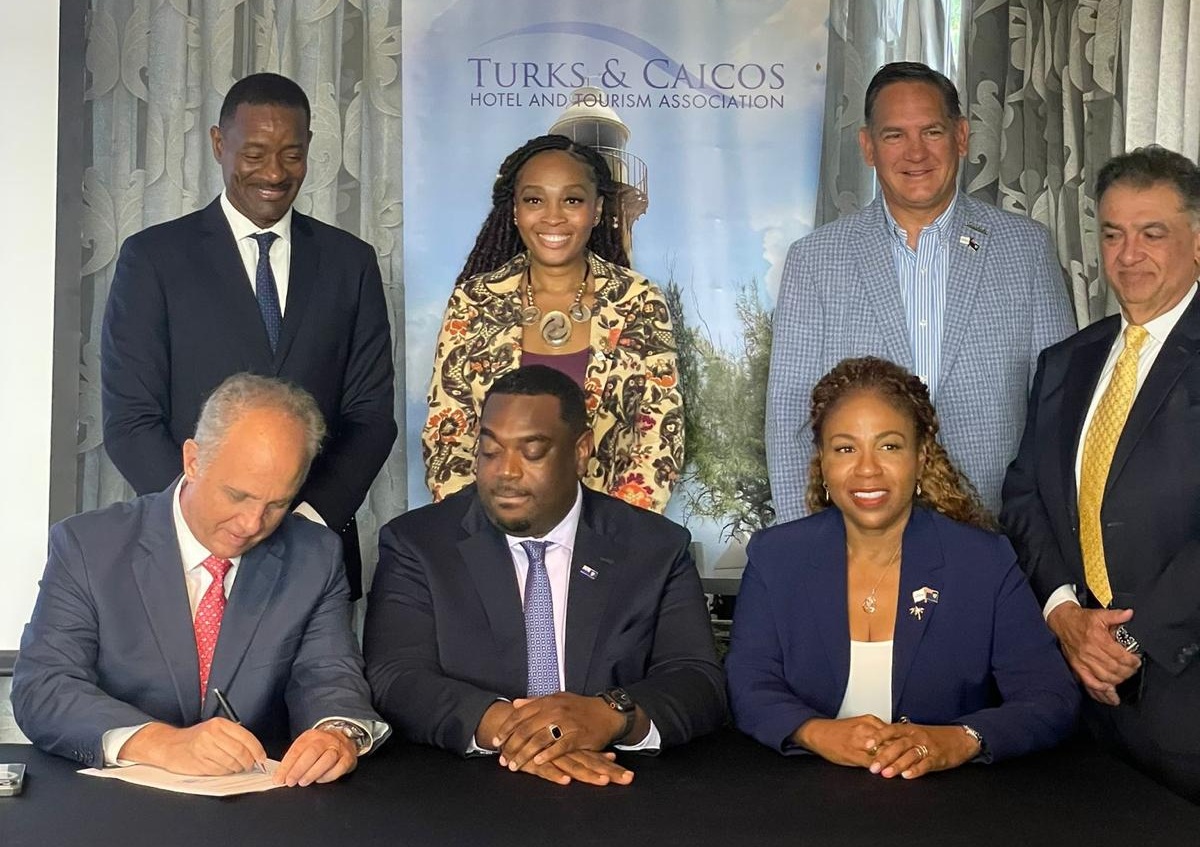
Providenciales, Turks and Caicos Islands, June 30, 2026 – The Turks & Caicos Hotel and Tourism Association (TCHTA) has secured a landmark partnership with Caribbean Health Insurance (CHI), a product of Bee Insurance Corp, giving tourism businesses across the destination access to health coverage of up to USD 500,000 per employee.
The official signing ceremony, hosted by Beaches Turks and Caicos, capped months of work led by the TCHTA Membership Committee to identify a reputable provider capable of helping to fill a critical coverage gap in the hospitality sector.
The launch also marks a timely and significant private-sector solution to a growing healthcare coverage concern following the Government’s recent announcement that work permit holders would no longer have access to the NHIB Treatment Abroad Program – a change that left many employees across the tourism sector, and beyond it, without the usual pathway to specialized medical care outside the Turks and Caicos Islands.
TCHTA President James McAnally said the agreement is a critical step in supporting the people who power the country’s leading industry.
“Our industry depends on people, and when something as important as access to care is affected, we have a responsibility to seek practical solutions,” said McAnally. “This partnership with Caribbean Health Insurance gives our members a comprehensive and affordable option for their teams. It is also an example of the role the TCHTA plays in advocating, responding, and creating avenues that support the sustainability of our sector.”
The Caribbean Health Insurance plan offers two tiers, CORAL and PEARL Elite, providing coverage of USD 300,000 and USD 500,000 respectively, with the PEARL plan including air ambulance service. Both grant policyholders access to a growing network of hospitals and specialists in the Dominican Republic and Colombia, with Jamaica expected to join the network later this year. Coverage includes telemedicine, bilingual patient support, and features a zero-deductible structure.
“We have developed Caribbean Health Insurance specifically for our region. At Caribbean Health Holdings, we are deeply committed to supporting the people and businesses of the Turks and Caicos Islands by expanding access to high-quality and affordable healthcare solutions,” said Sergio Madinabeitia Arango, Executive Director of CHI.
“Our medical network connects members to trusted centers of medical excellence across the Caribbean and Latin America, including leading providers in the Dominican Republic, Colombia, Jamaica, and we keep expanding. This regional approach ensures that world-class care is more accessible, more efficient, and closer to home.”
On the partnership with the TCHTA, Arango shared, “Our partnership with the TCHTA represents an important step in advancing health security for one of the country’s most vital industries. Together, we are helping create stronger healthcare access for employers, employees, and their families, while supporting the long-term wellbeing of the Turks and Caicos community.”
The initiative was spearheaded by the TCHTA Membership Committee, chaired by Snjezana Andrews. Ahead of the signing, the Committee hosted a public virtual presentation, connecting employers and employees to CHI representatives to learn more about the coverage options, ask questions, and better understand the enrollment process.
“This initiative speaks directly to the purpose of the Membership Committee,” said Andrews. “Our role is to listen to our members, understand where the gaps exist, and help identify practical solutions that bring real value. We are proud to offer members an option that responds to a clear need and allows them to better support their teams.”
In 2025, the Membership Committee identified health insurance options as a priority member benefit and key goal for the Association’s current term, noting that smaller tourism providers were often challenged to access traditional group coverage on their own. The Government’s announcement regarding changes to treatment abroad access added urgency to that work and broadened its relevance across the sector.
Andrews says the partnership is not just a win for TCHTA members, but for any organization in the Turks and Caicos Islands that values its employees and wants to strengthen the benefits available to them, adding, “In a competitive labour market, access to meaningful health coverage is key to attracting, supporting, and retaining good talent.”
Honourable Kyle Knowles, Minister of Health and Human Services, attended the signing ceremony and welcomed the opportunity for continued collaboration around healthcare access and coverage options for residents and workers in the Turks and Caicos Islands.
“This new program provides an additional layer of security for employees in the tourism and hospitality sector by expanding access to private health insurance coverage, including the opportunity for eligible migrant workers and their families to access overseas medical treatment when needed. That is a powerful and compassionate development. It recognizes that while our local healthcare system offers quality care and continues to improve, there are times when specialized treatment abroad may be necessary.
This initiative is a significant advancement that complements the healthcare services already available locally, while strengthening the safety net for those who serve in one of our most vital economic sectors. It reflects a practical and forward-looking approach to expanding healthcare access, enhancing employee welfare, and supporting the long-term sustainability of our tourism and hospitality industry.”
As part of its commitment to the Turks and Caicos Islands, Caribbean Health Insurance will establish a local office at The Hub in Grace Bay. Led by veteran local insurance executive Craig Archibald, the office will provide the public with an in-country point of contact for information, assistance and service.
The TCHTA also confirmed that a second coverage option, offering access to care within the United States, is being finalized with local provider, CSC Insurance Brokers Ltd. Further details will be shared once that agreement is complete.
“This is bigger than a single agreement. It’s about making sure our members and their teams have real options when it comes to something as fundamental as healthcare,” said Stacy Cox, TCHTA CEO. “We encourage every local organization, member or not, to reach out and explore what this partnership can offer their teams and families.”
Interested businesses can contact the Turks & Caicos Hotel and Tourism Association at info@turksandcaicoshta.com or 649.332.5787 to learn more about TCHTA membership and the CHI health insurance option.

PROVIDENCIALES, Turks and Caicos Islands — When the need arose to protect hundreds—more likely thousands—of the workers who power the Turks and Caicos Islands’ leading industry, the Turks and Caicos Hotel and Tourism Association (TCHTA) again demonstrated that its role extends well beyond promoting tourism or enhancing the visitor experience. It is also about advocating for, and responding to, the needs of the people behind the industry.
Four months after the Turks and Caicos Islands Government revised eligibility for the Overseas Medical Treatment Programme, leaving work permit holders outside the publicly funded treatment abroad system, the Association has stepped in with a solution —a practical alternative that restores access to overseas medical care.
The Government announced in February that only Turks and Caicos Islands British Overseas Territory Citizens and Status Card holders residing in the territory would remain eligible for Government-funded overseas treatment. At the time, officials also said continued investments in specialist services, diagnostic capacity and clinical infrastructure would reduce the need for overseas referrals and improve access to care at home.
Recognizing the implications of the policy change for tourism employers and employees alike, the TCHTA spent months working to secure another pathway to overseas medical care. In a media release, which Magnetic Media has published in full, the Association announced the commendable remedy.
We know that those efforts culminated last week in a landmark partnership with Caribbean Health Insurance (CHI), providing member businesses with two coverage options—CORAL, offering benefits of up to US$300,000, and PEARL Elite, providing up to US$500,000, including air ambulance services. A signing ceremony was held at Beaches Turks and Caicos Resort.
The plans connect employees with hospitals and specialists in the Dominican Republic and Colombia, with Jamaica expected to join the provider network later this year.
The Association says its work is not finished. A second insurance partnership with CSC Insurance Brokers Ltd. is nearing completion and will give participating employers and employees access to healthcare providers in the United States.
For an industry built on people, the initiative represents far more than another insurance product. It restores a pathway to overseas medical care for a workforce whose access to Government-funded treatment abroad changed earlier this year, reinforcing the TCHTA’s reputation for finding practical solutions when its members need them most.





-

 Africa6 days ago
Bahamas’ Ghana Teacher Plan Draws Fire as Both Nations Face Shortages
-

 News6 days ago
Ministry of Health Welcomes Appointment of New NHIB Chief Executive Officer and Highlights Progress of Organisational Transformation
-

 News7 days ago
Government Takes Case to Washington After U.S. Keeps TCI at Level 2
-

 News6 days ago
Invest TCI Supports Certification of Local Flats Fishing Guides Through MSME Technical Assistance Under Historic TCFFA–TCICC Partnership
-

 News6 days ago
DDME’s Hurricane Hunt Scavenger Hunt Sparks Community Spirit and Storm Preparedness in Providenciales
-

 News6 days ago
PDM Alleges Governor ‘Bias’, Opposes One-Year Extension
-

 Bahamas News6 days ago
What 45 Shell Casings and New Murder Charges May Mean for Three Officers in the Azario Major Case
-

 Bahamas News6 days ago
CARICOM Targets Affordability as Bahamas, TCI Continue to Feel the Pinch