
Bahamas News
US VP Kamala Harris and PM Davis Co-Host US-Caribbean Leaders Meeting, in The Bahamas

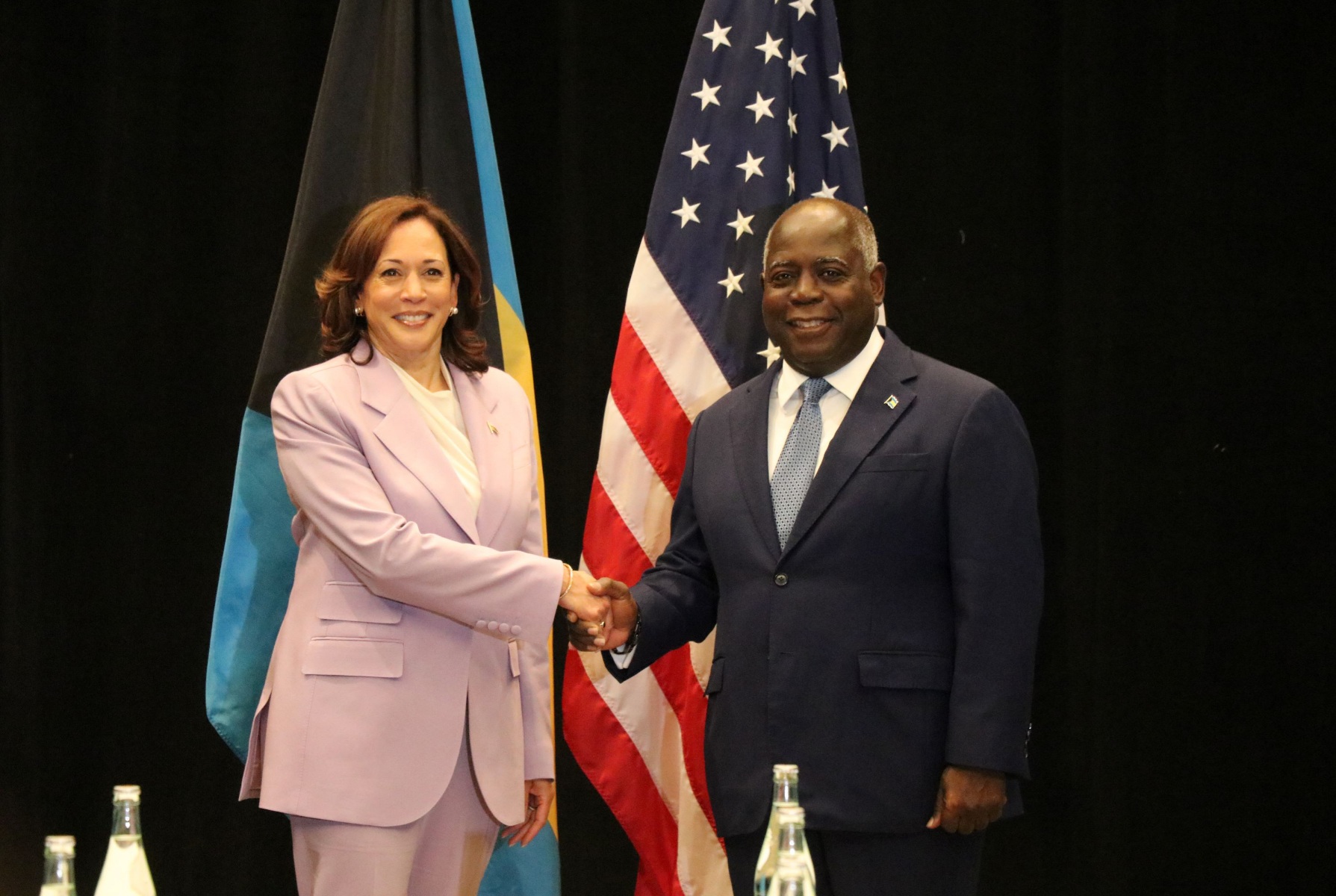
NASSAU, The Bahamas — Vice-President of the United States Kamala Harris arrived in The Bahamas on Air Force 2, landing at Odyssey Aviation, on June 8, 2023. She became the highest-ranking sitting US official to visit The Bahamas, since its Independence in 1973. Vice-President Harris joined Prime Minister and Minister Finance the Hon. Philip Davis in co-hosting the US-Caribbean Leaders Meeting, which was held at Atlantis Resort, Paradise Island, Thursday.
Among those there to greet her upon her arrival were Minister of Foreign Affairs and the Public Service the Hon. Frederick Mitchell; Minister of Education and Technical & Vocational Training the Hon. Glenys Hanna-Martin; Minister of State for the Public Service the Hon. Pia Glover-Rolle; US Charge d’Affaires, a.i., Ms. Usha E. Pitts; senior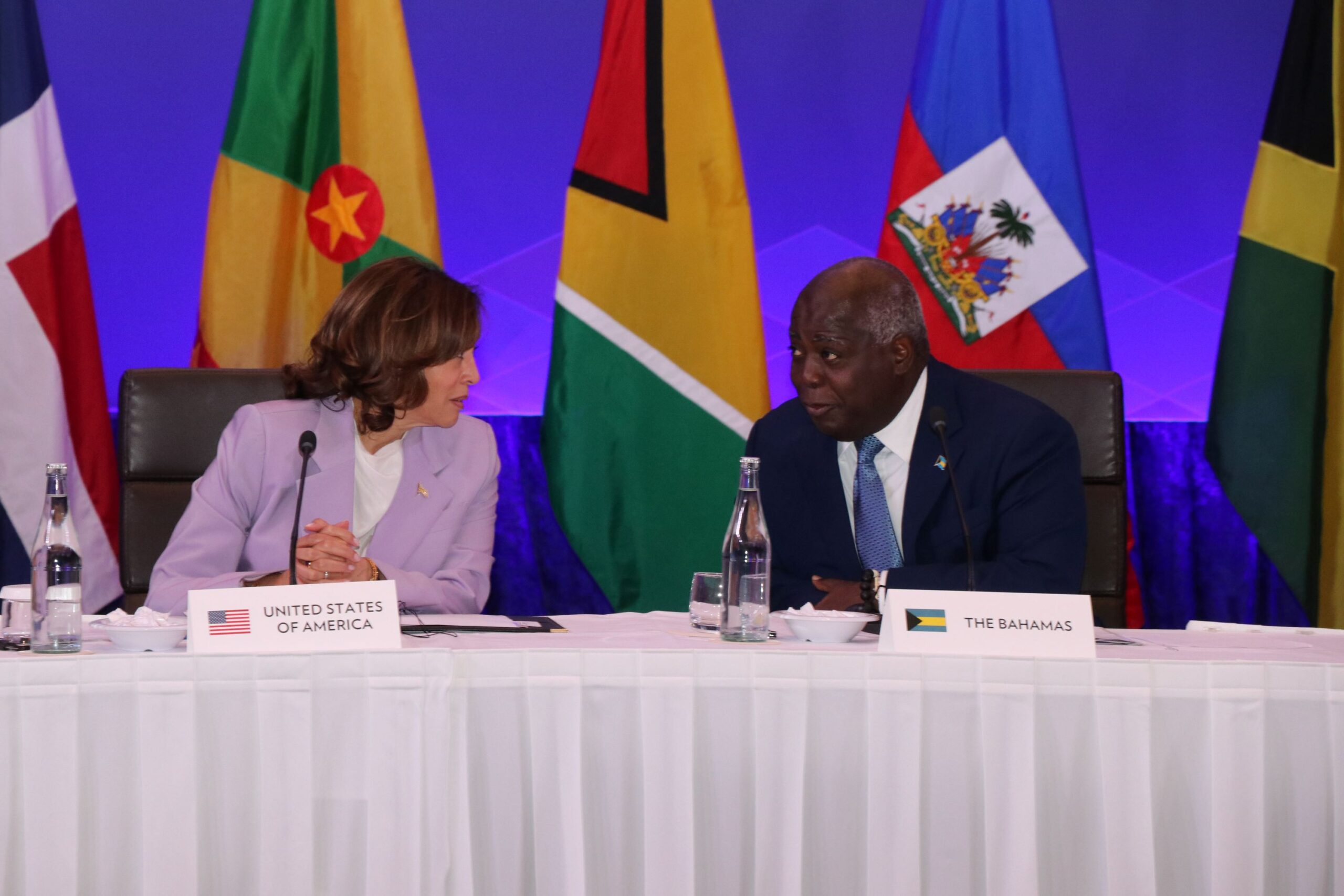 representatives of the Royal Bahamas Police and Defence Forces and a combined forces Colour Guard; special invited guests; civic and social group representatives; local members of her Alpha Kappa Alpha sorority family; and students from a number of public and private schools.
As her convoy made its way to Paradise Island, scores of onlookers – many of them tourists who were on vacation – cheered and waved, many with cellphones in hand to capture a glimpse of the historic visit.
Before the US-Caribbean Leaders Meeting, Prime Minister Davis greeted Vice-President Harris and they were the leads in a Bilateral Meeting. Also present for that meeting were various Cabinet Ministers.
According to the Office of the Prime Minister’s social media pages, both nations reaffirmed their commitment to fortify connections and address important regional concerns by building on their prior engagements. Their dialogue also reportedly paved the way for a successful summit, later that day, with a focus on attaining goals for sustainable development and climate resilience. Topics that were discussed, according to the Prime Minister’s social media pages, were collaboration and progress on climate change, regional security, and economic development.
After the Bilateral meeting, they took part in the multilateral US-Caribbean Leaders Meeting. During his Public Opening Statement to the Press, Prime Minister Davis welcomed visiting “friends and colleagues” to The Bahamas.
“Today, we are very pleased to welcome Vice-President Harris to join our Caribbean nations,” Prime Minister Davis said. “Madam Vice-President: I believe we all feel and appreciate the depth and sincerity of your commitment to the region and to our people. We will make the most of our time together, I’m sure.
“Indeed, our discussions will cover a broad range of issues: Energy and Food Security, Climate Resilience, Development Finance and Economic Opportunity, and Regional Co-operation and Security,” he added. “The agenda is ambitious – reflecting the urgency of addressing these challenges, and the real opportunity we see to make progress.”
Prime Minister Davis pointed out that they were not “starting anew”; but were building on the work and dialogue of June 2022’s Summit of the Americas, in Los Angeles, and in regional meetings held since.
“Coming together here in The Bahamas, let us seize the moment — to accelerate and deepen our engagement, and to work together to produce tangible outcomes,” he said.
“Madam Vice-President: it has been many years since we had an official visit from a President or Vice-President of The United States,” Prime Minister Davis added. “You hosted us very graciously at the White House earlier this year, and today I have the honour of extending to you our warmest welcome.
“We look forward to working together in close partnership to build solutions and a better way forward for us all.”
During her remarks, Vice-President Harris congratulated The Bahamas and CARICOM on their respective 50th anniversaries.
She also pointed out that as neighbors, the United States shared common bonds and interests with the Caribbean nations. She added that the partnership, was essential to “our mutual security and prosperity.”
“Our nations have extensive people-to-people ties,” Vice-President Harris said. “In fact, in the United States this month, we celebrate Caribbean American Heritage Month.”
She added: “Strengthening the U.S.-Caribbean relationship is a priority for me, as it is for President Joe Biden. And these meetings have proven — I believe, at a leader level, have proven to be very important and essential to the strength of these relationships.”
Vice-President Harris noted that, regarding the “existential threat” of the climate crisis, Caribbean nations were on the front lines. She pointed out that the US and regional leaders had discussed, for example, powerful storms that can wipe out economic progress; low-lying islands that face erosion, flooding, and deadly storm surge from rising seas.
“These discussions resulted in the launch of our U.S.-Caribbean Partnership to Address the Climate Crisis — or, as we call it, PACC 2030 — last year at the Summit of the Americas,” she noted. “PACC 2030 is designed to help accelerate the Caribbean’s transition to clean energy and to promote energy security and climate resilience.”
Vice-President Harris stated that, since they last met in Los Angeles in 2022, the United States had helped to facilitate clean energy projects throughout the region.
She said: “I’ll offer some examples: in St. Lucia, the work that we have done thus far to deploy solar microgrids to power schools, hospitals, and water treatment plants; Dominica and St. Kitts, to develop commercial geothermal power projects; Antigua and Barbuda, to train a clean energy workforce; and the Dominican Republic, to integrate battery storage in their energy grid.”
“Our work together has also helped build capacity for disaster preparedness,” she added. “For example, the administrator of NOAA led a group of U.S. experts to Barbados to support regional resilience, including early warning systems and sharing climate information with communities.”
Vice President Harris said that they established a network of Caribbean-based scientific experts to create new climate mitigation and adaptation methods; and in Jamaica, they are helping develop a national emergency commercial infrastructure and communications infrastructure.
“Since we last met, we have also worked to bring investors to the Caribbean to identify new opportunities for clean energy infrastructure, including through trade missions,” she said. “We have provided $28 million in food security assistance. And we have invested in the Blue-Green Investment Corporation, spearheaded by Barbados, which we expect to unlock up to $210 million over three years.”
Vice-President Harris pointed out that it was her pleasure to announce additional PACC 2030 investments.
She said: “One, specifically, a $20 million investment in the Caribbean Climate Investment Program to help incentivize the private sector to partner with Caribbean nations to develop more clean energy technologies, like microgrids and energy storage systems, and to help businesses become more energy efficient in their operations.”
“And, second, a $15 million investment to support emergency response efforts and strengthen the capacity of the Caribbean Disaster Emergency Management Agency,” she added. “This investment is intended to help develop new early warning systems and pre-position first aid equipment and generators.”
“As a follow-up to this convening, in fact, tomorrow the Atlantic Council and RMI are hosting a PACC 2030 summit here in Nassau,” Vice-President Harris announced. “There, we will work with these and other organizations to facilitate connections between the United States government, the private sector, NGOs, and philanthropic organizations, and officials here in the Caribbean to identify, build, and operate new clean energy projects.”
She noted that another key area of the United States’ work with the Caribbean, through PACC 2030, was to increase access to development financing. She added that, to that end, she met with the new President of the World Bank, Ajay Banga, earlier that week, and informed him that the United States will lead a diplomatic campaign on multilateral development bank reform.
“My conversations with the leaders at this table helped inform our administration’s approach,” she revealed. “We seek more available and — availability of low-cost concessional financing to nations in the Caribbean. And we believe addressing the climate crisis should be a critical part of the mission of the World Bank.
“More broadly, new debt must include disaster clauses to allow a pause on debt payments immediately following a natural disaster.”
Vice-President Harris pointed out that they wanted the bank to better mobilize the private sector in support of those goals.
“Implementation of these reforms will have a major impact on countries in the Caribbean, and we aim to achieve these key reforms by the G20 meeting this fall,” she said.
“At my invitation, President Banga will join our meeting today virtually in just a few minutes.”
Vice-President Harris said that, on the issue of security, too many people in all of their countries were dying from gun violence.
“I will reiterate that our administration is committed to disrupt gun trafficking,” she said. “We are committed to interdict shipments of arms and ammunition and hold traffickers accountable.”
“And today, I am pleased to announce that the United States Department of Justice will create a new position, a Coordinator for Caribbean Firearms Prosecutions, which will help maximize information sharing between our countries to support the prosecution of traffickers,” Vice-President Harris shared.
“This effort will be aided by the bipartisan Safer Communities Act, which President Biden signed last year, and includes new federal criminal offenses for firearms trafficking and straw purchases,” she added.
Vice-President Harris noted that, in addition, through the U.S. law enforcement agencies, they were supporting a recently established Caribbean Crime Gun Intelligence Unit in Trinidad and Tobago to train officials in firearms investigations and help bring criminals to justice.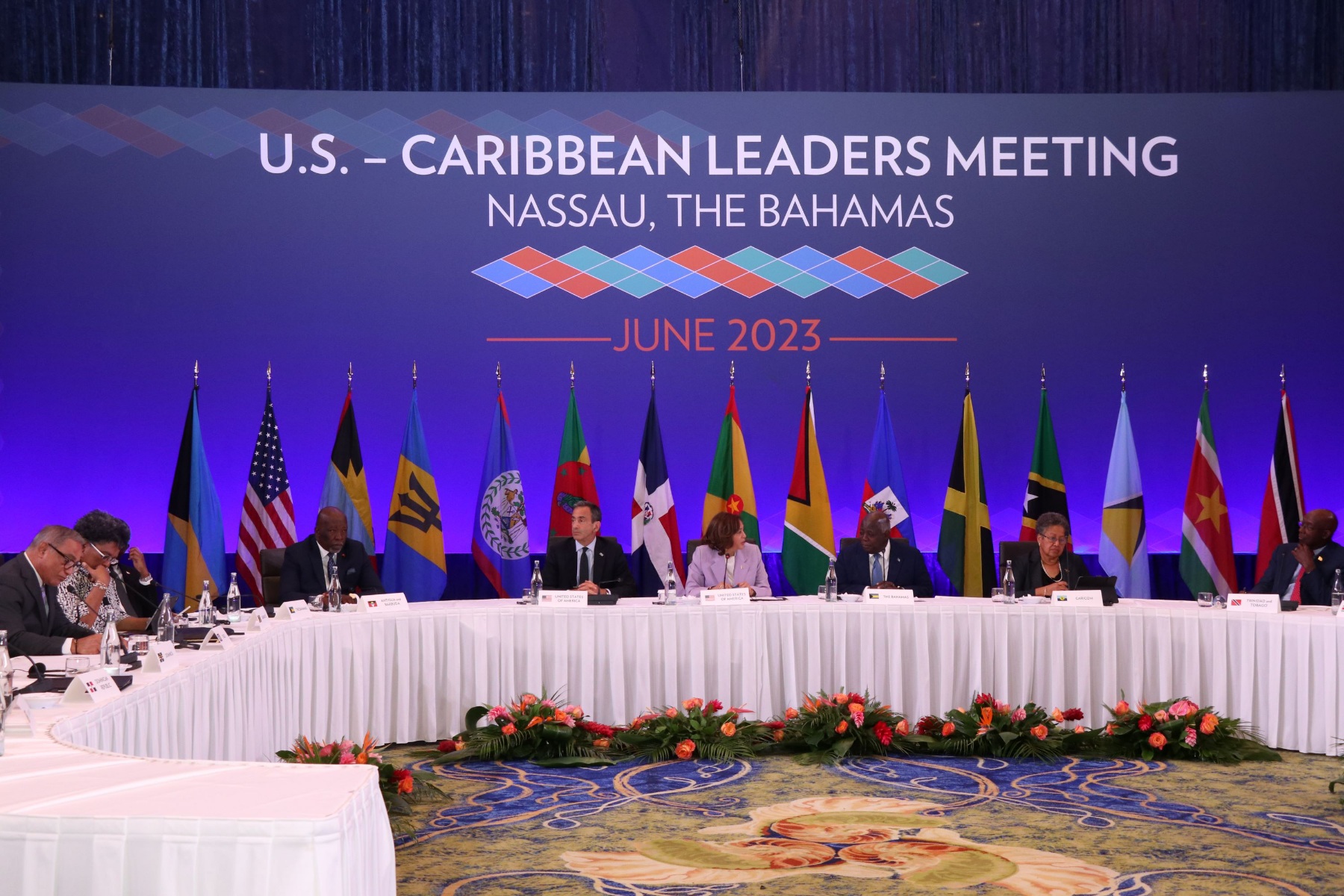
“And we will stand up a Haiti Transnational Criminal Investigative Unit in collaboration with the Haitian National Police to facilitate investigation and prosecution of firearms and human trafficking, which affects the entire region,” she said.
“More broadly on the issue of Haiti: First, I will say that our hearts go out to those who have lost loved ones and all who have been impacted by, just this week alone, the flooding and the earthquake,” she added. “The international community must continue to support the Haitian people in light of the devastating humanitarian and security crisis in that country.”
Vice-President Harris stated that the United States supported the development of a multinational force to Haiti.
“And today I’m pleased to announce $53.7 million in new humanitarian aid for Haiti,” she added. “In addition, our administration will support the extension of HOPE-HELP trade preferences for Haiti, which are due for renewal in 2025.”
Vice-President Harris noted that, in response to “longstanding requests from our Caribbean partners”, she was pleased to announce that the Biden-Harris administration had begun to process to establish an expanded diplomatic presence in the Eastern Caribbean, including two new embassies.
She said: “In conclusion: From the climate crisis, to development financing, to security, and Haiti and diplomatic presence, we have achieved substantial progress in the last two years based on shared priorities, many of which have been formed and discussed through these convenings that we have had over the last two years.”
“We are neighbors in the Western Hemisphere,” Vice-President Harris noted. “And the security and prosperity of this region requires the type of collaboration and partnership that we have developed and continued to grow over the last two years.
“It is the full intention of our administration and the United States to continue this good work, knowing, of course, there is more to do but that progress has been made. And so, again, I thank the leaders at this table and, Mr. Prime Minister, you, again, for hosting us.”
After the Multilateral Meeting, Vice-President Harris left Paradise Island, her convoy passing more waving onlookers – and rush-hour traffic – before being greeted back at Odyssey Aviation by the Colour Guard. Minister Mitchell, Ms. Usha Pitts, representative heads of the Royal Bahamas Defence and Police Forces, and members of local US Embassy bade her farewell.
As she waved from the top of the stairs, she appeared to pause a little, to catch a glimpse of the setting sun, before she entered Air Force 2.
(BIS Photos/Eric Rose)

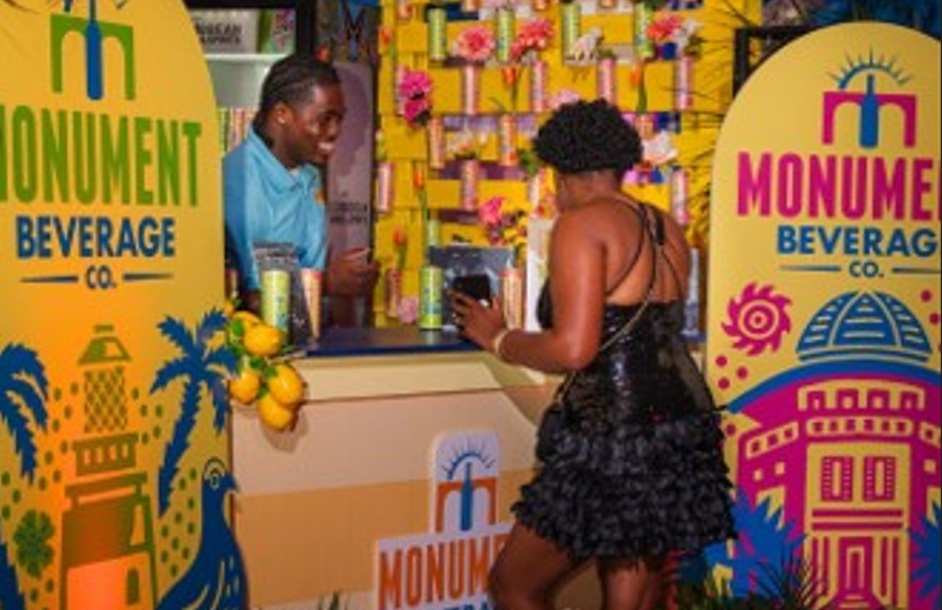
NASSAU, Bahamas — Caribbean Wines & Spirits (CWS), The Bahamas’ leading wine and spirits distributor, proudly supported Paradise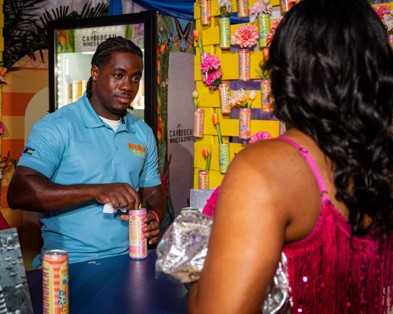 Plates, Hands for Hunger annual fundraiser with a flavorful offering of its newest product, Monument Beverage Co.
Monument, which launched this July and is available across six major islands, made its Paradise Plates debut. Guests enjoyed three bold flavors: Peach Passion, Ginger-Lime and Melon Fizz as they socialized throughout the evening.
Monument brand ambassadors engaged guests with knowledge on the ready-to-drink beverage’s unique taste and look. Many attendees were delighted to learn that Monument is 100% Bahamian-made and owned and enjoyed seeing the various national landmarks on the packaging.
The booth was adorned with vibrant brand colors, striped arches, tropical florals and a photo worthy backdrop featuring Monument cans filled with florals cascading down the wall.
At the end of the event, the entire Monument inventory had finished, making Monument’s Paradise Plates debut a huge success.
For more details on Caribbean Wines & Spirits, new products and specials, visit www.cwsbahamas.com today.
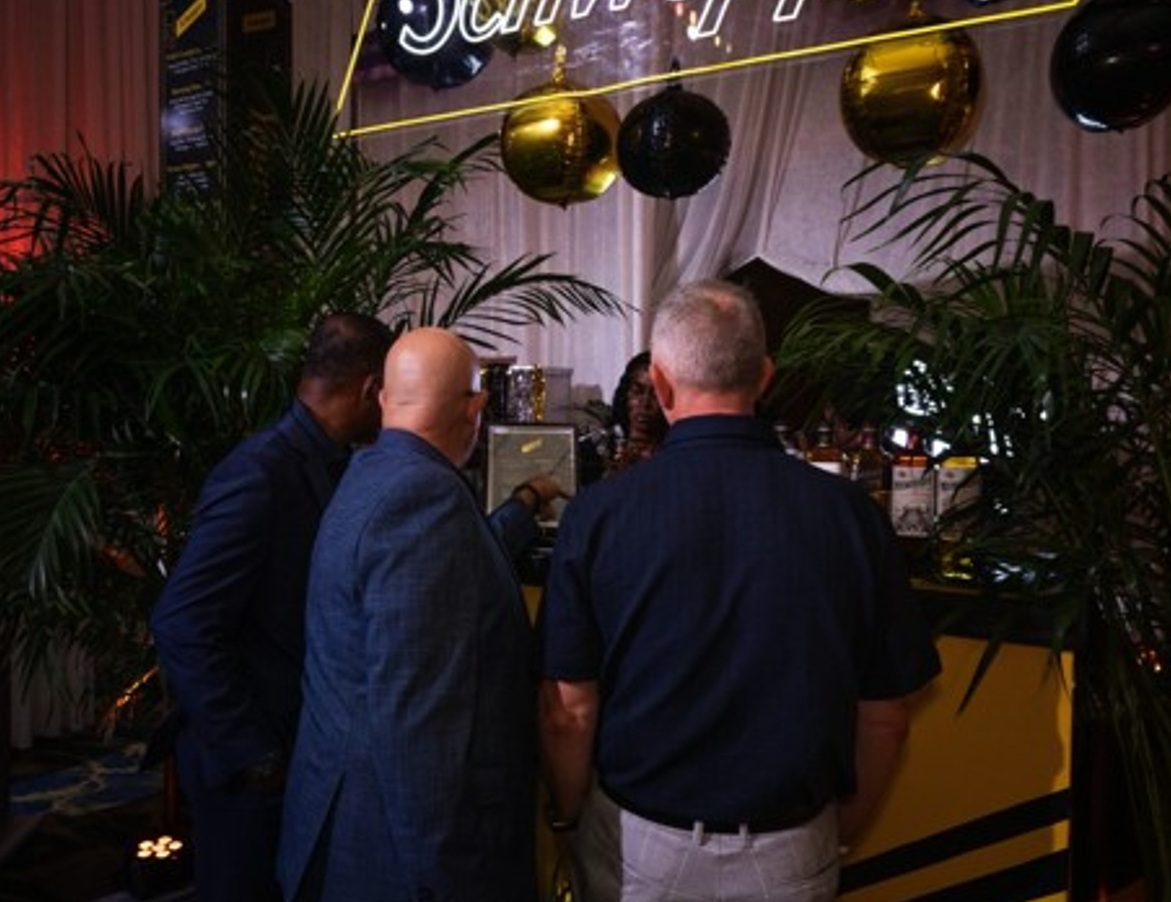
NASSAU, Bahamas — Schweppes, in collaboration with Nemiroff Vodka dazzled guests with handcrafted cocktails during Paradise Plates, Hands for Hunger’s annual fundraiser held at Atlantis’ Imperial Ballroom.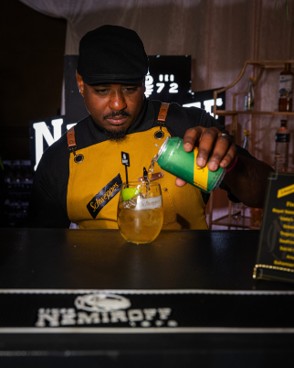
The evenings’ theme, 70’s: Paradise Disco, inspired bold and delicious sips from Schweppes and Nemiroff. The beautiful disco themed Schweppes booth, adorned with LED signs, lush greenery and hanging black and gold metallic orbs shined throughout the room.
Schweppes’ brand representatives and mixologists dressed in chic 70’s speakeasy attire engaged attendees throughout the night. Guests enjoyed receiving knowledge of each product and experiencing the vibrant energy of brand representatives.
Nemiroff Vodka, which is locally distributed by Caribbean Wines and Spirits (CWS), The Bahamas’ premier wines and spirits distributor; offered a unique variety of vodkas which made the perfect blend with Schweppes. Guests enjoyed, Nemiroff’s Honey Pepper, De Luxe, Burning Pear, Wild Cranberry, and Bold Orange vodkas throughout the night.
Fan favorite cocktails of the night were: the Wild Cranberry Tonic and the Bold Orange Fizz.
Following a positive response at Paradise Plates, CWS is offering Nemiroff and Schweppes specials at local liquor stores for the entire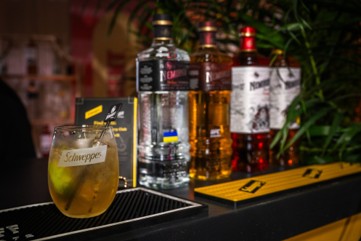 month. With the purchase of any 1-liter Nemiroff vodka, enjoy a complimentary three-pack of Schweppes mixers, to recreate the magic of Schweppes and Nemiroff.
Cara Douglas-Adderley, Senior Marketing Director for Caribbean Bottling (CBC), local producers and distributors of Coca-Cola and Dasani products and CWS shared the inspiration behind the Schweppes and Nemiroff promotion.
“We are thrilled to have paired Schweppes and Nemiroff for Paradise Plates this year, creating a premium cocktail experience for guests. After receiving such positive feedback, we wanted to extend that experience to consumers at home. Throughout October, consumers can visit their favorite watering hole, buy any 1-liter Nemiroff bottle and receive a free three-pack of Schweppes.”
Caribbean Bottling Company is proud to offer Schweppes, Coca-Cola’s premier mixer in collaboration with Caribbean Wines & Spirits and Nemiroff Vodka at Paradise Plates in support of Hands for Hunger’s mission.
For more information on CBC’s philanthropic work, new products and specials, visits www.cbcbahamas.com today.
Bahamas News
Two Months On, The Bahamas Academy of Sciences Turns Fifty Years of Research into Action
First peer-reviewed paper published, policy brief delivered to Minister Lightbourne, a seat at Climate Week, and a growing public audience for Bahamian science
NASSAU, The Bahamas, 7 October 2026 — Two months after putting fifty years of research on The Bahamas “on the record” at its first public event in July, The Bahamas Academy of Sciences (BAS) has been turning that evidence into action.
Since July, the Academy has published its first peer-reviewed paper, presented its findings to Government through a policy brief, taken Bahamian science to Climate Week in Nassau and New York, and launched a growing public conversation in which Bahamians can ask scientists questions and get answers. The Academy’s new policy brief, “Prioritising National Research Needs for The Bahamas,” is attached to this release.
“In July we said the record was open. Since then, we have been working to put it to use,” said BAS President Dr. Krista Sherman. “Fifty years of research revealed where The Bahamas is strong and where the gaps are: water, food, energy, long-term monitoring. Our job as the national academy is to share that evidence with the decision-makers and the public they serve, and to build the Bahamian research capacity to fill those gaps.”
THE RECORD, NOW PEER-REVIEWED AND PUBLIC
The Academy’s first publication, “Fifty Years of Research in The Commonwealth of The Bahamas: A Quantitative Thematic Analysis of Scholarly Output,” is now published in the international journal Gulf and Caribbean Research. Led by Dr. Amina Moss (University of Stirling) with BAS members Dr.
Krista Sherman, Dr. Williamson Gustave, Dr. Kathleen Sullivan Sealey, Dr. Charlotte Dunn, Dr. Nicola Smith, Lindy Knowles and Dr. Christy Gibson, the study analyses 12,113 scholarly records published about The Bahamas between 1975 and 2025.
It shows a rich scientific legacy, particularly in geology, fisheries, oceanography and conservation, while also highlighting persistent gaps in areas of direct national importance: groundwater resources, food systems, renewable energy, social-ecological governance and locally led, long-term monitoring. The full paper is free to read at https://doi.org/10.18785/gcr.3701.15.
FROM THE RECORD TO POLICY
Building on this research, BAS has prepared a policy brief, “Prioritising National Research Needs for The Bahamas,” which translates the findings into a set of ten strategic priorities.
The policy brief calls for greater investment in locally led, policy-aligned and climate-ready research, including:
- a national research agenda aligned with Vision 2040;
- stronger local scientific capacity, laboratories and field stations;
- rebuilt long-term monitoring of reefs, fisheries, coasts and mangroves;
- targeted research on groundwater, food systems and renewable energy;
- a national environmental and health data repository; and public health research on the risks facing small island states.
In September, Dr. Sherman presented the brief to the Hon. Zane Lightbourne, Minister of the Environment and Natural Resources, during a courtesy call. The visit is the first in a series of introductory meetings with Government ministries over the coming months. Through these meetings, the Academy will introduce its work and explore opportunities for collaboration in science, the environment, sustainability, conservation and climate resilience. The policy brief also maps research priorities to relevant national legislation and policies, from the Environmental Planning and Protection Act to the National Health Strategy 2026–2030.
BAHAMIAN SCIENCE AT CLIMATE WEEK, FROM NASSAU TO NEW YORK
BAS also brought Bahamian scientific expertise to Climate Week 2026.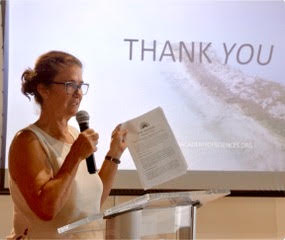
On Monday, 21 September, BAS Board member Dr. Kathleen Sullivan Sealey, Professor Emerita at the University of Miami, presented “Coasts and Climate Change” at the opening day of Climate Week in The Bahamas, hosted by the Baha Mar Resort Foundation at ECCHO, under the theme “At the Edge of the Water.” Dr. Sullivan Sealey explained why The Bahamas’ low-lying carbonate islands face growing risk from sea-level rise and storms, and how historical losses of coral reefs, seagrass, mangroves and dunes have weakened the islands’ natural defences. More importantly, she highlighted actions communities can take to reduce these risks.
During Climate Week, the Academy also released a science statement, “Climate Change and Ocean Warming Impacts on The Bahamas: What Does the Science Tell Us?”, a synthesis of the environmental, ecological, social and economic impacts facing the archipelago.
In New York, BAS Vice President Dr. Adelle Thomas, Vice-Chair of Working Group II of the Intergovernmental Panel on Climate Change (IPCC), brought the realities of vulnerable small island states to Climate Week NYC.
A GROWING PUBLIC AUDIENCE FOR BAHAMIAN SCIENCE
The Academy’s public campaign, 242 #ForTheRecord, has also been building a presence across its five platforms since launching in mid-July. Its most successful format has been the simplest: Bahamians ask a question and a BAS scientist answers it. So far, the “You Ask/Science Responds” series has tackled questions on how climate change will affect Bahamian farming (Dr. Williamson Gustave) and the science of blue holes (Dr. Krista Sherman). An upcoming episode will examine the effects of high temperatures on public health. Question-led content is reaching roughly twice the audience of the Academy’s institutional posts. During its first month, the campaign generated more than 18,500 views and over 200 shares across its platforms.
To extend the conversations to more Bahamians, beyond the traditional science-curious audiences,
BAS has also formalised collaborations with two local content creators, Kaché Knowles (“I is a Bahamian Bey”) and Stephen Hanna (“Schin Nguyen”). Their first joint pieces will appear before the campaign closes on 30 November.
WHAT COMES NEXT
For BAS, putting the record to work is only the beginning. Over the coming months, the Academy will:
- continue introductory meetings with Government ministries and agencies;
- host its Future Scientists classroom event with Bahamian students in early November;
- launch its YouTube channel with a video-podcast series on Bahamian scientists in November;
- begin work on its second peer-reviewed publication, “A Horizon Scan on Emerging Environmental Issues in The Bahamas Over the Next Decade”; and
- offer “Introduction to Statistics using Excel,” a short, practical course in early 2027 that will give early-career scientists and resource managers in The Bahamas hands-on skills in organising, analysing and summarising their own data.
“Research is most valuable when it can be used,” said Dr. Sherman. “The Bahamas has an extraordinary scientific record. Now we need to ensure that record informs the questions we ask, the decisions we make, and the science we build here at home.”
See BAS Climate Statement and BAS Policy Briefing 50 Years of Bahamian Research here: BAS Climate Statement,
BAS Policy Briefing_50 Years of Bahamian Research
PHOTO CAPTIONS:
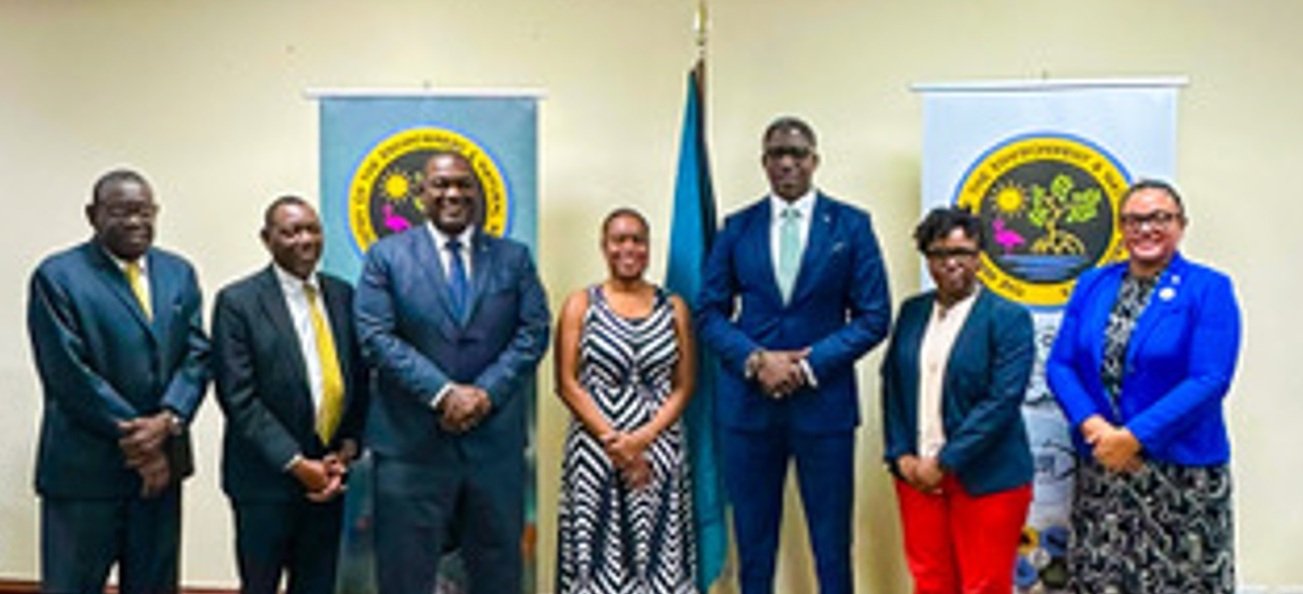
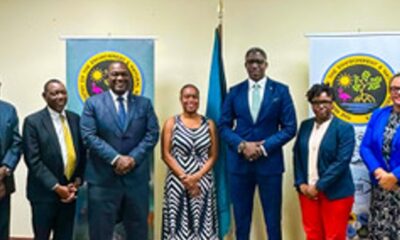
Header: BAS President Dr. Krista Sherman met the Minister of the Environment and Natural Resources and his team on 17 September 2026. L–R: Mr. David Davis, Permanent Secretary; Mr. Ricardo Deveaux, Acting Under Secretary; The Hon. S. Obie Roberts, Parliamentary Secretary; Dr. Krista Sherman, BAS President; The Hon. Zane Lightbourne, Minister; Dr. Rhianna Neely-Murphy, Director, Department of Environmental Planning and Protection; Ms. Danielle Hanek, Acting Director, Forestry Unit.
Credit: Ministry of Environment and Natural Resources.
Insert: Kathleen Sullivan Sealey, BAS Board member, presents the Academy’s science statement at Climate Week in The Bahamas, ECCHO, 21 September 2026.
Credit: Amaeleo Carey.
PRESS RELEASE: BAS





-
 News1 week ago
Beaches Turks & Caicos strengthens year-round commitment with local craft vendors and transport operators
-
 News6 days ago
Beaches Turks & Caicos gives Enid Capron Primary a pre-term facelift
-
 Independent writer3 days ago
Born Here, Raised Here, but Still Unable to Vote: Is this a Conundrum for TCI Electorate?
-
 News7 days ago
Stakeholders Strengthen Collaboration on Housing and Informal Settlements at World Habitat Day Roundtable
-
 Bahamas News1 week ago
Two Months On, The Bahamas Academy of Sciences Turns Fifty Years of Research into Action
-

 Bahamas News2 days ago
Monument Supports Hands for Hunger With Paradise Plates Debut
-

 Education7 days ago
TCICC Earns International Recognition at Ignition Community Conference 2026
-

 Bahamas News3 days ago
Schweppes ‘the Art of Mixology’ Dazzles at Paradise Plates with Nemiroff Vodka