
Bahamas News
Prince Edward, Countess Sophie Get Royal Send-off with 300+ GGYA Participants, Music and More at Maillis Campgrounds, Adelaide

#TheBahamas, March 7, 2023 – In a historic farm and cottage setting by the seaside, Royal visitors Their Royal Highnesses, The Earl and Countess of Wessex and Forfar, got a downhome taste of The Bahamas when more than 300 young people rallied round to say thank you for coming to our country and thank you for caring about our programme, the Governor General’s Youth Award.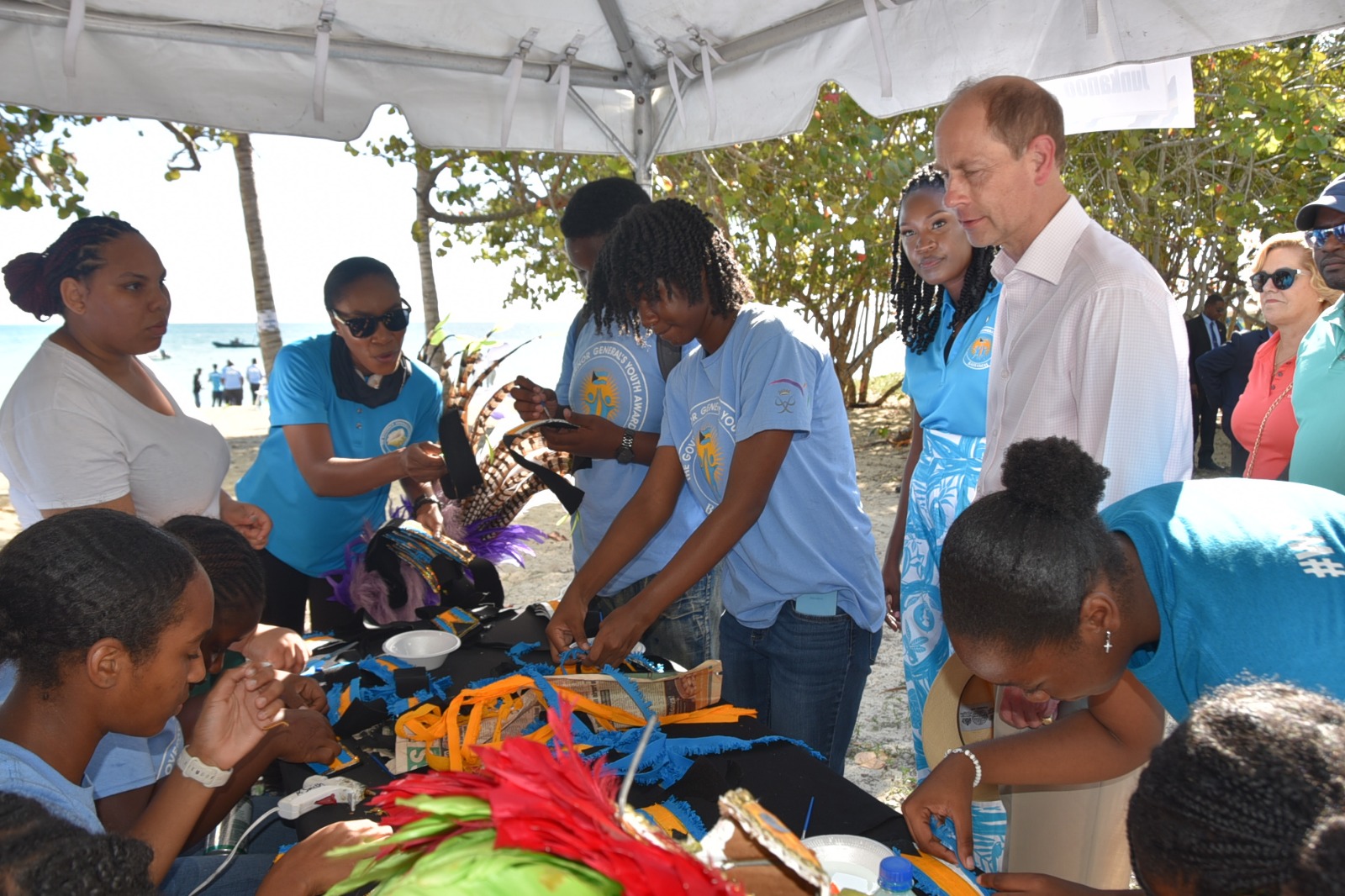
The afternoon event packed with music, dance, laughter and moments of mingling with royals that GGYA members shall always remember, took place at the sprawling Maillis campground in the historic village of Adelaide, miles and seemingly worlds away from the bustling capitol of the city, Nassau.
There, on a tree and vegetable farm with small boats bobbing at the shoreline ready to catch the bounty of the sea, the royals were treated to an afternoon far different from the pageantry that accompanied them throughout the three days of their visit to The Bahamas in late February. With Prince Edward assuming the role his father, Prince Philip, had prior to his passing as chair of the Duke of Edinburgh’s International Award, the two-fold visit was primarily to witness the Award in action at units that catered to young people who were deemed at risk or marginalized, and present awards to participants receiving their Gold Award through GGYA, the local version of the program.
Countess Sophie visited the Willie Mae Pratt Centre for Girls and got a firsthand look at what the girls were doing to complete their Award journey there. She also presented a Bronze Award to one participant who had recently completed that level.
On another part of the island Prince Edward was able to visit the SURE Programme and, while there, met with the volunteers and participants involved in GGYA. The Earl, as he was being briefed on the offerings for the young men at the school, was given a full tour of the facility, and was able to chat with the boys while they engaged in cooking, baking, and boat-building.
The visits to these centres were key evidence in the programme’s aim to extend the reach of the GGYA since they were recently given a grant from the Duke of Edinburgh’s International Award Special Projects Fund to get programmes started at five centres that catered to young people living with special needs, and those living in juvenile detention centres on New Providence and Grand Bahama.
The awards were presented on February 23 at a ceremony at Breezes where 13 young people received the highest award in the organization, the Gold Award, signifying they had completed every rung of a ladder that includes service, skills, and physical recreation. Gold participants must also undertake a residential project interacting with people away from their homes for five days and four nights, and complete a 4-day expedition or adventure – part of their path to success.
The program is the largest non-formal education framework for young people worldwide, inspiring more than one million participants in 130 countries to become involved in their communities while finding their own purpose, passion and place in the world.
While participants at the ceremonial occasion walked away with medals recognizing the level of their achievement, they showed another side at the “Royal Rally” event, on February 24, where connecting with the royals took on a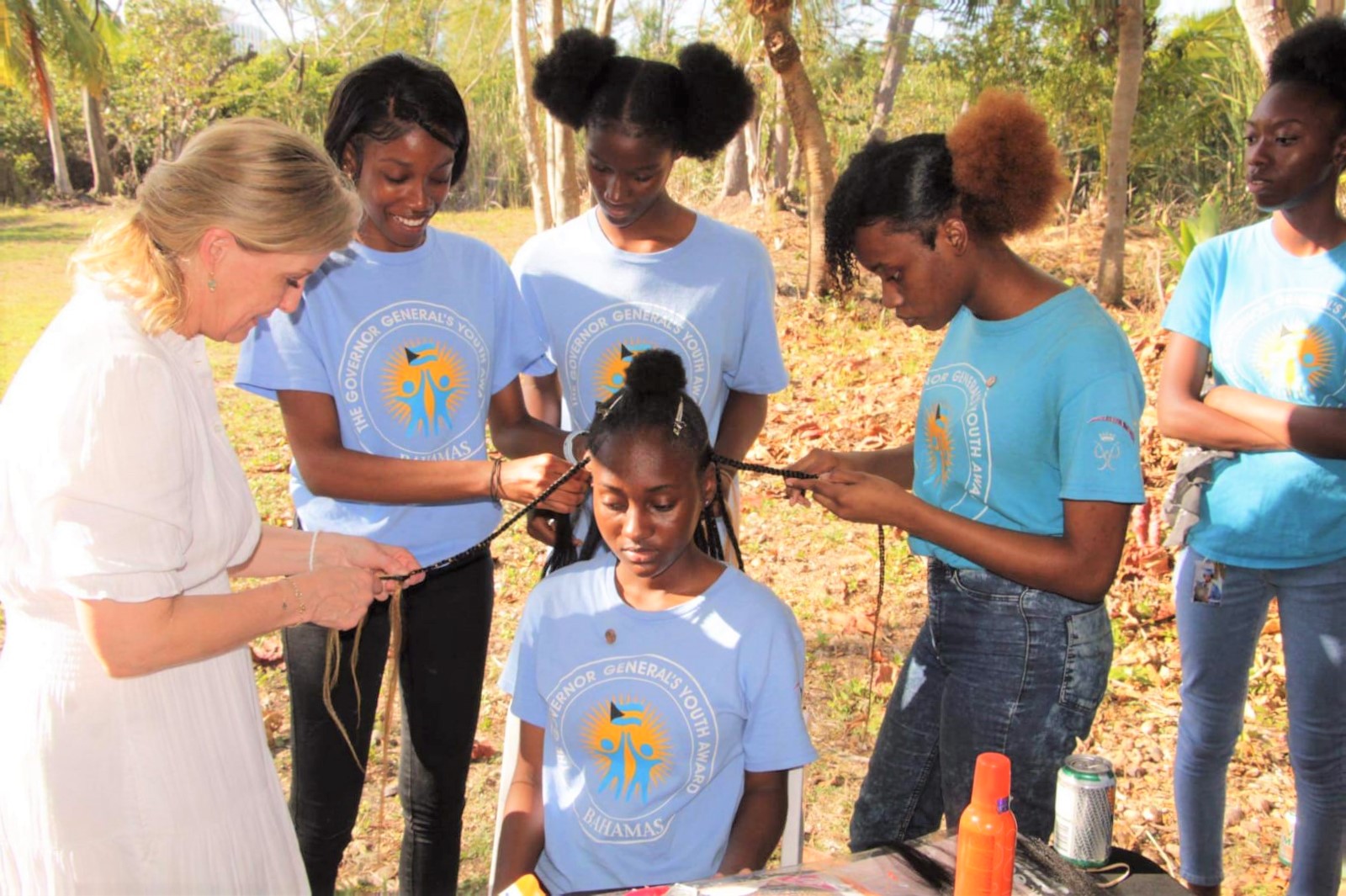 different perspective. Participating GGYA Units from schools across New Providence, were stationed at various tents displaying an array of activities that they engage in to achieve their Award.
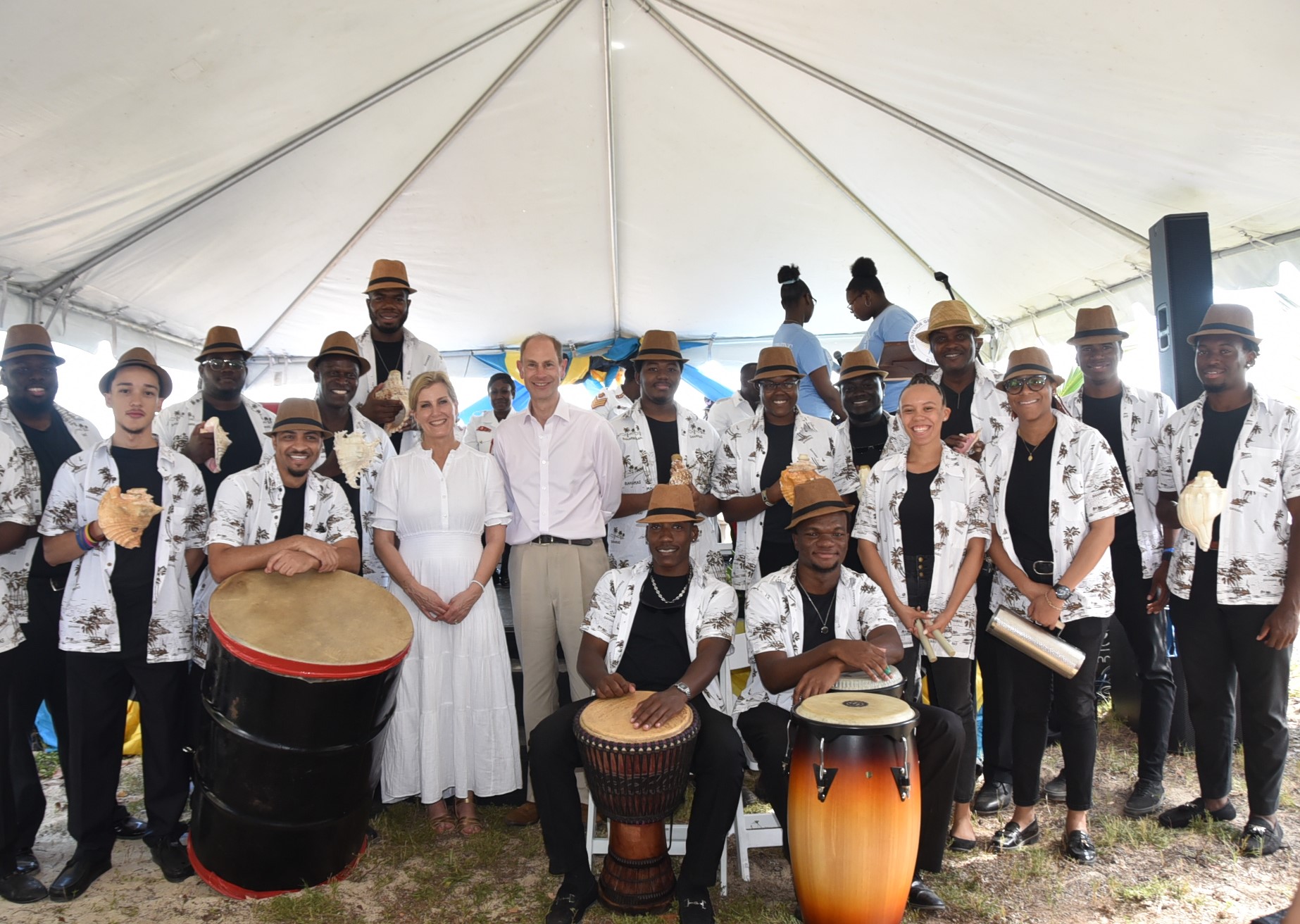
At the start of the afternoon event, the guests were treated to a selection of song and dance. However, to truly kick off the celebratory event was a newly formed Conchy Band led by Mr. Christian Justillien, that certainly got the entire audience on their feet – royal party included, leaning into the music, as the band showed up drumming talents and other members playing the melodious conch horns. The Earl Prince Edward and Countess Sophie then took their time visiting, chatting with, and engaging with each activity on display. While the sounds of the Royal Bahamas Police Force Pop Band permeated the air, The Earl and Countess helped a students from the different units with shell craft, junkanoo pasting, painting, and interacted with young people who did a quick turn around on their kayaks and sail boat. The Earl was particularly interested in the sailing, while Countess was delighted to show her braiding skills with some other participants. One former GGYA gold achiever, Edwin Johnson, returned to his alma mater, CC Sweeting High School, formed a GGYA unit that now has more than 70 participants, believed to be one of the largest group from any unit in The Bahamas.
“The first time we went to a family island, Eleuthera, it was shocking. We slept in tents on the campus of Preston Albury High School. It rained, water came into the tent and when we woke up, we were soaked. We had to cook that night by making a fire on the rocks, we made white rice and ground beef and then, on the second night, we cooked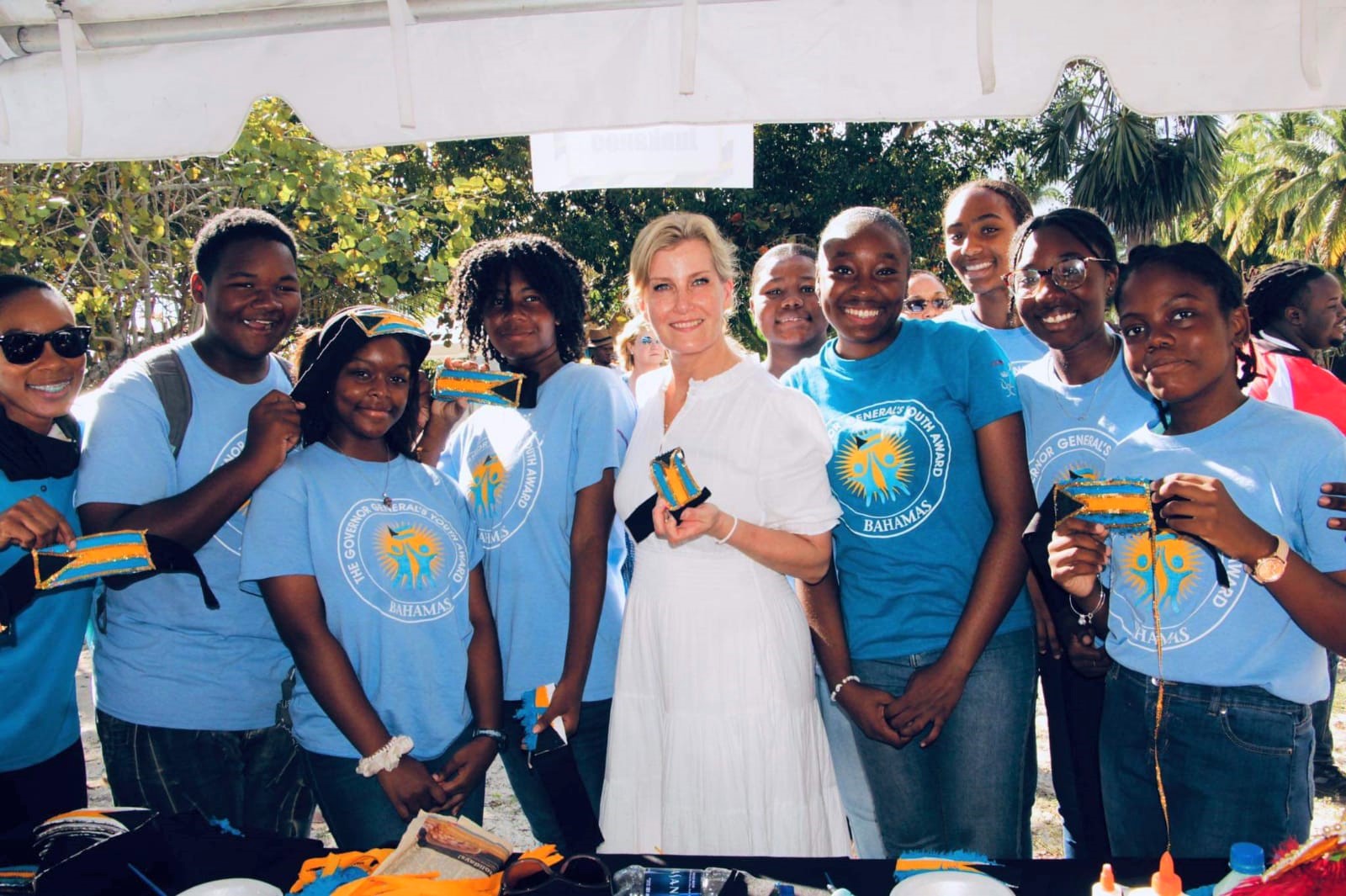 fried chicken and mashed potatoes on the rock stove by the beach,” said a student from Anatol Rodgers in Nassau, mirroring a similar experience shared by a student from The Beacon School in Freeport, Grand Bahama.
Both students agreed – the rain may have dampened their clothes, but not their spirits and both students said learning a bit about cooking made them stronger.
The high energy afternoon rally at the campground was capped off with a tree planting and Junkanoo rush out led by teens from Jordan Prince William High School.
Throughout their two-day visit, the royals were accompanied by the dignified Governor General of The Bahamas, Sir Cornelius A Smith who sits as patron of the GGYA.
The Royal Bahamas Police Force and Royal Bahamas Defense Force bands took turns showcasing their musical talents wherever they went in the land of sunshine and blue skies, and the royals were applauded for bringing their own genuine warmth.
Release: DPA News
Photo Captions:
Header: Prince Edward and Countess Sophie thoroughly enjoyed the Rake & Scrape sounds of the Conchy Band led by Chris Justillien with foot stopping music emanating from conch shell horns and goat skin drums
1st insert: Prince Edward along with GGYA National Director, Jacquetta Maycock, chatting at the rally with students making Junkanoo costumes
2nd insert: Hon. Zane Lightbourne, Minister of State for Education and Technical and Vocational Training (center), Mr. Pericles Maillis, and HRH Prince Edward plant a tree to commemorate their visit
3rd insert: Countess Sophie jumps right in to finish a hair braid with talented GGYA students from CC Sweeting Senior High School who demonstrated hair braiding and styling as their vocation at the Rally
4th insert: Countess Sophia with excited students showing off their Bahamas flag crafts at the rally


The Bahamas, March 30, 2026 – The voice of a proud mother captured the spirit of a nation Monday night, as Bendra Rolle shared heartfelt reflections on the overwhelming Bahamian support for her son, VJ Edgecombe, during the Philadelphia 76ers matchup against the Miami Heat in Miami.
“The patriotic support and scenery at my son, VJ Edgecombe’s NBA game… was overwhelming,” Rolle said in a statement issued following the game. “The arena in Miami was lit. Bimini and the Bahamas showed up and showed out.”
Her words come amid what has already been widely described as a remarkable showing of national pride, with Bahamians traveling in large numbers to South Florida to witness the young guard’s continued rise. For Rolle, however, the moment extended far beyond basketball.
“Beyond VJ’s basketball talents, I’m so moved by his magnetic personality and personal journey to inspire and excite an entire nation—our beloved Bahamas,” she said. “I thank God for VJ’s humility and for his hunger for greatness. He never forgets how far God has brought us.”
While the Sixers did not secure the win on the night, Edgecombe delivered a solid individual performance, finishing with 13 points and five assists. He made an early impact on the game, showing confidence and poise before foul trouble disrupted his rhythm, but still managed to leave his mark in meaningful minutes.
The game itself evolved into a cultural showcase, with Bahamian flags waving throughout the arena and chants ringing out in support of Edgecombe. Much of that presence was bolstered by a coordinated travel push from Bahamasair, which helped facilitate fan travel and added to the electric atmosphere in Miami.
Rolle said the emotional weight of the moment was deeply felt by her family, as they witnessed firsthand the unity and pride of the Bahamian people.
“Thanks and love for the tears and overwhelming joy on Monday, Bahamas,” she expressed. “The Bahamian flags were love, loud, and proud. On my own behalf, VJ, and the entire family, I am ever grateful for the indescribable experience.”
Her closing words underscored what many have described as the true victory of the night—not the final score, but the powerful display of national pride and support surrounding one of The Bahamas’ rising stars.

PHOTO BY SIXERS NATION
Bahamian pride is already on full display in South Florida, with fans arriving in strong numbers ahead of tonight’s highly anticipated NBA matchup featuring VJ Edgecombe and the Philadelphia 76ers.
Helping to power that movement was Bahamasair, which rolled out a strategic promotion to facilitate travel, turning the game into a full-scale national showing.
And the celebration started early.
A “Bahamas Invades Florida” pre-party over the weekend set the tone, with Bahamian fans, DJs and supporters converging in Fort Lauderdale to build momentum ahead of the game. The event, marketed as a major cultural gathering, has spilled into Miami, where a strong Bahamian presence is expected inside the arena tonight.
This is no ordinary road game.
The Sixers enter the matchup healthy and are favoured to win, adding to the anticipation surrounding what many expect to be a standout performance by the Biminite guard.
Edgecombe, the third overall pick in the 2025 NBA Draft, has been electric in his rookie season — delivering high-scoring performances and quickly establishing himself as one of the league’s most exciting young talents.
But beyond the stats, it’s the moment that matters.
With South Florida just a short flight away, Bahamians have seized the opportunity to show up in force — flags, energy and all — transforming the game into something far bigger than basketball.
A national turnout.
A rising star.
And a night where the Bahamas is expected to be felt — from tip-off to final buzzer.
Angle by Deandrea Hamilton. Built with ChatGPT (AI). Magnetic Media — CAPTURING LIFE.
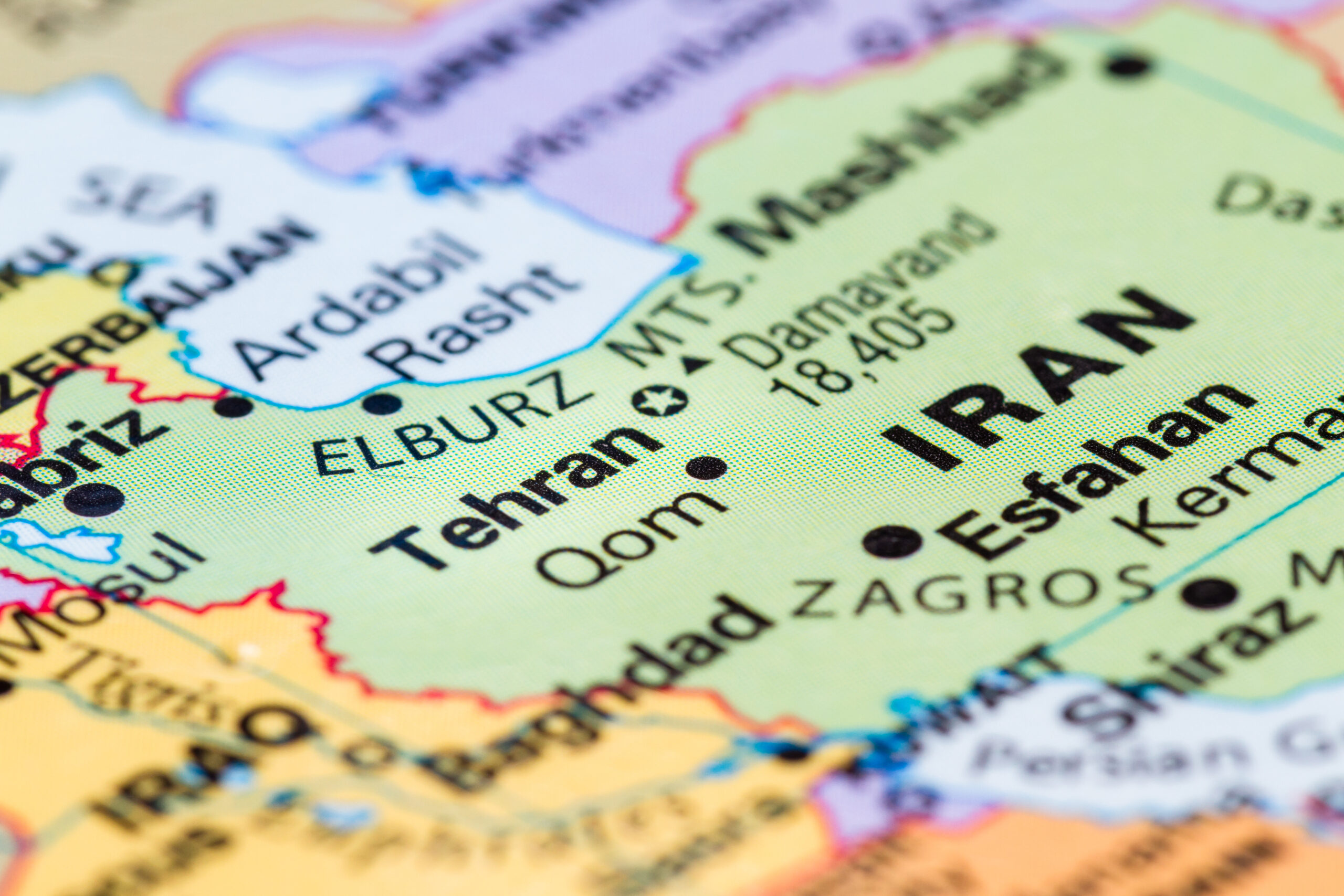
The Bahamas, March 18, 2026 – Twenty days into the latest Middle East escalation, the United Nations is warning the conflict is spreading beyond its original battlefield, as the death toll rises and governments around the world issue urgent travel advisories — including The Bahamas.
In a March 17 statement, the UN Secretary-General’s office said the war must stop and called for all Security Council resolutions to be respected, noting with concern that countries in the Gulf continue to be targeted, raising fears of a wider regional confrontation.
The current round of fighting began February 28 with strikes involving the United States, Israel and Iranian-linked forces, followed by missile and drone attacks across Iraq, Lebanon and parts of the Gulf.
International monitors report more than 1,300 people killed in Iran alone, with additional casualties reported in Lebanon, Israel and Gulf states. U.S. officials confirm at least 13 American service members have died since the escalation began, while reports indicate additional senior Iranian military leaders were killed in recent strikes.
Despite the growing violence, several NATO countries including the United Kingdom, France and Germany have not joined offensive operations, instead calling for diplomacy to prevent the conflict from widening.
The Bahamas Ministry of Foreign Affairs has also issued a travel advisory, warning Bahamian nationals to avoid travel to Israel, Palestine, Iran and Lebanon and to reconsider travel across much of the Gulf region due to the risk of sudden escalation, flight disruptions and security threats.
Officials say Bahamians already in the region should remain vigilant and be prepared for rapidly changing conditions.
Angle by Deandrea Hamilton. Built with ChatGPT (AI). Magnetic Media — CAPTURING LIFE.





-

 News1 week ago
Password to Paradise Radio Remotes at Beaches Turks & Caicos continue to highlight the TCI as the preferred Caribbean destination
-
 News1 week ago
Beaches Turks & Caicos adds four new PADI Dive Instructors to the cadre of professionals in the watersports department
-
 News1 week ago
Beaches Turks & Caicos shares fine dining experiences to high school students in Providenciales
-

 Bahamas News7 days ago
Bahamasair Backs Surge as Bahamians Flood South Florida for V.J. Edgecombe Showdown
-
 News7 days ago
50 Years of Ministerial Government: Cabinet Moves to Mark Milestone Rooted in 1976 Constitution
-

 News7 days ago
Fuel Costs Rise Again as Pelican Energy Warns of Global Pressures
-
 News7 days ago
Government Moves to Amend Destination Management Fee Law
-

 News7 days ago
Flow TCI Empowers Local Communities with ‘Project EmpowerHER’