Uncategorized
JAMAICA: PM Announces Members of Constitutional Reform Committee


#Kingston, March 27, 2023 – Prime Minister, the Most Hon. Andrew Holness, has announced the names of the members of the Constitutional Reform Committee (CRC), which will play a key role in ensuring Jamaica’s smooth transition to a Republic.
Minister of Legal and Constitutional Affairs, Hon. Marlene Malahoo Forte and Ambassador Rocky Meade, are co-chairs of the body, which includes Attorney General, Dr. Derrick McKoy; Senate President, Tom Tavares Finson; Government Senator, Ransford Braham; Opposition Senator, Donna Scott Mottley; Member of Parliament, St.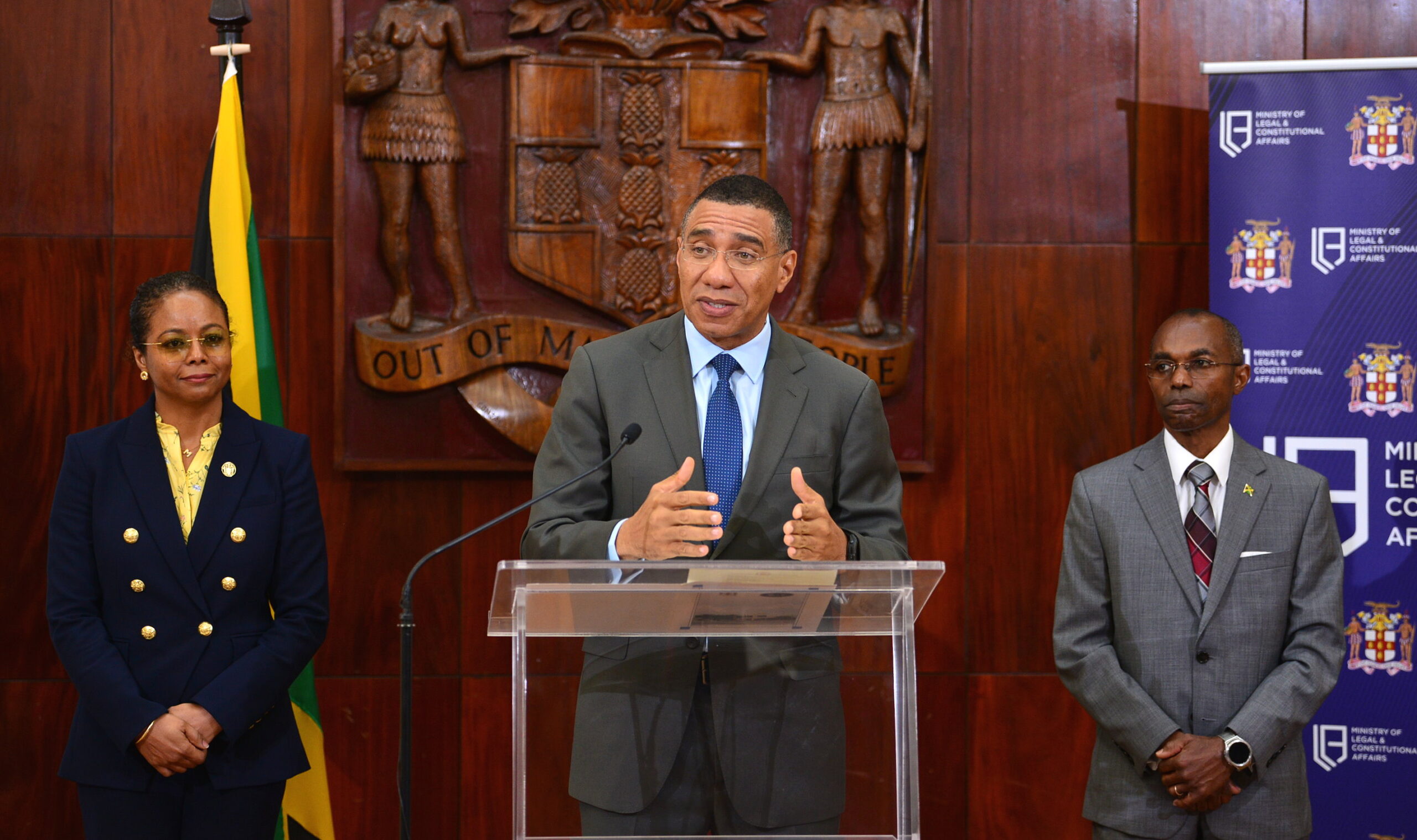 Andrew Western, Anthony Hylton; international constitutional law expert, Professor Richard Albert; national constitutional expert, Dr. Lloyd Barnett; consultant counsel and nominee of the leader of the Opposition, Hugh Small; representative of the wider faith-based society, Dr. David Henry; civil society representative, Dr. Nadeen Spence; Chair of the National Committee on Reparations, Lalieta Davis Mattis; and youth advisor, Sujae Boswell.
Christopher Harper will serve as the Committee’s liaison officer.
Addressing a press conference on Wednesday (March 22) at Jamaica House in St Andrew, Prime Minister Holness said the knowledge and guidance of the CRC will be crucial in the transition process.
“Their job is significant and I thank all of them for giving of their time and effort, knowledge and guidance to the process. I am confident that we will be able to meet the ambitious timelines that have been set and that we will be one step further in redefining who we are as a country and as a sovereign people,” he said.
He explained that the job of the Committee involves reviewing the work that has already been done, to pull from that body of work what is relevant to today’s circumstance and to give advice and guidance to the overall process.
“There may be the view that it is a straightforward and simple task of just changing the name of the country from that of a constitutional monarchy to a republic; that is not the case. There are many legal steps that we have to go through and there is the matter of a referendum, the outcome of which no one can predict,” he said, noting that the Government is committed to the process.
“This is not a partisan endeavor and I want to give the public the assurance that whatever we do, we will be acting in the best interest of the people of Jamaica,” he said.
Minister Malahoo Forte, in her remarks, informed that the committee will be meeting next Wednesday (March 29).
“The work has commenced in earnest. We settled the terms of reference for the committee this morning with an extremely ambitious timeline. I am grateful that all committee members have committed to working to achieving the goals along the way,” she said.
She explained that the terms of reference agree that the work will be undertaken in phases, “and we are focusing on phase one, which will abolish the constitutional monarchy and establish the Republic of Jamaica and related matters… . We looked at a timeline to get the Bill to Parliament in the shortest possible time”.
She pledged that the nation will be kept abreast of the process not only through media engagement but with statements in the Parliament.
The Committee’s purpose is to provide expert guidance and oversight to the Government and people of Jamaica during the constitutional reform process and implement recommendations on the consensuses reached.
The Committee is also expected to build consensus in areas where it has been eroded or is non-existent on important matters related to the process.
The body will be required to assess how the passage of time has impacted the recommendations of the 1995 Joint Select Committee on the Constitutional and Electoral Reform Report.
Members will, additionally, advise on what fresh perspectives should be considered in light of previous and current national, regional, or international developments and propose any necessary modifications to update the recommendations for implementation.
The Committee will further evaluate the recommendations on the establishment of the Office of a President, advise on the nature, qualification, tenure of the incumbent, and the legislative, executive, or ceremonial powers to be exercised by that individual.
The Government intends to hold a referendum relating to Jamaica’s proposed transition to a Republic.
The work will be done in three phases.
Contact: Chris Patterson
Release: JIS
Photo Captions:
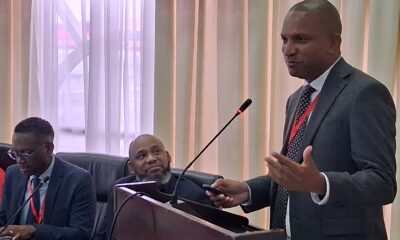
Header: Prime Minister, the Most Hon. Andrew Holness (foreground) with members of the Constitutional Reform Committee (CRC) at Jamaica House in St. Andrew on March 22. Minister of Legal and Constitutional Affairs, Hon. Marlene Malahoo Forte (second left) and Ambassador Rocky Meade (third right), are co-chairs of the committee.
Insert: Prime Minister, the Most Hon. Andrew Holness (at the podium) addressing a press conference to announce the members of the Constitutional Reform Committee (CRC) at Jamaica House in St. Andrew on March 22. He is flanked by committee co-chairs Minister of Legal and Constitutional Affairs, Hon. Marlene Malahoo Forte (left) and Ambassador Rocky Meade.
Photographer: Yhomo Hutchinson

By Deandrea Hamilton
GRAND TURK, Turks and Caicos Islands — Long before it became the Turks and Caicos Islands Statistics Authority, it was a small government unit quietly collecting information for policymakers. It existed largely in the background, producing figures on population, trade, employment and economic activity.
On Tuesday, May 26, that department entered a new era.
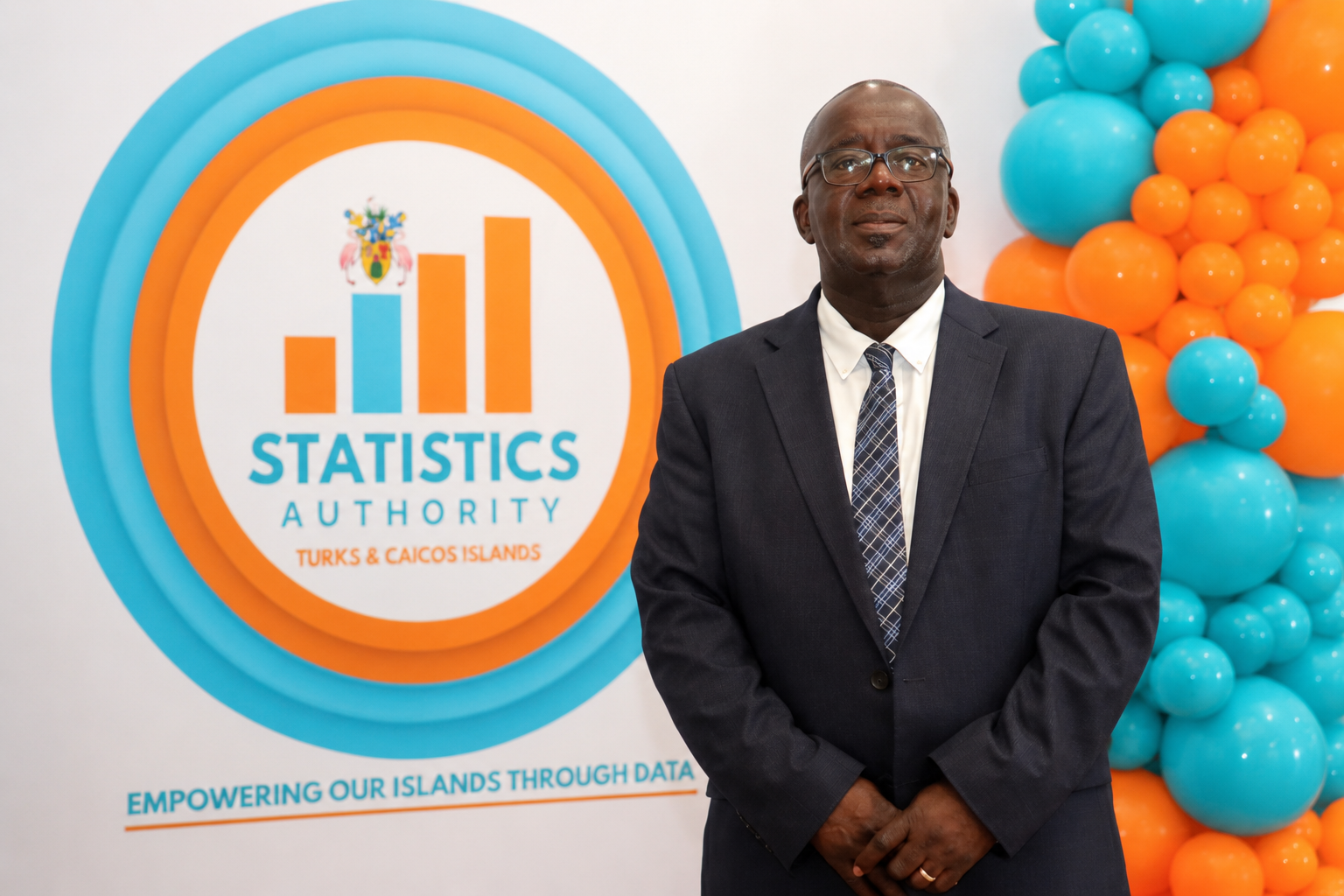
In a ceremony themed “Empowering Our Islands Through Data,” the Statistics Department officially became the Turks and Caicos Islands Statistics Authority, a milestone years in the making and one many in attendance attributed to the vision, persistence and leadership of longtime statistician Shirlen Forbes.
The launch itself reflected the values Forbes has championed throughout his career — inclusion, respect for institutional history and investment in the next generation.
Former and current staff were recognized. Tributes were paid to those who laid the foundation decades ago. Students from Enid Capron Primary School performed. Musicians including Robin Forbes, Dexter Landy, Vernal “Samsol” Lightbourn and Aleta “Apple” Astwood contributed cultural selections, while leaders from across government, CARICOM and the Opposition gathered under one roof.
The occasion also featured remarks from Pastor Bradley Handfield, Chairman of the Board of Directors of the Turks and Caicos Islands Statistics Authority, who described the launch as more than the creation of a new institution.
In his welcome message, Handfield said the Authority represents a renewed national commitment to data integrity, independence and excellence. He noted that reliable statistics underpin effective governance, business confidence and informed public discourse, while helping the country track social and economic progress and make better decisions for the future.
What stood out most was the genuine affection in the room.
The event united generations of statisticians, administrators and public servants who had contributed to the evolution of statistical services in the Turks and Caicos Islands. It was evident that Forbes had not forgotten those who came before him.
That commitment to people was highlighted by Acting Governor Anya Williams, who praised the department as one of the best-run entities in government and singled out Forbes for elevating both the institution and its staff.
“There are some departments that if they wrote today and said they wanted to become a statutory body, I would say, ‘Great, can I sign right now?’ But the Statistics Department was not one of those,” Williams said. She described it as a department with a long-standing record of excellence, crediting former leaders including Jones and Kathleen Forbes before noting that Shirlen Forbes had “taken it to another level.”
Her Excellency Williams spoke passionately about Forbes’ emphasis on training and higher education.
She recalled attending a University of the West Indies graduation where members of the department earned master’s degrees, achievements she directly linked to Forbes’ leadership.
“Sometimes they complain that they feel like they’re in school because Mr. Forbes always has them doing something,” she joked, before explaining that his focus extends beyond qualifications.
“For him it’s about empowerment.”
That philosophy has shaped a department that now stands at the centre of national planning.
The historical timeline presented at the launch traced the journey from a statistical unit operating under the Financial Secretary’s Office, through its disbandment in 1993, re-establishment in 1998-99 with support from the Caribbean Development Bank and CARTAC, modernization during the 2000s and 2010s, and ultimately the creation of the Statistics Authority. The Statistics Act of 2012 further strengthened the legal framework for the collection and protection of official data.
Premier Charles Washington Misick acknowledged that while politicians establish policy, professionals such as Forbes make implementation possible.
“My job is to set policy and direction, but it takes people like yourself to implement and deliver,” Misick said. “I’ll take my hat off to you.”
The Premier described statistics as critical to decision-making and national development, noting that modern governments cannot plan effectively without reliable data. He then formally declared the launch of the Statistics Authority.
Yet perhaps the most memorable aspect of the occasion was not the unveiling of a logo, mission statement or statutory framework.
It was the recognition that behind every census, survey, labour report and economic indicator are people dedicated to helping a country understand itself.
For decades, Shirlen Forbes has been one of those people.
Now, with the creation of the Turks and Caicos Islands Statistics Authority, his work stands as a reminder that nation-building is not only done in Parliament or Cabinet rooms. Sometimes it is done quietly, one dataset, one report and one trained professional at a time.
And on May 26, the Turks and Caicos Islands paused to say thank you.
Uncategorized
Sandals Resorts International and Ministry of Tourism Leveraging Radio Remotes to Boost Visitor Arrivals
MONTEGO BAY, May 11 (JIS): A week of live radio remotes from Sandals Ochi Beach Resort in St. Ann has showcased Jamaica’s resilient rebound from Hurricane Melissa, with Canadian and British hosts praising the island’s hospitality sector as not just reopened for business but “top tier and second to none”.
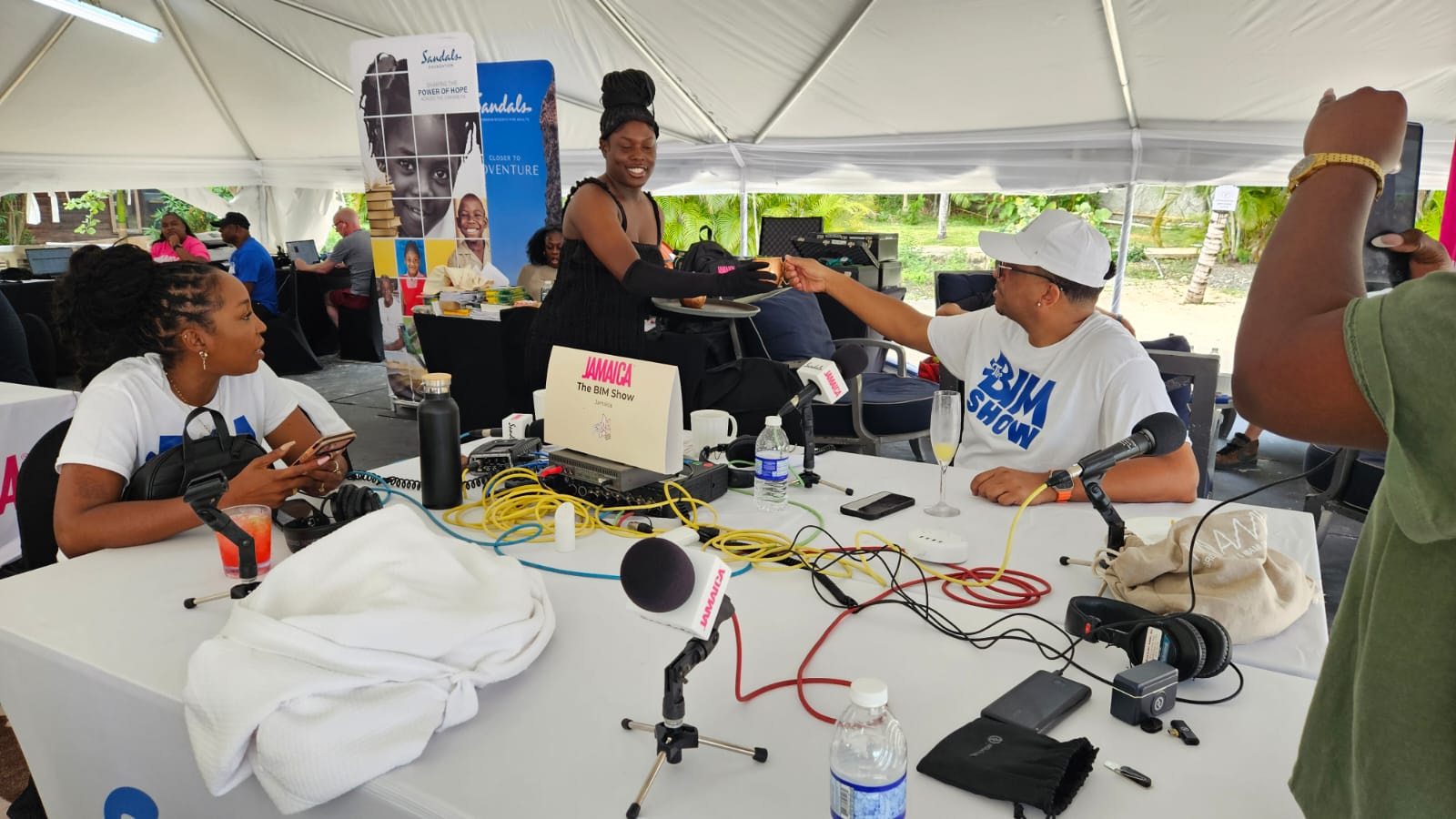
A joint venture between Sandals Resorts International and the Ministry of Tourism connected 11 international radio stations and one local outlet, including ‘The Bim Show’ on Fyah 105, to deliver on‑the‑ground impressions to an audience of nearly three million listeners.
During a seven‑day stay at Sandals Ochi, the hosts conducted live broadcasts back to their home bases, toured the Ocho Rios area, and interviewed Sandals staff as well as students from the Exchange All-Age School in St. Ann.
The initiative also provided first‑hand observations of Jamaica’s ongoing tourism recovery and the enduring warmth of the island’s people.
“First-class stuff… Jamaica is such an amazingly beautiful place. If you didn’t know, there is no way you could tell that six months ago, the island experienced a category-five hurricane, which caused so much damage. [It is] such an amazing place; amazing and beautiful people,” Brian West, a radio host from Hamilton, Ontario, Canada said.
Broadcaster from London, England, Jada Sachira, shared similar sentiments.
“It was such a wonderful experience; I thoroughly enjoyed the experience. The people have been so friendly and hard-working… everyone doing their part to ensure that visitors are well taken care of and to enjoy the Jamaican tourism product. Just breathtakingly beautiful. I want to come back for a longer stay,” she stated.
Another Canadia radio host, Patty Brown, underscored Jamaica’s iconic worker‑driven hospitality.
“You just have to come and see… that’s what I told my listeners. The Jamaican experience is simply magical… my first time here but definitely won’t be my last,” she stated.
Regional Public Relations Manager for Sandals Ochi Beach Resort, Lyndsay Isaacs, noted that the radio remotes have historically been highly successful, offering a tangible window into Jamaica’s tourism product for listeners.
“It’s a case of reporting back to their listeners what they have experienced first-hand. Sandals, along with the Ministry of Tourism, have been doing this kind of radio remotes for years and we find it very successful. It’s different and more emotional this time, seeing that we have been in a recovery state following Hurricane Melissa, which badly affected the sector. But look at us now – fully open for business,” Ms. Isaacs stated.
Mayor of St. Ann’s Bay, Councillor Michael Belnavis, praised the event for highlighting community hospitality and economic resilience.
“This radio remote has highlighted Jamaica’s unity and endurance in rebuilding the tourism sector. The people of St. Ann, and Jamaica as a whole, have demonstrated that hospitality is in our DNA,’ Mr. Belnavis stated.
Poko Loko Floating Bar’s owner Anthony Warren, offered another insider’s view, noting that positive results should come from the on-the-ground visits and live broadcasts from the radio hosts.
Meanwhile, Minister of Tourism, Hon. Edmund Bartlett, said the initiative is a strong signal of Jamaica’s competitive rebound in Caribbean travel.
“The radio remote’s reach is a testament to Jamaica’s continued relevance as a premier tourism destination. We have not only recovered but we have also elevated the Jamaican experience to a level that is unmatched in the region,” Mr. Bartlett said.
The collaborative event, which mobilised 11 international radio stations and one local outlet, demonstrates Jamaica’s aggressive post‑Melissa recovery strategy and reinforces the island’s reputation for warm hospitality and world‑class attractions.
Radio remotes have been popularly used as a vehicle by both the Ministry of Tourism and Sandals Resorts International as a means of reaching out directly to radio audiences in Jamaica’s biggest source markets: the United States, Canada and the United Kingdom.
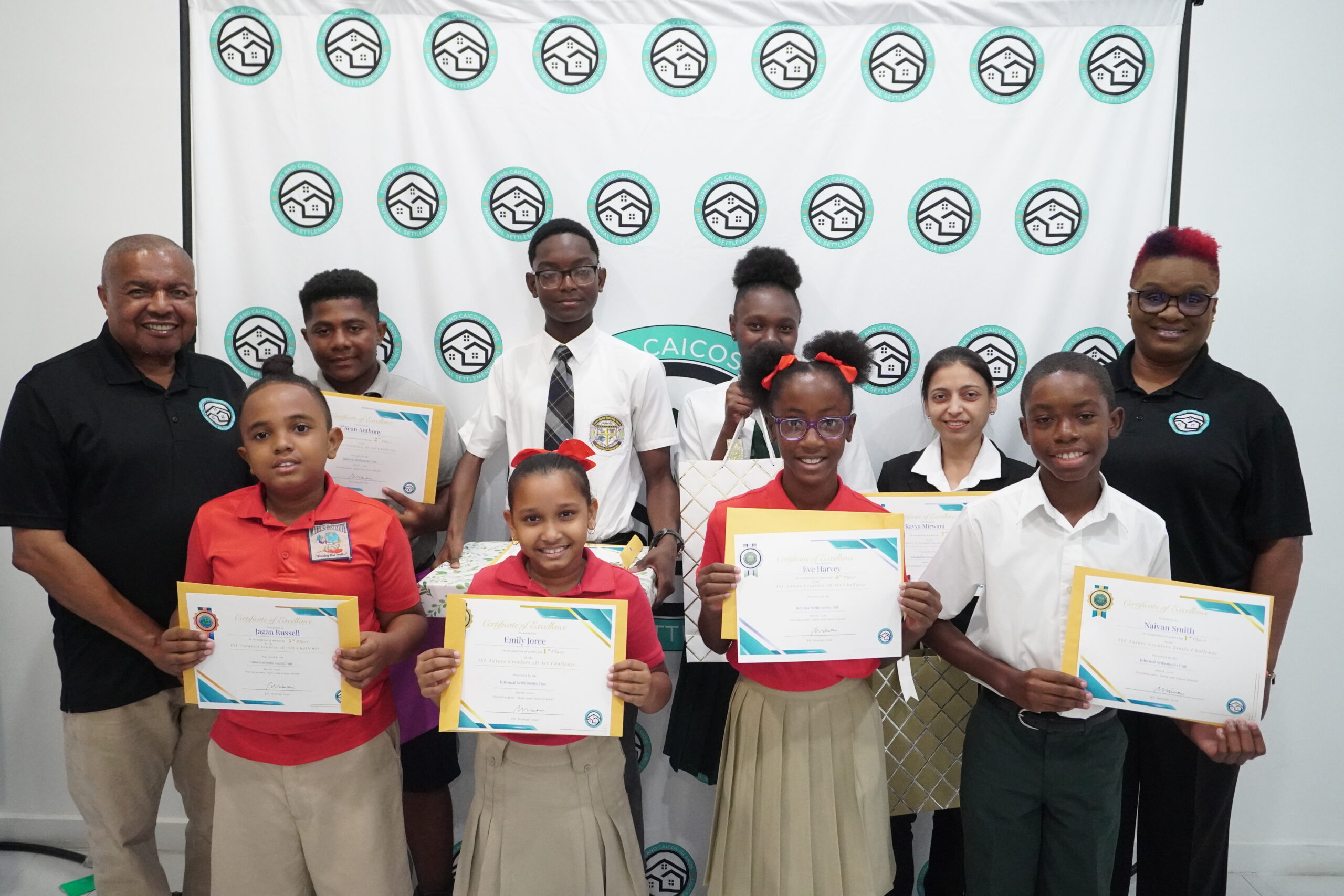
Providenciales, Turks and Caicos Islands – March 26, 2026 – The Informal Settlements Unit (ISU) successfully hosted its Future Creators Challenge Prize Distribution Ceremony on Wednesday, March 25, 2026, at its office in Providenciales, recognising outstanding student creativity and participation from across the Turks and Caicos Islands with winners hailing from Providenciales and North Caicos.
The Future Creators Challenge formed a central component of the ISU’s Youth Outreach Programme, an initiative designed to engage young people in understanding the challenges associated with informal settlements while encouraging critical thinking, creativity, and solution-oriented perspectives on national development. Through a combination of educational content, school engagement, and creative competitions, the programme provided students with an opportunity to explore issues of community development in accessible and meaningful ways.
Students competed across three categories: 2D Art, Essay Writing, and Jingle Creation, producing submissions that demonstrated both creativity and thoughtful engagement with the themes of the programme.
The following students were recognised for their outstanding performances:
2D Art Challenge
1st Place – Emily Joree – MILLS Institute
2nd Place – T’Sean Anthony – Thelma Lightbourne Primary School
3rd Place – Jagan Russell – MILLS Institute
4th Place – Eve Harvey – MILLS Institute
Essay Challenge
1st Place – Jordan Pierre – Louis Garland Thomas High School
2nd Place – Kavya Mirwani – British West Indies Collegiate
3rd Place – Mirsendy Obei – Raymond Gardiner High School
Jingle Challenge
1st Place – Naivan Smith – Raymond Gardiner High School
In addition to individual awards, MILLS Institute was presented with a special prize in recognition of submitting the highest number of entries to the ISU Future Creators Challenge, reflecting exceptional student participation and institutional support.
In remarks delivered during the session, ISU Strategic Lead Justice Carlos Simons KC underscored the importance of youth participation in shaping the future of the Turks and Caicos Islands, noting that “the future of the Turks and Caicos Islands depends on young people like you who are willing to engage, to imagine solutions, and to play a role in the development of your communities.” He further encouraged students to continue playing an active role in national development, expressing that he hoped “this is only the beginning of your journey as agents of change here in the TCI.”
The ISU extends its sincere appreciation to all participating schools, students, and teachers as well as the Ministry of Education, Youth, Sports and Culture, whose support contributed to the success of this inaugural Youth Outreach Programme initiative.
The Unit remains committed to expanding its engagement with young people across the Turks and Caicos Islands through innovative, inclusive engagement efforts that support awareness, education, and long-term national development.