
Health
Monkey Pox name to be phased out recommends WHO


By Deandrea Hamilton
Editor
November 29, 2022 – It’s a 52-year-old name which has run its course and in a year will be completely phased out, making way for its new, more politically correct and patient sensitive title: MPox. The World Health Organization briefed the world of the shift in a media statement on Monday November 29; the renaming process described as “accelerated.”
“When the outbreak of monkeypox expanded earlier this year, racist and stigmatizing language online, in other settings and in some communities was observed and reported to WHO. In several meetings, public and private, a number of individuals and countries raised concerns and asked WHO to propose a way forward to change the name.”
The World Health Organization has as part of its global health remit, to name or rename illnesses in consultation with its member states; some 45 countries weighed in on this particular change which factored in stigmatization and versatility.
“Various advisory bodies were heard during the consultation process, including experts from the medical and scientific and classification and statistics advisory committees which constituted of representatives from government authorities of 45 different countries.
The issue of the use of the new name in different languages was extensively discussed. The preferred term mpox can be used in other languages. If additional naming issues arise, these will be addressed via the same mechanism. Translations are usually discussed in formal collaboration with relevant government authorities and the related scientific societies.”
Although monkeyPox symptoms disappear on their own in a matter of weeks, for some the symptoms have led to medical complications and death. Immuno-compromised children are listed as particularly vulnerable, so are newborn babies.
“Complications from monkeypox include secondary skin infections, pneumonia, confusion, and eye problems. More recent complications include proctitis (sores and swelling inside the rectum that cause pain) and pain or difficulty when urinating. In the past, between 1% to 10% of people with monkeypox have died. It is important to note that death rates in different settings may differ due to a number of factors, such as access to health care. These figures may be an overestimate because surveillance for monkeypox has generally been limited in the past,” informed the CDCs website.
Dr Tedros Adhanom Ghebreyesus, Direcgtor-General, WHO in considering the advice from health experts specifically recommends: “Adoption of the new synonym mpox in English for the disease; Mpox will become a preferred term, replacing monkeypox, after a transition period of one year. This serves to mitigate the concerns raised by experts about confusion caused by a name change in the midst of a global outbreak. It also gives time to complete the ICD update process and to update WHO publications; The synonym mpox will be included in the ICD-10 online in the coming days. It will be a part of the official 2023 release of ICD-11, which is the current global standard for health data, clinical documentation and statistical aggregation. The term “monkeypox” will remain a searchable term in ICD, to match historic information.”
As of November 28, there had been 81,188 cases of mpox recorded worldwide according to the US Centers for Disease Control (CDC). Most alarming; over 80,000 of the cases have been recorded in locations not historically known to have monkeypox. Some 110 countries have now recorded mpox, a staggering 103 of them are newly added to the list of nations where the disease has been detected.
The biggest explosion of cases is recorded in the United States; 29,288 people were confirmed with the disease and 14 people have died as a result of it.
Regionally, Cuba, Dominican Republic, Jamaica, The Bahamas, Aruba, Curacao, Barbados, Martinique, Guadeloupe, Bermuda and Guyana have confirmed mpox on their shores.
In the coming days, the new mpox name will be added to the International Classification of Diseases or ICD and will be used in communication from health bodies. While the label: MonkeyPox will become a relic, it will continue to be used for at least another year.
“WHO will adopt the term mpox in its communications, and encourages others to follow these recommendations, to minimize any ongoing negative impact of the current name and from adoption of the new name,” it said in the statement posted at its website.
Maurizio de Angelis/Science photo libraryMonkeypox virus, illustration. Monkeypox virus particles are composed of a DNA (deoxyribonucleic acid) genome surrounded by a protein coat and lipid envelope.







Nassau, Bahamas, 1 October 2026 – Every Saturday this month, communities across The Bahamas will take steps in support of cancer patients and survivors as CIBC Caribbean’s Walk for the Cure returns to New Providence, Abaco, Eleuthera, and Grand Bahama.
CIBC Caribbean Head of Country, Terrance Gibson, said, “Each Saturday in October represents another community coming together,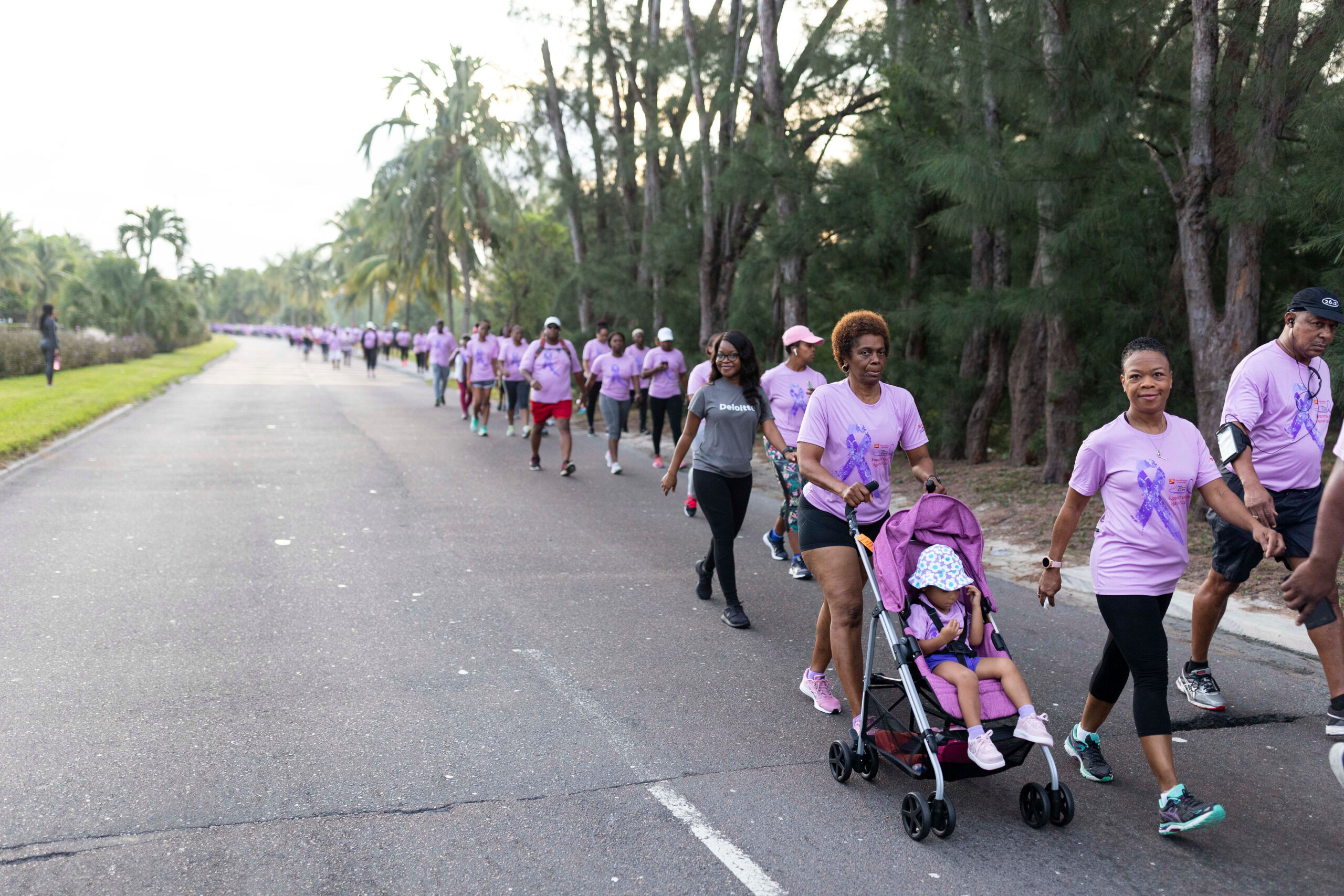 another opportunity to raise awareness and, most importantly, more support for the organizations that are doing this work every day.”
The month of activities begins this Saturday, October 3, in New Providence, with participants gathering at the Goodman’s Bay Corporate Centre for a 6:30am start.
CIBC Caribbean Walk Champion, Antionette Fox, said the series of walks gives communities across the country an opportunity to contribute to a cause that directly supports Bahamian cancer organizations.
“Every Saturday for the month of October, there will be a walk that you can participate in to contribute towards this worthy cause,” Fox said.
In New Providence, the morning will extend beyond the walk itself, with Zumba, wellness activities, informational vendors, and opportunities for participants to connect with organizations working directly with cancer patients and survivors.
Gennie Dean Caring and Sharing Cancer Support Group President Duquesa Dean said participants do not have to complete the full route to be part of the morning.
“Just come out…there is something for everyone, come for the community,” Dean said. “There’s a survivor ceremony, so come and participate and celebrate the people who have gone through cancer and are here as evidence that you could live after a cancer diagnosis.”
The Gennie Dean Caring and Sharing Cancer Support Group is one of eight cancer organizations in The Bahamas that benefit from funds raised through Walk for the Cure. The others are the Sister Sister Breast Cancer Support Groups of New Providence and Grand Bahama, Cancer Society of The Bahamas, the Cancer Societies of Abaco, Eleuthera, and Grand Bahama, and the Cancer Association of Grand Bahama.
Dean explained that CIBC Caribbean covers the cost of staging WFTC, allowing donations raised to support the work of beneficiary organizations.
For her organization, that assistance translates into tangible support for people navigating cancer, including food assistance, financial aid, prosthetic breasts, and mastectomy bras, as well as programs such as Step Into Wellness, which promotes movement and healthy living among cancer patients and survivors.
Corporate partners are also helping to strengthen this year’s effort. Bamboo Shack has joined the initiative as a gold sponsor, with representative Ghandi Pinder sharing that the cause has a personal significance for her.
Pinder recalled shaving her hair in solidarity with her sister after she was diagnosed with an aggressive form of breast cancer and began losing her hair during chemotherapy.
“We see you, we’re here with you, we’re in it with you,” Pinder said of Bamboo Shack’s message to those affected by cancer.
She also encouraged more of Corporate Bahamas to support initiatives that directly impact the communities they serve.
“At Bamboo Shack, we always say a better Bahamas begins with you… Together, we can make a difference,” she said.
Registration for Walk for the Cure is $30 for adults and $15 for children and can be completed at any CIBC Caribbean branch. CIBC Caribbean clients can also donate through online banking.
The New Providence Walk begins promptly at 6:30am on Saturday, October 3, at the Goodman’s Bay Corporate Centre, followed by Walk for the Cure events in other islands each Saturday throughout October. The Grand Bahama WFTC event will be held on October 10 and the Abaco and Eleuthera WFTC events will occur on October 17 and October 24 respectively.
Gibson added, “Some will walk for themselves, some in celebration of a survivor, and others in memory of someone they have lost. Whatever brings you to Walk for the Cure, every person who shows up becomes part of a much bigger expression of support for those affected by cancer.”
Health
TCI Hospital Marks Breast Cancer Awareness Month 2026 with “Know. Check. Act. Support.” Campaign
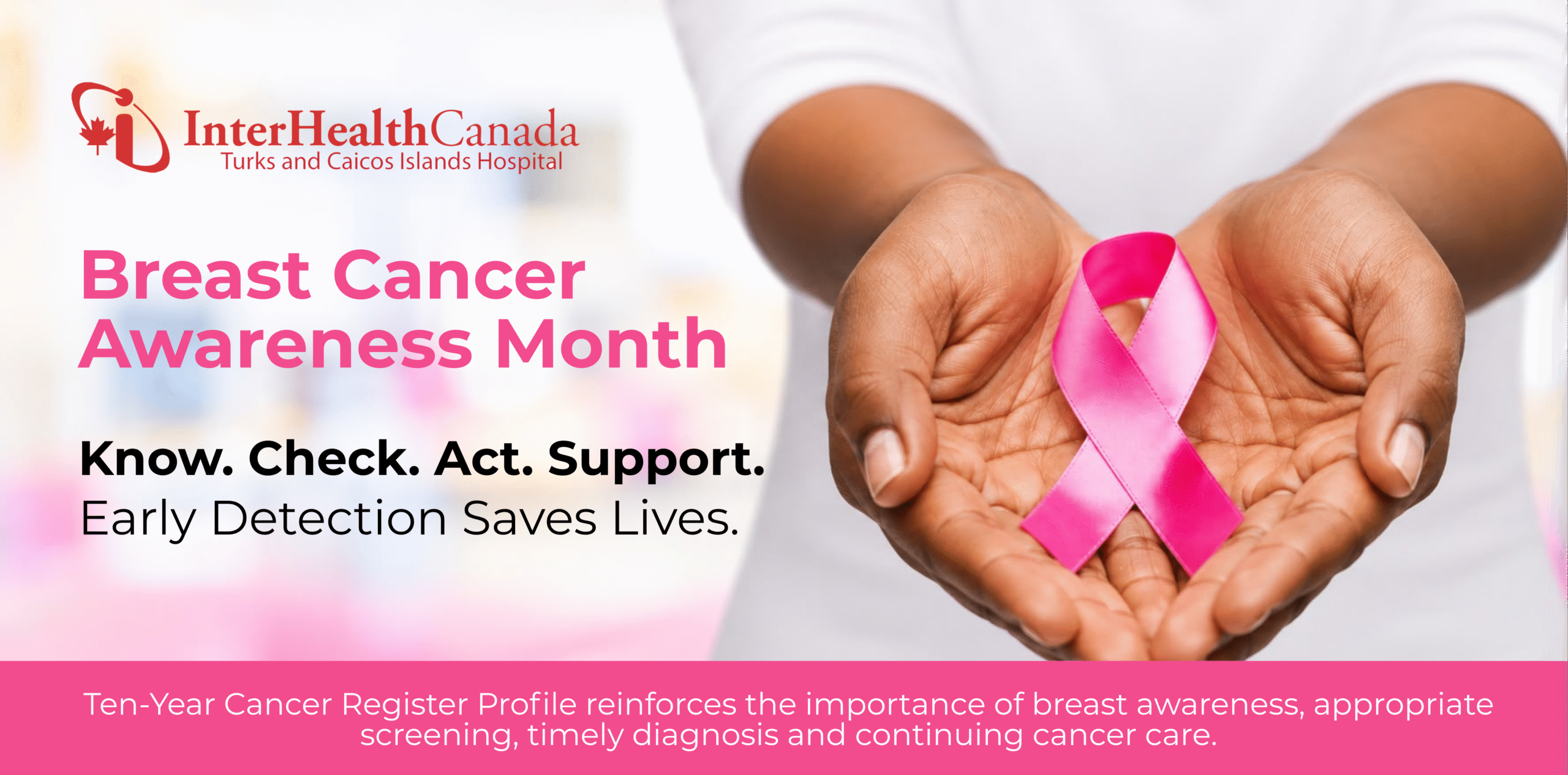
Ten-Year Cancer Register Profile reinforces the importance of breast awareness, appropriate screening, timely diagnosis and continuing cancer care
Providenciales, Turks and Caicos Islands – 1st October 2026 – Turks and Caicos Islands Hospital (TCI Hospital) is marking Breast Cancer Awareness Month 2026 with a month-long public awareness campaign under the theme “Know. Check. Act. Support. – Early Detection Saves Lives.”
This year’s campaign is being informed by TCI Hospital’s Ten-Year Cancer Register Profile, 2016–2025, which demonstrates that breast cancer remains an important and continuing healthcare issue for patients, families and the wider Turks and Caicos Islands community.
Throughout the ten-year period, TCI Hospital continued to record new cases of malignant neoplasms of the breast each year. Annual new registrations fluctuated, reinforcing an important message: breast cancer is not an occasional concern confined to Breast Cancer Awareness Month, it requires sustained awareness, appropriate screening, timely investigation and diagnosis, access to treatment, follow-up and support throughout the year.
What Our Cancer Register Tells Us
The TCI Hospital Cancer Register recorded 21 new breast cancer cases in 2016, the highest annual figure reported during the ten-year profile. In subsequent years, the overall annual new-case count ranged from 8 to 18 cases, with 18 new cases recorded in 2024 and 10 in 2025.
The register also demonstrates the continuing accumulation of breast cancer cases within the hospital’s cancer records. The total registered breast cancer caseload increased from 79 in 2016 to 192 by 2025. More recently, the register increased from 160 cases in 2023 to 181 in 2024 and 192 in 2025. These figures represent the hospital’s registered caseload and should not be interpreted as population incidence, prevalence or the number of people currently living with breast cancer.
Behind every registration is more than a statistic. Each represents a person whose diagnosis has implications for their family and for the healthcare professionals and services involved in cancer investigation, treatment, coordination, follow-up and support.
The ten-year profile therefore reinforces the importance not only of identifying breast cancer, but of ensuring that people affected by the disease are supported throughout their cancer journey.
Know the Signs and Act on Changes
Breast cancer can present in different ways. Changes that should prompt assessment by a healthcare professional may include a new lump or thickening in the breast or underarm; a change in the size, shape or appearance of a breast; dimpling, puckering or other unusual changes to the breast skin; nipple changes or unusual discharge; or another new or persistent breast change.
Finding a change does not necessarily mean that a person has cancer. However, an unexplained or persistent change should not be ignored.
TCI Hospital encourages members of the community to become familiar with what is normal for their breasts and to seek medical advice if they notice something different.
Know Your Risk. Know Your Family History.
Breast cancer risk is influenced by several factors. Understanding personal and family medical history can help individuals have more informed conversations with their healthcare providers about their individual risk.
Having no known family history of breast cancer does not mean that breast health can be ignored. Equally, people with a significant family history or other factors that may increase their risk should discuss this with an appropriate healthcare professional.
The TCI Hospital Cancer Register also records male breast cancer, reminding the community that although breast cancer predominantly affects women, it can also occur in men.
Screening and Early Diagnosis Matter
Breast awareness and screening have different but complementary purposes. Screening is intended to identify possible breast abnormalities in people who may not have symptoms, while a new or concerning breast change requires appropriate clinical assessment.
There is no single screening approach that is appropriate for every individual. TCI Hospital therefore encourages people to discuss their age, personal risk factors, family history and appropriate breast screening with their healthcare provider.
Similarly, people experiencing a concerning breast change should not wait for their next routine screening appointment before seeking medical advice.
The campaign’s message “Early Detection Saves Lives” emphasizes the importance of timely action. It does not mean that every breast change is cancer. Rather, seeking medical attention allows appropriate investigation to take place and, where cancer is diagnosed, enables the healthcare team to determine the most appropriate next steps.
From Cancer Registration to Better Cancer Care
TCI Hospital Chief Executive Officer Dr Denise Braithwaite-Tennant said the Cancer Register has an important role beyond recording the number of cancer cases seen by the hospital.
“Our Cancer Register is not simply about counting cases. It helps us understand the cancer burden presenting to our hospital, identify patterns over time and inform how we plan and strengthen cancer services. Behind every number is a patient, a family and a cancer journey. The continued recording of new breast cancer cases reminds us why awareness must lead to action and why our health system must continue to strengthen the pathway from appropriate screening and timely diagnosis through treatment, follow-up and survivorship support.”
“During Breast Cancer Awareness Month, we want our community to understand that fear should not become a reason to delay seeking care. Know what is normal for you, understand your risk, participate in screening that is appropriate for you and seek medical advice when something changes. Just as importantly, we must continue to support those undergoing cancer treatment and those living beyond a cancer diagnosis.”
Know. Check. Act. Support.
Throughout October, TCI Hospital will deliver a programme of activities designed to turn breast cancer awareness into practical action.
Activities will include an educational breast cancer awareness video addressing signs and symptoms, screening, early detection and support; publication of findings from the TCI Hospital Ten-Year Cancer Register Profile, 2016–2025; breast cancer facts and educational messages; a special House Call – Pink Round Table addressing breast cancer risk, symptoms, diagnosis, treatment and survivorship; and Pink Fridays, during which TCI Hospital team members will wear pink to promote awareness, early detection, survivorship and support.
The campaign will also highlight the important role of families, friends, caregivers, healthcare professionals and the wider community. Support can take many forms; from listening and accompanying someone to an appointment to assisting with transportation, meals, childcare or other practical needs during treatment.
TCI Hospital’s Breast Cancer Awareness Month message to the Turks and Caicos Islands community is:
KNOW – Know your body, your family history and your individual risk.
CHECK – Participate in appropriate screening and pay attention to changes.
ACT – Do not ignore a new or concerning breast change. Seek medical advice.
SUPPORT – Stand with patients, survivors, families and others affected by breast cancer.
Know. Check. Act. Support.
Early Detection Saves Lives.

Hydrating and focusing on nutrient-rich foods are key for recovery
If you’re sick with the flu, sometimes the last thing you want to do is eat or drink. But what passes your lips can support your recovery and help you feel better as your body fights off the virus.
Of course, no specific food will cure the flu, but what you consume can help relieve symptoms and ease that general feeling of ickiness.
So, let’s set a menu for recovery with registered dietitian Beth Czerwony, RD, LD.
The importance of hydration and nutrition
When you have the flu, your body works overtime to fight the infection. That depletes available resources and energy reserves, which can leave you tired, sweaty, achy and feverish.
Two main factors come into play:
- Dehydration: Sweating out a fever can drain your internal fluid reservoirs. Ditto for vomiting or diarrhea. As those losses add up, your risk of dehydration rises.
- Reduced nutrient intake: The loss of appetite that often comes with the flu can make it harder to get the energy, protein, vitamins and minerals your body needs to function and recover.
That’s why replenishing your body is so important during this time.
“Your body needs hydration and nourishment when you’re sick,” emphasizes Czerwony. “Your immune system is your body’s defense network against invaders like the flu. So, it pays to feed it well.”
Best foods and drinks when sick with the flu
Here’s what should be on your recovery menu when you’re trying to bounce back from the flu.
Water
A simple glass of water is the OG of hydration. It’s easy to get, easy to sip on and generally well-tolerated — always a plus if your tummy feels a bit topsy-turvy because of influenza symptoms.
“Your body needs hydration more than any specific food when you’re fighting the flu, especially early on,” says Czerwony. “Drinking more water is a great place to start.”
Electrolyte drinks
Electrolytes are essential minerals that help keep your body running efficiently. If you’re losing fluids due to illness, your electrolyte levels can quickly get out of balance and leave you worse for wear.
Drinking electrolyte-rich beverages (like sports drinks) can keep you hydrated and boost your electrolytes to help you feel better.
Herbal tea
A steamy cup of herbal tea does more than hydrate. It also may help soothe a sore throat and temporarily ease a stuffy nose. (Plus, let’s be realistic: There’s just something comforting about a sip of tea.)
Peppermint tea is a good option because its menthol can create a cooling sensation that makes breathing feel easier, says Czerwony. Herbal teas with echinacea, hibiscus or elderberry are also popular when you’re under the weather.
Soup
A bowl of soup provides both fluids and nutrients one spoonful at a time. Plus, like tea, the warmth may temporarily relieve congestion and help you breathe a bit easier.
Chicken soup has long been regarded as a feel-good remedy when you’re sick — and not just because Mom makes it with love. A widely cited study found that chicken soup may offer an anti-inflammatory effect that can ease respiratory issues.
Other soups, or even simple broth, can bring similar benefits by:
- Boosting hydration
- Replacing lost electrolytes
- Easing congestion
- Providing vitamins and nutrients
“Soup is gentle on your throat and easy on your stomach while also getting you key nutrients,” says Czerwony. “And maybe best of all, it basically feels like a warm hug in a bowl.”
Vitamin C-rich foods
Vitamin C is well-known as an immune system booster — and some research suggests it may slightly reduce the severity and duration of illness. It won’t cure the flu, but it may help you feel better.
Consider nibbling on these vitamin C-rich fruits and veggies:
- Citrus fruit (like oranges)
- Broccoli
- Cauliflower
- Cantaloupe
- Kiwi
- Potatoes
- Red bell peppers
- Strawberries
- Tomatoes
Fruit or vegetable juice
Eating whole fruits and vegetables is best to maximize nutritional benefits — but when you’re sick, that may be more than you can stomach. In that case, a glass of juice can help you get some key nutrients and fluids.
But Czerwony recommends drinking 100% juice, to limit added sugars.
Smoothies
Another way to drink your nutrients is to go the smoothie route. Just toss a combination of fruit, veggies, ice, milk, yogurt or juice into a blender to get a refreshing glass of key vitamins and minerals.
“A smoothie’s icy coolness may also bring relief if your throat feels raw or sore,” Czerwony notes.
Easy-to-tolerate foods
Sometimes when you’re sick, getting any food in qualifies as a victory. Certain foods tend to be gentle on your stomach as you work to regain your appetite. Options that could help you start eating include:
- Toast
- Crackers
- Bananas
- Applesauce
- Oatmeal
- Rice
- Eggs
- Yogurt
Comfort foods
You need nourishment when you’re down and out with the flu. So, if eating a certain comfort food usually makes you feel better … well, eat it. Don’t feel like you’re bound by certain “only-eat-this” rules.
“Choosing foods that just make you feel better can go a long way,” says Czerwony.
What to avoid when you have the flu
While it’s important to eat and drink when you have the flu, certain choices may be less helpful than others for recovery. The list includes:
- Alcohol: Can a shot of whiskey help cure the flu? No. The same goes for beer, wine or other liquor. “Alcohol won’t help you recover and may make it harder to rest, stay hydrated and feel your best,” advises Czerwony.
- Caffeinated products: If you’re sick, you need sleep — and caffeine can work against rest. It may also worsen nausea and stomach upset in some people. Consider limiting drinks like coffee, black tea, soda and energy drinks.
- Sugary foods: You may not feel like eating as much when you’re sick. Given that, try to limit sugary foods that fill your belly without offering much nutritional value to support recovery.
- Spicy foods: Turning up the heat with a spicy dish might irritate a sore throat or cause GI issues. It might be best to keep Scoville heat units to a minimum when your belly is feeling sensitive.
“If any food upsets your stomach or makes you feel worse, skip it until you’re feeling better,” advises Czerwony.
Final thoughts
Flu symptoms can last anywhere from a few days to two weeks. While eating and drinking won’t dramatically change that timeline, fueling up can help you feel a little better as you work back to 100%.
If your flu symptoms get worse, you have signs of dehydration or your appetite doesn’t return within a week, contact a healthcare provider for guidance.
“You can’t eat your way out of the flu, but you can give your body the support it needs to recover,” encourages Czerwony. “Odds are, you’ll feel better one sip, one spoonful and one small bite at a time.”





-

 Bahamas News3 days ago
The Bahamas Reaffirms Support for Ukraine at International Conference in Toronto
-

 News1 week ago
Indian Association of Turks and Caicos Islands Empowers Local Students Through Back-to-School Backpack & Supplies Drive
-

 Caribbean News1 week ago
Royal Caribbean Group and Sandals Resorts Announce Landmark Partnership to Accelerate Their Leading Vacation Experiences
-

 Health1 week ago
TCI Hospital Celebrates World Pharmacy Day 2026
-

 News5 days ago
Invest Turks and Caicos Islands Highlights Investment Growth and Workforce Opportunity at 5th Annual General Meeting
-

 Caribbean News1 week ago
Royal Caribbean Signs US$3-Billion Deal for Half of Sandals and Beaches
-

 Health4 days ago
What To Eat and Drink When You Have the Flu
-

 News1 week ago
DDME Conducts Hurricane Preparedness Presentation to Digicel Staff