
Caribbean News
ACP-EU Supports Digital Connectivity in the Caribbean in the Face of COVID-19


May 18, 2022 – In consultation with the Organisation of African, Caribbean and Pacific States (OACPS), the European Union (EU) is funding the DIRECCT (DIgital REsponse Connecting CiTizens) programme to strengthen the resilience of the health, education and small business sectors in the Caribbean to cope with current and future crises.
A press conference was held virtually today, bringing together the funding and implementing partners to launch the programme in the Caribbean region. Coordinated by the Agence Française de Développement (French Development Agency or AFD) Atlantic Regional Directorate, the bi-lingual event acknowledged the challenges to global and regional human development presented by the COVID-19 pandemic and highlighted the critical role of digital services to allow people to stay connected with their public health partners, educational institutions and essential businesses.
H.E. Mr. Georges Rebelo Pinto Chikoti, Secretary-General of the Organisation of African, Caribbean and Pacific States (OACPS) opened the floor by stating that “through this timely collaboration, we will finance 10 projects which will benefit more than 50 states throughout the OACPS in the areas of health, education and small businesses. By prioritizing the needs of NGOs and reducing gender inequality which are still very present in the digital world, we can transform this COVID-19 crisis into an opportunity to develop our countries.”
It is clear that the availability of digital services mitigated the impact of the pandemic for citizens, patients, students and businesses in the region. In future crises, the ability to stay connected with institutions and partners will be an essential and an effective response that has been severely tested in the last 2 years.
“The EU has set a new ambition: to support and increase access to digital services and tools in developing countries”, affirmed Mr. Luís Maia, Head of Cooperation of the Delegation of the European Union to Barbados, the Eastern Caribbean States, the OECS and CARICOM / CARIFORUM. “Digital transformation and innovation are keys priorities area in the EU’s engagement with the Caribbean and the EU plans to step up its digital engagement with Latin America and the Caribbean through a Digital Alliance. The aim is to combine both regions’ interests, strengths and capacities, to jointly address the digital divide and achieve inclusive digital transformation.”
The responsibility to implement this 15.4-million-euro program, which is funded by the European Union, is that of Agence Francaise de Developpement and Enabel, the Belgian development agency. “The ACP-DIRECCT program is fully in line with AFD’s digital strategy” reminded Mr Philippe La Cognata, Regional Director in the Atlantic Ocean of the French Development Agency, “the digital transition is one of the six priority transitions of AFD’s Strategic Orientation Plan. We will use digital technology as a lever to accelerate the achievement of the SDGs. AFD is thus positioning itself as a digital donor in order to become a reference partner for developing countries to accelerate their digital transition for sustainable development.”
“The Caribbean region will benefit from this programme through strengthened health information systems and increased capacity for early detection, response, monitoring, and reporting of public health threats and emerging diseases,” stated Dr. Joy St. John, Executive Director of the Caribbean Public Health Agency (CARPHA) as she presented a synopsis of the project Improving Digital Integrated Public Health Surveillance in the Caribbean. The initiative aims to increase capacity for real time access of Caribbean Ministries of Health to public health surveillance data from a variety of sources using a digital integrated information platform (One Health approach). CARPHA’s 26 Member States, many of which depend on tourism, will use this digital system to inform early and appropriate interventions to track and mitigate disease spread, and act as an evidence base for policy-makers to address local environmental and social determinants of health.
Ms. Seliatou Kayode-Anglade, Project Officer, Economy Private Sector and Trade division, Financial and Economic Governance Department of Expertise France presented the Digital transformation project for Micro Small and Medium Entreprises (MSMEs) in West Africa and the Caribbean. The objective of the project is to strengthen the resilience of off-line formal and informal MSMEs by improving their digital skills. Activities are implemented by partners in West Africa and in the Caribbean. “Caribbean Export is one of our partners in the Digital transformation project for MSMEs and we are glad to collaborate with them on such an important topic for Caribbean private sector development and economic resilience” reaffirmed Ms. Kayode-Anglade.
Mr. Deodat Maharaj, Executive Director, Caribbean Export Development Agency in his remarks welcomed the cooperation with Expertise France and praised the conception and design of the Virtual eCommerce Accelerator Programme (VEAP) that the Agency will be implementing. Maharaj affirmed the Agency’s commitment to working with relevant stakeholders to ultimately help Caribbean businesses and entrepreneurs take advantage of digital technologies to build their resilience and sustainability. “Under the rubric of the Virtual Ecommerce Accelerator Programme, we will engage Caribbean firms, Business Supports Organisations (BSOs) and ecommerce related private sector firms (such as website developers and drop shipment partners), over of 6-months period, utilising a learning by doing approach aimed at enhancing their knowledge of ecommerce and implementation of ecommerce strategies.” The accelerator will include a maximum of 2 BSOs in each country with 5 firms assigned to each BSO for support across the 15 CARIFORUM countries. These BSOs and firms will be supervised by a team of Master trainers and coaches in the areas of ecommerce website development, product development, marketing, analytics and general ecommerce operations.
Mr. Frédéric Murat, International Operations Manager of Bibliothèques Sans Frontières (Libraries without borders or BSF) presented the Offline Internet initiative launched by BSF in Haïti. While half of the world’s population does not have access to a quality internet, the need for the dissemination of digital content for training, education, information or leisure has never been greater in order to create stronger and more resilient societies in the face of contemporary challenges (education, employment, global warming, migration, risk and epidemic prevention…). In this project, BSF aims at promoting access to information and education in 15 Haïtian schools, libraries and local organisations for the most vulnerable through offline internet solutions.
DIRECCT projects aim to improve access to digital infrastructure in more than 55 African, Caribbean and Pacific (ACP) countries by increasing connectivity, support the development of sector-specific digital services (education, health and business) according to their particular needs and then train people to use them. In the health sector, the main objective is to enable public bodies to quickly collect reliable data on the status of the current pandemic and possible future health crises, which are essential tools for institutions to provide immediate and relevant responses. The €15.4 million programme is mainly implemented by the AFD in coordination with the Belgian development agency, Enabel.

By Deandrea Hamilton | Editor
September 28, 2026 – Wall Street initially flinched at the $3-billion handshake. But in a matter of days, it was smoother sailing.
Perhaps the bigger Caribbean business story is not what Sandals Resorts International is getting from the deal. It is who is writing the cheque — and what that says about what Gordon “Butch” Stewart built.
As reports of Royal Caribbean Group’s Sandals deal circulated Tuesday, RCL shares plunged 6.14 percent from Monday’s $250.25 close to $234.89, on sharply elevated trading.
When the agreement became official Wednesday — approximately $3 billion for a 50 percent equity interest in Sandals and Beaches Resorts — shares slipped another 1.95 percent to $230.30 and touched $222.22 intraday. Investors were digesting both the size of the investment and committed debt financing secured through Morgan Stanley.
But by Thursday, RCL rebounded 3.77 percent, with shares continuing their recovery Friday to finish the week around $243. Analysts were also looking ahead: JPMorgan reportedly raised its RCL price target from $345 to $394, while Citi placed the company on a 90-day positive catalyst watch.
And just who is RCL?
Royal Caribbean Group is a global vacation giant, publicly traded on the New York Stock Exchange with a market value of roughly $65 billion. Its portfolio includes Royal Caribbean International, Celebrity Cruises and Silversea, alongside private destinations and an expanding vacation platform.
So when a company of that scale commits $3 billion for only half of Sandals and Beaches Resorts, the transaction puts a striking financial marker on one of the Caribbean’s greatest home-grown hospitality success stories.
The deal, expected to close in early 2027, creates a 50-50 partnership with the Stewart family and takes Royal Caribbean deeper into the all-inclusive resort business.
Butch Stewart started Sandals in Jamaica in 1981 believing a Caribbean company could compete with the world’s best.
Forty-five years later, one of the world’s biggest vacation companies is prepared to pay $3 billion just to own half of what he built.
Now that’s the handshake that does more than seal a deal — it cements a legacy.
Caribbean News
Royal Caribbean Group and Sandals Resorts Announce Landmark Partnership to Accelerate Their Leading Vacation Experiences
Royal Caribbean Group Investment to Advance Sandals and Beaches’ Growth and Broaden the Group’s Vacation Portfolio
Montego Bay, Jamaica and Miami, September 24, 2026 – Royal Caribbean Group (NYSE: RCL) and Sandals Resorts today announced the signing of an agreement to form a partnership in the all-inclusive resort space with a 50% investment from Royal Caribbean Group. Building on Sandals and Beaches Resorts’ more than four decades of leadership in Caribbean hospitality, the joint venture will create new opportunities for continued resort growth while broadening the experiences across Royal Caribbean Group’s vacation platform.
The partnership brings together two of the travel industry’s most celebrated vacation companies, pairing Sandals and Beaches’ all-inclusive resort expertise with Royal Caribbean Group’s vacation platform, including industry-leading brands – Royal Caribbean, Celebrity Cruises and Silversea – a portfolio of private destinations, new river cruising offering, and an industry-first loyalty program. United in a shared history in the Caribbean and connected by a love for their communities, the companies will offer travelers an unparalleled collection of cruise, private destination and resort experiences, serving guests across more vacation occasions and establishing their undisputed leadership in Caribbean vacations.
The joint venture expands Royal Caribbean Group into an adjacent vacation category, growing its participation in the approximately $2 trillion global vacation market, and meets the growing global demand for Sandals and Beaches Resorts by accelerating their expansion. The partnership will include Sandals and Beaches’ collection of premier all-inclusive properties across the Caribbean, and the companies will explore opportunities to broaden distribution, deepen guest engagement, and make it easier for travelers to discover vacation experiences offered across both portfolios.
“For nearly 60 years, we’ve reimagined what a vacation can be, constantly expanding the ways we inspire our guests to explore, connect and create lifelong memories,” said Jason Liberty, Chairman and CEO, Royal Caribbean Group. “We have been building a vacation platform that brings joy to millions of people around the world and creates meaningful relationships that last with our guests. Our partnership with Sandals and Beaches Resorts is an important next step on that journey – bringing together two iconic leading vacation companies to further strengthen and grow one of the most admired resort portfolios in the world. The Stewart family has created powerful and beloved brands, and we are honored to build on that legacy. Together, we see tremendous opportunity to expand the reach of Sandals and Beaches Resorts and continue turning the vacation of a lifetime into a lifetime of vacations.”
“My father, Gordon ‘Butch’ Stewart, founded Sandals Resorts with the belief that a company built in the Caribbean could stand on the world stage alongside the most respected names in hospitality. Today is proof of how far that vision can go,” said Adam Stewart, Executive Chairman of Sandals Resorts and Beaches Resorts. “This partnership is the natural next step in building on that conviction. It gives us the ability to grow faster with a partner that shares our values of exceptional hospitality, long-term investment, and the power of enduring brands. Together, we will introduce more guests to Sandals and Beaches Resorts while creating even more extraordinary experiences for those who have made our resorts part of their lives for decades.” Stewart added, “As we continue to grow, we will remain true to what has always defined us: delivering authentic vacations that exceed expectations while creating opportunities for our team members, travel advisor partners and the communities we call home. The future has never been brighter, and I know this moment would make my father incredibly proud.”
The joint venture will be governed by a board under the shared leadership of Stewart and Liberty. Stewart will maintain a leadership role in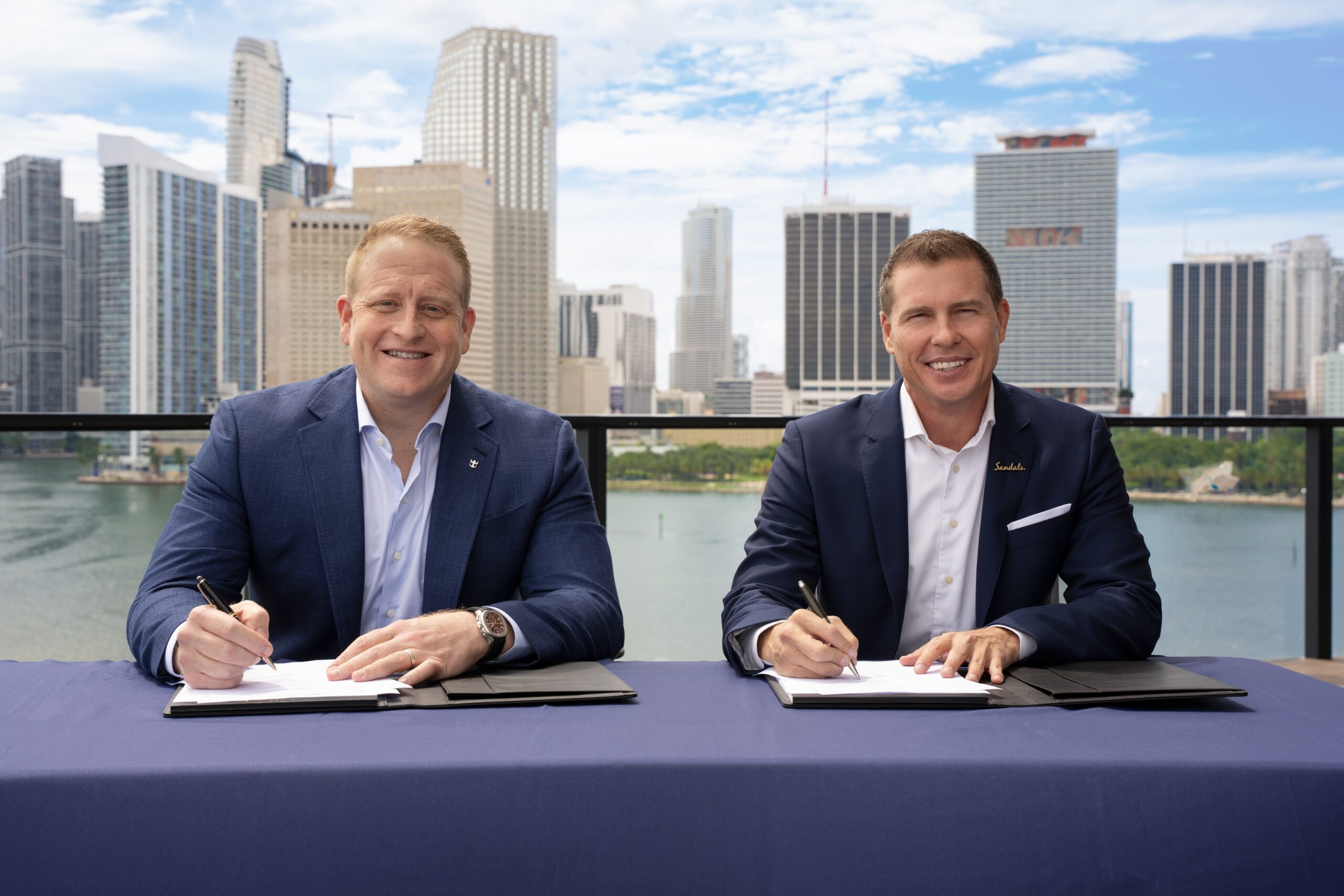 guiding the company’s long-term strategic growth as Executive Chairman of Sandals and Beaches Resorts. Existing reservations, loyalty programs, resort operations and cruise operations will continue as usual, with the partnership bringing additional resources to support future opportunities.
Under the terms of the agreement, Royal Caribbean Group will acquire a 50% equity interest in Sandals and Beaches Resorts for approximately $3 billion, representing a forward EBITDA multiple of approximately 10x. Royal Caribbean Group has secured committed debt financing from Morgan Stanley to fund the investment. The transaction is expected to close in early 2027, subject to customary approvals and closing conditions, and is expected to be accretive to earnings next year.
BofA Securities and PJT Partners acted as financial advisors, and Latham & Watkins and Jones Day acted as legal advisors to the Sandals Group. Perella Weinberg Partners and Morgan Stanley acted as financial advisors and Kirkland & Ellis LLP acted as legal advisor to Royal Caribbean Group.
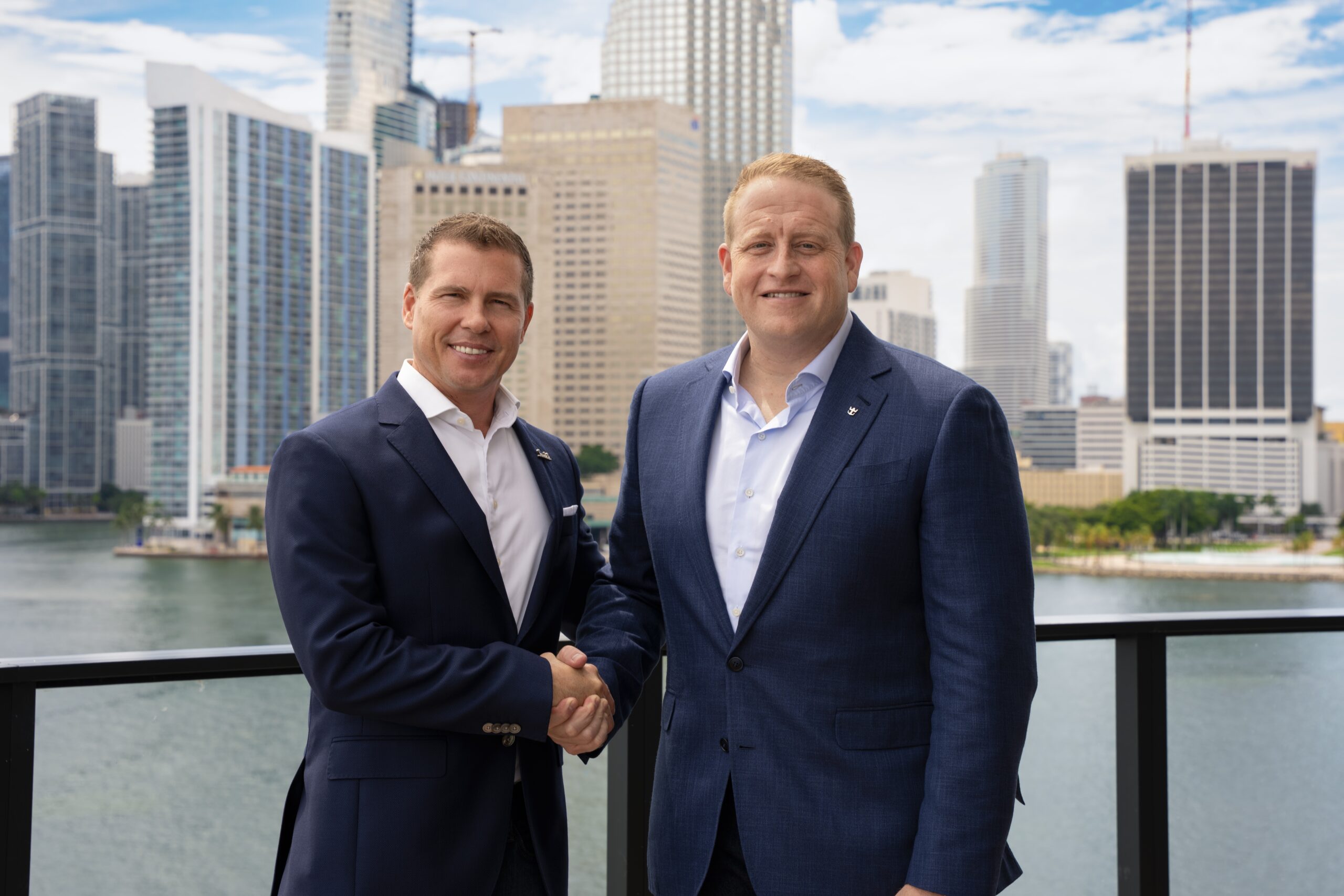
PHOTO CAPTION: Jason Liberty, Chairman and CEO of Royal Caribbean Group, and Adam Stewart, Executive Chairman of Sandals Resorts, mark the signing of an agreement to form a landmark partnership that expands Royal Caribbean Group into the all-inclusive resort space and supports the future growth of Sandals and Beaches Resorts. The signing took place at Royal Caribbean Group’s new headquarters in Miami, with the city’s skyline in the background.
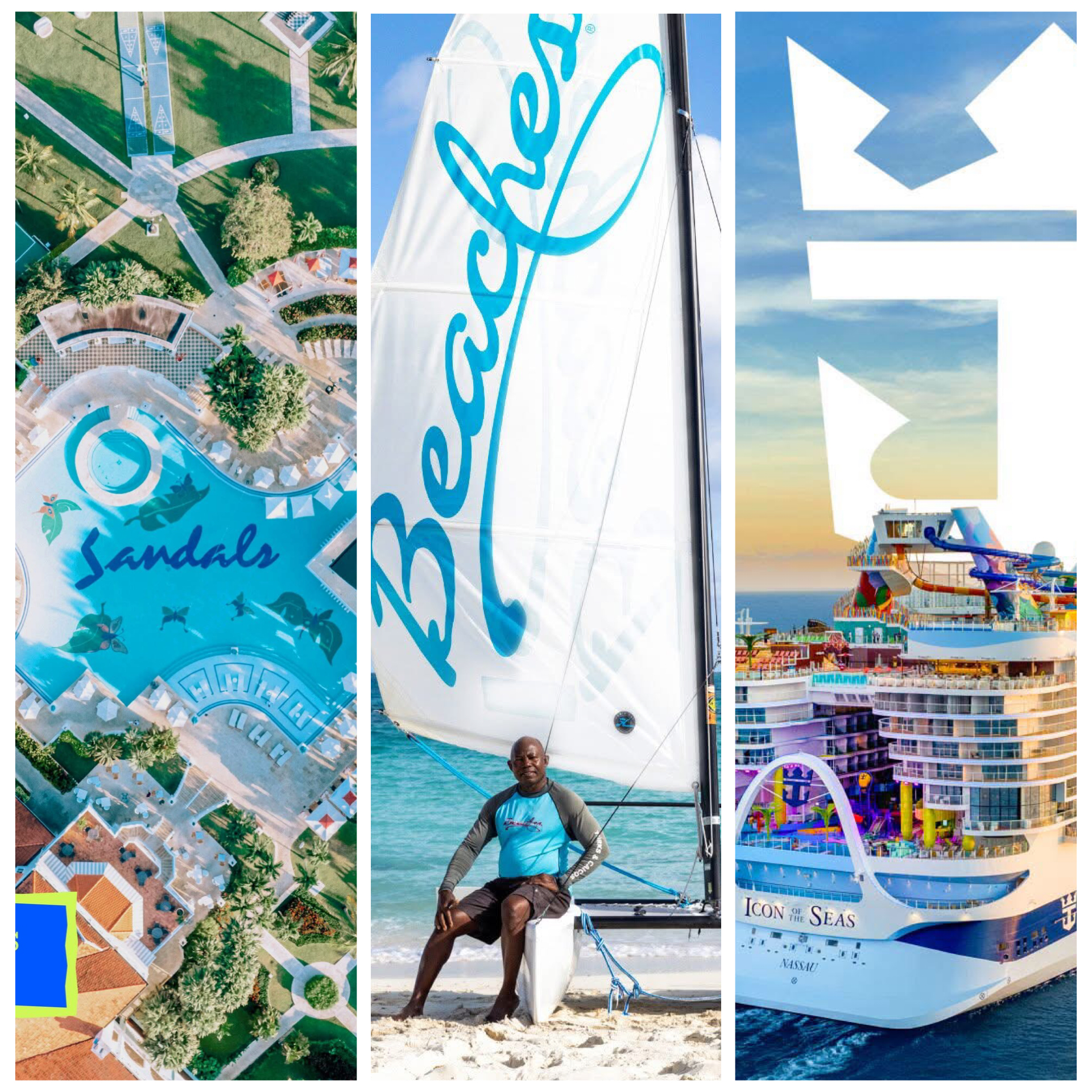
The Caribbean tourism deal first reported as a possibility on Tuesday is now a signed agreement. Royal Caribbean Group plans to pay approximately US$3 billion for a 50% stake in Sandals and Beaches Resorts, putting the value of the business at about US$6 billion. The purchase is expected to close in early 2027, subject to approvals.
Founded in Jamaica by the late Gordon “Butch” Stewart in 1981, the resort business has a presence across nine Caribbean destinations, including Jamaica, The Bahamas and Turks and Caicos. Sandals has described its workforce as nearly 20,000 people, most of them Caribbean nationals.
“My father, Gordon ‘Butch’ Stewart, founded Sandals Resorts with the belief that a company built in the Caribbean could stand on the world stage alongside the most respected names in hospitality,” said Adam Stewart in the announcement carried by PR Newswire. He will remain executive chairman, while the Stewart family retains a stake. The companies say existing reservations and resort operations will continue as usual.





-

 Health1 week ago
Cleveland Clinic First in Ohio to Perform Robotic Nipple-Sparing Mastectomy
-
 News4 days ago
Beaches Turks & Caicos strengthens year-round commitment with local craft vendors and transport operators
-
 News3 days ago
Beaches Turks & Caicos gives Enid Capron Primary a pre-term facelift
-

 Bahamas News5 days ago
Two Months On, The Bahamas Academy of Sciences Turns Fifty Years of Research into Action