
Caribbean News
TCHTA President’s Vision: Turks & Caicos as a Premier Service Destination


#TurksandCaicos, September 9, 2021 – When hearing the name Turks and Caicos, our waters, our weather, and immaculate powdery white beaches immediately come to mind.
Allow me to take you on a journey from the “Beautiful by Nature” Turks and Caicos Islands of today, to a destination known not only for its pristine beauty but one rooted in providing an exceptional service experience to visitors and residents alike. To envision Turks & Caicos as a service destination means taking an explorative look at our current positioning, our strengths and weaknesses, and the critical components needed to shape that vision.
The prerequisite of a service destination is a strong service culture. In a world where ‘brand Turks and Caicos’ is synonymous with a high level of service, our philosophy and values regarding service excellence must be embedded in every area of our nation’s service delivery.
Worldwide, perceptions about countries have been carefully established and strengthened over time. This is not happenstance. It is curated, developed, and maintained. A central idea and reputation of a country take years to build and to market, but when successful, the results are clear as indicated by our own personal thoughts when we hear a country’s name. 
Japan has built a reputation for efficiency; Sweden is known as a global design capital; Italy has a strong reputation in luxury fashion; Singapore, strict laws surrounding cleanliness; Estonia, known for technology and the digitalization of public services. These are all examples of successful nation branding, and this is what it will take for the vision of Turks & Caicos as a service destination to be realized.
While our visitors encounter picture-worthy, memorable experiences, as a service destination we would provide an elevated version of what we currently do so well; one where attention to every detail is paid, we anticipate and satisfy guests’ needs, and provide an on-island experience that leaves the guest feeling more exhilarated than a vacation in any other destination has ever made them feel.
Now, imagine if we take this model of an elevated service experience and apply it beyond the tourism sector. Nationally, there is a great deal of focus placed on the growth and management of tourism. When we look at how our product has successfully evolved since the advent of the Turks & Caicos tourism industry, we can proudly boast of a destination that is growing and is among the most popular destinations in the region, among those with the highest annual daily rates experienced in the Caribbean. We see our culinary landscape development and a gentle push toward branding in that area as well. Ultimately, we are uniquely positioned to build on the existing branding and truly set ourselves apart.
However, if we embark on the journey to becoming a fully realized service destination, it will be no small feat. It requires a holistic approach and must be all-encompassing. Service excellence cannot exist only in our hospitality sector but must permeate both the public and private sectors if we are to achieve effective nation branding.
The question then becomes, can we achieve this? The answer: yes, we can!
Mahatma Gandhi said, “A customer is the most important visitor on our premises. He is not dependent on us. We are dependent on him. He is not an interruption in our work – he is the purpose of it. We are not doing him a favor by serving him. He is doing us a favor by giving us the opportunity to serve him.”
This belief should be the guiding principle at the core of our nation branding if we hope to be regarded as a service destination.
There is a simple and abiding truth: if you don’t manage your country’s brand and perception, someone else will!
If we want to take charge of the emotion and feeling that comes to mind when the name Turks & Caicos is heard, there are key ingredients we must implement as we make a push to build our nation’s branding:
First and foremost, a strong vision of Turks & Caicos as a service destination is key. The vision and mission lay the foundation and must be clear to all involved. Effective nation branding is one that is holistic in nature. It is the crafting of a framework that supports the positioning of the country on an international level in a strategic and deliberate way.
This framework creates the basis for the service culture across companies, organizations, and ultimately the country at large. It defines how we act, speak, and look. It essentially harmonizes what the world sees and thinks about us and helps to make the Turks and Caicos brand easily recognizable and reputable.
The second ingredient is alignment. Nation branding requires full stakeholder engagement. What does this mean? It means a complete buy-in from government, businesses, and citizens. Before you can successfully sell yourself to the world as a service destination, there must first be an indoctrination of this theme within the country. Whether young or old, indigenous or non-indigenous, there must be a complete buy-in. In short, service must be the DNA of the destination.
This can only be achieved if the proper mechanisms are put in place to ensure the culture being created is sustainable. Education, training, and continued development are key factors to the success of maintaining the standard of excellence once it is set.
And thirdly, there must be measurement and accountability. Once we brand ourselves as a nation with a strong focus on service, it is important that we put checks and balances in place to ensure that we deliver across the board. Only then we will create the basis for culture credibility.
Why should we embark on becoming a service destination? Self-made millionaire and motivational speaker Jim Rohn once said, “If you make a sale, you can make a living. If you make an investment of time and good service, you can make a fortune.”
The key to any nation’s success is its ability to attract trade, investment, tourism, and talents. The strength of a nation’s service delivery and reputation can be the pivotal element to this as its overall perception has a distinct economic and social impact on its advancement.
Turks & Caicos as a service destination can significantly enhance the country’s competitiveness on the global stage and thereby support economic growth. This strong reputation can then be leveraged by all industry sectors for a united approach in the international markets.
Imagine a Turks & Caicos where your experience as a customer – whether with a government agency, your telecommunications provider, or even a service station – is honed specifically with you in mind. A nationwide service culture provides the framework for providers to continue seeking ways to better serve you, the customer, and to ensure that every effort is made to provide exceptional service even in challenging circumstances. 
It is said that courteous treatment will make a customer a walking advertisement. This is true and must apply not only to the service we deliver to our tourists and guests, but to the service we provide our citizens and residents as well.
With or without a push to brand ourselves nationally as a service destination, delivering a quality experience to clients and customers should be the objective of any business or organization in these islands. Take a good look at the inner workings of your business and examine whether or not you are operating with customer satisfaction in mind.
- Do your policies work for you as an organization more than they do for your customer?
- How can you optimize your policies with the customer or client in mind?
- What new solution would lend to a more customer-friendly experience?
- How do you ensure that the customer knows he/she is the most important component to the success of your business?
If we apply these questions to all business models, then we easily see a theme of service on a heightened level with tourism providers, investment organizations, public service agencies, and even our ‘Mom & Pop’ operations.
Once the key ingredients for nation branding are embedded in the country’s culture, this needs to be marketed to the masses. Here is where logos, slogans, and entertainment are developed to awaken the feelings and emotions that should be associated with your brand.
For this to resonate globally, no single organization should be responsible for this messaging. When nation branding is effective, an identity emerges that serves the country as well as the brands within it. Key operators leverage the theme of the nation’s brand to continue building value for the country and cementing the message of a strong service destination.
Let’s examine the Emirates model as an example. This airline not only markets and brands their company’s offerings but leverages the country’s image and culture essentially acting as a brand representative. They brand their product as an extension and representation of the national experience. This is what a complete buy-in throughout our country’s sectors will need to be. Everyone incorporating the central theme within their individual branding efforts to build a clear, consistent, credible, and competitive message.
I invite us all to begin thinking about the part we play in the branding of this wonderful country, and how we can develop a mindset of service excellence. This must be the order of the day without fail if we are to be regarded and recognized as a strong service destination.
Remember that a logo or slogan is not all there is to nation branding. The feelings, emotions, and perceptions that come to mind are indicative of our brand. If we are to stamp ourselves in this way, we must live and breathe service so much so that it is second nature.
The future of Turks and Caicos as a service destination begins with treating the customer as if you are that customer.
As Walt Disney once said, “Do what you do so well that they will want to see it again and bring their friends.”








By Deandrea Hamilton | Editor
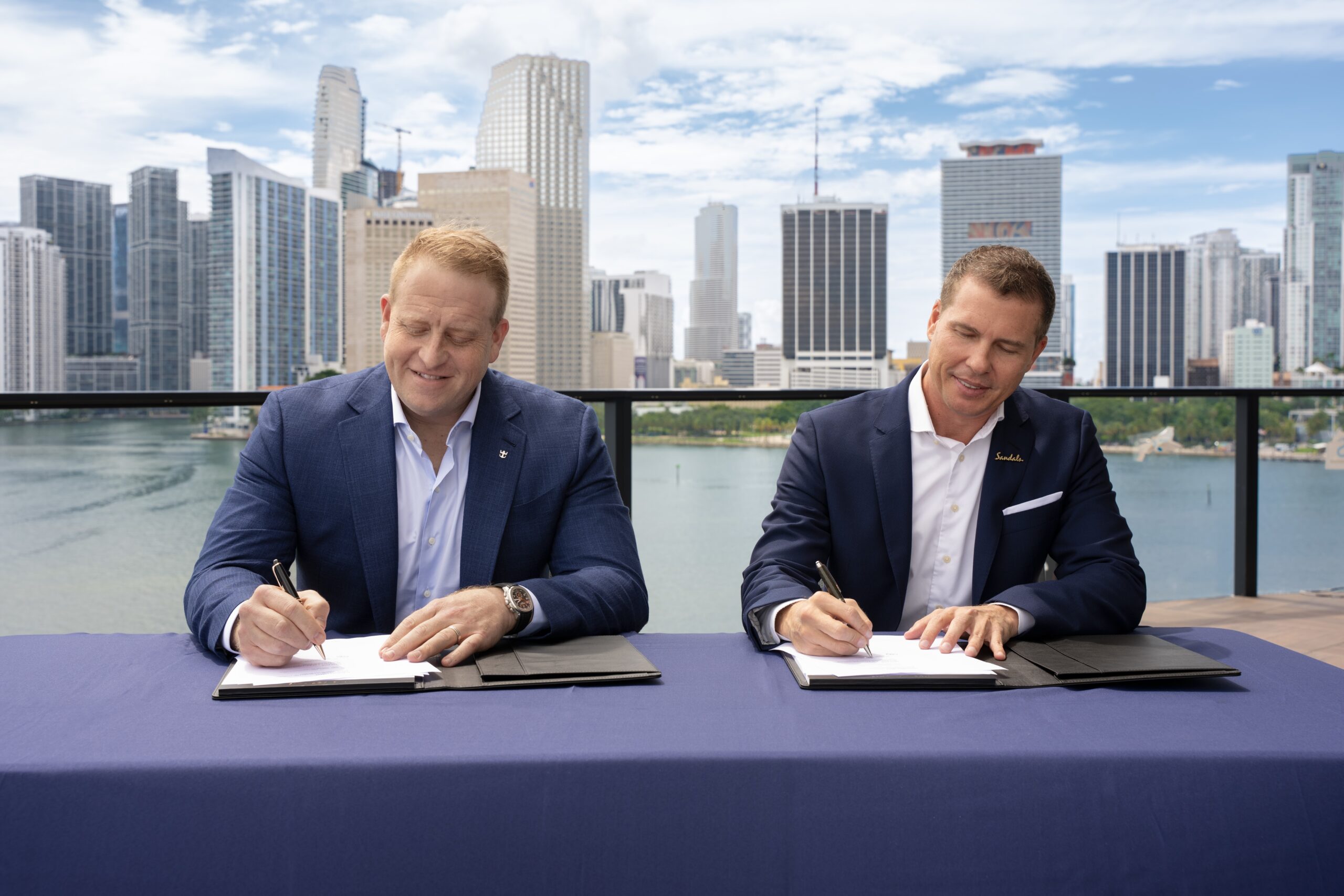
September 28, 2026 – Wall Street initially flinched at the $3-billion handshake. But in a matter of days, it was smoother sailing.
Perhaps the bigger Caribbean business story is not what Sandals Resorts International is getting from the deal. It is who is writing the cheque — and what that says about what Gordon “Butch” Stewart built.
As reports of Royal Caribbean Group’s Sandals deal circulated Tuesday, RCL shares plunged 6.14 percent from Monday’s $250.25 close to $234.89, on sharply elevated trading.
When the agreement became official Wednesday — approximately $3 billion for a 50 percent equity interest in Sandals and Beaches Resorts — shares slipped another 1.95 percent to $230.30 and touched $222.22 intraday. Investors were digesting both the size of the investment and committed debt financing secured through Morgan Stanley.
But by Thursday, RCL rebounded 3.77 percent, with shares continuing their recovery Friday to finish the week around $243. Analysts were also looking ahead: JPMorgan reportedly raised its RCL price target from $345 to $394, while Citi placed the company on a 90-day positive catalyst watch.
And just who is RCL?
Royal Caribbean Group is a global vacation giant, publicly traded on the New York Stock Exchange with a market value of roughly $65 billion. Its portfolio includes Royal Caribbean International, Celebrity Cruises and Silversea, alongside private destinations and an expanding vacation platform.
So when a company of that scale commits $3 billion for only half of Sandals and Beaches Resorts, the transaction puts a striking financial marker on one of the Caribbean’s greatest home-grown hospitality success stories.
The deal, expected to close in early 2027, creates a 50-50 partnership with the Stewart family and takes Royal Caribbean deeper into the all-inclusive resort business.
Butch Stewart started Sandals in Jamaica in 1981 believing a Caribbean company could compete with the world’s best.
Forty-five years later, one of the world’s biggest vacation companies is prepared to pay $3 billion just to own half of what he built.
Now that’s the handshake that does more than seal a deal — it cements a legacy.
Caribbean News
Royal Caribbean Group and Sandals Resorts Announce Landmark Partnership to Accelerate Their Leading Vacation Experiences
Royal Caribbean Group Investment to Advance Sandals and Beaches’ Growth and Broaden the Group’s Vacation Portfolio
Montego Bay, Jamaica and Miami, September 24, 2026 – Royal Caribbean Group (NYSE: RCL) and Sandals Resorts today announced the signing of an agreement to form a partnership in the all-inclusive resort space with a 50% investment from Royal Caribbean Group. Building on Sandals and Beaches Resorts’ more than four decades of leadership in Caribbean hospitality, the joint venture will create new opportunities for continued resort growth while broadening the experiences across Royal Caribbean Group’s vacation platform.
The partnership brings together two of the travel industry’s most celebrated vacation companies, pairing Sandals and Beaches’ all-inclusive resort expertise with Royal Caribbean Group’s vacation platform, including industry-leading brands – Royal Caribbean, Celebrity Cruises and Silversea – a portfolio of private destinations, new river cruising offering, and an industry-first loyalty program. United in a shared history in the Caribbean and connected by a love for their communities, the companies will offer travelers an unparalleled collection of cruise, private destination and resort experiences, serving guests across more vacation occasions and establishing their undisputed leadership in Caribbean vacations.
The joint venture expands Royal Caribbean Group into an adjacent vacation category, growing its participation in the approximately $2 trillion global vacation market, and meets the growing global demand for Sandals and Beaches Resorts by accelerating their expansion. The partnership will include Sandals and Beaches’ collection of premier all-inclusive properties across the Caribbean, and the companies will explore opportunities to broaden distribution, deepen guest engagement, and make it easier for travelers to discover vacation experiences offered across both portfolios.
“For nearly 60 years, we’ve reimagined what a vacation can be, constantly expanding the ways we inspire our guests to explore, connect and create lifelong memories,” said Jason Liberty, Chairman and CEO, Royal Caribbean Group. “We have been building a vacation platform that brings joy to millions of people around the world and creates meaningful relationships that last with our guests. Our partnership with Sandals and Beaches Resorts is an important next step on that journey – bringing together two iconic leading vacation companies to further strengthen and grow one of the most admired resort portfolios in the world. The Stewart family has created powerful and beloved brands, and we are honored to build on that legacy. Together, we see tremendous opportunity to expand the reach of Sandals and Beaches Resorts and continue turning the vacation of a lifetime into a lifetime of vacations.”
“My father, Gordon ‘Butch’ Stewart, founded Sandals Resorts with the belief that a company built in the Caribbean could stand on the world stage alongside the most respected names in hospitality. Today is proof of how far that vision can go,” said Adam Stewart, Executive Chairman of Sandals Resorts and Beaches Resorts. “This partnership is the natural next step in building on that conviction. It gives us the ability to grow faster with a partner that shares our values of exceptional hospitality, long-term investment, and the power of enduring brands. Together, we will introduce more guests to Sandals and Beaches Resorts while creating even more extraordinary experiences for those who have made our resorts part of their lives for decades.” Stewart added, “As we continue to grow, we will remain true to what has always defined us: delivering authentic vacations that exceed expectations while creating opportunities for our team members, travel advisor partners and the communities we call home. The future has never been brighter, and I know this moment would make my father incredibly proud.”
The joint venture will be governed by a board under the shared leadership of Stewart and Liberty. Stewart will maintain a leadership role in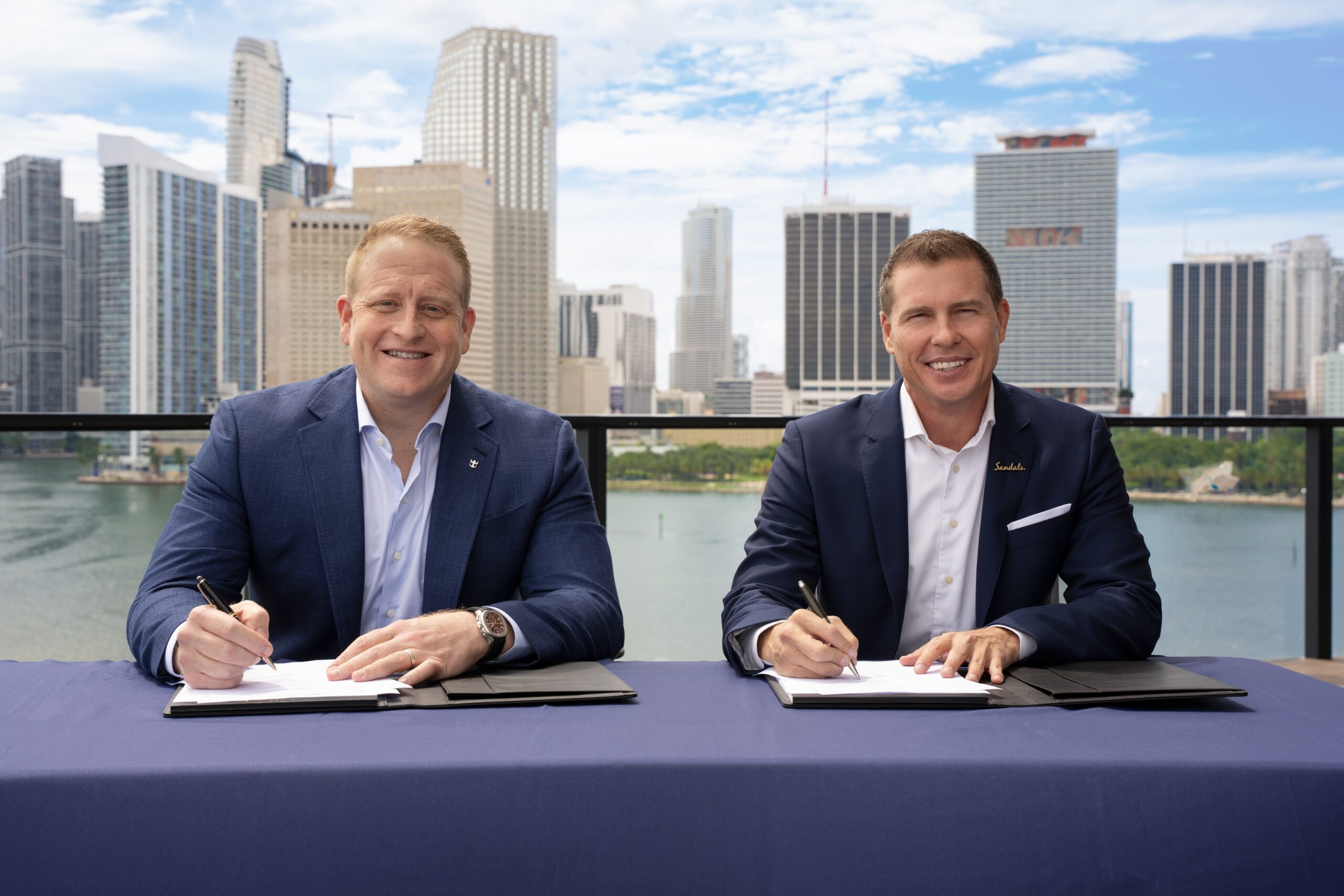 guiding the company’s long-term strategic growth as Executive Chairman of Sandals and Beaches Resorts. Existing reservations, loyalty programs, resort operations and cruise operations will continue as usual, with the partnership bringing additional resources to support future opportunities.
Under the terms of the agreement, Royal Caribbean Group will acquire a 50% equity interest in Sandals and Beaches Resorts for approximately $3 billion, representing a forward EBITDA multiple of approximately 10x. Royal Caribbean Group has secured committed debt financing from Morgan Stanley to fund the investment. The transaction is expected to close in early 2027, subject to customary approvals and closing conditions, and is expected to be accretive to earnings next year.
BofA Securities and PJT Partners acted as financial advisors, and Latham & Watkins and Jones Day acted as legal advisors to the Sandals Group. Perella Weinberg Partners and Morgan Stanley acted as financial advisors and Kirkland & Ellis LLP acted as legal advisor to Royal Caribbean Group.
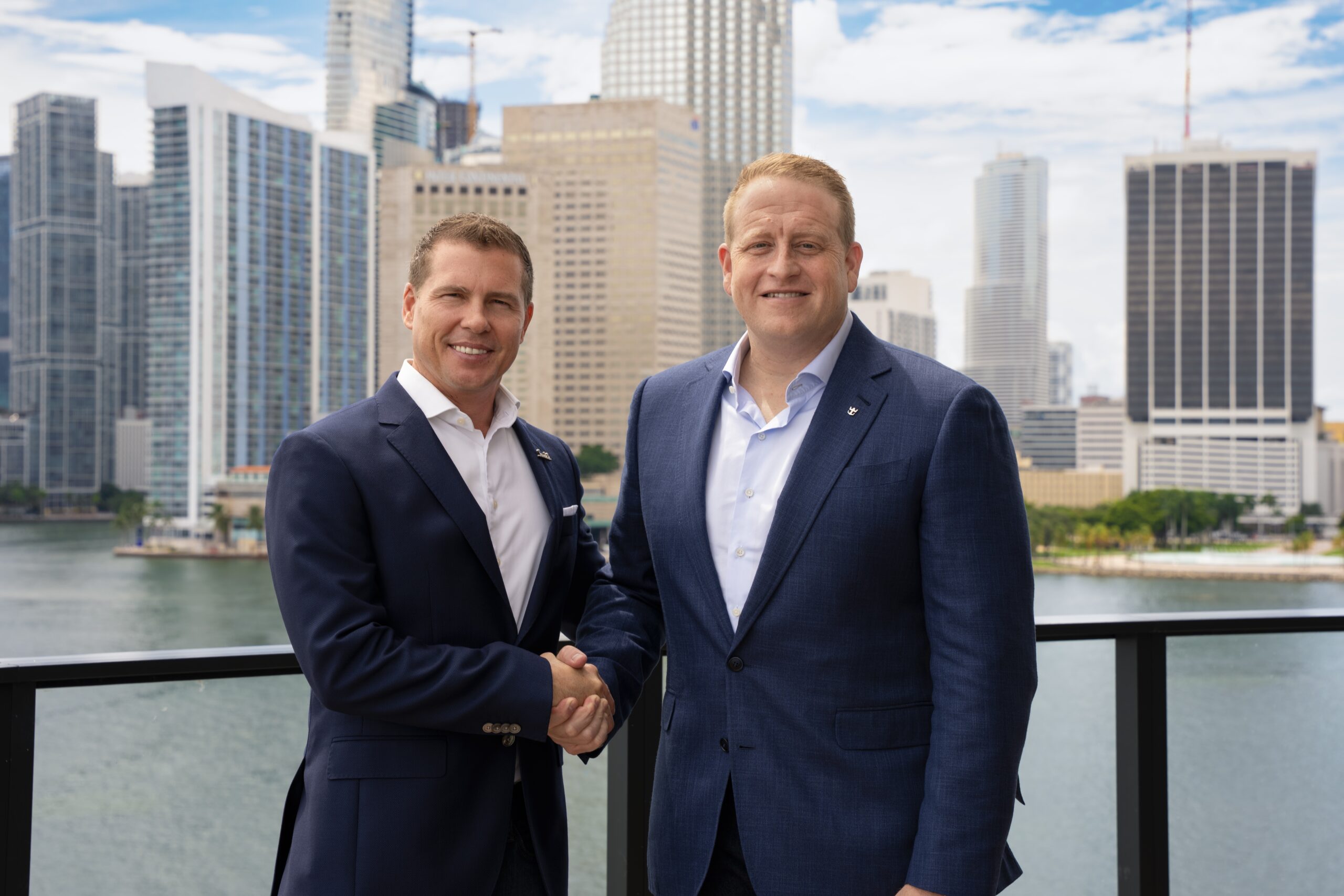
PHOTO CAPTION: Jason Liberty, Chairman and CEO of Royal Caribbean Group, and Adam Stewart, Executive Chairman of Sandals Resorts, mark the signing of an agreement to form a landmark partnership that expands Royal Caribbean Group into the all-inclusive resort space and supports the future growth of Sandals and Beaches Resorts. The signing took place at Royal Caribbean Group’s new headquarters in Miami, with the city’s skyline in the background.
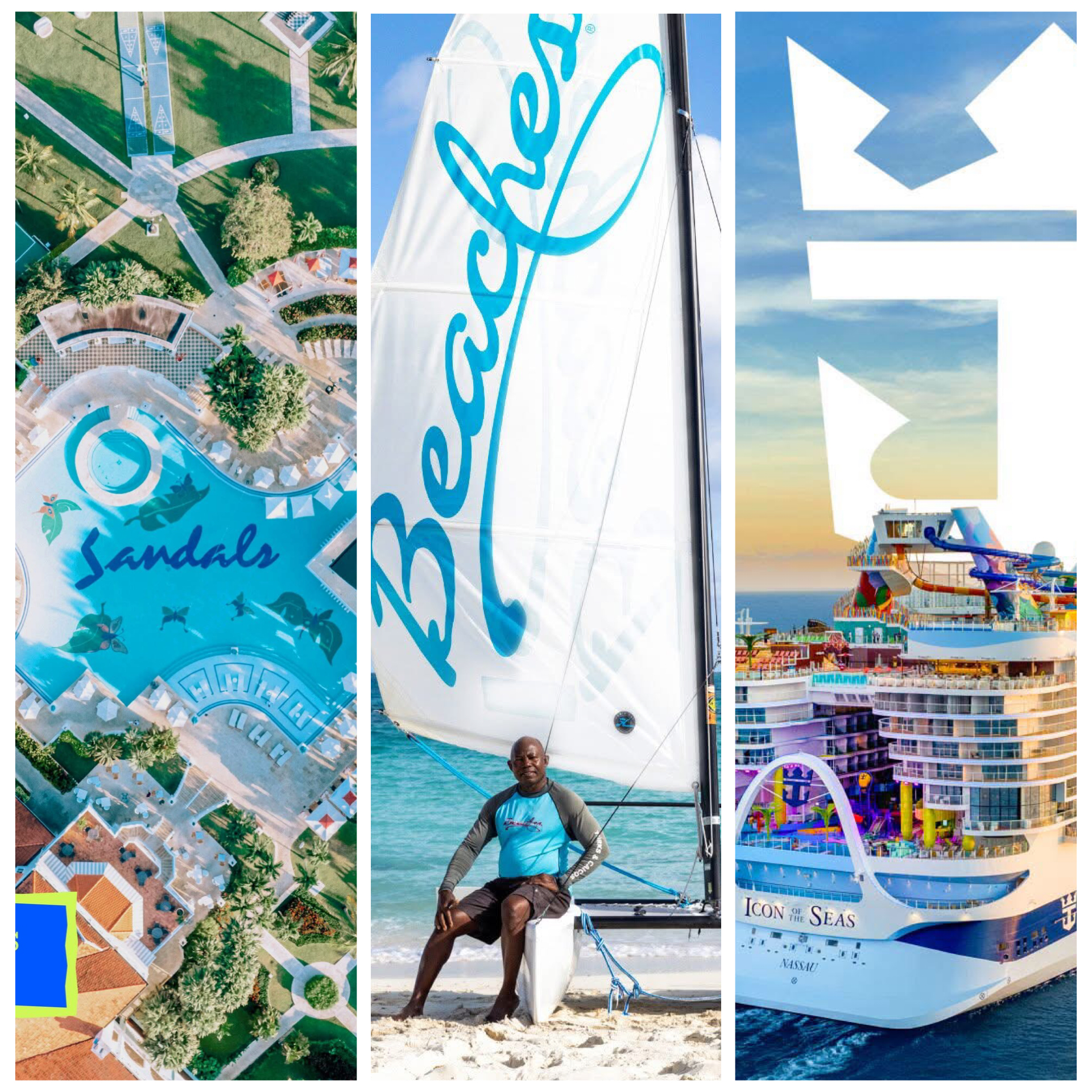
The Caribbean tourism deal first reported as a possibility on Tuesday is now a signed agreement. Royal Caribbean Group plans to pay approximately US$3 billion for a 50% stake in Sandals and Beaches Resorts, putting the value of the business at about US$6 billion. The purchase is expected to close in early 2027, subject to approvals.
Founded in Jamaica by the late Gordon “Butch” Stewart in 1981, the resort business has a presence across nine Caribbean destinations, including Jamaica, The Bahamas and Turks and Caicos. Sandals has described its workforce as nearly 20,000 people, most of them Caribbean nationals.
“My father, Gordon ‘Butch’ Stewart, founded Sandals Resorts with the belief that a company built in the Caribbean could stand on the world stage alongside the most respected names in hospitality,” said Adam Stewart in the announcement carried by PR Newswire. He will remain executive chairman, while the Stewart family retains a stake. The companies say existing reservations and resort operations will continue as usual.





-
 News1 week ago
Beaches Turks & Caicos strengthens year-round commitment with local craft vendors and transport operators
-

 News6 days ago
Beaches Turks & Caicos gives Enid Capron Primary a pre-term facelift
-

 Independent writer3 days ago
Born Here, Raised Here, but Still Unable to Vote: Is this a Conundrum for TCI Electorate?
-
 News7 days ago
Stakeholders Strengthen Collaboration on Housing and Informal Settlements at World Habitat Day Roundtable
-

 Bahamas News1 week ago
Two Months On, The Bahamas Academy of Sciences Turns Fifty Years of Research into Action
-

 Bahamas News2 days ago
Monument Supports Hands for Hunger With Paradise Plates Debut
-

 Education7 days ago
TCICC Earns International Recognition at Ignition Community Conference 2026
-

 Bahamas News3 days ago
Schweppes ‘the Art of Mixology’ Dazzles at Paradise Plates with Nemiroff Vodka