
Caribbean News
Assassinated: Haitian President Jovenel Moïse cut down by mercenaries in his prime

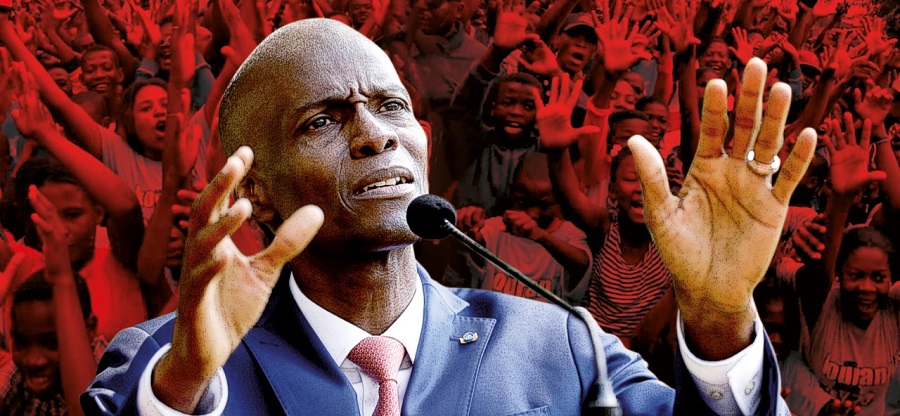
#Haiti, July 8, 2021 – First Lady Matine Moise has survived the attack on her home which killed her husband, the 58th president of the Republic of Haiti, Jovenel Moise.
In a story which is heartbreaking, horrifying, angering, confusing and still developing there are many questions including how the assailants managed to infiltrate the usually heavy security surrounding the president. Security Forces are layers thick; placed in his neighbourhood, on the compound of his home and within the house. Yet, around 1 a.m. on Wednesday the commandoes got into the private home and gunned down 53-year-old Moïse, his wife was also struck by bullets.
Now, the first lady is airlifted to medical care in South Florida and prayers are launched in hopes she will pull through despite having sustained critical injuries.
Weeping has been reported to Magnetic Media… those who loved the president are mortified by the news.
Others who know of the volatility of Haiti which has erupted several times in politically driven protests said it was hot on the ground, and his assassination is not a huge surprise.
Haiti has in recent years, under the leadership of Moïse has seen controversial and unpopular decisions made. Old friends like Venezuela, disappointed. A relationship with China abandoned in favour of Taiwan. New strategies to end food dependency and boost agriculture drawing warnings from the Dominican Republic; allegedly exploitive contracts and policies ended, which have offended the ‘Boujwazee’ and the Church.
Moïse was seen as a maverick, who did what other country leaders had failed to do, but his political naiveté may have cost him his life. President Moïse was also seen as a dictator who refused to demit office and hold a general election as constitutionally mandated. The confirmation of the assassination came early this morning from the interim PM of Haiti, Claude Joseph.
Joseph locked down the country; closing sea and air ports. He barricaded the capital Port Au Prince; not allowing motor vehicles in or out. Many guess that it must be in an attempt to capture the killers and they were right. The border between the Dominican Republic and Haiti was closed following the attack.
Haiti now also facing a possible conundrum as it is unclear how the country proceeds in terms of national leadership. The acting Prime Minister, because he is “acting” may not be able to assume the role of President. There is no parliament, because constitutionally it had to be dissolved since January 2020 and the Supreme Court Justice, in recent month died, reportedly after contracting the coronavirus.
On Monday, before his murder, President Moïse announced that he had identified a medical doctor – Ariel Henry – to take on the role of Prime Minister of Haiti. A move he justified as necessary to guide Haiti through the coronavirus pandemic.
Dr. Henry would have been the seventh prime minister in four years and would have taken over as Prime Minister of Haiti at the end of this week.

Our news organization was informed there is no such thing as a vice president in Haiti; a change Moïse had hoped to bring if re-elected along with other constitutional changes which had been promoted in a referendum. Some of those amendments were criticised for seeking to give too much power to the executive. An election was announced for September in Haiti.
Prime Minister Joseph has informed media that he is in charge of Haiti now.
As for video circulating where you can hear the order to “stand down”, it is legitimate and it is said dark blue trucks pulled into the compound, men posing as United States D.E.A. officers came in and they were the ones who gunned down Moïse.
“Barbaric”, “cowardly”, “worrisome”, and “atrocious” are among the descriptions of the way Jovenel Moïse met his untimely demise, coming from leaders around the region and around the world.
Turks and Caicos Premier, Washington Misick said it is horrific and “My prayer is that the perpetrators are found and held accountable for their malicious actions and that peaceful resolve and good order can arise from such a horrible tragedy.”
The murder of Moïse is particularly shocking because civilized countries of the world have come a long way from times when assassination is the way to make the point or win an argument.
From our media house (Magnetic Media) which has spent decades covering the people, places and plans of Haiti, we extend our deepest condolences.
See pages 21, 22 and 23 in our photo tribute to the slain President of Haiti, Jovenel Moïse.










By Deandrea Hamilton | Editor
September 28, 2026 – Wall Street initially flinched at the $3-billion handshake. But in a matter of days, it was smoother sailing.
Perhaps the bigger Caribbean business story is not what Sandals Resorts International is getting from the deal. It is who is writing the cheque — and what that says about what Gordon “Butch” Stewart built.
As reports of Royal Caribbean Group’s Sandals deal circulated Tuesday, RCL shares plunged 6.14 percent from Monday’s $250.25 close to $234.89, on sharply elevated trading.
When the agreement became official Wednesday — approximately $3 billion for a 50 percent equity interest in Sandals and Beaches Resorts — shares slipped another 1.95 percent to $230.30 and touched $222.22 intraday. Investors were digesting both the size of the investment and committed debt financing secured through Morgan Stanley.
But by Thursday, RCL rebounded 3.77 percent, with shares continuing their recovery Friday to finish the week around $243. Analysts were also looking ahead: JPMorgan reportedly raised its RCL price target from $345 to $394, while Citi placed the company on a 90-day positive catalyst watch.
And just who is RCL?
Royal Caribbean Group is a global vacation giant, publicly traded on the New York Stock Exchange with a market value of roughly $65 billion. Its portfolio includes Royal Caribbean International, Celebrity Cruises and Silversea, alongside private destinations and an expanding vacation platform.
So when a company of that scale commits $3 billion for only half of Sandals and Beaches Resorts, the transaction puts a striking financial marker on one of the Caribbean’s greatest home-grown hospitality success stories.
The deal, expected to close in early 2027, creates a 50-50 partnership with the Stewart family and takes Royal Caribbean deeper into the all-inclusive resort business.
Butch Stewart started Sandals in Jamaica in 1981 believing a Caribbean company could compete with the world’s best.
Forty-five years later, one of the world’s biggest vacation companies is prepared to pay $3 billion just to own half of what he built.
Now that’s the handshake that does more than seal a deal — it cements a legacy.
Caribbean News
Royal Caribbean Group and Sandals Resorts Announce Landmark Partnership to Accelerate Their Leading Vacation Experiences
Royal Caribbean Group Investment to Advance Sandals and Beaches’ Growth and Broaden the Group’s Vacation Portfolio
Montego Bay, Jamaica and Miami, September 24, 2026 – Royal Caribbean Group (NYSE: RCL) and Sandals Resorts today announced the signing of an agreement to form a partnership in the all-inclusive resort space with a 50% investment from Royal Caribbean Group. Building on Sandals and Beaches Resorts’ more than four decades of leadership in Caribbean hospitality, the joint venture will create new opportunities for continued resort growth while broadening the experiences across Royal Caribbean Group’s vacation platform.
The partnership brings together two of the travel industry’s most celebrated vacation companies, pairing Sandals and Beaches’ all-inclusive resort expertise with Royal Caribbean Group’s vacation platform, including industry-leading brands – Royal Caribbean, Celebrity Cruises and Silversea – a portfolio of private destinations, new river cruising offering, and an industry-first loyalty program. United in a shared history in the Caribbean and connected by a love for their communities, the companies will offer travelers an unparalleled collection of cruise, private destination and resort experiences, serving guests across more vacation occasions and establishing their undisputed leadership in Caribbean vacations.
The joint venture expands Royal Caribbean Group into an adjacent vacation category, growing its participation in the approximately $2 trillion global vacation market, and meets the growing global demand for Sandals and Beaches Resorts by accelerating their expansion. The partnership will include Sandals and Beaches’ collection of premier all-inclusive properties across the Caribbean, and the companies will explore opportunities to broaden distribution, deepen guest engagement, and make it easier for travelers to discover vacation experiences offered across both portfolios.
“For nearly 60 years, we’ve reimagined what a vacation can be, constantly expanding the ways we inspire our guests to explore, connect and create lifelong memories,” said Jason Liberty, Chairman and CEO, Royal Caribbean Group. “We have been building a vacation platform that brings joy to millions of people around the world and creates meaningful relationships that last with our guests. Our partnership with Sandals and Beaches Resorts is an important next step on that journey – bringing together two iconic leading vacation companies to further strengthen and grow one of the most admired resort portfolios in the world. The Stewart family has created powerful and beloved brands, and we are honored to build on that legacy. Together, we see tremendous opportunity to expand the reach of Sandals and Beaches Resorts and continue turning the vacation of a lifetime into a lifetime of vacations.”
“My father, Gordon ‘Butch’ Stewart, founded Sandals Resorts with the belief that a company built in the Caribbean could stand on the world stage alongside the most respected names in hospitality. Today is proof of how far that vision can go,” said Adam Stewart, Executive Chairman of Sandals Resorts and Beaches Resorts. “This partnership is the natural next step in building on that conviction. It gives us the ability to grow faster with a partner that shares our values of exceptional hospitality, long-term investment, and the power of enduring brands. Together, we will introduce more guests to Sandals and Beaches Resorts while creating even more extraordinary experiences for those who have made our resorts part of their lives for decades.” Stewart added, “As we continue to grow, we will remain true to what has always defined us: delivering authentic vacations that exceed expectations while creating opportunities for our team members, travel advisor partners and the communities we call home. The future has never been brighter, and I know this moment would make my father incredibly proud.”
The joint venture will be governed by a board under the shared leadership of Stewart and Liberty. Stewart will maintain a leadership role in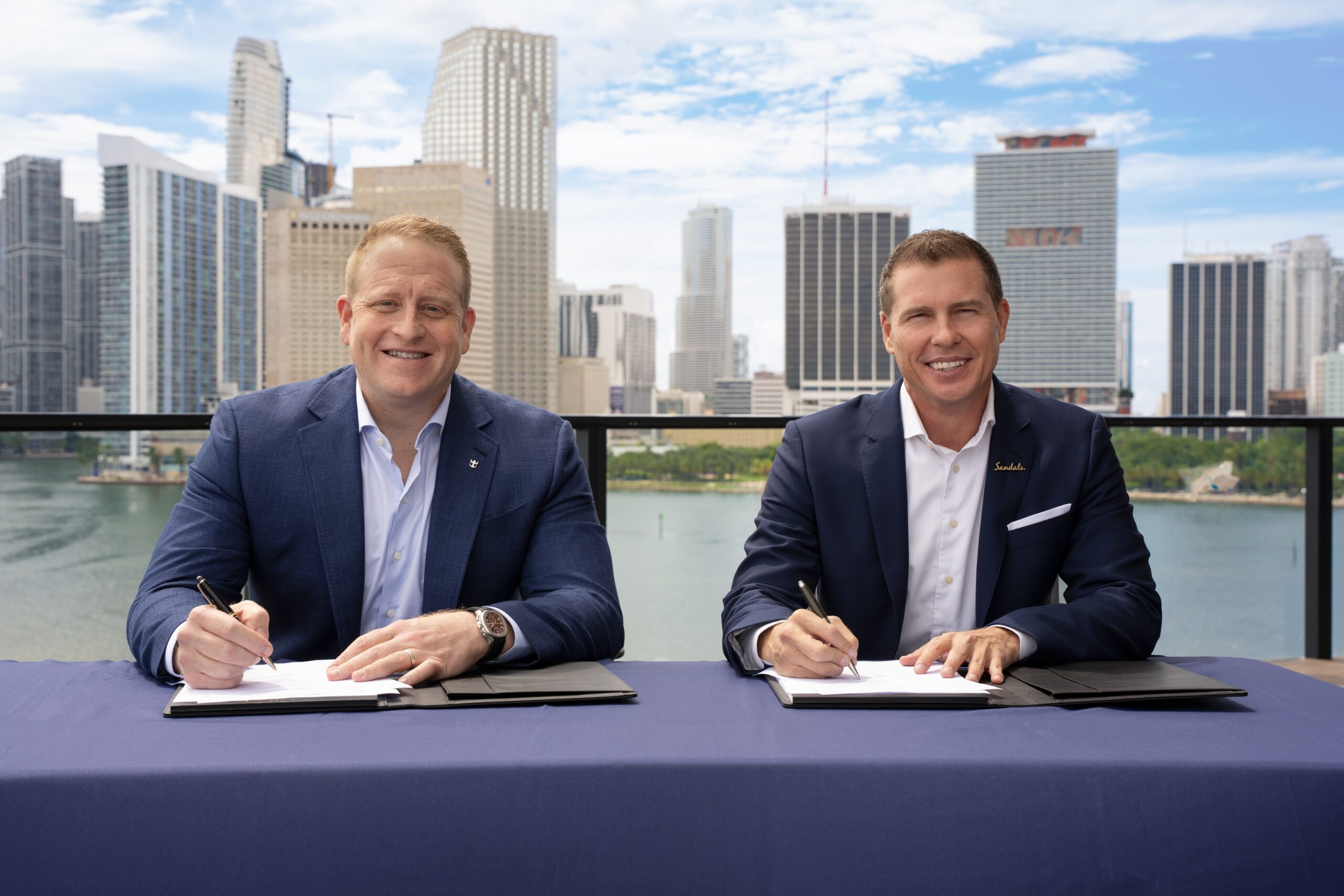 guiding the company’s long-term strategic growth as Executive Chairman of Sandals and Beaches Resorts. Existing reservations, loyalty programs, resort operations and cruise operations will continue as usual, with the partnership bringing additional resources to support future opportunities.
Under the terms of the agreement, Royal Caribbean Group will acquire a 50% equity interest in Sandals and Beaches Resorts for approximately $3 billion, representing a forward EBITDA multiple of approximately 10x. Royal Caribbean Group has secured committed debt financing from Morgan Stanley to fund the investment. The transaction is expected to close in early 2027, subject to customary approvals and closing conditions, and is expected to be accretive to earnings next year.
BofA Securities and PJT Partners acted as financial advisors, and Latham & Watkins and Jones Day acted as legal advisors to the Sandals Group. Perella Weinberg Partners and Morgan Stanley acted as financial advisors and Kirkland & Ellis LLP acted as legal advisor to Royal Caribbean Group.
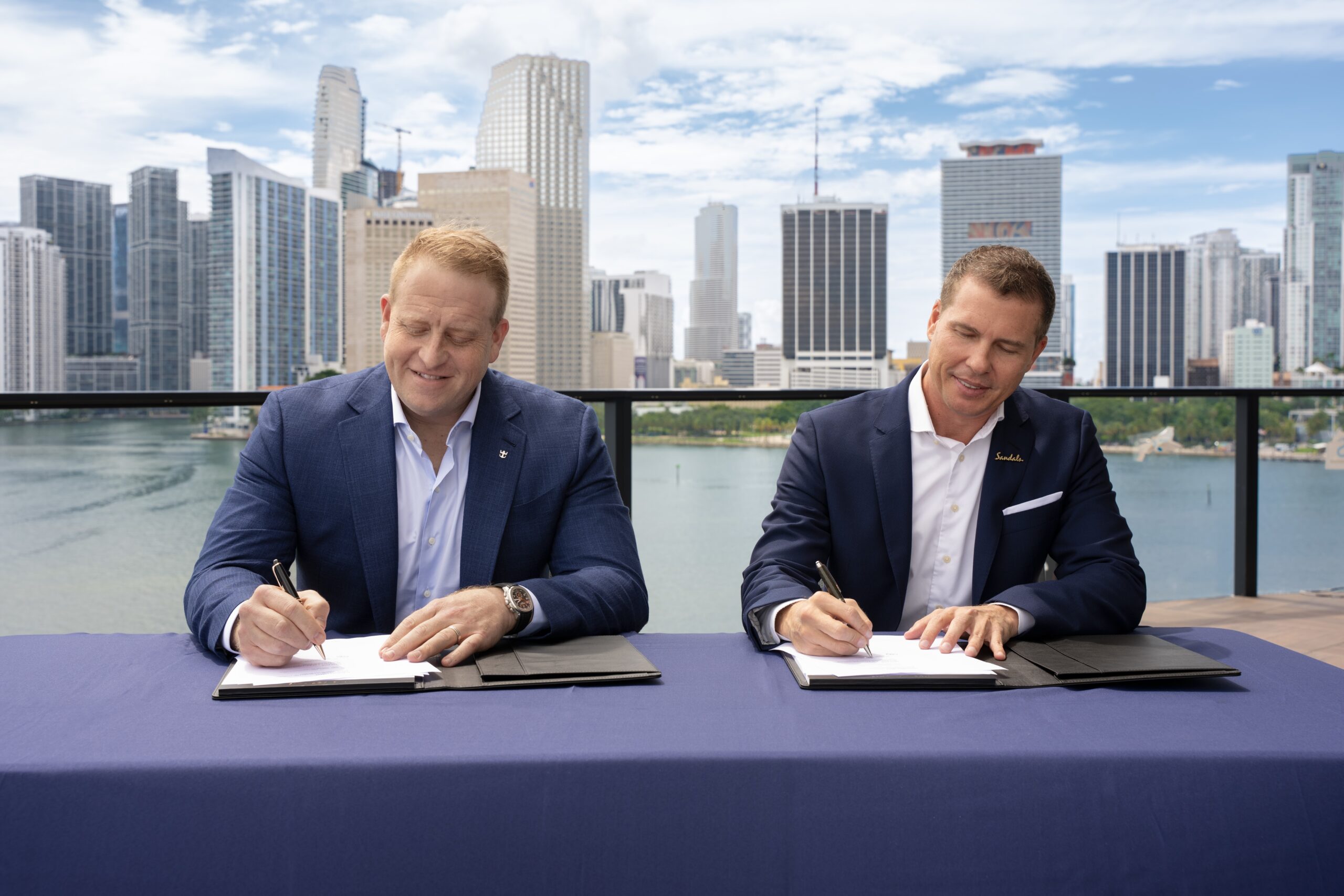
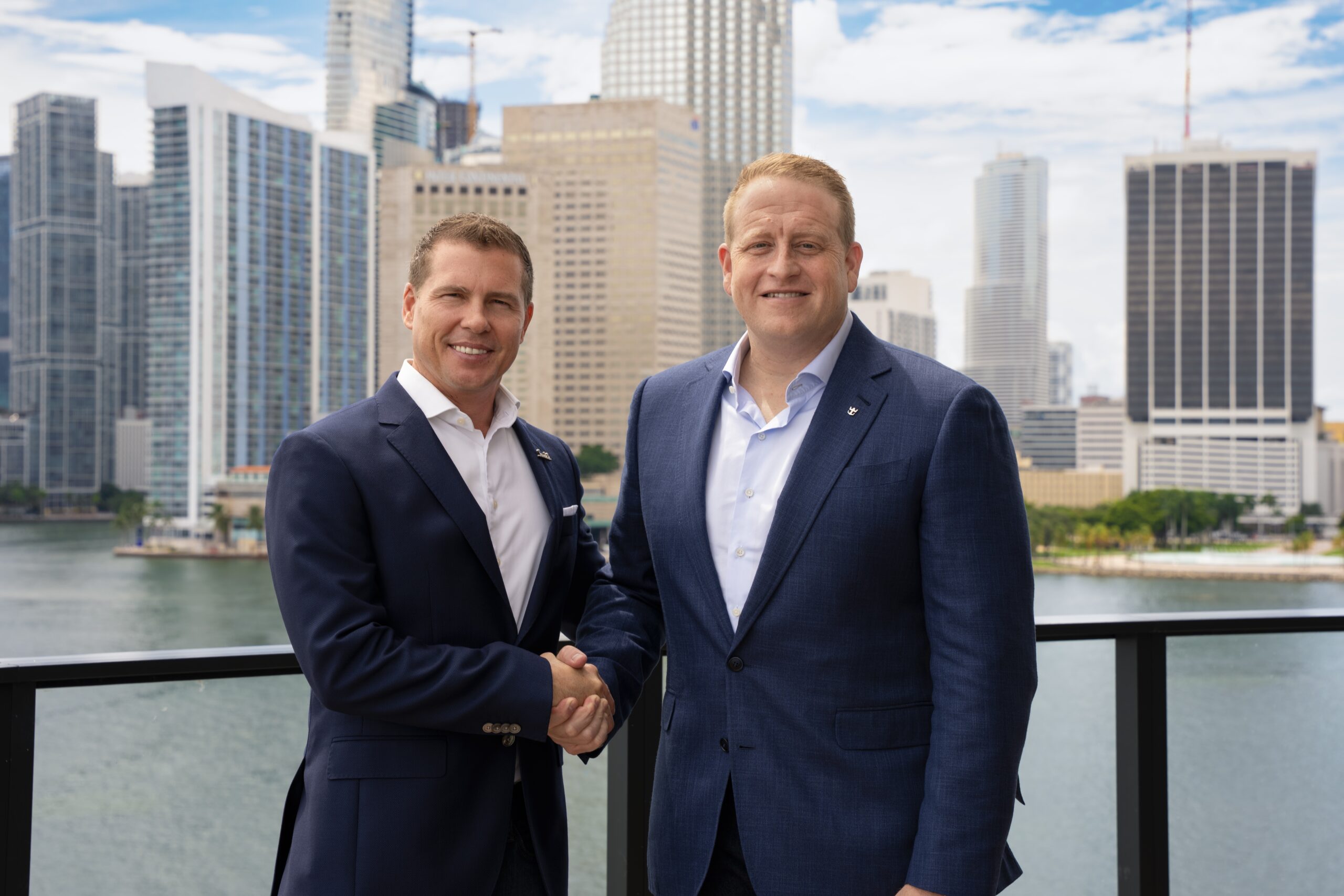
PHOTO CAPTION: Jason Liberty, Chairman and CEO of Royal Caribbean Group, and Adam Stewart, Executive Chairman of Sandals Resorts, mark the signing of an agreement to form a landmark partnership that expands Royal Caribbean Group into the all-inclusive resort space and supports the future growth of Sandals and Beaches Resorts. The signing took place at Royal Caribbean Group’s new headquarters in Miami, with the city’s skyline in the background.
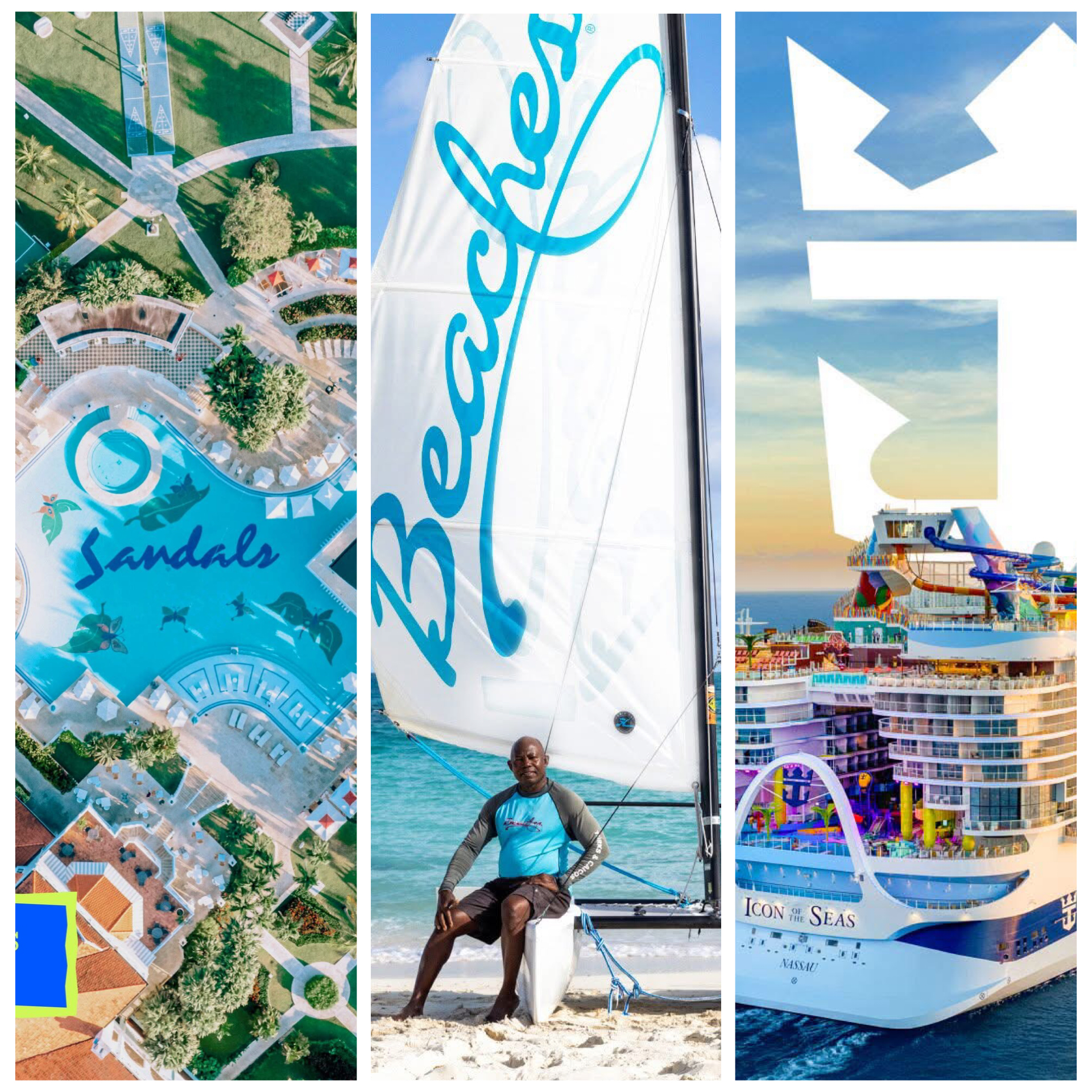
The Caribbean tourism deal first reported as a possibility on Tuesday is now a signed agreement. Royal Caribbean Group plans to pay approximately US$3 billion for a 50% stake in Sandals and Beaches Resorts, putting the value of the business at about US$6 billion. The purchase is expected to close in early 2027, subject to approvals.
Founded in Jamaica by the late Gordon “Butch” Stewart in 1981, the resort business has a presence across nine Caribbean destinations, including Jamaica, The Bahamas and Turks and Caicos. Sandals has described its workforce as nearly 20,000 people, most of them Caribbean nationals.
“My father, Gordon ‘Butch’ Stewart, founded Sandals Resorts with the belief that a company built in the Caribbean could stand on the world stage alongside the most respected names in hospitality,” said Adam Stewart in the announcement carried by PR Newswire. He will remain executive chairman, while the Stewart family retains a stake. The companies say existing reservations and resort operations will continue as usual.





-
 Bahamas News1 week ago
Rosewood Exuma: A precedent-setting case for environmental law and future development in The Bahamas
-
 News3 days ago
Imagine Turks & Caicos Represented in UK Parliament; New Report Favours It
-

 News6 days ago
Invest TCI Strengthens Regional Investment Connections at Caribbean Investment Forum 2026 in Barbados
-
 Bahamas News3 days ago
Bahamas Issues Cybersecurity Alert Over Akira Ransomware Threat
-

 Bahamas News6 days ago
Energy Minister Delivers Electrifying Keynote Opening Address at CAREC 2026
-

 News4 days ago
Crown Land Unit Leads Multi-Agency Enforcement Exercise in Five Cays
-
 News3 days ago
BermudAir Launches Service to the Turks and Caicos Islands on October 26th, Expanding Air Connectivity Ahead of Winter Season
-
 News3 days ago
DDME Celebrates International Day for Disaster Risk Reduction