
TCI News

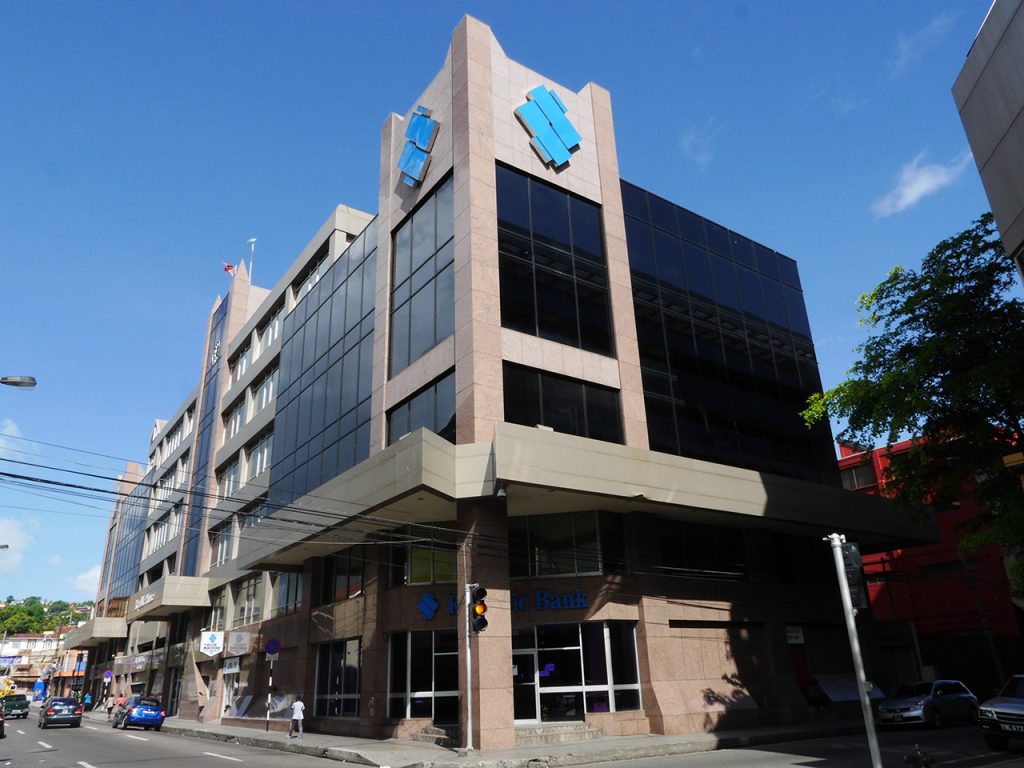
#GrandTurk, Turks and Caicos Islands – December 17, 2020 – A starting loan of $80 million dollars is approved by the Turks and Caicos House of Assembly and it will help to mitigate the economic fall-out resulting from the impact of the coronavirus pandemic on the local economy.

Losses sent the Turks and Caicos into recession and demanded that funds be found to fill the hundreds of millions of dollars lost in government revenue.
Premier Sharlene Robinson, on Wednesday December 16, informed the House, that it took a mere seven weeks of a competitive bidding process following the October announcement of the need for the loan, to agree on the Republic Bank Ltd as the best lender.
The loan is for up to $80 million at a per annum interest rate of 2.9 percent. Turks and Caicos has 12 months to repay the loan and can borrow an additional $100 million with no additional fees or penalties, said Mrs. Robinson, TCI Premier and Minister of Finance.
The Opposition Leader believes it took the PDM Administration too long to move to secure the loan.
“It is surprising that it took us until October to be able to reach out to financial institutions,” said Washington Misick, who is also the former Minister of Finance, “We could have seen this coming and could have better prepared to provide relief to the people of the Turks and Caicos Islands based on those projections. The good thing about numbers, the good thing about financial planning is you could always present what is called flexible budgets, scenario analysis that would say what the worst situation is, the best situation is and more likely situations.”
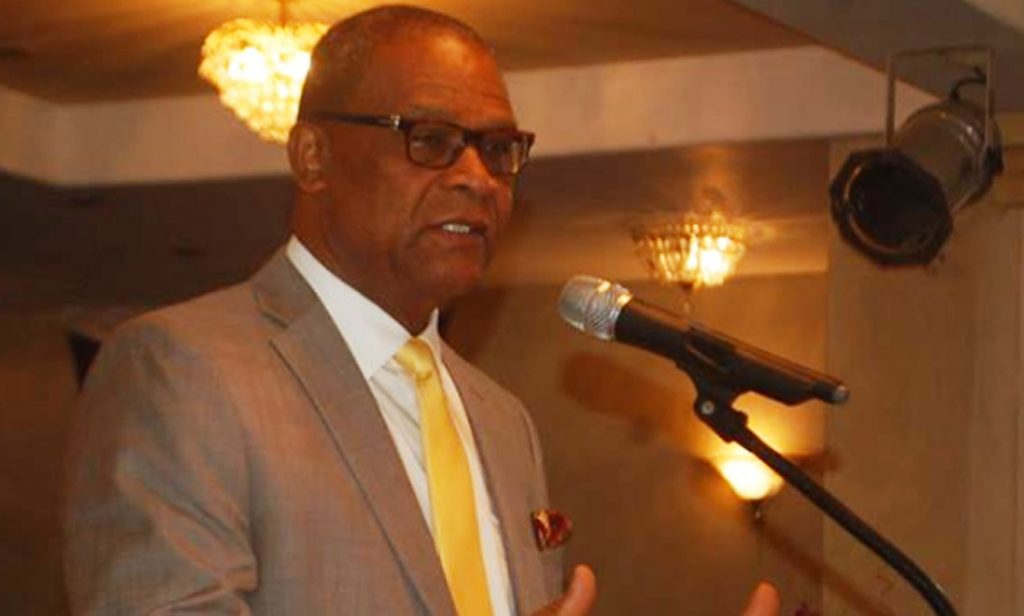
Mr. Misick is convinced the Turks and Caicos will need more money and shared the Opposition will support the measure largely because of those who would be adversely impacted if the borrowed funds were any further delayed.
“…for the people of the Turks and Caicos Islands and particularly the persons who would most likely be impacted, by the inability to pay government expenses in the absence of having this stand by line of credit
There was also concern and caution expressed by the Opposition Leader about when Turks and Caicos would begin to see some semblance of normal in the leading industry of tourism.

“It is anticipated that tourism would be in full swing by the middle of December, which is where we are now my understanding is the average occupancy rate in the islands is around 35 at the most 40 percent. So, I’m hoping – as I have spoken to the budget in April – that again we are not being over optimistic about what the real situation is.”
Misick agreed that the cost of the borrowing is reasonable.
Republic Bank is based in Port of Spain, Trinidad and Tobago and is a publically traded company on the Trinidad and Tobago Stock Exchange (TTSE).











Turks and Caicos, April 06, 2026 – Technical excellence early in their jumps became the defining factor for two Turks and Caicos athletes, as David Hall soared to gold in a nail-biting Under-20 high jump final at the 53rd CARIFTA Games in Grenada. Herwens Guerrier added to the country’s success with a 1.90 metre clearance to secure silver in the Under-17 division, finishing in a tightly contested field where all three medalists cleared the same height.
Both events were decided on countback — meaning the medals were determined not just by height cleared, but by which athlete did so with fewer failed attempts, highlighting the importance of precision and composure under pressure.
A wave of national pride followed the results, with congratulatory messages pouring in for the athletes who delivered under pressure on the regional stage. In a statement, Dileeni Daniel-Selvaratnam praised both competitors, saying their “hard work, discipline and determination have made the entire nation proud,” while encouraging the wider team to continue striving as competition unfolded at the Kirani James National Stadium in Grenada.
Team Turks and Caicos finished just outside of the top ten among 28 competing nations, and anticipation is already building for what is expected to be a spirited homecoming for the standout athletes, whose performances have ignited pride across the islands.
The 53rd staging of the CARIFTA Games, held at the Kirani James National Stadium in Grenada, unfolded under warm, at times testing conditions, with intermittent showers and shifting winds challenging athletes across disciplines.
Jamaica once again asserted its dominance, capturing its 40th consecutive CARIFTA title, continuing an unmatched run in regional athletics. Among the standout performers was Shanoya Douglas, whose electrifying run in the Under-20 200 metres earned her the prestigious Austin Sealy Award — the Games’ highest individual honour — after she shattered the long-standing record of Bahamian Shaunae Miller-Uibo, who went on to become an Olympic gold medalist in the 400 metres. Douglas clocked an impressive 22.11 seconds to rewrite the CARIFTA record books.
For Turks and Caicos, however, the spotlight remained firmly on the field, where two high jumpers delivered performances defined by discipline and growth. Hall’s gold medal-winning clearance of 2.00 metres marked a significant step forward in his development, improving on his 1.89 metre silver medal performance at the 2025 Inter-High Championships. Guerrier’s 1.90 metre effort in the Under-17 division similarly places him among the country’s top emerging talents, signalling a strong future for the event locally.
Angle by Deandrea Hamilton. Built with ChatGPT (AI). Magnetic Media — CAPTURING LIFE.

PROVIDENCIALES, Turks and Caicos Islands — It’s that time again — a period of compliance, accountability and transparency for those entrusted with public office and captured under the category of “Specified Persons in Public Life.”
The Integrity Commission is reminding all individuals who fall within this category that they are legally required to file their Declarations of Income, Assets and Liabilities, in accordance with Section 39 of the Integrity Commission Ordinance.
The declaration window is now officially open, running from April 1 to June 30, 2026, and applies to a wide cross-section of senior public officials, statutory board members and others operating within the machinery of government.
This is not a routine administrative exercise. It is a cornerstone of good governance — designed to ensure that those in positions of power are transparent about their financial interests, and to guard against corruption, conflicts of interest and illicit enrichment.
Who Must File
The Commission outlines several categories of individuals required to submit declarations this cycle.
They include:
- Persons who last filed on or before June 30, 2024
- Individuals newly appointed to statutory boards or government positions from April 1, 2026 onward
- Those who have demitted office, resigned or whose contracts have ended — who must file within 90 days of leaving their post
- Individuals who may not have previously realized they fall under the legal requirement
The net is wide — and intentionally so.
“Specified Persons in Public Life” includes elected officials, senior civil servants, financial officers, law enforcement leadership, members of statutory bodies, and other key decision-makers whose roles carry influence over public resources and policy.
Among them are Members of the House of Assembly, Cabinet Ministers, Permanent Secretaries, Heads of Department, senior police officers, and individuals serving on public boards and commissions.
The Commission notes that the full schedule of designated roles is extensive, and persons are encouraged to consult the official list available through its office or website to confirm whether they are captured under the law.
How to File
Unlike many modern reporting systems, this process remains deliberately controlled.
All declarations must be:
- Submitted in person
- Delivered by appointment only
- Accompanied by supporting documentation
Declarants will be contacted directly with their assigned appointment details, including date, time and location. The Commission has made it clear — submissions through third parties, email or mail will not be accepted.
This approach reinforces the seriousness of the process and ensures the integrity of submissions.
Declaration forms are available via the Commission’s website, and assistance is accessible through its Providenciales office for those needing clarification.
Penalties for Non-Compliance
The warning from the Commission is unambiguous.
Failure to file a declaration without reasonable cause is a criminal offence.
Penalties include:
- Up to one year imprisonment
- A fine of up to $15,000
- Or both
Additionally, the Commission is mandated to publish the names of non-compliant individuals in the official Gazette — a move that carries both legal and reputational consequences.
Confidential but Critical
While the process is strict, the Commission emphasizes that all declarations are confidential documents, handled with discretion.
Still, the purpose is clear: transparency does not always mean public disclosure — but it does mean accountability to an independent oversight body.
In a region where public trust can be fragile, these filings serve as a quiet but powerful mechanism to reinforce confidence in governance.
For Turks and Caicos, this annual exercise is more than paperwork — it is a test of integrity at the highest levels.
And for those required to file, the message is simple: comply, disclose, and do it on time.
For more information or to confirm filing obligations, individuals are encouraged to contact the Integrity Commission directly.
Angle by Deandrea Hamilton. Built with ChatGPT (AI). Magnetic Media — CAPTURING LIFE.
News
CALL 649-338-4008 OR 649-338-2684 IF A CHILD IS AT RISK: TCI Confronts Alarming Reality During Child Abuse Prevention Month


06PROVIDENCIALES, Turks and Caicos Islands — The Turks and Caicos Islands, a small British Overseas Territory though it is, is grappling with an unsettling truth: levels of physical and psychological violence against children remain alarmingly high.
Recent regional findings place the country among the most concerning in the Caribbean, with data showing that eight to nine out of every ten children experience some form of violent discipline — whether physical punishment or emotional harm.
It is a reality the Department of Family and Children Services is not taking lightly.
As the country marks Child Abuse Prevention Month 2026 under the theme “Positive Childhoods Start with Us,” officials are pushing beyond awareness and into action.
Director of DFCS, Ashley Adams Forbes, said changing that reality requires action from the entire community.
“Positive childhoods are not guaranteed—they are built when communities choose to show up for families and protect their children. When we listen, when we care, and when we speak up for a child in need, we may be changing the course of a life.”
Minister with responsibility for DFCS, Shaun D. Malcolm, warned that the consequences of inaction extend beyond individual families.
“Protecting our children is the most urgent duty we share as a nation. When any child is unsafe, our entire society is at risk.”
But beyond the messaging and observances, the Department is making it clear: residents have a role to play — and the tools to act.
Contact lines are open for those who suspect abuse, neglect or risk:
- Providenciales: 649-338-4008
- Grand Turk: 649-338-2684
Officials say even uncertainty should not silence action — reporting concerns can be the first step in protecting a child.
Across the islands, the call is for stronger families, more attentive communities and a willingness to intervene when something is not right. Because while policies and programmes matter, it is often the decisions made in homes, schools and neighbourhoods that determine whether a child feels safe — or suffers in silence.
The message this April is clear.
Positive childhoods do not happen by chance.
They are built — or broken — by the choices adults make every day.
And in Turks and Caicos, the moment to choose differently is now.
Angle by Deandrea Hamilton. Built with ChatGPT (AI). Magnetic Media — CAPTURING LIFE.





-

 News5 days ago
GOLD & SILVER – Hall & Guerrier Fly High for Turks and Caicos at CARIFTA 2026
-

 News5 days ago
CALL 649-338-4008 OR 649-338-2684 IF A CHILD IS AT RISK: TCI Confronts Alarming Reality During Child Abuse Prevention Month
-

 Independent writer4 days ago
The Rise of Right-Wing Populism and What It Could Mean for the Turks and Caicos Islands
-

 News6 days ago
Beaches Turks & Caicos, FIU train next generation of hospitality leaders in Providenciales
-

 Bahamas News6 days ago
FNM’S $200 CHILD SUPPORT PLAN SPARKS DEBATE AS PLP QUESTIONS FUNDING AND SCOPE
-

 Bahamas News5 days ago
Fuel Pain at The Pump: Global Tensions Drive Prices Up as Bahamians Feel the Squeeze
-

 News6 days ago
Birthright Citizenship Unchanged as U.S. Supreme Court Weighs Case, Majority of Americans Oppose Ending Policy
-
 News5 days ago
COMING SOON: BORROWING TO MODERNISE