
TCI News
TCI: Progress on summer Capital Works at Public Schools


#Providenciales, October 4, 2019 – Turks and Caicos – The Ministry of Education, Youth, Culture, Social and Library Services wishes to inform the public about the work undertaken to have schools ready for the 2019/20 school year.
The table below summarizes the progress of the summer maintenance works carried out at each school:
| School | Progress to date |
| Doris Robinson Primary School | 100% of the proposed work completed |
| Adelaide Oemler Primary School | 100% of the proposed work completed |
| C Hubert James Primary School | 80% of the proposed work completed. Minor work to be completed including ACs and window installation |
| Raymond Gardiner High School | 80% of the summer work completed in time for the reopening of school. |
| H J Robinson High School | 100% of the summer works completed. Capital projects are ongoing. Expected to be completed by December 2019 |
| Eliza Simons Primary School | 100% of the summer works completed |
| Ona Glinton Primary School | 100% of the summer work completed |
| Long Bay High School | 100% of the summer work completed |
| Enid Capron Primary School | 100% of the summer work completed |
While major summer works were completed in time for the reopening of school on 2nd September 2019, capital works continues at Clement Howell High School, Iris Stubbs Primary School, Marjorie Basden High and the H J Robinson High School. As per Planning requirements and considerations for health and safety of students, the works are being undertaken so that there is minimum impact or disruption to schools. The Ministry of Education and the Ministry of Infrastructure are pleased to inform you of the progress of the work to date:
H J Robinson High School: School Infrastructure Project Phase 1 – Renovations and Upgrade to CVQ Block at HJ Robinson High School – All doors have been replaced. Stairs to the Science block has been demolished, rebuilt and painted. Structural repairs to the Visual Arts block has been completed. Ceiling has been replaced and painted. All A/C units have been replaced in the staffroom. The project is at 31% completion and will be completed by December 2019.
Marjorie Basden High School: School Infrastructure Recovery Project – Repairs to cracks on gable end walls and columns for classroom blocks A & B completed. New windows installed to classroom blocks A & B. Roof decking replaced with peal and seal to block A. New floor tiles installed to toilet block with new toilets and face basin. New roof sheeting installed to toilet block and walls painted. Steel reinforcement and form work being finalized for pouring of concrete to suspended floor for the new two-storey classroom block. Overall completion is at 28%. Completion is scheduled for April 2020.
Iris Stubbs Primary School: Schools Infrastructure Recovery Projects – ISPS – Roof structure completed, roof sheeting installed. Walls rendered. Windows and doors are installed to classrooms. Ceiling installed to classrooms. Floor tiles are being laid in classrooms. Electrical conduits and boxes are being installed. Walls and ceilings are being primed with paint. Project is at 66% overall. The main classroom block will be completed by November 2019.
Clement Howell High School: School Infrastructure Project Phase 2 – Repairs to CHHS – Admin Block – foundation for extension of toilet poured. Peal and seal to roof completed. Claudette Dean Block – Damaged roofing structure removed and rafters strengthened. Second lift poured to secure rafters. Plywood decking installed. Claudette Clare Block – Same as Claudette Dean block. New roof trusses installed. The project is 6% overall completed.
The administrators, teachers, support staff at the Clement Howell High School and the contractor and his team of workers have taken the necessary precautions to reduce disruption to teaching and learning, minimize risks and ensure the safety of teachers, students and visitors alike.

The capital works being carried out will result in modernization of the infrastructure and aesthetics of each school, providing children with safe learning spaces and laboratories equipped with instructional resources to enable and support learning.
The work to repair and upgrade the Oseta Jolly Primary School and the Mary Robinson Primary School are ongoing:
Oseta Jolly Primary School: Repairs to roof structure of the two-storey block. Repairs to internal metal partitions to upper floor. Repairs to plywood decking and peal and seal to roof of single storey block. Demolition and repairs to roof structure of the Admin block. Demolition of the condemned 3-classroom block. Installation of formwork for new columns and beam to water cistern to support new 3-classroom block. Poured footing for security hut. Excavate foundation for new toilet block. Project is at 13% overall.
Mary Robinson Primary School: Demolition of the damaged roof structure and gable walls to water cistern. Construction of new gable walls and roof truss to water cistern completed. The contractor is awaiting the arrival of plywood and peal and seal for the roof of the main school building to arrive on island before commencing to strip the existing roof structure so as not to leave the building exposed to the elements.
The Ministry remains committed to building a resilient and inclusive education system.
Release: TCIG

Almost two million visitors recorded in 2025
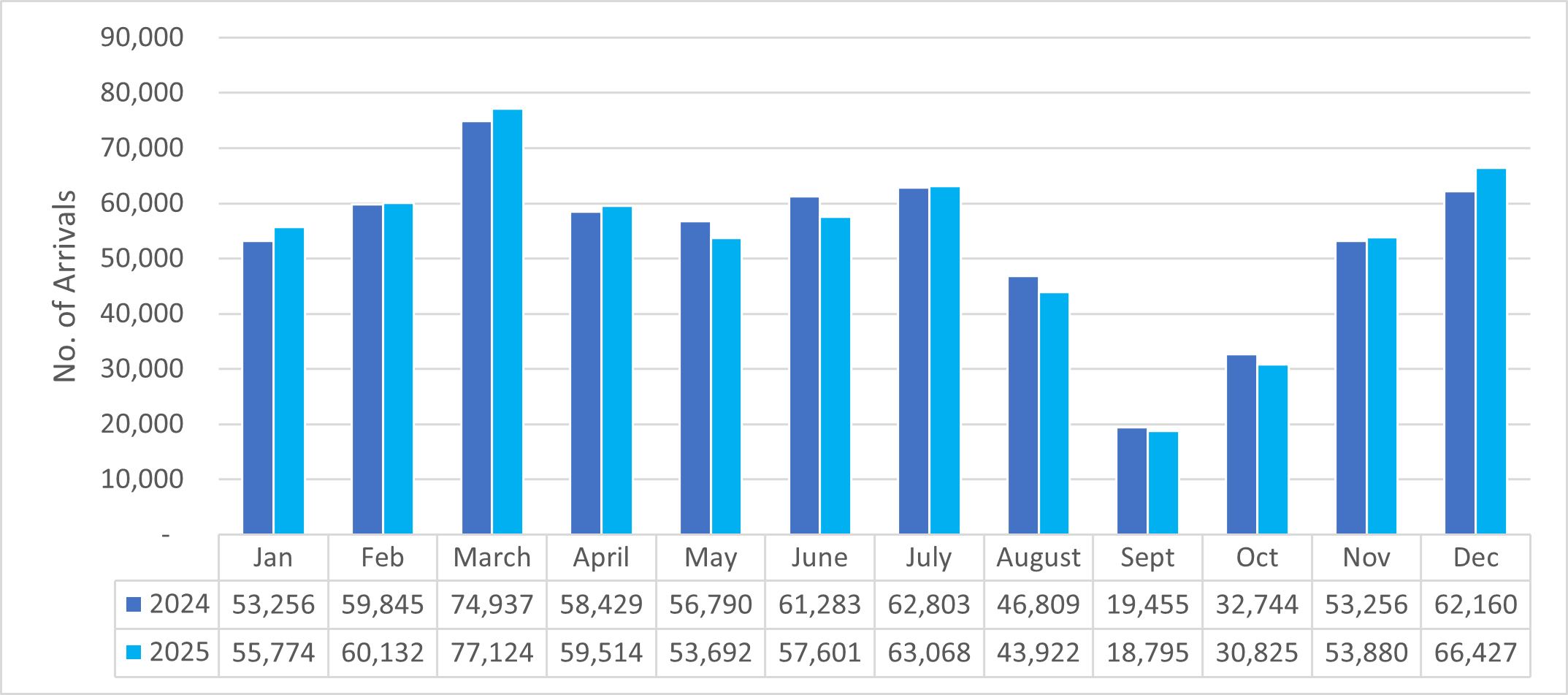
PROVIDENCIALES, TURKS AND CAICOS ISLANDS – The Turks and Caicos Islands saw an increase in stayover arrivals in December, seven percent higher than the corresponding period in 2024.
Preliminary data suggests that stay over arrivals by air for the month of December was 66,427 in comparison to 62,610 in December 2024.
From January to December 2025, preliminary visitor arrival numbers totalled 640,754; on par with the number recorded for the same period of 2024.
Stay Over Arrivals YTD December 2024/2025
The first quarter of the calendar year attracted the largest number of arrivals with visitor arrivals three percent higher than the first quarter of 2024. Reduced airlift from the United Kingdom and the United States, most notably the Virgin Atlantic and JetBlue services, was however felt from the second quarter (April to June). As a result, visitor arrivals dropped three percent in the second quarter.
By the third quarter of this year (July to September), geopolitical and economic conditions in the key source markets, namely the United States, led to further contraction of arrivals. In the last quarter of 2025, arrivals were impacted in October due to the passage of Hurricane Melissa but additional airlift from the USA and Canada resulted in an increase in arrivals in November and December.
Mr. Paul Pennicook, Interim CEO Consultant of Experience Turks and Caicos, said December’s increase in stayover arrivals is an encouraging indicator of the sustained interest in the Turks and Caicos Islands as a premier destination.
“While we note and continue to monitor geopolitical shifts that affect us, Experience Turks and Caicos is focused on increasing marketing initiatives in our primary source markets. We have spent the last two years investing in groundwork such as crucial travel advisor training to assist them in selling the destination more effectively. In the next fiscal, we will be building on those initiatives with co-op activities with partners as well as out of home advertising to increase visitation to our destination,” he said.
In Cruise, the preliminary count of passenger arrivals for the month of December 2025 was 129,346, a 22 percent increase over last December. This growth follows the berthing of 11 additional ships in Grand Turk this month.
From January to December, the cruise sector continued to outperform the same period last year, as the 1.3 million total cruise passengers recorded, marks a five percent Year-on-Year increase. 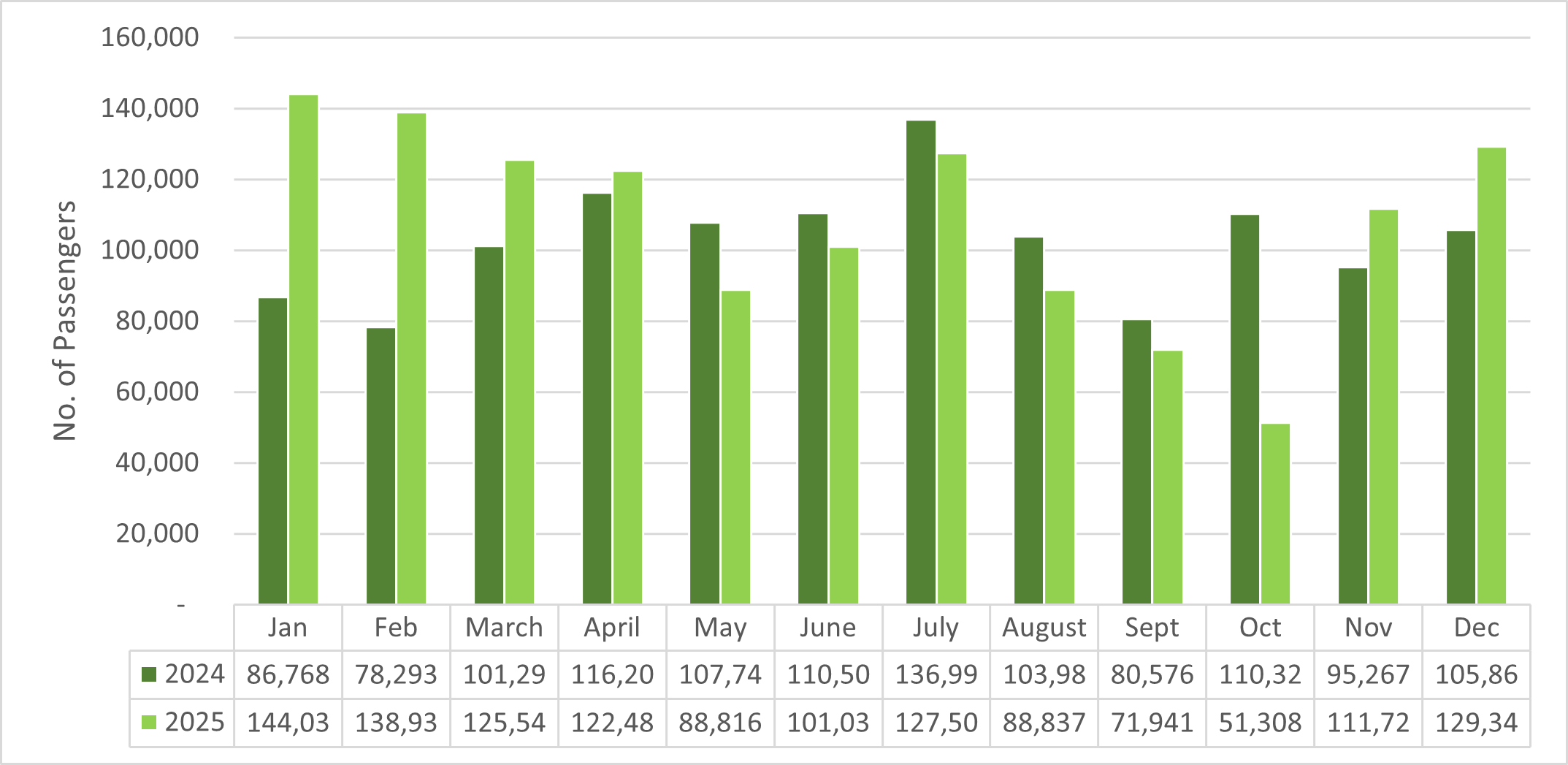
The cruise sector experienced significant growth in the first quarter of 2025, with passenger arrivals surpassing last quarter by 53 percent. In the second and third quarter however, several cruise lines adjusted their itineraries as vessels were pulled from the fleet or from the Caribbean region, which resulted in fewer passengers.
Arrivals dropped seven percent and 10 percent in the second and third quarters, respectively. Double digit growth was recorded in the last two months of Quarter 4. This growth however, was not sufficient to outweigh the drop in arrivals experienced in October, following the cancellation of cruise calls due to the passage of Hurricane Melissa. Despite the late-quarter rebound, arrivals for the final quarter of 2025 closed six percent below the same period in 2024.

News
The Department of Trade, Industry & Fair Competition to Host Export Readiness Workshop Under the theme “Empowering TCI Businesses for Local Growth and Global Markets.”
TCI News
Experience Turks and Caicos and Aquila Host Product Development Workshops to Strengthen Sister Islands Tourism
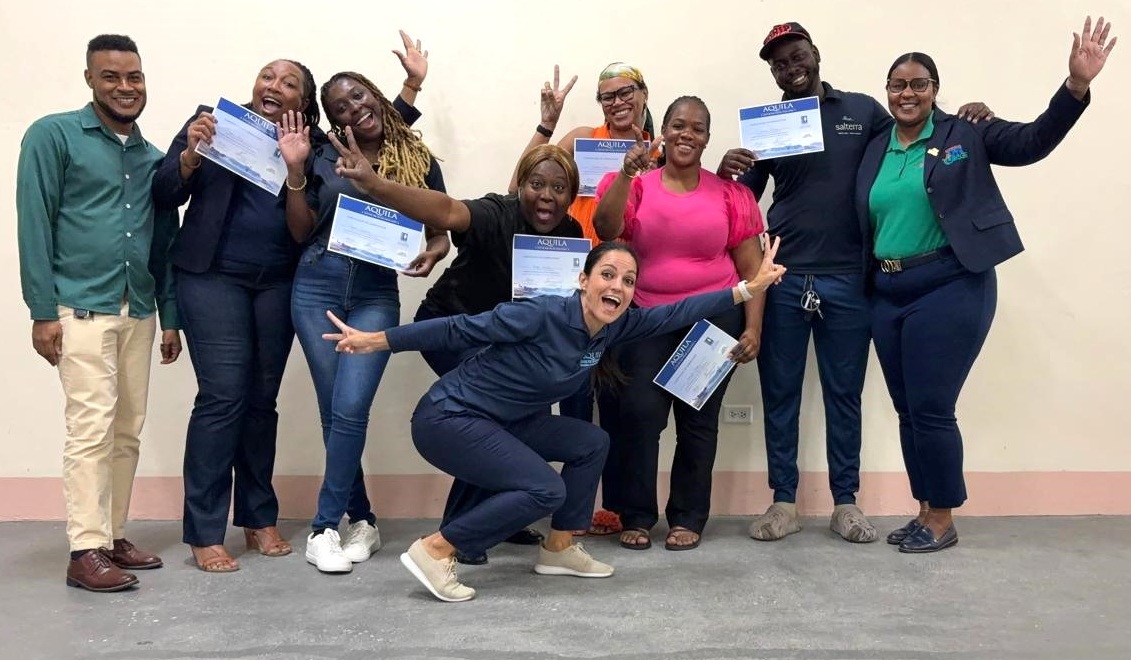
PROVIDENCIALES, TURKS AND CAICOS ISLANDS – Experience Turks and Caicos, in collaboration with the Aquila Center for Cruise Excellence, successfully hosted a Product Development Workshop for tourism stakeholders from North Caicos, Middle Caicos, and South Caicos on Wednesday, January 14 and Thursday, January 15, 2026.
The workshop was designed to support tour operators, entrepreneurs, and tourism-related businesses as they adapt to the evolving demands of the global tourism industry. Participants engaged in hands-on exercises and structured sessions aimed at reimagining existing tourism products and developing new, innovative, and sustainable experiences that are market-ready and aligned with current visitor expectations.
Throughout the workshop, attendees were equipped with practical tools and strategies to develop high-impact tourism offerings, strengthen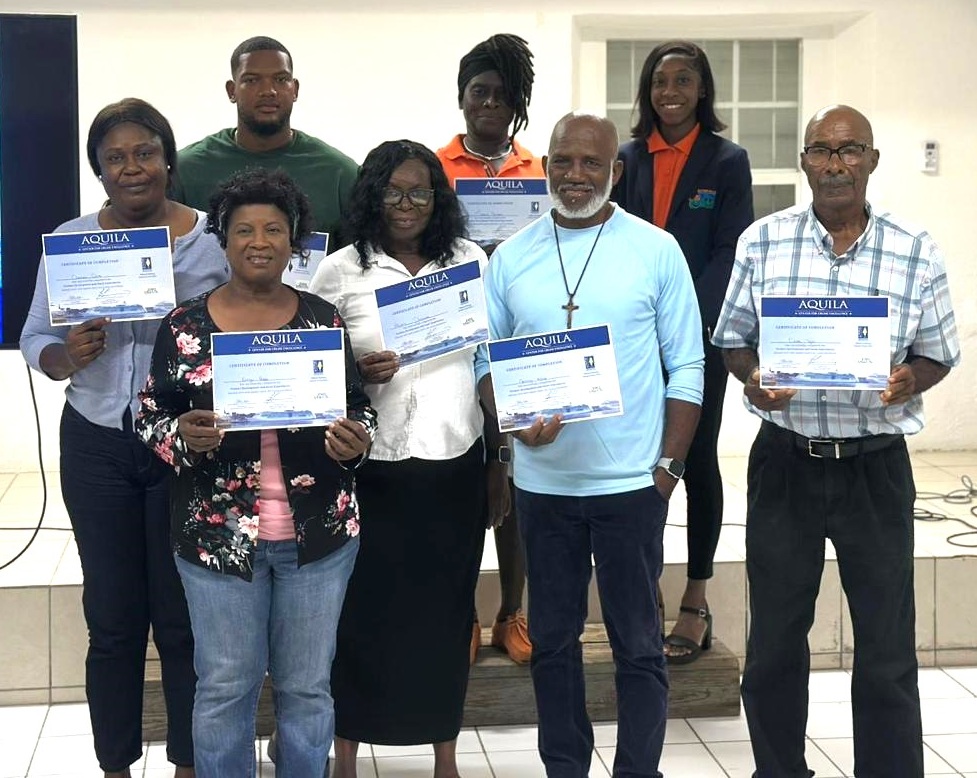 product packaging and pricing, assess market readiness, and enhance value creation. Emphasis was also placed on collaboration, partnership development, and the promotion of sustainable practices to ensure that the Turks and Caicos Islands remain a fresh, competitive, and appealing destination. More than 20 participants representing tourism businesses across the islands took part in the training sessions.
“Experience Turks and Caicos has a responsibility to ensure that all communities across the Turks and Caicos Islands benefit from tourism. These workshops are designed to equip local businesses with the essential tools and knowledge needed to maximise the opportunities within the industry, and we look forward to supporting their continued growth,” said Mr. Paul Pennicook, Interim CEO Consultant.
Speaking on the importance of the initiative, Candesha Mills the Product Development Manager at Experience Turks and Caicos said: “We are actively working on destination development by supporting our stakeholders as they reimagine their products and experiences. Workshops like this are critical to helping businesses identify opportunities for collaboration, create bundled offerings, and develop cohesive tourism experiences that align with emerging trends and evolving visitor expectations.”
The workshops were facilitated by Ms. Ambra Attus, who guided participants through strategies for designing distinctive and engaging tourism experiences that resonate with today’s travellers.
She said: “Product development is where destinations truly define their identity, and these trainings are designed to help operators in North, Middle and South Caicos create experiences that are not only market-ready, but meaningful, high-quality, and rooted in what makes these islands truly special. These sessions reflect a forward-thinking commitment by Experience Turks and Caicos to invest in their people and in the long-term quality of the destination’s tourism product. Aquila is proud to be your training partner.”
The workshop also featured the Invest TCI MSME Team, who were on site with an information station available throughout both sessions. Stakeholders had the opportunity to engage directly with the team, gain insights into the MSME Programme, and learn more about the range of support services, incentives, and resources available to assist business growth and development.
Experience Turks and Caicos commended participants for their commitment to investing in their businesses and contributing to the continued enhancement of the destination’s tourism product. The organisation expressed appreciation for the active participation and innovative ideas shared during the session, which are expected to contribute meaningfully to the sustainable growth of tourism in North and Middle Caicos and South Caicos.





-
 News4 days ago
The Department of Trade, Industry & Fair Competition to Host Export Readiness Workshop Under the theme “Empowering TCI Businesses for Local Growth and Global Markets.”
-
 TCI News6 days ago
Experience Turks and Caicos and Aquila Host Product Development Workshops to Strengthen Sister Islands Tourism
-

 News3 days ago
Strong December Performance Signals Continued Demand for the Turks and Caicos Islands