
TCI News
TCI: Letter to the Editor: “CRIME – It’s Everyone’s Business”


#Providenciales, October 4, 2019 – Turks and Caicos – I literally cringe as I read my WhatsApp messages, followed by newspaper articles week after week detailing the tragic deaths of young men on the islands of Grand Turk and Provo.
One must wonder, when will these senseless killings stop? As you know, bad news travels very fast, in most cases it’s embellished but partly true; wishing the stories were fibs. Living abroad for over 30 plus years, with the majority of my career spent in private and corporate investigations, I’m certainly not a novice to such crime trends.

Nevertheless, it’s disheartening to hear how the crime spree is tarnishing these beautiful by nature islands. By definition, I am not a criminologist, however, I have quite an extensive background and education in this particular arena. Therefore, why not share my expertise as crime is everyone’s business. I said that to say this. If we want to get serious about controlling crime, we must focus on the root causes, prevention, punishment and rehabilitation. All four of these areas are interdependent of each other.
Root Causes: your preaching to the choir, as we all know how most of the weapons are getting into the country. The recent search and seizure of the boat that ran aground off great Sand Cay, where a cash of ammunition and guns were confiscated is quite evident. We have wide open borders and many deserted Cays to stash weapons for easy filtration into the mainland. The country has a coastal RADAR tracking station in South Dock, Providenciales, but is one unit enough? Is it strategically placed for maximum detection and interceptions? Even if the radar station in Provo picks up a signal near Grand Turk or great Sand Cay, do we have the available resources to respond and engage quickly? The Marine Police in Grand Turk do not have a working vessel. How will they respond I beg the differ. Proper detection mechanism for weapons and or drugs are also not in place to deal with the level of supplies that arrive on these cargo ships. So, it’s like catch me if you can. Do we have a trained harbor master in Grand Turk?
While on the beach, I have personally had yacht captains come ashore on their dingy and walked up to me asking directions to Customs and immigration departments. Who is conducting proper searches on their boats? This is not war time for the Britt’s. Why aren’t we putting the necessary pressure on them to provide us with one of their decommissioned Navy vessels to patrol our waters as frequently as the US Coast Guard does? We can’t depend solely on the US or the Bahamas Royal Navy, they have their own problems and limited resources.
Prevention: Quoting the old cliché, “An ounce of prevention is worth a pound of cure. A little precaution before a crisis occurs is preferable to a lot of fixing up afterward. I’m excited to see we now have a native in top level management in the law enforcement department who better understands the culture of our youth and is in position to make collective decisions. Not to take away anything from the great progress we’ve made with putting a dent in crime, but we must do more as it seems we are being more reactive then proactive? It must start with building relationships and trust within communities and introducing new neighborhood watch programs. This will help to stop nuisance crimes and provide the needed intelligence to address serious crimes.
I believe the most significant contribution to short and long term crime reduction, besides a good education, will come from the early identification of young people at risk of offending behavior, and implementing sound programs to help them make better life choices – choices that will benefit them, their families and their communities at large. This is where more help is needed from our Civic leaders. Having an anti-gang strategy and targeting gang activity directly would assist in this push to reduce crime. I have seen the devastating blow uncontrolled gang activity can have on a community to include innocent bystanders. Safety and security are not just a policing issue, the whole of government has a role to play, along with communities themselves contributing and bridging that gap. Our police officers have never dealt with this level of gang related violence to no fault of their own. Why aren’t we requesting assistance from countries like the US, who have long been plagued with these kinds of behaviors and have trained experts in this area?
Punishment: I’ve said it before, and I’ll say it again, there is no silver bullet to solving these complex issues but our leaders and law enforcement must and I repeat “MUST” continue to explore endless measures to see what are the most effective ways to get to the core of crime reduction. Crime and punishment go hand in hand, which should include taking a closer look into our prison system. Our we creating a Ritz Carlton service for prisoners or an inconvenience? They are labeled prisoners for a reason. I have had the opportunity to visit our prison system on numerous occasions and although we have improved in some areas in terms of tighter security, what I saw was repugnant.
Prisoners wearing the most expensive sneakers, clothing of the latest style, having groceries delivered that can fill a small convenience store, families bringing in cooked meals etc. Is this prison to you? I’m an advocate for human rights, but we must reevaluate the true purpose of the prison system and its intended purpose. It was not designed for luxury but as a punishment for crimes committed.
Here is some food for thought.
1. Why are the prisoners not wearing uniforms? During my visits, most times you cannot differentiate the prisoners from the visitors.
2. Why are we allowing cooked food and groceries to be brought in?
3. The prison should have their own commissary which is a more controlled environment and reduces the opportunity for entry of drugs, phones and makeshift weapons.
4. Chain gang, what happened to those days? While growing up in Grand Turk, low risk prisoners were required to clean the streets, why not return to those bygone days. Back then, it was a shame to be seen in prison clothes on the street.
5. Why are repeat offenders being released within 30 to 60 days?
6. What background check if any, is being done on deportees back to this country?

Rehabilitation: A holistic approach to crime control is what’s needed. Inclusive of the role Mental health counseling and anger management classes can have. All are areas needing attention in this developing country. Mental health has been a taboo for far too long and can no longer be ignored and if left untreated, it could have wide reaching impact such as what we are seeing today in relation to the recidivism rate and growing violent crimes among teens. If you look at the profile of the individuals committing crimes in our communities, they are primary older teens or young adults.
In my opinion, they are not inherently bad kids, just are impressionable, conflicted young people wrestling with emotions and impulses. Unless a heinous crime is committed, locking them away in the prison population is not the answer. An adequate facility with psychological treatment and trained counselors is what’s needed. Let’s face it, technically we do not have life sentences in the Turks and Caicos. Therefore, at some point these prisoners will eventually be released into society.
Now what? They’re still grappling with the same mental problems. The threat of longer prison sentences, no matter how severe, will not deter anyone who believes their crimes will not be detected and they can get away with it. It will also not deter those who are too overcome by emotion or disordered thinking or to care about the consequences of their behavior.
We are dealing with a different type of criminal today, most with low self-esteem, hostility, pleasure- or thrill-seekers and lack of empathy. Let’s invest in our youth now.Here are some of our short- and long-term needs. A. Stronger community policing focusing on one community at a time.
B. Trade schools for our youth, geared specifically toward curriculum that drives economic development.
C. Summer programs for our youth and at-risk children.
D. Law enforcement need Seg-ways not SUV’s for our road patrol, particularly in smaller communities.
E. We need to do a better job with promoting the existing crime stoppers program with focus on confidentiality and incentives.
F. Government needs to provide all branches of law enforcement the needed resources to prevent and help fight crime.
In conclusion, there were many newspaper articles written on crime and recommended solutions. However, the reality is, Britain now controls our purse string. So, our local representatives must do a better job at prioritizing and communicating what can be done within their limited budget and scope of powers. This will soften the blow on unfulfilled promises.
Sometimes it’s not just the major projects, it could be simple projects that can make a huge difference. For example, street lighting in select areas that are dimly lit to help deter crime. These projects may not require an absorbent amount of allocated funds but can have an impressionable impact on ordinary citizens and keep hope alive for our nation.
Ed Forbes – Concerned citizen in GT

Independent writer
Fifty Years of Ministerial Government: Honouring Our Past, Embracing Our Present and Preparing for Our Destiny

An Editorial by Dr. Alicia Swann
In the days following our most recent national celebration, I have observed conversations filled with strong opinions and emotions. Some have expressed pride and gratitude, while others have questioned our flag, Constitution, identity, political system and future.
After listening, I feel compelled to share my thoughts—not to dismiss anyone’s feelings or deepen division, but to offer historical clarity and, most importantly, hope.
The concerns of Turks and Caicos Islanders are valid. Many are worried about the protection of our land and identity, opportunities for our children and whether our people will continue to have a meaningful place in the country our ancestors built. These concerns deserve honest discussion, factual information, prayerful reflection and responsible planning.
However, as the Turks and Caicos Islands commemorates fifty years of Ministerial Government and celebrates National Flag Day, we must remember that this occasion is not about the current administration, one political party or any individual leader.
Governments come and go, but the story of a people remains.
This celebration belongs to our ancestors—the true visionaries, pioneers and nation-builders who paved the way for us. It belongs to the salt rakers who laboured beneath the blazing sun, the fishermen who braved dangerous seas, the farmers, teachers, mothers, pastors and citizens who built communities and demanded a voice in their homeland.
Many never lived to enjoy the progress their sacrifices helped to create. Yet because they endured, we inherited a country filled with possibilities.
A Political Journey That Began Long Before 1976
Long before European colonisation, these islands were inhabited by the Lucayan-Taíno people. Following European arrival, Indigenous communities suffered enslavement, forced removal and disease.
From the seventeenth century, Bermudian salt rakers developed our natural salt ponds. Enslaved Africans provided much of the labour sustaining the salt and plantation economies, and their descendants became central to the formation of the Turks and Caicos Islander people.
Britain’s influence developed through colonial expansion and competition with Spain and France. At different stages, the islands were administered through The Bahamas and Jamaica.
Dissatisfaction with decisions made under Bahamian administration contributed to our separation from The Bahamas in 1848 and the establishment of a local Legislative Board. In 1873, TCI became a dependency of the British colony of Jamaica. Local elections were abolished and were not restored until the 1959 Constitution—approximately eighty-six years later.
When Jamaica gained independence in 1962, TCI remained under Britain. From 1965 until Bahamian independence in 1973, the Governor of The Bahamas also served as Governor of TCI. We then received our own resident Governor and continued our constitutional journey.
Haiti never governed the Turks and Caicos Islands, but it holds an important place in our regional history. Following its independence in 1804, Haiti became a powerful symbol of freedom from slavery. Historical records indicate that enslaved people escaped from these islands to freedom in Haiti during the 1820s. In later generations, Haitians, Jamaicans, Bahamians and other Caribbean people contributed to our churches, public service, construction, education, hospitality and economy.
Our history is connected to the wider Caribbean, but our identity remains distinctly Turks and Caicos Islander.
The Significance of 1976
The 1976 Constitution provided for a Chief Minister and other Ministers with responsibility for important areas of government. The Honourable James Alexander George Smith “JAGS” McCartney became our first Chief Minister.
JAGS represented more than a political party. He represented a national awakening—the belief that Turks and Caicos Islanders deserved dignity, representation and a meaningful voice in the management of their homeland.
Ministerial Government was not the achievement of one person alone. It was made possible by generations of representatives, civil servants, community organisers, clergy, educators, workers and citizens who believed our people were capable of shaping their destiny.
The fifty years that followed were not without difficulty. We experienced controversy, constitutional change and interruptions to elected government. Yet representative government returned, our institutions developed and our people continued moving forward.
This anniversary does not suggest that everything has been perfect. It demonstrates that our democracy and our people have endured.
Never Forget Our Resilience
Our ancestors survived slavery, colonial administration, poverty, migration, isolation, political interruption and devastating hurricanes. From an economy once dependent upon salt, sisal and fishing, we built one of the world’s most recognised tourism destinations.
Generations of Turks and Caicos Islanders travelled to neighbouring countries seeking opportunities unavailable at home. Some were not always welcomed or treated as equals. Today, people from many of those same countries come to our shores hoping to work, live and create better futures.
This should not inspire hatred or prejudice. Those who come lawfully and contribute positively deserve dignity and respect. However, it should remind us how far we have come and why we must never surrender our identity or rightful place within our country.
Hospitality and patriotism are not opposites. We can welcome others without losing ourselves.
Scripture reminds us:
“But if any provide not for his own, and specially for those of his own house, he hath denied the faith.”
—1 Timothy 5:8
Caring for our own does not mean mistreating others. It means ensuring that Turks and Caicos Islanders are educated, protected and empowered to participate meaningfully in the development of their homeland.
Government has an important responsibility, but nation-building requires more than government. Parents must teach our values, businesses must create opportunities, citizens must respect the law and young people must prepare themselves to lead.
Pride in Where We Are
Until such time as we become an independent and sovereign nation, we must thank God for where we are today.
There is nothing wrong with celebrating our constitutional progress, embracing our present flag or respecting our existing institutions. Doing so does not prevent us from desiring further advancement.
We cannot know where we are going unless we understand where we are now and how we arrived here. Our present flag represents our identity, history and constitutional relationship with Britain. It should be treated with dignity and respect.
Embracing the present is not abandoning the future; it is the pathway towards building it. We celebrate not because the journey is complete, but because God has brought us a mighty long way.
Passports, Citizenship and Our Future
Today, we remain a British Overseas Territory. Although the passport associated with our territory may identify the Turks and Caicos Islands, it is not a sovereign TCI passport issued under the authority of an independent Turks and Caicos nation. It exists within the British nationality system and derives its legal authority from the United Kingdom.
British Overseas Territories citizenship, British citizenship and Turks and Caicos Islander status are connected but legally distinct. None presently represents citizenship issued by a sovereign TCI nation.
This should not cause us to disrespect the passport or constitutional position we hold. Instead, it should encourage us to think responsibly about our future.
If we envision sovereignty, we must eventually determine who would become a citizen of an independent TCI, whether dual citizenship would be permitted and what rights and responsibilities citizenship would carry. We must also consider how to protect our limited land, create pathways to ownership and help Islanders build generational wealth.
Our immigration system must welcome lawful contribution and respect human dignity while protecting the country’s long-term interests and enforcing its laws fairly.
These complex questions must not be decided through hostility, secrecy, political favour or temporary emotion. They require public education, research and consultation involving every inhabited island, our diaspora, elders, young people, churches, businesses, experts, Parliament, relevant institutions and the United Kingdom Government.
After proper preparation and national consultation, the people—not merely a government—should ultimately determine our political future through a clear and credible referendum.
Preparing for Our Destiny
I envision a future in which the Turks and Caicos Islands advances beyond its present constitutional position, governs its own destiny and may one day raise the sovereign flag of an independent nation.
Is it possible? Yes.
Would it require sacrifice, disciplined planning and strong institutions? Absolutely.
Would it require God-fearing leaders with integrity who place the country above personal and political interests? Without question.
“When the righteous are in authority, the people rejoice: but when the wicked beareth rule, the people mourn.”
—Proverbs 29:2
Independence without integrity would merely replace one form of dependency with another. Sovereignty must be supported by ethical leadership, economic stability, an independent judiciary, effective border protection, disaster preparedness and an educated population.
Preparation does not mean declaring independence tomorrow. It means beginning the research, civic education, institution-building and national consultation today.
“Write the vision, and make it plain upon tables, that he may run that readeth it.”
—Habakkuk 2:2
Preparing the Next Generation
We must ensure that our children know the history of the Turks and Caicos Islands and understand the sacrifices that paved the way for them.
A generation that does not know its history may inherit a country without understanding its value.
Our history must be taught in our homes, schools, churches and communities. Our children should never have to depend entirely upon outsiders to explain who they are or where they came from.
We must also stop gatekeeping knowledge. Whatever wisdom, education, experience or influence God has given us was not given for our benefit alone. It was entrusted to us so that we may mentor and guide those coming behind us.
True leadership does not conceal knowledge to protect a position. It shares knowledge to prepare a successor.
Let us give our children more than possessions. Let us give them identity, history, wisdom, confidence and a country they are prepared to protect and lead.
We Have What It Takes
We are a small country, but smallness does not mean incapability. Our ancestors created communities with almost nothing and survived circumstances far more difficult than those we face today.
We can honour our present flag without surrendering our future. We can welcome others without losing ourselves. We can celebrate how far we have come while preparing responsibly for where we wish to go.
This is the true meaning of the anniversary: a celebration of our ancestors, constitutional progress, national resilience and continuing right to determine our destiny.
Our ancestors paved the way. We must now possess the courage, discipline, unity and faith to continue the journey.
Dr. Alicia Swann
Proud Turks and Caicos Islander, Civic Leader and Advocate
Education
Department of Education Concludes Four-Day TCI National Standards Secondary School Curriculum Implementation Training
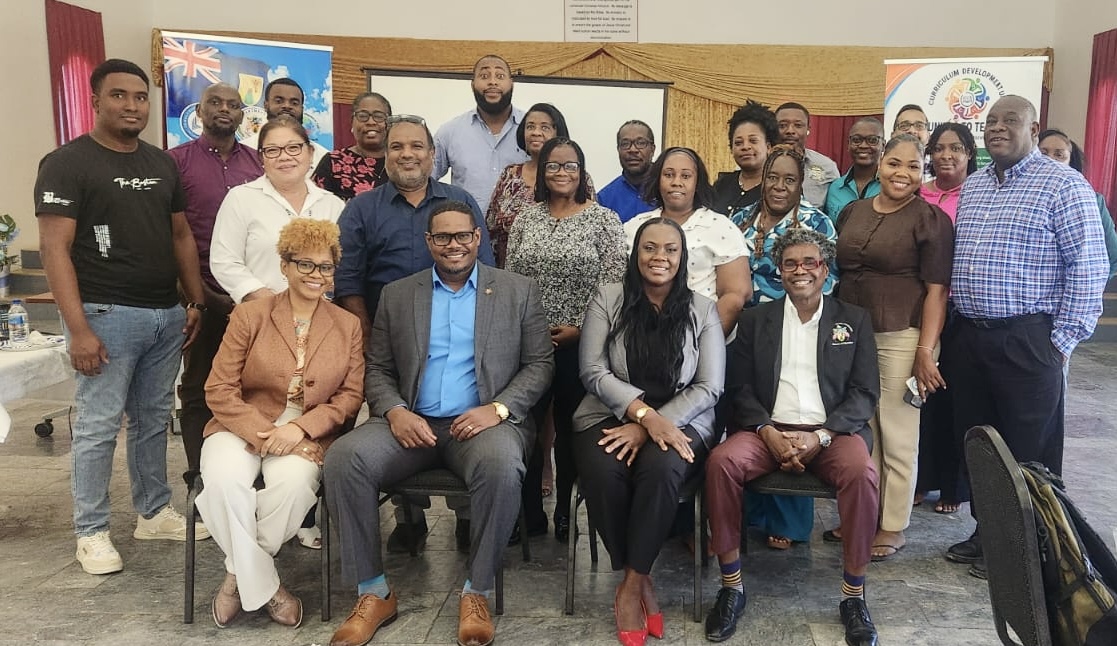
Providenciales, Turks and Caicos Islands: The Department of Education, through its Curriculum Development Unit, successfully concluded a four-day TCI National Standards Secondary School Curriculum Implementation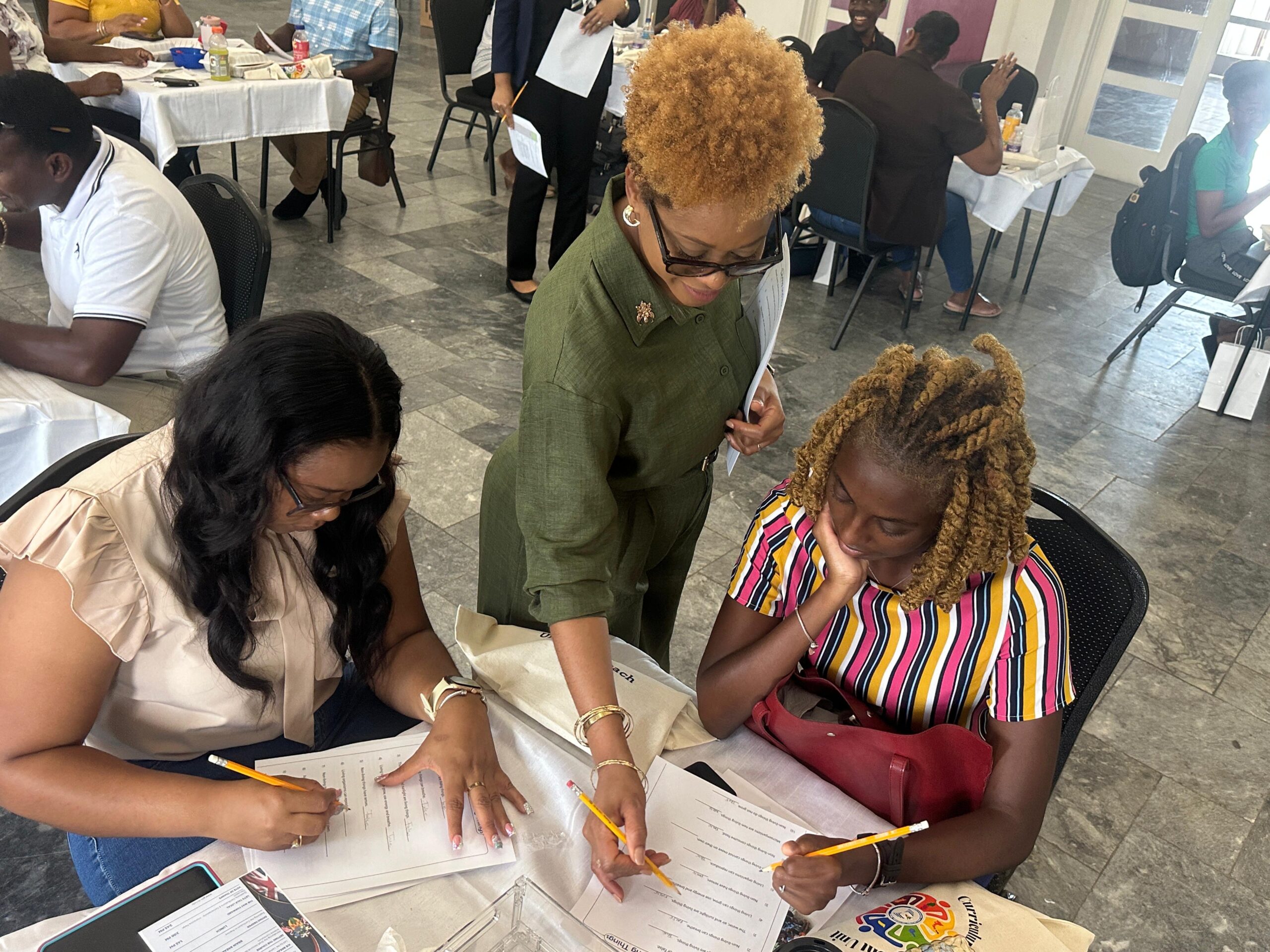 Training, bringing together secondary school teachers, curriculum officers, education officials, facilitators and key stakeholders in preparation for the piloting of the Turks and Caicos Islands’ draft national secondary curricula.
The training focused on Social Studies, Mathematics, English Language and General Science. Teachers explored the draft curricula, learning objectives, content, instructional approaches and assessment expectations, while considering how the standards can be translated into meaningful classroom practice. The curricula are grounded in research, educational data, national priorities, comparative curriculum analysis and the distinctive context of the Turks and Caicos Islands.
The Honourable Rachel Taylor, Minister of Education, Youth, Sports and Culture, commended Mrs Cleon Astwood, Head of the Curriculum Development Unit, and her team for their dedication and the significant progress made in developing the National Standards Curricula for secondary education. She also recognised the invaluable contribution of educators across the Turks and Caicos Islands, whose professional expertise, classroom experience, and feedback are essential to ensuring that the curricula are relevant, responsive, and aligned with the evolving needs of TCI learners.
“The development of our National Standards Curricula is an important investment in the future of our children and, ultimately, in the future of the Turks and Caicos Islands. Education must continue to evolve to meet the changing needs of our learners, our society, and our economy. Our teachers are at the heart of this process. Their knowledge, professional experience, and insight from the classroom are critical to ensuring that the curricula we develop are academically sound, relevant to our local context, and practical to implement. I commend our Curriculum Development Unit and our educators for the tremendous work being undertaken and for their continued commitment to strengthening the quality of education we provide to every child in the Turks and Caicos Islands.”
Educators were also addressed by Mr James Astwood, Permanent Secretary; Mr Mark Garland, Director of Education; and Ms Elisann Delancy, Deputy Director of Education, who emphasised embracing change, professional collaboration and continuous improvement.
A central focus of the training was the role teachers will play during the pilot phase. Teachers were encouraged to critically engage with the draft documents, paying attention to the clarity and appropriateness of objectives, sequencing and progression, instructional time, resources, gaps, omissions and areas requiring clarification or revision. Their classroom experiences and documented feedback will help strengthen the curricula before finalisation and national implementation.
The Social Studies session also emphasised Local Studies. A panel featuring Mrs Lisa Talbot of the Turks and Caicos National Museum, Dr Carlton Mills, Mrs Joan Astwood-Sutton and Ms Cynclair Musgrove provided historical and cultural perspectives to support accurate, culturally relevant classroom instruction.
Mrs Cleon Astwood noted: “Curriculum development cannot take place in isolation from the teachers who will ultimately bring these documents to life. As they pilot these documents, we expect them to question, test, reflect and provide meaningful feedback. Constructive professional dialogue is necessary if we are to produce strong, relevant curricula that genuinely meet the needs of our students and our education system.”
With the training concluded, participating teachers will now implement and evaluate the draft curricula in authentic classroom settings, document strengths and challenges, and submit recommendations to the Curriculum Development Unit. The Department of Education extends its appreciation to all teachers, school leaders, facilitators, historians, stakeholders and Ministry and Department officials who contributed to the successful four-day exercise.
Turks and Caicos, September 11, 2026 – Fewer than 40 days may remain before InterHealth Canada’s reported 90-day handover period expires, yet the Turks and Caicos Islands Government has not publicly identified those steering the hospitals through the transition—or disclosed their mandate, deadlines and work programme.
The September 8 Speech from the Throne offered confirmation that a body exists: “A Joint Transition Committee of Government and Inter- Health has been formed to manage the handover.”
Government acknowledged the gravity of what comes next, declaring: “The immediate duty is clear. Clinical care and facilities services must continue without interruption while successor arrangements are put in place.”
It went further, promising: “Staffing, essential works, critical supplies and interim funding will be handled so that patients are protected during the transition from one contract to the next.”
Opposition Leader Douglas Parnell said the committee was expected to include six representatives from TCIG and six from InterHealth Canada. He claimed the names had been identified, but that the committee had not held its first meeting and no transition agreement had been executed. Parnell demanded publication of its membership, appointments, first meeting date and work programme.
Those claims have not been independently confirmed, but the Throne Speech did not answer them. It declared the committee formed without naming its chair or members, explaining its authority, confirming whether it has met, or setting measurable deadlines.
The distinction is critical. The hospitals are national assets; what is in question is who will deliver and manage the clinical and facilities services now contracted through InterHealth Canada when the arrangement ends.
Health Minister Kyle Knowles has insisted patient care will continue, saying: “We are working diligently to bring closure to this matter,” and maintaining that government can manage the process.
The Throne Speech itself framed the stakes plainly: “The people must be able to reach a hospital they can trust, at a price the country can sustain.”
Government also announced that “A Health Services Authority will be established to oversee primary, secondary and some tertiary level care,” but that authority is still to be established. The longer-term vision, according to the Speech, is “improved local capacity, prevention, transparent provider arrangements, responsible financial control and a workforce equal to the task.”
With the reported October 18 deadline approaching, assurances are no longer enough. The public needs to know who is managing the transition, what they must deliver, when each safeguard must be completed and what contingency exists if a successor arrangement is not ready.
A committee cannot inspire confidence while its composition and work remain invisible.





-
 Education5 days ago
Department of Education Concludes Four-Day TCI National Standards Secondary School Curriculum Implementation Training
-

 Independent writer3 days ago
Fifty Years of Ministerial Government: Honouring Our Past, Embracing Our Present and Preparing for Our Destiny
-
 News5 days ago
UNDER 40 DAYS: COMMITTEE FORMED—BUT WHO IS ON IT?
-

 Health1 day ago
Know the Possible Warning Signs of Prostate Cancer
-

 News6 days ago
Invest TCI Brings Entrepreneurs and Bankers to the Table