
TCI News
TCI: Educators and Education Officers now better equipped to protect vulnerable children

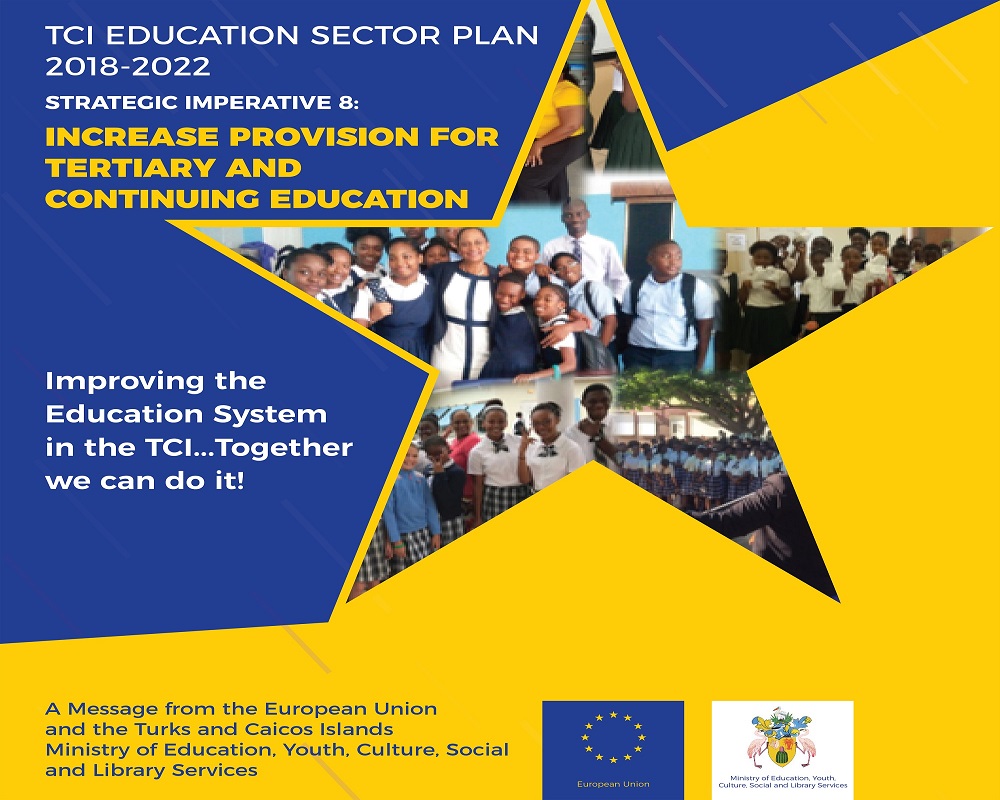
#Providenciales, July 31, 2019 – Turks and Caicos – The Ministry of Education, Youth, Culture, Library and Social Services with the support from the European Union is working to ensure Education Officers and school Principals are better equipped to identify and cope with children who may be exposed to or suffering from violence and abuse.

Ms. Heidy Williams is the Education Officer with responsibility for Early Childhood Education and she explained that a recent training session successfully demonstrated to participants their key roles and responsibilities when it comes to safeguarding children, “Child protection and safe-guarding refers to the protection and safe-guarding of all children against violence. It ensures that systems are in place to prevent, identify and stop violence that are already happening. Violence against children can be in the form of poor nutrition, poor health care, lack of affection, unresponsive care, child maltreatment, neglect, corporal punishment, exposure to violence and abuse (physical, emotional, sexual).”
Hurting children can now be much better served due to the techniques and strategies learned during the training session. Ms. Williams said a component of the program called, Courageous Conversation, had a major impact on the educators.
“Holding Courageous Conversations is the process of having the confidence to be bold and direct in order to show awareness and bring about change to a situation, recognizing that the implications can be difficult but the outcomes are generally positive.”
Admittedly, when these situations arise, they can be disconcerting and downright uncomfortable.
Ms. Williams notes that “these components are extremely important to the Ministry because children are most vulnerable to violence and these adverse experiences early in life can impair the brain architecture. Early stress due to violence elevates the stress hormone cortisol and this can disrupt brain development altering academic performance and causing harmful mental and physical consequences that can last into adulthood.”
Ms. Williams further expressed that even one incident where a child is impacted by negative events or environments are viewed as too much.
“With the challenges of sporadic incidences of violence against children, the Ministry of Education recognizes the need to be proactive in guaranteeing the safety and well-being of children into adulthood,” said Ms. Williams who added that the training even helped Education Officers and Principals to understand how to begin Courageous Conversations. The method we are using is known as the ‘OARS Approach’. It is an acronym for O- open ended questions; A- Affirmation; R- Reflective listening and S for Summarizing. Emphasis was placed on how to interview, noting the importance of preparation, opening comments, body language, how to respond, listening and tone of voice.”

Public and private school principals and Education Officers were equipped with the skills of active listening without interrupting, how to interview, how to analyze a situation and the risk involved, how to stay neutral, methods of getting one’s attention, words to avoid when interviewing parents, helping them to find solutions to problems and methods of communicating to children in an age appropriate manner.
The training was facilitated by Barnardo’s, a British charity dedicated to protecting vulnerable children and organised for the Turks and Caicos from May 4-6, 2019 by the UK Foreign & Commonwealth Office.
“Improving the Education System in the TCI…..Together we can do it”
#magneticmedianews
#improvingeducationinthetci
#euandmoe
#protectingvulnerablekidsintci








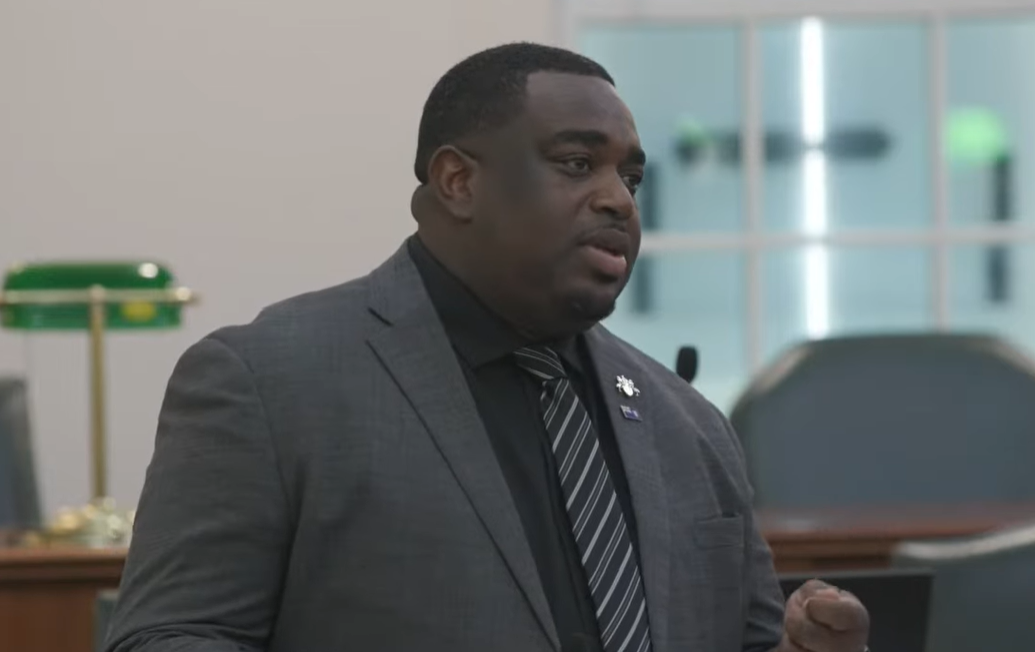
Turks and Caicos, April 25, 2026 – A major shift in how healthcare is delivered in the Turks and Caicos Islands is at the center of the Government’s latest budget, with a focus on reducing reliance on overseas treatment and strengthening services at home.
Presenting his contribution to the national debate, Kyle Knowles outlined a strategy aimed at building a more sustainable healthcare system —one that allows more residents to access quality care within the country.
The health sector has been allocated $94.1 million, making it one of the largest areas of public spending in the $550.8 million Budget passed on April 23.
Central to the Minister’s approach is a restructuring of the Treatment Abroad Programme (TAP), which has grown significantly in recent years as more patients are sent overseas for specialized care.
The Government now aims to reverse that trend.
“We are reforming healthcare to ensure long-term sustainability,” Knowles indicated, pointing to efforts to strengthen local services and reduce the need for travel.
The strategy includes improving healthcare infrastructure, expanding services available within the islands and increasing efficiency through the digitization of medical records.
Digitization is expected to support better coordination of care, reduce delays and allow for more accurate tracking of patient needs—part of a broader effort to modernize public services.
The Minister emphasized that the goal is not only cost control, but improved access.
“No family should have to leave home to get quality care,” he said, underscoring the Government’s intention to refocus healthcare delivery on local capacity.
The shift comes as rising healthcare costs continue to place pressure on public finances, with overseas treatment representing one of the most expensive components of the system.
By investing more heavily in domestic services, the Government is seeking to reduce that burden while improving outcomes for residents.
While the direction is clear, details on timelines and the pace of expansion for local services were not fully outlined in the presentation.
Still, the emphasis on sustainability, access and modernization signals a strategic pivot in how healthcare is expected to evolve in the Turks and Caicos Islands.
Angle by Deandrea Hamilton. Built with ChatGPT (AI). Magnetic Media — CAPTURING LIFE.

Turks and Caicos, April 25, 2026 – Premier Charles Washington Misick has pushed back against criticism of the Government’s newly passed budget, defending both its direction and execution as deliberate and necessary for national development.
Wrapping up debate on the $550.8 million Budget, passed on April 23, the Premier dismissed concerns raised by the Opposition about inefficiency, rising costs and gaps in delivery, insisting the Government’s approach is measured and focused on long-term growth.
“This budget is about delivering for our people,” Misick said, as he reinforced the administration’s commitment to infrastructure, healthcare expansion and broader economic development.
Opposition Leader Edwin Astwood had earlier challenged the Government’s performance, pointing to unfilled posts, delayed projects and what he described as weak execution despite increasing allocations.
In response, the Premier rejected the notion that the Government is failing to deliver, instead arguing that building national capacity takes time and sustained investment.
He maintained that staffing challenges are being addressed and that improvements across ministries are ongoing, even as demand for public services grows.
The Premier also defended the scale of spending, framing it as a necessary step to support development across the islands, rather than unchecked expansion.
“We are investing in the future of this country,” he said, pointing to continued funding for infrastructure, community development and public services.
On the question of equitable growth, Misick reiterated his administration’s focus on balanced development, including ongoing investments in the Family Islands.
He argued that progress is being made, even if transformation is not occurring as rapidly as some would like.
Throughout his closing remarks, the Premier leaned on the country’s economic fundamentals—highlighting strong cash reserves, stable growth projections and international confidence in the Turks and Caicos Islands’ fiscal management.
While the rebuttal addressed criticism head-on, it did not significantly alter the structure of the budget or introduce major new measures in response to concerns raised during the debate.
Instead, the Government’s position remained consistent: the plan is in place, the investments are targeted, and delivery will continue.
The exchange underscores a clear divide—between an Opposition pressing for faster, more measurable results, and a Government maintaining that its strategy is already on course.
Angle by Deandrea Hamilton. Built with ChatGPT (AI). Magnetic Media — CAPTURING LIFE.
PHOTO COURTESY OF THE OFFICE OF THE PREMIER
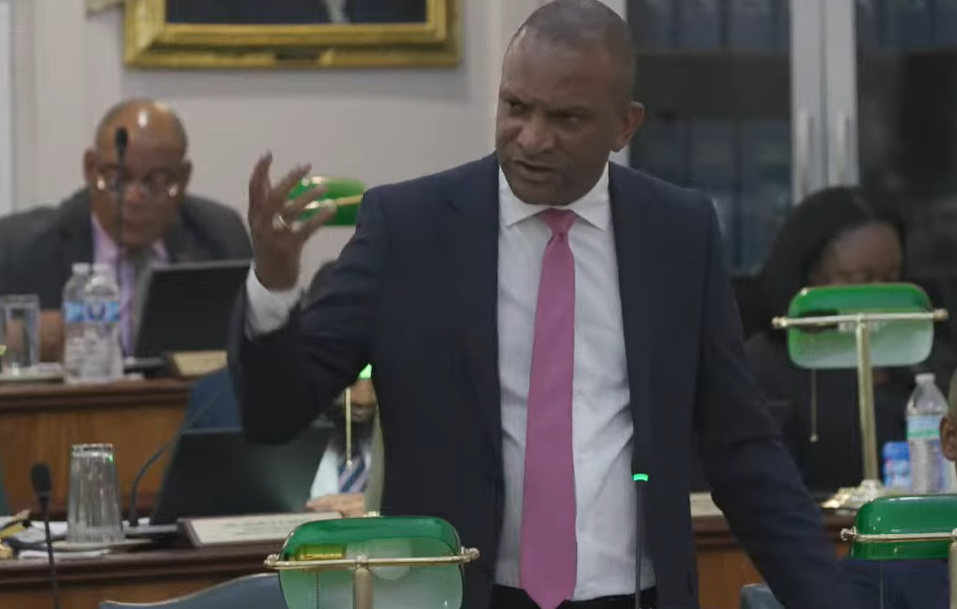
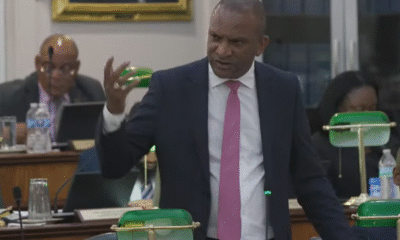
Turks and Caicos, April 25, 2026 – There was no mistaking the enthusiasm of the Minister of Finance, Investment and Trade, E. Jay Saunders, as he laid out his vision for a more digitally driven Turks and Caicos Islands—one where services are faster, systems are connected, and doing business is easier.
But within that forward-looking presentation, what remained notably absent were clear timelines and defined measures to ensure data security and system reliability.
“We are moving toward a fully integrated digital government,” Saunders told the House, as he outlined a future where public services are delivered seamlessly through technology.
With responsibility for the country’s economic and digital transformation, Saunders pointed to several areas expected to be reshaped by the rollout of e-government systems, including revenue collection, business licensing, customs processing and access to public services—all designed to reduce delays, improve compliance and streamline transactions.
The vision is one of convenience and efficiency: fewer lines, faster approvals, and systems that communicate across departments rather than operate in silos.
Within the framework of the Government’s $550.8 million Budget, passed on April 23, the digital push is positioned as a key driver of modernization and improved service delivery.
However, for many users, the experience of government systems today remains inconsistent.
Periodic outages, payment disruptions and service downtime continue to affect daily transactions, raising practical concerns about how quickly the country can transition to a fully digital model.
Despite the scale of the ambition, the Minister’s presentation did not directly address how system reliability will be strengthened or how data will be protected as more services move online.
Those elements—uptime, security and resilience—are critical to public confidence, particularly as businesses and residents become increasingly dependent on digital platforms to access government services.
The direction is clear, and the potential impact is significant.
But as the country moves closer to greater digital dependence, the success of that transformation will ultimately rest not just on what is promised—but on whether the systems can be relied upon when they are needed most.
Angle by Deandrea Hamilton. Built with ChatGPT (AI). Magnetic Media — CAPTURING LIFE.





-
 News1 week ago
Police Honour Retired Officers and Reach Out to Community in Grand Turk
-

 News1 week ago
NEW DESTINATION GUIDE BOOK ANNOUNCED FOR TURKS & CAICOS ISLANDS
-

 News6 days ago
TCI Real Estate Enters Buyer’s Market Phase as Luxury Demand Softens
-

 Independent writer1 week ago
Questions & Concerns About Integrity at TCI Immigration Department and the Department of Labour / Employment Services
-
 Government6 days ago
$94.1Mfor Health; Knowles Pushes to Keep Care at Home
-

 News1 week ago
Experience Turks and Caicos Launches Strategic Travel Advisor Education Program in Partnership with Travelview International
-
 Government6 days ago
Digital Government Push Advances, but Reliability and Security Details Remain Unclear
-

 News6 days ago
Key Projects and Community Investments Feature in Citizen’s Budget Guide