
TCI News
TCI: The time I hated my country


#Providenciales, June 28, 2019 – Turks and Caicos – I was born in the 1970’s in the capital island of Grand Turk, a time when my country was the third world of the third world. Those born before me and around that time would understand what I mean. There was no running water. Drums and water cisterns held our water, and we accessed this water using buckets. Our baths occurred in small tubs and if you were fortunate, you were the first or the second person who took a bath in that same water.
We had limited electricity in our homes, 3 TV channels (and 2 which didn’t work) and an antenna on the roof that had to be positioned at the right angle to make it work. Our food was cooked some days on a cold stove by my grandfather who’s intentions were really good but didn’t rescue us from the fact that he never learned to cook until much later in his life. We walked barefooted as we only had a single pair of what was called our “GOOD SHOES”.

I can also recall some days attending primary school without shoes. For fun, we played marbles, went fishing, ran behind horses, donkeys, goats and chickens, played with a bicycle tyre or wheel and pulled a klim can.
With all that said it was surprisingly a good life. No worries or concerns and we were at our happiest with what little we had. Then my mom decided to study in New York in the mid-80’s. As an only child, she took me with her. A new place in the big city!
At first I asked, how could she take me from my good life in my third world home and force upon me a strange life in the concrete jungle? But wait, the concrete jungle was actually better than my home! We had running water and good food. I mean who would turn down New York style pizza and Burger King? Chinese food to die for? We had access to the latest toys, video games and fashion and my TV had all 12 analog channels. I was living my best life.
This is the point at which I started to hate my home. How could I have been born in such a place? A place so harsh, so dissolute and so backward? I asked God why did He do that to us? Why would you place my ancestors in such a place and made life so hard for us? Why couldn’t I be born and raised in the US and not know about such a place called the Turks and Caicos, which none of my classmates in New York knew about and wasn’t even on the world map to show to them during geography lessons?
Imagine trying to explain something that does not exist according to the latest world map at that time? I was the laughing stock of the class.
My mother finished her degree in 2 years and my time in New York came to an end and it was time to return to my home. But home to what? As far as I knew, nothing had changed. I knew that the conditions were the same. “Home sweet home,” as it is so gloriously stated.
I returned home and could not wait for the day I could escape again return to New York to live for good. But something interesting happened. My presence on these isles made me fall in love with my home all over again. The saying that one must be “in the room” in order to appreciate the experience sounds true when it comes to the TCI. I did not want to live in any other place on this earth.
I was indeed fortunate enough to return to New York for college and I would captivate audiences with my stories of a place no one in the room knew about. A place so geographically close to the US but it seemed so far in the minds of my audience. I returned home knowing that I had a contribution to make to a developing country. A country that gave me a scholarship, which helped me achieved my goals. A country that I thought could be the best country in the world.
Fast forward to today, I have watched my country develop tremendously in my life-time and become my concept of New York to so many people. However, my recent concerns lie with the answer to the question, for whose benefit has this country become so developed? Who is currently out there reaping the benefits of the best country in the world? Certainly not its home-grown people! Certainly, not the descendants of those whose backs were broken by whips and wounds treated by labouring further in salt! Certainly, not the people who remained and called this place home before the world even had a glimmer of its possible existence!
The question which arises is, why? Why haven’t and why shouldn’t the people and their descendants who first loved and cared for this place when there was nothing to gain be the first to benefit from their country’s development?
In Jamaica, the Jamaicans benefit from their country’s growth. In the Dominican Republic, it is the Dominicans who benefit before anyone else. In Cuba, the theory is that the Cubans benefit alone. Even in Haiti, with all its turmoil, it is still the Haitian who benefits where there are benefits available. In America, the American benefits. In Canada, the Canadians benefit.
Why is it that in Turks and Caicos the Turks and Caicos Islander has no benefit to look forward to? Why is it that the first harvest of benefits are seemingly distributed amongst everyone else other that the native person with the native person left to graze the field with the hope of collecting any fallen residue?
My fellow Turks and Caicos Islanders, when will we wake up and take back the control and enjoyment of our country? When will we work together and do the things that we need to do to put our people first? When will we put our differences aside and focus on us, our children and our children’s children?
It appears that we are the only group to be falling behind as the country moves forward. We are very close to becoming 4th Class citizens any day now in a country which is rightfully our own! Those foreign to our shores already look upon us with disdain and many of us can relate to stares and frowns, within our own home, which question our very right to exist, let alone our right to benefit first.
A colleague suggested to me that writing this article would amount to a waste of time because all Turks and Caicos Islanders are aware of the problems I write about, yet no one will seize the opportunity to take action. What will we do, at this point? ABSOLUTELY NOTHING! And this absolutely nothing will lead to our further demise. I am not oblivious to the fact that taking action will create discomfort.
However, history teaches us that sometimes we need to become a little uncomfortable and seriously restless in order to recognize and aggressively pursue the opportunities and benefits wrongfully withheld from us and routinely exploited for personal gain by those entrusted with the power to govern on our behalf.

I write with the hope that my colleague would be proven wrong. I write this as a call to action. A cry for justice. A summons to every Turks and Caicos Islander to join hands and to fight for our country. What’s at stake is bigger than your party affiliation! Let us do what we need to do to secure a future for our children. Let’s put our differences aside for a time and fight for the greater good. A cause much bigger than self. Are you ready? I know I am.
Today, I will ask my people to sign a petition as one united front to have our Constitution restored as per the recommendations in 2015. To restore the constitutional power to the people we elect to represent us. This is the start that we need for a brighter future. This is not a PDM or a PNP issue or problem. The problem affects all of us who live in the country. Let’s show the world that we can unite and operate at a level bigger than politics and set our country on the right foot to prosperity.
Our goal is to get enough signatures from the voting population of the country that the powers that be will give the people of this country a referendum to decide if they want their constitution restored or not. LET’S RESTORE THE POWER BACK TO THE PEOPLE ONE SIGNATURE AT A TIME!!!
Anyone interested in helping or volunteering with this cause, please contact me on (649) 232-3382 or email me at Malcolm_Deveraux@Hotmail.com.
Release: Malcolm Deveraux

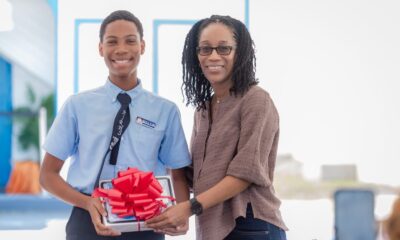
Providenciales, Turks and Caicos Islands – Friday, 2nd October 2026: Invest Turks and Caicos officially opened Caya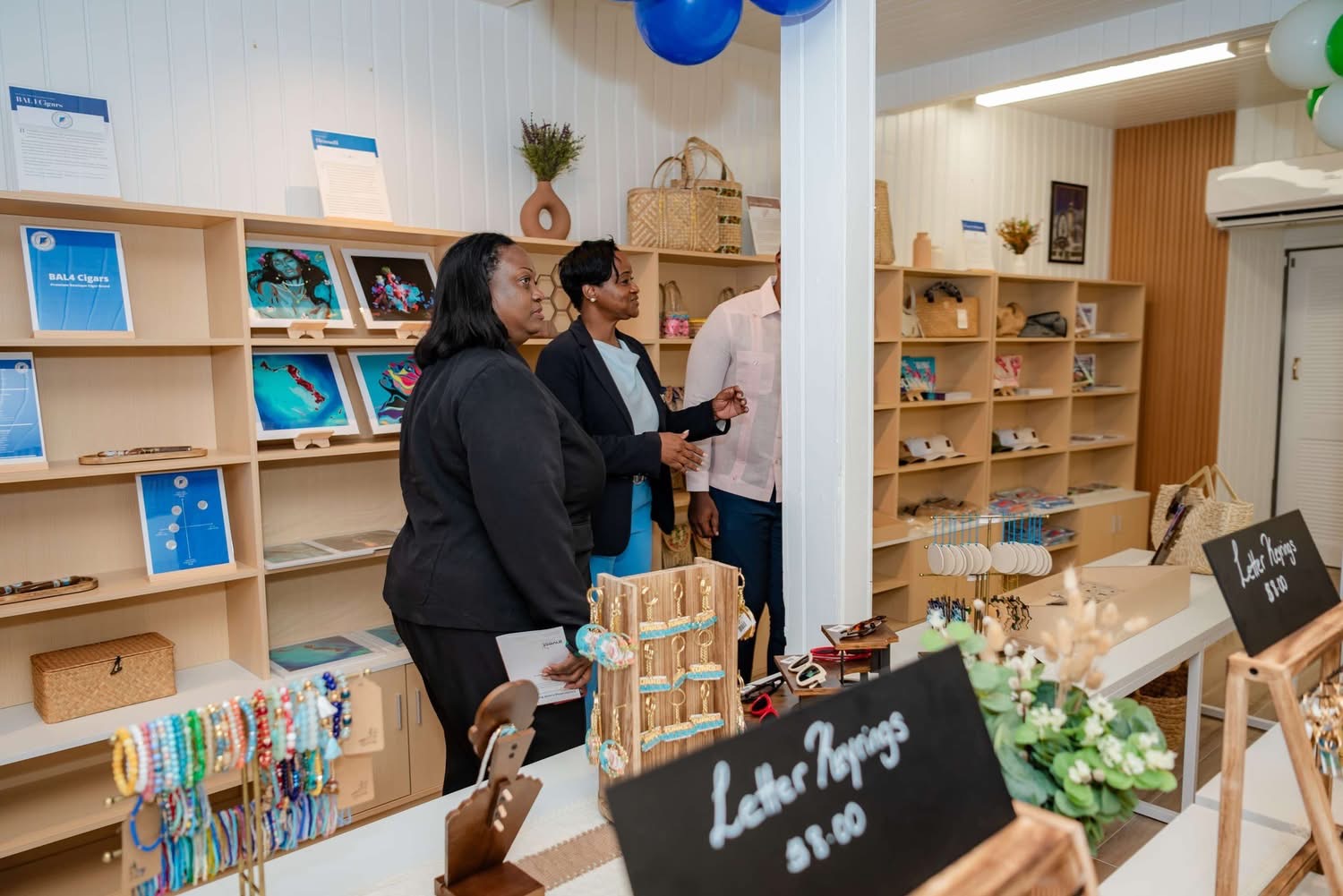 Hico Collective, the Grand Turk MSME Storefront, on Friday, September 18, 2026, marking a significant milestone in the Agency’s ongoing efforts to support local entrepreneurs, expand access to market opportunities, and strengthen the small business ecosystem.
Caya Hico Collective has been established as a dedicated retail space to showcase and sell locally made products, initially featuring entrepreneurs participating in the MSME Programme. As the initiative develops, there are plans to expand participation to include other small businesses producing locally made goods, including those not directly supported under the Programme. The storefront will provide local businesses with greater exposure and direct access to both residents and the thousands of visitors who arrive in Grand Turk each year creating stronger linkages between local entrepreneurs and the tourism economy. The store currently features fourteen (14) inaugural vendors, representing a diverse selection of local businesses and products from across the Turks and Caicos Islands.
Speaking on the significance of the initiative, Ms. Alexa Cooper, Chief Domestic Investment Officer, said:
“This storefront represents a practical and meaningful step in supporting our MSMEs by providing access to market, one of the most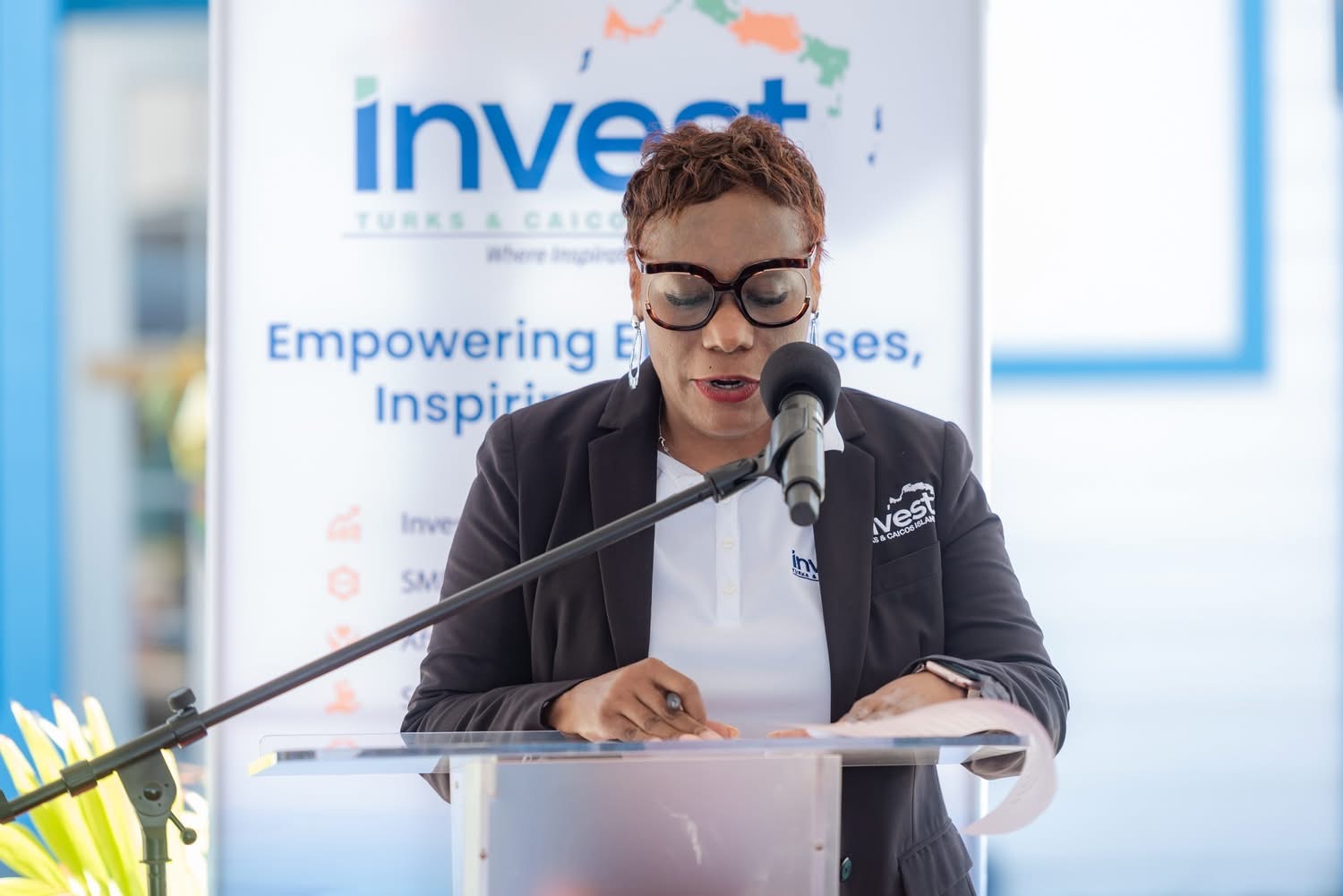 critical components of business growth. It is a space where local talent, creativity and entrepreneurship can be showcased, supported and connected with new customers.”
A Name Chosen by Grand Turk’s Youth
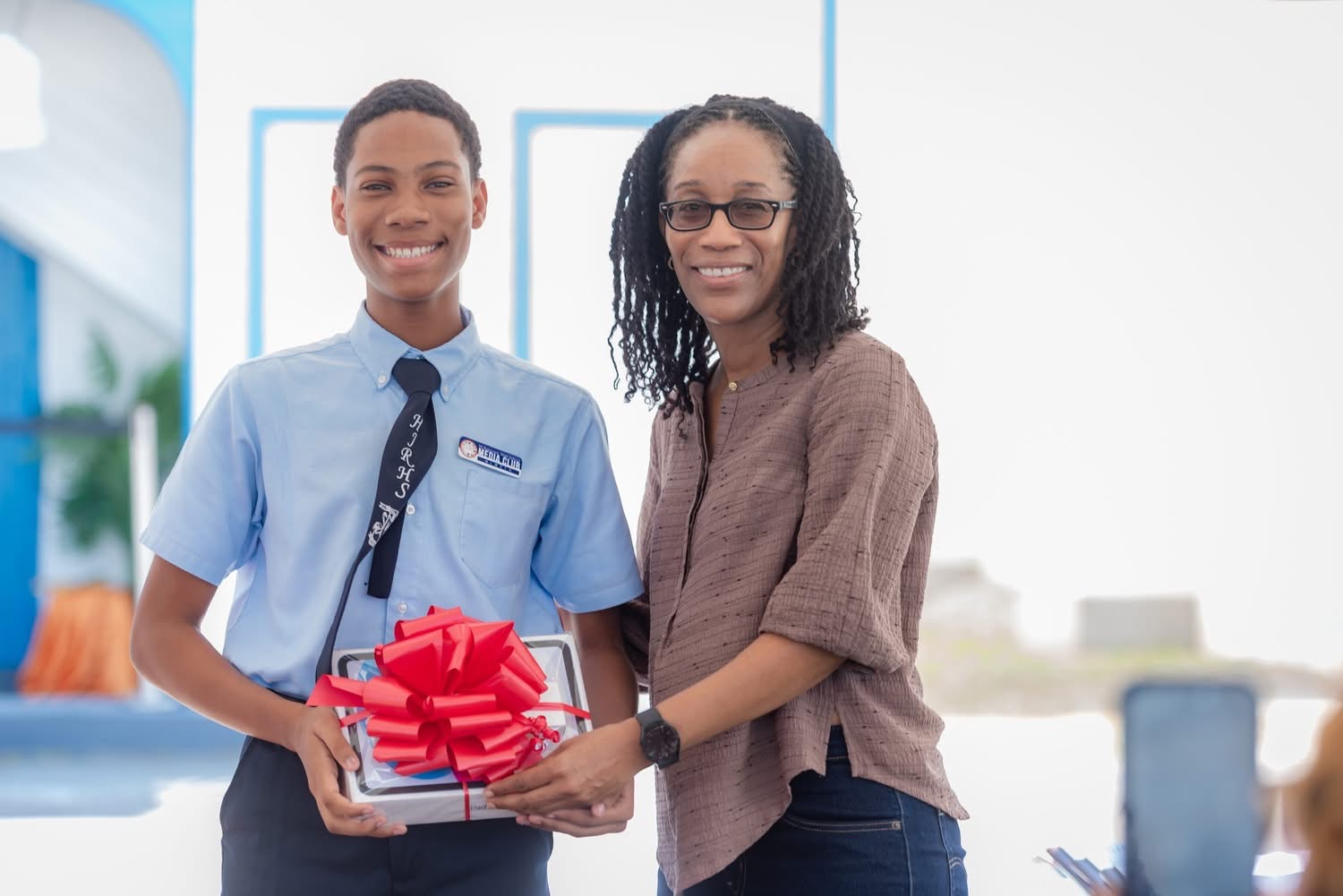
The name Caya Hico Collective was selected through the Grand Turk MSME Storefront Naming Competition, an initiative conducted in partnership with H.J. Robinson High School. Students were invited to propose an original name that reflected Grand Turk’s identity, culture and heritage while also being suitable for a storefront showcasing locally made products.
Following an independent judging process, Mauvarii Selver was selected as the competition winner for the submission Caya Hico Collective.
The name was recognised for its cultural and historical significance, distinctiveness and strong storytelling potential. “Caya Hico” is derived from the Lucayan term meaning “string of islands,” reflecting the archipelagic identity and heritage of the Turks and Caicos Islands. The use of “Collective” further reflects the purpose of the storefront: bringing together products from multiple local entrepreneurs under one shared retail platform. Together, the name Caya Hico Collective connects the Islands’ heritage with the initiative’s vision of bringing local businesses, products and creativity together in one space.
The naming competition provided students with an opportunity to participate directly in a real-world branding exercise and contribute to an initiative that will form part of Grand Turk’s commercial and tourism landscape.
Mauvarii was formally recognised during the opening ceremony, alongside the other students who participated in the naming competition, the inaugural MSME vendors, and key stakeholders whose contributions supported the successful development and opening of the storefront.
Angela Musgrove, Chief Executive Officer of Invest Turks and Caicos, added:
“Caya Hico Collective is more than a retail space. It reflects our continued focus on strengthening linkages between local businesses and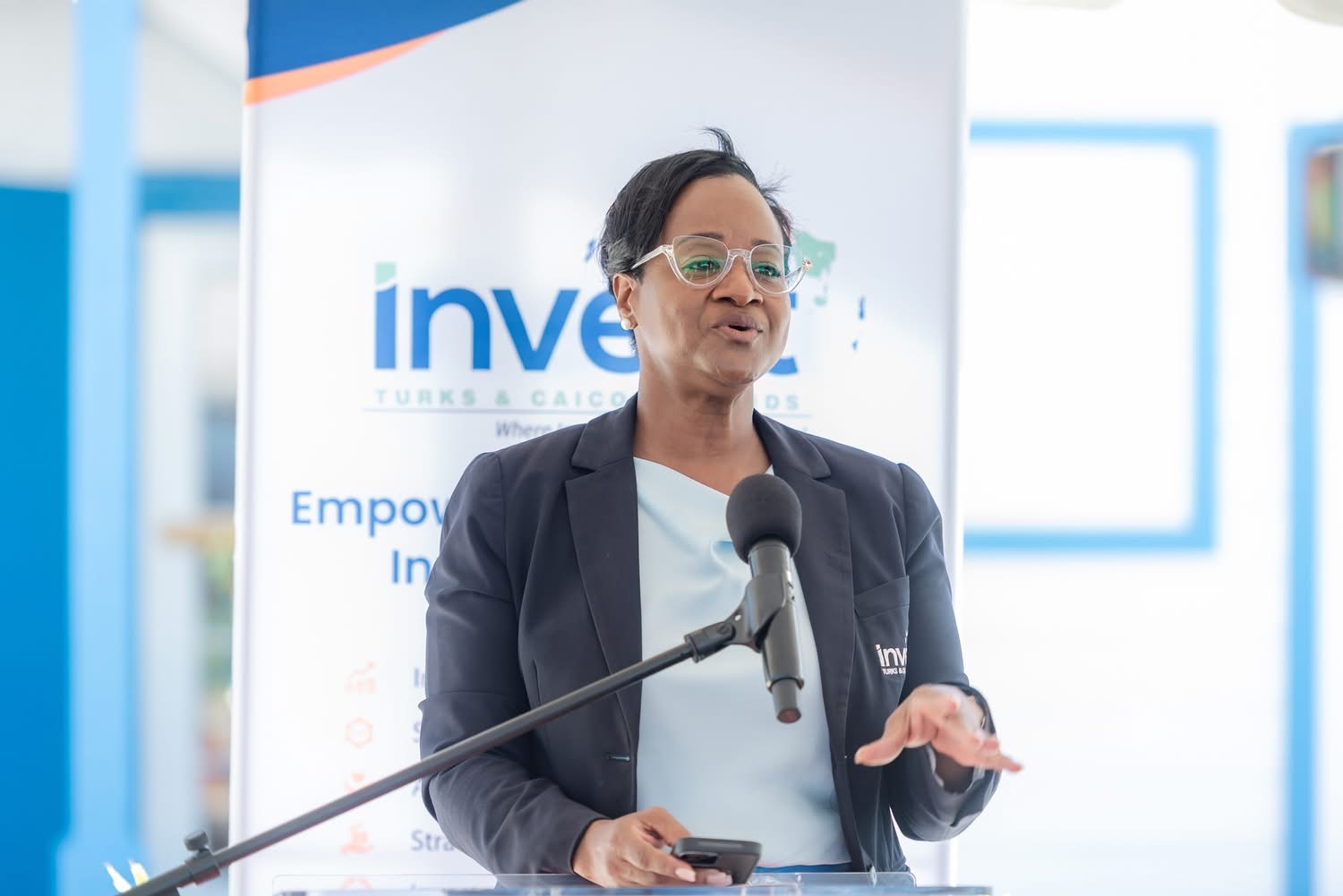 the tourism sector, creating more opportunities for MSMEs to reach visitors, increasing sales and participate more fully in the tourism economy. At the same time, it gives visitors greater access to authentic products that reflect the creativity and culture of the Turks and Caicos Islands.”
Supporting Local Enterprise and Tourism Linkages
Caya Hico Collective is expected to serve as an important platform for local entrepreneurs by increasing the visibility of locally produced goods, creating additional sales opportunities and providing visitors with greater access to authentic products from the Turks and Caicos Islands.
Through the storefront, Invest Turks and Caicos aims to encourage residents and visitors alike to discover, purchase and support locally made products, while creating a stronger connection between entrepreneurship, culture and the visitor experience in Grand Turk. The initiative is intended to increase opportunities for local businesses to benefit from tourism activity by connecting visitors directly with locally made products that showcase the creativity and talent of entrepreneurs across the Turks and Caicos Islands. This forms part of Invest Turks and Caicos’ broader commitment to promoting economic diversification, sustainable business development and stronger linkages between local enterprises and the tourism sector.
Health
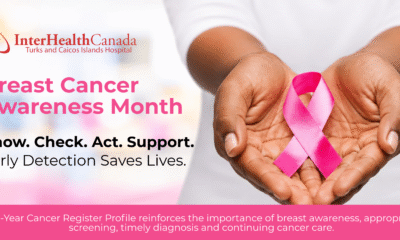
TCI Hospital Marks Breast Cancer Awareness Month 2026 with “Know. Check. Act. Support.” Campaign
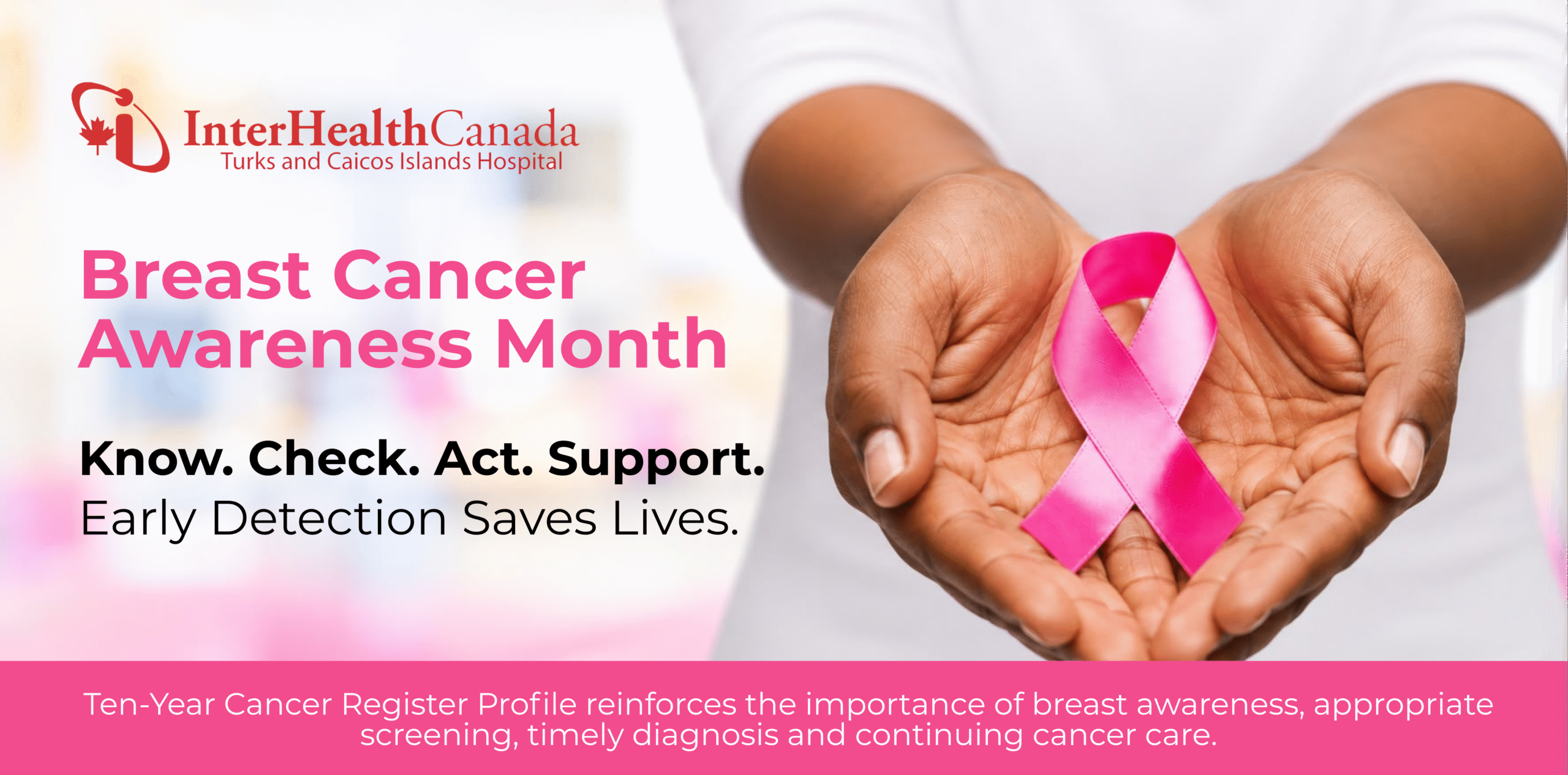
Ten-Year Cancer Register Profile reinforces the importance of breast awareness, appropriate screening, timely diagnosis and continuing cancer care
Providenciales, Turks and Caicos Islands – 1st October 2026 – Turks and Caicos Islands Hospital (TCI Hospital) is marking Breast Cancer Awareness Month 2026 with a month-long public awareness campaign under the theme “Know. Check. Act. Support. – Early Detection Saves Lives.”
This year’s campaign is being informed by TCI Hospital’s Ten-Year Cancer Register Profile, 2016–2025, which demonstrates that breast cancer remains an important and continuing healthcare issue for patients, families and the wider Turks and Caicos Islands community.
Throughout the ten-year period, TCI Hospital continued to record new cases of malignant neoplasms of the breast each year. Annual new registrations fluctuated, reinforcing an important message: breast cancer is not an occasional concern confined to Breast Cancer Awareness Month, it requires sustained awareness, appropriate screening, timely investigation and diagnosis, access to treatment, follow-up and support throughout the year.
What Our Cancer Register Tells Us
The TCI Hospital Cancer Register recorded 21 new breast cancer cases in 2016, the highest annual figure reported during the ten-year profile. In subsequent years, the overall annual new-case count ranged from 8 to 18 cases, with 18 new cases recorded in 2024 and 10 in 2025.
The register also demonstrates the continuing accumulation of breast cancer cases within the hospital’s cancer records. The total registered breast cancer caseload increased from 79 in 2016 to 192 by 2025. More recently, the register increased from 160 cases in 2023 to 181 in 2024 and 192 in 2025. These figures represent the hospital’s registered caseload and should not be interpreted as population incidence, prevalence or the number of people currently living with breast cancer.
Behind every registration is more than a statistic. Each represents a person whose diagnosis has implications for their family and for the healthcare professionals and services involved in cancer investigation, treatment, coordination, follow-up and support.
The ten-year profile therefore reinforces the importance not only of identifying breast cancer, but of ensuring that people affected by the disease are supported throughout their cancer journey.
Know the Signs and Act on Changes
Breast cancer can present in different ways. Changes that should prompt assessment by a healthcare professional may include a new lump or thickening in the breast or underarm; a change in the size, shape or appearance of a breast; dimpling, puckering or other unusual changes to the breast skin; nipple changes or unusual discharge; or another new or persistent breast change.
Finding a change does not necessarily mean that a person has cancer. However, an unexplained or persistent change should not be ignored.
TCI Hospital encourages members of the community to become familiar with what is normal for their breasts and to seek medical advice if they notice something different.
Know Your Risk. Know Your Family History.
Breast cancer risk is influenced by several factors. Understanding personal and family medical history can help individuals have more informed conversations with their healthcare providers about their individual risk.
Having no known family history of breast cancer does not mean that breast health can be ignored. Equally, people with a significant family history or other factors that may increase their risk should discuss this with an appropriate healthcare professional.
The TCI Hospital Cancer Register also records male breast cancer, reminding the community that although breast cancer predominantly affects women, it can also occur in men.
Screening and Early Diagnosis Matter
Breast awareness and screening have different but complementary purposes. Screening is intended to identify possible breast abnormalities in people who may not have symptoms, while a new or concerning breast change requires appropriate clinical assessment.
There is no single screening approach that is appropriate for every individual. TCI Hospital therefore encourages people to discuss their age, personal risk factors, family history and appropriate breast screening with their healthcare provider.
Similarly, people experiencing a concerning breast change should not wait for their next routine screening appointment before seeking medical advice.
The campaign’s message “Early Detection Saves Lives” emphasizes the importance of timely action. It does not mean that every breast change is cancer. Rather, seeking medical attention allows appropriate investigation to take place and, where cancer is diagnosed, enables the healthcare team to determine the most appropriate next steps.
From Cancer Registration to Better Cancer Care
TCI Hospital Chief Executive Officer Dr Denise Braithwaite-Tennant said the Cancer Register has an important role beyond recording the number of cancer cases seen by the hospital.
“Our Cancer Register is not simply about counting cases. It helps us understand the cancer burden presenting to our hospital, identify patterns over time and inform how we plan and strengthen cancer services. Behind every number is a patient, a family and a cancer journey. The continued recording of new breast cancer cases reminds us why awareness must lead to action and why our health system must continue to strengthen the pathway from appropriate screening and timely diagnosis through treatment, follow-up and survivorship support.”
“During Breast Cancer Awareness Month, we want our community to understand that fear should not become a reason to delay seeking care. Know what is normal for you, understand your risk, participate in screening that is appropriate for you and seek medical advice when something changes. Just as importantly, we must continue to support those undergoing cancer treatment and those living beyond a cancer diagnosis.”
Know. Check. Act. Support.
Throughout October, TCI Hospital will deliver a programme of activities designed to turn breast cancer awareness into practical action.
Activities will include an educational breast cancer awareness video addressing signs and symptoms, screening, early detection and support; publication of findings from the TCI Hospital Ten-Year Cancer Register Profile, 2016–2025; breast cancer facts and educational messages; a special House Call – Pink Round Table addressing breast cancer risk, symptoms, diagnosis, treatment and survivorship; and Pink Fridays, during which TCI Hospital team members will wear pink to promote awareness, early detection, survivorship and support.
The campaign will also highlight the important role of families, friends, caregivers, healthcare professionals and the wider community. Support can take many forms; from listening and accompanying someone to an appointment to assisting with transportation, meals, childcare or other practical needs during treatment.
TCI Hospital’s Breast Cancer Awareness Month message to the Turks and Caicos Islands community is:
KNOW – Know your body, your family history and your individual risk.
CHECK – Participate in appropriate screening and pay attention to changes.
ACT – Do not ignore a new or concerning breast change. Seek medical advice.
SUPPORT – Stand with patients, survivors, families and others affected by breast cancer.
Know. Check. Act. Support.
Early Detection Saves Lives.
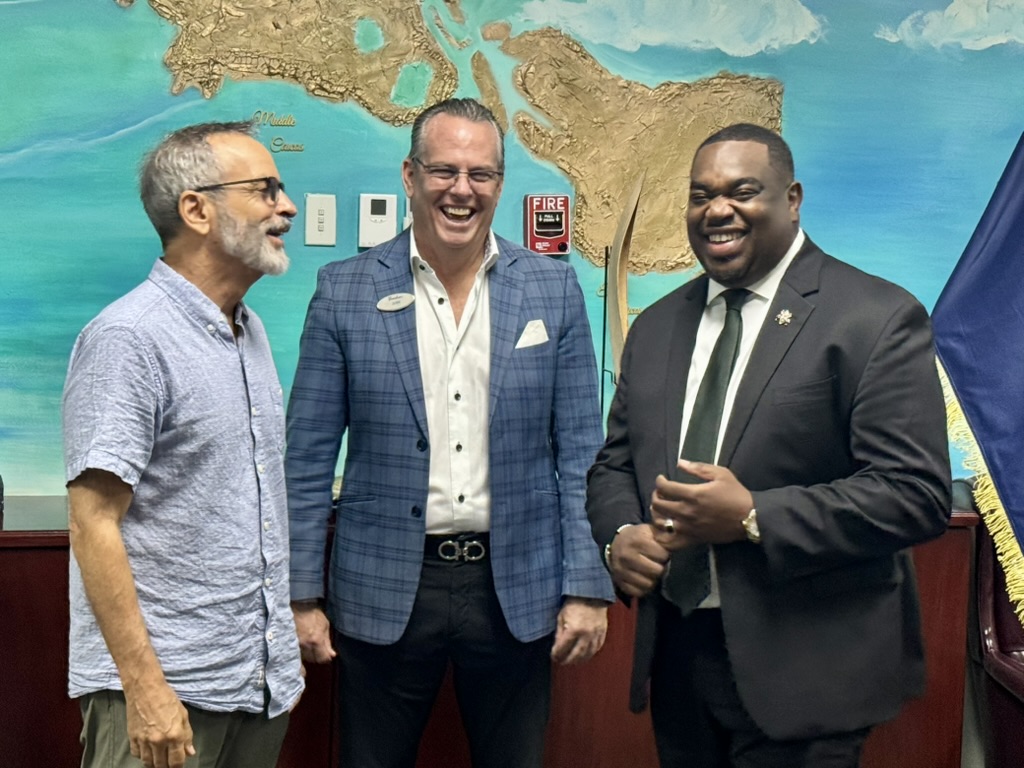
Turks and Caicos Islands, September 29, 2026 – Beaches Turks and Caicos, the Sandals Foundation, and Great Shape Inc.’s iCare programme have completed a record-breaking one-week humanitarian eye care mission in Providenciales, delivering free optical services to more than 4,800 individuals. The 2026 venture brought together 52 volunteer eye care professionals from the United and Canada who provided comprehensive screenings, advanced laser treatments, and thousands of pairs of glasses to residents across the Turks and Caicos Islands.
The mission’s services covered multiple areas of eye health as medical volunteers conducted over 1,000 health screenings paired with educational sessions on eye care and the risks associated with prolonged screen use. Among the most significant clinical achievements were 122 Selective Laser Trabeculoplasty (SLT) procedures, a treatment for open-angle glaucoma, and 13 panretinal photocoagulation (PRP) procedures, an outpatient laser therapy used to halt the growth of abnormal, fragile blood vessels on the retina that can cause bleeding and vision loss.
In addition to clinical interventions, the team distributed over 150 pre-made prescription glasses, more than 2,500 sunglasses, and over 1,400 reading glasses during the mission week. A further 700 custom prescription glasses are being completed and will be delivered to patients in the coming weeks. In addition to adults, students from 16 government and non-government schools throughout Providenciales also received vision testing and care.
Kyle Knowles, Minister of Health and Human Services for the Turks and Caicos Islands, praised the collaboration as “timely” and highlighted the unmatched visual support provided to the community. “We are grateful for this continued collaboration with the TCI government and the Sandals Foundation,” Knowles said. “We have seen where these eye care professionals come here and share their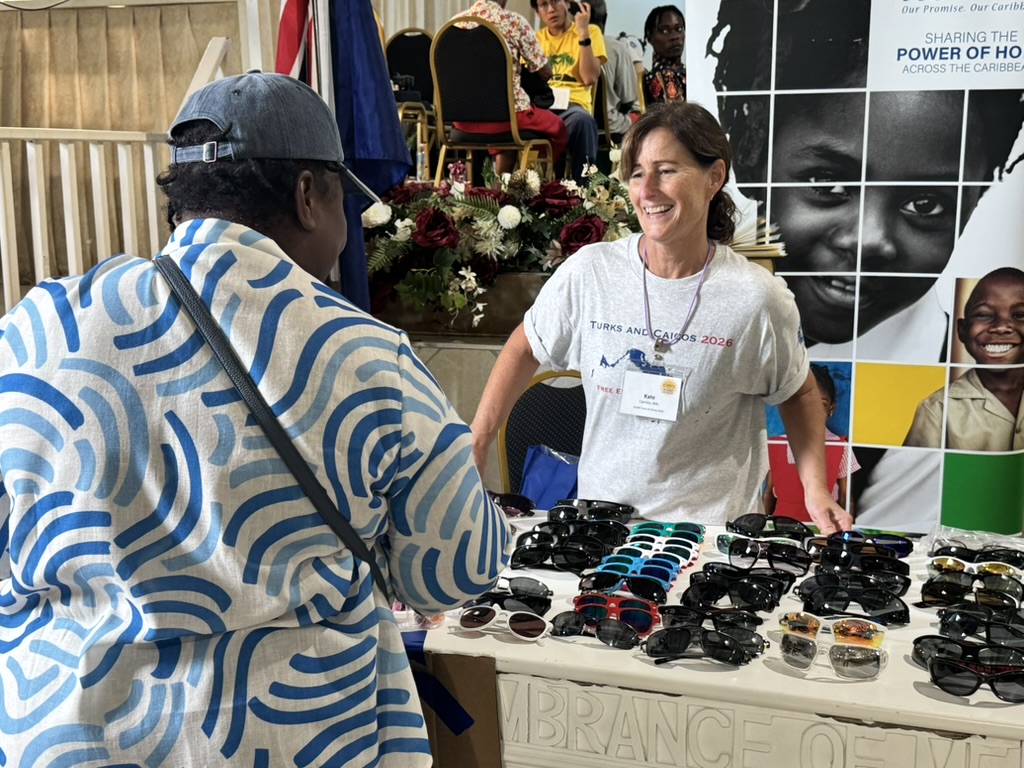 expertise with our schools and our communities, free of charge. This is what teamwork looks like here in the Turks and Caicos Islands.”
Deryk Meany, General Manager of Beaches Turks and Caicos, noted the historic scale of the mission. “We have witnessed a record number of optical services being offered this year which augurs well for the people and children of the Turks and Caicos Islands,” Meany said. “The support that the Sandals Foundation and Great Shape Inc.! has received from the government of the TCI is phenomenal. As an organization, we are conscious of the support that is needed and the opportunities that we have to share in this mission.”
Rachel Taylor, Minister of Education, Youth, Sports and Culture emphasized the value of early screening for students in an era of increasing digital device use. “To be able to provide early screening for our students is priceless,” Taylor said. “With the consistent use of gadgets by our children, the health screening and education is timely for us within the education ministry. We are grateful for this support from the Sandals Foundation and the Great Shape team. If there are challenges identified by the team, parents will be able to provide the necessary care for the children.”
For Nadienne Crossman, vice principal of the BEST Institute, the competence and warmth of the volunteer team was a highlight. “The services provided by these professionals was unmatched,” Crossman noted. “The team who visited our school allowed every student to feel comfortable while they were being tested. As teachers, when we got to the community site, we were treated with respect by everyone. To be able to see multiple specialists free of charge was outstanding. Sandals Foundation and the Great Shape team provided a safe space for us to care for our eyes.”
Steven Stern, Founder of iCare, credited the enthusiasm of volunteers and the seamless support from local partners. “The team for this project was enthusiastic with every client that we saw,” Stern said. “They were creative in using technology to assist with translation while they also learned so much about the TCI culture. The support from the Sandals Foundation and the government of the TCI was simply magical. We are looking forward to returning already.”
The Sandals Foundation coordinates logistics and covers costs for transportation, food, and beverages for the iCare clinic and its teams, while Beaches Resorts provides accommodation free of charge. The close of the 2026 mission stands as a testament to the power of cross-sector collaboration — uniting government, hospitality, and nonprofit expertise to safeguard vision and opportunity for an entire community.





-
 Bahamas News1 week ago
The Bahamas Reaffirms Support for Ukraine at International Conference in Toronto
-
 News1 week ago
Invest Turks and Caicos Islands Highlights Investment Growth and Workforce Opportunity at 5th Annual General Meeting
-
 News6 days ago
Invest Turks and Caicos Officially Opened Caya Hico Collective, Grand Turk MSME Storefront
-
 Bahamas News7 days ago
Walk for the Cure Every Saturday This October
-
 Bahamas News1 week ago
‘Even Nygard didn’t try that’ – Supreme Court hears massive 400-foot seawall was added to Rosewod Exuma behind the public’s back
-
 Health7 days ago
TCI Hospital Marks Breast Cancer Awareness Month 2026 with “Know. Check. Act. Support.” Campaign
-

 Health1 week ago
What To Eat and Drink When You Have the Flu
-
 News1 week ago
Record-breaking eye care mission transforms vision for thousands in Providenciales