
Bahamas News
BAHAMAS: Government signs contract that will give Crooked Island settlements potable water for first time

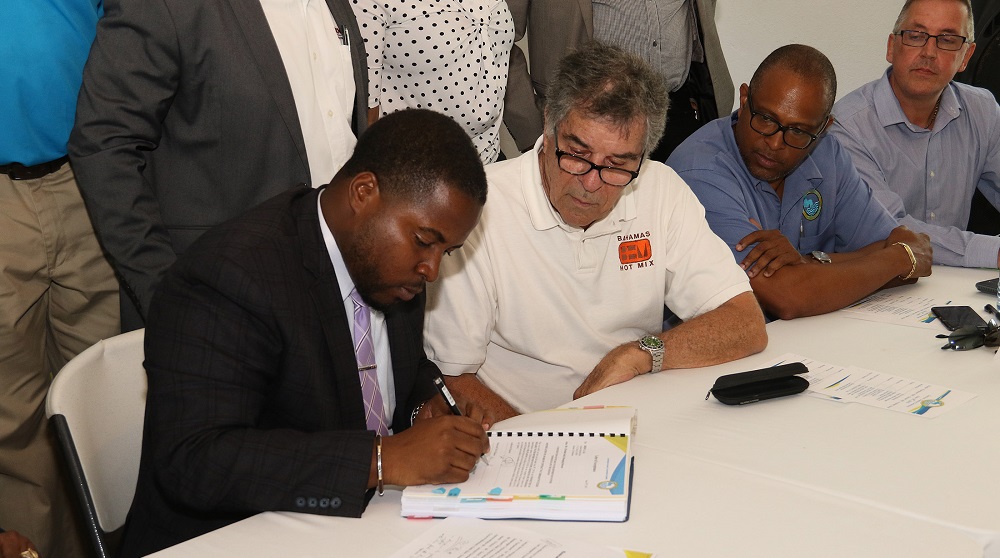
Crooked Island, June 20, 2019 – Bahamas – Residents of Crooked Island clapped their hands gleefully and burst forth exclamations of praise during the contract signing ceremony to supply potable water for the first time in several settlements on this remote island.
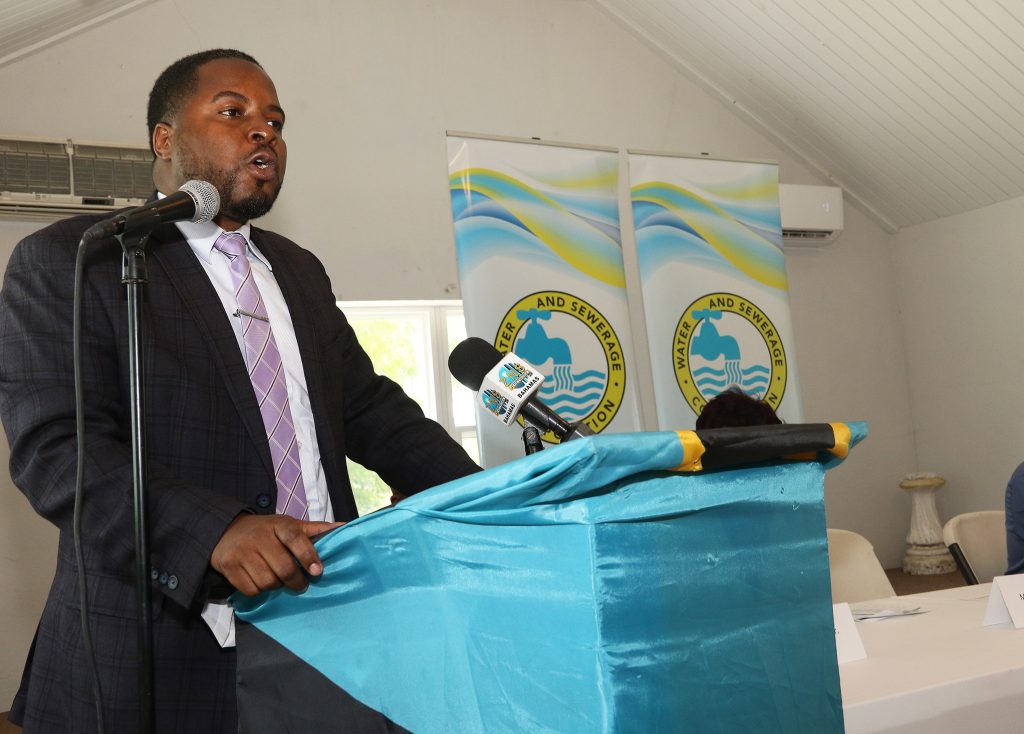
Water and Sewerage Corporation (WSC) Executive Chairman and MP for Long Island, Adrian Gibson led a small delegation to this southern island Tuesday, June 18, 2019 and signed a contract totaling $1,911,650.46 with Peter Andrews, Chairman, Bahamas Hot Mix (BHM) at Ezekiel Thompson Hall in Cabbage Hill.
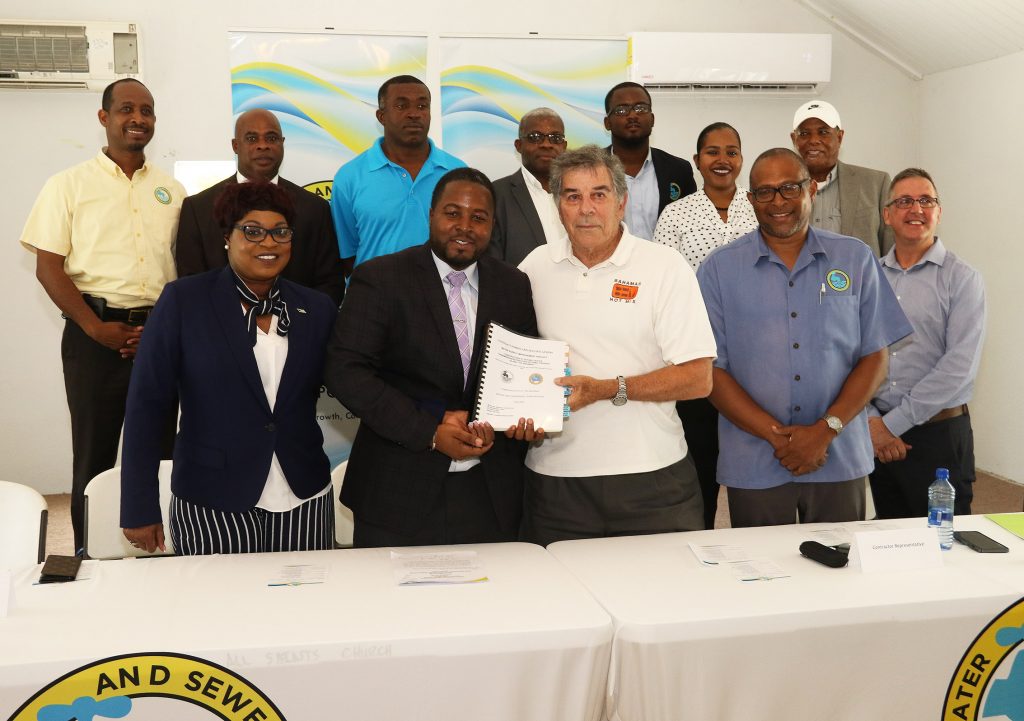
The delegation included Miriam Emmanuel, MP for MICAL and Chairman, Education Loan Authority; Elwood Donaldson, General Manager, WSC; Robert Deal, Deputy General Manager; Cyprian Gibson, Assistant General Manager, WSC; Bennett Minnis, WSC board member; Karl McIntosh, N.O Whyte and Associates Ltd.; other representatives of WSC and BHM. Leonard Dames Jr., Administrator; Local Government practitioners including David Daxon, Chief Councilor, leaders of religious organizations and other residents of the island attended the ceremony.
The project is a part of the $28.33 million loan from the Caribbean Development Bank and $13.3 million in counterpart funding from the Bahamas Government, and is expected to supply water to the Pond Road, Timothy Thompson Settlement, Church Grove Settlement and Colonel Hill Settlement. It covers approximately 18,850 feet of 4-inch PVC pipe, approximately 5,800 feet of 2-inch PVC pipe and 83 water service connections. The work is expected to be completed in approximately 8 months.
Local residents of Crooked Island are expected to be employed on the project that also offers opportunities for females to work as required by CDB terms.
Mr. Andrews said skilled operators are needed but the majority of hires will be trained on the job.

The program comprises two projects in New Providence and projects on six Family Islands including Crooked Island.
In his remarks, WSC Chairman, expressed excitement as the government provides a potable water distribution to Crooked Island.
“We recognize that all of Crooked Island will not benefit from this initial project but this government is committed to providing the entire island with a potable water system; so we intend to expand the system as far and as fast as the budget will allow,” said Mr. Gibson.
He responded to some of the concerns expressed by Mr. Daxon, on behalf of the residents, in his welcome.
“I understand his passion,” said Mr. Gibson. “I feel the same way about my island. The corporation will also be purchasing a Reverse Osmosis plant to address your concerns because of water production.
“Limited budgets can only do some things at a time. Start at one point and over time you build on that until you get to where you want to be. I agree, access to potable water is a universal right. All of these islands should have potable water. It is unfortunate that it happened. We’re doing our best to address it. He who feels it knows it.”
Mr. Gibson remarked that because The Bahamas is located in a hurricane zone the proposed water systems have been designed so that they are robust to climate variability and climate change. He said engineers have identified potential climate change impacts along with the appropriate adaptation measures.
He explained that pipelines along roadways which are adjacent to the sea will be laid at a depth of 4 feet, rather than the standard 3 feet and will be installed on the opposite side of the roadway from where the sea is.
Studies have been carried out to identify areas that would be under water if Crooked Island is impacted by a storm of high intensity.
Mr. Gibson expressed thanks to the Hon. Desmond Bannister, Minister of Public Works; and to the Most Hon. Prime Minister Hubert Minnis for their support. He also acknowledged the following: the CDB, Julius Bonaby and the staff of the Family Island Department of WSC in Crooked Island; engineers in the Project Management Unit; and N.O. Whyte and Associates for their technical assistance and project management.
He assured residents in the Family Islands that the government will do everything in its power to ensure a safe and reliable water supply to residents.
“This government is keenly aware of the needs in the various Family Islands and we are currently formulating plans to address them,” he said.
By Kathryn Campbell
Release: BIS
Photo Captions:
Header:
First Insert:
Second Insert:
PHOTO CAPTIONS
6680
Adrian Gibson, Executive Chairman, Water and Sewerage Corporation and MP for Long Island speaks at a Contract Signing ceremony in Crooked Island, June 18, 2019. (BIS Photo/Patrick Hanna)
6706(1)
Adrian Gibson, Executive Chairman, Water and Sewerage Corporation (WSC) and MP for Long Island signs the contract as Peter Andrews, Chairman, Bahamas Hot Mix (BHM), looks on, June 18, 2019. Also shown is Elwood Donaldson, General Manager, WSC and Paul Huckle, Commercial Manager, BHM. (BIS Photo/Patrick Hanna)
6711
Adrian Gibson, WSC Executive Chairman and MP for Long Island, is shown holding contract with Peter Andrews, Chairman, BHM. Also shown from left in the first row: Miriam Emmanuel, MP for MICAL and Chairman, Education Loan Authority; Elwood Donaldson, General Manager, WSC. From left in back row: Cyprian Gibson, Assistant General Manager; Leonard Dames, Administrator; David Daxon, Chief Councilor; Karl McIntosh, N.O Whyte and Associates Ltd; Ashton Symonette and Ayla Isaacs, Project Management Unit; Bennett Minnis, Board Member and Paul Huckle, BHM.
(BIS Photo/Patrick Hanna)

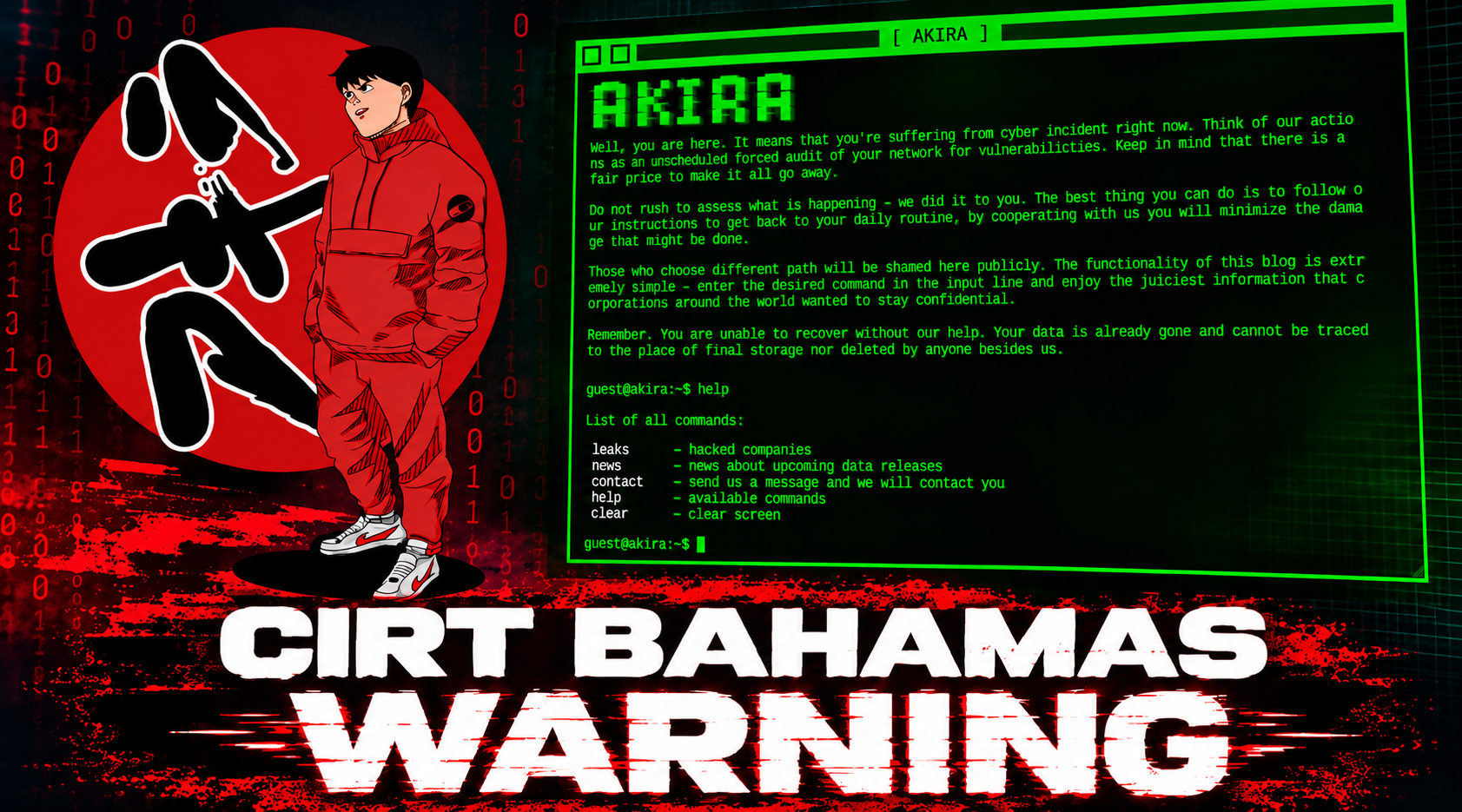
Nassau, The Bahamas, October 22, 2026 — The National Computer Incident Response Team of The Bahamas (CIRT-BS) has issued a cybersecurity advisory warning businesses, government institutions and other organisations about the growing threat posed by Akira ransomware, a cybercriminal operation capable of stealing sensitive information, disrupting networks and demanding ransom payments.
Active since March 2023, Akira operates through a Ransomware-as-a-Service model, with affiliates exploiting weaknesses in computer networks to gain unauthorised access.
Once inside, attackers can steal confidential data, disable recovery systems and encrypt files, preventing organisations from accessing critical information.
Particularly concerning is Akira’s use of double extortion, threatening to publish stolen information unless victims pay. Some attacks involve data theft without encryption.
The October 22 advisory identifies vulnerabilities involving Cisco and SonicWall firewalls, VPN services, Microsoft Remote Desktop Protocol, Veeam backup systems and outdated Windows and Linux operating systems. VMware ESXi and Nutanix AHV environments are also potential targets.
Attackers may exploit unpatched software, stolen login credentials and inadequately secured remote-access applications, including AnyDesk and RustDesk.
Warning signs include unexpected administrator accounts, unusual remote logins, unauthorised software installations, suspicious backup activity, mass file changes and ransom notes.
CIRT-BS recommends immediate security updates, multifactor authentication, restricted remote access, stronger network monitoring and secure backups maintained separately from operational systems.
Organisations should also remove unnecessary internet exposure of remote desktop services, limit administrative privileges and regularly test backup restoration.
The advisory does not identify any confirmed Akira attack against a Bahamian organisation but highlights vulnerabilities that could expose institutions to serious financial and operational disruption.
Cybersecurity incidents can be reported to CIRT-BS at soc@cirt.bs or through its official website.
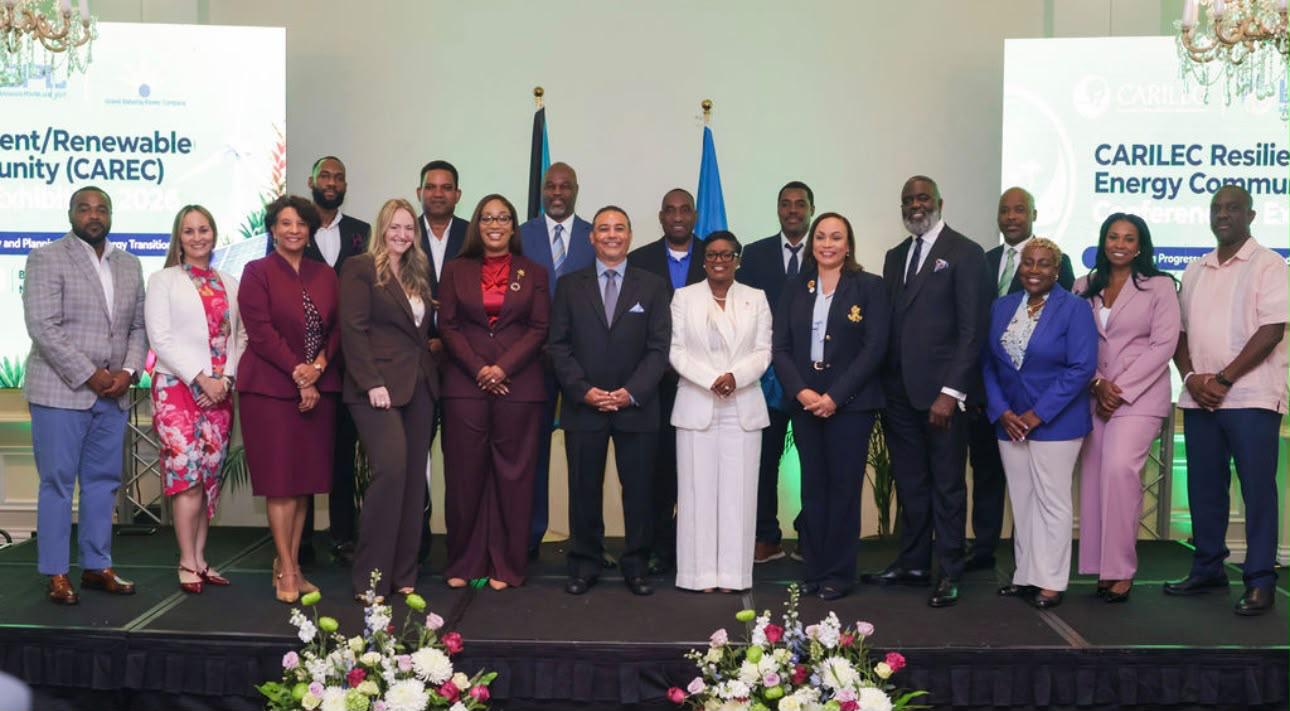
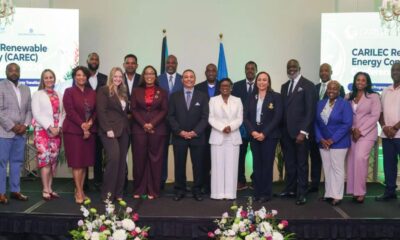
NASSAU, The Bahamas – The Bahamas’ Minister of Energy, Utilities and Aviation, The Honourable JoBeth Coleby-Davis, delivered an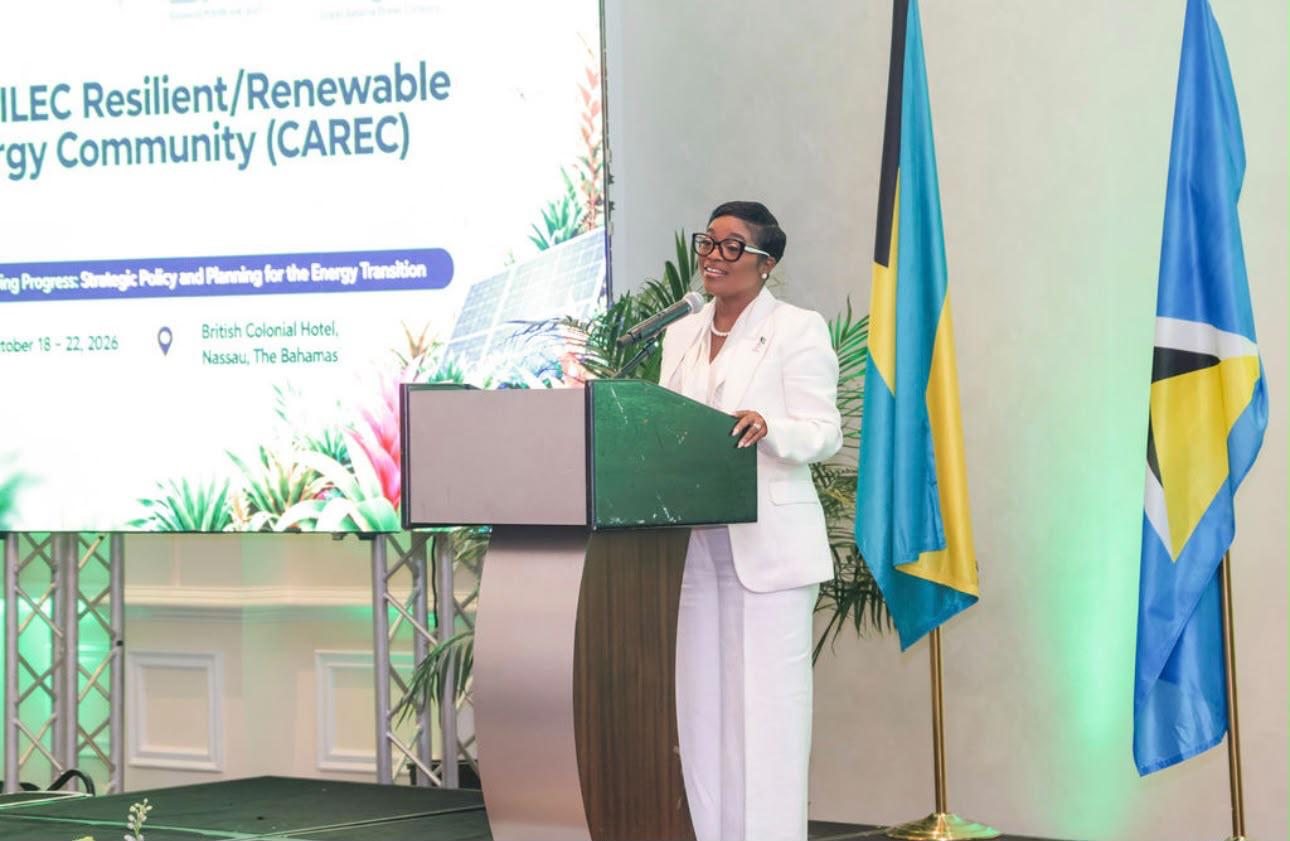 electrifying address during the opening ceremony of the 2026 CARILEC Resilient/Renewable Energy Community (CAREC) Conference and Exhibition, being held October 18–22, 2026, at the British Colonial Hotel in Nassau, The Bahamas.
Under the theme “Empowering Progress: Strategic Policy and Planning for the Energy Transition,” the event draws more than 200 industry leaders, policymakers, regulators, and energy professionals committed to advancing practical strategies for sustainable and reliable Caribbean power systems through renewable energy and emerging technologies.
During her address, titled “The New Energy Era: Transforming Policy into Progress,” Minister Coleby-Davis reminded attendees that The Bahamas’ national motto, “Forward, Upward, Onward, Together,” aptly describes what the region’s energy transition demands.
“Empowering Progress speaks directly to our national motto. Not waiting for progress, but creating the conditions that allow progress to happen. Meaningful progress, however, does not occur by accident. It requires vision, sound policy, strategic planning, strong institutions, and the determination to turn decisions into results,” said Minister Coleby-Davis.
Participants acknowledged that small island developing states share similar pressures, compounded by geographical challenges, small electricity markets, ageing infrastructure, geopolitical influences, and the growing threat of severe weather.
Tasked with ushering in a new energy era across the islands while addressing the challenges posed by The Bahamas’ unique archipelagic composition, Minister Coleby-Davis said, “Every island needs a different answer, but the same logic. As an archipelagic nation, we must provide electricity across many islands, each with its own demand and infrastructure needs. Our strategy, therefore, must be national in direction, but responsive to individual communities.”
Restating her Ministry’s three core messages—that energy is an economic and security priority, technology must be viewed as a tool to support strong institutional leadership, and natural gas should be considered a bridge, not a destination—Minister Coleby-Davis reiterated that “progress must now be reflected in functioning infrastructure, effective institutions, and better electricity services: from policy commitments to coordinated implementation, and from fragmented investment decisions to long-term planning.”
Organised by CARILEC and co-hosted by Bahamas Power and Light (BPL) and Grand Bahama Power Company (GBPC), the annual Conference and Exhibition brings together the Caribbean energy community to advance practical solutions to the region’s most pressing energy challenges and accelerate progress towards more resilient, reliable, and sustainable power systems.
Bahamas News
Rosewood Exuma: A precedent-setting case for environmental law and future development in The Bahamas
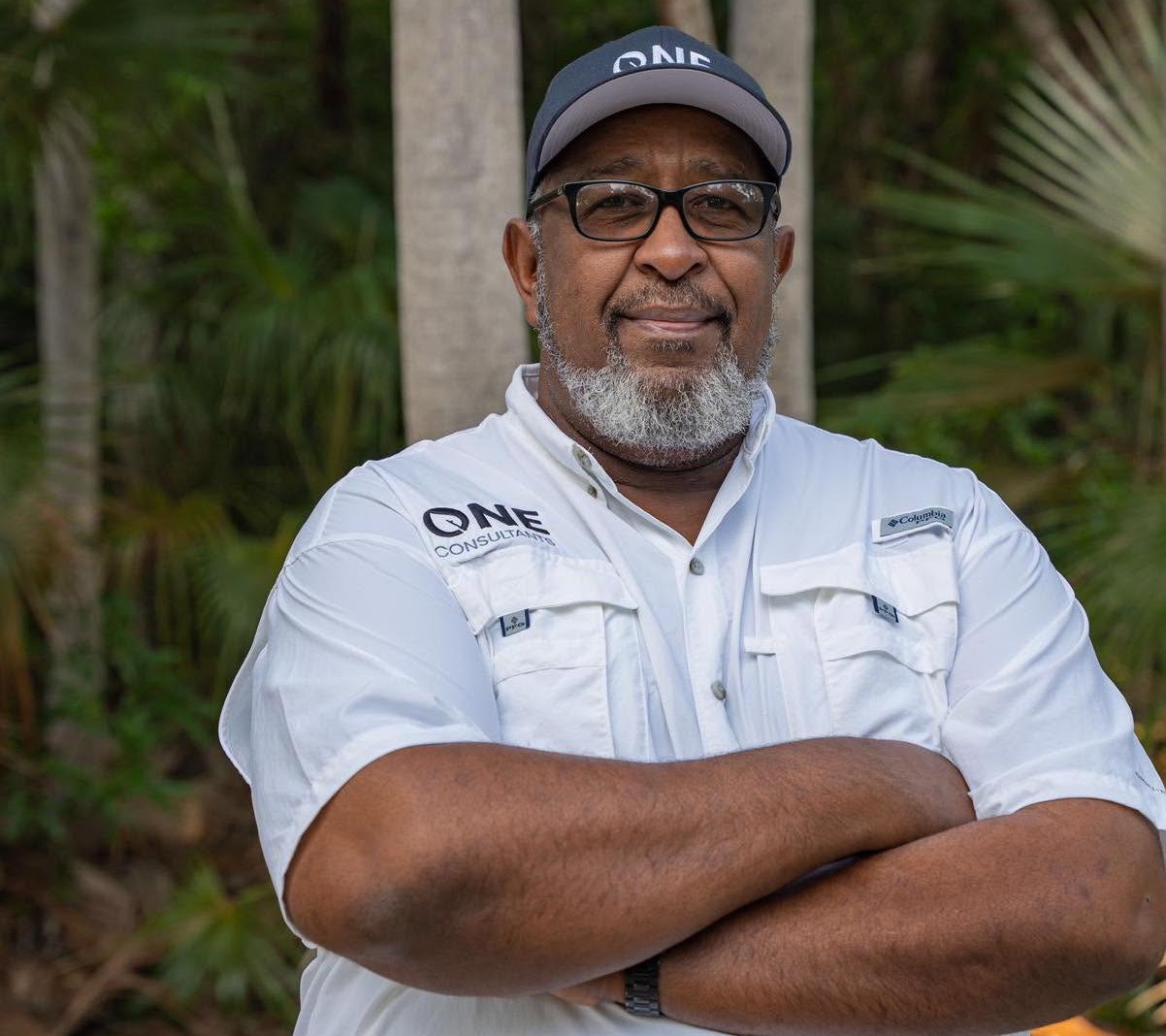
By Eric Carey, ONE Consultants, former Executive Director of the Bahamas National Trust.
We are facing an extraordinarily important moment in judicial history in The Bahamas as we await a decision on the trial of allegations in the Yntegra group’s Rosewood Exuma project.
As former Minister of the Environment, Romauld Ferreira, put it in the Supreme Court last week: “A lot is at stake…a great deal of what will be considered in this case sets the stage for what’s to come for future development in the country.”
In the trial of the judicial review of government approvals given to Yntegra for their Rosewood Exuma resort this week, we’ve heard technical arguments about failure to make key environmental documents like Yntegra’s Environmental Impact Assessment and Environmental Management Plan available to the public, failure of key documents to assess some of the most controversial aspects of the project, an unlawful consultation process, and a failure to conduct further consultation following major changes to the development.
Lawyers for Turtlegrass described how there was a “salami slicing” of the project into chunks as a way to circumvent the approvals process and disguise its full impact from public scrutiny. Only certain portions came before the public and key stakeholders like Turtlegrass and Over Yonder Cay for scrutiny, while some of the most controversial aspects did not. This is particularly problematic given what is at stake – the dredging of a beautiful Exuma bay, the North Bay, to transform it into an industrial shipping channel, complete with an enormous seawall, dock, back-of-house facilities and other industrial infrastructure.
It is unfortunate that it has had to come to this – an expensive judicial review process that calls out the government for falling down on its duties to protect the environment and follow the law – but it is important and the broader implications should not be overlooked. When Justice Leif Farquharson rules on this case, he’ll set a precedent that could echo in The Bahamas for years to come, one that answers the question: are the 2019 environmental laws that Ferreira took to parliament after many years of advocacy by environmentalists toothless tigers that are just for decoration – or are they capable of protecting the environment that we all depend on and the rights of those affected by projects to have a genuine say in them?
What is curious is that at the same time as these points are being raised in court as part of the judicial review, we are seeing personal attacks about Bob Coughlin – the person spearheading this legal action and test of environmental laws – by online trolls. Coughlin, an Exuma resident for almost a decade, has long been established as an environmental advocate and a passionate philanthropist – one who has donated almost $4 million to causes in The Bahamas since 2018, including millions to the organisation I once led, the Bahamas National Trust.
For reasons one can only speculate about, these trolls have been trying to make out all sorts of absurd things: that his legal action in support of environmental protection is a petty dispute born out of fears of competition. That Coughlin no longer even wants to pursue his eco-tourism project, when the reality is that he was forced to put it on hold because of the destructive environmental plans that are in dispute. That he is the only one who has an issue with this Rosewood Exuma resort, when in fact, neighbouring resort, Over Yonder Cay – one of the top rated resorts in the Caribbean – as well as the Save Exuma Alliance – consisting of most of the local islands and businesses in the Exuma area, and thousands of petition signers have expressed their concern with the project – over 9,000 to date. Most ironically, they claim, wrongly, that Coughlin received crown land for personal use, when in fact it is Yntegra who received crown land while having no development track record, when Coughlin instead bought his lease on Sampson Cay from a private owner.
The timing of these claims, in the week of the trial, suggest a patronising and cynical attempt to distract from the gravity of the case being heard, what it represents, and how important this decision is. With their simplistic, jingoistic and factually-dubious references to crown land, white foreigners, and the like – it’s not hard to imagine that those involved are engaged in a ploy to push the buttons of Bahamians who they apparently believe can be too easily distracted into ignoring the real issue here: that the government, has – in the words of those in the Supreme Court this week – “run roughshod” over environmental laws with its approvals for Yntegra’s Rosewood Exuma project and that this is truly a landmark case and the decision will have a long-lasting impact on future development. This is at a time when foreign direct investment (FDI) inflows into the Bahamian economy are forecast to increase by as much as two thirds over the next two years, according to the Inter-American Development Bank (IDB).
So I call on my fellow Bahamians to stay focused. This is not a story about one man – it is a story about the future we want for our country and whether we are willing to sacrifice our ability to demand environmental accountability in all developments moving forward. There is too much at stake to be thrown off the track by trolls.
As Ferreira says of the judicial review that now awaits Justice Leif Farquharson’s judgement: “This is the first set of litigation, serious litigation, that takes a deep dive into the Environmental Planning and Protection Act and the environmental impact assessment regulations…There’s a lot at stake here.”





-

 Bahamas News6 days ago
Rosewood Exuma: A precedent-setting case for environmental law and future development in The Bahamas
-
 News5 days ago
Invest TCI Strengthens Regional Investment Connections at Caribbean Investment Forum 2026 in Barbados
-

 Bahamas News2 days ago
Bahamas Issues Cybersecurity Alert Over Akira Ransomware Threat
-
 News3 days ago
Imagine Turks & Caicos Represented in UK Parliament; New Report Favours It
-
 Bahamas News6 days ago
Energy Minister Delivers Electrifying Keynote Opening Address at CAREC 2026
-

 News3 days ago
Crown Land Unit Leads Multi-Agency Enforcement Exercise in Five Cays
-
 News2 days ago
BermudAir Launches Service to the Turks and Caicos Islands on October 26th, Expanding Air Connectivity Ahead of Winter Season
-
 News2 days ago
DDME Celebrates International Day for Disaster Risk Reduction