
TCI News
TCI: Consultation Proposed on Amendments to The Elections Ordinance


#Providenciales, March 14, 2019 – Turks and Caicos – The Supervisor of Elections is inviting the general public to participate in providing feedback on proposed amendments to the Elections Ordinance of the Turks and Caicos Islands (TCI) following reports from Elections Adjudicators appointed by the Governor and the Election Observer Mission to the Turks and Caicos Islands carried out by the British Islands and Mediterranean Region of the Commonwealth Parliamentary Association of the (CPA BIRMR) during 2016 General Elections.
The current Elections Ordinance (“Ordinance”) of the (TCI) was revised in 2012 and a new Ordinance which repealed the former Ordinance was enacted and came into force on May 18, 2012.
The consultation on the attached proposed amendments to the Elections Ordinance is in light of experience of general elections conducted in 2012 and 2016. It was discovered that some of the provisions of the Ordinance were insufficient to meet requirements and need to be improved.

The areas of the Ordinance which need improvement are in respect to benefits from practical experience, and to clarify the interpretation of various provisions.
Amendments to the Ordinance would avoid the practice of piecemeal amendment and would permit the enactment of comprehensive amendments better suited to current requirements.
Kindly note that persons are urged to refer to the Elections Ordinance under the recently issued 2018 Revised Laws of the TCI, as there has been a renumbering of some sections due to 2016 amendments which are now incorporated in the Ordinance.
Please submit your feedback on the proposed amendments to the Elections Ordinance by email or hard copy document to Lister Dudley Lewis, Supervisor of Elections, SPPD Office Complex, South Base Grand Turk or email DLLewis@gov.tc. The consultation will commence March 5th 2019 and closes April 5th, 2019.
Lister Dudley Lewis
Supervisor of Elections
THE FOLLOWING ARE THE PROPOSED AMENDMENTS TO THE ELECTIONS ORDINANCE FOR CONSULTATION.
CONVENTION ON THE RIGHTS OF PERSONS WITH DISABILITIES
- The Convention on Rights of Persons with Disabilities has not been extended to the Turks and Caicos Islands, however in accordance with the Constitution there is protection against discrimination against any person with disability.
Section 16 of the Constitution relates to qualification to be elected for membership of the House of Assembly and it does not disqualify anyone from being elected because of disability. If a person is of a sound mind and able to understand the act and what they are to do, and if they are qualified to stand for elected office in accordance with the Constitution, then despite their disability, they should have the same legal rights to participate in political life.
In order to comply with requirements of the Convention all persons with disabilities should not be offered a lower standard of service than other voters, but reasonable adjustments should be made so they will not be disadvantaged in any way and they should have the same access to the electoral process as anyone else with designated parking and ramps.
The Supervisor supports the approach that a person who applies for a ballot paper and appears to have some form of mental health problem or have a learning ability should not be excluded from voting or refused a ballot paper on the grounds of mental incapacity if registered as an elector. The standard highlighted in the Convention to be adapted in TCI.
The question is, should the Rights of Persons with Disabilities be implemented in the Turks and Caicos Islands (TCI). If implemented it will enhance the legal rights of persons with disabilities to participate in political life.
STANDARD LAYOUT OF POLLING STATIONS
- It is proposed that to ensure more consistency in the voting process the Ordinance be amended to incorporate a standard layout of all polling stations for the next general elections.
A standard layout of polling stations will aim to maximize:
(a) The efficiency of the flow of voters through the polling station
(b) The transparency of the voting process
(c) Protection of the secrecy of voting
A standardized polling station layout will further promote an orderly controlled flow of voters through polling stations. Polling stations will have one available entrance and one available exit. The entrance and exit will be at opposite ends of the voting area to allow a one-way progression of voters through the voting area.
The question is, should the Ordinance be amended to incorporate a provision for a standardized polling station layout for all polling stations.
DELETE REQUIREMENT FOR INSERTION OF PRESIDING OFFICER INITIALS AND DATE OF POLLING ON BALLOTS
- It is stipulated that voting procedures in the TCI could be more simplified if the superfluous requirement for writing the date of the elections on the ballot’s counterfoil and the initials of the Presiding Officer is removed.
Ballot papers for general elections in the (TCI) are printed in accordance with the Elections Ordinance. Ballots are printed with a space on the counterfoil for Presiding Officers to insert the date of polling and a space for the Presiding Officer’s initials.
Research has revealed that ballot papers used by the following Jurisdictions namely, Cayman Islands, Bermuda, Montserrat and British Virgin Islands still require the date of polling and Presiding Officers initials to be inserted on the counterfoil of their ballots, however it is not a requirement in Guyana, Antigua and the United Kingdom.
The initials of Presiding Officers and date of polling on ballot papers are not important for the voting process in the TCI. If the amendment is made Presiding Officers will only have the responsibility to put on ballots the number corresponding to the consecutive number on the official list of voters and this will speed up the voting process. The polling date for elections can be inserted on ballots at the time of printing.
The question is, should Section 45(3) and4)(a) of the Ordinance be amended by deleting the requirement for insertion of initials of Presiding Officers and date of polling from the counterfoil on Ballots?
END THE PRACTICE OF MARKING VOTERS FINGER WITH INK OR DYE
- It was stipulated that there is an urgent need to either end the practice of marking voter’s finger with ink at polling stations on polling day and an elaborate detailed procedure be introduced for checking voters before issuing ballot papers.
Section 45(10) (d) of the Ordinance stipulates (“the Presiding Officer must require the voter to permit his finger to be marked with ink or a dye”). This requirement was introduced and implemented for general elections of 2012 and 2016 and voter’s voiced their dissatisfaction of its use.
The use of finger stain ink for general elections process in the TCI is important and it is accepted and implemented in other Jurisdictions. The use of Ink prevents persons voting in more than one electoral district and it is an important function in the electoral process.
However, Section 45(10) (d) of the Ordinance is flawed it do not stipulate what a Presiding Officer can do if a voter refuses to have his finger stain. The Ordinance only permit the Presiding Officer to require voters to permit their finger to be stained and if they refuse, a ballot paper is still issued.
The question is, should the practice of marking voters finger with ink or dye end and other alternative means be implemented to identify persons who have voted, and should Section 45(10) (d) be repealed or should the section be amended to incorporate a provision that if a voter refuses to have his finger stained, the Presiding Officer should not issue a ballot paper to the voter.
DISPLAY ELECTIONS RESULTS OUTSIDE POLLING STATIONS
- After tabulation of ballot papers at polling stations and winners declared the results are not displayed at Polling Stations by Returning Officers.
Presently there is no requirement or provision in the Elections Ordinance directing Returning Officers to display election results outside polling stations after counting of ballots and declaring winners for district and All Island District Candidates.
It is believed that displaying elections results outside polling stations will increase transparency and confidence in the outcome of elections.
The question is, should the ordinance be amended to incorporate a provision to direct Returning Officers to display elections results outside polling stations?
ADVANCE POLLING
- During General Elections and on Polling Day Police and Emergency service personnel may be required to attend emergency situations that may prevent them exercising their Democratic right to vote and in the circumstances, it is proposed that advance polling be introduced in the TCI to facilitate persons to vote the day before polling day.
If advance polling is instituted in the TCI, it is recommended that the polls be open at 8am and closed at 4pm.
The question is, should advance polling be introduced in the TCI and if introduced should this courtesy be extended to persons with special needs, Senior Government officials, Prisoners and Senior Citizens sixty- five (65) years and older?
DOCUMENTS ACCEPTED FROM SELF-SPONSERED STUDENTS
- Self-sponsored Students studying overseas have difficulty obtaining letters from senior officials at the Institution attending to confirm their enrolment and attendance to support their voter registration applications.

Section 12(6)(b) of the Ordinance is believed may be too restrictive in terms of what documentary evidence the Supervisor can consider and accept to determine whether Students are self sponsored students overseas in considering their registration applications.
The question is, should the Ordinance be amended to permit the Supervisor to accept the following documents in support of self-sponsored Students registration applications studying overseas:
· Institution acceptance letter
· Receipts indicating payment of school fees
· Proof of Residence overseas
· Notarized document from Student/Parent confirming attendance at the Institution.
AMENDMENT TO FORM No. 1 OF SCHEDULE 1
- There is a clear inconsistency between the requirements in Form No. 4 of Schedule 1 and Section 10(3) (c) of the Ordinance. Form No. 4 of Schedule 1 forms a part of the Legislation and Section 53 of the Interpretation Ordinance of the TCI, states “every schedule or table to any Ordinance, or part of any Ordinance should, together with any notes there to, be construed and have effect as part of the Ordinance”. Section 10(3) (c) should take precedence over Form No. 4 and there is a need for clarity and consistency throughout the Ordinance.
Previously in Claims and Objections process persons were only allowed to object to another person if he/she was registered in the same electoral district however, if an amendment is made it will allow a registered voter to object to another person in any of the ten (10) electoral districts.
The question is, should Form No. 4 of Schedule 1 be amended to conform to the stipulation in Section 10(3) (c) so that the Objector in Claims and Objections process need only be “another person” appearing from the Electors Register to be himself entitled to be registered?
RECOUNT OF BALLOTS PAPERS “ALL ISLAND” CANDIDATES
- The Ordinance is silent on the procedure to adopt when All Island Candidates can request a recount of the ballots after the Returning Officer for All Island Candidates announces the results on the night of elections.
Section 55(13) (c) of the Ordinance stipulates “Any of the Candidates or their agents who is not satisfied with the accuracy of the count may, on completion of the count in the case of an election for the All Islands district, at the central location, demand a recount which shall thereupon be carried out in the same manner as the original. The section only permits Count and re-count of All Island ballots to be carried out at the central location in Grand Turk.
However, when Section 55(13) (c) was introduced in 2012 it was intended that after close of polls the All Islands ballot boxes would be transported to the central location Grand Turk and the original counting conducted, and for general elections 2012 and 2016 ballots for the All Island districts were counted at each polling station and results communicated to the Returning Officer appointed in Grand Turk on election night at the central location. The Returning Officer would tabulate the results from each electoral district and declare the five candidates with the largest amount of votes as winners via radio.
It is proposed that Section 55(13) (c) of the Ordinance be amended to stipulate that after the Returning Officer declares the five All Island Candidates elected, Candidates must immediately request a recount which shall be communicated to a Returning Officer in any of the electoral districts and his/her request shall be communicated to the Returning Officer appointed.
The Returning Officer upon receiving the request shall instruct the Supervisor to transport the All Island ballot boxes to the central location Grand Turk where a recount shall be carried out.
The question is, should the Ordinance be amended to reflect when and at what stage can All Island Candidates request a recount after the Returning Officer on the night of elections declares the five All Island candidates as winners?
AMENDMENT TO VOTER REGISTRATION APPLICATION FORM NO. 1
- The present voter registration application Form No. 1 of Schedule 1 is inadequate for efficient voter registration process.
If the Form is Amended, it will require applicants to produce additional information for a more efficient voter registration process. The amended Form should include the following:
· Proof of Applicants completed address
· Email address
· Place of employment and address
The question is, should Form No. 1 of Schedule 1 of the Ordinance be amended and a new form introduced? (See proposed new voter registration application Form for implementation).
NEW FORM TO FORM PART OF SCHEDULE 1 OF THE ORDINANCE
- It is recommended that an additional Form be implemented to form part of Schedule 1 of the Ordinance.
The new Form will form part of schedule 1 and be created as Form No. 23 and include the following:
· Notice of change of name
· Notice of change of occupation
· Notice of change of residence
The question is, should a new Form be implemented to form part of Schedule 1 of the Ordinance? (See new Form attached for implementation).
TRANSFER OF ELECTORS MOVING FROM ONE ELECTORAL DISTRICT TO ANOTHER
- Registered voters in the TCI move from one electoral district to another and there is no process in place to facilitate their transfer. During Claims and Objections process numerous objections are submitted objecting to Persons name on the register in various electoral districts and this is a challenge for the Supervisor in deciding whether to remove persons or allow them to remain in the district where their name appear in the Register.
Presently the only procedure to facilitate transfer of electors is the making of a Claim if an elector believes that he or she is wrongly listed in the Electors List or Electors Register. The question is, given the itinerant nature of the TCI’s population, particularly as it relates to employment and movement of persons between Electoral Districts should the Ordinance be amended to accommodate a transferal process for electors moving from one electoral district to another? (See attached propose Form for Electors change of residence).

RESIDENCY PERIOD FOR PERSONS TRANSFER BETWEEN ELECTORAL DISTRICTS
- There is no provision in the Ordinance stipulating a required residency period for persons who may have transfer from one electoral district to another. The only provision in the Ordinance which speaks to a period of residence is Section 3(1) (a) that stipulate the following “a person is resident in a place if, for more than 6 months in the period of 12 months immediately preceding the date of application for registration as an elector, the person used the place as a home (whether or not continuously).
There is also no stipulated time for determining the correct electoral district in which to place an elector when a change of residence has occurred and the practice that has developed and accepted over the years as part of the electoral process is to use the 6 months of the time period stated in section 3(1).
The question is, should the ordinance be amended to accommodate a residence period and should the practice of 6 Months residence period be also legislated to fill the present lacuna that exists in the ordinance?
FIX TIME FOR RESERVE DECISION OF THE SUPERVISOR
- There is a standardized practice for transmitting decisions made by the Supervisor during Claims and Objections process, and persons appearing are given verbal decisions and advised of their right of appeal to Adjudicators in accordance with section 18(3) of the Ordinance. This is subsequently followed by written notice to Claimants and Objectors stipulating the decision of the Supervisor. It is proposed that the Ordinance be amended to allow a period of seven (7) days for the Supervisor to make and notify Claimants and Objectors of his reserved decision arising out of Claims and Objection hearing.
The question is, should the Ordinance be amended to incorporate a fixed time of seven (7) days for the Supervisor to make and notify Claimants and Objectors if his decision is reserved?
Press Release: TCIG

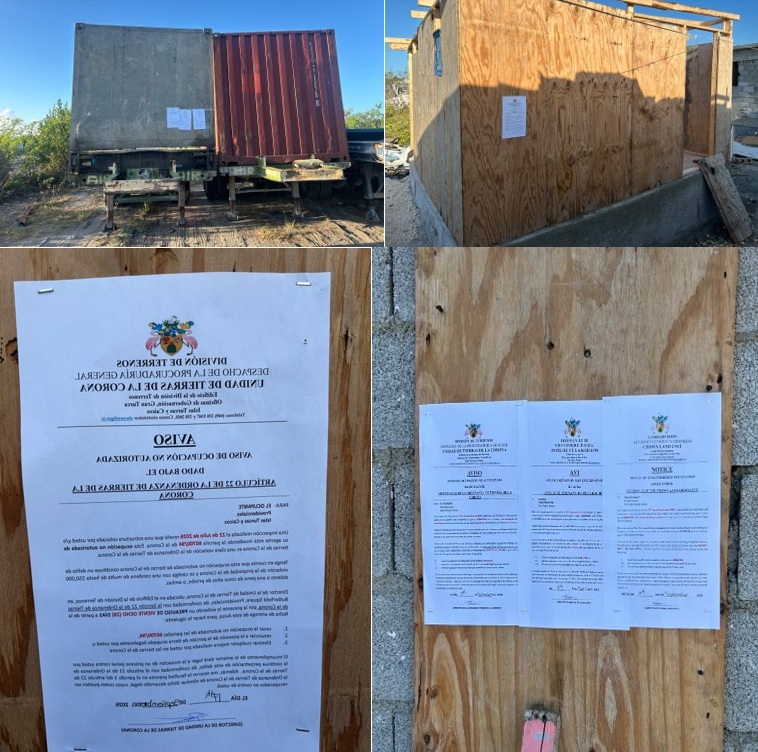
Providenciales, Turks and Caicos Islands: The Crown Land Unit, with coordination and support from the Informal Settlements Unit (ISU), conducted a multi-agency enforcement exercise in the Five Cays area on Thursday, September 17, 2026, as part of ongoing efforts to address the illegal occupation and unauthorised use of Crown land.
The exercise brought together representatives from the Crown Land Unit, ISU and the Turks and Caicos Islands Border Force. Security for the exercise was provided by the Royal Turks and Caicos Islands Police Force. Inspections were conducted across several parcels of Crown land throughout Five Cays, where instances of illegal occupation and unauthorised use had been identified.
During the exercise, a total of forty (40) Section 22 Notices of Unauthorised Occupation were served in accordance with the provisions of the Crown Land Ordinance. The notices related to various forms of unauthorised occupation and use of Crown land, including incomplete structures, shipping containers, derelict vehicles, trailer chassis, building materials and other items.
Where persons were not present, notices were affixed to the relevant structures or items. The exercise forms part of the Crown Land Unit’s continuing efforts to prevent squatting and encroachment on Crown land and to ensure that identified instances of unauthorised occupation are appropriately addressed.
The Government of the Turks and Caicos Islands reminds the public that Crown land must not be occupied, developed or otherwise used without lawful authority.
The Crown Land Unit, supported by the ISU and its other partner agencies, will continue to identify and address instances of illegal occupation of Crown land across the Turks and Caicos Islands. Persons affected by notices issued during enforcement exercises are encouraged to comply with the requirements outlined and to seek guidance from the relevant authorities where necessary.
News
BermudAir Launches Service to the Turks and Caicos Islands on October 26th, Expanding Air Connectivity Ahead of Winter Season

Providenciales, Turks and Caicos Islands (October 22nd, 2026) – The Turks and Caicos Islands welcomes BermudAir as the airline begins its service to the destination on Monday, October 26th, marking the start of a wider expansion that will connect us with additional cities across the United States, Canada and the Caribbean.
BermudAir’s service will begin with a new nonstop service between Fort Lauderdale, Florida, and Providenciales. The flight will depart from the Howard Hamilton International Airport at 8 am on Monday morning and arrives at 7.40 pm. Aboard the inaugural flight will be a delegation from the Turks and Caicos Islands led by Experience Turks and Caicos and the Turks and Caicos Islands Airports Authority (TCIAA), and will include Deputy Governor, Her Excellency Anya Williams, Minister of Tourism, Hon. Zhavargo Jolly, as well s representatives of the Turks and Caicos Hotel and Tourism Association (TCHTA), the board of the Turks and Caicos Islands Tourism Authority, Invest TC and local media.
BermudAir will operate the Fort Lauderdale–Providenciales route three times weekly, on Mondays, Wednesdays and Fridays, through May 3rd, 2027. making it easier for business travellers with the schedule offering the potential for same-day return trips. The airline is also launching nonstop service between Fort Lauderdale and Belize City, Belize, on the same schedule, offering travellers in South Florida direct access to both destinations.
The new service introduces BermudAir’s premium leisure inflight experience to the Turks and Caicos Islands. Flights will operate on Embraer E190 aircraft configured without middle seats, giving every passenger a window or aisle seat, alongside complimentary snacks and beverages.
Minister of Tourism, the Honourable Zhavargo Jolly, welcomed the airline’s arrival, noting the importance of expanding airlift to support the continued development of the destination’s tourism industry.
“Air connectivity remains one of the most important factors in the continued development of our tourism industry. BermudAir’s expansion represents an opportunity to strengthen our connections with key international markets while opening new doors for our sister islands. I am particularly encouraged by the planned direct service between Newark and South Caicos, which speaks directly to our vision of expanding tourism opportunities across the Turks and Caicos Islands. Our objective is to ensure that improved connectivity translates into greater economic activity, stronger local businesses and more opportunities for Turks and Caicos Islanders to participate in and benefit from tourism.” said Minister Jolly.
Commenting on the significance of the new route for the country’s development, the Honourable Arlington Musgrove, Minister of Physical Planning and Infrastructure Development (PPID), stated: “The introduction of BermudAir’s new service is a testament to the continued growth and development of our aviation sector. The Ministry of Physical Planning and Infrastructure Development, alongside the Turks and Caicos Islands Airports Authority, remains dedicated to enhancing our airport infrastructure to accommodate increased airlift. We are committed to working to ensure that our facilities provide a seamless, world-class experience for all incoming passengers and we warmly welcome BermudAir to our shores.”
The Fort Lauderdale launch is the first of several new services BermudAir plans to introduce to the Turks and Caicos Islands for the 2026– 2027 winter season. Additional connections to Providenciales are scheduled from:
- Bermuda to TCI and Grand Cayman: Beginning December 18th, 2026
- Anguilla: Beginning December 19th, 2026
- Boston, Massachusetts: Beginning December 19th, 2026
- Toronto, Canada: Beginning December 19th, 2026
- Raleigh-Durham, North Carolina: Beginning December 20th, 2026
- Newark, New Jersey to South Caicos: Beginning December 20th, 2026
- St. Petersburg/Tampa, Florida: Beginning December 21st, 2026
- Baltimore-Washington: Beginning December 24th, 2026
The expansion will give travellers more options for reaching the destination during the winter travel season, while broadening access from established and developing source markets. The additional routes also create opportunities for tourism stakeholders to reach new audiences and encourage visitors to explore more of the islands.
For flight schedules and bookings, visit www.flybermudair.com.
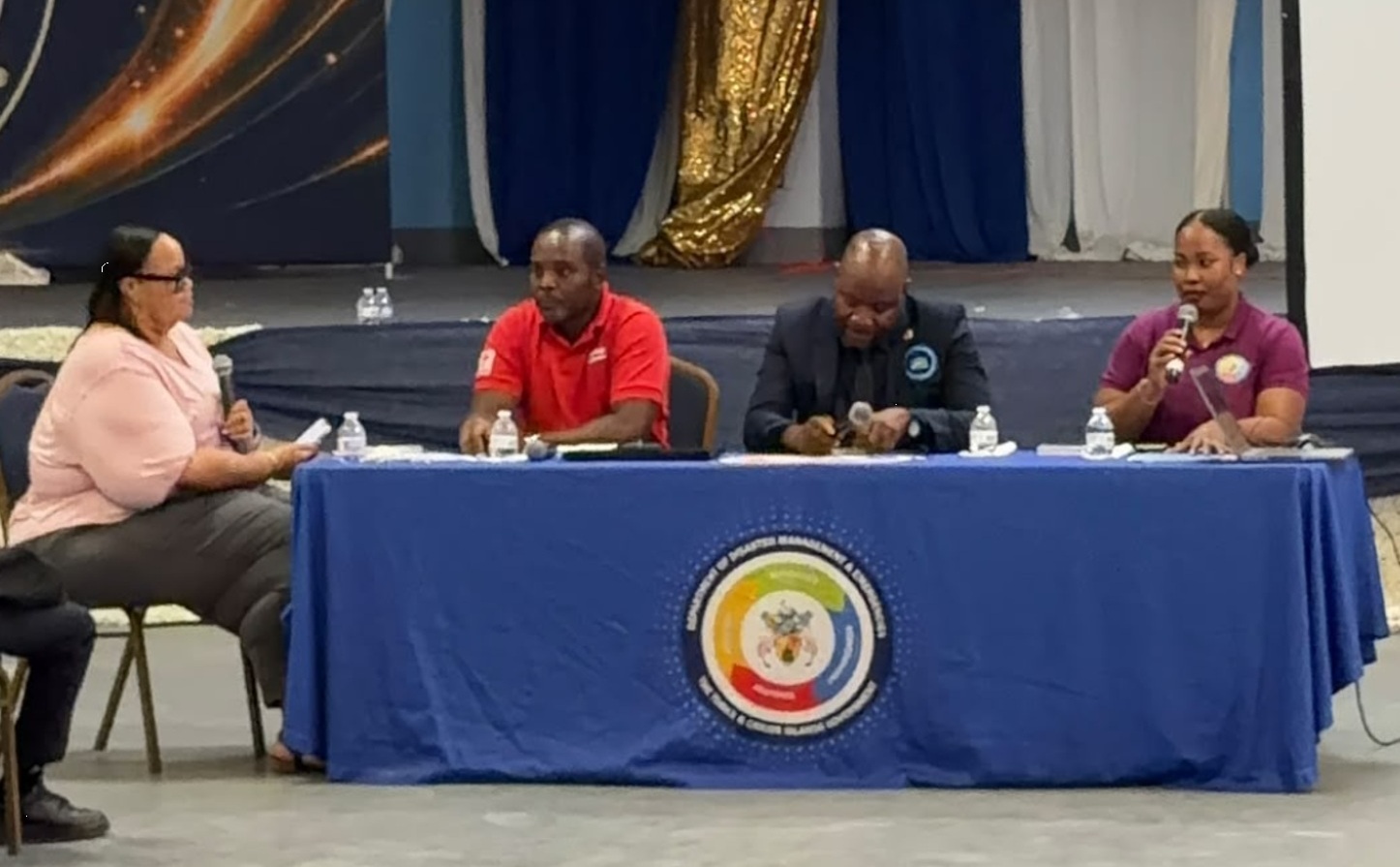
Providenciales, Turks and Caicos Islands – Thursday, 22 October 2026: The Department of Disaster Management and Emergencies (DDME) joined the global observance of International Day for Disaster Risk Reduction (IDDRR) on October 13th. Various initiatives were held throughout the islands to bring awareness to the public, including panel discussions, community engagement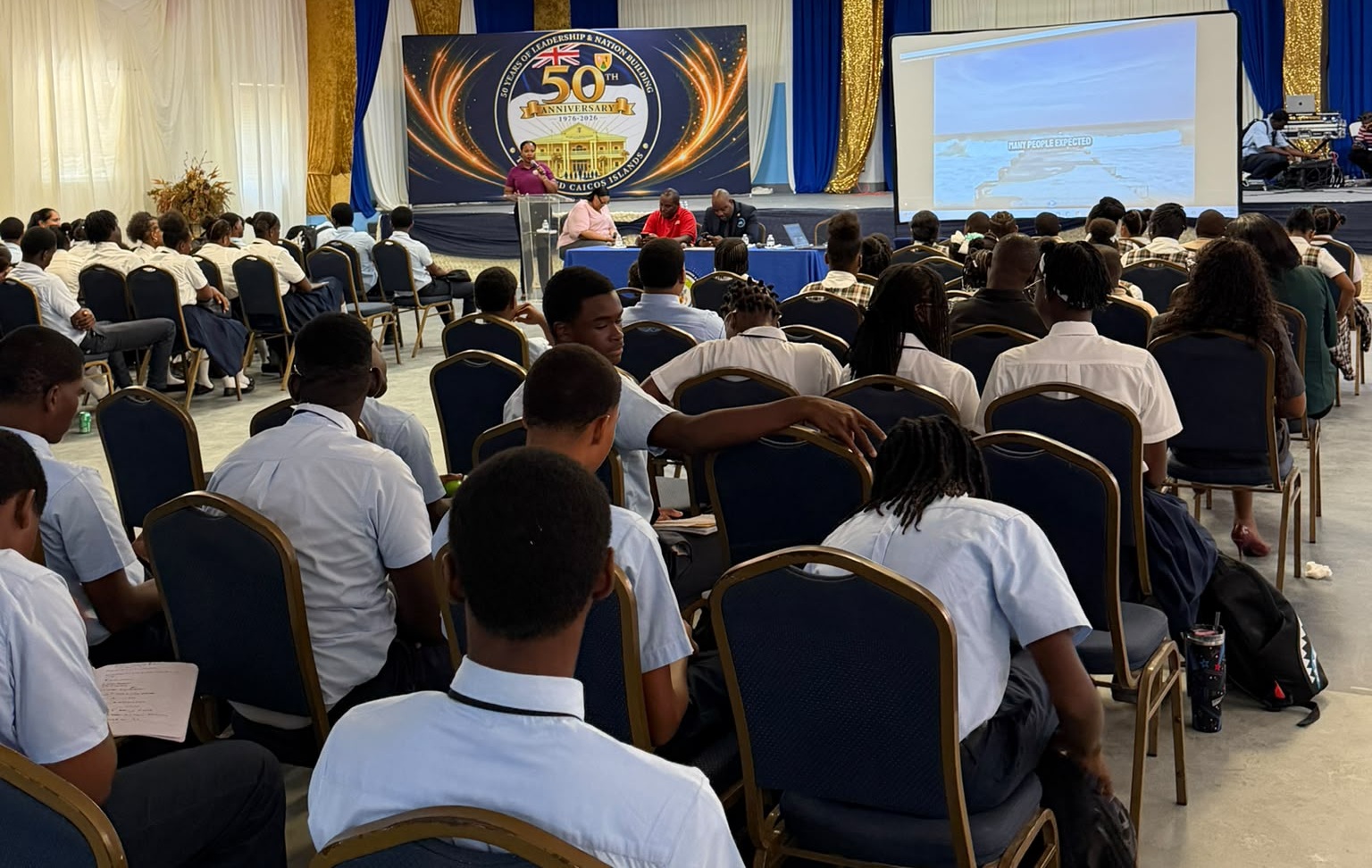 activities, school visits, essay writing and an original video submission from the Eliza Simons School in Grand Turk.
Disaster Risk Reduction is a people-centred endeavour; it emphasises that policies, systems and investments must be designed around the needs and capabilities of individuals and communities, according to the Sendai Framework for Disaster Risk Reduction 2015-2030. Each year, the United Nations Office for Disaster Risk Reduction (UNDRR), as the implementing agency for the Sendai Framework, issues a call to action encouraging individuals, communities, and countries to become resilient.
The 2026 IDDRR theme, ‘Resilience Starts at Home’ seeks to bring global and national awareness of the core role of households in disaster risk reduction, advocating for stronger governance and investment in resilient housing, reducing housing-related risk and empowering households to take risk-informed actions to protect themselves and strengthen community resilience.
The Turks and Caicos Islands, in an effort to reduce disaster risk, seeks to observe the concepts and core principles of the Sendai Framework 2015-2030. Throughout the years, many initiatives have been taken through the various stages of the disaster cycle from preparedness to recovery in an effort to strengthen the resilience of the Turks and Caicos Islands. Initiatives such as the creation and consistent updating of building codes, the Reconstruction and Rehabilitation Housing Project following major hurricanes such as Ike in 2008, the creation of an early recovery framework, as well as strengthening CCRIFF insurance were all implemented to ensure that the Turks and Caicos Islands were on the path to build back stronger and better.
This year’s theme underscores the roles governments, the private sector, and individuals play in ensuring communities and homes are safe and more resilient. The Turks and Caicos Islands Government has made significant strides in ensuring that homes are constructed through the use of risk-informed planning, land use planning and construction practices. The Reconstruction and Rehabilitation Housing Project, which facilitated the construction of twenty-four (24) completely rebuilt homes and repaired thirty-four (34) homes, provided a baseline for future housing initiatives such as Programme 3. This programme includes community renewal and infilling under the National Housing Policy and seeks to repair property that has sustained physical damage for vulnerable people.
Residents of the Turks and Caicos Islands are reminded of the individual role that they can play in ensuring that their homes are resilient.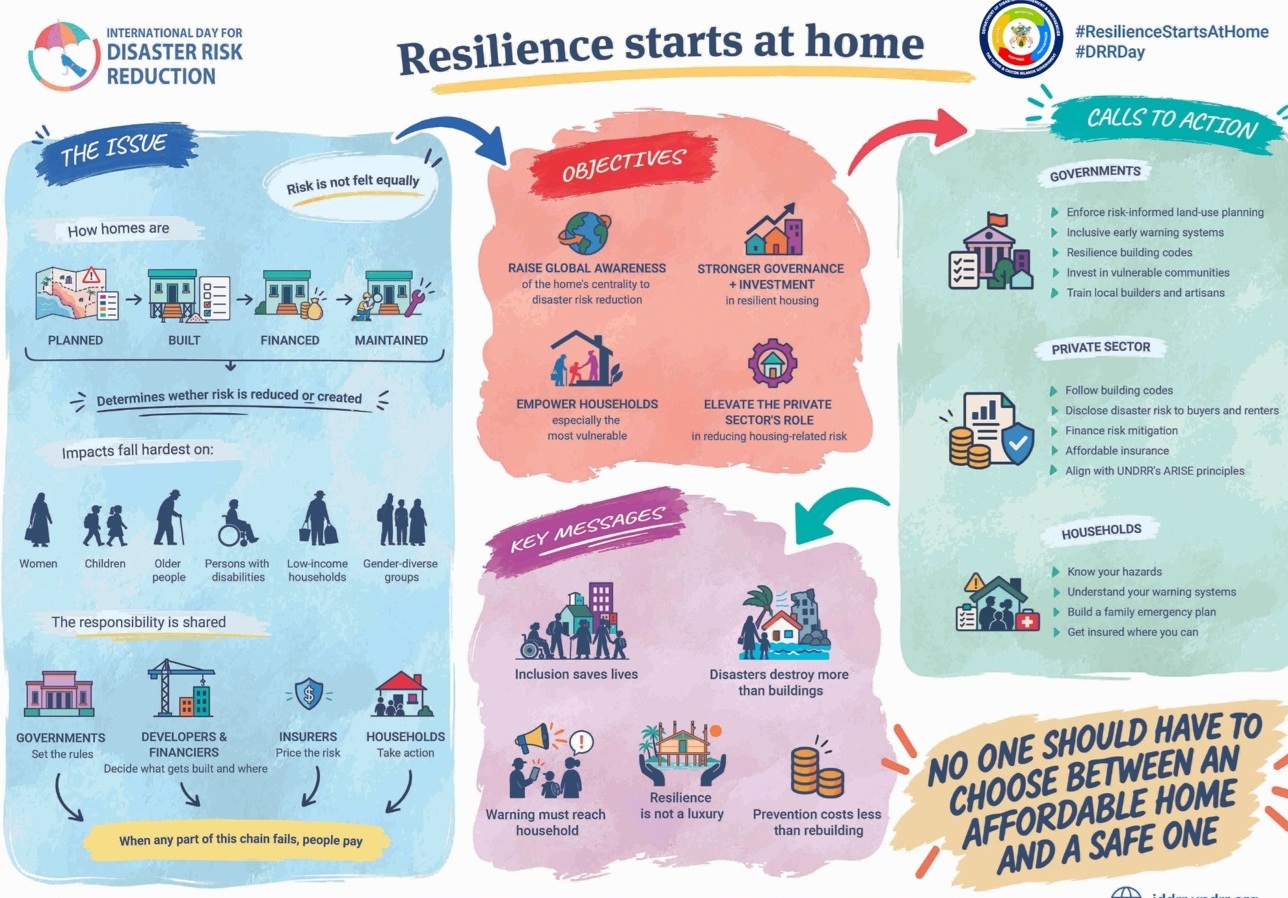
- Ensure that you obtain the proper approvals from the Planning Department before building.
- Ensure that you utilise the standards and building codes of the Turks and Caicos Islands.
- Include proper drainage systems and other methods to reduce flooding and water pooling near your home.
- Update your family emergency plans and ensure that everyone in your household is aware of its contents.
Let us all do our part in ensuring that all homes across the Turks and Caicos Islands are resilient.
Highlights from IDDRR can be seen on the Official DDME Social media accounts: Facebook @ddme.tci_official and Instagram @ddm.tci





-

 News4 days ago
Imagine Turks & Caicos Represented in UK Parliament; New Report Favours It
-

 News7 days ago
Invest TCI Strengthens Regional Investment Connections at Caribbean Investment Forum 2026 in Barbados
-

 Bahamas News1 week ago
Rosewood Exuma: A precedent-setting case for environmental law and future development in The Bahamas
-

 Bahamas News4 days ago
Bahamas Issues Cybersecurity Alert Over Akira Ransomware Threat
-

 Bahamas News7 days ago
Energy Minister Delivers Electrifying Keynote Opening Address at CAREC 2026
-

 News4 days ago
BermudAir Launches Service to the Turks and Caicos Islands on October 26th, Expanding Air Connectivity Ahead of Winter Season
-

 News5 days ago
Crown Land Unit Leads Multi-Agency Enforcement Exercise in Five Cays
-

 News4 days ago
DDME Celebrates International Day for Disaster Risk Reduction