
Caribbean News
JAMAICA: Prime Minister calls for more Jamaicans to get involved in Agriculture


#Montego Bay, January 17, 2019 – Jamaica – Prime Minister, the Most Hon. Andrew Holness, has heightened the call for more Jamaicans “from all walks of life” to venture into agriculture, emphasising that the sector is an important contributor to the growth of the Jamaican economy.
 “We should never limit agriculture, because the moment that we limit agriculture to being merely a manual and domestic endeavour, then we limit ourselves and the potential for growth. Make no mistake, agriculture is big business, and it should run the gamut,” the Prime Minister said.
He was speaking at the official launch of the Essex Valley Agriculture Development Project, held at the Lititz Primary School in St. Elizabeth, on January 16.
“We must dispense with the historical and social issues that have limited our perception and our understanding of agriculture. As I stand here, I want to tell you… I want to go into farming. I believe it is one of the most rewarding and noble endeavours, and we want more Jamaicans from all walks of life, whether you wear a bush jacket or fancy shirt or jacket and tie, to get involved. All of us must put our hands in the soil and turn it and create some value,” Mr. Holness said.
The project, which represents one of the largest investments in irrigation infrastructure in Jamaica, will impact the livelihoods of over 700 farmers on 718 hectares of land, through the provision of irrigation water and improved access to local and global agricultural markets.
Mr. Holness said that the Government, through “vertical integration”, will seek to spur growth in the agricultural sector, through infrastructural improvements and increasing investment in the sector.
“For agriculture to grow, you must look at what is called vertical integration. You must create not just production opportunities of the crop but you have to create the processing facilities and infrastructure. On top of that, you have to create the markets for the distribution, and then you have to parallel with that, the financial systems to support it,” he argued.
In the meantime, the Prime Minister expressed gratitude to the British government for funding the Essex Valley Development project, stating that any investment in agriculture will propel the country to economic independence.
“Let me say thanks to the British government for its consideration and funding this project through the United
Kingdom Caribbean Infrastructure Partnership Fund (UKCIF). This is the kind of support that is going to move the needle,” Mr. Holness said.
The Essex Valley development is being funded through a grant of £35.5 million from the UKCIF, which is administered by the Caribbean Development Bank (CDB).
In addition to improving irrigation systems, the project entails other components to boost agriculture in Essex Valley. These include training for farmers and other stakeholders in food-safety standards and climate-smart agriculture practices; design and construction of a photovoltaic plant to power the irrigation system and related administrative buildings; financing for a climate vulnerability assessment study to enhance the sustainability of the systems developed under the project; development of guidelines to support the participation of men, women, youth and persons with disabilities; and an operational plan to enhance the viability and sustainability of the facilities and services.
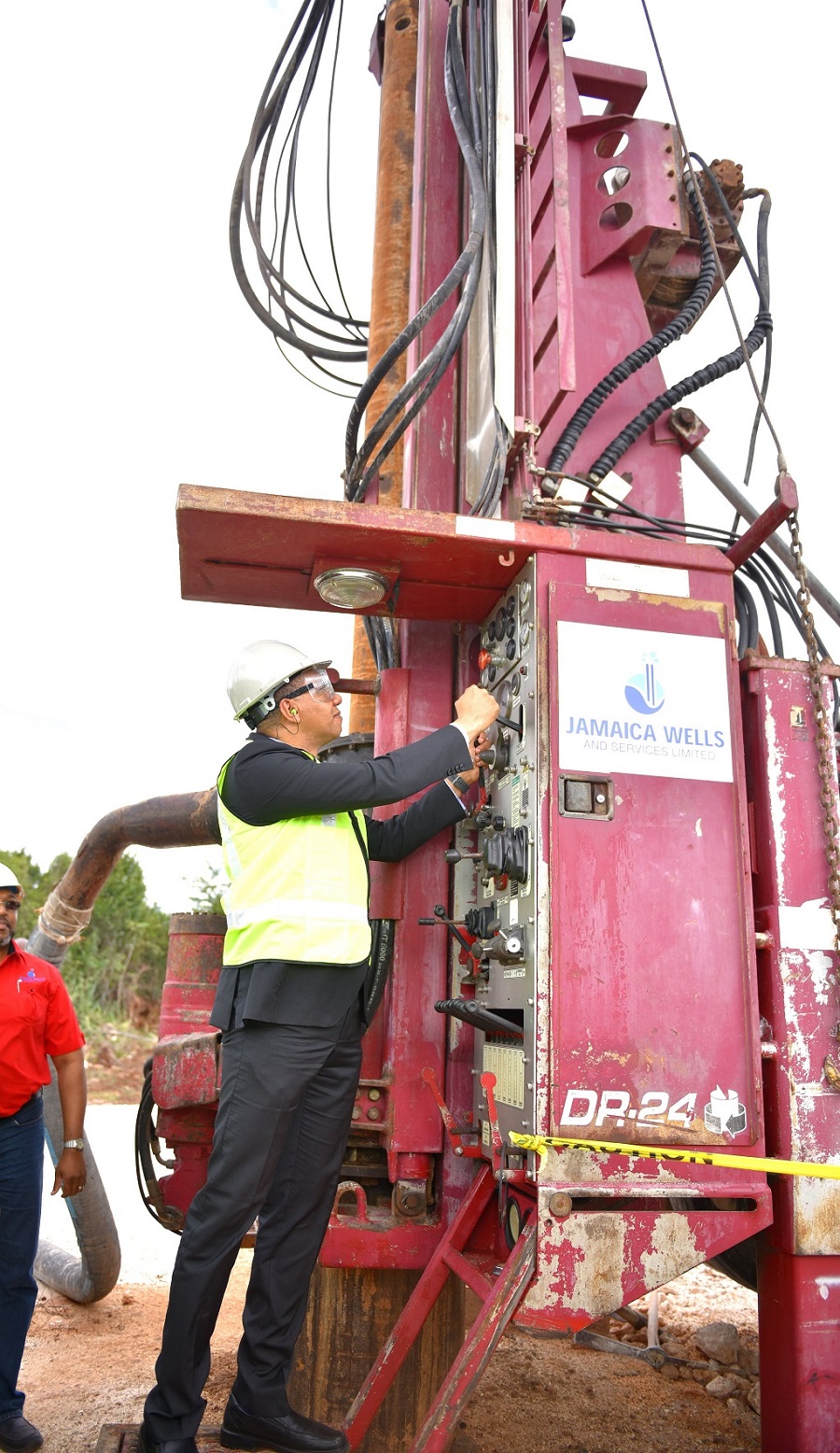
Ground was also broken for the development of six irrigation wells that will supply water for the project.
Release: JIS
Contact: Nickieta Sterling
Photo Caption:
Header: Prime Minister, the Most Hon. Andrew Holness (second left); and Minister of Industry, Commerce, Agriculture and Fisheries, Hon. Audley Shaw (third left), unveil a sign at the well site for the Essex Valley Agriculture Development Project in Lititz, St. Elizabeth, following the launch of the project on Wednesday, January 16. Sharing the moment (from left) are Head of the United Kingdom Department for International Development in the Caribbean, Stefan Kossoff; British High Commissioner to Jamaica, His Excellency Asif Ahmad; Member of Parliament for South Manchester, Michael Stewart; President of the Caribbean Development Bank, Dr. William Smith; and Member of Parliament for South East St. Elizabeth, Franklyn Witter.
Insert: Prime Minister, the Most Hon. Andrew Holness, at the controls of a well drilling machine during breaking of ground for the well site for the Essex Valley Agriculture Development Project in Lititz, St. Elizabeth, on Wednesday, January 16.

By Deandrea Hamilton | Editor
September 28, 2026 – Wall Street initially flinched at the $3-billion handshake. But in a matter of days, it was smoother sailing.
Perhaps the bigger Caribbean business story is not what Sandals Resorts International is getting from the deal. It is who is writing the cheque — and what that says about what Gordon “Butch” Stewart built.
As reports of Royal Caribbean Group’s Sandals deal circulated Tuesday, RCL shares plunged 6.14 percent from Monday’s $250.25 close to $234.89, on sharply elevated trading.
When the agreement became official Wednesday — approximately $3 billion for a 50 percent equity interest in Sandals and Beaches Resorts — shares slipped another 1.95 percent to $230.30 and touched $222.22 intraday. Investors were digesting both the size of the investment and committed debt financing secured through Morgan Stanley.
But by Thursday, RCL rebounded 3.77 percent, with shares continuing their recovery Friday to finish the week around $243. Analysts were also looking ahead: JPMorgan reportedly raised its RCL price target from $345 to $394, while Citi placed the company on a 90-day positive catalyst watch.
And just who is RCL?
Royal Caribbean Group is a global vacation giant, publicly traded on the New York Stock Exchange with a market value of roughly $65 billion. Its portfolio includes Royal Caribbean International, Celebrity Cruises and Silversea, alongside private destinations and an expanding vacation platform.
So when a company of that scale commits $3 billion for only half of Sandals and Beaches Resorts, the transaction puts a striking financial marker on one of the Caribbean’s greatest home-grown hospitality success stories.
The deal, expected to close in early 2027, creates a 50-50 partnership with the Stewart family and takes Royal Caribbean deeper into the all-inclusive resort business.
Butch Stewart started Sandals in Jamaica in 1981 believing a Caribbean company could compete with the world’s best.
Forty-five years later, one of the world’s biggest vacation companies is prepared to pay $3 billion just to own half of what he built.
Now that’s the handshake that does more than seal a deal — it cements a legacy.
Caribbean News
Royal Caribbean Group and Sandals Resorts Announce Landmark Partnership to Accelerate Their Leading Vacation Experiences
Royal Caribbean Group Investment to Advance Sandals and Beaches’ Growth and Broaden the Group’s Vacation Portfolio
Montego Bay, Jamaica and Miami, September 24, 2026 – Royal Caribbean Group (NYSE: RCL) and Sandals Resorts today announced the signing of an agreement to form a partnership in the all-inclusive resort space with a 50% investment from Royal Caribbean Group. Building on Sandals and Beaches Resorts’ more than four decades of leadership in Caribbean hospitality, the joint venture will create new opportunities for continued resort growth while broadening the experiences across Royal Caribbean Group’s vacation platform.
The partnership brings together two of the travel industry’s most celebrated vacation companies, pairing Sandals and Beaches’ all-inclusive resort expertise with Royal Caribbean Group’s vacation platform, including industry-leading brands – Royal Caribbean, Celebrity Cruises and Silversea – a portfolio of private destinations, new river cruising offering, and an industry-first loyalty program. United in a shared history in the Caribbean and connected by a love for their communities, the companies will offer travelers an unparalleled collection of cruise, private destination and resort experiences, serving guests across more vacation occasions and establishing their undisputed leadership in Caribbean vacations.
The joint venture expands Royal Caribbean Group into an adjacent vacation category, growing its participation in the approximately $2 trillion global vacation market, and meets the growing global demand for Sandals and Beaches Resorts by accelerating their expansion. The partnership will include Sandals and Beaches’ collection of premier all-inclusive properties across the Caribbean, and the companies will explore opportunities to broaden distribution, deepen guest engagement, and make it easier for travelers to discover vacation experiences offered across both portfolios.
“For nearly 60 years, we’ve reimagined what a vacation can be, constantly expanding the ways we inspire our guests to explore, connect and create lifelong memories,” said Jason Liberty, Chairman and CEO, Royal Caribbean Group. “We have been building a vacation platform that brings joy to millions of people around the world and creates meaningful relationships that last with our guests. Our partnership with Sandals and Beaches Resorts is an important next step on that journey – bringing together two iconic leading vacation companies to further strengthen and grow one of the most admired resort portfolios in the world. The Stewart family has created powerful and beloved brands, and we are honored to build on that legacy. Together, we see tremendous opportunity to expand the reach of Sandals and Beaches Resorts and continue turning the vacation of a lifetime into a lifetime of vacations.”
“My father, Gordon ‘Butch’ Stewart, founded Sandals Resorts with the belief that a company built in the Caribbean could stand on the world stage alongside the most respected names in hospitality. Today is proof of how far that vision can go,” said Adam Stewart, Executive Chairman of Sandals Resorts and Beaches Resorts. “This partnership is the natural next step in building on that conviction. It gives us the ability to grow faster with a partner that shares our values of exceptional hospitality, long-term investment, and the power of enduring brands. Together, we will introduce more guests to Sandals and Beaches Resorts while creating even more extraordinary experiences for those who have made our resorts part of their lives for decades.” Stewart added, “As we continue to grow, we will remain true to what has always defined us: delivering authentic vacations that exceed expectations while creating opportunities for our team members, travel advisor partners and the communities we call home. The future has never been brighter, and I know this moment would make my father incredibly proud.”
The joint venture will be governed by a board under the shared leadership of Stewart and Liberty. Stewart will maintain a leadership role in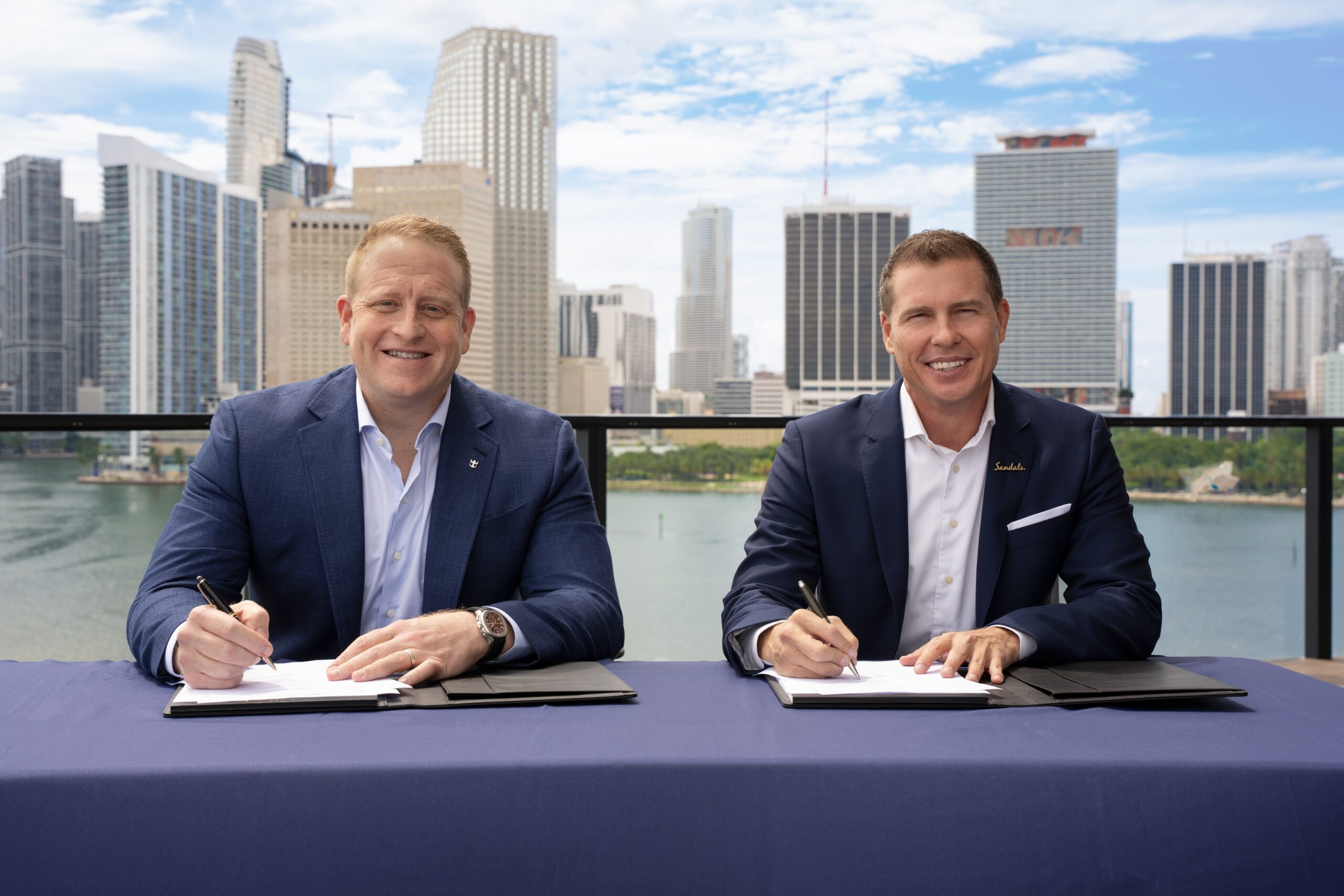 guiding the company’s long-term strategic growth as Executive Chairman of Sandals and Beaches Resorts. Existing reservations, loyalty programs, resort operations and cruise operations will continue as usual, with the partnership bringing additional resources to support future opportunities.
Under the terms of the agreement, Royal Caribbean Group will acquire a 50% equity interest in Sandals and Beaches Resorts for approximately $3 billion, representing a forward EBITDA multiple of approximately 10x. Royal Caribbean Group has secured committed debt financing from Morgan Stanley to fund the investment. The transaction is expected to close in early 2027, subject to customary approvals and closing conditions, and is expected to be accretive to earnings next year.
BofA Securities and PJT Partners acted as financial advisors, and Latham & Watkins and Jones Day acted as legal advisors to the Sandals Group. Perella Weinberg Partners and Morgan Stanley acted as financial advisors and Kirkland & Ellis LLP acted as legal advisor to Royal Caribbean Group.
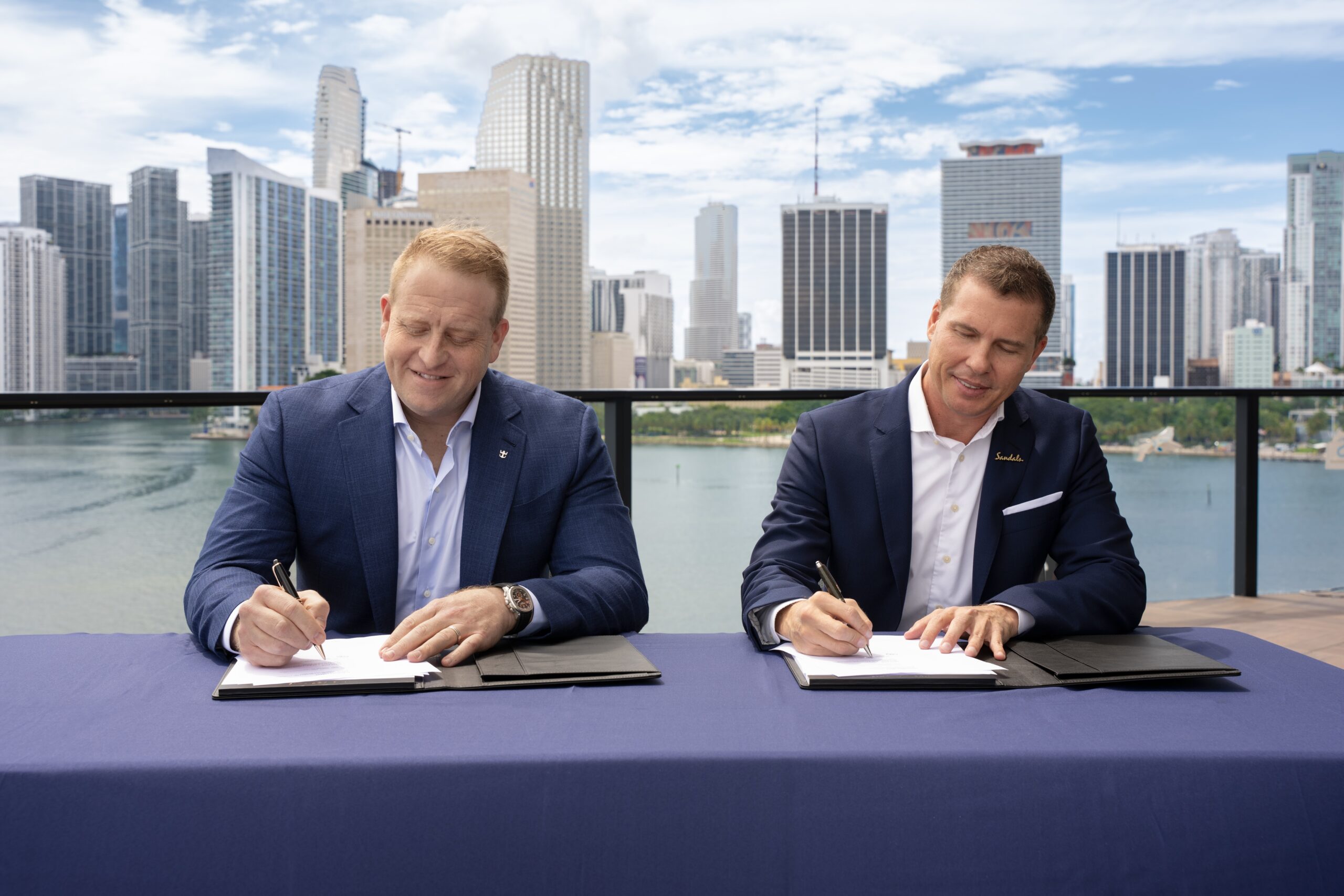
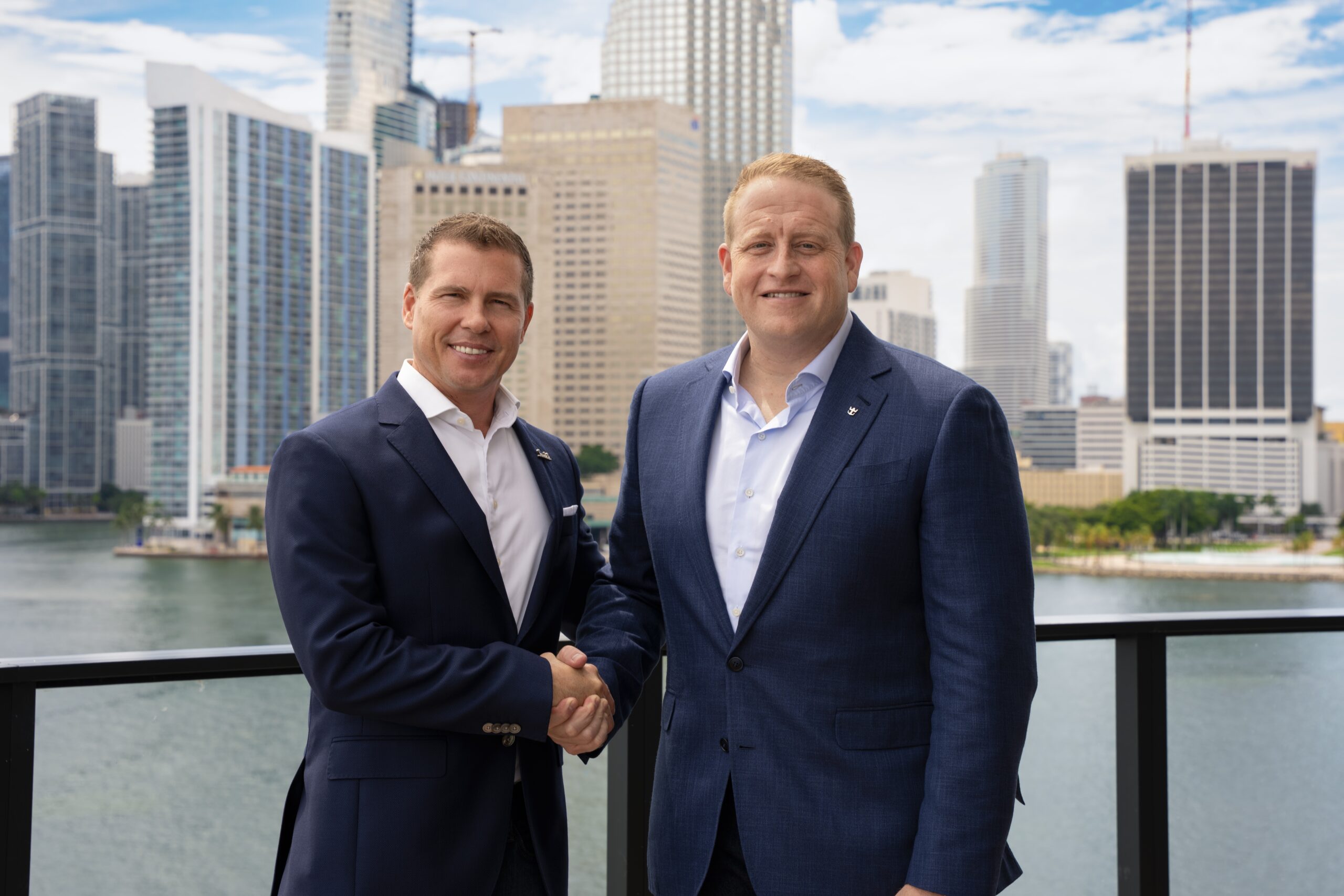
PHOTO CAPTION: Jason Liberty, Chairman and CEO of Royal Caribbean Group, and Adam Stewart, Executive Chairman of Sandals Resorts, mark the signing of an agreement to form a landmark partnership that expands Royal Caribbean Group into the all-inclusive resort space and supports the future growth of Sandals and Beaches Resorts. The signing took place at Royal Caribbean Group’s new headquarters in Miami, with the city’s skyline in the background.
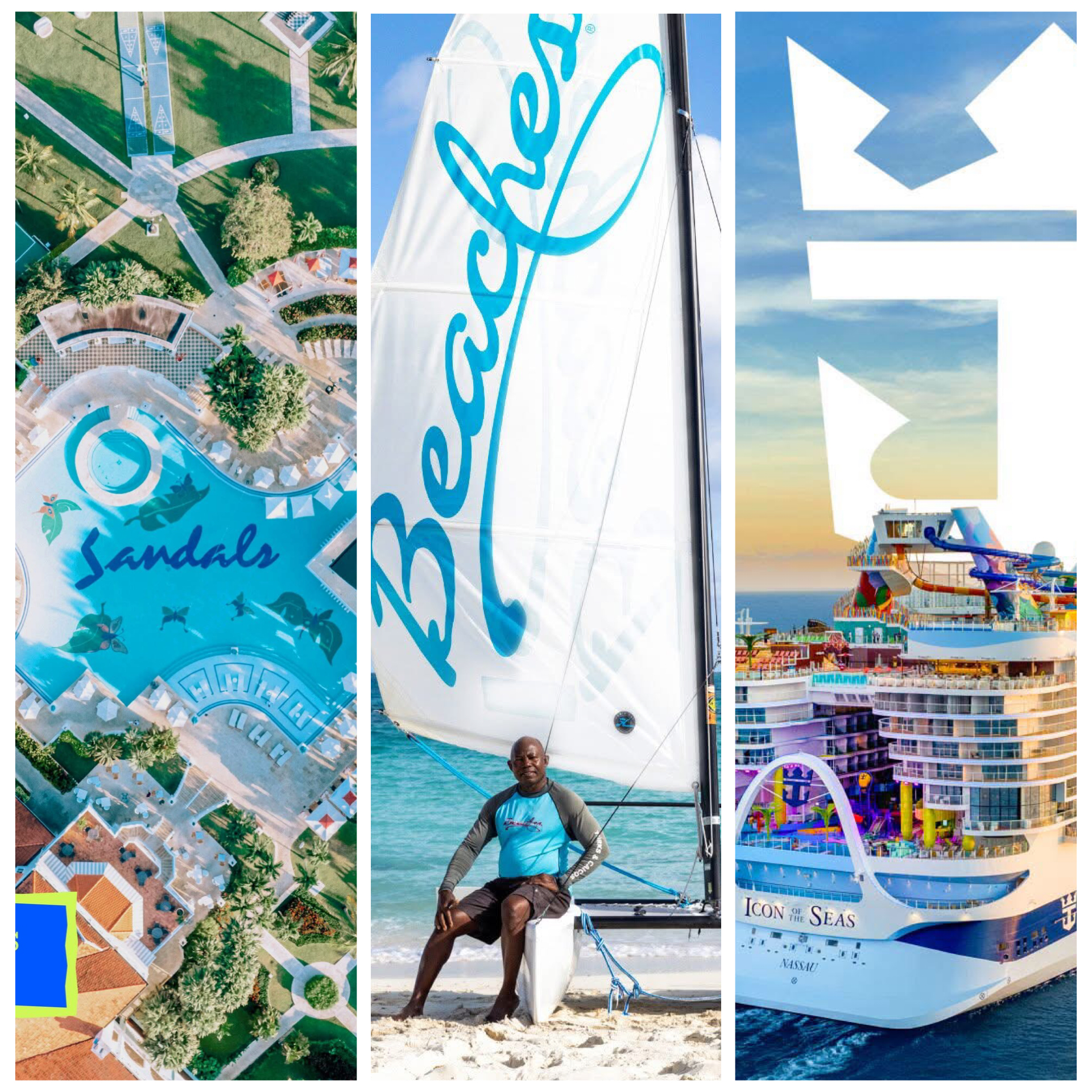
The Caribbean tourism deal first reported as a possibility on Tuesday is now a signed agreement. Royal Caribbean Group plans to pay approximately US$3 billion for a 50% stake in Sandals and Beaches Resorts, putting the value of the business at about US$6 billion. The purchase is expected to close in early 2027, subject to approvals.
Founded in Jamaica by the late Gordon “Butch” Stewart in 1981, the resort business has a presence across nine Caribbean destinations, including Jamaica, The Bahamas and Turks and Caicos. Sandals has described its workforce as nearly 20,000 people, most of them Caribbean nationals.
“My father, Gordon ‘Butch’ Stewart, founded Sandals Resorts with the belief that a company built in the Caribbean could stand on the world stage alongside the most respected names in hospitality,” said Adam Stewart in the announcement carried by PR Newswire. He will remain executive chairman, while the Stewart family retains a stake. The companies say existing reservations and resort operations will continue as usual.





-

 Bahamas News6 days ago
Rosewood Exuma: A precedent-setting case for environmental law and future development in The Bahamas
-
 News5 days ago
Invest TCI Strengthens Regional Investment Connections at Caribbean Investment Forum 2026 in Barbados
-

 Bahamas News2 days ago
Bahamas Issues Cybersecurity Alert Over Akira Ransomware Threat
-
 Bahamas News5 days ago
Energy Minister Delivers Electrifying Keynote Opening Address at CAREC 2026
-

 News2 days ago
Imagine Turks & Caicos Represented in UK Parliament; New Report Favours It
-

 News3 days ago
Crown Land Unit Leads Multi-Agency Enforcement Exercise in Five Cays
-

 News2 days ago
BermudAir Launches Service to the Turks and Caicos Islands on October 26th, Expanding Air Connectivity Ahead of Winter Season
-

 News2 days ago
DDME Celebrates International Day for Disaster Risk Reduction