
TCI News
The Turks and Caicos Islands Government, Rocky Mountain Institute and FortisTCI to Draft Resilient National Energy Transition Strategy


#Providenciales, September 27, 2018 – Turks and Caicos – With a focus on building a sustainable, reliable, and least-cost energy future that takes into consideration the full scope of generating and delivering electricity in the Turks and Caicos Islands, the Government (TCIG) alongside  Rocky Mountain Institute (RMI) and FortisTCI Limited have partnered to develop the Turks and Caicos Islands Resilient National Energy Transition Strategy (R-NETS). RMI is facilitating this initiative and held a kick-off meeting with all participants on Thursday, September 13, 2018, to discuss and agree on the project timeline and objectives.
As technology continues to drive change in the electric utility industry at a rapid pace, the transition toward a smarter energy grid, with more renewable energy and energy efficient options, will require a systematic approach to new developments. The R-NETS is intended to ensure that all stakeholder needs – including customers, the government and the utility – are met as changes are implemented. The R-NETS will also identify specific roles for TCIG, FortisTCI, developers, financial institutions, and local communities that will enable this transition toward a more sustainable energy future. Other objectives of the process include exploring viable options for producing and distributing electricity to customers across the Turks and Caicos Islands, identifying the appropriate mix of energy sources needed to meet short and long-term consumer energy needs, and ensuring that TCIG objectives are aligned with that of the electricity sector.
The R-NETS process has three phases and takes a highly collaborative approach. Phase one takes a fact-based approach and identifies the traditional and renewable energy options available for TCI, along with current costs, projected future costs, and other risk factors. Phase two takes into account the technical and financial implications and seeks to narrow the potential least-cost options further to meet the energy needs of the Turks and Caicos Islands. Phase three of the process will see the production of an R-NETS report and implementation plan. This report, also referred to as an Integrated Resource Plan (IRP), details the technical and economic concerns of the chosen future path and any implications on customer rates, reliability, environmental sustainability and resiliency of the plan.
“We are pleased to partner with FortisTCI and the TCI Government to advance important national interests in the electricity sector. This inclusive process invites all stakeholders to have a seat at the table and work toward selecting resilient and cost-effective technology solutions, in support of advancing the shared priorities of the TCI,” said Roy Torbert, principal at RMI.
 Minister of Infrastructure, Housing and Planning Hon. Goldray Ewing said, “this is a pivotal moment for the Turks and Caicos Islands energy sector, since this undertaking will chart the course and establish our energy landscape for the short, medium and long term. This collaborative engagement could not have occurred at a more opportune time, given Cabinet’s recent approval for the drafting of legislation for the implementation of integrated resource planning for the sector. This of course will allow for more rigid regulatory oversight and involvement in the development of the electricity sector, in alignment with the objectives of least cost generation, reliability, and environmental and economic sustainability of the sector.”
FortisTCI President & CEO Eddinton Powell said, “FortisTCI is fully committed to the R-NETS process and is looking forward to collaborating with the Turks and Caicos Islands Government and Rocky Mountain Institute in further developing the electricity sector in these islands. Creating a joint strategy is the right approach and serves as the first step toward modernizing the electricity sector and expanding the energy mix in ways that are beneficial to all stakeholders. This will strengthen and grow our economy.”
Public consultation meetings will be held at the Gustavus Lightbourne Sports Complex on the 3rd of October in Providenciales and at the H.J. Robinson High School Auditorium in Grand Turk on the 4th of October. RMI will lead both meetings scheduled to begin at 6 p.m. All interested persons are encouraged to attend to learn more about the R-NETS process and expected outcomes.
Release: TCIG

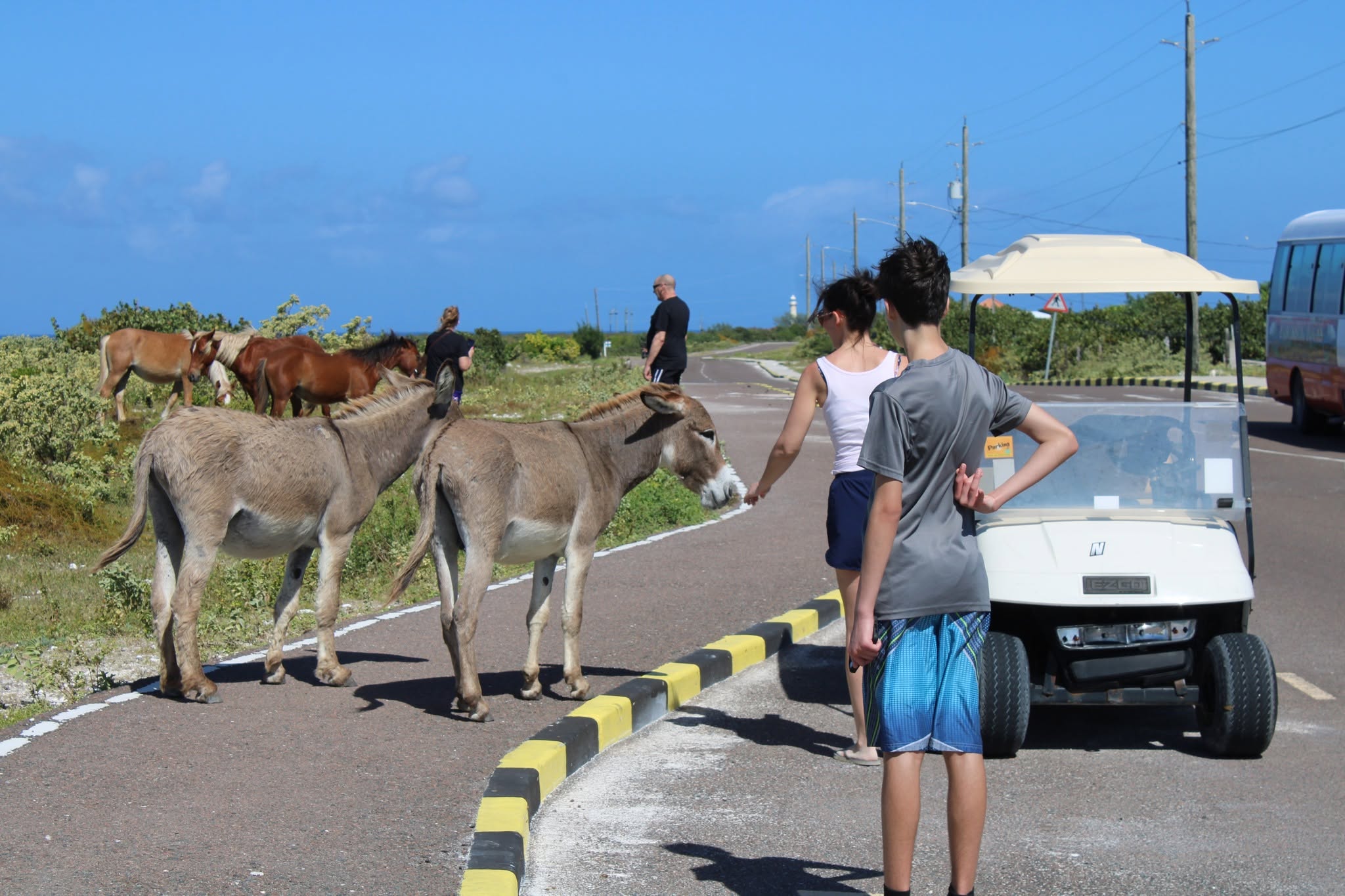
Turks and Caicos, October 31, 2026 – Once again, I feel compelled to put pen to paper on this matter. You don’t expect to slam your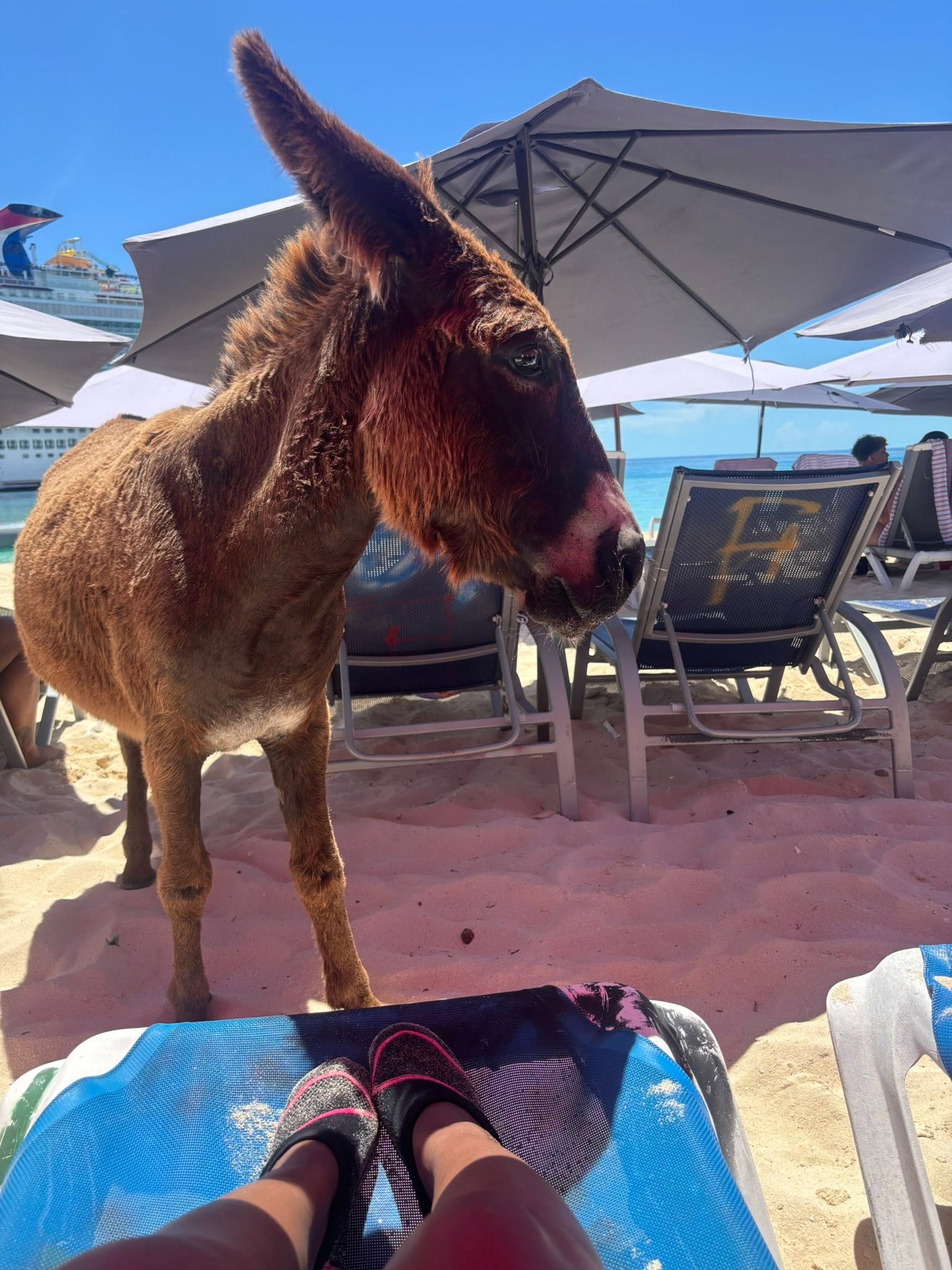 brakes in paradise. But in Grand Turk, it’s becoming routine.
Donkeys roam along roadsides, darting into traffic, while packs of dogs linger around neighborhoods. Tourists and residents alike face dangerous encounters with animals that, while symbolic of Grand Turk’s identity, now pose very real threats to public safety and themselves.
I’ve had near misses myself, and I’m not alone. This is no longer simply an island charm issue; it’s an unfolding dilemma that demands attention.
Grand Turk has a long history of romanticizing its animals. Donkeys, once essential to the island’s salt trade in the 1800s, are now part of its distinctive character. Yet neither they nor the growing population of free-roaming dogs are being adequately managed.
Estimates place the donkey population at around 500 on an island measuring just 10.5 square miles, with approximately 4,000–5,000 residents and tourist numbers that can double on cruise ship days. Add dogs that are quasi-owned—fed occasionally out of pity or when they wander onto someone’s property, but rarely properly cared for or contained—and the scale of the problem becomes clearer.
Feeding a dog occasionally is not the same as taking responsibility for it. The same applies to owners who fail to provide adequate fencing, allowing their dogs to roam freely through neighborhoods and onto public roads. Responsible ownership requires more than occasional feeding; it means ensuring an animal’s welfare while protecting the wider community.
Tourists may marvel at roadside donkeys or follow a friendly dog to the beach. But they don’t necessarily witness the accidents, injuries, property damage, and scattered garbage. Nor do they see how open grazing areas are disappearing beneath roads, homes, and new developments.
So, whose space is it now? Are the animals invading ours, or are we gradually taking theirs, leaving less vegetation for them to feed on?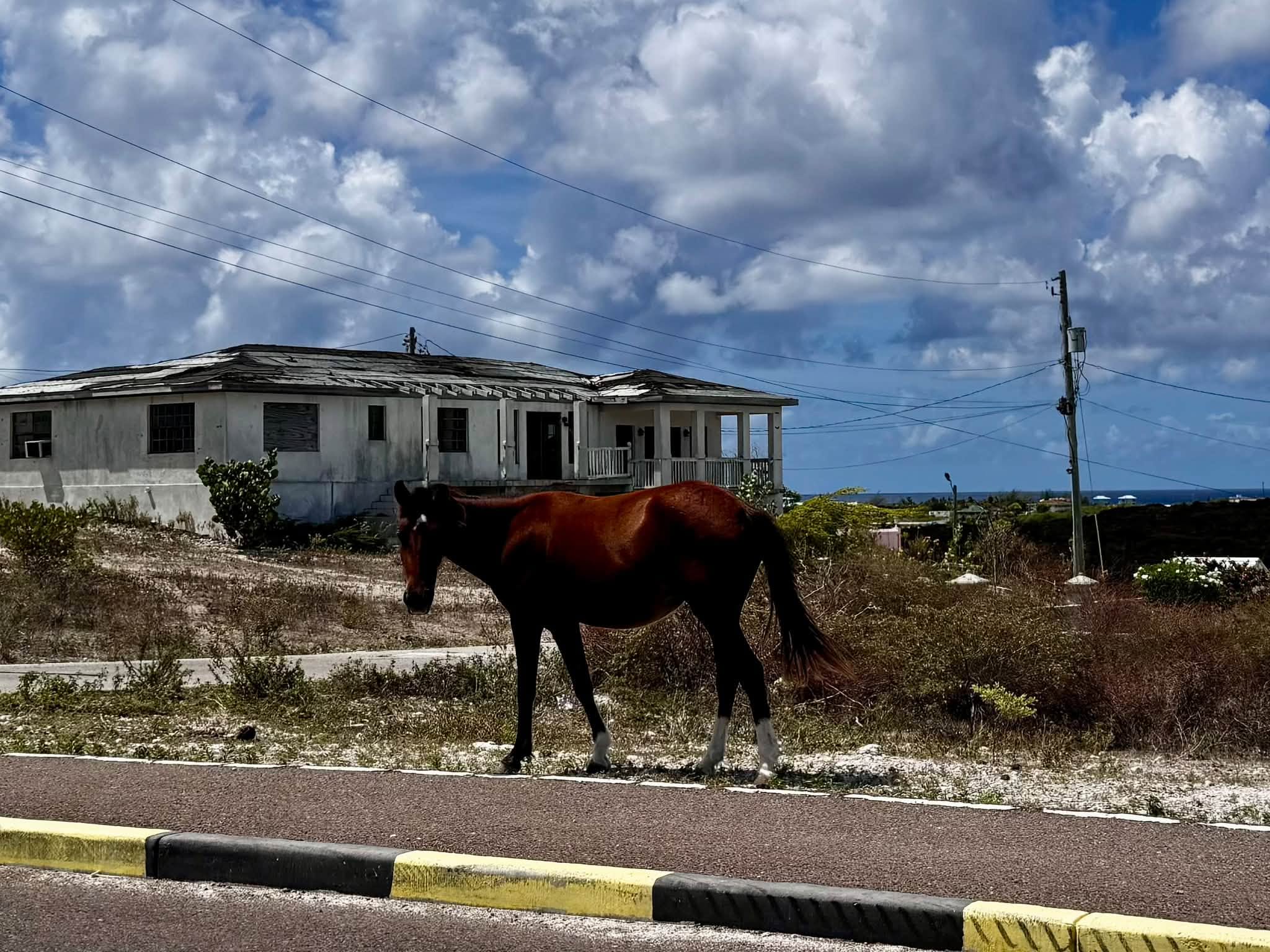
This is not simply a debate about animals. It is about responsibility, planning, and public safety.
Grand Turk’s Department of Agriculture faces a challenging predicament. The Turks & Caicos Society for the Prevention of Cruelty to Animals (TCSPCA) does what it can, but without adequate funding and government support, its capacity remains limited. Volunteers continue to step forward, yet goodwill alone cannot resolve a problem of this magnitude.
There are several suggestions from avid Hooves & Paws TCI volunteers: Establish satellite watering holes away from high-traffic areas, properly maintain existing ones, or explore the creation of a donkey sanctuary etc.
We have recently welcomed the long-awaited arrival of a full-time veterinarian, but that alone is not enough. Support vehicles, appropriate facilities, and equipment for the safe and humane capture and treatment of animals are also essential.
There is another uncomfortable question that deserves an answer: Is the Department investing in the training and resources needed for the humane euthanasia of severely injured animals when recovery is no longer possible, rather than leaving police officers to resort to shooting them?
There may be emergencies in which officers must act immediately to protect human life. However, emergency responses should not replace a properly funded animal management programme. Severely injured animals deserve a humane, professional response, with veterinary guidance wherever circumstances permit.
We have also heard concerning reports of animal mutilation. Such reports warrant serious attention and, where appropriate, proper investigation. Animal welfare must be part of this conversation, not an afterthought.
If Grand Turk wants to preserve its Beautiful by Nature identity, it needs more than slogans. It needs enforcement, practical solutions, and a willingness to acknowledge that some animals are suffering while others pose genuine dangers to residents and visitors.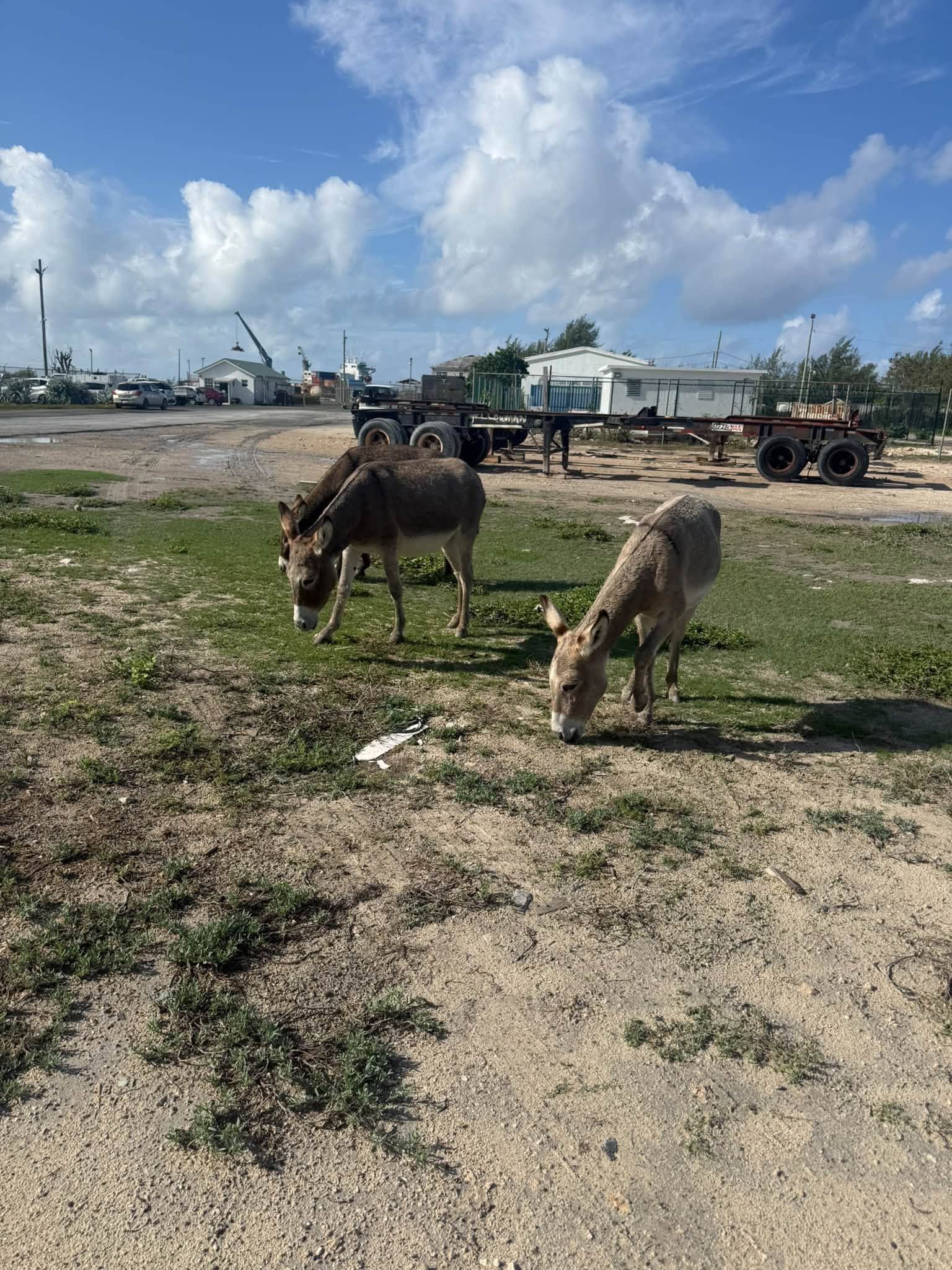
No one wants to strip the island of its character. Donkeys, dogs, horses, cows, and even the occasional roaming of goats or roosters contribute to the experience that makes Grand Turk memorable. But when charm becomes a hazard and beauty collides with danger, it is time to stop romanticizing the situation and start organizing around solutions.
There is no single, perfect answer. But continuing to do too little only increases the risk of more accidents, more suffering, and further damage to the environment we claim to cherish.
The wild can still be free, and humans and animals can coexist. But that balance requires responsible ownership, humane treatment, effective enforcement, adequate resources, and government leadership.
This administration must work alongside local volunteers, expatriate residents, animal welfare organizations, and the private sector to develop sustainable strategies before neglect leads to irreversible consequences.
Grand Turk’s animals are part of our heritage. Protecting that heritage means protecting the animals, the people who share this island with them, and the visitors who come here expecting paradise.
Ed Forbes
News
Joyful Collaboration between 2 Regional Foundations Uplifts Tourism Professionals in Turks & Caicos
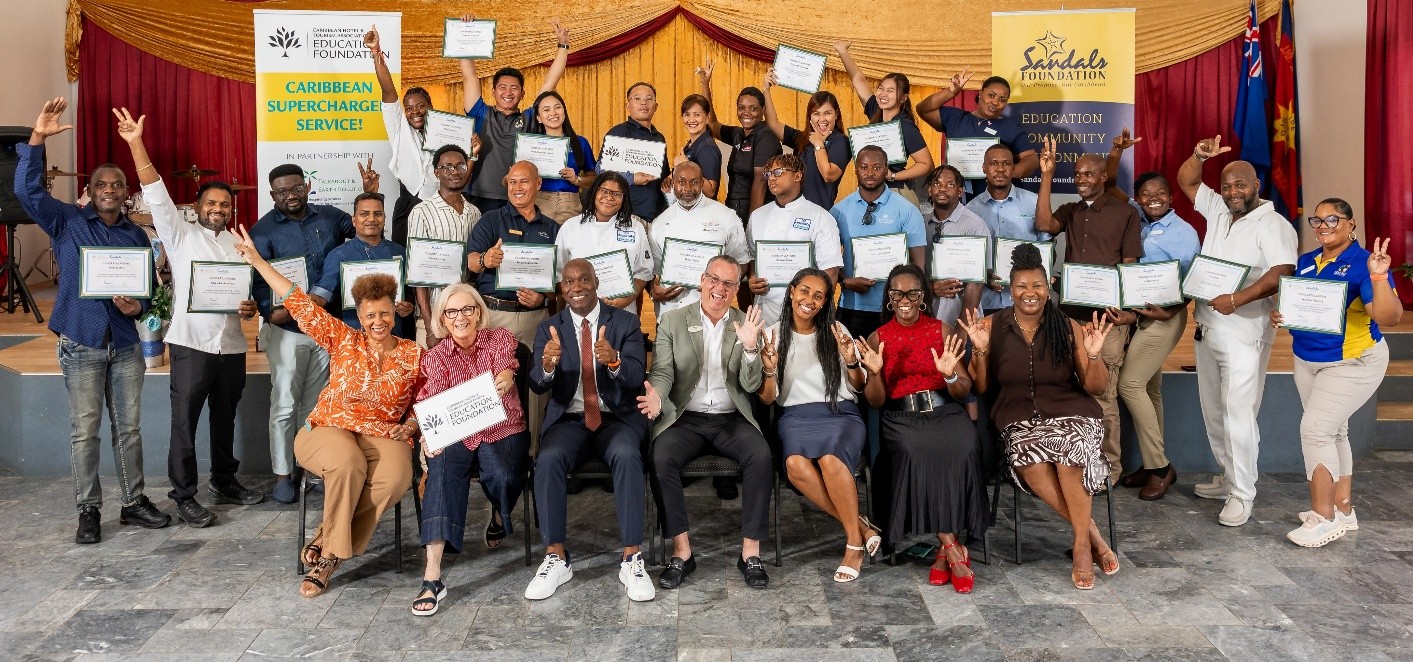
Turks and Caicos – Caribbean Supercharged Service, Learning & Leadership workshops were enjoyed by professionals from Grace Bay Car Rentals, a local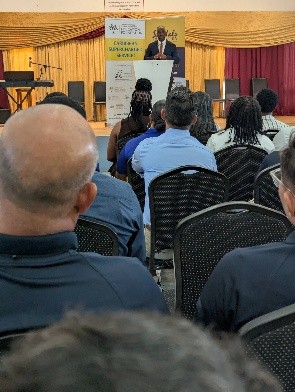 sponsor, alongside a Heavy Machinery Rental Company, a Paint retailer, 8 resorts, a luxury villa management enterprise and 3 TCHTA sponsored junior chefs, including Team TCI Junior Chef 2026, Zaliya Dickenson, who will complete at the Taste of the Caribbean in November for her country.
These workshops were the result of the longstanding partnership between the CHTA Education Foundation and their sponsor, Sandals Foundation, who support the Caribbean Supercharged programme on a different island every year. This year, the Turks & Caicos Hotel & Tourism Association (TCHTA) hosted the initiative to the delight of its members.
The workshops targeted new team members, seasoned professionals, managers and supervisors. Topics included Foundations & Finesse within Customer Interactions, Delivering Clear Expectations for Service Consistency and Making Memorable Moments.
Sandals Foundation was pleased to also sponsor chefs, cooks, stewards, warehouse & purchasing staff from 7 resorts and 2 high schools for an intensive HACCP Preparation & Pre-Requisites informational day, including international coursebooks, team training booklets and each person’s international assessment fee. The course is approved by the Royal Society for Public Health UK, earns Continuing Professional Development Credits, and is recognized globally as the leading Food Safety Management System.
Deryk Meany, General Manager, Beaches TCI, represented Heidi Clarke, Executive Director, Sandals Foundation at the 20 October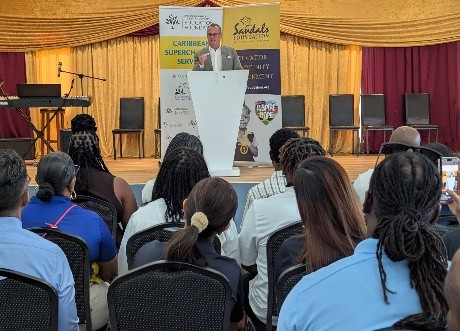 Celebration with energy and passion for professional development and life-long learning in tourism to ever uplift and grow ourselves. He asked participants to ‘never stop learning! Today is a step upwards in your personal growth and that of the industry. We are never too old to learn, to share our experiences within training and grow”
Wesley Clerveau, Permanent Secretary, Ministry of Tourism, gave spirited, positive inspiration and congratulations to the participants “Stayover arrivals in TCI have increased by 6% between January & June this year, we are hot! The place visitors wish to be, and your time, application and learning in each workshop is invaluable to us as a destination and to you as citizens and residents. I urge you to put what you have gained into practice immediately and keep applying yourselves; the more you upgrade, the more service elevates, the more we all succeed”
Karolin Troubetzkoy, Chairwoman, CHTA Education Foundation commented “Congratulations to everyone who participated in this year’s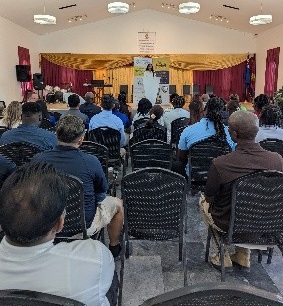 workshops, thank you for being fully engaged and making the most of your opportunity.
Special mention to the 8 past participants that we reunited with and are now working in leadership positions, BRAVO! We are delighted for you and encourage you to stay focused and keep shining and growing upwards.
It has been the Education Foundations honor to work closely with our sponsor Sandals Foundation and partner with TCHTA again to create Caribbean Supercharged positivity within each of you”.
Stacey-Ann Wharton, Vice President TCHTA, congratulated everyone present and stressed the TCHTA ongoing commitment to learning and development of members teams and management, along with special TCHTA scholarships for the HACCP session for 3 Junior Chefs, showing the Associations commitment to nurturing talent from High School upwards.
PHOTO CAPTIONS
First Insert: Wesley Clerveau, PS, Ministry of Tourism
Second Insert: Deryck Meany, GM Beaches TCI representing Sandals Foundation
Third Insert: Stacy-Ann Wharton, Vice President, TCHTA
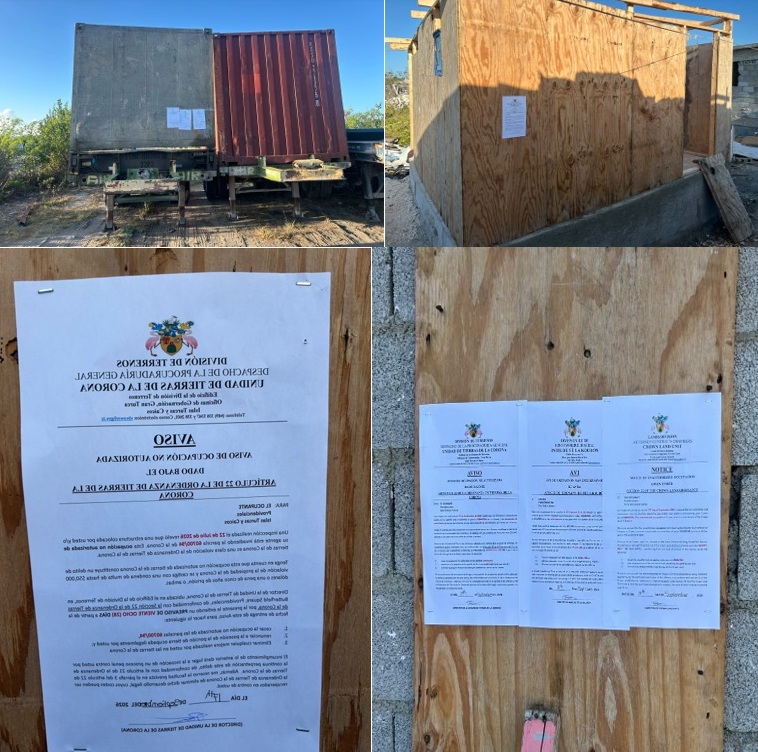
Providenciales, Turks and Caicos Islands: The Crown Land Unit, with coordination and support from the Informal Settlements Unit (ISU), conducted a multi-agency enforcement exercise in the Five Cays area on Thursday, September 17, 2026, as part of ongoing efforts to address the illegal occupation and unauthorised use of Crown land.
The exercise brought together representatives from the Crown Land Unit, ISU and the Turks and Caicos Islands Border Force. Security for the exercise was provided by the Royal Turks and Caicos Islands Police Force. Inspections were conducted across several parcels of Crown land throughout Five Cays, where instances of illegal occupation and unauthorised use had been identified.
During the exercise, a total of forty (40) Section 22 Notices of Unauthorised Occupation were served in accordance with the provisions of the Crown Land Ordinance. The notices related to various forms of unauthorised occupation and use of Crown land, including incomplete structures, shipping containers, derelict vehicles, trailer chassis, building materials and other items.
Where persons were not present, notices were affixed to the relevant structures or items. The exercise forms part of the Crown Land Unit’s continuing efforts to prevent squatting and encroachment on Crown land and to ensure that identified instances of unauthorised occupation are appropriately addressed.
The Government of the Turks and Caicos Islands reminds the public that Crown land must not be occupied, developed or otherwise used without lawful authority.
The Crown Land Unit, supported by the ISU and its other partner agencies, will continue to identify and address instances of illegal occupation of Crown land across the Turks and Caicos Islands. Persons affected by notices issued during enforcement exercises are encouraged to comply with the requirements outlined and to seek guidance from the relevant authorities where necessary.





-

 Bahamas News1 week ago
Federal Investigation into Florida Turnpike Tragedy that Killed Three Children of Bahamian Mother
-
 News1 week ago
Joyful Collaboration between 2 Regional Foundations Uplifts Tourism Professionals in Turks & Caicos
-
 Independent writer6 days ago
Wild, Free, and Out of Control: Grand Turk’s Animal Debacle Is No Island Secret