
TCI News
Ten Year Anniversary, Commission of Inquiry announced for TCI this day in history 2008

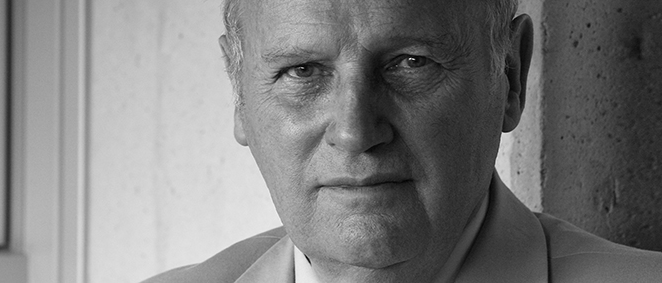
#Providenciales, Turks and Caicos Islands – Tuesday July 10, 2018 – In nine days from today, the Rt. Hon. Sir Robin Auld, a 60-year attorney, a former Lord Justice of the Court of Appeal for England and Wales, a Queen’s Council, a man knighted 30 years ago and the leading man in a decade’s old debacle in Turks and Caicos will celebrate his 81st birthday; that however is not what this flashback piece is about…
This Magnetic Media article is a reflective report and a rousing reminder of the 10 year anniversary of the genesis of the controversial announcement that the Turks and Caicos Islands would be subject to a Commission of Inquiry or COI (as we have labelled it).
That inquiry – unravelling scandalously at a makeshift courtroom at the Palms Resort in 2009 – was led by Sir Robin Auld, QC.
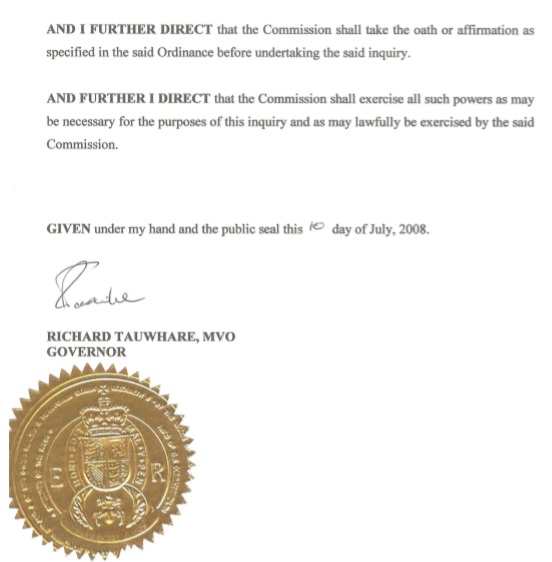
From Commission of Inquiry Report
The revelation that the COI was unavoidable following a Foreign Affairs Committee (FAC) report was made six months earlier in the meeting room of the Sands Resort on July 10, 2008 and it came from then Governor, Richard Tauwhare. Mr. Tauwhare also issued a National Address about the coming of the probe into government malfeasance.
“In exercise of my powers as Governor under the Commissions of Inquiry ordinance, I have today, Thursday 10th July 2008 appointed a commission of inquiry to inquire into whether there is information that corruption or other serious dishonesty in relation to past and present elected members of the House of Assembly, previously known as the Legislative Council may have taken place in recent years.”
Ten days later, Richard Tauwhare, his wife and two children were gone, bid farewell in a dazzling show at the Providenciales International Airport. The three-year governor was transported out of the islands which were about to undergo a metamorphosis many say retarded the country’s progress on the way to greater self-determination.
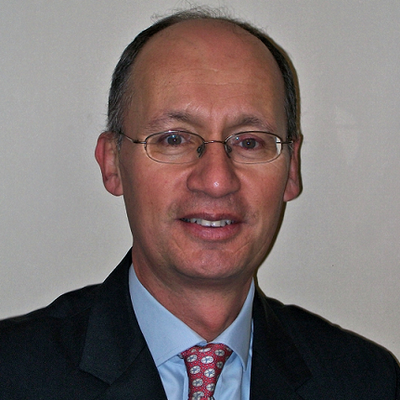
Former Governor Richard Tauwhare
Tauwhare in that National Address, where he was clearly and even nervously reading from a teleprompter, acknowledged the seriousness of his decision.
“The appointing of a Commission of Inquiry is an extremely serious step. I have taken this decision only after the most careful and detailed deliberation. I did so after following an instruction from the Secretary of State for Foreign and Commonwealth Affairs to consider in accordance with the Commissions of Inquiry Ordinance whether a commission should be appointed.”
While the statement assured that there was no wish by the United Kingdom to interfere with the democratic process in the Turks and Caicos Islands, testimonies and conclusions given during the captivating COI led to a complete overhaul of the democracy.
Announced by new Governor, H.E. Gordon Wethell was a constitutional suspension on August 14, 2009 which ushered in British-direct rule; there was an interim administration appointed by the UK for three years; there was a new constitution created for the territory which allowed for trial without jury and the powers of the elected administration were reduced and in some cases retracted.
Former Governor Gordon Wetherell
On the flip side, the UK maintained its posture that the move to conduct the Commission of Inquiry would unearth evidence which proved that they were right to intervene and shut down the scandalous administrative style of the Mike Misick regime.
The just over four weeks of the COI spawned some of the Caribbean’s most awe-striking headlines and jaw dropping moments. Even cronies and supporters of the Progressive National Party government were reduced to grunts and groans as the bundles and bundles of evidence were painstakingly extracted and exposed. 
The curious and intrigued remained glued to the proceedings where reports emerged of lavish purchases including a specially designed jet, journeys of government and celebrity friends to remote and exotic corners of the globe, suspect under-the-table payouts and overrides of policies for would-be developers, cheap sales of luxury lands, weighty price tags attached to anything from cars, to clothing, to parties, residences, spousal allowances and even a reported $7,000 spent on coffee and pastries – all allegations of systemic weaknesses and serious government dishonesty which unfolded like a Hollywood drama, to a packed house.

From Essence magazine
The monumental costs were pinned to the Public Purse or abuse of public office; Michael Misick claimed he had a serious debt problem due to the extravagant life led by his extravagant wife. Monies allegedly forked over to the embattled ex-premier – who eventually resigned – were called loans, and nothing more.
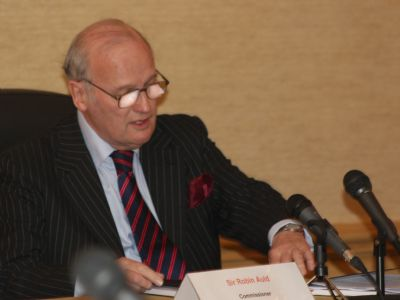 Ten years on, Sir Robin Ernest Auld is seemingly retired as an acclaimed author and celebrated professor noted in the annals at the astute Squire Law Library in Cambridge in the United Kingdom.
In his career highlights at Squire Law Library, last on the list is the 2008-2009 Commission of Inquiry into governmental corruption in the Turks and Caicos Islands. However, up to 2014, Sir Robin Auld remained busy as consultant, adviser and representative for the UK where his mission was to Kyiv, Ukraine.
The 2008-2009 Commission of Inquiry Report was published in December 2013; the Special Investigation and Prosecution Team trial which was a progeny of the COI report began exactly one year later.
Amazingly, expensively, that saga continues.








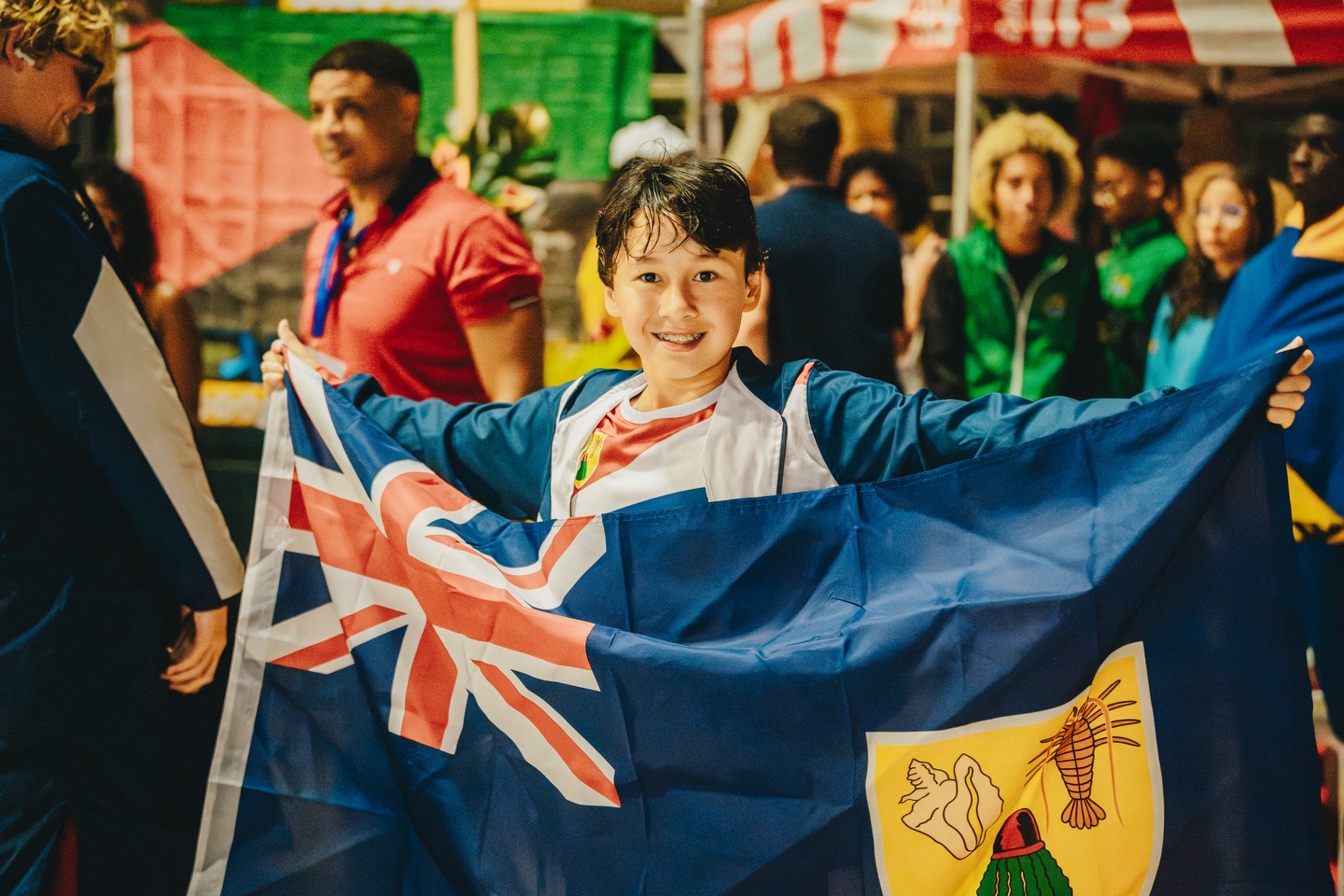
PHOTOS COURTESY OF THE TCI SPORTS COMMISSION
Turks and Caicos, April 14, 2026 – The Turks and Caicos Islands is celebrating a proud moment in aquatics, led by standout swimmer Luc Durliat, who secured the country’s lone medal at the 2026 CARIFTA Aquatics Championships in Martinique.
Durliat captured bronze in the Boys 11–12 200m Butterfly, clocking an impressive 2:39.33 after advancing through multiple rounds, showcasing both endurance and composure in the pool. His performance stood out in a highly competitive field and signaled growing strength in the territory’s aquatics programme.
The Turks and Caicos Islands Swimming Federation praised the young athlete’s achievement, stating:
“Congratulations to Luc Durliat on winning bronze in the Boys 11–12 200m Butterfly at the CARIFTA Aquatics Championships 2026, proudly representing the Turks and Caicos Islands National Team. Your hard work, determination, and strong performance in the pool have made Turks and Caicos proud.”
Durliat’s medal came amid a broader showing of progress by Team TCI, with several swimmers delivering personal best performances throughout the competition. Among them were Isaac Farley, Anaiah Alleyne, Kian Jules, Ezekiel Martin and Rishith Gururaja, all of whom posted significant improvements, underscoring the team’s upward trajectory.
Minister of Education, Youth, Sports and Culture Rachel Marshall Taylor also commended the team’s efforts, highlighting Durliat’s resilience and the wider gains in the sport.
“In the pool, Luc Durliat showcased resilience and competitive spirit, earning a bronze medal in the 200m Butterfly… His performance stands as a testament to the growth and promise of aquatics in the Turks and Caicos Islands,” she said.
The team returned home to a celebratory reception organized by the Turks and Caicos Islands Sports Commission, beginning with an airport welcome at the Providenciales International Airport, followed by a motorcade and press conference.
The homecoming not only honored Durliat’s podium finish but also recognized a team that continues to build momentum on the regional stage—proving that while the medal count may be small, the impact is growing.
Developed by Deandrea Hamilton • with ChatGPT (AI) • edited by Magnetic Media.
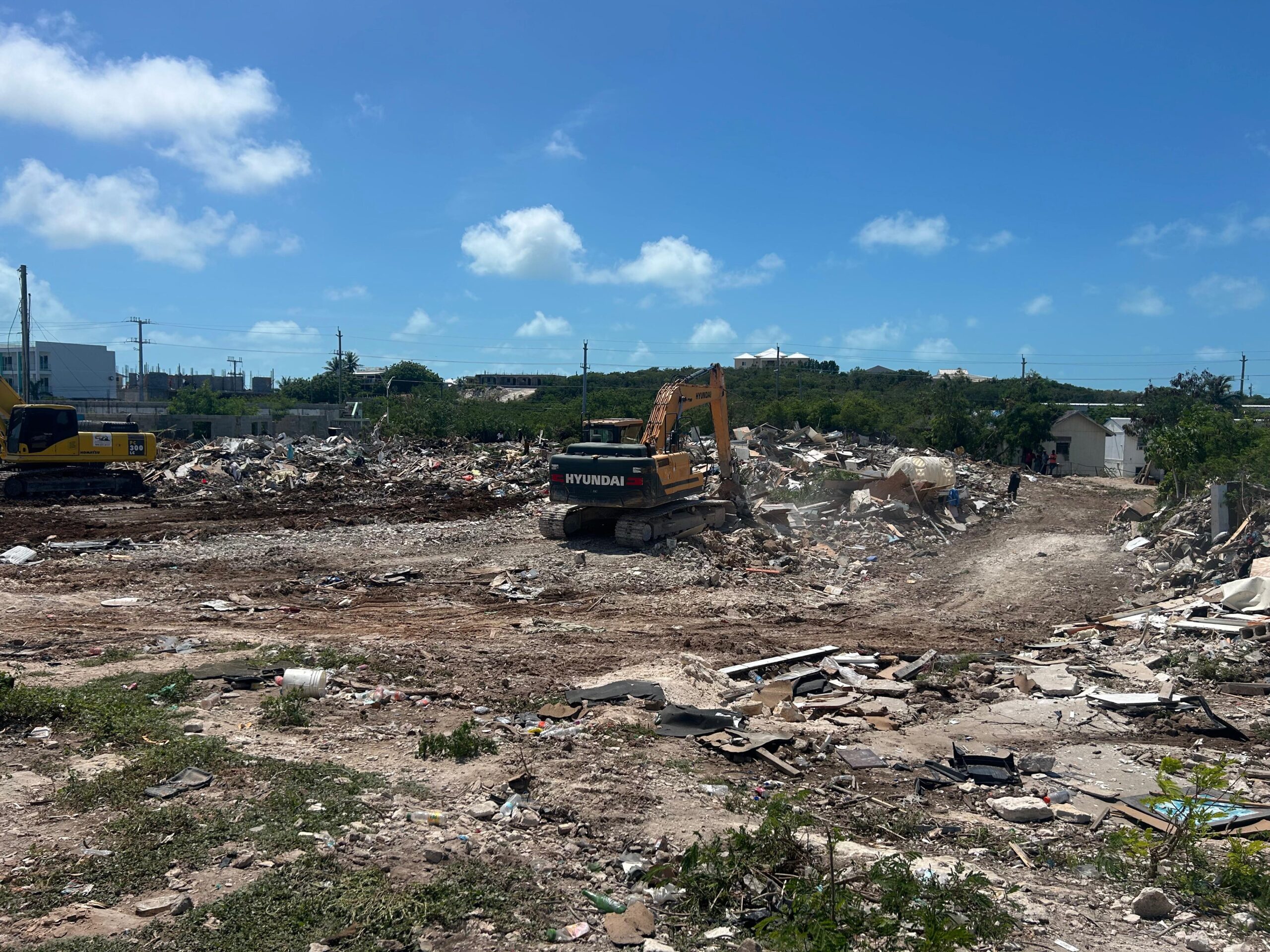
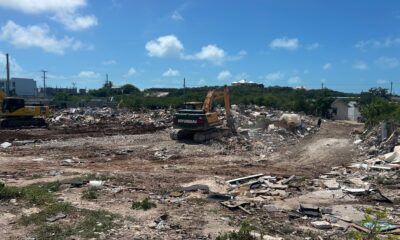
Providenciales, Turks and Caicos Islands, 14 April 2026 —The Informal Settlements Unit (ISU), in coordination with the Planning Department and key partner agencies, conducted a multi-agency enforcement exercise on Thursday, April 9, 2026, at Block and Parcel 60802/49 and 60802/65, located in the Caicos Lodge area.
The operation was led by the Planning Department, with coordination by the ISU and support from the Royal Turks and Caicos Islands Police Force, the TCI Border Force, Pelican Energy TCI, and DevCon Power Supply. All agencies worked collaboratively to ensure the exercise was carried out in a safe, orderly, and controlled manner.
The enforcement action followed a structured and lawful process in accordance with the Physical Planning framework of the Turks and Caicos Islands. A total of fifty (50) unauthorized structures were removed during the exercise.
Section 45 Enforcement Notices were first issued on the affected parcels on December 11 2024, identifying unauthorized structures in illegal occupation. This was followed by the issuance of Warning Notices on March 26 2026, which clearly advised occupants that they were in breach of planning and land use regulations and provided a 14-day period to remove the structures voluntarily. Despite these notices and the time afforded for compliance, the unauthorized structures remained in place.
The Government wishes to emphasize that the structures removed were unauthorized developments, constructed without the required planning approvals and in breach of established building and land use regulations.
Planning regulations exist to ensure that all developments meet minimum standards for safety and structural integrity. Unauthorized settlements, regardless of appearance, often lack these safeguards and can pose serious risks to occupants and the wider community.
The enforcement of these regulations is therefore not only a legal obligation, but a necessary measure to protect lives, property, and public health.
The Turks and Caicos Islands Government remains fully aware of the housing challenges currently facing the country. However, unlawful development cannot be allowed to proliferate in a manner that compromises safety, undermines planning systems, and infringes on property rights.
All persons undertaking construction or occupation of land must do so in accordance with the law, including obtaining the necessary planning approvals.
The Government will continue to work collaboratively across agencies to:
- Uphold planning and development regulations
- Protect private and public lands
- Prevent the expansion of unsafe and informal settlements
- Advance long-term solutions for sustainable community development
This exercise represents part of an ongoing commitment to ensuring that development within the Turks and Caicos Islands is lawful, safe, and aligned with national standards.

Turks and Caicos, April 14, 2026 – Planning data from the March 31, 2026 Physical Planning Board meeting points to a clear and consequential trend in Providenciales: a steady rise in approvals for multi-unit residential developments, reflecting growing demand for rental housing on the island.
Applications reviewed at the meeting include apartment buildings ranging from small two-unit structures to larger developments with up to 15 units, along with extensions to existing buildings to add additional floors and living space. The pattern is consistent across multiple submissions—developers are no longer focusing primarily on single-family homes, but instead are maximizing land use to accommodate more residents per parcel.
This shift signals more than just a change in construction style; it reflects mounting pressure within the housing market. Providenciales has been experiencing sustained population growth, driven by economic opportunity, migration and labour demand, all of which are placing strain on available housing stock. As a result, rental inventory has tightened, with many residents facing limited options and rising costs.
In that context, the Planning Board’s approvals suggest that the market is responding—perhaps not through a coordinated housing policy, but through private development adapting to demand. Multi-unit dwellings, apartment complexes and building expansions are emerging as practical solutions to increase housing availability in a setting where land is finite and demand continues to climb.
At the same time, the data reveals that not all proposed developments are moving forward without delay. Several applications, including larger-scale residential projects, were deferred, indicating that regulatory review remains active and that some proposals require further scrutiny or modification before approval. This points to a balancing act between facilitating growth and maintaining planning standards.
What emerges from the meeting is a picture of an island adjusting in real time. Housing development is becoming denser, more vertical and more responsive to immediate needs, as opposed to long-term master planning.
For residents, the implications are significant. Increased rental units could help ease the current shortage, but questions remain about affordability, infrastructure capacity and whether the pace of development can keep up with demand.
In the end, the Planning Board data offers a grounded look at how Providenciales is evolving—not through announcements, but through approvals that reveal where the pressure truly lies.
Beyond housing, the meeting also revealed a mix of supporting and stalled developments shaping the wider growth picture. Among the notable approvals were a warehouse and distribution centre, pointing to expanding commercial and logistics needs, and a boat ramp in Providenciales, signalling continued investment in marine access infrastructure.
At the same time, several applications were deferred, including proposals for solar farms and larger-scale residential developments, suggesting that while demand is strong, not all projects are advancing at the same pace. The combination of approvals and deferrals highlights a development environment that is active but still navigating regulatory checks, infrastructure readiness and planning requirements.
The 786th Ordinary Meeting of the Physical Planning Board was held on March 31, 2026, in Providenciales, with participation both in person and via video conference. Acting Chairman Trent Dickenson presided over the session, joined by members Dondre Brooks and Terrell Gardiner, along with ex-officio members Dainer Lightbourne from Planning and Jamall Blair from the Department of Environment and Coastal Resources. Supporting the Board were key technical staff, including Deputy Director of Planning Toriano Williams, Assistant Director and Secretary Reginald Charles, and Land Use Planner Britney Simmons, reflecting a full complement of planning and environmental oversight at the sitting.
Developed by Deandrea Hamilton • with ChatGPT (AI) • edited by Magnetic Media.





-
 News5 days ago
Community Emergency Response Training – Blue Hills & Wheeland
-
 News5 days ago
HAITIANS FLEE HOME AS PUSH FACTORS MOUNT; LANDINGS SURGE IN TCI, AGAIN
-
 News5 days ago
TCI Selected from 59 Countries for World Bank AI Programme as Officials Attend Washington Meetings
-
 Caribbean News4 days ago
Team Trinidad & Tobago Makes Waves with Historic CARIFTA Aquatics Performance
-

 News5 days ago
What Planning Board Meeting Exposes about Housing Development in Providenciales
-
 News5 days ago
Multi-Agency Enforcement Action Conducted at Caicos Lodge
-

 Caribbean News4 days ago
Mottley Celebrates CARIFTA Champions After Stunning Relay Upset
-

 Bahamas News4 days ago
New Manifestos Released as Bahamas Heads to Historic May 12 Vote