
Bahamas News
UAB AND OHIO ACCEPT 2017 BAHAMAS BOWL INVITATIONS

#Bahamas, November 27, 2017 – Nassau – UAB will represent Conference USA and Ohio will represent the Mid-American Conference as both institutions accepted bids to the 2017 Bahamas Bowl, set for Friday, Dec. 22 in Nassau’s Thomas A. Robinson National Stadium.
The Bahamas Bowl will be played at 12:30 p.m. ET, and the contest will be televised on ESPN and broadcast on the Bahamas Bowl Radio Network. The early invitation allows both UAB and Ohio additional time to prepare to play in an international destination, including obtaining passports for those who still need them to travel to the Bahamas as well as giving extra time for fans to make their travel plans to Nassau for bowl week.
Tickets to the 2017 Bahamas Bowl can be purchased through at the Thomas A. Robinson Stadium Box Office, online at NSA-Bahamas.com and by phone at 325-0376.
The 16 combined victories (eight each for UAB and Ohio) between this year’s teams is tied for the most in Bahamas Bowl history with last year’s matchup between Eastern Michigan and Old Dominion. This will be the first meeting between UAB and Ohio. Conference USA leads the Bahamas Bowl series, 2-1 over the MAC.
 UAB (8-4 overall, 6-2 in Conference USA play) is one of the most inspirational stories of the 2017 college football season. The Blazers football program was cut, along with two other sports, after the 2014 season, but a unprecedented fundraising effort by businesses and fans in the Birmingham area resulted in an announcement six months later by the university that the program would return in 2017. After the two-year hiatus, UAB returned to the field and won a school-FBS record eight games. Head coach Bill Clark, who is in his second season (14-10 record at UAB; 25-14 in three seasons overall as a collegiate head coach) at UAB, stayed through the program’s hiatus and led the Blazers to the school’s second bowl bid in its’ history (2004 Sheraton Hawai’i Bowl).
“The amount of work our coaches and players have put in over the last two years has been incredible, and we are thrilled to play in the Bahamas Bowl,” said Clark. “Ohio is a very solid team led by an outstanding coach in Frank Solich, and it is going to be a great game. Our players will be ready for the challenge and look to become the first team to win a bowl game at UAB.”
The Blazers come into the Bahamas Bowl with six victories in their last eight games to finish second in Conference USA’s West Division. UAB won all six home games, and the six C-USA victories were also the most in the Blazers’ history. The Blazers average 29.6 points per game, and UAB has scored 30 or more points six times. UAB averaged 190.2 rushing yards per game, led by true freshman running back Spencer Brown, who broke the school record for freshman rushing yards with 1,292. Redshirt junior quarterback A.J. Erdely tied a school record with 13 rushing touchdowns, which is also the most by a Blazer QB, and he has accounted for 29 touchdowns (13 rushing, 16 passing).
UAB has been strong on defense, especially in stopping runners behind the line of scrimmage. The Blazers have 81 tackles for loss and have posted four or more in each game this season. UAB has 14 interceptions, including 10 in the last seven games, and have posted five multi-interception games. Redshirt senior cornerback Darious Williams has five interceptions and is second in FBS in passes defensed with 20 (1.7 per game). Redshirt senior linebacker Tevin Crews led the team with 95 tackles, and redshirt junior defensive lineman Stacy Keely led the Blazers with four sacks.
“We are honored to accept an invitation to play in this year’s Bahamas Bowl against such a great opponent as Ohio,” said UAB Director of Athletics Mark Ingram. “Our coaches and players have represented our university extremely well throughout the entire season, and this is a tremendous reward for their hard work. We look forward to playing another nationally televised game and watching this remarkable team cap off their season with one more game.”
 Ohio (8-4 overall, 5-3 in Mid-American Conference play) will be led to its’ 11th all-time bowl appearance by head coach Frank Solich, who is in his 13th season (96-71 record) at Ohio and his 19th as a college head coach (154-90 record) overall. Solich, who also served as the head coach at Nebraska from 1998-2003, has taken the Bobcats to nine bowls, including in each of the last three seasons. He is the third-longest tenured coach in the FBS ranks.
“We are excited to accept an invitation for the 2017 Bahamas Bowl. It’s a location that our players, staff and fans are excited about,” said Solich. “We are looking forward to a great game against a talented UAB team.”
The Bobcats come into the Bahamas Bowl with four victories in the last six games as Ohio finished second in the MAC East Division. The Bobcats average 38.9 points per game and set a school record with 467 points scored, and Ohio has scored 40 or more points in six games. Ohio has averaged 244.2 rushing yards per game behind redshirt junior running back A.J. Ouellette (980 yards) and sophomore quarterback Nathan Rourke (882 yards). Rourke has five 100-yard rushing games, and Ouellette has four 100-yard efforts. Rourke holds the school record for rushing touchdowns in a season with 21 (second in FBS), and his 37 total touchdowns responsible for is one away from tying the Ohio season record. He also has thrown for 2,018 passing yards and 15 TDs.
On defense, the Bobcats have held opponents to 25.8 points per game. Ohio has been strong against the run as the Bobcats’ opponents have averaged only 111.4 yards per game. Redshirt senior linebacker Quentin Poling leads the team with 102 tackles, including 47 solo stops, 12.5 tackles for loss and three forced fumbles. He also leads the team with 5.5 sacks, part of the Bobcats’ 28 overall. Redshirt senior linebacker Chad Moore paces the Bobcats with three interceptions. Redshirt senior cornerback Bradd Ellis has 18 pass breakups, which ties the school record and ranks in the top three in FBS in the category.
“We are honored and excited about being invited to the Bahamas Bowl. It is a fantastic location and event for our team and fans,” said Ohio Director of Athletics Jim Schaus. “All of the past MAC schools who have attended rave about their experience.”
For more information on the 2017 Bahamas Bowl, visit BahamasBowl.com. The game is one of 14 postseason bowl games owned and operated by ESPN Events, a division of ESPN.
About The Bahamas Bowl
The Bahamas Bowl will provide student-athletes, conference partners, alumni, fans and sponsors a first-class international bowl experience while promoting The Bahamas and highlighting the educational and athletic opportunities for the youth of The Islands through college football. The fourth-annual Bahamas Bowl will take place in Nassau, Bahamas on Friday, Dec. 22, 2017 at Thomas A. Robinson National Stadium between teams from Conference USA and the Mid-American Conference. The game will be televised nationally in the United States on ESPN.

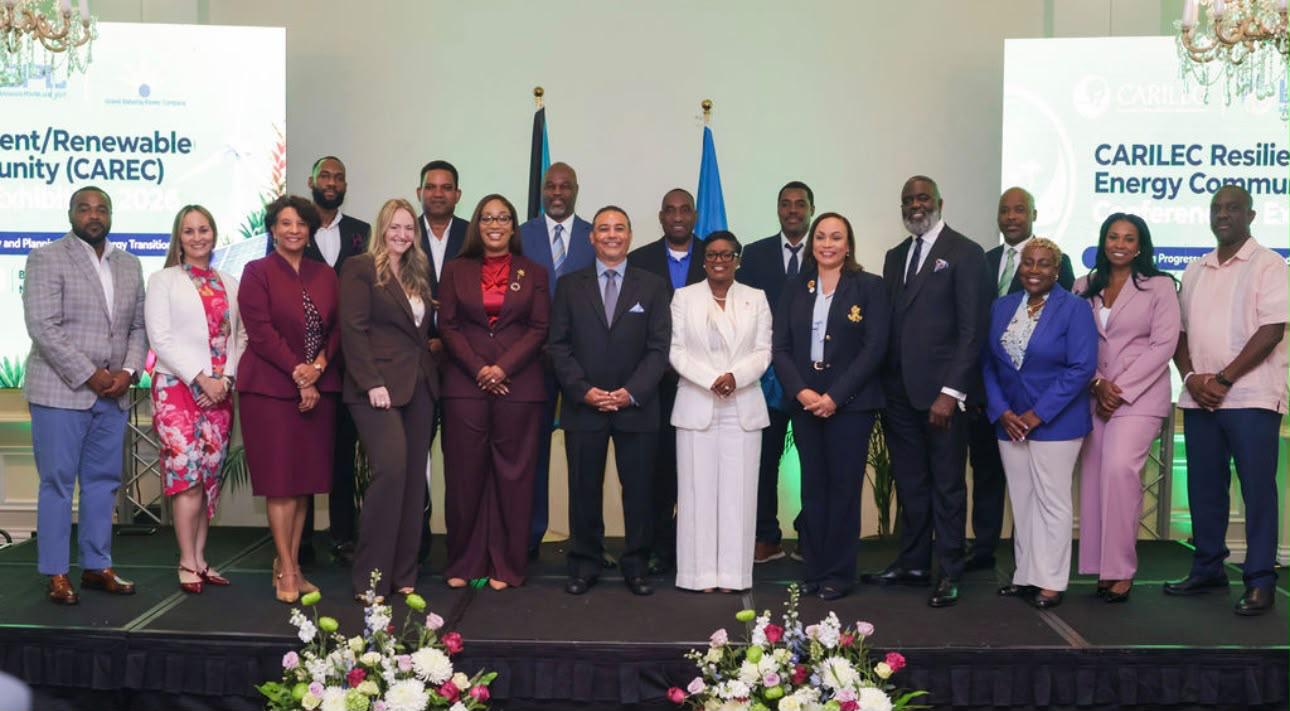
NASSAU, The Bahamas – The Bahamas’ Minister of Energy, Utilities and Aviation, The Honourable JoBeth Coleby-Davis, delivered an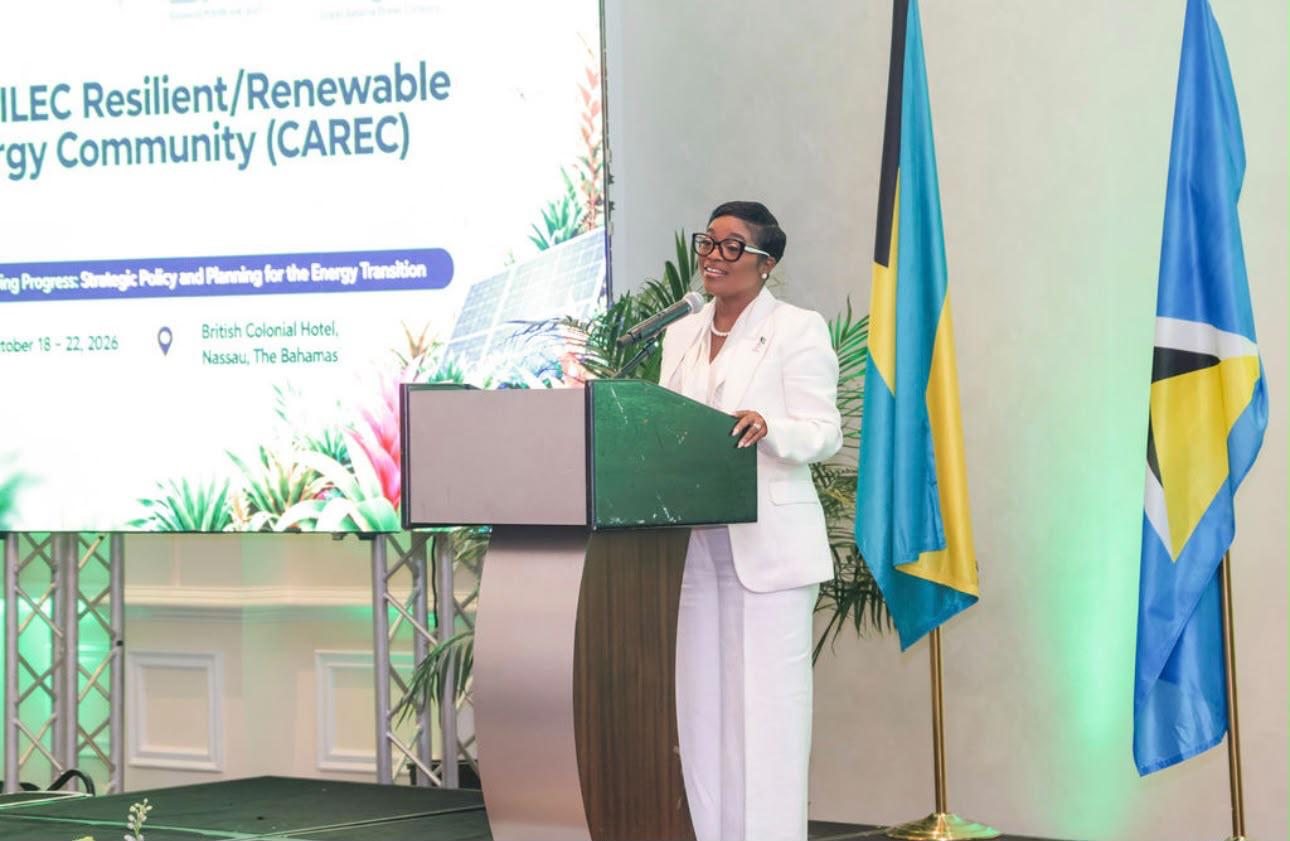 electrifying address during the opening ceremony of the 2026 CARILEC Resilient/Renewable Energy Community (CAREC) Conference and Exhibition, being held October 18–22, 2026, at the British Colonial Hotel in Nassau, The Bahamas.
Under the theme “Empowering Progress: Strategic Policy and Planning for the Energy Transition,” the event draws more than 200 industry leaders, policymakers, regulators, and energy professionals committed to advancing practical strategies for sustainable and reliable Caribbean power systems through renewable energy and emerging technologies.
During her address, titled “The New Energy Era: Transforming Policy into Progress,” Minister Coleby-Davis reminded attendees that The Bahamas’ national motto, “Forward, Upward, Onward, Together,” aptly describes what the region’s energy transition demands.
“Empowering Progress speaks directly to our national motto. Not waiting for progress, but creating the conditions that allow progress to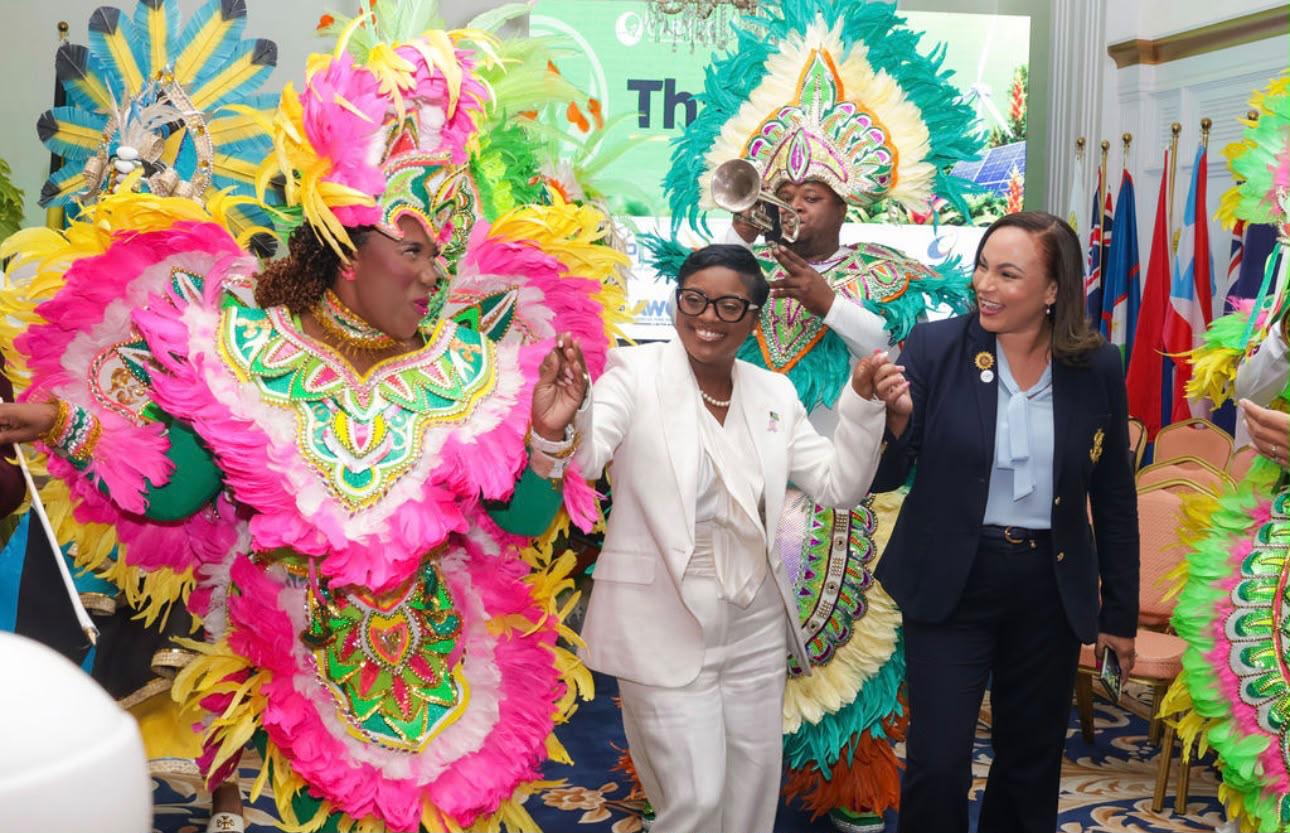 happen. Meaningful progress, however, does not occur by accident. It requires vision, sound policy, strategic planning, strong institutions, and the determination to turn decisions into results,” said Minister Coleby-Davis.
Participants acknowledged that small island developing states share similar pressures, compounded by geographical challenges, small electricity markets, ageing infrastructure, geopolitical influences, and the growing threat of severe weather.
Tasked with ushering in a new energy era across the islands while addressing the challenges posed by The Bahamas’ unique archipelagic composition, Minister Coleby-Davis said, “Every island needs a different answer, but the same logic. As an archipelagic nation, we must provide electricity across many islands, each with its own demand and infrastructure needs. Our strategy, therefore, must be national in direction, but responsive to individual communities.”
Restating her Ministry’s three core messages—that energy is an economic and security priority, technology must be viewed as a tool to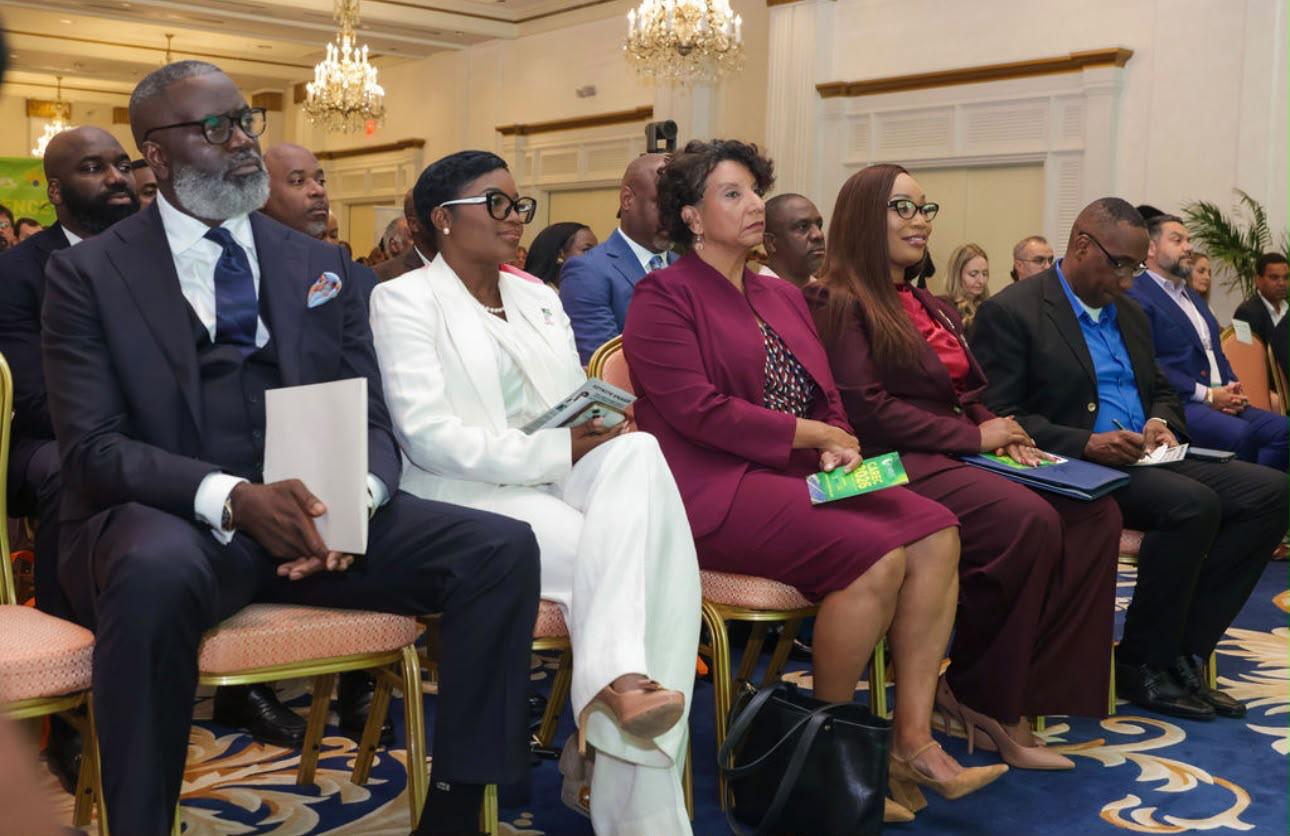 support strong institutional leadership, and natural gas should be considered a bridge, not a destination—Minister Coleby-Davis reiterated that “progress must now be reflected in functioning infrastructure, effective institutions, and better electricity services: from policy commitments to coordinated implementation, and from fragmented investment decisions to long-term planning.”
Organised by CARILEC and co-hosted by Bahamas Power and Light (BPL) and Grand Bahama Power Company (GBPC), the annual Conference and Exhibition brings together the Caribbean energy community to advance practical solutions to the region’s most pressing energy challenges and accelerate progress towards more resilient, reliable, and sustainable power systems.
Bahamas News
Rosewood Exuma: A precedent-setting case for environmental law and future development in The Bahamas
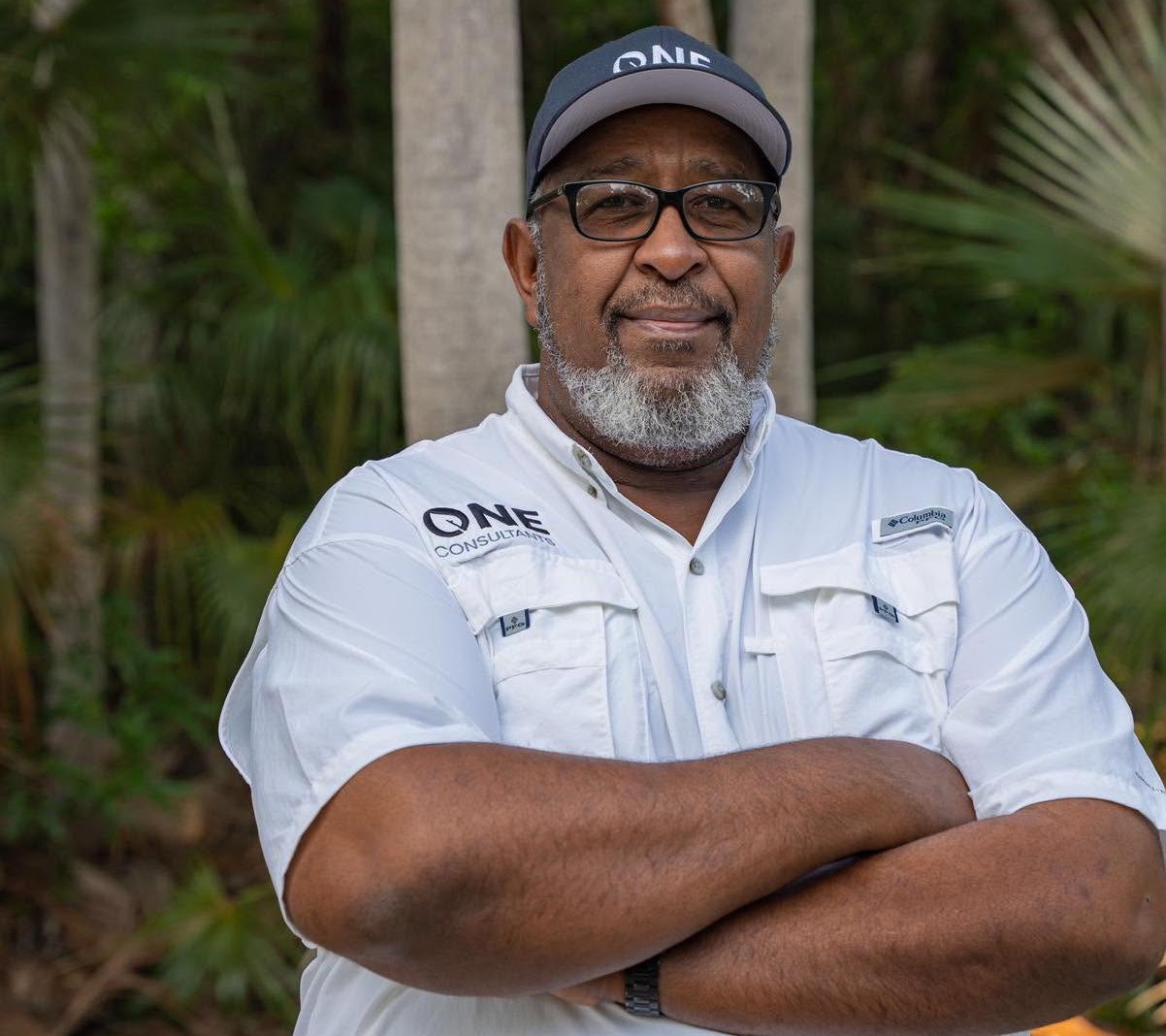
By Eric Carey, ONE Consultants, former Executive Director of the Bahamas National Trust.
We are facing an extraordinarily important moment in judicial history in The Bahamas as we await a decision on the trial of allegations in the Yntegra group’s Rosewood Exuma project.
As former Minister of the Environment, Romauld Ferreira, put it in the Supreme Court last week: “A lot is at stake…a great deal of what will be considered in this case sets the stage for what’s to come for future development in the country.”
In the trial of the judicial review of government approvals given to Yntegra for their Rosewood Exuma resort this week, we’ve heard technical arguments about failure to make key environmental documents like Yntegra’s Environmental Impact Assessment and Environmental Management Plan available to the public, failure of key documents to assess some of the most controversial aspects of the project, an unlawful consultation process, and a failure to conduct further consultation following major changes to the development.
Lawyers for Turtlegrass described how there was a “salami slicing” of the project into chunks as a way to circumvent the approvals process and disguise its full impact from public scrutiny. Only certain portions came before the public and key stakeholders like Turtlegrass and Over Yonder Cay for scrutiny, while some of the most controversial aspects did not. This is particularly problematic given what is at stake – the dredging of a beautiful Exuma bay, the North Bay, to transform it into an industrial shipping channel, complete with an enormous seawall, dock, back-of-house facilities and other industrial infrastructure.
It is unfortunate that it has had to come to this – an expensive judicial review process that calls out the government for falling down on its duties to protect the environment and follow the law – but it is important and the broader implications should not be overlooked. When Justice Leif Farquharson rules on this case, he’ll set a precedent that could echo in The Bahamas for years to come, one that answers the question: are the 2019 environmental laws that Ferreira took to parliament after many years of advocacy by environmentalists toothless tigers that are just for decoration – or are they capable of protecting the environment that we all depend on and the rights of those affected by projects to have a genuine say in them?
What is curious is that at the same time as these points are being raised in court as part of the judicial review, we are seeing personal attacks about Bob Coughlin – the person spearheading this legal action and test of environmental laws – by online trolls. Coughlin, an Exuma resident for almost a decade, has long been established as an environmental advocate and a passionate philanthropist – one who has donated almost $4 million to causes in The Bahamas since 2018, including millions to the organisation I once led, the Bahamas National Trust.
For reasons one can only speculate about, these trolls have been trying to make out all sorts of absurd things: that his legal action in support of environmental protection is a petty dispute born out of fears of competition. That Coughlin no longer even wants to pursue his eco-tourism project, when the reality is that he was forced to put it on hold because of the destructive environmental plans that are in dispute. That he is the only one who has an issue with this Rosewood Exuma resort, when in fact, neighbouring resort, Over Yonder Cay – one of the top rated resorts in the Caribbean – as well as the Save Exuma Alliance – consisting of most of the local islands and businesses in the Exuma area, and thousands of petition signers have expressed their concern with the project – over 9,000 to date. Most ironically, they claim, wrongly, that Coughlin received crown land for personal use, when in fact it is Yntegra who received crown land while having no development track record, when Coughlin instead bought his lease on Sampson Cay from a private owner.
The timing of these claims, in the week of the trial, suggest a patronising and cynical attempt to distract from the gravity of the case being heard, what it represents, and how important this decision is. With their simplistic, jingoistic and factually-dubious references to crown land, white foreigners, and the like – it’s not hard to imagine that those involved are engaged in a ploy to push the buttons of Bahamians who they apparently believe can be too easily distracted into ignoring the real issue here: that the government, has – in the words of those in the Supreme Court this week – “run roughshod” over environmental laws with its approvals for Yntegra’s Rosewood Exuma project and that this is truly a landmark case and the decision will have a long-lasting impact on future development. This is at a time when foreign direct investment (FDI) inflows into the Bahamian economy are forecast to increase by as much as two thirds over the next two years, according to the Inter-American Development Bank (IDB).
So I call on my fellow Bahamians to stay focused. This is not a story about one man – it is a story about the future we want for our country and whether we are willing to sacrifice our ability to demand environmental accountability in all developments moving forward. There is too much at stake to be thrown off the track by trolls.
As Ferreira says of the judicial review that now awaits Justice Leif Farquharson’s judgement: “This is the first set of litigation, serious litigation, that takes a deep dive into the Environmental Planning and Protection Act and the environmental impact assessment regulations…There’s a lot at stake here.”
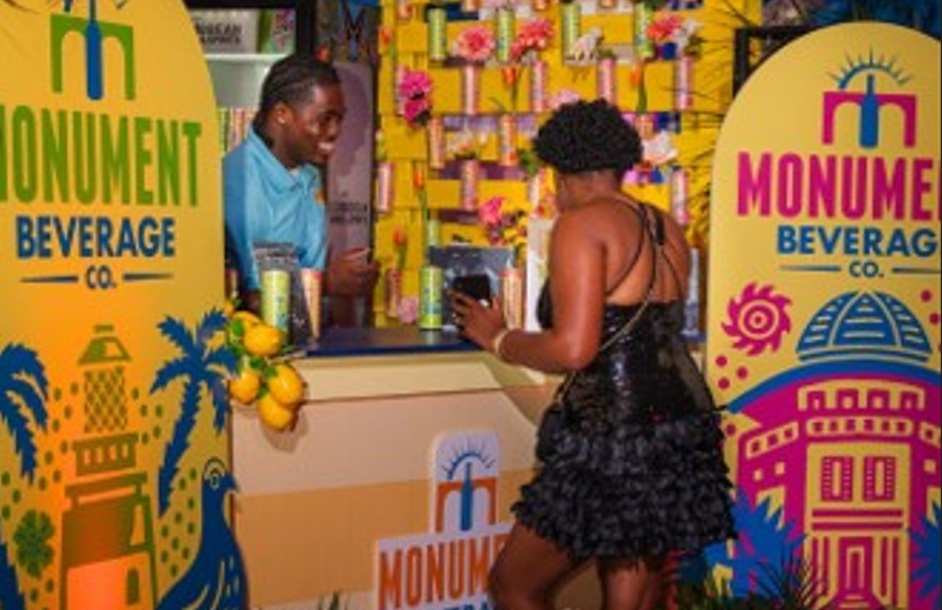
NASSAU, Bahamas — Caribbean Wines & Spirits (CWS), The Bahamas’ leading wine and spirits distributor, proudly supported Paradise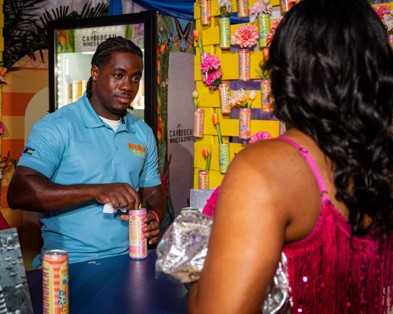 Plates, Hands for Hunger annual fundraiser with a flavorful offering of its newest product, Monument Beverage Co.
Monument, which launched this July and is available across six major islands, made its Paradise Plates debut. Guests enjoyed three bold flavors: Peach Passion, Ginger-Lime and Melon Fizz as they socialized throughout the evening.
Monument brand ambassadors engaged guests with knowledge on the ready-to-drink beverage’s unique taste and look. Many attendees were delighted to learn that Monument is 100% Bahamian-made and owned and enjoyed seeing the various national landmarks on the packaging.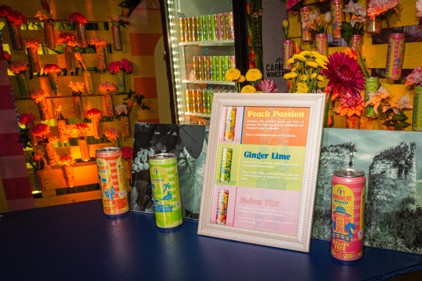
The booth was adorned with vibrant brand colors, striped arches, tropical florals and a photo worthy backdrop featuring Monument cans filled with florals cascading down the wall.
At the end of the event, the entire Monument inventory had finished, making Monument’s Paradise Plates debut a huge success.
For more details on Caribbean Wines & Spirits, new products and specials, visit www.cwsbahamas.com today.





-

 Independent writer1 week ago
Born Here, Raised Here, but Still Unable to Vote: Is this a Conundrum for TCI Electorate?
-
 Bahamas News2 days ago
Rosewood Exuma: A precedent-setting case for environmental law and future development in The Bahamas
-
 Bahamas News6 days ago
Monument Supports Hands for Hunger With Paradise Plates Debut
-
 Bahamas News7 days ago
Schweppes ‘the Art of Mixology’ Dazzles at Paradise Plates with Nemiroff Vodka
-
 Bahamas News1 day ago
Energy Minister Delivers Electrifying Keynote Opening Address at CAREC 2026