
Uncategorized
Diaspora Conference Takes Centre Stage June 13 To 18 In Mo-Bay














Turks and Caicos, March 18, 2026 – Across the Turks and Caicos Islands, the skyline is changing. New resorts rise along the Northern coastline of Providenciales, promising luxury, exclusivity, and world-class experiences designed for the global traveler. These developments are often celebrated as progress, as evidence of economic growth and international relevance.
But beneath that narrative lies a quieter question: who is this development truly for, if it does not meaningfully include the culture of the place it occupies?
More specifically, where are the local artists?
Modern tourism is no longer defined by architecture alone. Today’s traveler is not simply purchasing a room. They are seeking experience, identity, and connection to a place. In response, hospitality brands increasingly market authenticity as a defining feature of luxury.
Encouragingly, there are emerging examples within the Turks and Caicos Islands where this principle is present. Recent developments such as Beaches Resort’s new village extension, Treasure Beach and The Strand TCI have made intentional efforts to incorporate local visual artists into their properties, signalling an understanding that art is not an accessory, but an essential component of place-making.
These efforts demonstrate what is possible. Yet, across many developments, this level of integration remains inconsistent or non-existent. In comparison, the yet to open properties like the Andaz feature videos claiming to be rooted in culture while promoting Nigerian-Canadian and Trinidadian artists; whose work will adorn its walls and shape the narrative of “local culture” to its visitors. There are whispers of developments transporting artists all expenses paid to create and outfit their properties with art.
Instead of commissioning local artists, properties also rely on imported, mass-produced décor or artwork sourced from overseas. The result is a visual identity that could belong anywhere. A resort may sit on TCI Soil, but its interiors frequently tell no story of the islands themselves. This is more than an aesthetic oversight. It is a missed cultural and economic opportunity.
Local artists are not merely decorative contributors. They are interpreters of place, translating the land, its flora, and its lived experience into visual form. In a destination like the Turks and Caicos Islands, where identity is deeply tied to landscape and memory, art plays a critical role in shaping how a place is understood and remembered.
To exclude local artists from major developments is, in effect, to remove one of the most direct expressions of national identity from the visitor experience.
There is also a clear economic cost.
When developments bypass local creatives, funds that could circulate within the domestic economy instead flow outward. This is a form of economic leakage that is rarely discussed but widely felt. Commissioning local artists, licensing their work, and integrating it into design and branding are not acts of charity. They’re investments in a local creative economy with the potential to grow alongside tourism itself.
There remains an outdated assumption that meeting international standards requires looking outward rather than inward. But globally, the opposite is increasingly true. The most competitive destinations are those that embed local culture into their offerings in meaningful ways. Authenticity is no longer optional; it is expected.
The Turks and Caicos Islands should not aspire to look like everywhere else. Its value lies in being unmistakably itself. The positive steps taken by developments such as Beaches’ Treasure Beach and The Strand TCI should not be viewed as exceptions, but as a model. They show that integrating local artists is both achievable and beneficial, enhancing the guest experience while supporting the domestic economy.
This raises an important question for policymakers and developers alike: what would it look like to make this approach standard practice? Practical solutions already exist. Development frameworks/agreements can encourage or require a percentage of project budgets to be allocated to local art. Our newly launched national artist registry by the Department of Culture could streamline procurement and ensure professional standards. Partnerships between developers and cultural institutions could allow artists to be involved from the earliest design stages, rather than as an afterthought.
Hotels themselves can play a role by hosting exhibitions, supporting artist residencies, and incorporating locally produced work into their guest experience. Beyond one-time purchases, licensing agreements can allow artists to benefit from the continued use of their work across branding and digital platforms. None of this is radical. It is standard practice in destinations that understand the long-term value of cultural identity.
At its core, this issue is about more than art. It is about how a country chooses to represent itself, and who is included in that representation. The Turks and Caicos Islands is not simply a collection of beaches and luxery buildings. It is a living culture, shaped by its people, its history, and its environment. Its artists are part of that fabric, producing work that reflects and preserve what makes these islands distinct.
To build a tourism industry that does not meaningfully include them is to create a version of the country that is incomplete.
As development continues, the question is not whether the islands will grow. Growth is already underway. The question is whether that growth will be rooted in the identity of the place, or whether it will continue to operate around it.
In a global market where authenticity carries increasing value, the answer should be clear.
I leave you to ponder:
Turks and Caicos, where are YOUR artists?
About HezronH:
“We are all blended with a swath of experiences; walking, breathing, and thinking creatures full of insight and emotions expelled through every single pore. Our aura illuminates spaces of darkness and drives ideas through vision, endowing minds with fragments of personality shimmering through a kaleidoscope of colour.”
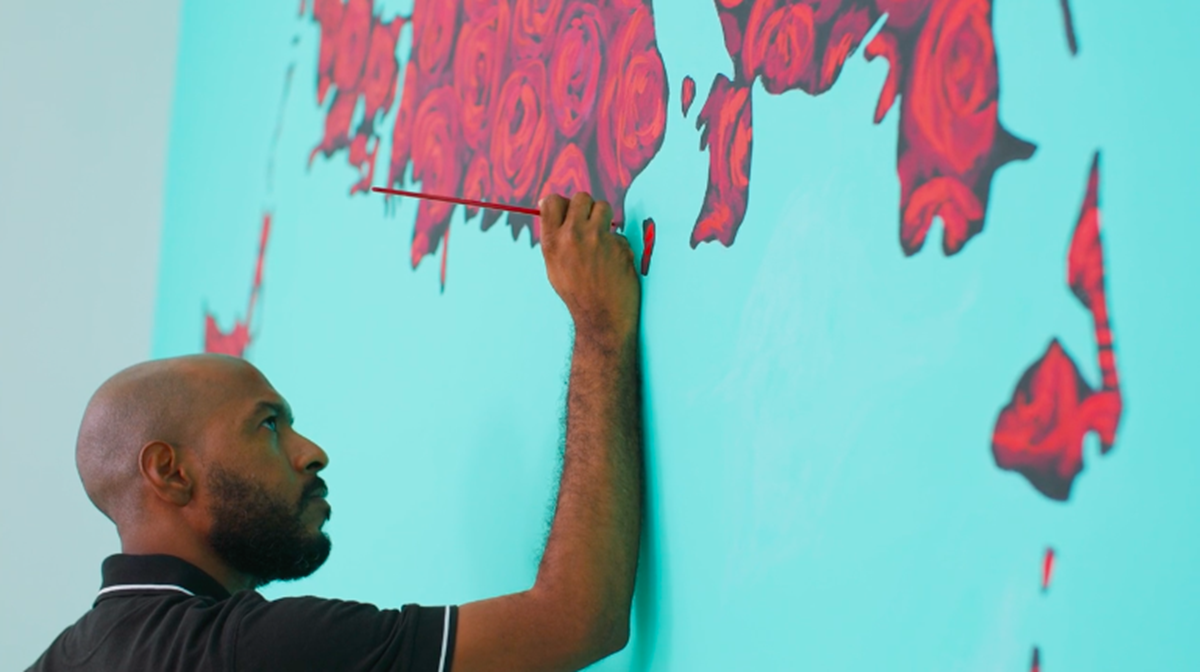
Turks and Caicos Islands’ artist Hezron Henry’s work is an exploration of this concept, via his practice. His body of work consists of oil stick, oil pastel and acrylic on paper, canvas, and digital painting, adapting both traditional and modern painting mediums to his signature style. His art is laden with vibrant colours and a link is established highlighting the emotive power of colour. Drawing inspiration from his youth, collecting comics, and his everyday interactions as an adult, he bridges youthful vibrancy and rule-breaking with the depth of an individual’s search for belonging in a region, still underrepresented, and overlooked.
Hezron infuses his portraits with introspection and longing while vivid colours harken to a palette present in Fauvism.
His passion is honest artistic expression, creating an experience people can enjoy and connect with on an ethereal level.
As one of Turks and Caicos’ most prolific artists he has exhibited in cities across Australia, New Zealand, the UK, Trinidad & Tobago at CARIFESTA, Portland (USA), and at Art Takes 2021 (NYC). Hezron has also had the pleasure of being featured in several publications: Beautiful Bizarre Magazine, Wacom’s “The Next Level,” Turks and Caicos Magazine, and selected as “Curators’ Picks: Emerging” on international art platform Artsy.
Select Achievements/Exhibitions/Publications/Projects
2024 – Indelible Imprints, Group Show, SaveArtSpace x Gallery 90220, Los Angeles
2024 – Feature, Cacique (interCaribbean In-Flight Magazine), Apr – Jun
2024 – Interview, Up and Away (Bahamasair In-Flight Magazine), Apr – Jun
2023 – Curators’ Picks: Emerging – Artsy
2023 – Curators’ Choice: Atlantic World Art Fair
2023 – Print It!, Group Exhibit, Leeds, UK
2022 – Caribbean Metaverse Art Week, Decentraland
2022 – Deus: The Quest for Divinity, Solo Show, Black Pony Gallery, Artsy Viewing Room
2021 – Expression Against Oppression, Group Exhibit, SaveArtSpace, Portland
2020 – Drawn Vol. 4: Leaders in Contemporary Illustration
2020 – Exclusive Evening of Art Exhibition, Group Show, Providenciales
2019 – Across Boundaries Exhibition, Group Show, Trinidad and Tobago National Museum
2019 – Apparel Collab, Konk
2018 – Fabric Prints, bēchë 2019 Collection
2017 – EP Cover, Maskanoo, Lady Livz
2017 – The Next Level Exhibition, Group Show: Sydney, Melbourne & Auckland
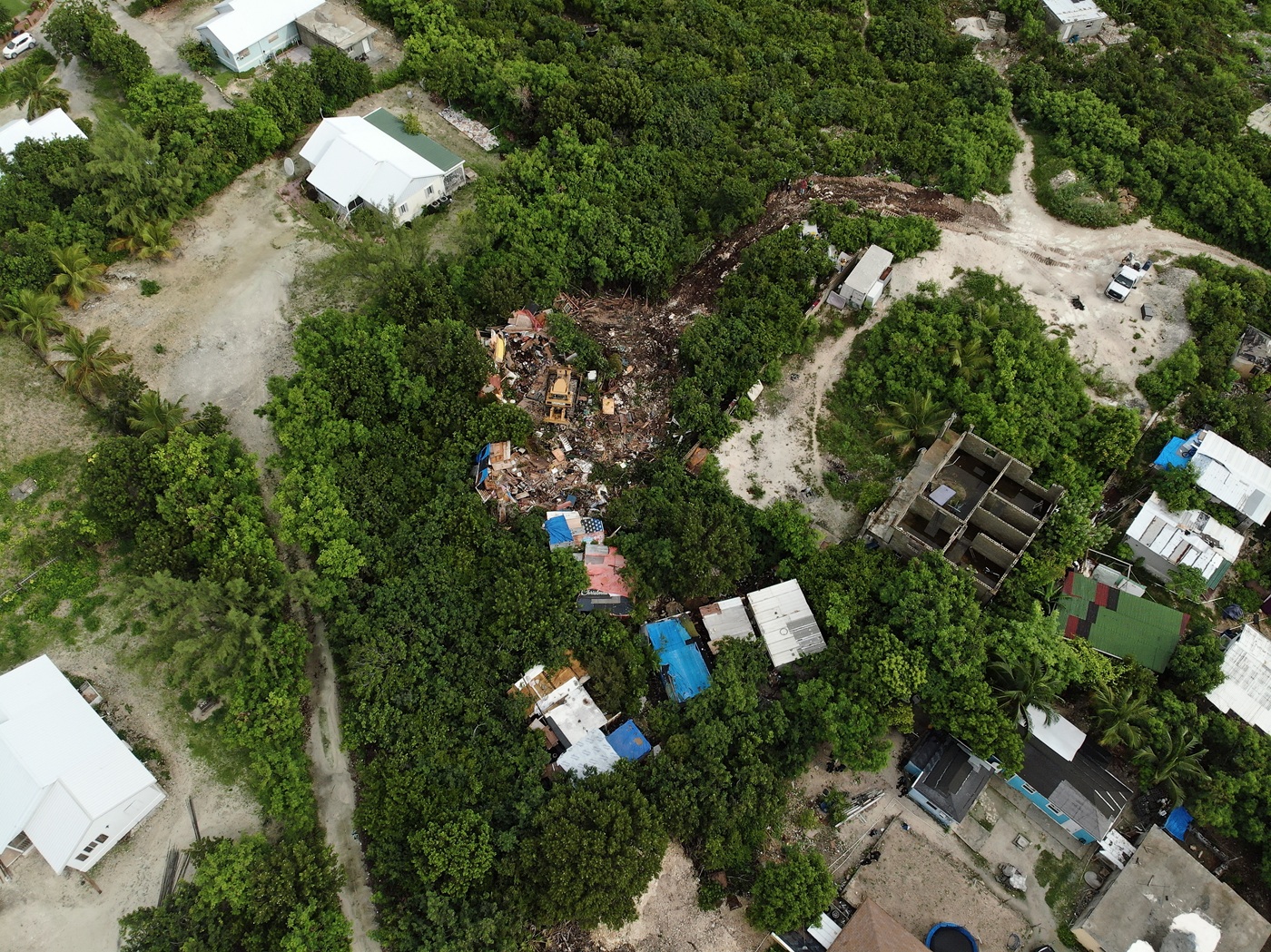
Providenciales, Turks and Caicos Islands, 23 October 2025 — The Crown Land Unit, supported by the Informal Settlements Unit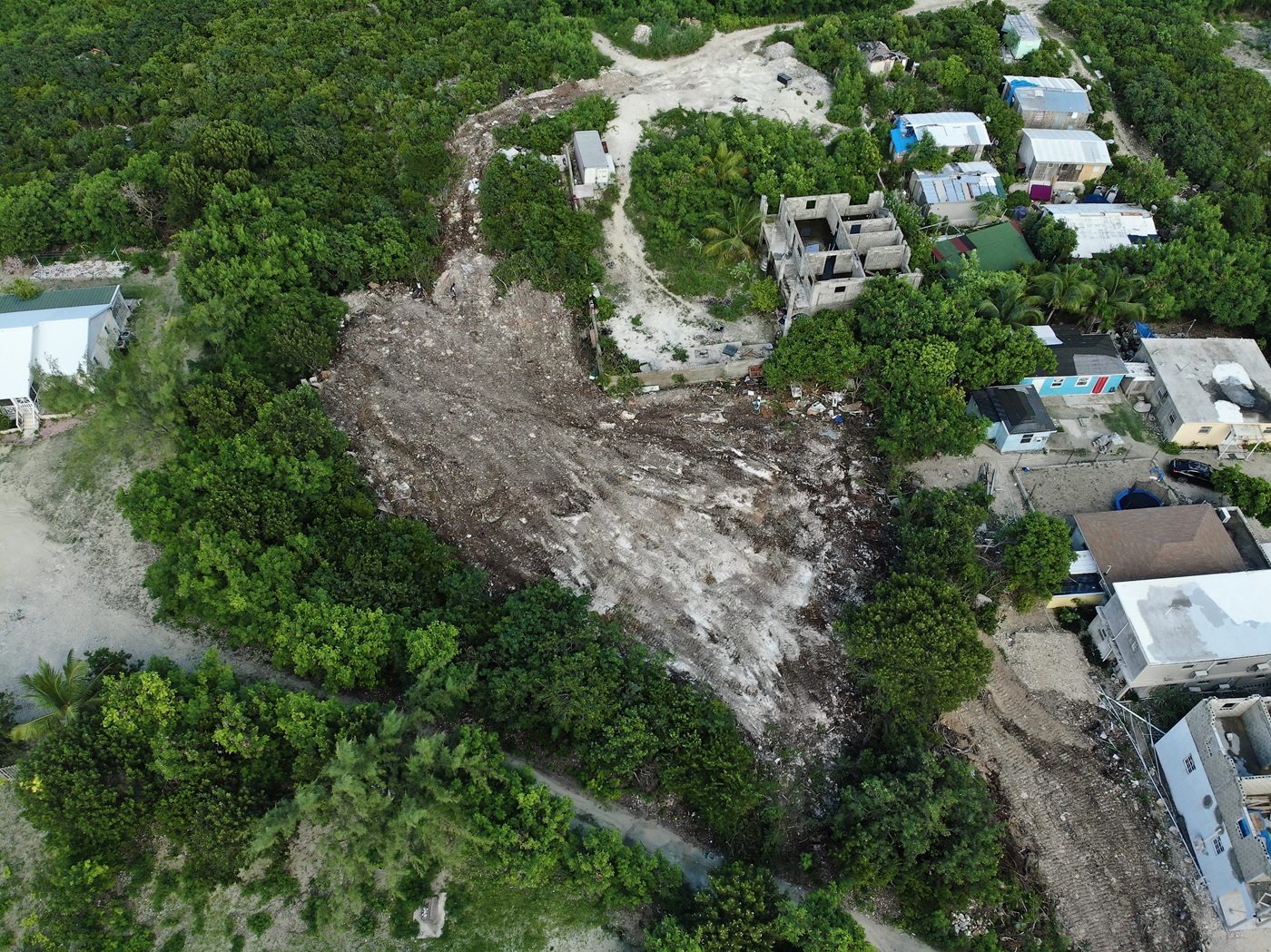 (ISU) and Immigration and Border Services, led the successful execution of a reclamation exercise in Blue Hills on Wednesday October 15, 2025. The Royal Turks and Caicos Islands Police Force provided security for the operation, which formed part of the Government’s ongoing mandate under the Crown Land Ordinance to prevent squatting and encroachment on Crown Land.
During inspections conducted by the Crown Land Unit, illegally constructed timber buildings were identified on parcels 60501/091 and
60501/092. Notices of Illegal Occupation were issued in accordance with the Crown Land Ordinance; however, the persons responsible for the construction failed to comply with the instructions contained in the notices. As a result, enforcement action was taken to remove the structures and reclaim the land.
The exercise resulted in the full reclamation of 0.84 acres of Crown Land, with the removal of sixteen unauthorized and unoccupied timber structures across the two parcels. Of these, four structures were located on parcel 60501/091 (measuring 0.49 acres) and twelve structures on parcel 60501/092 (measuring 0.35 acres).
The ISU reaffirms its commitment to supporting partner agencies in the coordinated management of Crown Land, ensuring that all enforcement actions are carried out lawfully, efficiently, and in the public interest.
Uncategorized
TCI Imports Shift Dramatically – Panama Emerges as Back Door for Chinese Goods as TCI Imports Shift Dramatically

Deandrea Hamilton | Editor
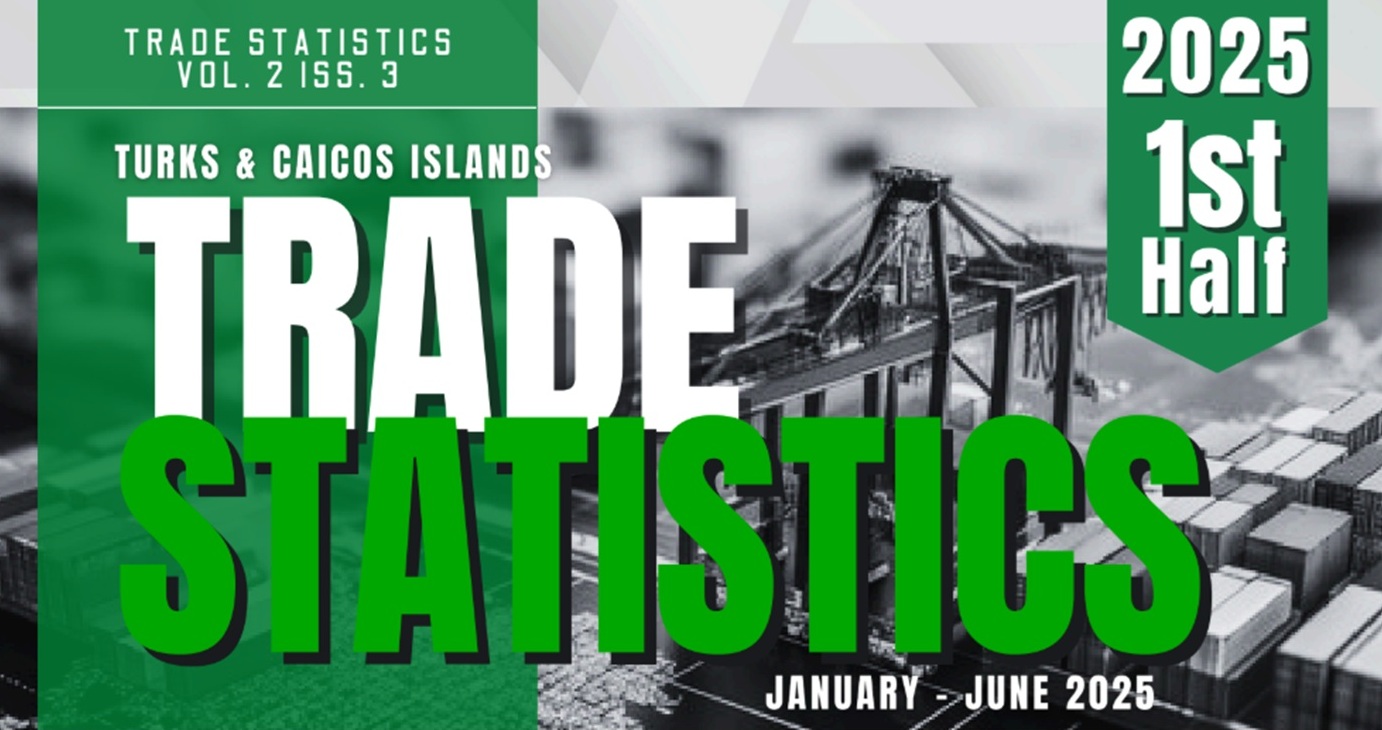
Turks and Caicos, September 6, 2025 – Turks and Caicos Islands’ import bill is telling a story far bigger than dollars and cents. The Statistics Authority’s half-year trade bulletin shows Panama exploding onto the scene as a major supplier, with shipments rising nearly 600 percent in the first half of 2025 compared to the same period last year.
On paper, it looks like TCI has suddenly fallen in love with Panamanian goods. In reality, it’s a snapshot of how the islands are being swept into the currents of global geopolitics.
Panama’s 582% Surge
Between January and June, imports from Panama leapt from just $166,000 in 2024 to $1.13 million this year — an eye-watering 582% increase. But Panama isn’t a new manufacturing powerhouse; it’s a logistics hub. Its Colón Free Trade Zone, one of the largest in the world, specializes in re-exporting Chinese and Latin American goods across the Caribbean.
For Turks and Caicos, that means everything from Hisense televisions and Lenovo laptops to Haier refrigerators is increasingly being routed through Panama instead of Miami or Nassau. Importers are finding cheaper prices, better bulk deals, and fewer tariff headaches as global trade tensions drive up U.S.–China costs.
“The trade war between Washington and Beijing looks remote from Grand Turk or Providenciales,” one local trader told Magnetic Media, “but it shows up right here on our docks. We’re buying the same Chinese products — they just happen to arrive with Panamanian paperwork.”
Italy’s Luxury Touch
While Panama grabbed the headlines with percentages, Italy’s exports to TCI also nearly tripled, climbing from $281,000 to $967,000 (+244%). The bulletin does not identify specific goods, but Italian exports globally are known for furniture, tiles, fashion, and leather products.
Poland’s Quiet Rise
Another surprise name in the trade tables is Poland, which saw exports to TCI almost double, from $3.86 million to $7.18 million (+86%). Poland is among the world’s leading furniture exporters, and its rise in TCI’s statistics underscores how European suppliers are increasingly part of the islands’ import mix.
South Caicos on the Move
The report also points to South Caicos as a key growth point. Imports through the South Caicos Customs Main Office jumped from $384,000 to $2.93 million (+663%), while the South Caicos Harbour Master nearly doubled from $3.6 million to $6.9 million (+94%). Officials link the surge to the island’s new Norman B. Saunders Sr. International Airport and the opening of the Salterra Resort & Spa, signaling how major developments can reshape local trade flows.
The U.S. Still Dominates — Especially Food For all the shifts, one fact remains unchanged: the United States is TCI’s biggest supplier, accounting for $443.5 million in imports in the first half of 2025, up 19 percent from the year before. A large chunk of that increase came from food and live animals, which rose 18 percent overall to $103.9 million.
Supermarkets and resorts are stocked with familiar American staples — from Kraft Heinz ketchup and PepsiCo beverages to Tyson Foods’ frozen meats. As the population grows and the tourism sector drives up demand, the U.S. remains the breadbasket and supermarket for the islands.
A Changing Trade Map
Add it all together and the picture is striking. The Turks and Caicos Islands imported $479.5 million worth of goods in the first six months of 2025, up 14.7 percent year-on-year. But behind the topline growth is a reshaped trade map:
- Panama’s re-exports stand in for Chinese goods once routed through the U.S.
- Italy and Poland supply higher-end goods, likely for the growing tourism and construction sectors.
- South Caicos is now a visible player in national trade flows.
For a small economy, these aren’t just accounting quirks — they’re signals of how global forces, local projects, and shifting supply chains intersect. A trade war between giants half a world away is rewriting who stamps the paperwork on the islands’ televisions, sofas, and ketchup bottles.
And as South Caicos’ surge proves, a single development project can swing millions of dollars in international trade.
FYI — The Numbers at a Glance
- Total imports (Jan–Jun 2025): $479.5M (+14.7%)
- Panama: $1.13M (+582%)
- Italy: $967K (+244%)
- Poland: $7.18M (+86%)
- U.S.: $443.5M (+19%)
For Turks and Caicos, the trade bulletin isn’t just about numbers. It’s about where the islands fit in a world of shifting power, supply chains, and resort-driven transformation. And for 2025, Panama, Italy, Poland — and South Caicos — are the names to watch.





-

 News6 days ago
CARICOM – A Regional Club With Benefits; Turks & Caicos Wants In
-
 Uncategorized1 week ago
WHERE ARE THE LOCAL ARTISTS?
-

 Health1 week ago
Gut Health Linked to Lower Colorectal Cancer Risk According to Cleveland Clinic Dietitian
-
 Bahamas News1 week ago
Bahamas Warns Travellers as UN says Middle East Conflict May No Longer Be Contained
-
 News1 week ago
NATIONAL SECURITY SHIFT: PREMIER CONFIRMS REGIMENT EXPANSION
-
 News1 week ago
Statistics Authority Highlights Trade Data as Turks & Caicos Records $227M in Imports for Q4 2025
-
 News1 week ago
South Dock Expansion Milestone as UK Audit Highlights Importance of TCI Port Security
-
 Caribbean News1 week ago
Fighting the fungus foe of the beloved banana