TCI News
TCIG cuts Economic Stimulus by over $10 million while 2,000 people wait for cash


#TurksandCaicosIslands – December 22, 2020 – The pace and procedure of financial support to thousands of Turks and Caicos Islands people amidst the catastrophic Covid-19 pandemic has attracted some commendation but mainly it has elicited stinging criticism.
Government last week rushed through the House of Assembly a measure to grant a Christmas loan of up to one month’s salary to Civil Servants, while casually accepting that as many as 2,000 people who applied for stimulus cash were still waiting the promised funds.
The first stimulus payouts began in April, yet of the 9,000 people who had applied and the 7,165 applications which were approved, there remains nearly 400 people, eight months later, who have yet to be paid.

The fact is revealed in the 61-page Appropriations Committee Report which guided debate on the recent Budget Supplementary.
Families across the country have been devastated by the pandemic’s walloping effect on travel and tourism. In some households, both mother and father lost income or experienced a drastic reduction in salary.
Public sector salaries were uninterrupted during the pandemic, yet the urgency of the government was clear and the Christmas loan for its workers was fast-tracked.
The same sense of resoluteness was less tangible in relation to the thousands who have been pining for their stimulus monies.
Taxi and public license drivers still wait. In a press conference, it was announced there is a $500,000 allotment to this category of workers. However, until they work out an arrangement with the National Insurance Board, the free funding is frozen.

From the report: ‘Taxi Drivers Stimulus – The Taxi Drivers stimulus is still outstanding as the Ministry of Finance is awaiting confirmation from the Taxi Drivers that they had entered into arrangements with NIB’
In the second round of Economic Stimulus, the TCI Government offered $600 to Turk and Caicos citizens who were adversely impacted when the national lockdown and subsequent raft of restrictions were imposed from March to July.
The deadline for applications was December 9 and 3,129 Belongers applied for the financial help. The Report did not state who, if anyone, had received the payout.
The Appropriations Committee Report informed 90 percent of the 900 Business applications approved are paid; however it means 90 local companies, months later, are still hanging on in hope for the critical cash.
Also striking in the report is the stated reduction of $5.5 million in funding to the Economic Stimulus plan. However, the same report informed that the Committee approved $19.3 million as the new budgeted sum for the stimulus. This agreed figure falls nearly $12 million below the previously budgeted $25 million dollars for financial support to workers amidst the pandemic.
Meanwhile, the country is apparently swimming in cash due to, what can only be labelled, a wise savings strategy firmly guided by British oversight of the once fiscally beleaguered territory.
In the Report presented in the House of Assembly on December 16, 2020 it is outlined that cumulatively, TCIG has $155 million dollars set aside.
The breakdown is: the National Forfeiture Fund: $6.4 million; National Wealth Fund: $25.8 million; the Development Fund: $26 million and Unrestricted Cash: $96.8 million.
While some countries committed to monthly payments up to a specific number of weeks of stimulus money to people who suffered lost wages as a result of the unexpected, unprecedented impact of the coronavirus pandemic, the Turks and Caicos Islands Government opted for a one-time only payment approach.











by Deandrea Hamilton | Editor
PROVIDENCIALES, TCI — In a country where government press conferences are virtually non-existent, ministers are often difficult for journalists to access and regular broadcast television news has disappeared, TCI Innovation, Technology and Energy Minister E. Jay Saunders has challenged Caribbean media to become “impossible to ignore.”
Speaking at the Caribbean Broadcasting Union gathering, Saunders argued that the Caribbean does not have a relevance problem but a “discoverability and positioning problem.”
Discoverability is precisely the issue in Saunders’ home country. Even Government’s own attempts at video news broadcasting have struggled against the realities of consistently producing a daily, weekly or even monthly newscast.
The difficulties confronting TCI media extend well beyond algorithms: limited advertising revenue, underfunding, shortages of trained professionals and insufficient human capacity leave newsrooms struggling for both staff and stamina.
Then there is the reality of operating in one of the region’s smallest societies. Politicians, journalists, advertisers, businesses and the subjects of stories often exist within the same tight economic and social circles. A controversial report that might create a ripple elsewhere can produce a tsunami in TCI, intensifying concerns among journalists about commercial and professional victimisation.
Saunders believes AI can help.
He urged Caribbean media to use the technology to transform one original story into television, radio, web, podcast, social and translated content without multiplying newsroom workload.
He also wants regional journalism structured so AI systems can find, understand and trust Caribbean sources, moving media beyond traditional SEO into Answer Engine Optimisation.
His ultimate message was emphatic: “Use AI not to make Caribbean media more artificial — but to make Caribbean voices more visible.”
For Turks and Caicos media, however, becoming visible may require more than technology. It requires an environment in which journalism can survive.
That last sentence is where I think we land the plane. It acknowledges that EJ actually has some us
Bahamas News
Bahama Brass Band Invitation Sparks Heritage Debate Ahead of TCI Constitutional Holiday


Turks and Caicos, August 20, 2026 – The planned participation of the Bahama Brass Band in the Turks and Caicos Islands’ inaugural Constitutional Holiday celebrations on August 30 has sparked public debate over culture, heritage and the historical contributions of Turks and Caicos Islanders abroad.
Organizers defended the invitation, saying the band’s inclusion is intended to highlight the deep historical ties between the two countries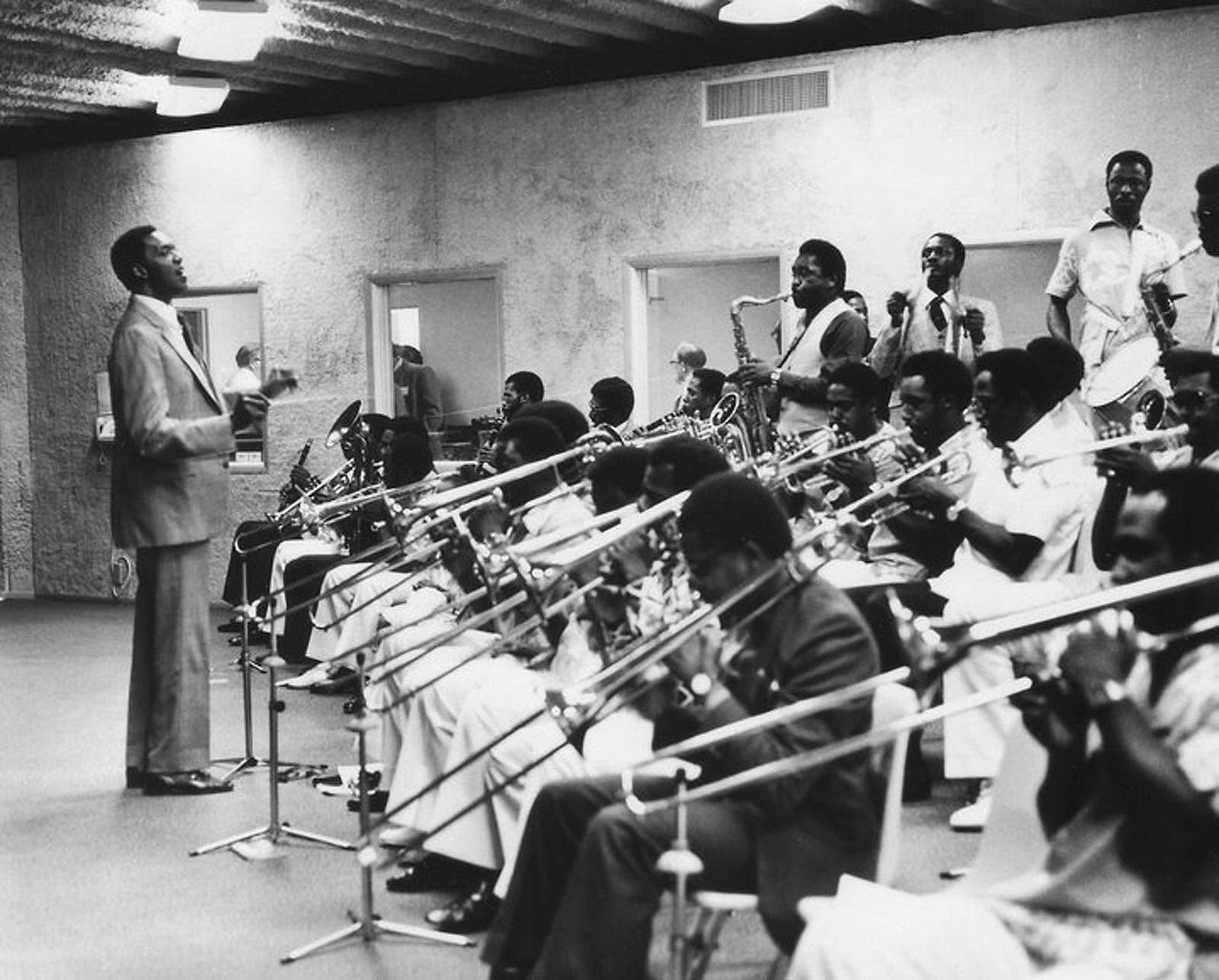 and honor Turks and Caicos men who helped establish and develop the institution in Grand Bahama.
According to the organizers, the Bahama Brass Band began in 1955 in Pine Ridge, Freeport, with Turks and Caicos Islanders, including the late Deacon Reuben Hall Sr. of Middle Caicos and Jenkins Williams and Mervin Hendfield of North Caicos, among those who helped build its foundation. The band eventually grew to more than 50 men.
The organizers also pointed to the participation of Turks and Caicos men in The Bahamas’ Independence celebrations on July 10, 1973, arguing that their contributions became part of Bahamian history while maintaining strong connections to their homeland.
Supporters say bringing the band home represents an opportunity to honor those pioneers, showcase their regional influence and expose younger generations to an important part of Turks and Caicos history.
However, concerns raised publicly described the invitation as potentially disrespectful to local culture and heritage. Organizers acknowledged those concerns, apologizing to anyone who felt overlooked or offended, while maintaining that no disrespect was intended.
The committee said the event should ultimately unite rather than divide, presenting the band’s history as evidence of the reach and resilience of Turks and Caicos heritage.
PHOTO CREDIT: Bahamas Brass Band
News
BermudAir Launches New York Area’s First Nonstop Service to South Caicos, Now Just a 3.5 Hour Flight from Newark

Twice-Weekly Nonstop Flights Begin December 20 with Fares from $347 One Way, Creating Direct Access to Salterra Resort & Spa
– New Route Expands BermudAir’s Winter Turks & Caicos Network –
[New York, NY – August 20, 2026] – BermudAir, the leading premium leisure carrier to Bermuda and the Caribbean, today announced it will introduce nonstop flights to South Caicos from Newark this winter. The route places one of the Caribbean’s most secluded island destinations just 3.5 hours from the New York area for the first time.
The new service starts on December 20, 2026, operating on Sundays and Thursdays, and will be the only nonstop service to the destination from the New York area. This seasonal service will operate through April 25, 2027. Fares start at $347 one way ($773 roundtrip) and go on sale today.
The new South Caicos route creates gives travelers two distinct luxury resort options, with direct access to Salterra, A Luxury Collection Resort & Spa, recently named the No. 1 resort in Turks and Caicos by Condé Nast Traveler.
Set across 85 beachfront acres with a 3,000-foot private white-sand beach, Salterra brings a full luxury resort experience to an island still defined by its historic salinas, pristine waters, bonefishing flats and uninhabited cays. Upon landing at South Caicos International Airport (XSC), guests are approximately 10 minutes from the resort.
While flights go on sale today, the airline’s BermudAir Holidays vacation-packaging division will offer curated travel to South Caicos from next month, featuring flights, hotels and authentic island experiences, with bundled discounts and value-added perks, making it even easier to explore the destination.
Previously BermudAir announced seven new routes to Providenciales in Turks and Caicos, from Newark (EWR), Boston (BOS), Baltimore-Washington (BWI), Raleigh-Durham (RDU), Fort Lauderdale (FLL), St Petersburg/Tampa (PIE) and Toronto (YYZ) which will all start in December except for Fort Lauderdale which begins October 26.
Expanded Winter Season
- To South Caicos:
- Twice-weekly nonstop from Newark (Sundays and Thursdays) from December 20 through April 25, 2027.
- To Turks and Caicos:
- Weekly nonstop from Newark (Saturdays) and one weekly direct service (Thursdays) from December 19 through April 29, 2027;
- Weekly nonstop service from Boston (Saturdays), from December 19 through May 1, 2027;
- Weekly nonstop service from Baltimore-Washington (Thursdays), from December 24 through April 29, 2027;
- Twice-weekly nonstop service from Raleigh-Durham (Thursdays and Sundays), from December 20 through May 2, 2027;
- Thrice-weekly service from Fort Lauderdale (Mondays, Wednesdays and Fridays), from October 26 through May 3, 2027;
- Twice-weekly nonstop service from St Petersburg/Tampa (Mondays and Thursdays), from December 21 through May 3, 2027; and
- Weekly nonstop service from Toronto (Saturdays), from December 19 through May 1, 2027.
“We’re thrilled to continue expanding our Caribbean network as the premium leisure carrier from North America,” said Adam Scott, Founder and CEO of BermudAir. “Now New Yorkers can fly nonstop to two distinct sides of the Turks and Caicos Islands — Providenciales and the secluded island of South Caicos, home to the exquisite Salterra and Sailrock South Caicos resorts.”
The airline consistently earns Net Promoter Scores of 70+, one of the highest ratings in the airline industry. All flights will be operated on comfortable Embraer E190 aircraft, offering passengers the airline’s signature warm service and authentic island hospitality.
“South Caicos has always felt worlds away, and that is part of its magic,” said Michael Tibbetts, Founder and CEO of Salterra. “Beginning this winter, guests can fly nonstop from Newark in 3.5 hours, land at one of the newest international airports in the region and be at Salterra minutes later. This route makes a long weekend escape and an extended stay to one of the Caribbean’s most unspoiled islands remarkably easy, without changing the sense of discovery that makes South Caicos so special.”
For more information or to book flights, visit www.flybermudair.com. Salterra will offer dedicated stay packages timed to BermudAir’s Thursday and Sunday nonstop service. To book a stay at Salterra, A Luxury Collection Resort & Spa, visit www.salterra.com