
Caribbean News
InterHealth Canada – TCI Hospital Accredited to offer Medical Internships

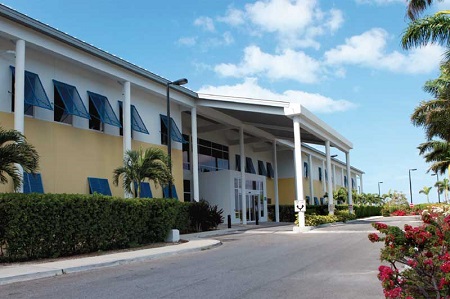
#Providenciales, June 20, 2019 – Turks and Caicos Islands – InterHealth Canada – Turks and Caicos Islands Hospital has been granted accreditation status from the University of the West Indies Caribbean Association of Medical Councils (C.A.M.C) to offer medical internships. The Chairman of the UWI Accreditation Committee, Professor Trevor McCartney along with a team of other industry experts conducted an onsite assessment in February 2019 following an application by the private healthcare management company.

Medical graduates are required to successfully complete a one-year rotation in the four major disciplines of Internal Medicine, General Surgery, Obstetrics and Gynaecology and Paediatrics. These medical interns must commit three months to each discipline to become eligible for full registration in their home state, and meet the clinical and academic requirements for registration in all CARICOM states.
Medical interns are physicians who have successfully completed all of the requirements to receive provisional registration and practice licenses. Medical interns receive training for a period of 4 to 5 years prior to graduating as doctors. The advancement of the internship program involves a partnership between InterHealth Canada (IHC) and the Turks and Caicos Islands Government (TCIG). While the UWI accreditation grants the hospital the option to commence rotations as early as July 1st, 2019, additional steps are required.
The next step involves the submission of an application to become a locally registered teaching hospital under the Ministry of Education and the presentation of a business case to TCI Government via the Change Procedure outlined in the Project Agreement. This proposal will seek funds to support four new medical intern positions and four registrar level positions. A multi-stakeholder meeting involving local entities is planned to discuss the implementation process.
Commenting on the accreditation, Dean of Medical Sciences at the UWI Mona Campus, Dr Tomlin Paul stated: “The Faculty of Medical Sciences, UWI Mona, is delighted to have news of a successful accreditation of the Turks & Caicos Islands (TCI) Hospital. This augurs well for the continued education of our Medical Graduates from the TCI. We look forward to working with the Hospital’s Administration in the continued development of Human Resources for the Caribbean Health Sector.”
Chief Executive Officer at IHC-TCI Hospital, Daniel Carriere stated: “Our successful accreditation as a teaching facility via the University of West Indies denotes a major milestone for the TCI Hospital. The fact that we will host medical interns will dramatically enhance our ability to continuously improve service delivery for our patients. The associated expectations will also provide a platform to develop other teaching programs, greater flexibility in our staffing requirements within the medical services and decrease our reliance on locum appointments. In addition, the teaching designation will further support the recruitment and retention of highly skilled staff.”
Chief of Medical Services at IHC-TCI Hospital, Dr Denise Braithwaite-Tennant stated: “The introduction of medical interns is expected to increase our physician-patient ratios, accelerate learning, drive innovation, improve health outcomes, enhance the patient experience, quality of care and patient safety. Consultants will supervise the medical interns’ performance and guide their professional development. Our objective is to transform the long-standing single consultant physician model overtime to a multi-level skill mix of consultant, registrar and medical interns. Many Turks and Caicos Islanders have expressed interest in returning home for their medical internships. The accreditation is the first step towards eventually accommodating these requests. Patient safety is our number one priority and building local human capacity remains a key strategic imperative.”
Minister of Health, Agriculture, Sports and Human Services, Honorable Edwin Astwood stated: “Congratulations to the Turks and Caicos Islands Hospital, InterHealth Canada for its successful application to become a facility accredited by the University of the West Indies to deliver medical internship programs. The Ministry of Health, Agriculture, Sports and Human Services worked collaboratively with Dr Braithwaite-Tennant and the hospital team to show case our capacity to facilitate knowledge sharing and transfer. Academic medicine challenges physicians to work as multi-disciplinary teams and promote a comprehensive and multifaceted look at a patient’s condition and treatment plan, ultimately helping the hospital team provide the best care possible. The increased physician-patient ratios and the change in the physician model by creating a tiered structure seeks to foster an environment of sustainable learning and health system improvement.”

Minister of Education, Youth, Culture, Social and Library Services, Honorable Karen Malcolm stated: “We are excited and proud of the work IHC has done in collaboration with the Ministry of Health and Department of Education to obtain this accreditation status as a teaching hospital. This milestone achievement means that our medical students can now do their internship here within the Turks and Caicos Islands. We will continue to work with IHC and all stakeholders to make this vision a reality.”
TCI Government Health Registrar, Dr Derrick Aarons stated: “The achievement of accreditation for the medical internship programme by InterHealth Canada with the support of the Turks and Caicos Islands Government (TCIG) is to be widely acclaimed! This matter is also timely as the TCIG is currently implementing three Councils to regulate the health professions within the country. The Medicine and Dentistry Professions Council will provide registration for suitably qualified medical interns to work under the direction and supervision of a specialist in the related field of medicine. This process should auger well for improved health care delivery to the citizens and residents of the Turks and Caicos Islands.”
Release: InterHealth Canada

By Deandrea Hamilton | Editor
September 28, 2026 – Wall Street initially flinched at the $3-billion handshake. But in a matter of days, it was smoother sailing.
Perhaps the bigger Caribbean business story is not what Sandals Resorts International is getting from the deal. It is who is writing the cheque — and what that says about what Gordon “Butch” Stewart built.
As reports of Royal Caribbean Group’s Sandals deal circulated Tuesday, RCL shares plunged 6.14 percent from Monday’s $250.25 close to $234.89, on sharply elevated trading.
When the agreement became official Wednesday — approximately $3 billion for a 50 percent equity interest in Sandals and Beaches Resorts — shares slipped another 1.95 percent to $230.30 and touched $222.22 intraday. Investors were digesting both the size of the investment and committed debt financing secured through Morgan Stanley.
But by Thursday, RCL rebounded 3.77 percent, with shares continuing their recovery Friday to finish the week around $243. Analysts were also looking ahead: JPMorgan reportedly raised its RCL price target from $345 to $394, while Citi placed the company on a 90-day positive catalyst watch.
And just who is RCL?
Royal Caribbean Group is a global vacation giant, publicly traded on the New York Stock Exchange with a market value of roughly $65 billion. Its portfolio includes Royal Caribbean International, Celebrity Cruises and Silversea, alongside private destinations and an expanding vacation platform.
So when a company of that scale commits $3 billion for only half of Sandals and Beaches Resorts, the transaction puts a striking financial marker on one of the Caribbean’s greatest home-grown hospitality success stories.
The deal, expected to close in early 2027, creates a 50-50 partnership with the Stewart family and takes Royal Caribbean deeper into the all-inclusive resort business.
Butch Stewart started Sandals in Jamaica in 1981 believing a Caribbean company could compete with the world’s best.
Forty-five years later, one of the world’s biggest vacation companies is prepared to pay $3 billion just to own half of what he built.
Now that’s the handshake that does more than seal a deal — it cements a legacy.
Caribbean News
Royal Caribbean Group and Sandals Resorts Announce Landmark Partnership to Accelerate Their Leading Vacation Experiences
Royal Caribbean Group Investment to Advance Sandals and Beaches’ Growth and Broaden the Group’s Vacation Portfolio
Montego Bay, Jamaica and Miami, September 24, 2026 – Royal Caribbean Group (NYSE: RCL) and Sandals Resorts today announced the signing of an agreement to form a partnership in the all-inclusive resort space with a 50% investment from Royal Caribbean Group. Building on Sandals and Beaches Resorts’ more than four decades of leadership in Caribbean hospitality, the joint venture will create new opportunities for continued resort growth while broadening the experiences across Royal Caribbean Group’s vacation platform.
The partnership brings together two of the travel industry’s most celebrated vacation companies, pairing Sandals and Beaches’ all-inclusive resort expertise with Royal Caribbean Group’s vacation platform, including industry-leading brands – Royal Caribbean, Celebrity Cruises and Silversea – a portfolio of private destinations, new river cruising offering, and an industry-first loyalty program. United in a shared history in the Caribbean and connected by a love for their communities, the companies will offer travelers an unparalleled collection of cruise, private destination and resort experiences, serving guests across more vacation occasions and establishing their undisputed leadership in Caribbean vacations.
The joint venture expands Royal Caribbean Group into an adjacent vacation category, growing its participation in the approximately $2 trillion global vacation market, and meets the growing global demand for Sandals and Beaches Resorts by accelerating their expansion. The partnership will include Sandals and Beaches’ collection of premier all-inclusive properties across the Caribbean, and the companies will explore opportunities to broaden distribution, deepen guest engagement, and make it easier for travelers to discover vacation experiences offered across both portfolios.
“For nearly 60 years, we’ve reimagined what a vacation can be, constantly expanding the ways we inspire our guests to explore, connect and create lifelong memories,” said Jason Liberty, Chairman and CEO, Royal Caribbean Group. “We have been building a vacation platform that brings joy to millions of people around the world and creates meaningful relationships that last with our guests. Our partnership with Sandals and Beaches Resorts is an important next step on that journey – bringing together two iconic leading vacation companies to further strengthen and grow one of the most admired resort portfolios in the world. The Stewart family has created powerful and beloved brands, and we are honored to build on that legacy. Together, we see tremendous opportunity to expand the reach of Sandals and Beaches Resorts and continue turning the vacation of a lifetime into a lifetime of vacations.”
“My father, Gordon ‘Butch’ Stewart, founded Sandals Resorts with the belief that a company built in the Caribbean could stand on the world stage alongside the most respected names in hospitality. Today is proof of how far that vision can go,” said Adam Stewart, Executive Chairman of Sandals Resorts and Beaches Resorts. “This partnership is the natural next step in building on that conviction. It gives us the ability to grow faster with a partner that shares our values of exceptional hospitality, long-term investment, and the power of enduring brands. Together, we will introduce more guests to Sandals and Beaches Resorts while creating even more extraordinary experiences for those who have made our resorts part of their lives for decades.” Stewart added, “As we continue to grow, we will remain true to what has always defined us: delivering authentic vacations that exceed expectations while creating opportunities for our team members, travel advisor partners and the communities we call home. The future has never been brighter, and I know this moment would make my father incredibly proud.”
The joint venture will be governed by a board under the shared leadership of Stewart and Liberty. Stewart will maintain a leadership role in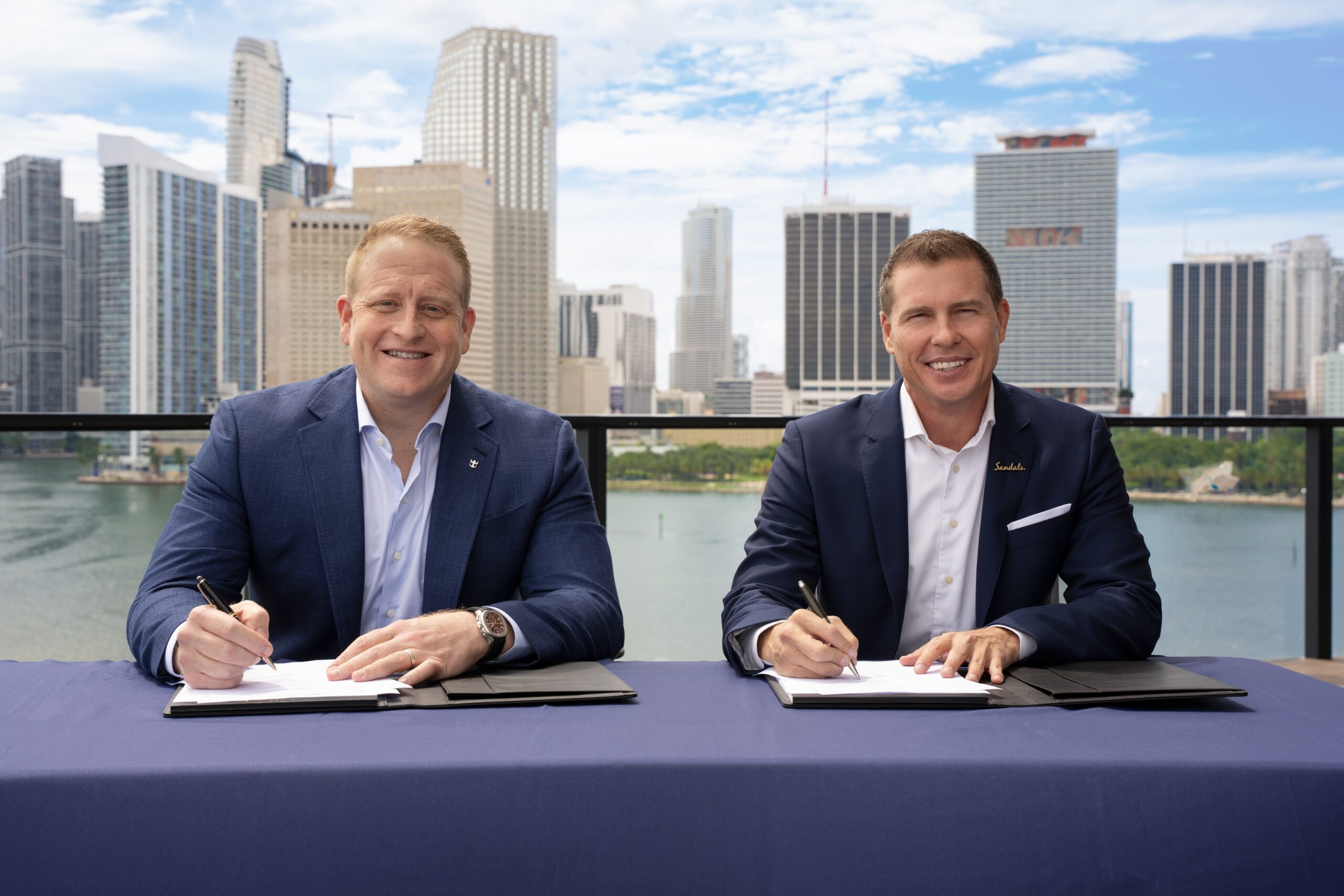 guiding the company’s long-term strategic growth as Executive Chairman of Sandals and Beaches Resorts. Existing reservations, loyalty programs, resort operations and cruise operations will continue as usual, with the partnership bringing additional resources to support future opportunities.
Under the terms of the agreement, Royal Caribbean Group will acquire a 50% equity interest in Sandals and Beaches Resorts for approximately $3 billion, representing a forward EBITDA multiple of approximately 10x. Royal Caribbean Group has secured committed debt financing from Morgan Stanley to fund the investment. The transaction is expected to close in early 2027, subject to customary approvals and closing conditions, and is expected to be accretive to earnings next year.
BofA Securities and PJT Partners acted as financial advisors, and Latham & Watkins and Jones Day acted as legal advisors to the Sandals Group. Perella Weinberg Partners and Morgan Stanley acted as financial advisors and Kirkland & Ellis LLP acted as legal advisor to Royal Caribbean Group.
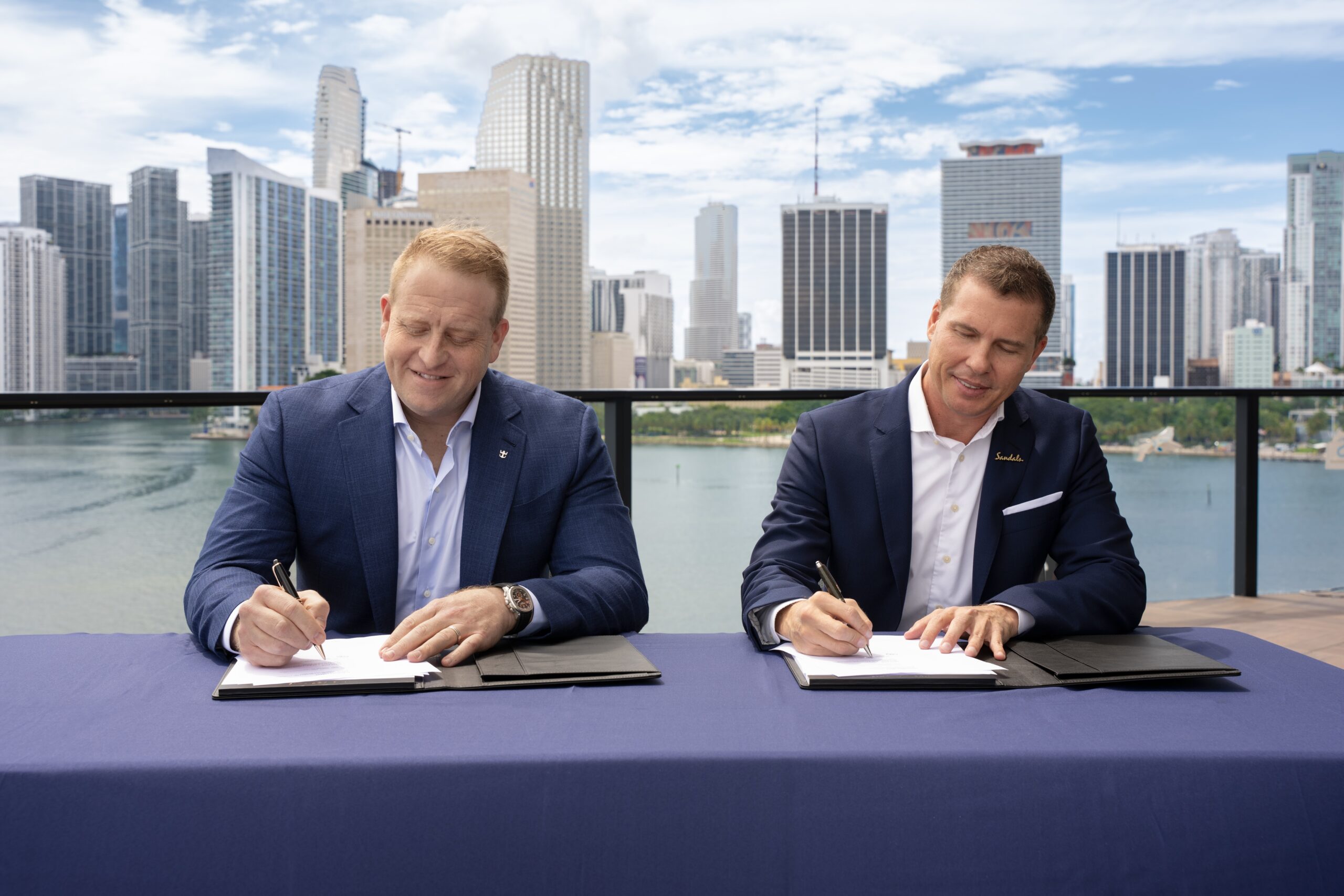
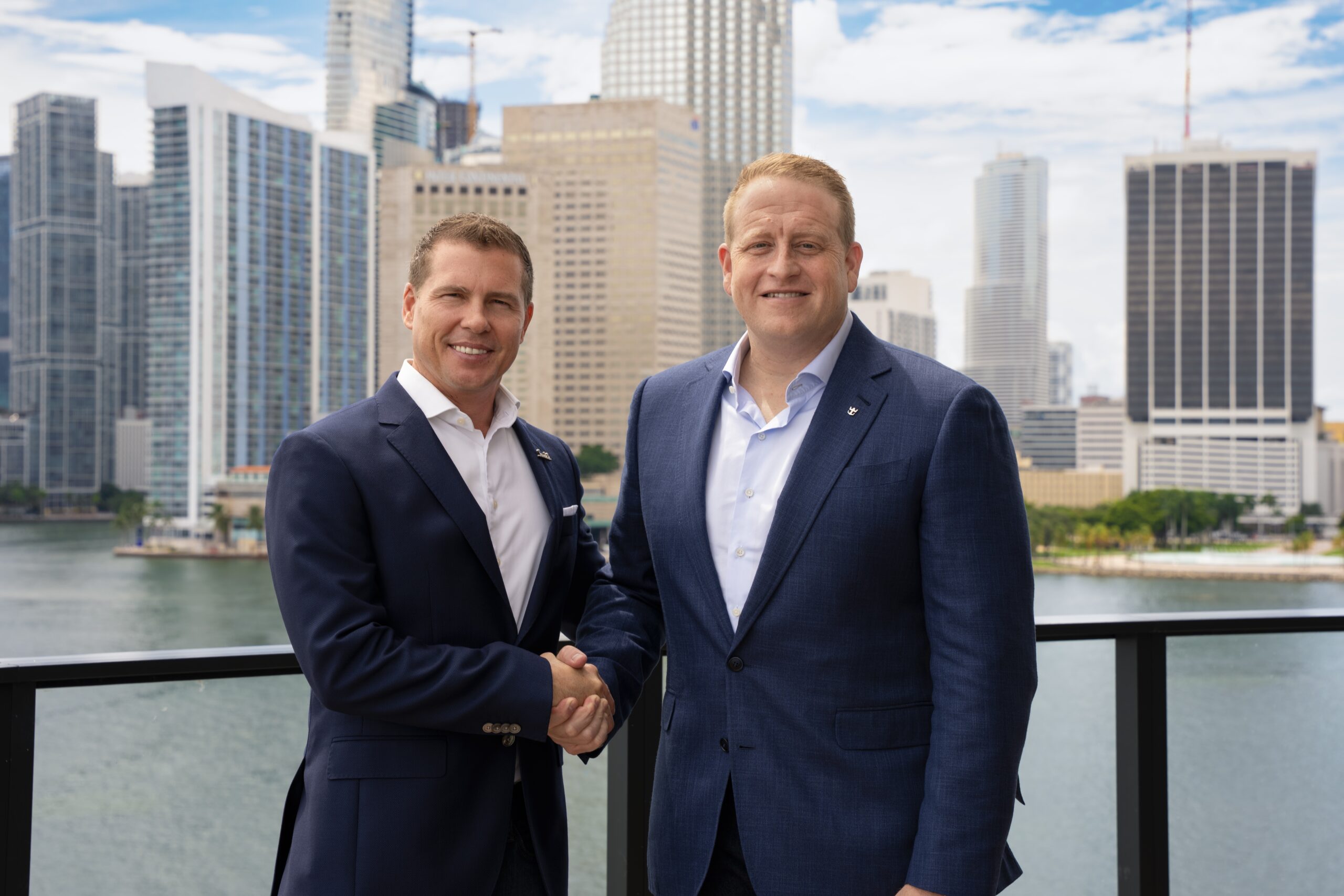
PHOTO CAPTION: Jason Liberty, Chairman and CEO of Royal Caribbean Group, and Adam Stewart, Executive Chairman of Sandals Resorts, mark the signing of an agreement to form a landmark partnership that expands Royal Caribbean Group into the all-inclusive resort space and supports the future growth of Sandals and Beaches Resorts. The signing took place at Royal Caribbean Group’s new headquarters in Miami, with the city’s skyline in the background.
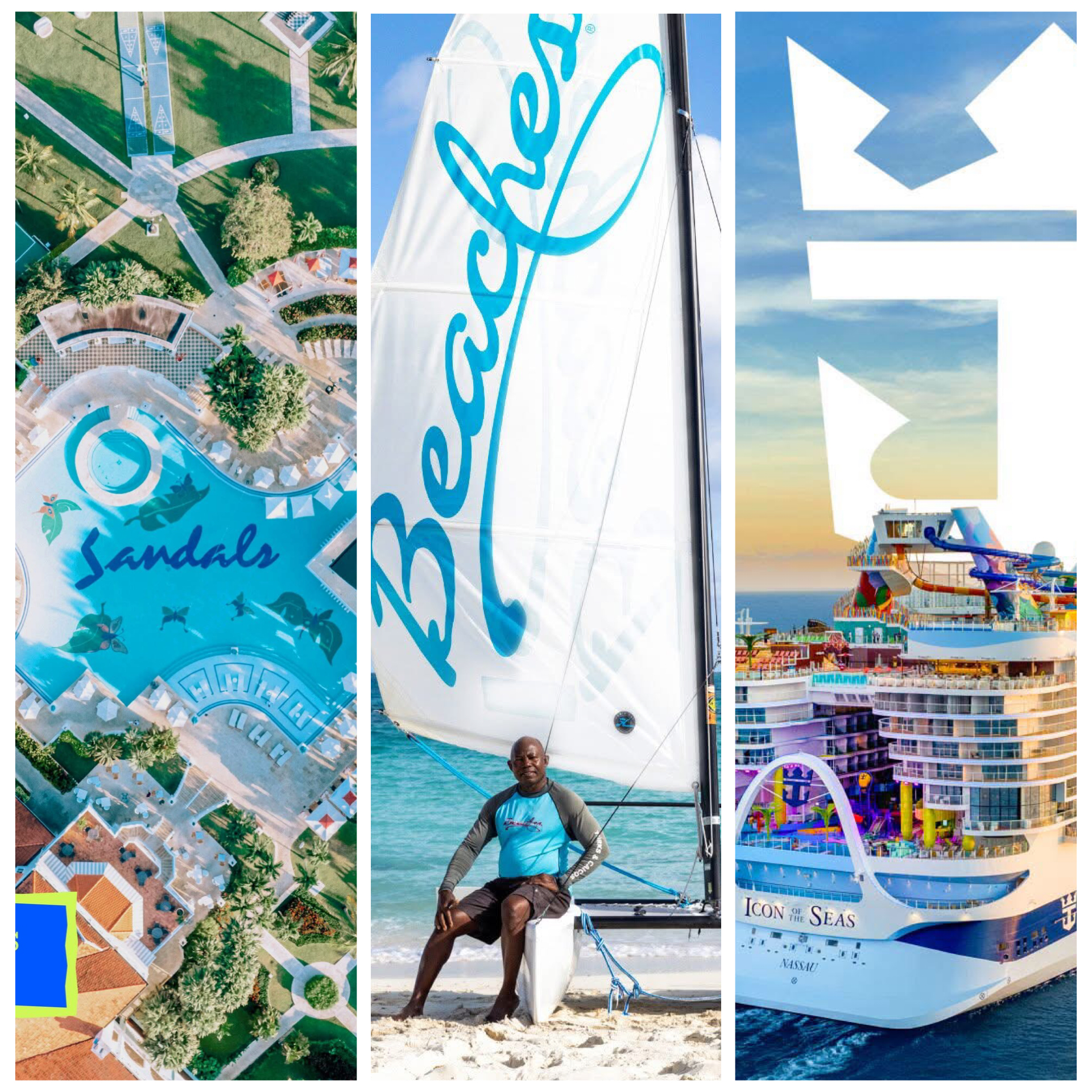
The Caribbean tourism deal first reported as a possibility on Tuesday is now a signed agreement. Royal Caribbean Group plans to pay approximately US$3 billion for a 50% stake in Sandals and Beaches Resorts, putting the value of the business at about US$6 billion. The purchase is expected to close in early 2027, subject to approvals.
Founded in Jamaica by the late Gordon “Butch” Stewart in 1981, the resort business has a presence across nine Caribbean destinations, including Jamaica, The Bahamas and Turks and Caicos. Sandals has described its workforce as nearly 20,000 people, most of them Caribbean nationals.
“My father, Gordon ‘Butch’ Stewart, founded Sandals Resorts with the belief that a company built in the Caribbean could stand on the world stage alongside the most respected names in hospitality,” said Adam Stewart in the announcement carried by PR Newswire. He will remain executive chairman, while the Stewart family retains a stake. The companies say existing reservations and resort operations will continue as usual.





-
 Bahamas News1 week ago
The Bahamas Reaffirms Support for Ukraine at International Conference in Toronto
-
 News1 week ago
Invest Turks and Caicos Islands Highlights Investment Growth and Workforce Opportunity at 5th Annual General Meeting
-
 Bahamas News6 days ago
Walk for the Cure Every Saturday This October
-
 News5 days ago
Invest Turks and Caicos Officially Opened Caya Hico Collective, Grand Turk MSME Storefront
-
 Bahamas News1 week ago
‘Even Nygard didn’t try that’ – Supreme Court hears massive 400-foot seawall was added to Rosewod Exuma behind the public’s back
-

 Health6 days ago
TCI Hospital Marks Breast Cancer Awareness Month 2026 with “Know. Check. Act. Support.” Campaign
-

 Health1 week ago
What To Eat and Drink When You Have the Flu
-
 News1 week ago
Record-breaking eye care mission transforms vision for thousands in Providenciales