
Bahamas News
Blacklisting and regional political unrest concerns, as Bahamas goes to 30th CARICOM Inter-Sessional

#Nassau, February 25, 2019 – Bahamas – Prime Minister the Most Hon. Dr. Hubert A. Minnis will lead a delegation to the 30th Inter-Sessional Meeting of the Conference of Heads of Government of the Caribbean Community (CARICOM), in St Kitts, February 26-27, 2019.
Heads are expected to engage in several side meetings to advance diplomacy and bilateral agreements among Member States. High on the agenda for The Bahamas are the recent Blacklisting by the European Union and the political unrests in Haiti and Venezuela. Senior Policy Advisor to the Prime Minister, Joshua Sears discussed the importance of the Meeting, which takes place just months before Regular Meeting of the Conference of Heads of Government of the Caribbean Community.
Inter-Sessional meetings came about after Heads discovered that many items on the Agenda for the Regular Meeting could not be adequately dealt with. Hence, a meeting in between is held to address any issues which might require urgent attention.
“But there are also special meetings by Heads which are called to deal with specific matters. For example, most recently Heads met to deal with the situation in Venezuela, and after 9/11 Heads met in special session to deal with that specific issue and the economic implications for Caribbean countries,” Mr. Sears said.

“So Inter-Sessional will give the Prime Minister and other Heads of Government a chance to assess some critical issues.”
According to Mr. Sears, the Intersessional Meeting covers a full slate of issues over a two-day period.
“Quite a lot can be done in two days. The Agenda has been set and streamlined to have focused discussions. There will be some long hours but that’s the tradition and we have no concerns about our ability to complete the Agenda,” he said.
Among the Agenda items are: the CARICOM Single Market and Economy, Security issues, Blacklisting and Border Issues.
Just recently The Bahamas, and several other Caribbean countries, was placed on a European Union Blacklist, which requires additional scrutiny regarding financial transactions.
“For many years CARICOM has been advocating for a fair process and we will see now that that voice has resonated with developed countries,” Mr. Sears said.
The United States also made its statement on the EU’s process and it is anticipated that CARICOM Heads of Government will also renew their commitment to working together as a group to call for a fairer process. “The entire CARICOM region is adversely impacted by these regulations,” Mr. Sears said, adding that, “The good thing about it is through the Financial Action Task Force countries agreed to recommendations to improve their financial sectors and by each country taking the necessary steps… we follow each other and adopt the best practices, Heads share their views, Central Banks Governors meet and they share views and they all work towards making these recommendations more relevant to address the financial concerns of the international financial community.”
Acknowledging that these are “vexing problems” for The Bahamas and CARICOM as a whole, Mr. Sears said that the developing countries within the EU feel that these centres are causing them to lose tax revenues. “Personally, I don’t think that’s a justified conclusion, for them to take the steps they are taking particularly when countries have demonstrated their commitments to improving legislative framework and policy framework. I think they are misguided in that respect,” he said.
Heads are to also view updates on applications for Associate Membership from Aruba, Curacao and Saint Maarten.
“Heads agreed some time ago for these countries to be considered for membership as these countries already have relations with CARICOM so its basically, in essence, a formality,” Mr Sears said.
Regarding the CARICOM Single Market and Economy, although The Bahamas joined the Caribbean Commiunity (CARICOM) on July 4, 1983, it remains out of the CSME which is an enlarged market offering a single economic space for the production of competitive goods and services.
“The Bahamas is not frowned upon for not joining the CSME, we make decisions based on our national interests and we certainly have been a part of CARICOM. We have attended Heads of Government meetings and there are lots of areas in which we participate like the Community Council of Ministers, the Council of Foreign and Community Relations, the organization dealing with health and social development and many other areas of collaboration within the Caribbean Community. So from our point of view there is not a concern in terms of about being isolated from or being negatively impacted,” Mr. Sears said.
Regarding border issues, he pointed out that a concern for The Bahamas and other member-states is the political crisis in Venezuela, which has impacted several Member States in a direct way.
“Guyana has been bearing the brunt of the humanitarian crisis in terms of people crossing the border. Trinidad has been impacted and there have been a few incidents reported. This has been on the world stage,” Mr. Sears said, “Also the situation in Haiti has been one of concern for CARICOM and the president of Haiti (is expected) to brief CARICOM. Of course, the impact on us in terms of the illegal migration is one of critical concern.”

Heads will also have chance to dialogue with the President of Estonia, Her Excellency Kersti Kaljulaid. It is customary that one special guest is allowed at these meetings.
The Prime Minister’s Delegation will include the Hon. Darren Henfield, Minister of Foreign Affairs, Mr. Sears, Viana Gardiner, Chief Operating Officer, Prime Minister’s Delivery Unit; Erica Wells-Cox, Director of Communications Office of the Prime Minister and other government officials.
On the margins of the Inter-Sessional, there’s the 10th Special Meeting of the Community Council of Ministers on February 25, which will be attended by Ministers of Foreign Affairs.
The 30th Inter-Sessional Meeting of the Conference of Heads of Government of the Caribbean Community just precedes the 40th Regular Meeting of the CARICOM Heads of Government Conference scheduled for July in Saint Lucia.
“It’s critical for the Bahamian public to appreciate and understand that CARICOM is an organization which has a strong voice in international relations. We have a strong voice on issues. Sometimes the Bahamian people don’t appreciate the need and the necessity for governments to participate in these organizations.
“The world is such a small place and we all try to develop best practices and standards and there are policy issues which impact education and the legal framework which calls for collaboration between Governments. When we go to the OAS, or the Commonwealth of Nations or the United Nations, CARICOM’s voice is one, which is very important too. We attend these meetings as part of that whole process,” Mr. Sears said.
By Lindsay Thompson
Release: BIS


The Bahamas, August 27, 2026 – The Royal Bahamas Police Force wishes to inform members of the public that several individuals are scheduled to appear before the Magistrate’s Court on Thursday, 27th August 2026, at 12:00 noon.
The individuals and charges are as follows:
An 18-year-old female is scheduled to be arraigned on the following charges:
Three (3) counts of Murder
Three (3) counts of Attempted Murder
Three (3) counts of Possession of a Firearm with Intent to Endanger Life
Three (3) counts of Possession of an Unlicensed Firearm
Two (2) counts of Possession of Ammunition
Armed Robbery
Abetment to Armed Robbery
Stealing
Receiving
The charges stem from three separate shooting incidents and an armed robbery that occurred on Friday, 21st August 2026, and Saturday, 22nd August 2026.
The first shooting occurred in the area of Soldier Road and Baillou Hill Road, resulting in the death of a 51-year-old male.
The second shooting occurred in the area of Joe Farrington Road, resulting in the death of a 52-year-old male.
The third shooting occurred in the area of Gladstone Road, resulting in the death of a 36-year-old male.
The armed robbery occurred at a business establishment in the area of Carmichael Road and Baillou Hill Road.
A 21-year-old male is scheduled to be arraigned on one charge of:
- Murder
The charge stems from a shooting incident that occurred on Tuesday, 21st July 2026, in the area of Samson Street, Nassau Village, which resulted in the death of a 28-year-old male.
A 32-year-old male is scheduled to be arraigned on the following charges:
- Murder
- Attempted Murder
These charges stem from a shooting incident that occurred on Wednesday, 24th December 2025, in the area of Graham Drive, Yellow Elder, which resulted in the death of a 25-year-old male.
RBPF, PACD
Bahamas News
Bahama Brass Band Invitation Sparks Heritage Debate Ahead of TCI Constitutional Holiday
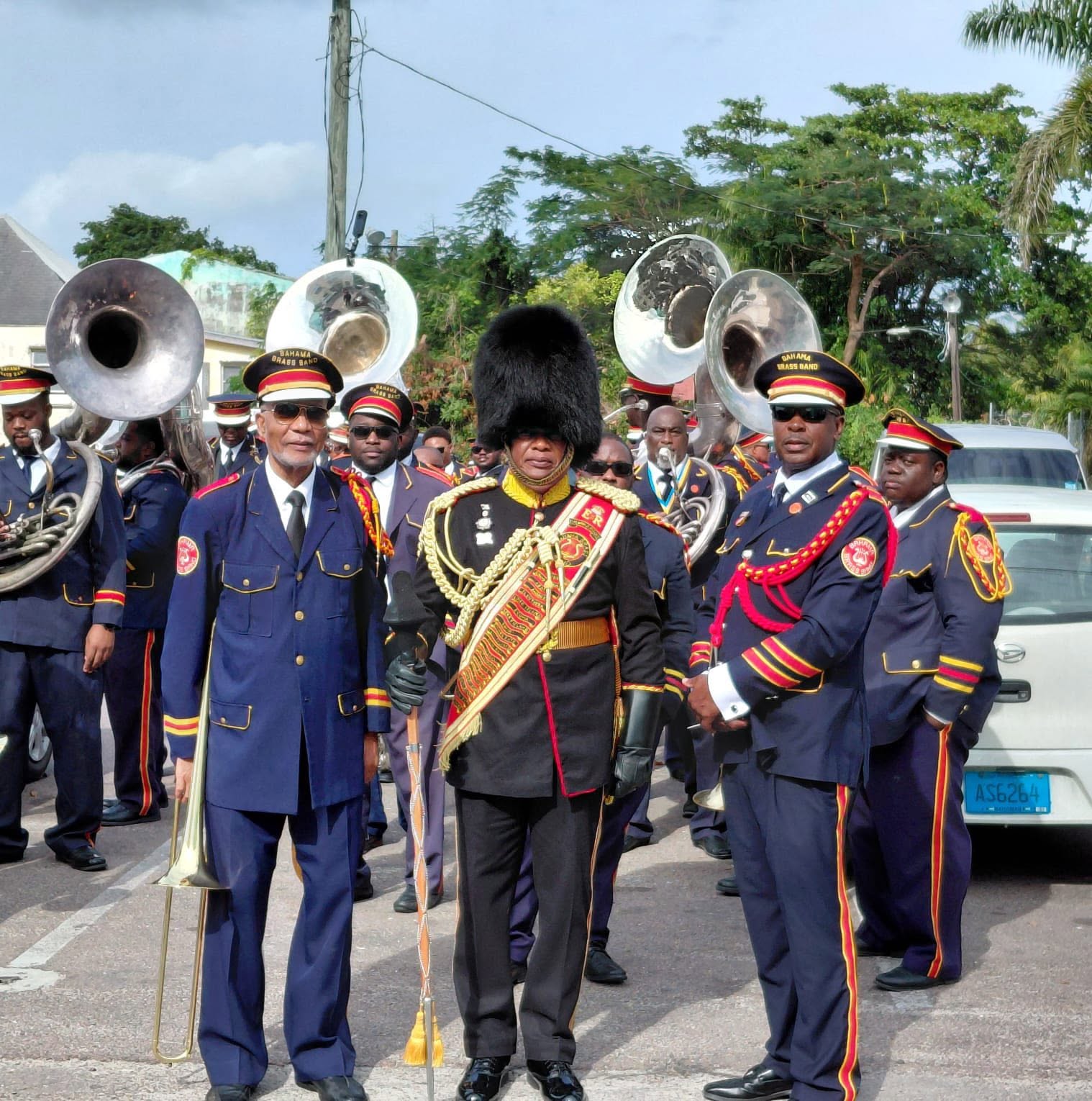
Turks and Caicos, August 20, 2026 – The planned participation of the Bahama Brass Band in the Turks and Caicos Islands’ inaugural Constitutional Holiday celebrations on August 30 has sparked public debate over culture, heritage and the historical contributions of Turks and Caicos Islanders abroad.
Organizers defended the invitation, saying the band’s inclusion is intended to highlight the deep historical ties between the two countries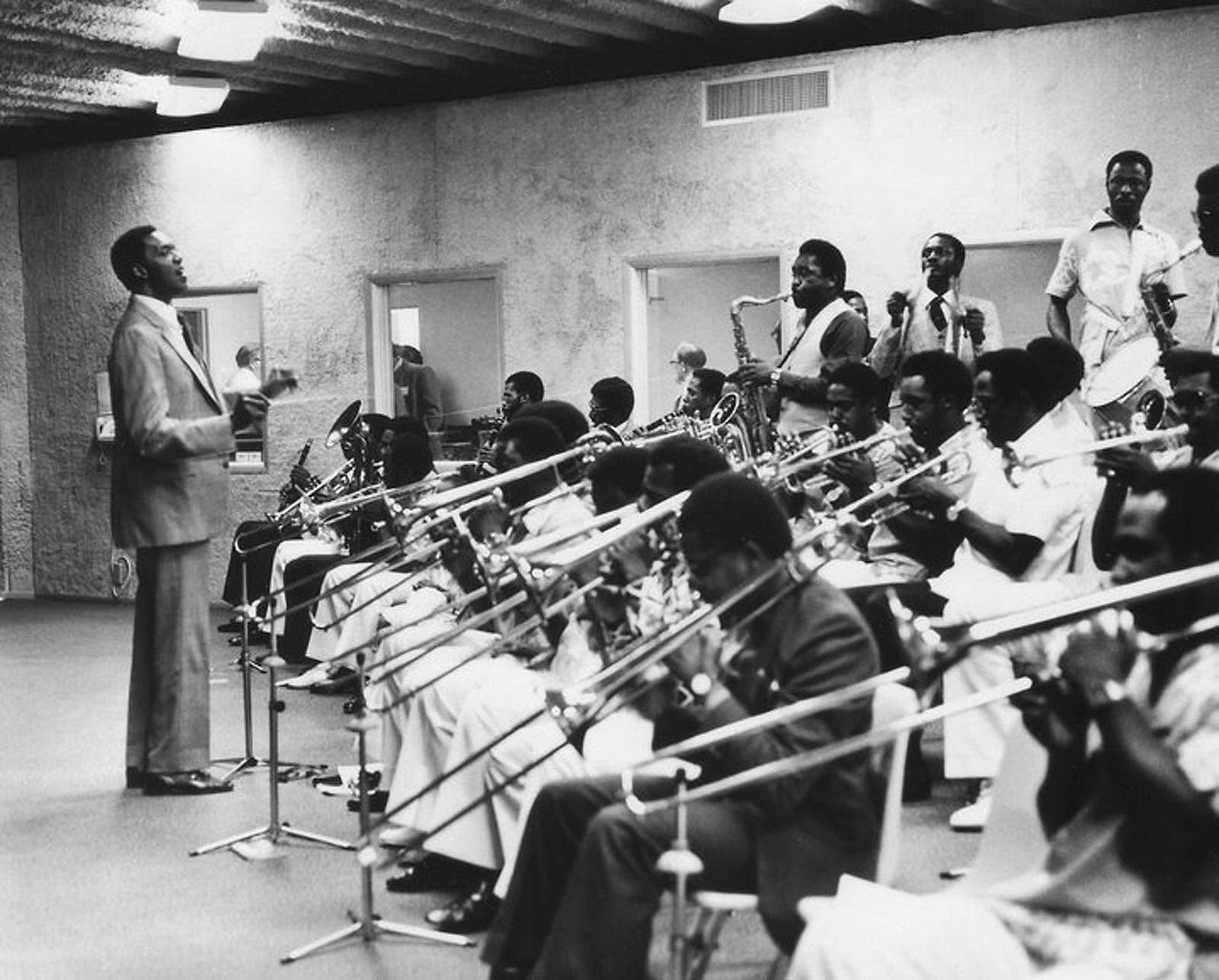 and honor Turks and Caicos men who helped establish and develop the institution in Grand Bahama.
According to the organizers, the Bahama Brass Band began in 1955 in Pine Ridge, Freeport, with Turks and Caicos Islanders, including the late Deacon Reuben Hall Sr. of Middle Caicos and Jenkins Williams and Mervin Hendfield of North Caicos, among those who helped build its foundation. The band eventually grew to more than 50 men.
The organizers also pointed to the participation of Turks and Caicos men in The Bahamas’ Independence celebrations on July 10, 1973, arguing that their contributions became part of Bahamian history while maintaining strong connections to their homeland.
Supporters say bringing the band home represents an opportunity to honor those pioneers, showcase their regional influence and expose younger generations to an important part of Turks and Caicos history.
However, concerns raised publicly described the invitation as potentially disrespectful to local culture and heritage. Organizers acknowledged those concerns, apologizing to anyone who felt overlooked or offended, while maintaining that no disrespect was intended.
The committee said the event should ultimately unite rather than divide, presenting the band’s history as evidence of the reach and resilience of Turks and Caicos heritage.
PHOTO CREDIT: Bahamas Brass Band
NASSAU, Bahamas — Caribbean Bottling Company (CBC), local producers of Dasani products, proudly sponsored the fifth annual, Caribbean Hoopfest.
The tournament brings together Bahamian high school basketball teams and visiting teams from the United States for a competitive showcase at the Kendal G. L. Isaacs Gymnasium. Following its inaugural year at the Kendal G. L. Isaacs gym and last year’s event at Loyola Hall, the tournament returned to the Kendal G. L. Isaacs gym this year.
During the weekend tournament, CBC kept athletes well hydrated with in-kind donations of Dasani Water, Powerade and Minute Maid Juices.
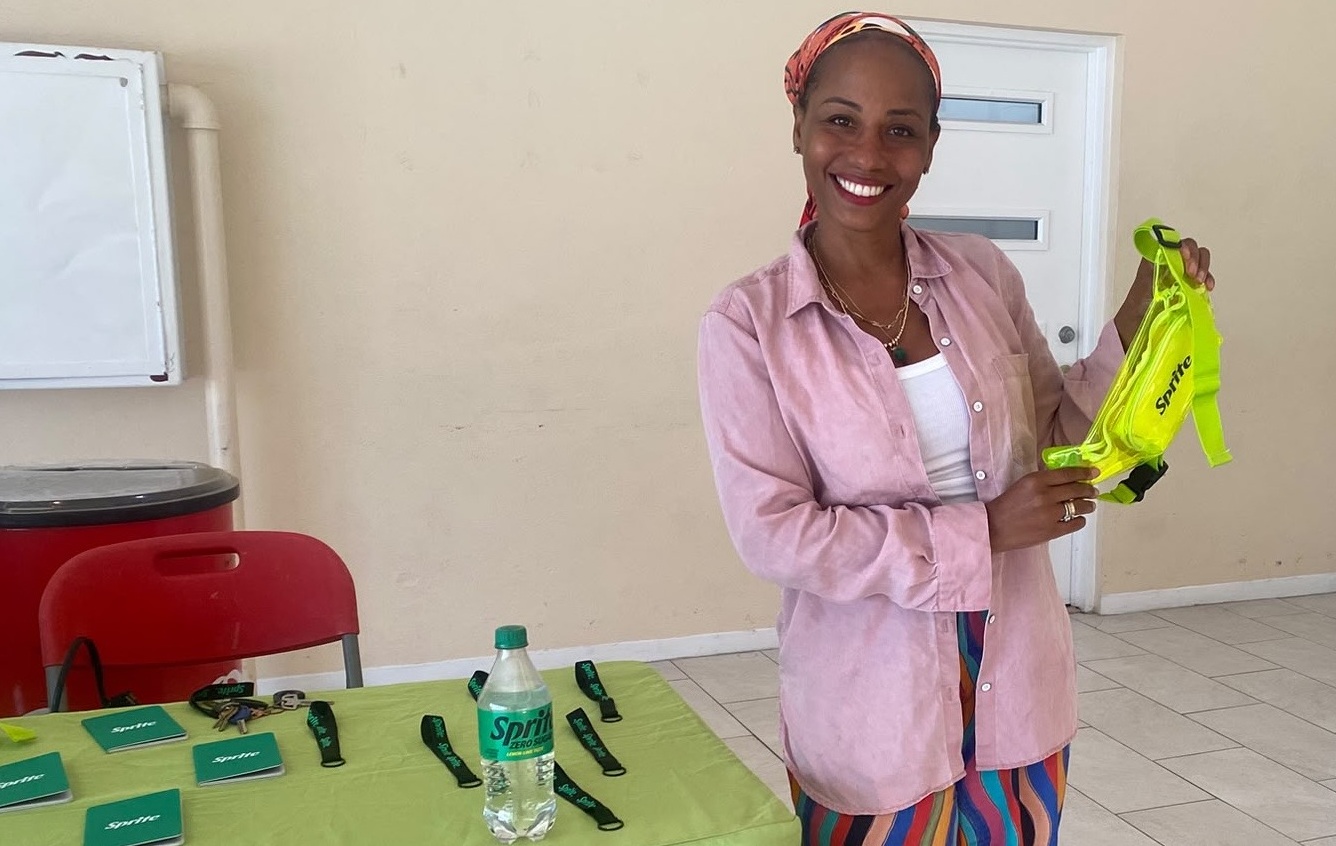
During the tournament’s final day, CBC provided additional support by offering Sprite No Sugar samples and inviting attendees to participate in its Spin the Wheel for a chance to win exciting prizes.
CBC was proud to support this incredible event, which provides young Bahamian athletes with valuable exposure to U.S. basketball scouts and coaches. This opportunity gives them the chance to earn scholarships, continue their education, and pursue their basketball careers in the United States.
Event organizer, Donald Francois shared his appreciation for CBC’s support.
“I want to express our sincere appreciation for Caribbean Bottling Company, who has been a tremendous supporter and an important part of the success of our program. Without CBC’s support, Caribbean Hoop Fest would not be able to function at the level it does today. And without Caribbean Hoop Fest, we would not have been able to provide the opportunities that have helped young Bahamian athletes gain exposure and pursue educational opportunities in the United States,” he expressed.
Since the program’s inception, several Bahamian student-athletes have been selected for scholarship opportunities, highlighting the tournament’s growing impact on the development and advancement of young basketball talent in The Bahamas.
They are: Kelvin McDowells – Guard, Wodson Antoine – Power Forward, Justin Lafleur – Guard and Sean John – Guard.
After another successful edition of the tournament, Francois shared what he hopes he and Caribbean Bottling Company can achieve in the future.
“Our vision is bigger than basketball. We want to use the platform of Caribbean Hoop Fest to educate, develop, and create opportunities for young people and their families throughout the Bahamas. With individuals and organizations committed to our mission, we believe we can continue to grow the program and make an even greater impact,” Francois said.
For more details on community support, events and new products visit Caribbean Bottling Company at www.cbcbahamas.com today.





-

 Education1 week ago
Department of Education Concludes Four-Day TCI National Standards Secondary School Curriculum Implementation Training
-

 Independent writer6 days ago
Fifty Years of Ministerial Government: Honouring Our Past, Embracing Our Present and Preparing for Our Destiny
-
 News1 week ago
UNDER 40 DAYS: COMMITTEE FORMED—BUT WHO IS ON IT?
-

 Health5 days ago
Know the Possible Warning Signs of Prostate Cancer
-

 News1 week ago
Invest TCI Brings Entrepreneurs and Bankers to the Table
-

 News3 days ago
Liberty Business launches in Turks and Caicos Islands
-
 Education3 days ago
TCI Schools Invited to Participate in 2026 National Student Council Election