
Caribbean News
Increased airlift to the Caribbean fuels new opportunities for the region

#Miami, December 14, 2018 – USA – The Caribbean’s private sector has a unique opportunity to generate strong profits in the new year with the unprecedented quantity of airlift coming into the region.
Director General and CEO of the Caribbean Hotel and Tourism Association (CHTA), Frank Comito, encouraged regional stakeholders to get ready for what the association believes can be an especially strong winter season.
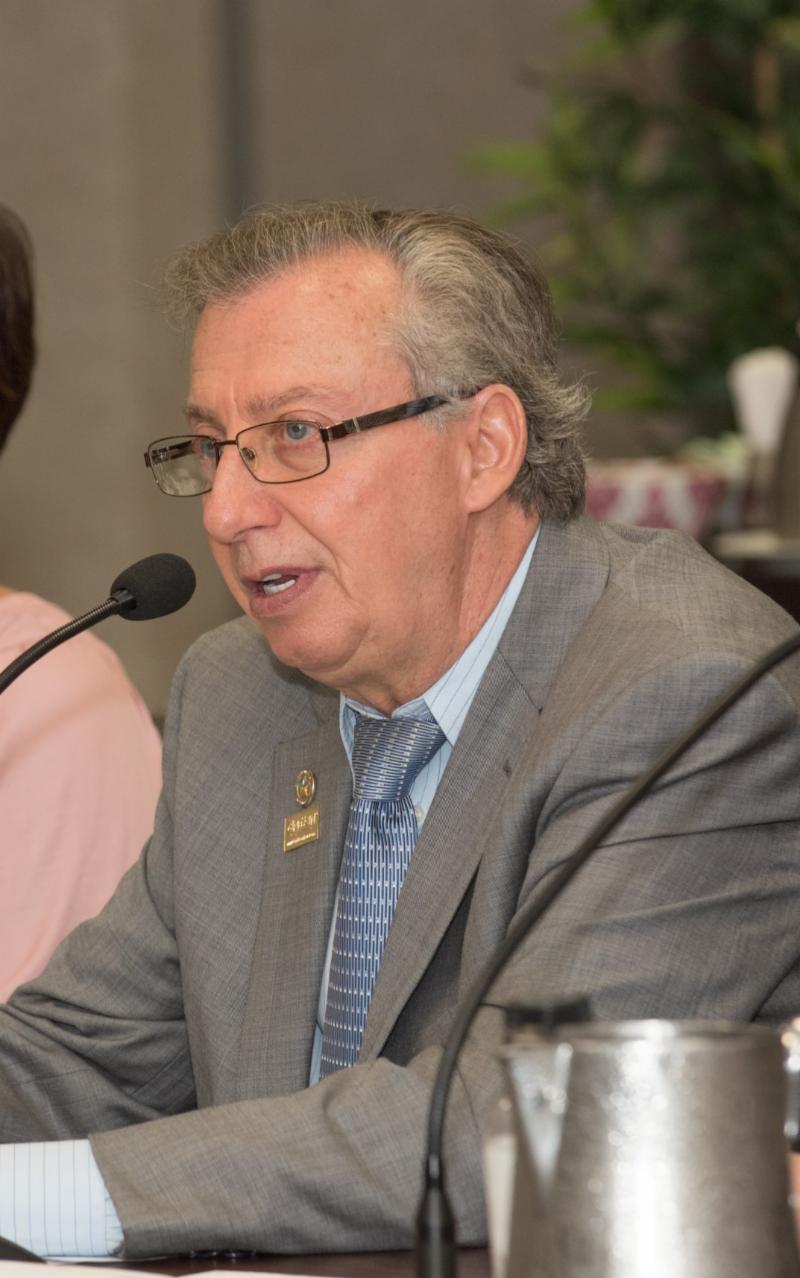 “With new routes and upgraded aircraft announcements over recent months, market-savvy hoteliers are positioned to increase occupancy and generate additional business.”
Comito, whose team is preparing to host the 37th annual Caribbean Travel Marketplace, the Caribbean’s largest tourism marketing event, in Montego Bay, Jamaica from January 29 to 31, 2019, said that while the 2017 storms affected year-over-year growth, with new, re-opening and upgraded hotels the region is poised for growth.
Destinations which were impacted by the 2017 hurricanes are seeing a return to pre-2017 flight levels while many other destinations in the region are seeing increased service. “We are confident that hotels participating in Marketplace this January in Jamaica will be in a great position to promote their properties, especially with the added airlift,” added Comito.
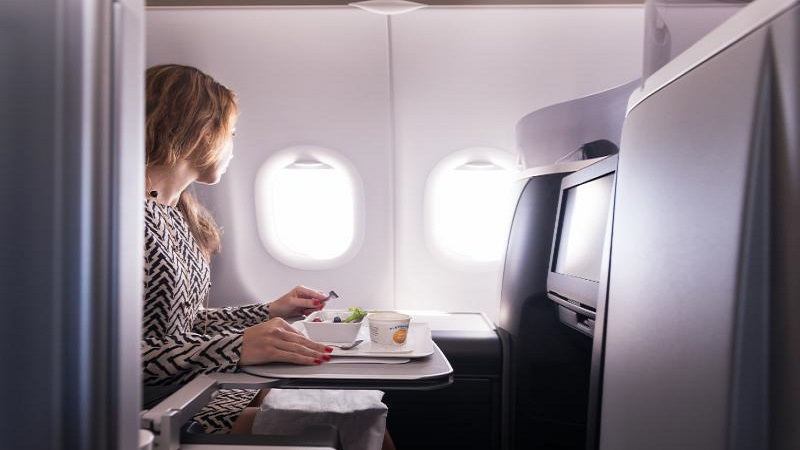
The CHTA chief executive cited JetBlue Airways’ continued growth into the region with additional flights and upgraded Mint service starting in early 2019. Delta Air Lines is bumping up its service to The Bahamas; Kingston, Jamaica; St. Kitts and Port-au-Prince, Haiti. Similarly, American Airlines has added capacity to Aruba, Bahamas, Bonaire, Cayman Islands, St. Kitts, St. Vincent and the Grenadines and Turks and Caicos, and is increasing its service to Barbados, Curaçao, Puerto Plata and Santo Domingo, Dominican Republic; and St. Lucia.
Also on CHTA’s radar are new Southwest flights to Cancun and the Mexican Caribbean; Grand Cayman; Punta Cana, Dominican Republic; and Turks and Caicos. The airline is also expanding its service to San Juan, Puerto Rico.
Copa Airlines, Frontier Airlines, Iberia, LATAM Airlines, Norwegian Airlines, Spirit Airlines, Sunwing, United Airlines and Virgin Atlantic are also extending their reach into the Caribbean.
Comito noted that regional carriers are also undergoing considerable expansion and some are entering into new partner agreements, helping to improve connectivity, particularly to those destinations with fewer nonstop flights. Examples include the rapid expansion of InterCaribbean Airways flights, now covering 22 cities in 13 countries; Caribbean Airlines with more than 600 weekly flights; LIAT, which is teaming up with Air Antilles and Winair; and Seaborne Airlines, which was recently acquired by Silver Airways.
These among other travel, tourism and hospitality trends will be discussed in Jamaica during Caribbean Travel Marketplace, which will attract hotel and destination representatives, including high-level executives and key decision makers; wholesalers and tour operators; online travel agencies; Meetings, Incentives, Conventions and Exhibitions (MICE) planners; and members of the media for several days of business meetings, including a busy program of thousands of pre-scheduled appointments to expand their businesses.
Comito explained that while demand for the region is strong, major investments in airport expansions were contributing to the growth in airlift, which bodes well for the destinations and travelers.
Airports in Antigua, Bahamas and San Juan, Puerto Rico have recently benefited from upgrades, while those in Bermuda, Cayman Islands, Curaçao and St. Maarten are under construction. Officials in Anguilla, British Virgin Islands, Grenada, Haiti, Kingston, Martinique, St. Lucia and the U.S. Virgin Islands are each examining expansion plans.
Caribbean Travel Marketplace 2019 is produced by CHTA in collaboration with co-hosts Jamaica Hotel & Tourist Association, the Jamaica Tourist Board and the Jamaica Ministry of Tourism. It is the leading event in the  Caribbean tourism industry where more than 1,000 delegates from 26 Caribbean countries meet with buyers from over 20 markets.
This year’s host sponsors are Interval International, Jamaica Hotel & Tourist Association, Jamaica Tourist Board, JetBlue Vacations and MasterCard, while Platinum sponsors include Adara, AMResorts , Figment Design, Marketplace Excellence, OBMI, Sojern, STR, Travelzoo, and the United States Virgin Islands. Gold sponsors are Best Western International, Condé Nast Traveler, Delta Air Lines, Flip.to, HCP Media, Northstar Media, Prevue magazine, Rainmaker, Recommend magazine, SiteMinder, Simpleview, The New York Times, Travalliance Media, Travel Relations and TravPRO Mobile.
The 2019 event is expected to have an increase in the number of buyers and suppliers and exciting new activities that will strengthen the connectivity between industry stakeholders.
To register, visit http://bit.ly/2AbQ9jQ
Source: Caribbean Hotel and Tourism Association (CHTA)
Contact: Darcel Choy, Marketplace Excellence +1 201 861-2056
darcel@marketplaceexcellence.com
About the Caribbean Hotel and Tourism Association (CHTA)
The Caribbean Hotel and Tourism Association (CHTA) is the Caribbean’s leading association representing the interests of national hotel and tourism associations. For more than 50 years, CHTA has been the backbone of the Caribbean hospitality industry. Working with some 1,000 hotel and allied members, and 32 National Hotel Associations, CHTA is shaping the Caribbean’s future and helping members to grow their businesses. Whether navigating new worlds like social media, sustainability, legislative issues, emerging technologies, climate change, data and intelligence or, looking for avenues and ideas to better market and manage businesses, CHTA is helping members on issues which matter most.
For further information, visit www.caribbeanhotelandtourism.com.

By Deandrea Hamilton | Editor
September 28, 2026 – Wall Street initially flinched at the $3-billion handshake. But in a matter of days, it was smoother sailing.
Perhaps the bigger Caribbean business story is not what Sandals Resorts International is getting from the deal. It is who is writing the cheque — and what that says about what Gordon “Butch” Stewart built.
As reports of Royal Caribbean Group’s Sandals deal circulated Tuesday, RCL shares plunged 6.14 percent from Monday’s $250.25 close to $234.89, on sharply elevated trading.
When the agreement became official Wednesday — approximately $3 billion for a 50 percent equity interest in Sandals and Beaches Resorts — shares slipped another 1.95 percent to $230.30 and touched $222.22 intraday. Investors were digesting both the size of the investment and committed debt financing secured through Morgan Stanley.
But by Thursday, RCL rebounded 3.77 percent, with shares continuing their recovery Friday to finish the week around $243. Analysts were also looking ahead: JPMorgan reportedly raised its RCL price target from $345 to $394, while Citi placed the company on a 90-day positive catalyst watch.
And just who is RCL?
Royal Caribbean Group is a global vacation giant, publicly traded on the New York Stock Exchange with a market value of roughly $65 billion. Its portfolio includes Royal Caribbean International, Celebrity Cruises and Silversea, alongside private destinations and an expanding vacation platform.
So when a company of that scale commits $3 billion for only half of Sandals and Beaches Resorts, the transaction puts a striking financial marker on one of the Caribbean’s greatest home-grown hospitality success stories.
The deal, expected to close in early 2027, creates a 50-50 partnership with the Stewart family and takes Royal Caribbean deeper into the all-inclusive resort business.
Butch Stewart started Sandals in Jamaica in 1981 believing a Caribbean company could compete with the world’s best.
Forty-five years later, one of the world’s biggest vacation companies is prepared to pay $3 billion just to own half of what he built.
Now that’s the handshake that does more than seal a deal — it cements a legacy.
Caribbean News
Royal Caribbean Group and Sandals Resorts Announce Landmark Partnership to Accelerate Their Leading Vacation Experiences
Royal Caribbean Group Investment to Advance Sandals and Beaches’ Growth and Broaden the Group’s Vacation Portfolio
Montego Bay, Jamaica and Miami, September 24, 2026 – Royal Caribbean Group (NYSE: RCL) and Sandals Resorts today announced the signing of an agreement to form a partnership in the all-inclusive resort space with a 50% investment from Royal Caribbean Group. Building on Sandals and Beaches Resorts’ more than four decades of leadership in Caribbean hospitality, the joint venture will create new opportunities for continued resort growth while broadening the experiences across Royal Caribbean Group’s vacation platform.
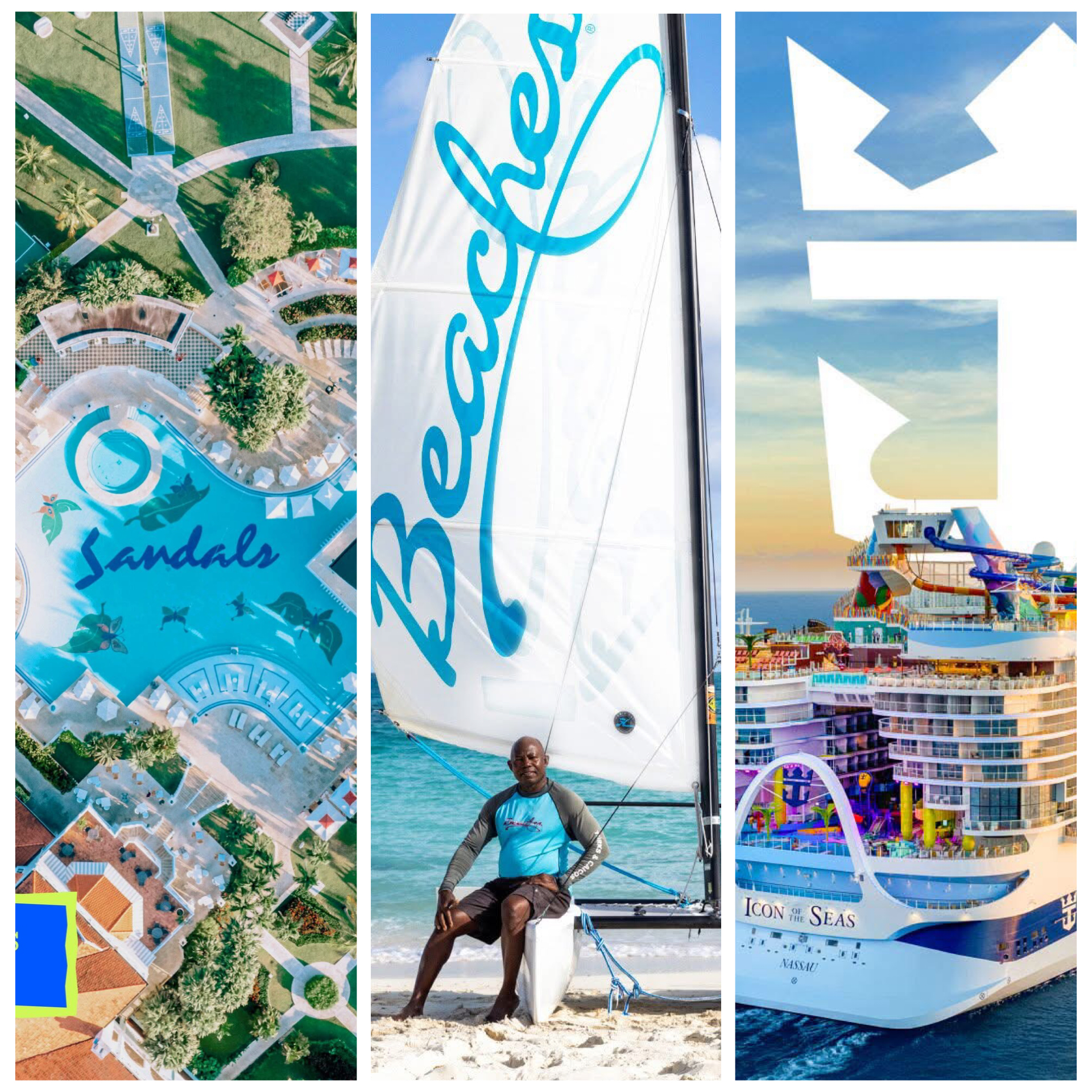
The partnership brings together two of the travel industry’s most celebrated vacation companies, pairing Sandals and Beaches’ all-inclusive resort expertise with Royal Caribbean Group’s vacation platform, including industry-leading brands – Royal Caribbean, Celebrity Cruises and Silversea – a portfolio of private destinations, new river cruising offering, and an industry-first loyalty program. United in a shared history in the Caribbean and connected by a love for their communities, the companies will offer travelers an unparalleled collection of cruise, private destination and resort experiences, serving guests across more vacation occasions and establishing their undisputed leadership in Caribbean vacations.
The joint venture expands Royal Caribbean Group into an adjacent vacation category, growing its participation in the approximately $2 trillion global vacation market, and meets the growing global demand for Sandals and Beaches Resorts by accelerating their expansion. The partnership will include Sandals and Beaches’ collection of premier all-inclusive properties across the Caribbean, and the companies will explore opportunities to broaden distribution, deepen guest engagement, and make it easier for travelers to discover vacation experiences offered across both portfolios.
“For nearly 60 years, we’ve reimagined what a vacation can be, constantly expanding the ways we inspire our guests to explore, connect and create lifelong memories,” said Jason Liberty, Chairman and CEO, Royal Caribbean Group. “We have been building a vacation platform that brings joy to millions of people around the world and creates meaningful relationships that last with our guests. Our partnership with Sandals and Beaches Resorts is an important next step on that journey – bringing together two iconic leading vacation companies to further strengthen and grow one of the most admired resort portfolios in the world. The Stewart family has created powerful and beloved brands, and we are honored to build on that legacy. Together, we see tremendous opportunity to expand the reach of Sandals and Beaches Resorts and continue turning the vacation of a lifetime into a lifetime of vacations.”
“My father, Gordon ‘Butch’ Stewart, founded Sandals Resorts with the belief that a company built in the Caribbean could stand on the world stage alongside the most respected names in hospitality. Today is proof of how far that vision can go,” said Adam Stewart, Executive Chairman of Sandals Resorts and Beaches Resorts. “This partnership is the natural next step in building on that conviction. It gives us the ability to grow faster with a partner that shares our values of exceptional hospitality, long-term investment, and the power of enduring brands. Together, we will introduce more guests to Sandals and Beaches Resorts while creating even more extraordinary experiences for those who have made our resorts part of their lives for decades.” Stewart added, “As we continue to grow, we will remain true to what has always defined us: delivering authentic vacations that exceed expectations while creating opportunities for our team members, travel advisor partners and the communities we call home. The future has never been brighter, and I know this moment would make my father incredibly proud.”
The joint venture will be governed by a board under the shared leadership of Stewart and Liberty. Stewart will maintain a leadership role in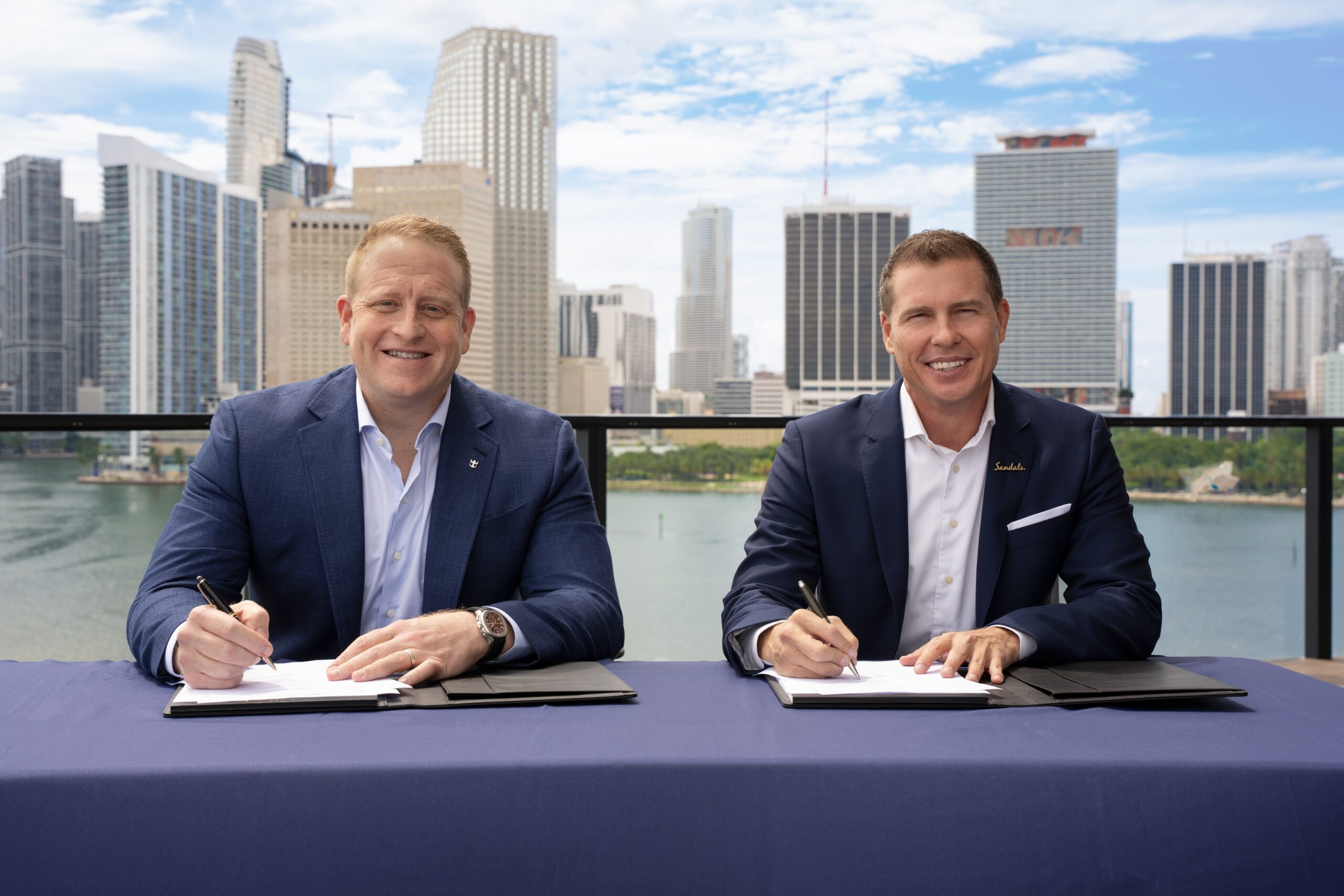 guiding the company’s long-term strategic growth as Executive Chairman of Sandals and Beaches Resorts. Existing reservations, loyalty programs, resort operations and cruise operations will continue as usual, with the partnership bringing additional resources to support future opportunities.
Under the terms of the agreement, Royal Caribbean Group will acquire a 50% equity interest in Sandals and Beaches Resorts for approximately $3 billion, representing a forward EBITDA multiple of approximately 10x. Royal Caribbean Group has secured committed debt financing from Morgan Stanley to fund the investment. The transaction is expected to close in early 2027, subject to customary approvals and closing conditions, and is expected to be accretive to earnings next year.
BofA Securities and PJT Partners acted as financial advisors, and Latham & Watkins and Jones Day acted as legal advisors to the Sandals Group. Perella Weinberg Partners and Morgan Stanley acted as financial advisors and Kirkland & Ellis LLP acted as legal advisor to Royal Caribbean Group.
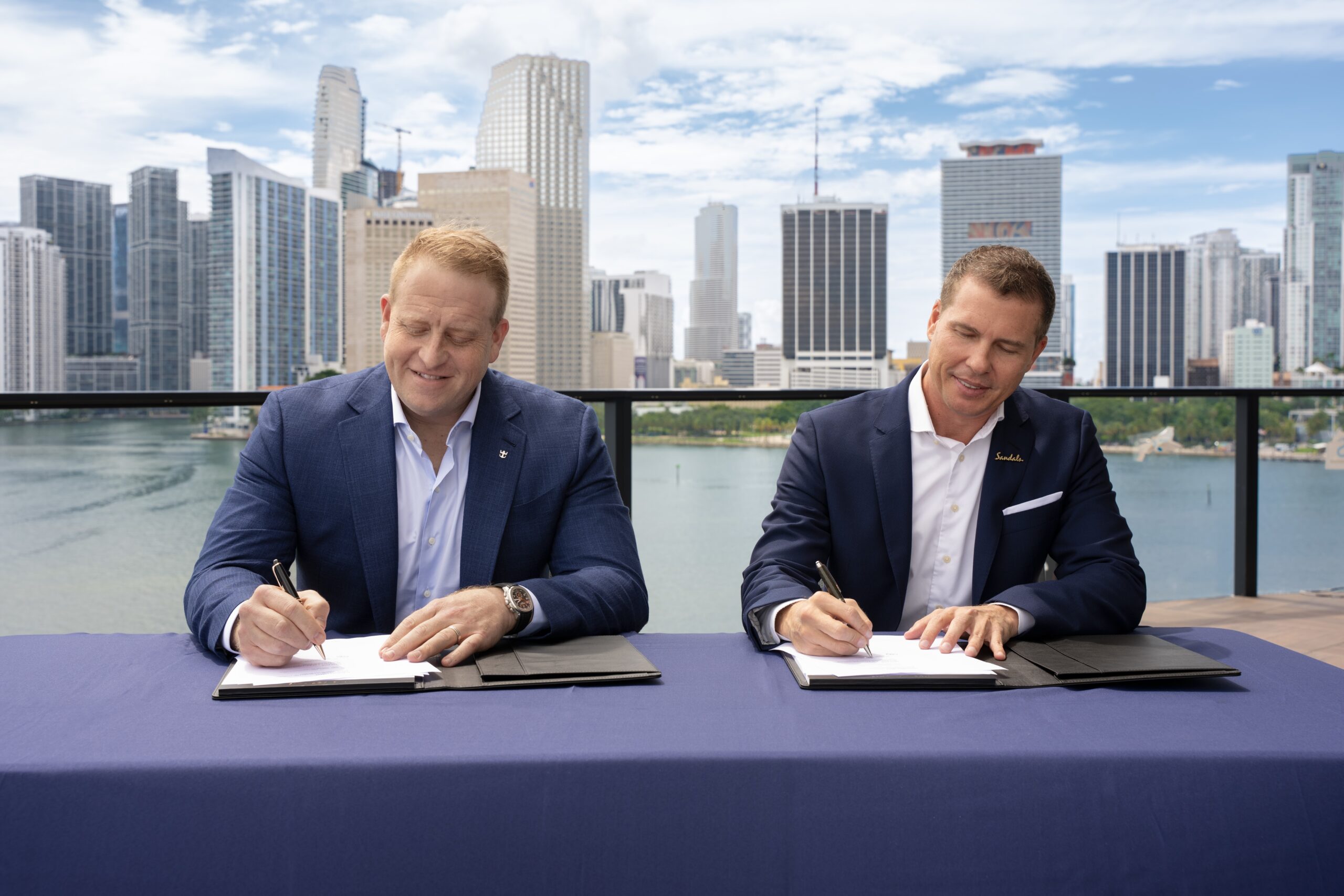
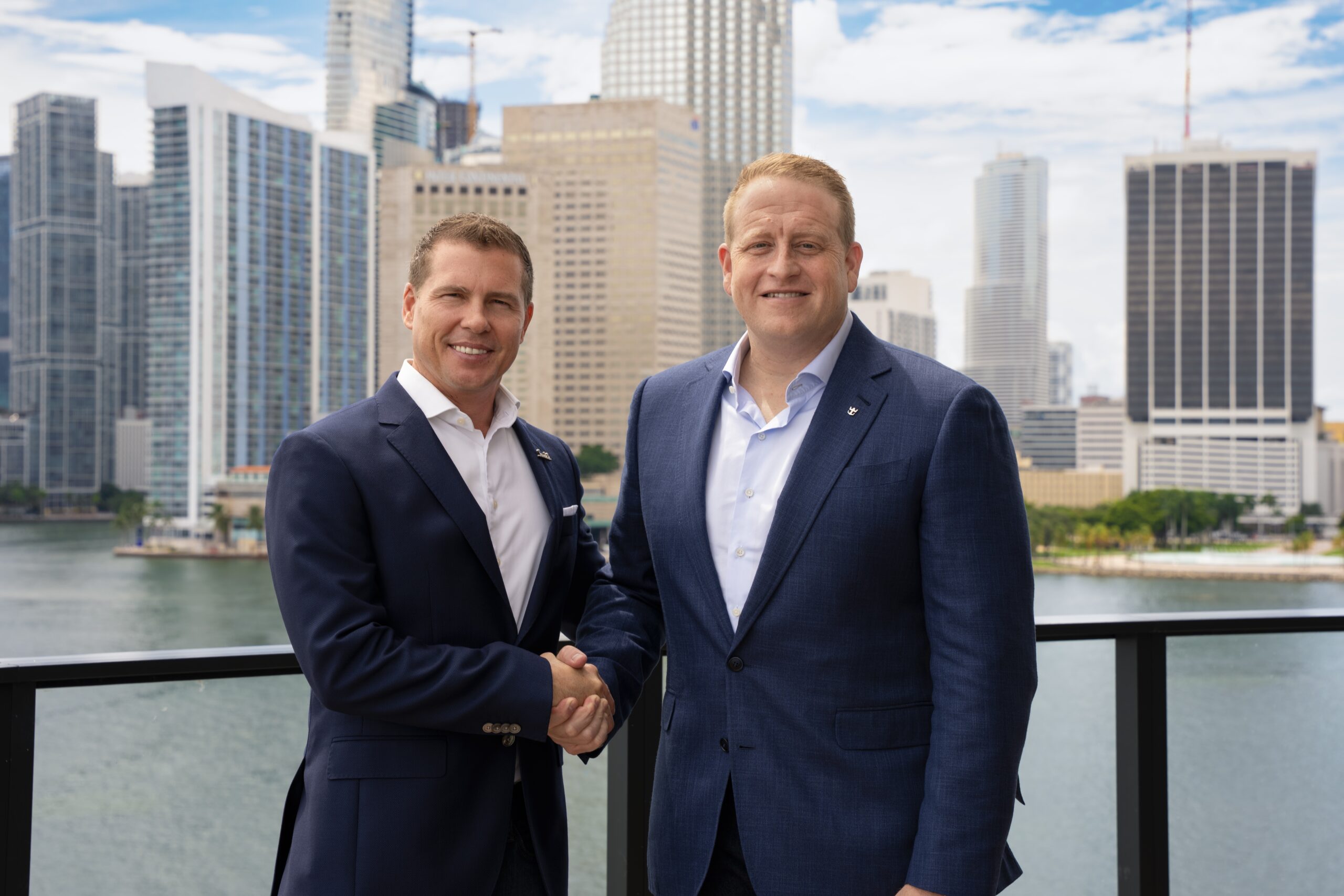
PHOTO CAPTION: Jason Liberty, Chairman and CEO of Royal Caribbean Group, and Adam Stewart, Executive Chairman of Sandals Resorts, mark the signing of an agreement to form a landmark partnership that expands Royal Caribbean Group into the all-inclusive resort space and supports the future growth of Sandals and Beaches Resorts. The signing took place at Royal Caribbean Group’s new headquarters in Miami, with the city’s skyline in the background.
The Caribbean tourism deal first reported as a possibility on Tuesday is now a signed agreement. Royal Caribbean Group plans to pay approximately US$3 billion for a 50% stake in Sandals and Beaches Resorts, putting the value of the business at about US$6 billion. The purchase is expected to close in early 2027, subject to approvals.
Founded in Jamaica by the late Gordon “Butch” Stewart in 1981, the resort business has a presence across nine Caribbean destinations, including Jamaica, The Bahamas and Turks and Caicos. Sandals has described its workforce as nearly 20,000 people, most of them Caribbean nationals.
“My father, Gordon ‘Butch’ Stewart, founded Sandals Resorts with the belief that a company built in the Caribbean could stand on the world stage alongside the most respected names in hospitality,” said Adam Stewart in the announcement carried by PR Newswire. He will remain executive chairman, while the Stewart family retains a stake. The companies say existing reservations and resort operations will continue as usual.





-

 Independent writer1 week ago
Born Here, Raised Here, but Still Unable to Vote: Is this a Conundrum for TCI Electorate?
-

 Bahamas News3 days ago
Rosewood Exuma: A precedent-setting case for environmental law and future development in The Bahamas
-

 Bahamas News7 days ago
Monument Supports Hands for Hunger With Paradise Plates Debut
-

 Bahamas News1 week ago
Schweppes ‘the Art of Mixology’ Dazzles at Paradise Plates with Nemiroff Vodka
-

 Bahamas News2 days ago
Energy Minister Delivers Electrifying Keynote Opening Address at CAREC 2026
-

 News2 days ago
Invest TCI Strengthens Regional Investment Connections at Caribbean Investment Forum 2026 in Barbados