
Bahamas News
BAHAMAS: Deputy Prime Minister’s Remarks and Draft Legislation – Fiscal Responsibility

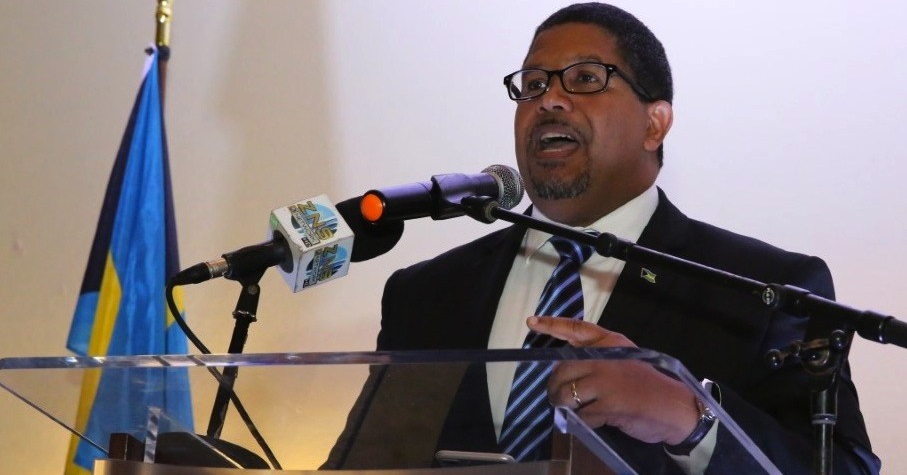
#Bahamas, May 16, 2018 – Nassau – Press Conference on Fiscal Responsibility Legislation – Public Consultation – Peter Turnquest, Deputy Prime Minister and Minister of Finance
I invited you here today to present a landmark piece of legislation that honors a significant commitment made by the FNM Administration to the Bahamian people. We promised to make fiscal discipline a central component of our Economic Action Plan, and today we are demonstrating that commitment in a very specific way.
Last week, Cabinet approved the Fiscal Responsibility Bill, 2018 for public consultation. Today, we present that Bill to the Bahamian people. The Bill sets guiding principles and rules for the way the government spends and accounts for the people’s money. Instead of relying on governments to exercise fiscal discipline by choice, the new legislation constrains spending by the force of law. It is a forward-looking bill intended to reshape the culture of public accountability. Doing so with legislation means it will commit all future governments and not just this administration. This is a built-in safeguard to ensure continuity, sustainability, and commitment to fiscal discipline.
I cannot emphasize enough the importance of this legislation. Once passed, it will subject this Government and all successive governments to new standards of public accountability and public sector financial management. And perhaps, more importantly, from the public’s point of view, it will empower civil society and the Parliament to participate in the system of accountability in a robust and comprehensive way.
To give you an idea of how this works in the new law, it will establish an independent five-member Fiscal Responsibility Council comprised of civil society professionals with specific areas of expertise in law, business, economics, accounting, and finance.
The Government does not nominate these professionals. In each respective category, they will be nominated independently by the Bahamas Bar Association, The Chamber of Commerce, the University of The Bahamas, the Bahamas Institute of Chartered Accountants and the Certified Financial Analysis’ Society of The Bahamas. The Fiscal Responsibility Council is mandated to conduct periodic and ongoing assessments of the Government’s finances and to make its assessments public. The Government is also mandated to provide its fiscal strategy reports to the Fiscal Responsibility Council and to also to the Parliament.
The new law will require the Government to submit a Fiscal Adjustment Plan to explain any proposed deviations from its Fiscal Strategy Report. The law will require the Government to present a Fiscal Impact Analysis along with any new spending proposal that falls outside of the approved budget. The proposed legislation is very specific and clear: All of these documents are to be made public on specific dates or time periods, and; the contents of each document must conform to the guidelines in the law.

Simply put, the proposed Fiscal Responsibility Legislation reinforces transparency and responsibility in the management of the fiscal finances and strategically enjoins the participation of Parliament and the people in holding the Government accountable for achieving its fiscal targets and objectives.
Because the new fiscal and debt targets will require a significant adjustment from the current fiscal position, the Bill contemplates a three-year transition period to ensure this is done in an orderly manner. This timeframe will also allow the Ministry of Finance to align its internal resources to deliver on the more rigorous reporting requirements necessary for the public’s assessment of the Government’s fiscal strategy and performance.
While all aspects of the Bill are essential to the fiscal responsibility principles, the overarching strategic goals pivot on the fiscal objectives, which are to:
- Lower the deficit and maintain a sustainable fiscal balance
- Lower debt to sustainable long-term levels
- Maintain current expenditure growth in line with growth in nominal GDP
We believe that this combination of fiscal objectives will achieve sustainability in the Government’s finances and ensure the long-run stability and viability of the Bahamian economy.
For the benefit of the public, I will provide a few more specifics in two critical areas of the Bill: Fiscal Targets and Oversight of Pre-Election Spending.
I want to emphasize, however, that the Bill is very comprehensive, so my highlights this morning will be supplemented by additional information published by the Ministry of Finance over the course of the week, and leading into the budget debate. The public can find this information on the Ministry of Finance Facebook Page, on the Government’s website – www.bahamas.gov.bs – and through traditional media outlets. The draft Bill is available for download starting today, and the public can submit comments to fiscalresponsibility@bahamas.gov.bs.
Fiscal targets and limits that constrain government spending
Picking up on my introduction to the fiscal objectives…
I want to emphasize, the overarching strategic goal of the legislation is to achieve specific fiscal objectives. By fiscal objectives, I am referring to the government’s fiscal balance or deficit, the national debt and growth rates in expenditure.

FIRST: After the law’s implementation, the government would be required to reduce its debt to GDP ratio to a maximum of 50% of GDP over time. It is currently at 58%.
What does this mean? It says: If we can keep our debt at a manageable level, our economy can generate enough revenue to service them comfortably. At 50% of GDP or less, we can maintain macroeconomic stability, avoid spiraling interest charges, maintain market confidence in the Government’s fiscal policy and have space to respond to unforeseen shocks.
If we let our debt levels grow at an unchecked pace, then we run the risk of effectively leaving the bill on our children to pay off. No government should have the power to saddle future generations with burdensome debt, dooming them to a diminished standard of living. We must start taking the necessary steps to pay our bills up front and contain the growth of our national debt.
SECOND: After the law’s implementation, the government would have three years to lower the fiscal balance from a deficit of 5.8% of GDP recorded in last fiscal year 2016/2017 to no more than 0.5% by 2021/2022.
What does this mean? It means the Government has to live within its means. We can no longer continue to put the country’s bills on a virtual credit card and continue to have expenditure outpace the revenue on a consistent basis. The proposed law sets a cap on the deficit. Every year, the Government will have to abide by this limit when it designs its national budget.
Every day we teach our children to live within their means. We regulate banks so they cannot lend money irresponsibly. The operations of the Government should be no exception.
THIRD: Once the fiscal balance reaches target levels, the Government would have to constrain its growth in current expenditure. Year over year increases in current spending cannot exceed the long run growth in nominal GDP.
What does this mean? It means the Government has to control its annual spending levels. Nominal long run GDP growth currently averages some 3.0%, which takes into account the historical and projected path for this indicator. Using this benchmark, it would mean the Government cannot increase its current expenditure year over year by more than 3%.
The Government set all of these targets after conducting a comprehensive economic analysis with technical assistance from the multilateral community.
The Ministry of Finance is not waiting on the new legislation to start walking the walk. We are developing the 2018/2019 budget based on the standards set in the new bill, even though the law is not yet on the books. We don’t expect it to become law until after the budget debate next month; however, we have chosen to be forward-looking, and see no reason to delay the practice of sound fiscal management.
Our budget will embody the principles of accountability, intergenerational equity, responsibility, stability, transparency and inclusive growth, as the Bill calls for. Our budget will lower the deficit, and; it will control the growth in current expenditure. Our budget will make tough decisions to place us on a path to fiscal sustainability. Sometimes that means difficult adjustments in the short and medium term, but real leadership is about making those decisions in the best long-term interests of our county, and not about seeking short-term political gains and popularity.
The management of our fiscal policies will take into account the welfare of current and future generations of Bahamians. It will account for our public assets, liabilities and fiscal risks in a way that maintains fiscal and environmental sustainability.

We will apply these principles without delay, and we are proposing to enshrine them into law so that it is not just a matter of discretion, but it is, in fact, the standard of good governance.
Oversight of pre-election spending
The new fiscal responsibility law will create an important public document called the “Pre-Election Economic and Fiscal Update” that will give Bahamians a new tool for oversight of pre-election government spending. If we use the former administration as an example, it is clear why this provision is needed in the legislation.
The former government’s deficit in the year before the election was 5.8% of GDP, almost double the deficit in the previous year. They projected the deficit at $100 million and overshot this target by over $500 million or 600 percent. They managed to miss their budgetary estimates by over a half a BILLION dollars. And this took place without the public having any idea of the state of the Government’s finances.
Let me break this down from the point of view of the draft legislation. As I mentioned before, the Bill sets the deficit limit at 0.5% of GDP, based on a comprehensive analytical exercise done with multilateral partners. If the draft legislation were in place under the former administration, their deficit in the election year would have gone over the limit by 1060%. By any measure, this demonstrated recklessness and a disregard for fiscal responsibility. Worse than that, the spike in this spending has created obligations on this government and the people of The Bahamas that will remain with the country for years to come.
In the ordinary course of our lives, we all build in contingencies and tolerances for our spending, anywhere from 10-20%—whether it’s budgeting for our monthly expenses, our children’s school fees, or construction of our first home. Overshooting your limit by 1000% showed a total lack of fiscal discipline, and quite frankly the Bahamian people deserve better.
During the upcoming budget debate, we will explain, in detail to the Bahamian people, how the arrears and commitments made years ago by former administrations created burdens for all of us today. As a responsible administration, we want to ensure that such a thing never happens again.
The draft legislation provides a mechanism for transparency and accountability that will effectively constrain government spending in election years. The proposed law mandates that the Financial Secretary prepare and publish a Pre-Election Economic and Fiscal Update before the Election. This report on the state of the economy and government finances will be available for the public to review.
With everything I have shared, I hope it is clear; this landmark legislation on fiscal responsibility will have no small impact. It represents a deliberate and transformational cultural shift in the way the government spends and accounts for the people’s money.
The proposed Fiscal Responsibility Legislation:
- Honors a campaign commitment to make fiscal discipline a central component of our Economic Action Plan
- Establishes sound governing principles to guide the process
- Creates an ongoing system of checks and balances
- Sets limits to control the deficit
- Establishes caps on debt levels
- Reins in overall government spending
- Mandates an unprecedented level of transparency
- Addresses the risk of pre-election spending sprees
- Puts civil society front and center in government oversight, and
- Strengthens the overall system of accountability.
With that, I encourage the public to review the Bill and provide feedback to the Government during this period of public consultation.
Release: Ministry of Finance

Bahamas News
Bahama Brass Band Invitation Sparks Heritage Debate Ahead of TCI Constitutional Holiday

Turks and Caicos, August 20, 2026 – The planned participation of the Bahama Brass Band in the Turks and Caicos Islands’ inaugural Constitutional Holiday celebrations on August 30 has sparked public debate over culture, heritage and the historical contributions of Turks and Caicos Islanders abroad.
Organizers defended the invitation, saying the band’s inclusion is intended to highlight the deep historical ties between the two countries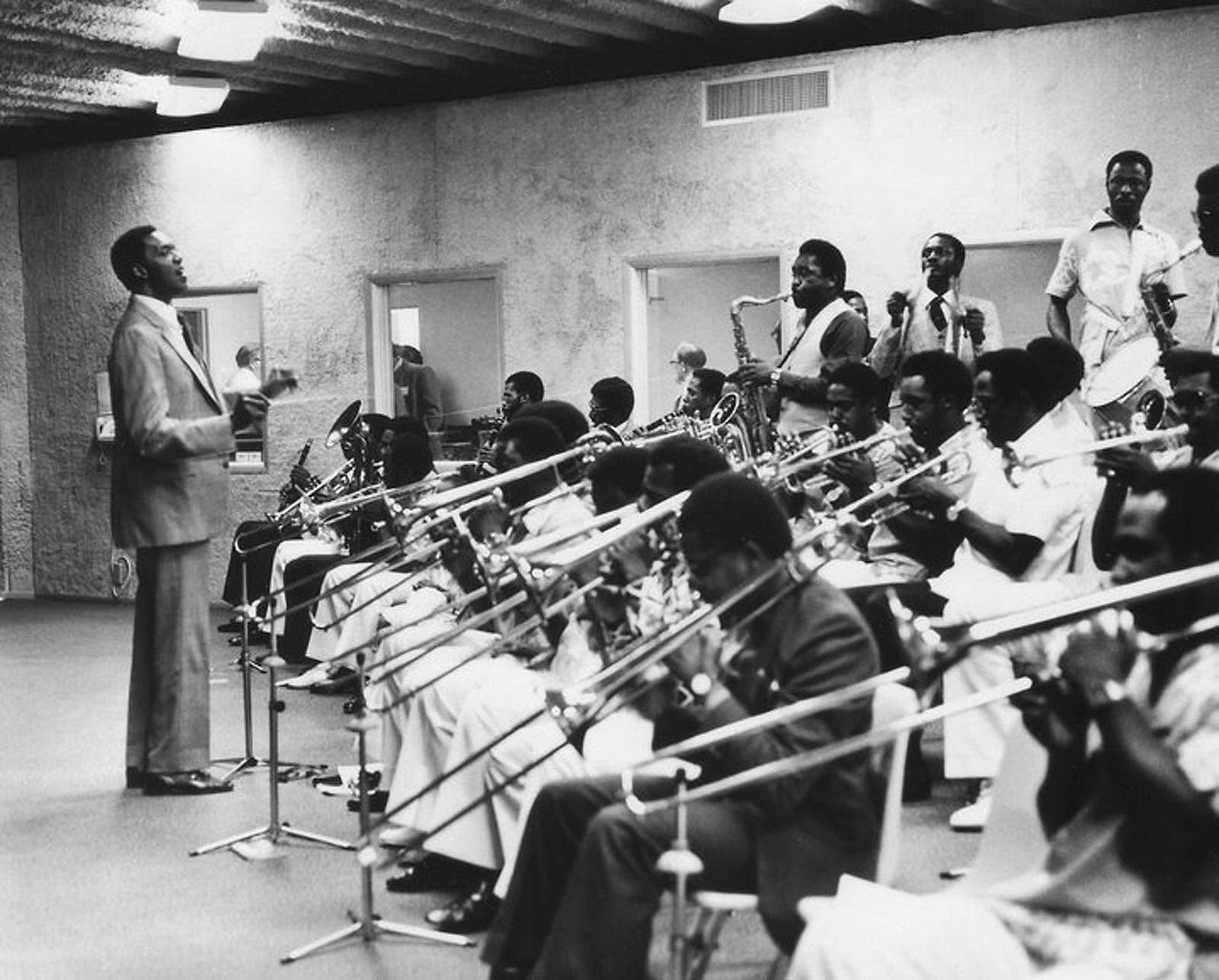 and honor Turks and Caicos men who helped establish and develop the institution in Grand Bahama.
According to the organizers, the Bahama Brass Band began in 1955 in Pine Ridge, Freeport, with Turks and Caicos Islanders, including the late Deacon Reuben Hall Sr. of Middle Caicos and Jenkins Williams and Mervin Hendfield of North Caicos, among those who helped build its foundation. The band eventually grew to more than 50 men.
The organizers also pointed to the participation of Turks and Caicos men in The Bahamas’ Independence celebrations on July 10, 1973, arguing that their contributions became part of Bahamian history while maintaining strong connections to their homeland.
Supporters say bringing the band home represents an opportunity to honor those pioneers, showcase their regional influence and expose younger generations to an important part of Turks and Caicos history.
However, concerns raised publicly described the invitation as potentially disrespectful to local culture and heritage. Organizers acknowledged those concerns, apologizing to anyone who felt overlooked or offended, while maintaining that no disrespect was intended.
The committee said the event should ultimately unite rather than divide, presenting the band’s history as evidence of the reach and resilience of Turks and Caicos heritage.
PHOTO CREDIT: Bahamas Brass Band

NASSAU, Bahamas — Caribbean Bottling Company (CBC), local producers of Dasani products, proudly sponsored the fifth annual, Caribbean Hoopfest.
The tournament brings together Bahamian high school basketball teams and visiting teams from the United States for a competitive showcase at the Kendal G. L. Isaacs Gymnasium. Following its inaugural year at the Kendal G. L. Isaacs gym and last year’s event at Loyola Hall, the tournament returned to the Kendal G. L. Isaacs gym this year.
During the weekend tournament, CBC kept athletes well hydrated with in-kind donations of Dasani Water, Powerade and Minute Maid Juices.
During the tournament’s final day, CBC provided additional support by offering Sprite No Sugar samples and inviting attendees to participate in its Spin the Wheel for a chance to win exciting prizes.
CBC was proud to support this incredible event, which provides young Bahamian athletes with valuable exposure to U.S. basketball scouts and coaches. This opportunity gives them the chance to earn scholarships, continue their education, and pursue their basketball careers in the United States.
Event organizer, Donald Francois shared his appreciation for CBC’s support.
“I want to express our sincere appreciation for Caribbean Bottling Company, who has been a tremendous supporter and an important part of the success of our program. Without CBC’s support, Caribbean Hoop Fest would not be able to function at the level it does today. And without Caribbean Hoop Fest, we would not have been able to provide the opportunities that have helped young Bahamian athletes gain exposure and pursue educational opportunities in the United States,” he expressed.
Since the program’s inception, several Bahamian student-athletes have been selected for scholarship opportunities, highlighting the tournament’s growing impact on the development and advancement of young basketball talent in The Bahamas.
They are: Kelvin McDowells – Guard, Wodson Antoine – Power Forward, Justin Lafleur – Guard and Sean John – Guard.
After another successful edition of the tournament, Francois shared what he hopes he and Caribbean Bottling Company can achieve in the future.
“Our vision is bigger than basketball. We want to use the platform of Caribbean Hoop Fest to educate, develop, and create opportunities for young people and their families throughout the Bahamas. With individuals and organizations committed to our mission, we believe we can continue to grow the program and make an even greater impact,” Francois said.
For more details on community support, events and new products visit Caribbean Bottling Company at www.cbcbahamas.com today.
NASSAU, Bahamas — More Bahamians are accessing HIV and sexually transmitted infection-related healthcare through National Health Insurance, a trend the NHI Authority says should be viewed positively.
NHIA stressed in an August 6 statement that its 2025 figures measure healthcare utilisation, not newly diagnosed infections. They include beneficiaries screened, treated, monitored or receiving follow-up care, including people diagnosed previously.
“Increased utilisation of these services should be viewed as a positive development,” NHIA said.
The Authority pointed to “greater enrolment and use of NHI, improved access to screening and testing, continued treatment and monitoring of existing conditions, and increased willingness to seek medical care.”
The development comes amid a mixed three-year HIV picture. New diagnoses rose from 130 in 2023 to 156 in 2024, before declining to 142 in 2025.
NHIA said increased utilisation demonstrates that more beneficiaries are accessing needed healthcare and actively managing their health, reinforcing the importance of screening, early diagnosis and continued treatment.





-

 News1 week ago
Beaches Turks & Caicos shares dining etiquette training at Provo youth summer camp
-

 News4 days ago
BermudAir Launches New York Area’s First Nonstop Service to South Caicos, Now Just a 3.5 Hour Flight from Newark
-

 News6 days ago
Salt Cay Water Shortage Unresolved as Residents Question Promised Relief
-

 Bahamas News4 days ago
Bahama Brass Band Invitation Sparks Heritage Debate Ahead of TCI Constitutional Holiday
-

 Bahamas News4 days ago
CBC Supports Opportunities for Young Bahamian Basketball Players