
Bahamas News
Government Successful at Issuing a Benchmark US$750 Million Bond Issue

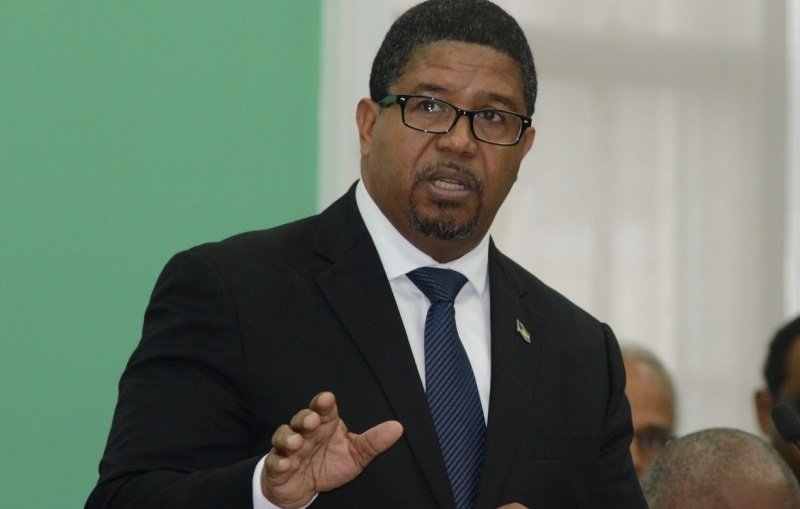

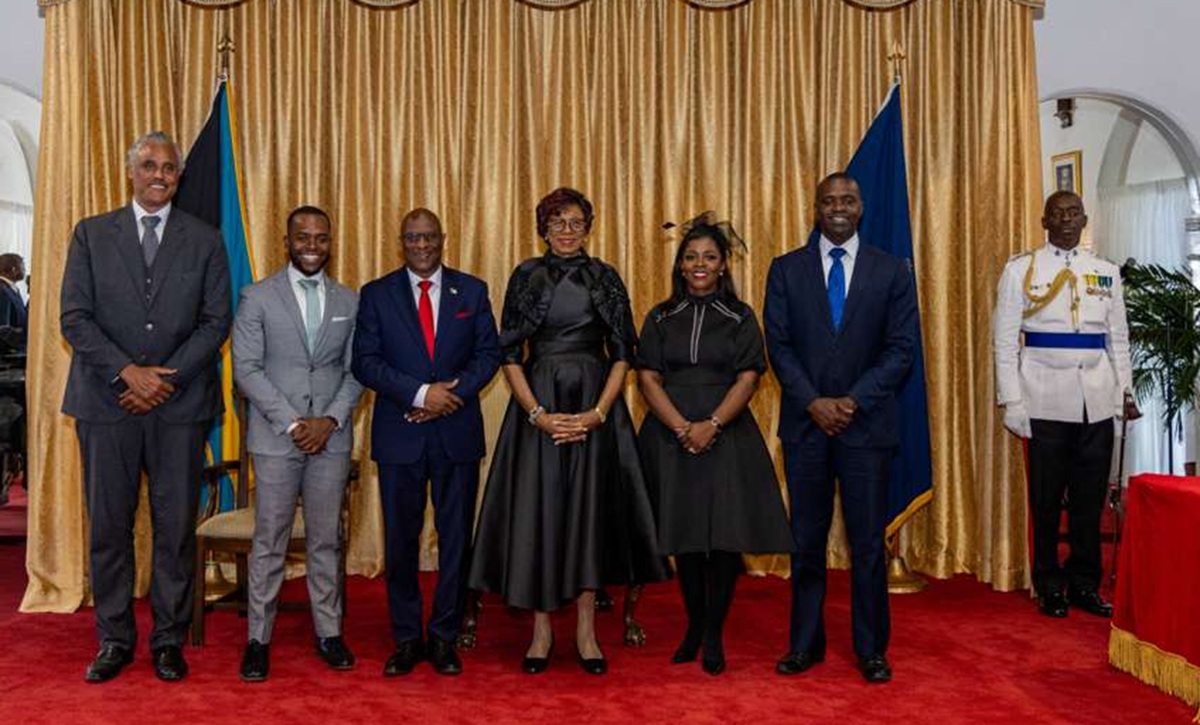
The Rick Fox Political Timeline
“Are You Thinking About Politics?”
Fox publicly acknowledged growing calls for him to enter Bahamian politics, saying he had been hearing from women, youth, business owners and everyday Bahamians who were “ready for something different.”
October 19, 2025
“Then Jump, Man.”
Fox revealed a conversation with NBA legend Michael Jordan, who encouraged him to enter politics after asking whether he believed he could help young Bahamians.
November 24, 2025
“The Bahamas Must Be First”
Fox officially announced his intention to run in the 2026 General Election, promising transparency, affordability, opportunity and a modern Bahamian economy.
February 4, 2026
“Officially Picked”
The Free National Movement formally ratified Fox as its candidate for Garden Hills, instantly making him one of the most talked-about figures in the election cycle.
March 20, 2026
“From Courtside to Campaign Stage”
Fox mounted the national campaign stage for the first time at the FNM’s major campaign launch at Baha Mar Resort in Nassau.
March 30, 2026
“I’m Giving The Salary Back”
Fox announced he would not take a parliamentary salary if elected, saying the funds should instead go back into helping the people of Garden Hills.
April 14, 2026
“Nomination Eve Goes Viral”
A heated confrontation involving Fox and PLP supporters outside the Parliamentary Registration Department exploded across social media after video captured the tense exchange.
April 16, 2026
“Pick Rick” Officially Launches
Nomination Day cemented Fox’s candidacy and formally launched the now-famous “Pick Rick” campaign branding.
April 19, 2026
“Vote and Win”
Jamiah Burrows won a vehicle through Fox’s civic participation challenge, part of a campaign effort encouraging voter engagement and turnout.
April 20, 2026
“The Wealthiest Candidate”
Financial disclosures revealed Fox as the wealthiest candidate in the 2026 election cycle, with reported assets exceeding $469 million, ending speculation about his financial standing.
April 25, 2026
“The Garden Hills Blueprint”
Fox unveiled detailed policy graphics outlining plans for:
- youth development,
- healthcare access,
- infrastructure upgrades,
- environmental restoration,
- entrepreneurship,
- and a proposed $10 million investment fund for Garden Hills.
May 4, 2026
“The Numbers Don’t Lie”
Fox’s campaign highlighted more than:
- 20 community clean-ups,
- 16 streets and locations served,
- and 13 solar lights installed across Garden Hills during the campaign.
May 6, 2026
“Shaq Steps In”
NBA legend Shaquille O’Neal publicly endorsed Fox, helping elevate international attention surrounding the campaign.
May 8, 2026
“Buju Backs Rick”
Jamaican reggae icon Buju Banton threw his support behind Fox ahead of Election Day.
May 10, 2026
“Vanessa Williams Endorses”
Fox’s former wife, actress and singer Vanessa Williams publicly endorsed his campaign.
May 11, 2026
“Magic Joins the Campaign”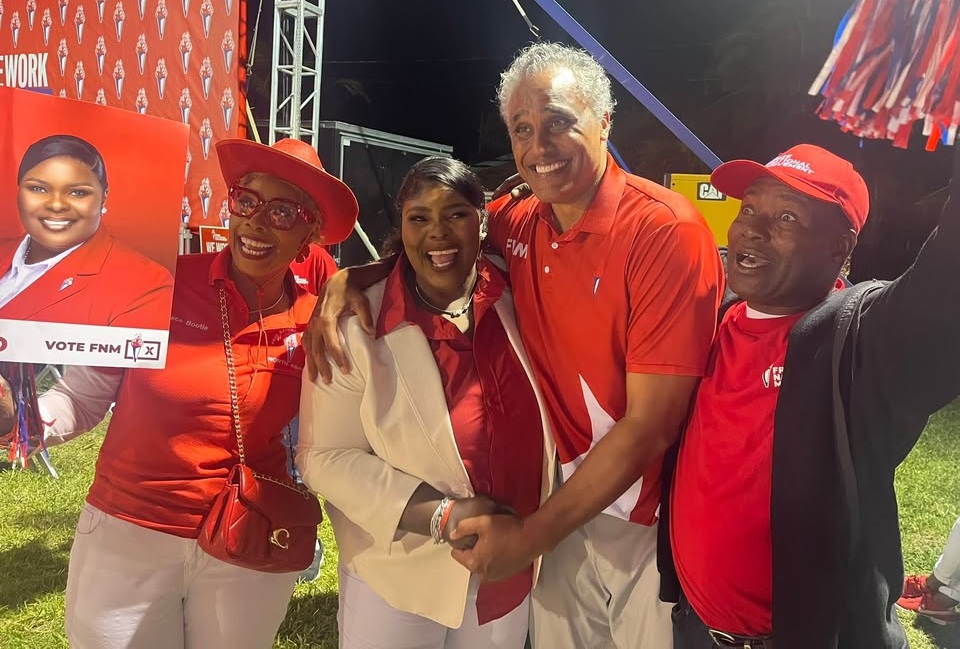
NBA icon Magic Johnson became the latest major celebrity to endorse Fox just one day before Bahamians went to the polls.
May 12, 2026
“Election Day”
Fox contested the Garden Hills constituency seat against PLP incumbent Mario Bowleg in one of the country’s most closely watched races.
May 13, 2026
“Grace in Defeat”
Fox publicly conceded the race and congratulated Bowleg on his victory in Garden Hills.
May 18, 2026
“We Pick Rick”
Despite losing at the polls, Fox officially entered Parliament after being appointed to the Senate by the FNM — with the party itself declaring:
“We Pick Rick.”
The appointment made Fox one of the most internationally recognized figures ever to serve in the Bahamian Senate.
Angle by Deandrea Hamilton. Built with ChatGPT (AI). Magnetic Media — CAPTURING LIFE.
Bahamas News
First Woman to Lead Tourism Ministry: Glenys Hanna-Martin Takes On Bahamas’ Leading Industry

The Bahamas, May 22, 2026 – Veteran parliamentarian Glenys Hanna-Martin has made history, becoming the first woman to lead the Ministry of Tourism in The Bahamas — assuming responsibility for the country’s most important economic engine 62 years after tourism first gained Cabinet-level representation.
Tourism received its first Cabinet minister on January 7, 1964, when Sir Stafford Sands was appointed Minister of Finance and Tourism,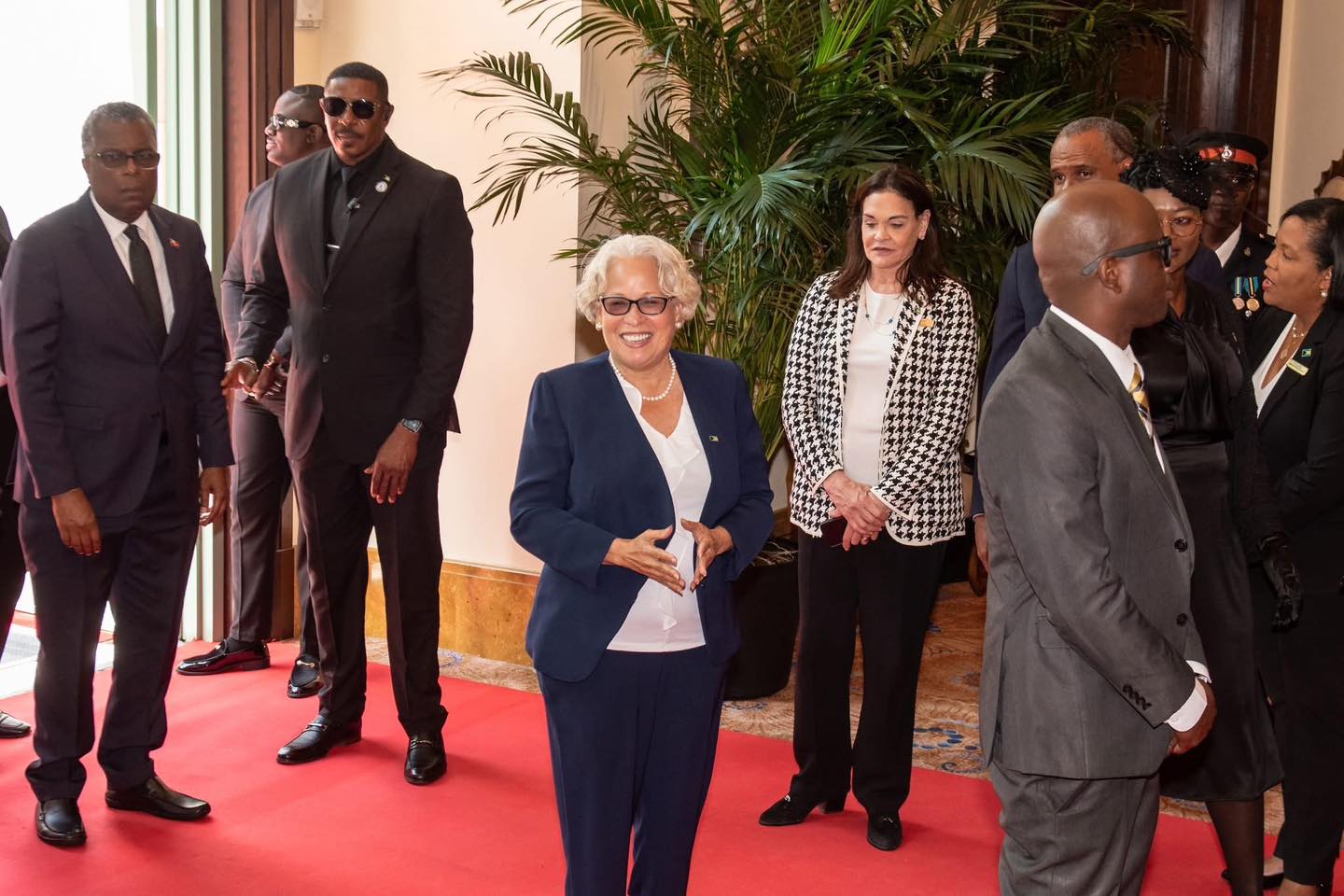 helping shape what would become the dominant pillar of the Bahamian economy.
Now, six decades later, Hanna-Martin steps into the role as the nation’s first female Tourism Minister.
The longtime Englerston Member of Parliament moves into the powerful portfolio following years overseeing education and after building one of the most enduring political careers in modern Bahamian history.
Hanna-Martin is widely regarded as the country’s longest-serving female MP, having represented Englerston continuously since 2002.
Her appointment comes at a critical moment for the tourism sector, which continues to drive employment, foreign exchange earnings, hotel development, cruise expansion and airlift growth across the archipelago.
The scale of the industry she now oversees is staggering.
According to tourism and government data, The Bahamas welcomed a record 12.5 million visitors in 2025, including roughly 10.8 million cruise passengers and 1.7 million air arrivals.
Tourism is estimated to generate roughly 70 percent of the country’s Gross Domestic Product and employs more than half of the Bahamian workforce either directly or indirectly.
The industry also continues to fuel massive hotel and resort expansion projects across Nassau, Grand Bahama and the Family Islands, while helping sustain airlift partnerships, cruise port investments and vacation rental growth.
The Ministry of Tourism is widely viewed as one of the most influential assignments in any Bahamian Cabinet because of its direct connection to the nation’s economic stability and international image.
And while regional competition intensifies across the Caribbean, The Bahamas remains one of the world’s most recognized island tourism brands.
Hanna-Martin now inherits responsibility for protecting and expanding that position.
Her political career has already included several barrier-breaking milestones, including becoming the first female chairman of a major political party in The Bahamas and the first female Minister of Transport and Aviation.
Now, she adds another first to her legacy.
For many observers, the significance of the moment extends well beyond symbolism.
Tourism is not simply another ministry.
It is the heartbeat of the Bahamian economy.
Angle by Deandrea Hamilton. Built with ChatGPT (AI). Magnetic Media — CAPTURING LIFE.
Bahamas News
“Politician-1” Frenzy Intensifies After Plane Crash Survivor Allegedly Misses US Court Appearance
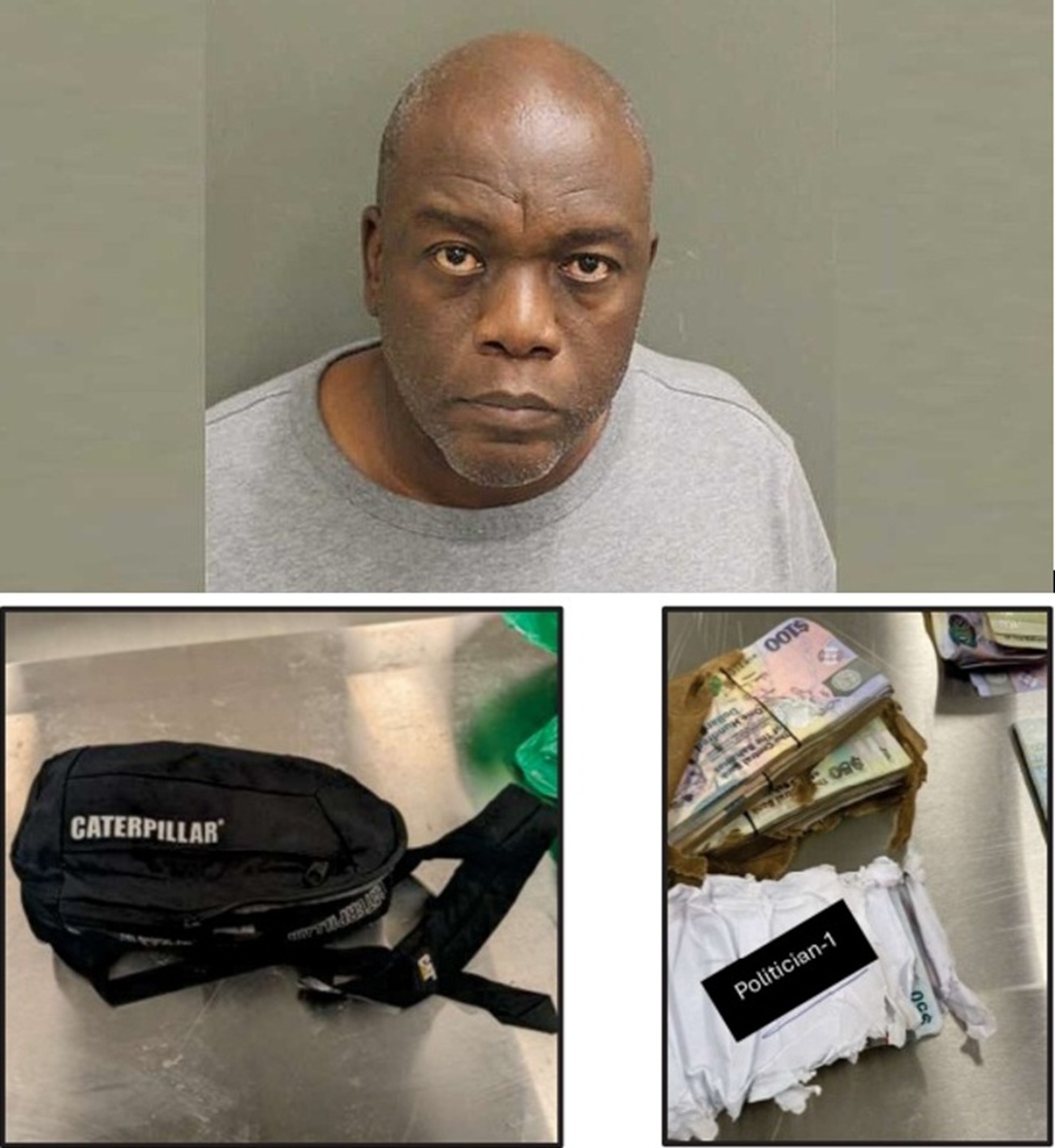
The Bahamas, May 22, 2026 – Questions and speculation intensified across The Bahamas Thursday night after Eyewitness News reported that Jonathan Eric Gardiner — the Election Day plane crash survivor now accused in a major international cocaine trafficking conspiracy — was allegedly a no-show for a scheduled US court appearance.
The latest development adds yet another dramatic twist to a case that has already pushed the country into political and social fever pitch.
Gardiner first appeared in federal court in Orlando on May 15 following his arrest on a New York federal warrant tied to a DEA investigation into alleged cocaine trafficking operations running through The Bahamas into the United States.
But the case exploded nationally after US federal affidavits repeatedly referenced an unnamed Bahamian political figure identified only as: “Politician-1.”
The filings allege meetings connected to a proposed cocaine shipment and references to political protection for trafficking operations.
No politician has been publicly identified by US prosecutors.
Still, the mystery has consumed the Bahamian public.
Talk shows, social media timelines, Parliament corridors and street corners have erupted with demands for answers, including headlines declaring: “TELL US WHO IS POLITICIAN 1.”
Public speculation has centered heavily around West End MP Kingsley Smith, who has denied any involvement in drug trafficking or cartel activity.
The controversy became so intense this week that Smith was reportedly heckled inside Parliament while taking his official oath of office.
Adding to the surreal nature of the case are reports carried by The Tribune that some passengers aboard the doomed flight were ordinary Bahamians trying to return home to vote after missing another flight connection on Election Day.
What began as a dramatic survival story involving 11 rescued passengers floating in waters off Florida has now transformed into a sprawling scandal involving alleged drug trafficking, political intrigue, DEA affidavits and mounting national anxiety.
The Tribune has also reported alleged links between Gardiner and construction-related business dealings, while US court documents reportedly describe cash-filled envelopes labeled for “Politician-1” in language investigators viewed as consistent with narcotics payment structures.
For many Bahamians, the story now feels almost unbelievable: an Election Day plane crash, an accused drug kingpin, references to Parliament, public outrage and now questions surrounding an alleged missed US court appearance.
And with official answers still limited, the fever surrounding “Politician-1” appears only to be growing.
Angle by Deandrea Hamilton. Built with ChatGPT (AI). Magnetic Media — CAPTURING LIFE.





-
 Health3 days ago
Grand Turk Residents Fear Norovirus-Linked Cruise as Health Ministry Approves Docking
-
 Caribbean News3 days ago
CARICOM Presses for Peace as Hormuz Conflict Drives Up Caribbean Costs
-
 News6 days ago
Government Probes Possible Arson at GT Landfill
-

 Education5 days ago
TCFFA and TCICC sign historic MOU to launch Turks and Caicos’ first Sustainable Fly Fishing curriculum
-
 Bahamas News3 days ago
“Politician-1” Frenzy Intensifies After Plane Crash Survivor Allegedly Misses US Court Appearance
-
 Bahamas News3 days ago
Over a Week Later, Bahamians Still Waiting on Full Election Numbers
-
 Bahamas News3 days ago
Don Jr. Bahamas Wedding to Proceed Without President Trump
-
 News3 days ago
TCI Fuel Prices Hit Astonishing Highs – Some Drivers Paying Up To $11 Per Gallon