
News
You can now VOTE ELECTRONICALLY in the Turks and Caicos Islands


Garfield Ekon and Deandrea Hamilton
Editorial Staff
Turks and Caicos, December 2, 2024 – The Turks and Caicos Islands (TCI), can now legally go ahead with Electronic Voting, following the November 27 passage of the Elections Amendment Bill 2024, by the House of Assembly.
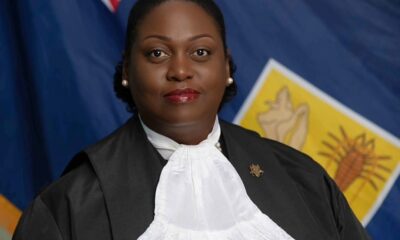
Attorney General, Hon Rhondalee Braithwaite Knowles, KC moved the Bill, reminding the Speaker and the gallery of the factors which would have necessitated amendments to the legislation including: recommendations by election observers and the Supervisor of elections, enactment of amendments to the Constitution and follow through on electronic voting, which had been passed in the House ahead of the 2021 General Elections, with the implementation deferred to a later date.
“The House having voted funds to support the Supervisor, ensuring that at this next election, we have electronic voting and so there are some changes in the Bill that would reflect that. These machines, of course, have well-established credentials. They are used around the world,” she said.
An electronic voting system will streamline the voting process and delivers efficiency and accuracy by electronically tabulating each vote, and leveraging the system, voters can expect reduced waiting time at polling stations, and presenting rapid results, as well as facilitating analysis of the voting process.
“I believe that we should have another demonstration prior to polling day, and as many as we can have, so that people are good as to how these machines work,” stated Opposition member of the House, Hon Alvin Garland who addressed the House, during the recent debate over the Bill.
The new legislation is aligned with the 2020 Elections Amendment Ordinance, aimed at enhancing the electoral process through modern technology, and underscores the commitment of the Turks and Caicos Islands’ Government to conducting elections that are efficient and uphold the highest standards of accuracy and transparency.
House of Assembly members also supported Advanced Polling, which goes beyond the current Priority Voting.
“So in relation to that, the Constitution Team that negotiated with the United Kingdom would have been told by the United Kingdom that it was not necessary to have a specific provision in the Constitution to empower the making of advanced voting,” said the AG, who added, “but they have pointed out to us that it is not necessary because there is nothing in the constitution that prohibits advanced voting and so because the constitution empowers the legislature to make laws for the peace, order and good governance of these islands, the Elections Ordinance can be amended to include advanced voting.”
Electronic voting a form of computer-mediated voting in which voters make their selections with the aid of a computer. The voter usually chooses with the aid of touch-screen display although audio interfaces can be made available for voters with visual disabilities.
Ballot casting, recording, and tabulation are routinely done with computers even in voting systems that are not, strictly speaking, electronic. Electronic voting in the strict sense is a system where the first step, ballot composition (or choosing), is done with the aid of a computer.








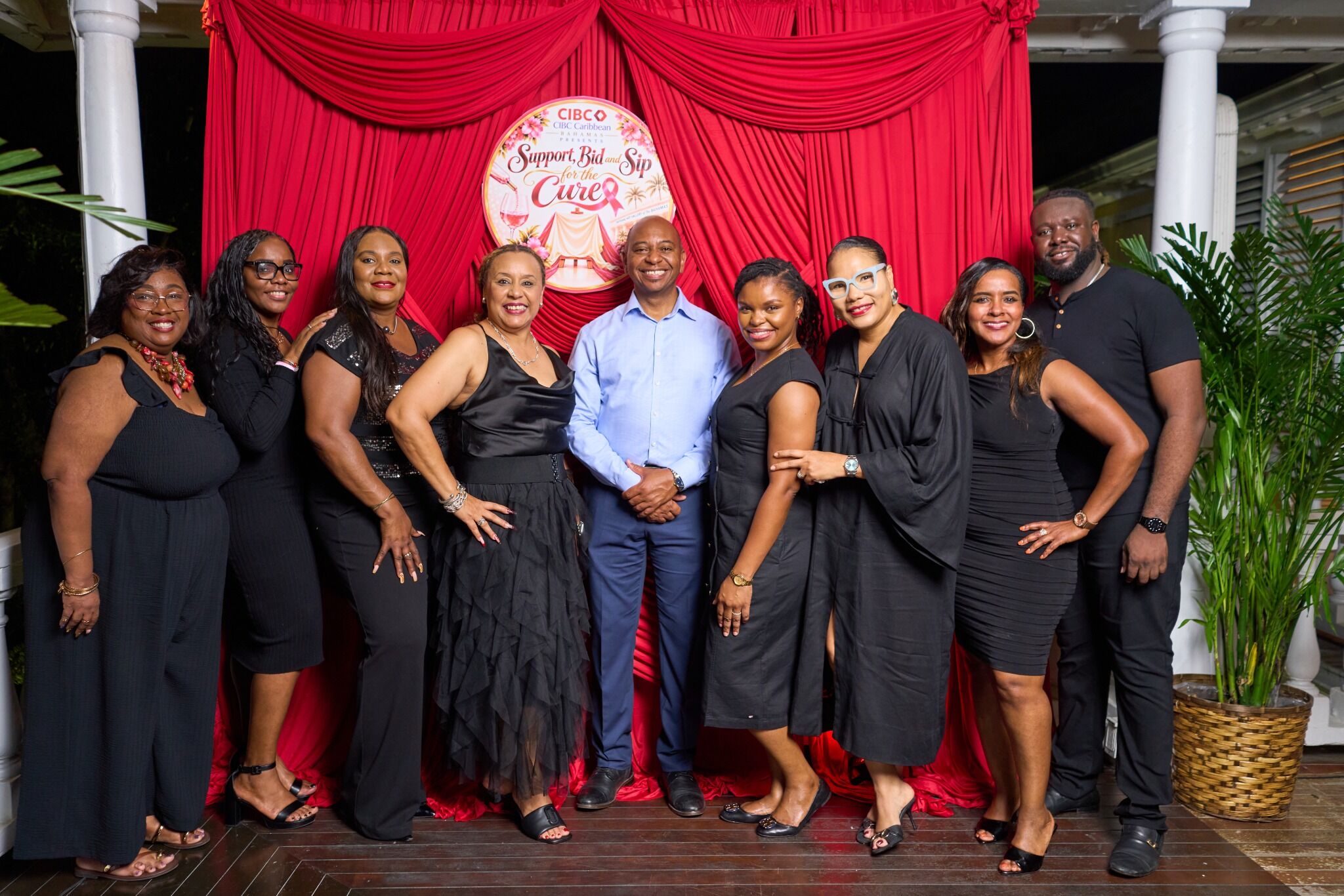
Nassau, Bahamas, 23 November 2026 – With 15 years of Walk for the Cure now successfully concluded, CIBC Caribbean is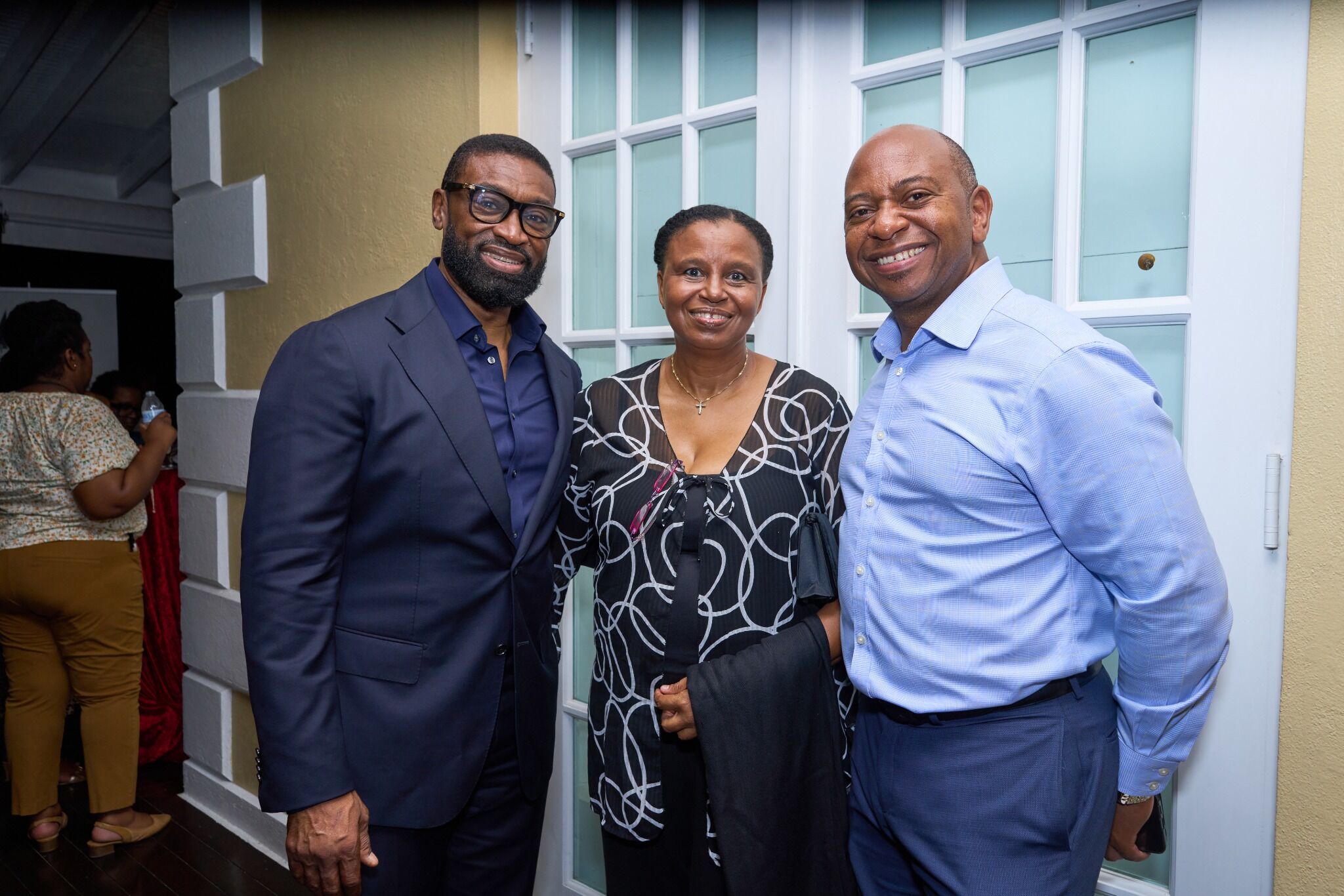 introducing new ways to build on its fundraising efforts in support of a worthy cause.
The latest addition is Sip for the Cure, which brings together art, culture and philanthropy to raise additional funds for cancer organizations across The Bahamas. Hosted by Das Quay, the recent event featured a silent auction, including an exclusive piece by renowned Bahamian artist His Excellency Jamaal Rolle, along with performances by the R.M. Bailey Senior High School Junkanoo Group and Rhythm in Motion Studios.
CIBC Caribbean Head of Country Terrance Gibson said the new initiative reflects the bank’s commitment to finding meaningful ways to engage supporters beyond the traditional walks.
“Walk for the Cure has shown us what is possible when people come together with a shared purpose. Sip for the Cure is an extension of that commitment, creating another opportunity for people to give and help make a difference in the lives of those affected by cancer,” Gibson said.
“While this event marks the close of another fundraising season, the need for support continues long after the last walk. Our hope is that Sip for the Cure will grow into an annual tradition, allowing us to build on what we have achieved and extend the reach of the support we provide.”
Held at the National Art Gallery of The Bahamas, the event followed four Walk for the Cure events hosted in New Providence, Grand Bahama, Abaco and Eleuthera throughout October. The event also provided an opportunity for CIBC Caribbean to recognize the individuals, businesses and community partners whose contributions have supported the flagship fundraiser over its 15-year history.


Photo Captions:
1st insert: From left are Charles Sealy II, Cheyvonne Bethell, and CIBC Caribbean Head of Country Terrance Gibson.
2nd insert: Pictured beside CIBC Marketing Manager F. Leann Albury-Mitchell are student artists Ayira Roache, left, and Chloe Sawyer, right.
3rd insert: Standing beside an exclusive piece by his Excellency Jamaal Rolle, left, is CIBC Caribbean Head of International Corporate Banking Tonia Cartwright, right.
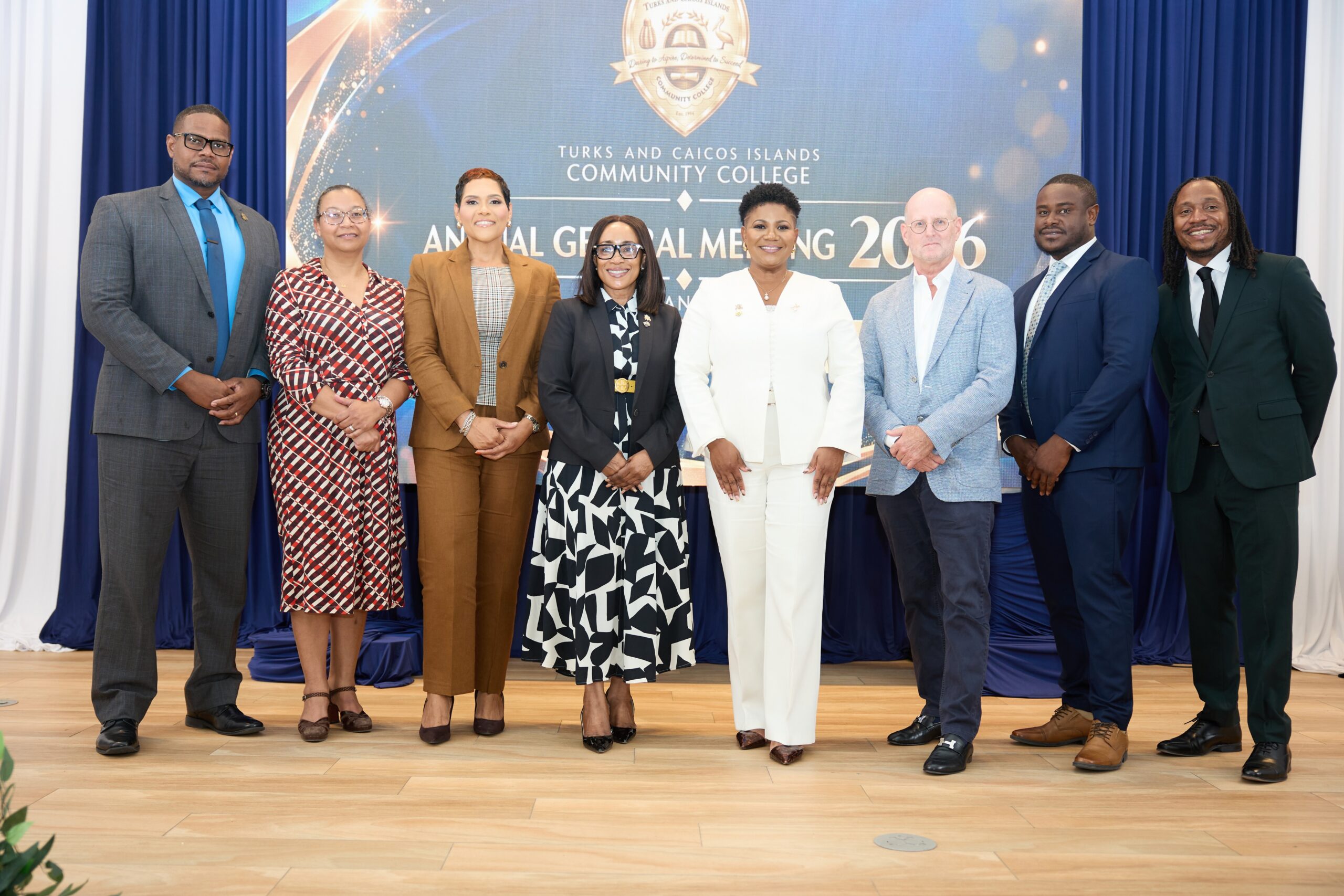
Turks and Caicos, November 23, 2026 – The Turks and Caicos Islands Community College (TCICC) officially launched the TCICC Foundation and Endowment at its Board of Governors’ second Annual General Meeting on Thursday, October 22, 2026, in Providenciales.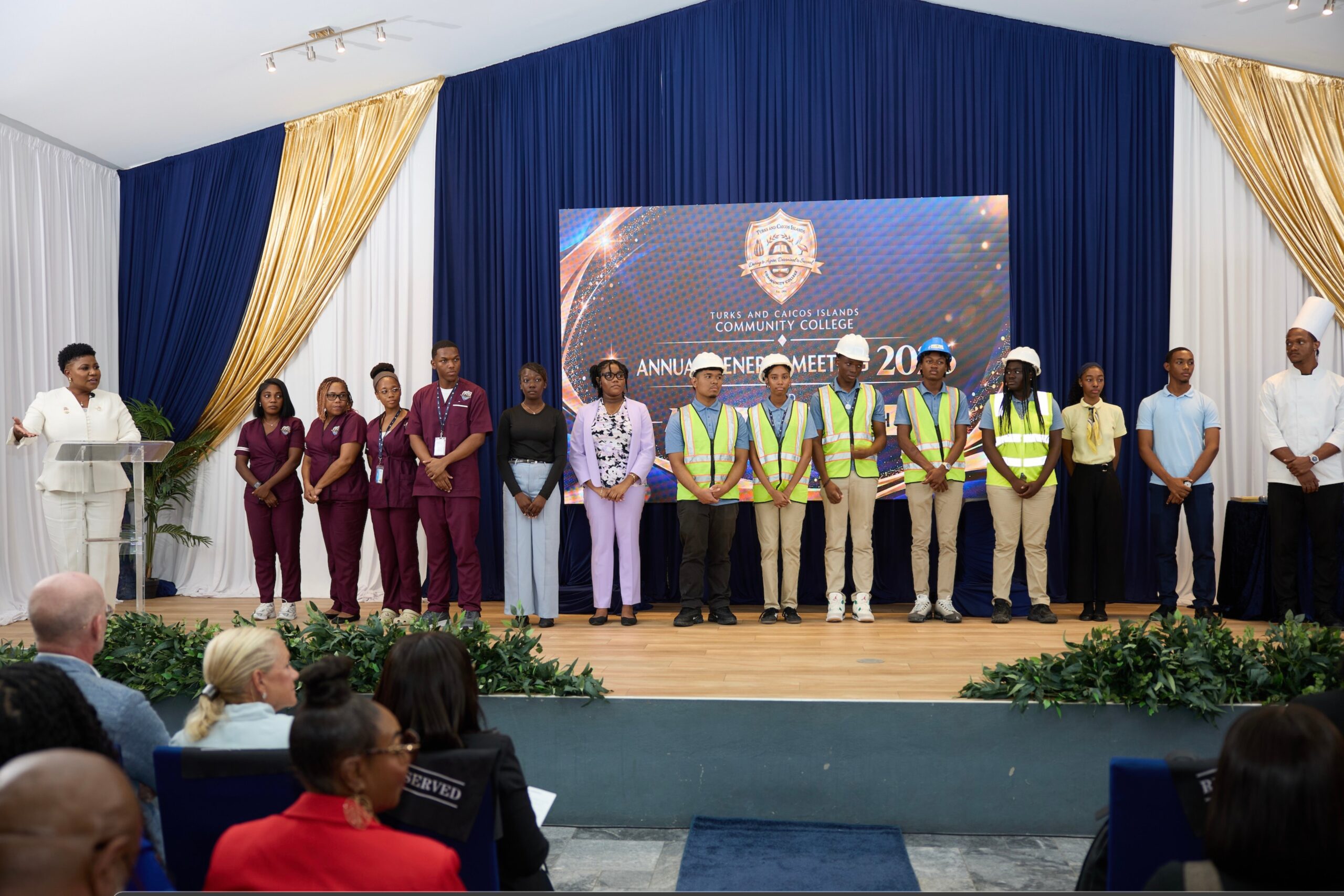
Held under the theme “Together We Advance: Strengthening Partnerships, Expanding Possibilities,” the event introduced an initiative to strengthen the College’s financial sustainability through philanthropy, student support and educational investment.
Mr. Leonardo Patrick emphasized the need for sustainable funding as enrollment and academic offerings expand.
President and CEO Dr. Candice Williams reported a 32 percent enrollment increase, from 469 students in Fall 2024 to 619 in Fall 2025, alongside a record 144 graduates and ISO 9001:2015 certification.
“TCICC is not the same institution it was a year ago. We are larger. We are stronger. We are more accountable. And we are moving forward with intention,” she affirmed.
Board Chair Sheba Wilson described the Foundation as a significant step toward institutional sustainability.
Keynote speaker Dr. Stan Hartling urged businesses to invest through mentorship, internships, apprenticeships and career opportunities.
Education Minister Hon. Rachel Marshall Taylor welcomed the initiative, highlighting opportunities for scholarships and stronger academic programs.
Dr. Williams closed by inviting students from TCICC’s seven faculties onto the stage, emphasizing the Foundation’s student-centered mission.
Annual memberships range from US$45 for students to US$18,000 for corporations, with additional categories available.
For membership, donations or Board participation, contact TCICC at (649) 339-3900.
Bahamas News
Nearly 1,500 UK Parliamentarians to Weigh In on Bahamas–Turks and Caicos Maritime Boundary Treaty
By Deandrea Hamilton | Editor
A historic maritime boundary treaty between The Bahamas and the Turks and Caicos Islands is heading for scrutiny by 650 elected members of the United Kingdom’s House of Commons and approximately 796 members of the House of Lords before it can become legally binding.
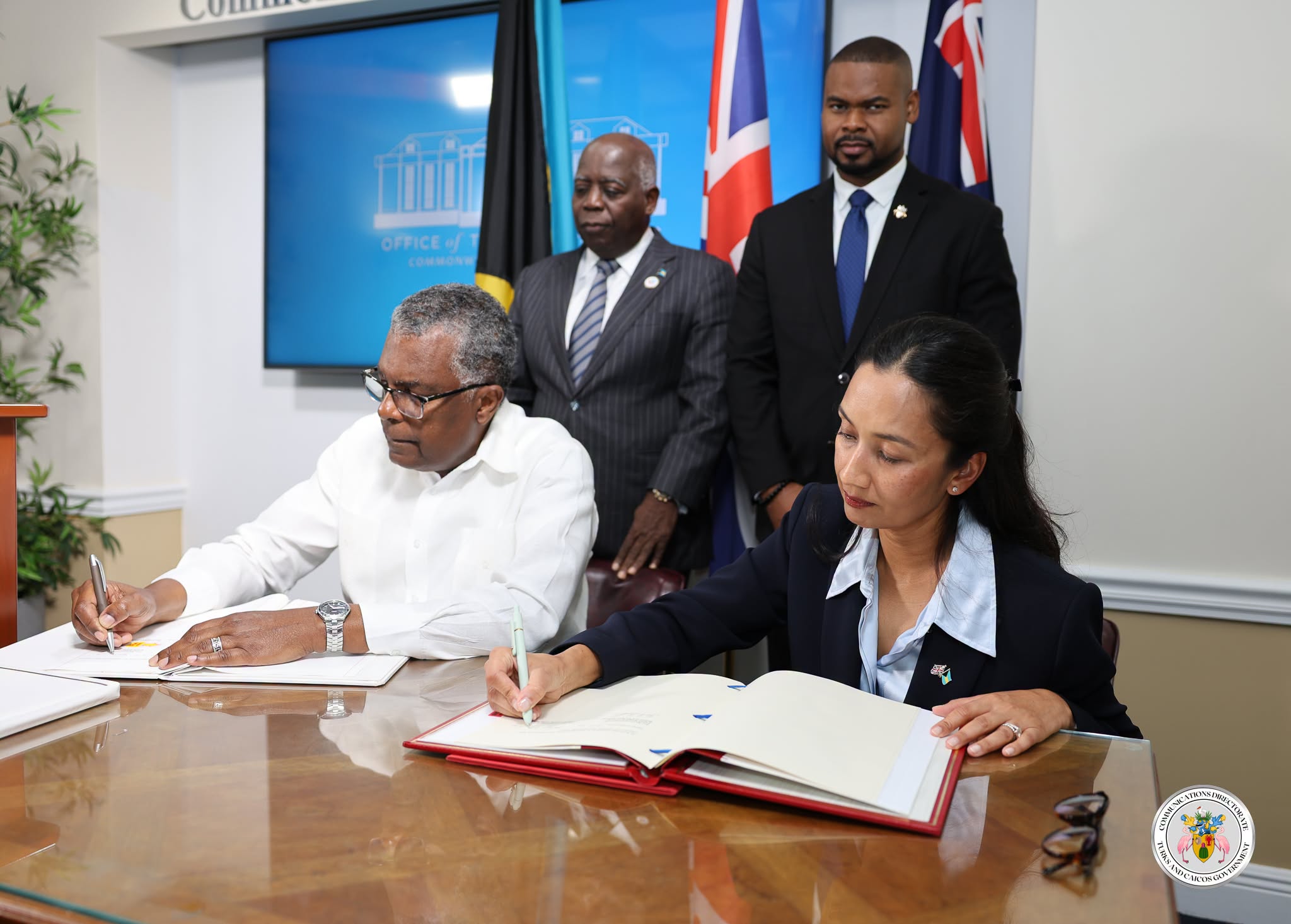
The agreement was signed in Nassau on Monday, November 16, 2026, by Bahamian Foreign Affairs and Immigration Minister Frederick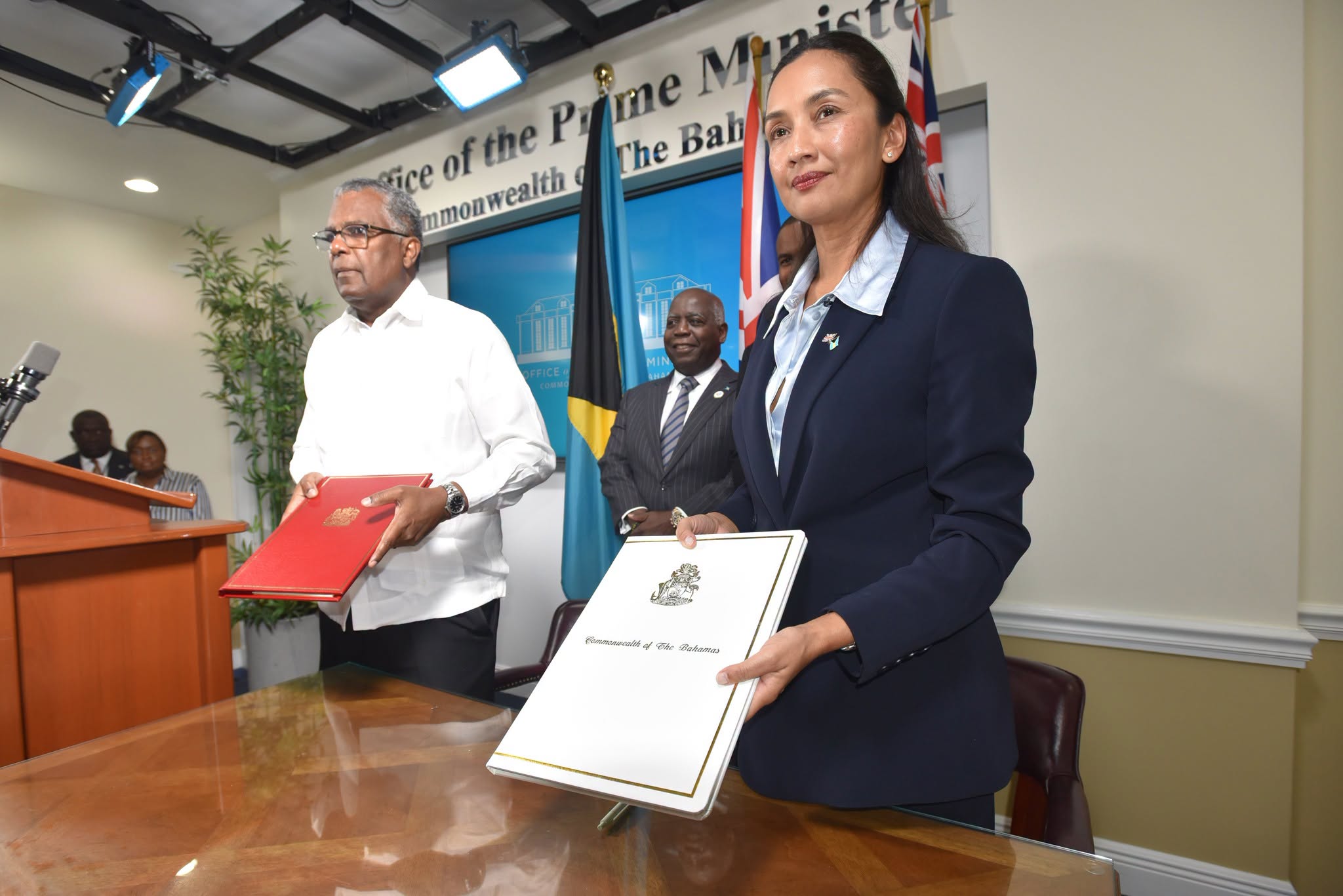 Mitchell and British High Commissioner Smita Rossetti, representing the United Kingdom. Looking on were Bahamian Prime Minister Philip Davis and Turks and Caicos Deputy Premier Jamel Robinson.
Although the treaty draws a delimitation line across the Atlantic Ocean, that line runs much deeper than the surface.
It establishes a boundary through the water column, across the seabed and into the subsoil beneath it, defining maritime rights and jurisdiction involving fisheries, underwater resources and security operations.
The boundary separates maritime areas between Mayaguana and Inagua in The Bahamas and the Caicos Islands.
But the signatures do not make the treaty immediately enforceable.
Under British parliamentary procedures, the agreement must be presented to both Houses for 21 sitting days, allowing parliamentarians to scrutinize its provisions and potentially object to ratification.
A parliamentary vote is not automatically required. However, the House of Commons can formally delay ratification, while the House of Lords may register objections.
The process reflects the Turks and Caicos Islands’ constitutional relationship with Britain, which retains responsibility for its international treaty arrangements.
Deputy Premier Jamel Robinson emphasized the territory’s involvement in the negotiations.
“Our Government has been actively engaged in the negotiations, ensuring that the interests of our people and our maritime communities were represented throughout the process.”
He added that the agreement strengthens the foundation for maritime security, responsible fisheries management and cooperation between the neighboring jurisdictions.
Negotiations began in 1992, with a technical agreement reached in 1996 that was never ratified. Talks resumed in 2023, following changes to The Bahamas’ archipelagic baselines in 2008.
Prime Minister Philip Davis welcomed the conclusion of negotiations spanning more than three decades.
“It gives fishermen and law enforcement officers on both sides an agreed line, and it will strengthen the close cooperation between our security services.”
Davis also acknowledged the longstanding friendship between the two island communities.
“Our peoples have been friends for generations, and today’s Agreement builds on that friendship.”
Once both governments complete their domestic procedures, the treaty will enter into force on the 30th day following the final notification.
For two Caribbean neighbors, the agreement settles a 34-year-old boundary question, but its final legal journey now passes through Westminster.





-
 Bahamas News1 week ago
Sunset and friendship as guests join Governor General at 700ft table for inaugural The Longest Table event in The Bahamas
-
 Bahamas News3 days ago
CIBC Caribbean Introduces Sip for the Cure
-
 Bahamas News4 days ago
Nearly 1,500 UK Parliamentarians to Weigh In on Bahamas–Turks and Caicos Maritime Boundary Treaty
-
 Education4 days ago
TCICC Foundation Officially Launched at Board of Governors’ Second Annual General Meeting
-
 Independent writer4 days ago
Golf Cart Restrictions: What Happens to Grand Turk’s Tourism Economy?