News
Stakeholders Strengthen Collaboration on Housing and Informal Settlements at World Habitat Day Roundtable

Providenciales, Turks and Caicos Islands – Friday, 9 October 2026: Representatives from across Government and key
Held at the Salvation Army Brighter Futures Centre under the theme “Adequate Housing for All,” the roundtable was hosted by the Informal Settlements Unit (ISU) and the Department of Housing and Community Renewal, in collaboration with the Planning Department.
The event brought together representatives from agencies whose respective mandates intersect with housing, land use, infrastructure, environmental management, social development and informal settlements. Discussions focused on the challenges affecting access to adequate housing in the Turks and Caicos Islands and the need for coordinated approaches to both existing informal settlements and future housing development.
Opening remarks were delivered by Justice Carlos W. Simons KC, Strategic Lead of the Informal Settlements Unit; Premier of the Turks and Caicos Islands, Hon. Charles Washington Misick; and Her Excellency Dileeni Daniel-Selvaratnam, Governor of the Turks and Caicos Islands.
In his remarks, Premier Misick acknowledged the housing crisis facing the Turks and Caicos Islands, including the gap between the cost of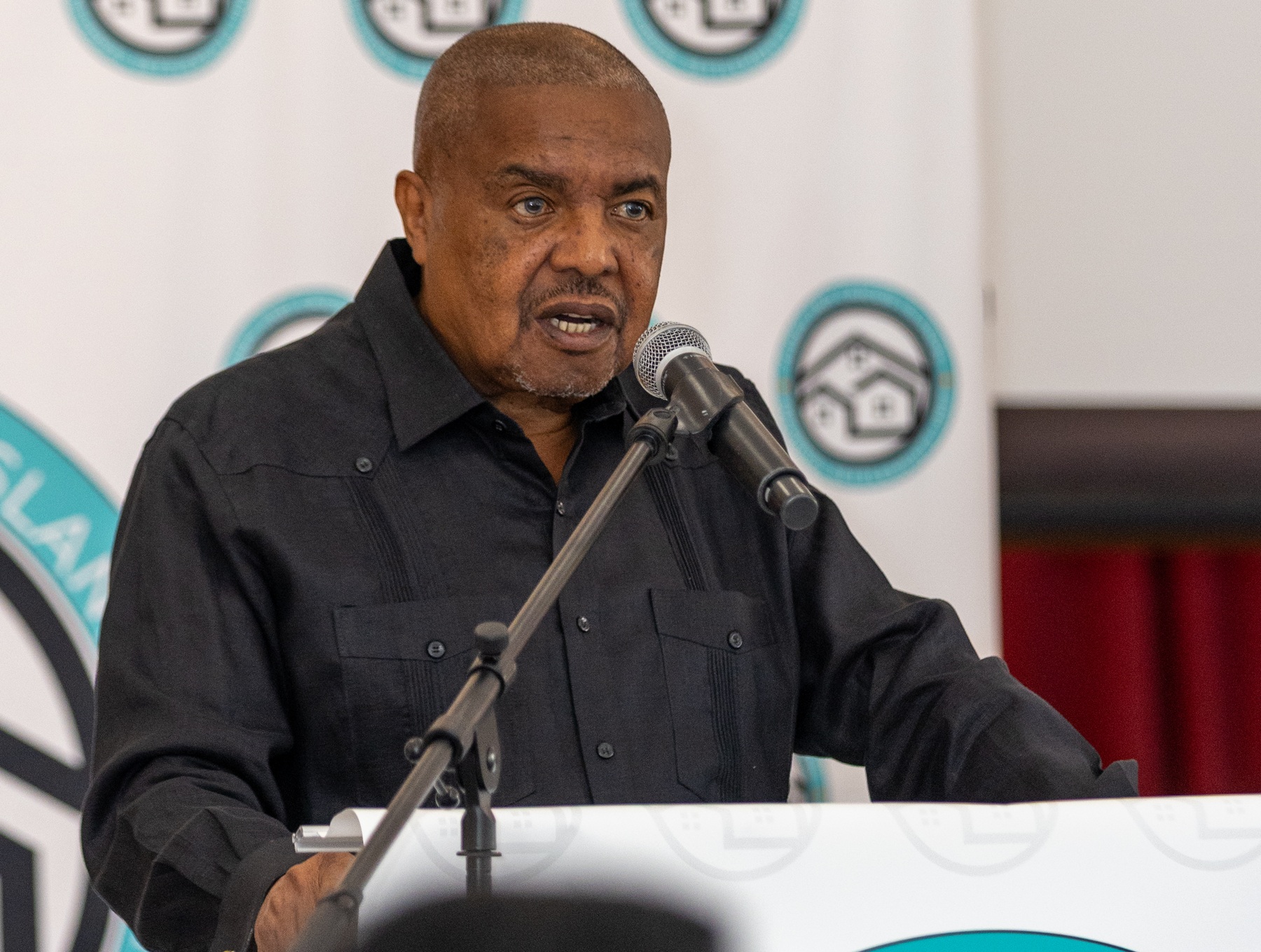
Governor Daniel-Selvaratnam also addressed the pressures on housing availability and affordability arising from the Islands’ rapid economic growth, noting their connection to the proliferation of informal settlements. While recognising the difficult circumstances faced by individuals seeking shelter, she stressed the need for responses that balance humanitarian considerations with the enforcement of laws governing land use, planning, immigration and public safety.
“This is therefore not a choice between humanity and enforcement. A mature response must be capable of holding several truths at once- that some people are genuinely vulnerable…that the state has responsibilities towards those at risk, and that equally, laws governing land, planning, immigration and public safety must retain meaning,” the Governor stated.
The Department of Housing and Community Renewal, Planning Department and Informal Settlements Unit subsequently delivered
The Housing Department outlined current housing challenges and initiatives being pursued to expand access to appropriate and affordable housing. The Planning Department examined the relationship between housing, land use, infrastructure, safety and resilient community development, while the ISU presented findings from its GIS mapping and Social Needs Assessment Survey and outlined possible pathways for addressing informal settlements through regularisation, redevelopment and alternative housing solutions.
The presentations were followed by a guided stakeholder discussion examining issues including housing affordability, infrastructure, land availability, informal settlement regularisation, environmental and social considerations, and the roles different agencies can play in developing sustainable responses.
A key outcome of the discussion was an agreement to establish a stakeholder liaison network, with each participating organisation committing to designate a representative to serve as its principal point of contact. The network will provide a mechanism for continued communication and information-sharing among participating agencies, while helping to identify opportunities for closer collaboration on matters where their respective mandates intersect.