Connect with us

world news

A Tapestry of Peace: Humanity, Not Politics, Ends the War in Gaza

Published

on

By Deandrea Hamilton | Magnetic Media


October 14, 2025 – I watched the people, by the hundreds, walk the dusty strip that led back to their home in Gaza. We all knew, as they did, they were heading into hollowed-out neighbourhoods — debris, shattered glass, skeletal walls — reminders of years of despair.

But there was something else too: a buoyancy in their stride, a glimmer in their eyes. The Mediterranean glistened, still impossibly beautiful. The people — strong, proud, indomitable — moved as though carrying both grief and grace in equal measure.

In that moment, I realized this was more than diplomacy. More than the signing of a historic document in distant halls of marble and microphones. This was humanity rediscovering itself — a world beginning to understand that beyond geography and faith and politics, we are all human beings, bound by the same elemental truths: emotion, desire, hope, dream, and love.

It was not politicians who brokered this new peace, but visionaries who remembered the simplicity of service — that peace, like business, depends on relationships, trust, and respect. Perhaps it took a businessman to remind the world that excellence in service to humanity means meeting people’s needs with empathy, not ideology.

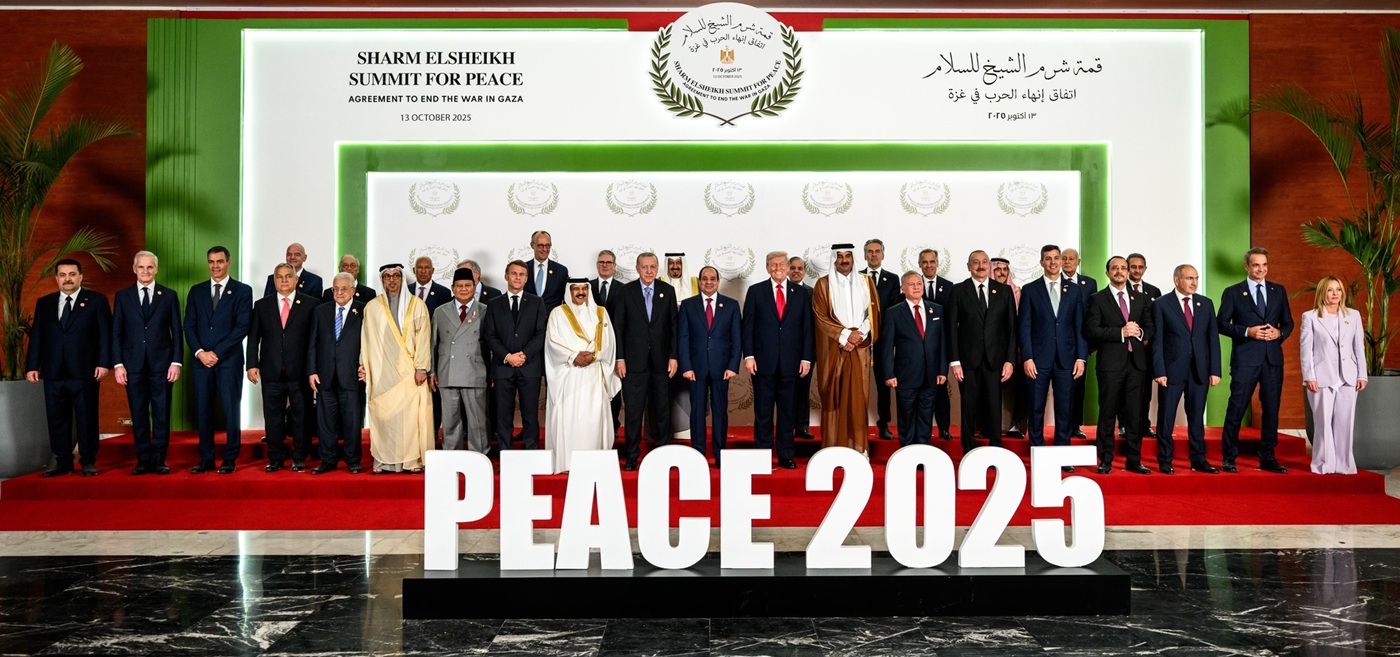
The Trump Peace Agreement, signed in Sharm El-Sheikh, Egypt, brought to a close more than two years of suffering and opened, in the words of the signatories, “a new chapter for the region defined by hope, security, and prosperity.” Egyptian President Abdel Fattah El-Sisi, who hosted the summit, called it “the dawn of renewal — not only for Gaza, but for how we see one another.”

Under the accord, 20 living hostages held in Gaza have been freed and reunited with their families, marking the end of one of the most painful sagas of the conflict. In addition, the agreement mandates the return of 28 deceased hostages, with four sets of remains already handed over. The deal also includes the release of thousands of Palestinian detainees, allowing families long separated by war to embrace again — mothers and sons, brothers and sisters, husbands and wives.

For the first time in decades, the streets of Gaza and Tel Aviv echoed the same sound — weeping and relief.

The agreement’s language was strikingly human: a shared vision of “tolerance, dignity, and equal opportunity for every person,” where faith is not a dividing line but a moral compass. It pledges to protect sacred sites across Christianity, Islam, and Judaism, recognizing that this narrow strip of land carries deep spiritual meaning for much of humanity.

The declaration also commits to dismantling extremism “in all its forms,” replacing radicalization with education, opportunity, and respect. In a time when rage had become routine, the world seemed to pause — if only for a moment — to breathe again.

Observers call it a diplomatic miracle; others see divine timing. But either way, this peace feels different — grounded in the recognition that people cannot be endlessly broken without consequence. The Muslim and Arab world, long accused of intolerance, appears to be turning a page: moving from rejection to reconciliation, from ideology to empathy.

For a generation raised on images of rockets, ruins, and rage, the simple act of dialogue has reclaimed its power. The leaders who signed the document — Donald J. Trump, Abdel Fattah El-Sisi, Tamim bin Hamad Al-Thani, and Recep Tayyip Erdoğan — pledged to resolve future disputes through negotiation, not war.

Standing before the Knesset in Jerusalem the following day, President Trump declared,

“This peace will not end with signatures. It will endure through every handshake, every investment, and every act of mercy that follows. Peace is not an event — it is a way of life.”

And as I watched the people of Gaza — battered, barefoot, but unbroken — I couldn’t help but believe that this time, maybe, the world has finally begun to live that truth.

We have not just reached peace; we have rediscovered the tapestry God Himself has woven — of difference, dignity, and divine connection — the beauty of being human.

Angle by Deandrea Hamilton. Built with ChatGPT (AI). Magnetic Media — CAPTURING LIFE.

News

Violence against children persists in Latin America and the Caribbean  

Published

on

A new report by PAHO and UNICEF warns of the impact of violence from an early age and calls for strengthening prevention, protection and response from health, education and social protection systems to break the cycle of violence and ensure safe environments.


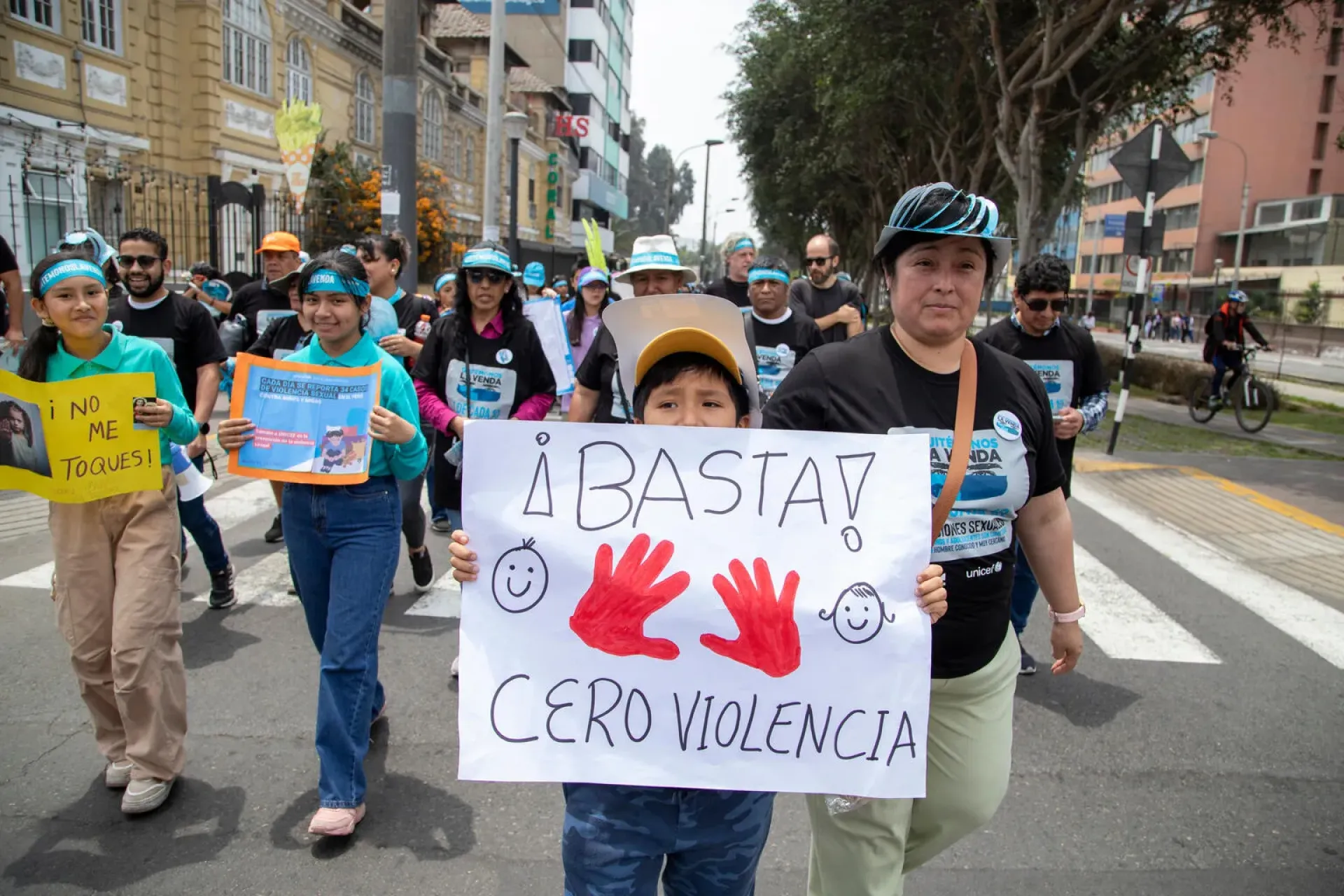
PANAMA CITY / WASHINGTON, D.C., 26 January 2026 – In Latin America and the Caribbean, violence continues to be a serious threat to the lives, health and well-being of millions of children, adolescents and young people, warn the Pan American Health Organization (PAHO) and UNICEF in a new joint publication, Violence against children and adolescents in Latin America and the Caribbean: New data and solutions.

The most serious consequence of violence is the death of thousands of children, adolescents and young people. Between 2015 and 2022, 53,318 children and adolescents were victims of homicide in the region.

The most recent available data, focusing on adolescents aged 15 to 17 years, show contrasting trends by sex. Between 2021 and 2022, the homicide rate among adolescent boys decreased from 17.63 to 10.68 deaths per 100,000 in Latin America and the Caribbean, although it remains high. During the same period, the rate among female adolescents doubled, from 2.13 to 5.1 deaths per 100,000.

Homicides occur in a context of rising armed violence in some areas of the region, associated with organized crime, easy access to firearms, social inequalities and harmful gender norms, which increasingly expose adolescents to situations of lethal violence.

Different forms of violence are interconnected andin many cases, intensify over time. The report highlights how violence is present from a very early age. In the region, 6 out of 10 children and adolescents under 14 years of age are subject to some type of violent discipline at home, while one in four adolescents aged 13 to 17 experiences bullying at schoolNearly one in five women in Latin America and the Caribbean report having experienced sexual violence before the age of 18. Increasingly, violence manifests itself in digital environments, although available data remains limited.

“Every day, millions of children in Latin America and the Caribbean are exposed to violence – at home, at school and in communities with a gang presence. Multiple places and situations in the region present real risks and dangers for children,” said Roberto Benes, UNICEF Regional Director for Latin America and the Caribbean. “We know how to end the violence. In Latin America and the Caribbean, strong and sustained public policies are required to prevent and respond to violence in all its forms so that every child can grow up in a safe environment.”

“Violence has a profound and lasting impact on the physical and mental health of children and adolescents and violates their right to grow up in safe environments, at home, school and in the community,” said Dr. Jarbas Barbosa, Director of PAHO. “Health services play a key role in prevention and response: when health workers identify people and groups at risk early and provide timely, quality support, they can make a real difference for survivors, their families and communities.”

In addition to describing the scale of the problem, the report highlights evidence-based solutions that can prevent violence and mitigate its costs.

To advance this agenda and end violence in all its forms, PAHO and UNICEF urge governments in the region to strengthen and enforce child protection laws, ensure effective control of firearms, train police officers, teachers, and health and social workers, support parents and caregivers in respectful parenting practices, invest in safe learning environments, and scale up responsive services to ensure that all children and adolescents grow up protected, have access to justice, and live healthy, violence-free lives.

The report was validated during a regional ministerial consultation held on 23-24 October 2025, which brought together more than 300 participants from across the region, including ministers and senior officials from the health, education, justice and child protection sectors, as well as civil society representatives, youth leaders and international partners, with the aim of agreeing on concrete actions to build safer environments for children and adolescents.

Continue Reading

world news

Haiti Begins Preparing Polling Stations as Long-Delayed Elections Finally Take Shape

Published

on

Haiti, December 4, 2025 – For the first time in nearly a decade, Haiti is taking concrete steps toward holding national elections — and the most visible sign came this week with confirmation that more than 1,300 polling centers are being readied across nine departments. After years of political paralysis and escalating gang rule, the preparation of voting sites is the clearest signal yet that Haiti may finally be inching back toward democratic governance.

According to Haitian electoral authorities, 1,309 voting centers have been identified and are now being assessed for accessibility, staffing, and security. These centers form the backbone of a new electoral plan that has been quietly but steadily advancing since early November, when officials submitted a draft elections calendar. That calendar marks August 30, 2026 as the date for Haiti’s first-round general elections — the first since 2016. A second round is tentatively set for December 6, 2026, with a new president expected to be sworn in on February 7, 2027, restoring the constitutional timeline that Haiti has missed for years.

The progress accelerated on December 2, 2025, when Haiti’s transitional presidential council formally adopted a new electoral law — a prerequisite for launching the process. International partners, including CARICOM, the United States, Canada, and the United Nations, have long pressed Haiti to move toward elections, but repeated security collapses made even basic preparations impossible.

The challenge now is enormous. The United Nations estimates that gangs currently control around 90 percent of Port-au-Prince, and violence continues in key areas targeted for polling. Attacks in regions like Artibonite — where voting centers are being prepared — highlight the fragile reality on the ground. Yet Haitian officials insist that stabilisation efforts led by the transitional government and international support missions will allow the election machinery to keep moving.

Still, the symbolism of seeing polling centers mapped, listed, and prepared cannot be overstated. For a population that has lived through presidential assassinations, mass displacement, gang takeovers, and repeated postponements, the simple act of preparing schools and buildings for voting feels like a long-overdue return to civic possibility.

Haiti is nowhere near ready to vote today — but for the first time in years, the infrastructure of democracy is being rebuilt, room by room, center by center.

Angle by Deandrea Hamilton. Built with ChatGPT (AI). Magnetic Media — CAPTURING LIFE.
Continue Reading

USA

UN Welcomes Trump-Brokered DRC–Rwanda Deal, But Keeps Its Distance

Published

on

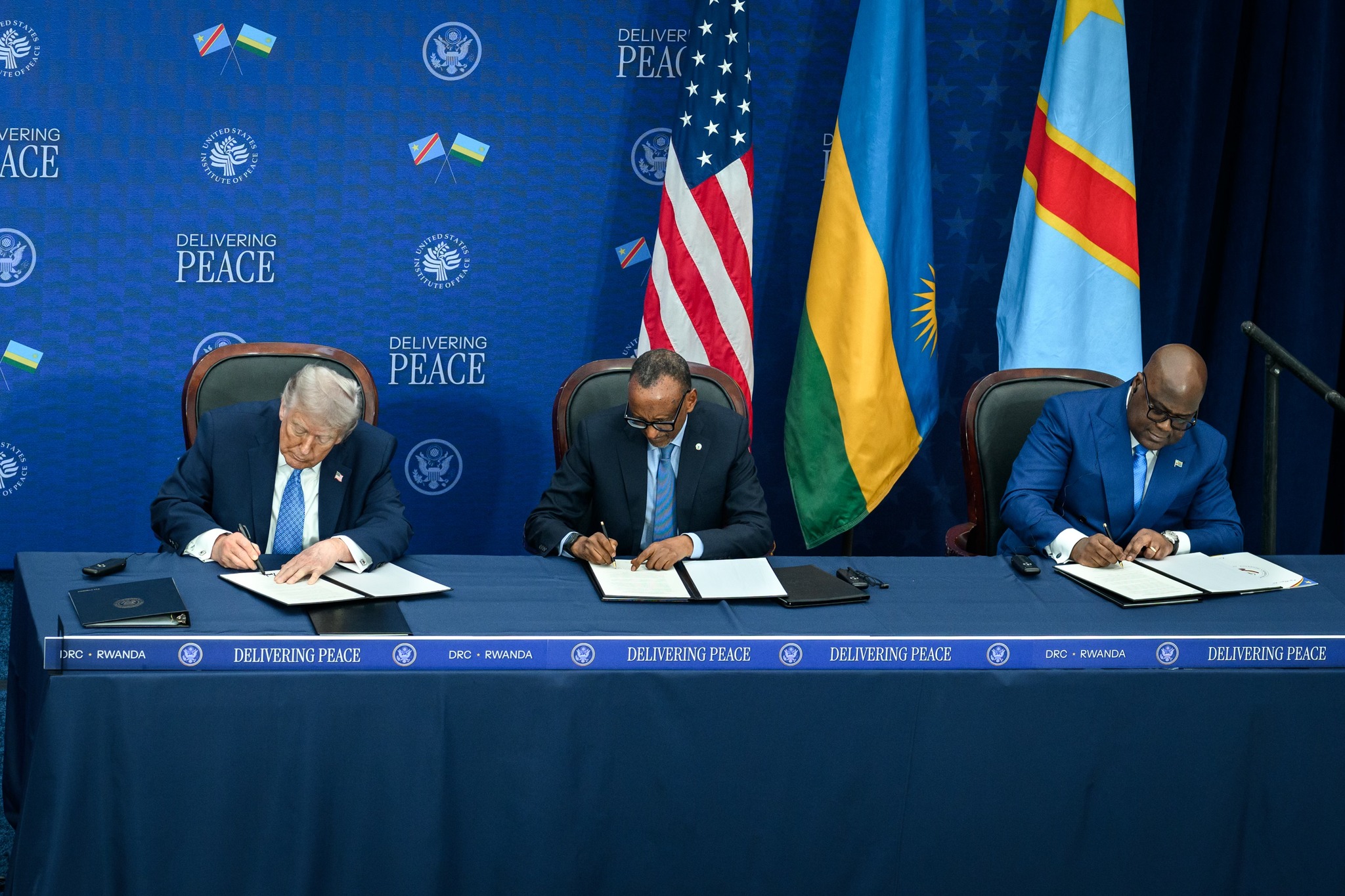
December 2, 2025 – The United Nations is cautiously welcoming a new peace agreement between the Democratic Republic of the Congo (DRC) and Rwanda, signed in Washington today under the heavy branding of President Donald Trump – but it pointedly notes that the UN was not directly involved in the talks.

At the UN’s regular press briefing, the spokesperson was pressed on whether the White House had cut New York out of a process where the UN has had “a longstanding role on the ground.”

“This is not an agreement that we are directly involved in,” the spokesperson said, adding that UN colleagues in the region had been “in contact with the US,” and that the organisation welcomes “this positive development towards peace and stability in the Great Lakes.”

The UN went out of its way to stress complementarity, highlighting the African Union’s mediation role, the involvement of Togo’s President Faure Gnassingbé and Qatar, and the continuing work of UN peacekeepers and political missions in support of both the new Washington process and the earlier Doha track. What matters, the spokesperson said, is not “the configuration,” but whether there is “actually peace on the ground.”

In Washington, the optics told a different story: President Trump flanked by Rwanda’s Paul Kagame and the DRC’s Félix Tshisekedi at the newly rebranded Donald J. Trump Institute for Peace, celebrating the so-called Washington Accords for Peace and Prosperity as a “historic” breakthrough that ends decades of bloodshed in eastern Congo.

According to U.S. and international reporting, the accord commits Rwanda to withdraw its forces and halt support for the M23 rebel group, while Kinshasa pledges to neutralise the FDLR and other militias operating near the Rwandan border. The agreement also folds in earlier frameworks signed in June, and is paired with bilateral economic deals giving the United States preferred access to critical minerals – cobalt, tantalum, lithium and other resources that have long fuelled conflict in the region.

Trump and his allies are framing the deal as proof he can deliver in months what multilateral diplomacy has struggled with for decades. A recent White House article touting his Ukraine summit casts the DRC–Rwanda track as part of a broader record of “cleaning up” global wars and restoring “peace through strength.”

But even as the leaders signed in Washington, fighting between Congolese forces and M23 rebels continued around key eastern cities, and rights advocates warned that economic interests risk overshadowing justice and accountability for atrocities informed a report from Reuters and the Associated Press (AP).

That tension – between Trump’s highly personalised, bilateral style and the slower, rules-based multilateralism of the UN – was on display in the briefing room. Journalists pushed the UN to say whether it should have been more closely consulted. The spokesperson refused to bite, repeating that every peace effort has its own shape, and suggesting the UN will judge the Washington Accords not by the ceremony, but by whether guns go quiet in North Kivu and Ituri.

For now, the UN is standing slightly to the side of the cameras, signalling that it won’t compete with Washington’s moment – but it also won’t take ownership of a deal it didn’t design.

Angle by Deandrea Hamilton. Built with ChatGPT (AI). Magnetic Media — CAPTURING LIFE.

Continue Reading

FIND US ON FACEBOOK

TRENDING