
USA
“I Traded My Legs for My Life”: Hannah Smith Rings Recovery Bell After Devastating Bahamas Boating Accident



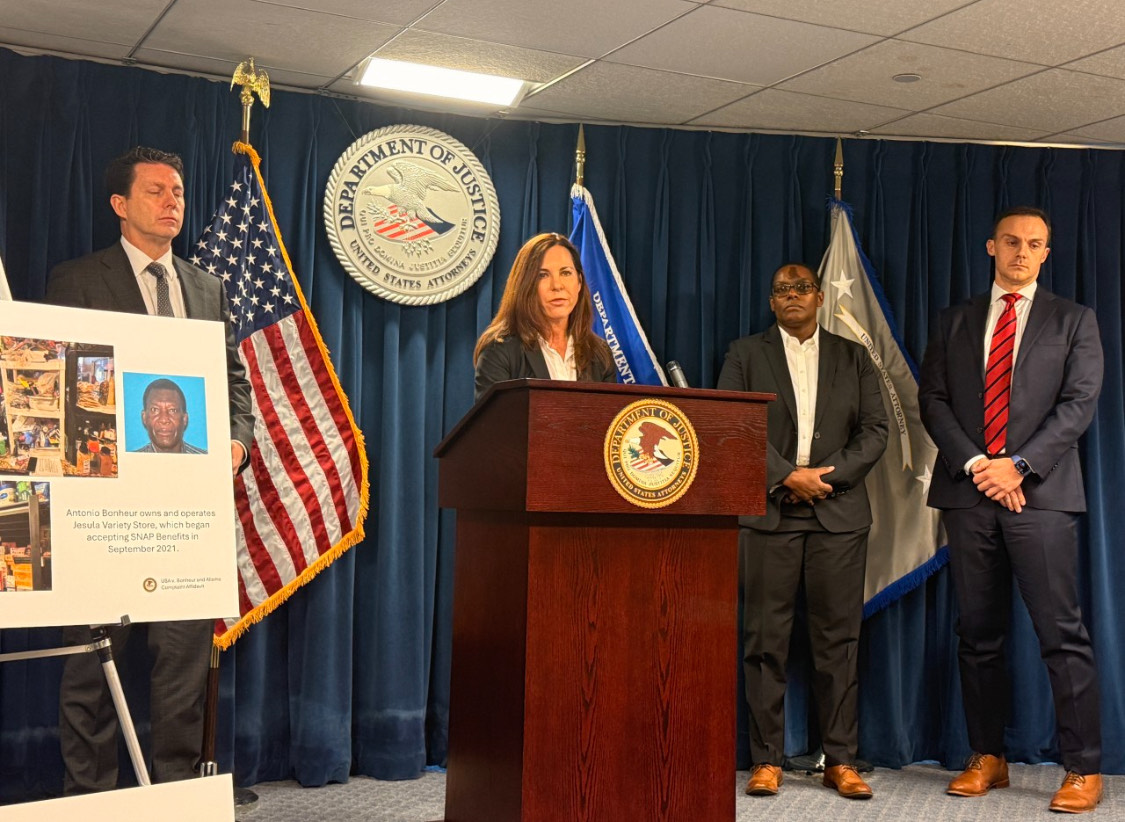
BOSTON — Two men originally from Haiti are facing federal criminal charges in Massachusetts after authorities alleged they orchestrated a years-long scheme to illegally traffic nearly US$7 million in Supplemental Nutrition Assistance Program (SNAP) benefits while also selling donated food products intended for the international charity Feed My Starving Children.
Federal prosecutors announced the charges in mid-December 2025, following a lengthy investigation by the U.S. Department of Agriculture’s Office of Inspector General and other federal agencies. The case centers on two small retail businesses operating in the Mattapan section of Boston, which investigators say processed extraordinarily high volumes of SNAP transactions inconsistent with legitimate grocery sales.
The defendants were identified as Antonio Bonheur, 74, of Mattapan, and Saul Alisme, 21, of Hyde Park. Prosecutors said both men are originally from Haiti. Bonheur is a naturalized U.S. citizen, while Alisme is a lawful permanent resident of the United States. Court filings did not specify when either man first entered the country.
According to charging documents, Bonheur owned and operated Jesula Variety Store, a small neighborhood shop that began accepting SNAP benefits in September 2021. Despite having a very limited inventory and a storefront measuring only a fraction of the size of a typical grocery store, the business allegedly redeemed millions of dollars in SNAP benefits over several years.
Federal authorities estimate that between 2021 and 2025, Jesula Variety Store redeemed approximately $6.8 million in SNAP benefits — an amount prosecutors say is impossible for a store of its size and stock. By comparison, investigators noted that a full-service supermarket in the same area would typically redeem a small fraction of that amount each month.
Alisme is accused of operating a second business, Saul Mache Mixe Store, located adjacent to Bonheur’s shop. That store began accepting SNAP benefits in May 2025 and allegedly trafficked more than $120,000 in benefits within a matter of months, raising immediate red flags for investigators monitoring redemption data.
Prosecutors allege the men engaged in SNAP trafficking, a felony offense that involves exchanging food assistance benefits for cash or other non-approved items. In undercover operations, law-enforcement agents allegedly observed customers receiving cash in exchange for swiping their SNAP cards, often at a discounted rate, while the merchants later redeemed the full value from the federal government.
In addition to the food stamp fraud, authorities allege the defendants sold donated food products manufactured by the nonprofit Feed My Starving Children. The meals, which are funded entirely through charitable donations, are intended for distribution to malnourished children in impoverished countries and are not authorized for retail sale in the United States. Prosecutors say the products were instead offered for sale inside the stores, generating illicit profit from food meant for humanitarian relief.
Federal officials described the alleged conduct as a serious abuse of both taxpayer-funded assistance programs and charitable goodwill.
“This case represents a dual betrayal,” prosecutors said, noting that the scheme not only diverted public funds from families in need but also exploited donations intended to fight hunger abroad.
Bonheur and Alisme are each charged with food stamp fraud, a federal offense that carries a potential sentence of up to five years in prison, fines of up to $250,000, and permanent disqualification from participating in federal nutrition programs. Additional penalties could include asset forfeiture if the defendants are convicted.
The criminal complaints were filed in U.S. District Court in Massachusetts in October 2025, though the arrests and public announcement came weeks later. Authorities allege the core of the scheme spanned more than three years, beginning in 2021 and continuing into 2025.
As of the announcement, neither defendant had entered a plea. Attorneys for Bonheur declined to comment publicly, while counsel for Alisme did not immediately respond to media inquiries. No formal defense arguments have yet been presented in court, and both men are presumed innocent unless and until proven guilty.
Federal officials emphasized that SNAP fraud undermines confidence in one of the nation’s most important social safety-net programs, which serves millions of low-income families, seniors, and people with disabilities. The case, they said, underscores ongoing efforts to strengthen oversight and prevent abuse of both government assistance programs and charitable food aid.
The investigation remains ongoing.
USA
U.S. Attorney Jeanine Pirro Condemns ‘King’ of Haitian 400 Mawozo Gang – Life in Prison for Kidnapping Children, Missionaries

U.S.A, December 4, 2025 – U.S. Attorney for Washington, D.C., Jeanine Pirro delivered a blistering summary of one of Haiti’s most disturbing gang cases, confirming in a December 3 video message that the self-proclaimed “king” of the 400 Mawozo gang has been sentenced to life in prison for orchestrating the kidnapping of 17 Christian missionaries — including three children aged six, three, and just eight months old.
Pirro detailed how the hostages were held for 62 days, terrorized, and used as bargaining chips as the gang demanded US$1 million per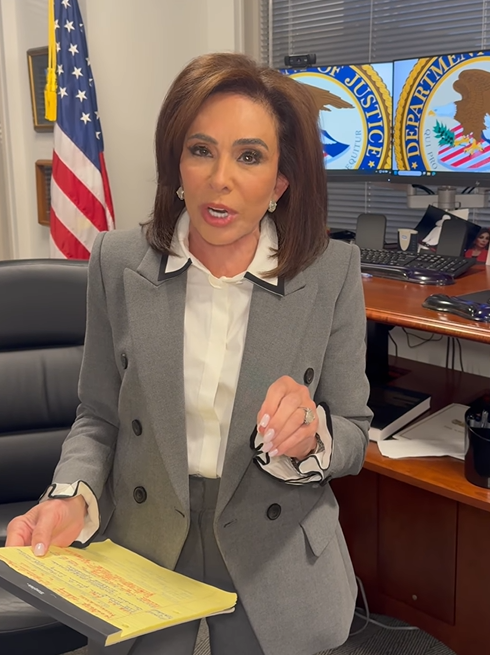 person for their release. “They were ultimately able to escape,” she said, adding that the man responsible “will never see the light of day.”
The defendant — Joly “Yonyon” Germine — directed the entire operation from inside a Haitian prison, Pirro said. Despite being incarcerated on prior charges tied to trafficking, weapons smuggling, and money laundering, Germine continued to run gang finances, coordinate kidnapping operations, and even oversee weapons purchases using ransom proceeds. U.S. prosecutors previously showed that he used contraband phones to command 400 Mawozo gunmen on the outside.
According to court documents, the October 2021 kidnapping targeted a group from Christian Aid Ministries traveling near Port-au-Prince. Sixteen were Americans and one Canadian. Some hostages described being moved between gang safehouses at gunpoint, sleeping on floors, and hearing constant gunfire. A few eventually escaped on foot under cover of darkness; others were released only after partial ransom payments totaling roughly US$350,000.
Federal prosecutors framed the case as a window into Haiti’s violent kidnapping economy, where ransom money funds the purchase of U.S.-sourced assault rifles that fuel the country’s spiraling gang wars. Germine had already received a 35-year sentence in an earlier weapons-trafficking case before this week’s life sentence was imposed.
Pirro, summarizing the outcome, said simply: “Now he’ll never see the light of day.”
Angle by Deandrea Hamilton. Built with ChatGPT (AI). Magnetic Media — CAPTURING LIFE.






-

 Bahamas News1 week ago
Economic and Financial Experts Assess US-China Relations; Offer Advice for The Bahamas
-

 Government4 days ago
$6M Digital Transformation Drive to expand E-Government, National ID and Biometric Borders
-

 Bahamas News1 week ago
Experts Analyze Economic Landscape; Opportunities and Challenges
-

 News1 week ago
Beaches Resorts Announces Grand Opening of Treasure Beach Village at Beaches Turks and Caicos
-

 Caribbean News1 week ago
Widow’s Testimony Recounts Night Haiti President Was Killed
-

 News4 days ago
NATIONAL SECURITY SHIFT: PREMIER CONFIRMS REGIMENT EXPANSION
-

 News1 week ago
North and Middle Caicos Students receive educational material from Sandals Foundation and Beaches Turks and Caicos resort
-

 Uncategorized4 days ago
WHERE ARE THE LOCAL ARTISTS?