
TCI News
TCI Top Models Take New York by Storm: A Global Future in Sight


NEW YORK CITY, New York– Monday, 25th August, 2025 —Three of the Turks and Caicos Islands’ brightest rising stars have taken a major leap toward international modelling success following a transformative and career-shaping journey to New York City, the beating heart of the global fashion industry.
Shakem Charles, TCI Top Model 2025; Brittney Bien-Amie, TCI Top Model Muse 2025; and Hubert Prospere, Cycle 6 First Runner-Up, recently travelled to the fashion capital with a clear goal: to meet with leading fashion and commercial agencies and secure international representation that could launch their careers onto the global stage.
Curated and led by Courtney Robinson, Executive Producer and Founder of the TCI Top Model Contest, the visit was more than a talent showcase—it was a strategic career development initiative aimed at placing TCI models on par with the world’s top talent.
“This trip marked an essential next step in elevating our models from local promise to international prospects,” said Robinson. “Our meetings confirmed what we already knew—TCI talent is world-class. The response from agencies has been overwhelmingly positive, and our models represented both themselves and the Turks and Caicos Islands with pride, poise, and professionalism.”
Over several days, the trio participated in a rigorous schedule of agency interviews with top-tier fashion and commercial representation, runway walk assessments, digital photoshoots, and self-taped auditions. Each model left a strong impression on industry executives, setting the stage for potential signings with agencies that have global networks spanning US states: New York, Los Angeles and Chicago, along with international cities: London, Milan and Paris.
In between meetings, the models explored New York’s most iconic neighbourhoods and cultural landmarks, absorbing the city’s dynamic energy and artistic spirit. Highlights included the cobblestone streets of SoHo, the edgy vibrance of the Lower East Side, the architectural grandeur of Hudson Yards and the bright lights of Times Square. At The Museum of Modern Art (MoMA), they explored the exhibitions Face Value: Celebrity Press Photography, The Many Lives of the Nakagin Capsule Tower, and Oasis in the City. At The Metropolitan Museum of Art, they experienced Superfine: Tailoring Black Style, Lorna Simpson: Source Notes, and Arts of Africa and Oceania. These cultural encounters provided creative fuel and deepened the models’ understanding of global aesthetics, visual storytelling, and self-expression.
Reflecting on his experience, Shakem Charles shared, “Walking into those agencies in New York felt like stepping into a vision I’ve carried quietly for years—something I wasn’t sure would happen so soon. It wasn’t just a series of interviews—it was a pivotal moment that sharpened my focus and deepened my resolve. Each meeting confirmed that this is where I’m meant to be. I’m no longer watching from the sidelines—I’m ready to take my place on the world stage.”
Brittney Bien-Amie, who captivated agencies with her commanding presence, said, “New York was surreal—like watching pieces of my own dream come to life. I’ve always held this vision in my heart, but to actually be seen, heard, and embraced by some of the biggest names in the industry—it was overwhelming in the best way. I wasn’t just showing them my portfolio—I was showing them my journey. And I walked out knowing, not hoping, that I belong. This is just the beginning of something bigger than I ever imagined.”
Hubert Prospere, known for his sharp editorial edge, added, “This trip wasn’t just about meeting agencies—it was about proving to myself and the world that I belong at the highest levels of this industry. Every meeting, every look, every conversation confirmed that my talent and professionalism stand shoulder to shoulder with the best. The agencies were genuinely impressed, not only by my portfolio but also by the passion and discipline I showed. This is not the finish line—it’s the launching pad for a path that will take us well beyond what we envisioned. The possibilities ahead are limitless.”
What especially stood out to the agencies was the calibre of the models’ portfolios, built in collaboration with leading TCI Top Model’s creative forces—particularly renowned local photographer Renau Destine, who has been a mainstay of the creative team since 2012. His work has helped shape the visual identity of the competition and prepared the models for the international spotlight, ensuring their materials matched the standard of top global talent.
With meetings concluded and follow-ups underway, the models are now awaiting final decisions regarding agency representation, development deals, and placement in international markets. Many of the agencies have affiliate offices across major fashion hubs, opening doors to careers that span continents.
“This moment isn’t just about modelling,” Robinson emphasised. “It’s about representation, visibility, and proving that world-class talent can come from anywhere—even a small island nation. This is a win not just for the models, but for the Turks and Caicos Islands as a whole.”
As they return home to await the next chapter, one thing is clear: they didn’t just visit New York—they made their mark.


News
50 Years of Ministerial Government: Cabinet Moves to Mark Milestone Rooted in 1976 Constitution
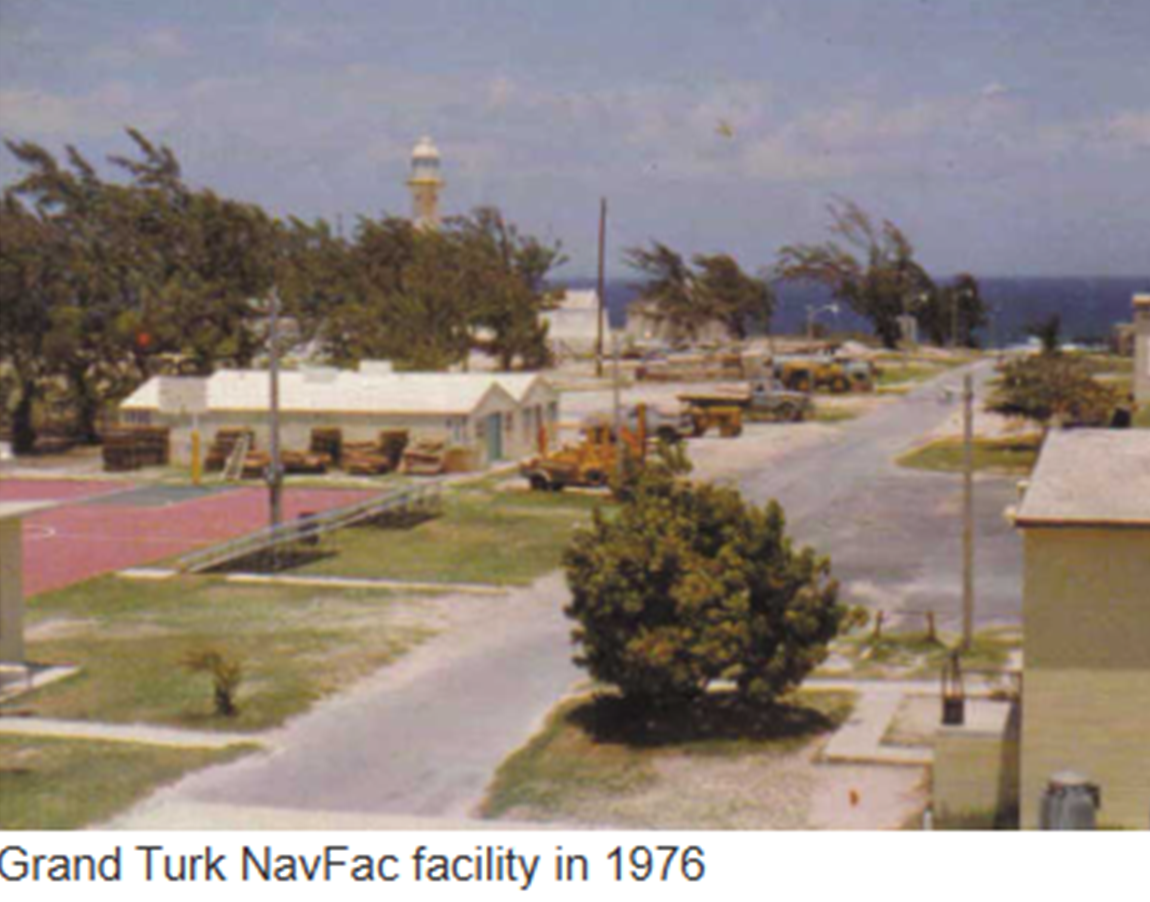
Turks and Caicos, March 30, 2026 – The Turks and Caicos Islands is preparing to mark a major political milestone, with Cabinet approving the establishment of a National Commemorative Committee to celebrate 50 years of ministerial government, a system first introduced under the 1976 Constitution.
The decision, confirmed in the February 10 Post Cabinet statement, signals a year of reflection on a governance model that fundamentally reshaped how the country is run — shifting from direct colonial administration toward locally led political leadership.
That shift was formalized in the Turks and Caicos Islands Constitution Order 1976, which laid the legal foundation for ministerial government and introduced a structured Executive and Legislative system.
At its core, the 1976 Constitution established an Executive Council, bringing together:
- a Governor,
- a Chief Minister elected by members of the Legislative Council,
- and Ministers appointed to assist in governing the Islands.
A Very Different Government Back Then
If today’s Cabinet feels crowded, the 1976 version would have seemed almost unbelievable. There were just three Ministers serving alongside the Chief Minister — a tight, compact leadership team responsible for the affairs of an entire country. No sprawling list of ministries, no long roster of portfolios — just a handful of individuals carrying the weight of governance.
Becoming a Minister wasn’t a direct vote of the people either. You first had to win a seat in the Legislative Council, and from there, the Chief Minister would recommend who should serve. The Governor then made the appointments. In other words, political trust and alignment mattered just as much as public support — and ultimate authority still rested above the local leadership.
And as for job security? There wasn’t much of it. Ministers served without fixed terms and could be removed if they lost their seat, resigned, or if the Governor revoked their appointment. Even the Chief Minister could be ousted through a vote of no confidence. Add to that the basic requirements — being at least 21, a British subject, and meeting residency rules — and it’s clear that ministerial government in 1976 was not only smaller, but far more tightly controlled.
This marked the first time elected representatives were formally given defined roles in the administration of national affairs.
Under the Constitution, the Governor retained overarching authority, but was required in many instances to act on the advice of the Executive Council, particularly in shaping policy and overseeing government operations.
The Chief Minister, meanwhile, was positioned as the central political leader, responsible for directing government business and advising on the appointment of Ministers.
Importantly, the Constitution also allowed for the assignment of responsibilities to Ministers, giving them oversight of specific areas of government — a structure that remains at the heart of today’s Cabinet system.
Section 13 of the Order made clear that Ministers could be assigned responsibility for the administration of departments or government business, embedding accountability and functional governance into the system.
The Legislative Council, established alongside the Executive, provided the law-making body, with elected and appointed members participating in debates, passing legislation, and representing the interests of the Islands.
Together, these provisions created the framework for what is now recognized as ministerial government — a hybrid system balancing local political leadership with constitutional oversight by the Governor.
The explanatory note of the 1976 Order describes it as introducing “new provisions for the Government of the Turks and Caicos Islands,” including the creation of a Legislative Council with elected members and Ministers appointed on the advice of the Chief Minister.
Fifty years on, that structure has evolved through subsequent constitutional changes, but its foundation remains rooted in the 1976 framework.
Cabinet’s decision to establish a commemorative committee suggests that the anniversary will not only celebrate political progress, but also invite reflection on how effectively the system has delivered on its promise of representation, accountability, and governance.
As the Islands approach this Golden Jubilee, attention is likely to turn not only to the achievements of ministerial government, but also to the ongoing question of how the system continues to serve a modern and rapidly developing Turks and Caicos Islands.
Developed by Deandrea Hamilton • with ChatGPT (AI) • edited by Magnetic Media.

Turks and Caicos, March 30, 2026 – The Turks and Caicos Islands Government has signaled changes to its tourism funding framework, with Cabinet approving draft amendments to the Destination Management Fee Act 2023.
The decision was confirmed in the Post Cabinet statement following the February 5 meeting, chaired by Governor Dileeni Daniel- Selvaratnam, where members agreed to move forward with revisions to the law governing the collection and administration of the fee.
The Destination Management Fee, introduced in 2023, is applied to travelers entering the country and is embedded within the cost of travel. The charge was designed to support tourism-related development, including marketing, infrastructure, and sustainability initiatives.
At the time of its introduction, the fee was linked to the establishment of a Destination Management and Marketing Organisation (DMMO), which was expected to coordinate tourism strategy and enhance the visitor experience.
However, recent developments have shifted that landscape.
The DMMO has since been discontinued, raising new questions about how funds generated through the fee are being managed and what structure will now guide tourism development efforts.
The Cabinet note does not outline what specific changes are being proposed under the amended legislation.
It also does not indicate whether adjustments will be made to:
- who pays the fee,
- how it is collected, or
- how the revenue is allocated and overseen.
The move to amend the law comes amid broader government efforts to strengthen revenue collection and compliance, including updates provided to Cabinet on the work of the Drag-Net Steering Committee — a multi-agency initiative focused on improving government revenue systems.
The lack of detail surrounding the amendments leaves several key questions unanswered, particularly given the fee’s direct impact on both visitors and residents and its role in supporting the country’s tourism economy.
Any changes to the Act would require further legislative steps, including presentation to the House of Assembly, before taking effect.
For now, the Cabinet’s approval signals that the government is moving to revise a policy that is already in force — but without yet disclosing how those revisions will alter the current system.
As tourism remains the backbone of the Turks and Caicos Islands economy, clarity on the future of the Destination Management Fee — and the framework it supports — is expected to be closely watched in the weeks ahead.
Developed by Deandrea Hamilton • with ChatGPT (AI) • edited by Magnetic Media.
Photo Credit: TCIAA

Turks and Caicos, March 30, 2026 – Electricity costs in the Turks and Caicos Islands are climbing again, with Pelican Energy reporting increases in the fuel factor for March, while warning that global instability could push prices even higher in the months ahead.
In its latest update to customers, the power provider confirmed that fuel factor rates — the portion of electricity bills tied directly to the cost of fuel — have risen across most service territories.
Providenciales, North Caicos and Middle Caicos will see a 3.4 percent increase, bringing the rate to $0.1658 per kilowatt hour, while Grand Turk and Salt Cay will experience a 2.8 percent rise to $0.1569 per kWh. The rate for South Caicos is still pending, though in February it climbed by 2.8 percent to $0.1728 per kWh.
The fuel factor is a variable charge, meaning it moves in response to international oil prices — and right now, those prices are under pressure.
Pelican Energy pointed to geopolitical tensions in the Middle East, including ongoing conflict affecting key global shipping routes such as the Strait of Hormuz, as a major driver of recent increases.
That narrow waterway near Iran is one of the world’s most critical oil transit corridors, with a significant share of global fuel supply passing through it daily. Any disruption — whether from conflict, threats, or shipping delays — has a direct impact on global prices.
Energy markets have remained volatile as a result, with production decisions by OPEC and its allies also influencing supply levels and pricing trends.
For the Turks and Caicos Islands, which relies heavily on imported fuel for electricity generation, the impact is immediate.
“Because we rely on imported fuel to generate electricity, these market conditions can influence fuel costs in TCI,” the company said, noting that it is closely monitoring developments.
While the upward movement in fuel costs is concerning, Pelican Energy also indicated that infrastructure upgrades are underway — projects that may cause short-term inconvenience but are expected to improve long-term energy reliability.
Those improvements could include enhancements to generation capacity and distribution systems, though in the near term, residents and businesses may experience disruptions, including traffic impacts linked to ongoing works.
The company emphasized that the fuel factor will continue to fluctuate in line with global trends, rising when international prices increase and falling when they decline.
For consumers already facing high utility costs, the latest adjustment reinforces how closely local electricity prices are tied to global events far beyond the region’s control.
With tensions in key oil-producing areas showing no clear resolution, and global supply routes remaining vulnerable, the outlook for fuel costs remains uncertain.
For now, Pelican Energy says it will continue to monitor international developments and keep customers informed — but the message is clear: what happens in global oil markets is being felt directly on electricity bills at home.
Developed by Deandrea Hamilton • with ChatGPT (AI) • edited by Magnetic Media.





-

 News3 days ago
Password to Paradise Radio Remotes at Beaches Turks & Caicos continue to highlight the TCI as the preferred Caribbean destination
-

 Health1 week ago
Turks and Caicos Islands Hospital Celebrates Patient Safety Awareness Month: “Team Up for Patient Safety”
-

 News4 days ago
Beaches Turks & Caicos adds four new PADI Dive Instructors to the cadre of professionals in the watersports department
-

 News4 days ago
Beaches Turks & Caicos shares fine dining experiences to high school students in Providenciales
-

 Health1 week ago
Turks and Caicos Islands Medical Association (TCIMA) Elects New Executive
-

 News7 days ago
Flow TCI supports ‘Stars of Tomorrow’ at Inter-Primary Track and Field Championships
-

 Bahamas News2 days ago
Bahamasair Backs Surge as Bahamians Flood South Florida for V.J. Edgecombe Showdown
-

 News7 days ago
The Turks and Caicos Islands Featured in Top Canadian Publications