
Bahamas News
The Government Signs Power Purchase Agreements to Help Transform Power Generation Across the Family Islands


By Llonella Gilbert
Bahamas Information Services
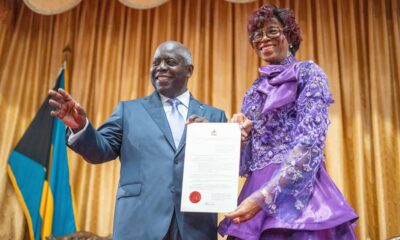
NASSAU, The Bahamas — During a press conference at the Office of The Prime Minister on Sunday, June 1, 2025, Prime Minister and Minister of Finance the Hon. Philip Davis announced the signing of Power Purchase Agreements (PPAs) with two Bahamian partners who will help to transform power generation across the Family Islands.
The Prime Minister said, “We have made incredible progress in such a short amount of time. When we took office in 2021, we encountered a power grid and power generation system on life support.”
He explained that Bahamas Power and Light (BPL) was drowning in over half a billion dollars of debt, plus another $100 million in unfunded pension obligations. The Prime Minister noted that at the same time, the country’s energy infrastructure required $500 million in critical upgrades to prevent catastrophic failure. He said, “In New Providence, 60 percent of power generation equipment needed replacement, while our Family Islands were in even worse shape, with 80 percent of equipment requiring replacement within five years.
“For Bahamian families, our energy failures caused unnecessary hardship for a population that was still staggering from the effects of Hurricane Dorian, COVID-19, a deflated economy, and crippling inflation.”
The Prime Minister said the Government is committed to taking on these challenges head-on, with energy reform near the top of its list of priorities as one of the most meaningful ways to lower costs for families and local businesses.
“Ultimately, we see energy reform as a catalyst for economic empowerment and growth for all Bahamians.”
He added, “Our vision extended to every island, not just New Providence, not just the major economic and population centres, but to every island where Bahamians live, work, and raise their families.”
The Prime Minister noted that it is an ambitious undertaking requiring the Government to take on multiple Bahamian partners to deliver on its promise of widespread change.
“The PPAs we are signing today represent our unwavering commitment to keeping that promise.
“These partnerships will bring modern, reliable, affordable electricity to islands that have, for too long, endured aging infrastructure, frequent outages, and exorbitant costs.”
He explained that through these agreements, the Government will establish solar microgrids combined with advanced LNG and multigas systems across nine different areas in the Family Islands.
“This hybrid approach represents the perfect balance for our archipelago. We are harnessing our abundant sunshine while introducing cleaner fuels to ensure that our power needs are met, regardless of what the weather looks like.”
The Prime Minister said, “All of our partners are Bahamian-owned enterprises with the resources to expedite development to ensure that our people will benefit from these changes as soon as possible.
“In fact, each one of the PPAs we have signed this year will be initiated before year’s end and will be completed in 2026.”
He said among the companies the Government is partnering with is Family Island Microgrid Co., which will develop and operate new energy systems on five islands: Harbour Island, Bimini, Moore’s Island, Farmer’s Cay, Black Point and Staniel Cay in the Exumas. These communities will soon benefit from efficient multi-gas generation.
The Prime Minister said the second partnership is with RenugenPro Co. Ltd. RenugenPro who will bring an energy revolution to San Salvador, Long Island, and Cat Island, with solar, battery energy storage and LNG facilities.
“These islands, each with their own unique energy challenges, will soon enjoy reliable, affordable electricity that should be the right of every Bahamian citizen. The impact of these changes will be felt within months, not years.”
He explained that as large-scale solar and hybrid facilities spring up, Bahamians will benefit immediately from these comprehensive energy reforms. The Prime Minister said by this time next year, Bahamians across 14 islands will experience the benefits of modern, reliable, affordable electricity. He added that by 2030, 32 per cent of the nation’s electricity needs will be met by solar power – surpassing the global target of 30 per cent.
“Finally, after years of falling behind in the adoption of renewable energy, we will lead the way using the power of the sun in this new energy era:
“No more sky-high electricity bills at the end of each month.
“No more sweating in the dark at night because of power failures and load shedding.”
The Prime Minister said, “No more appliances shorting out and food going bad because the power went off for far too long. That is the energy future we are striving for.”
(OPM Photos/Bradisha Fraser)




By Lindsay Thompson
Bahamas Information Services
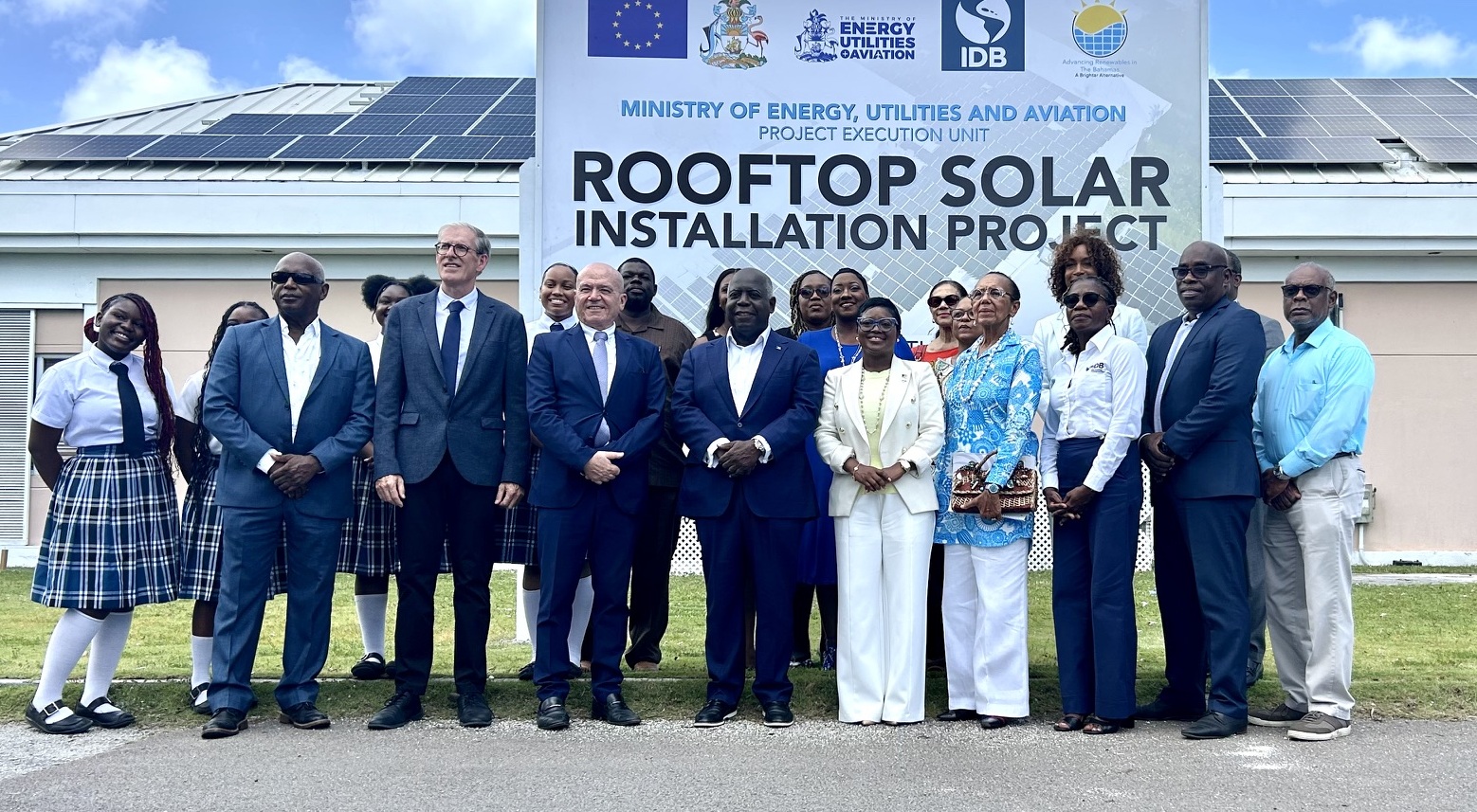
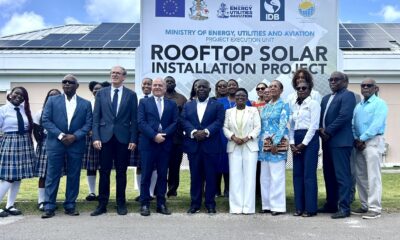
NASSAU, The Bahamas – Prime Minister the Hon. Philip Davis participated in ceremonies commissioning Completed Rooftop Solar Installations at the University of The Bahamas, a move towards energy sustainability.
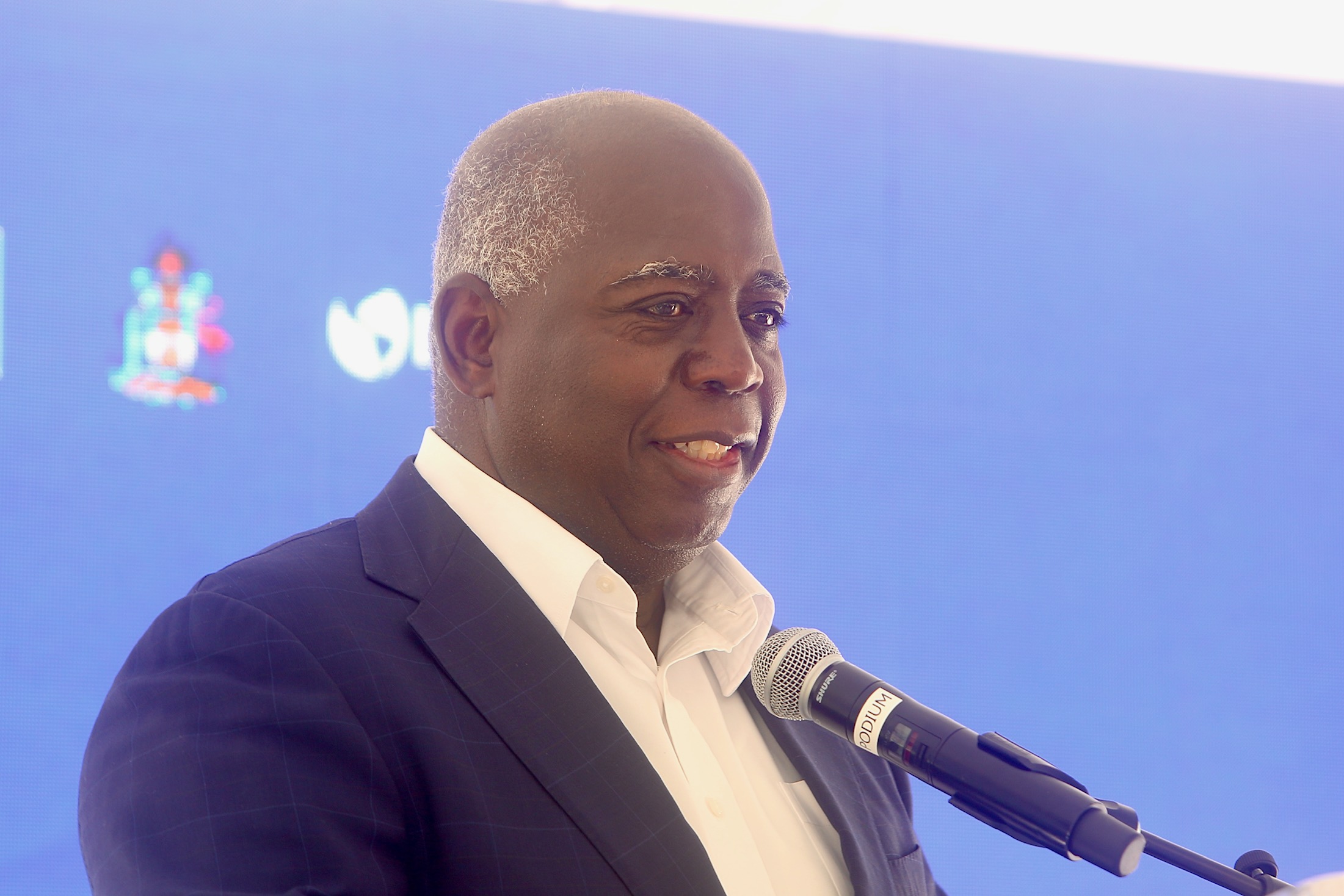
Prime Minister Philip Davis
“Today, we turn a new page on how we power our lives, how we protect our environment, and how we define Bahamian leadership in the 21st century.
Energy is foundational to national development,” the prime minister said.
The ceremony commissioning installation completion, under the Reconstruction with Resilience in the Energy Sector in The Bahamas (RRESB) programme, was held on Friday, July 3, 2026 at Courtyard Choices, University of The Bahamas.
“With this commissioning, the University of The Bahamas takes its place at the vanguard of our energy transition. You are setting an example and proving your commitment to stewardship – leaving our islands better than we found them,” the prime minister said.
He said it was good to mark the commissioning: “The country has turned a new page on how we power our lives, how we protect our environment, and how we define Bahamian leadership in the 21st century,” he said.
The prime minister regarded energy as fundamental to national development, and added, “It determines how effectively we educate our children, how reliably we deliver healthcare, and how competitive our businesses can be.” So, today is about solar panels, yes. But it is also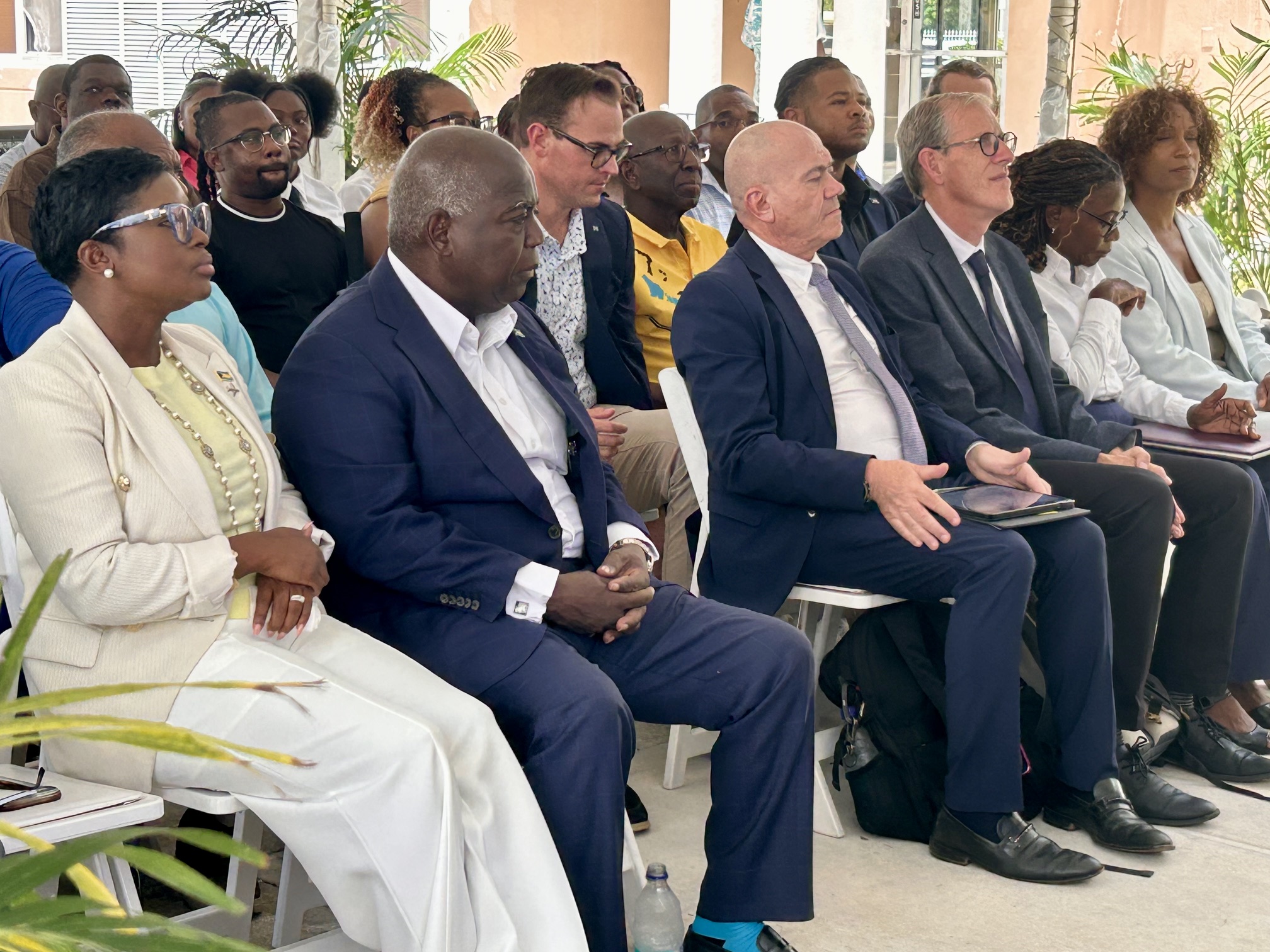 about how we power this country and what that means for the future we are building together. This is why programmes like RRESB matter.”
He said that it reflects his administration’s commitment to strengthening the systems that underscore daily life in the country, while building a country that is more sustainable and more energy-secure.
“We live on the frontlines of a changing climate.
“We have felt the fury of the winds and the rising of the tides. We know, better than most, that the old ways of generating power – reliant on volatile oil and fragile, centralized grids are no longer enough to guarantee our safety.
“This is why this administration will continue to strengthen our critical infrastructure and improve the resilience of our energy sector.
“As Prime Minister, I see these investments as investments in our future. They will serve our country for many years to come – while reflecting a broader shift in how we think about development.
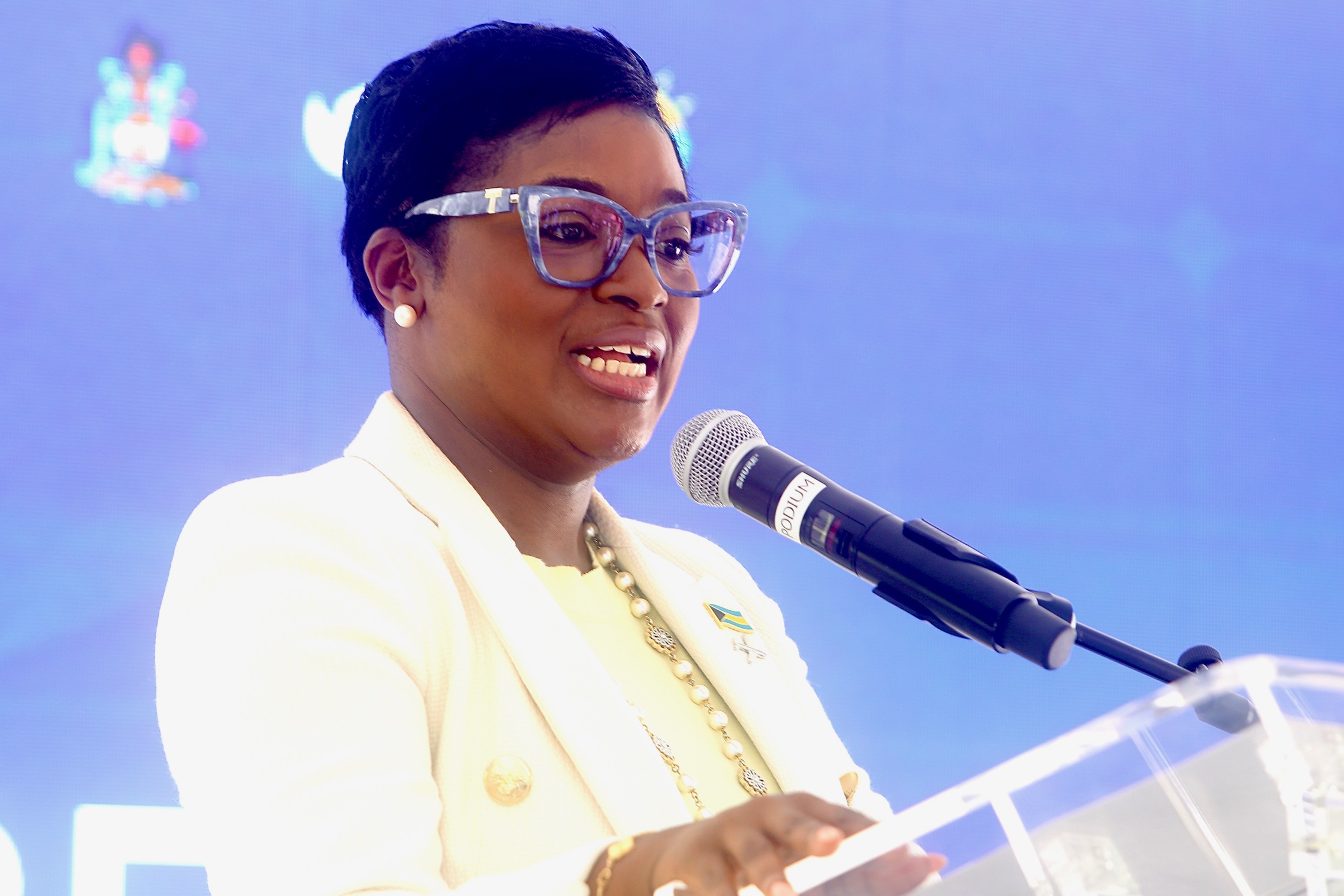
Minister of Energy, Utilities and Aviation JoBeth Coleby-Davis
The Prime Minister said: “Sustainability is no longer separate from growth – it is essential to it.”
He extended sincere appreciation to Mr. Ruiz, Head of Cooperation at the Delegation of the European Union to Jamaica, Belize, The Bahamas, The Turks and Caicos Islands and the Cayman Islands, and to Mr. Fache, Program Manager with the European Union Delegation, for their partnership.
And, he commended partners at the Inter-American Development Bank, the University of the Bahamas, the Project Execution Unit, AnO Technologies, the Hon. Jobeth Coleby-Davis and the Ministry of Energy, Utilities and Aviation for their dedication and expertise in implementing this program.
“Today’s achievement reflects what can be accomplished when we work together in pursuit of a stronger Bahamas.
“This is the work of nation-building. It is not accomplished in a single day or in a single project. It is steady work – consistent and purposeful.”
(BIS Photos/Kristaan Ingraham)
Bahamas News
Diamond Stubbs, 17 • Betrica Brown, 19 • Stania Webb, 19 • Fourth victim yet to be identified
Deandrea Hamilton | Editor
Six road deaths in two days leave a nation searching for answers
NASSAU, The Bahamas – A nation that only days ago celebrated graduations, scholarships and bright futures is now united in grief as six lives were lost on Bahamian roads in just two days, including four young women whose deaths have shaken the country to its core.
The names Diamond Stubbs, 17; Betrica Brown, 19; and Stania Webb, 19 have become the heartbreaking symbol of one of the country’s deadliest road tragedies in recent memory. A fourth young woman, believed to be 18 years old, had not been publicly identified by authorities up to publication time, as families continued to mourn and await official confirmation.
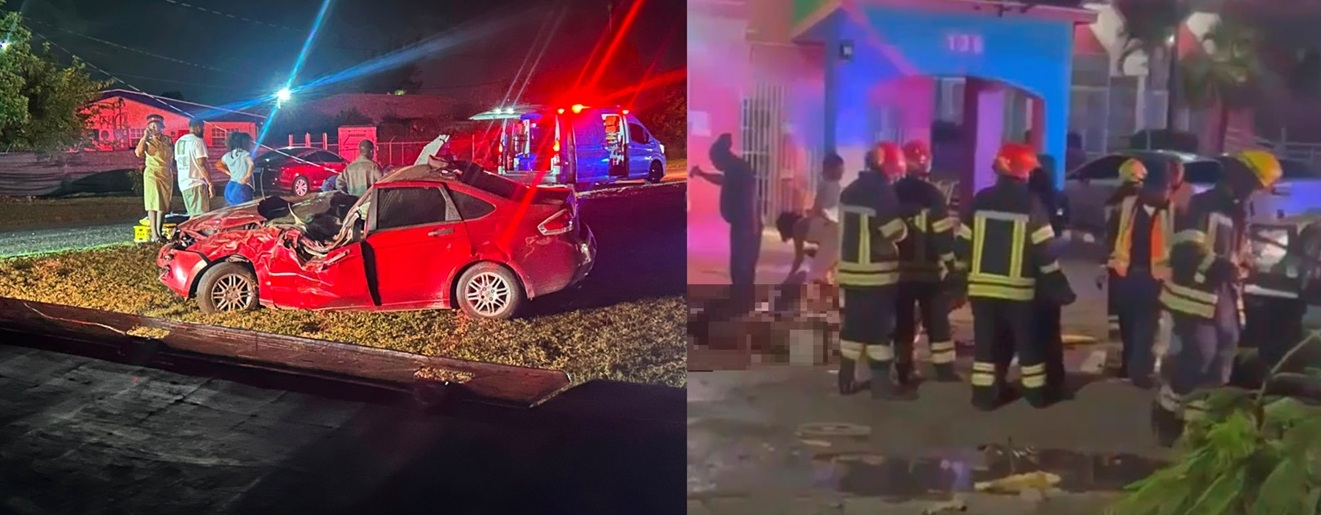
The four were among eight occupants travelling in a gray Mazda when it crashed into a tree on Shirley Street shortly after 1 a.m. Sunday. Police said the 19-year-old driver reportedly struck a pothole, looked back toward his passengers and lost control before the vehicle slammed into the tree. Three young women died at the scene, while a fourth later succumbed to her injuries in hospital. Four others, including the driver, remain hospitalized as investigations continue.
The tragedy’s impact reached the House of Assembly on Monday, where Members observed a moment of silence – led by Prime Minister Philip Davis – in honour of the young women whose lives were cut tragically short.
What has resonated most across the country is not simply how they died, but who they were.
Diamond Stubbs had just graduated from Old Bight High School in Cat Island as valedictorian and head girl. She was preparing to attend Langston University in Oklahoma on scholarship and was remembered by her father as an exceptional student who earned virtually every academic award presented at graduation while inspiring other young people to pursue their dreams.
Betrica Brown, who called both Cat Island and Abaco her homes, had recently travelled to Nassau to secure her student visa. Youth and Sports Minister Mario Bowleg said she was preparing to begin college on a volleyball scholarship.
Stania Webb had already distinguished herself at Langston University, where she earned both President’s List and Honour Roll recognition after graduating from Old Bight High School at just 16 years old. Family members remembered her as a quiet, ambitious young woman deeply committed to her Christian faith and education.
Speaking in Parliament, Prime Minister Philip Davis described the loss as heartbreaking, extending condolences to the families, classmates and loved ones whose lives have been forever changed. He urged Bahamians to keep those still hospitalized and the grieving families in their prayers. Similar expressions of sympathy came from across the political divide, churches, schools and communities throughout the country.
Some residents were also chided for sharing gruesome and graphic photos and video in the hours following the shocking car crash. Relatives said it made a difficult, heartbreaking time more unbearable.
Condolences poured in from government and Christian ministers; The Bahamas Union of Teachers; The Bahamas Christian council and other leaders from across the islands.
The national tragedy extended beyond New Providence. Also on Sunday, 26-year-old Nica Julien lost her life in a separate traffic collision in Grand Bahama. Then, on Monday, a road traffic accident claimed the life of a 30-year-old man on the highway of Abaco.
Together, the six deaths have transformed what should have been a season of celebration with graduations and independence festivities in play, into one of national mourning, leaving families, communities and an entire country searching for answers—and praying that no more names are added to the list.

The Bahamas, June 26, 2026 – Imagine boarding a plane for another Bahamian island, only for it to crash in U.S. waters during what now appears to have been a remarkable twist of timing.
Jonathan Gardiner’s Election Day flight has dominated headlines for weeks, but Thursday’s decision by a New York federal judge suggests the story may be far bigger than the crash itself.
Gardiner was denied bail after U.S. District Judge Gregory Woods described him as a danger to the community, a significant flight risk and concluded that the government’s evidence is “very strong.”
For many Bahamians, however, the public narrative has remained fixed on the approximately $30,000 recovered after the crash, including an envelope reportedly containing $5,000 intended for an unnamed politician.
Gardiner’s attorneys have argued the cash was legitimate, saying roughly $20,000 had been withdrawn from his business account the day before the flight. They also maintain the prosecution’s case is circumstantial and have argued that his speedy trial rights are being violated.
But prosecutors say the charges stem from a three-year federal investigation into an alleged conspiracy to import cocaine into the United States—not an investigation that began because a plane crashed in Bahamian waters.
That distinction may prove critical.
The crash brought the case into public view, but it may not be what ultimately determines its outcome.
The judge’s ruling raises a question that now deserves greater attention: What evidence from that three-year investigation persuaded a federal judge that the government’s case is “very strong”?
The answer may not lie in the cash recovered after the crash, but in investigative material that has yet to be fully presented in open court.
As the case moves toward trial, Magnetic Media will continue looking beyond the headlines and following the evidence that underpins one of the most closely watched criminal prosecutions involving a Bahamian in recent years.





-
 Caribbean News1 week ago
Sandals® and Beaches® Resorts Launch Rebranded Loyalty Program, ‘Island Insiders Club’
-
 News1 week ago
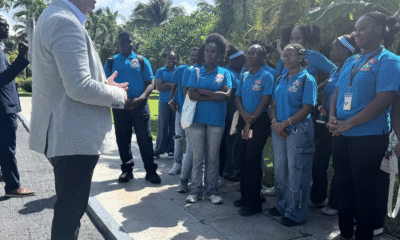
Beaches Turks & Caicos resort hosts high school tourism clubs from Providenciales and North Caicos
-
 Caribbean News6 days ago
Returning Haitians Could Be the Answer Haiti Has Been Praying For
-
 News1 week ago
Community Comes Together as ISU Community Engagement Exercise Delivers Essential Services in Kew Town
-
 Health6 days ago
Turks & Caicos Hotel and Tourism Association Secures Landmark Health Insurance Partnership for Tourism Workforce
-
 News6 days ago
COURT DENIES BAIL; MISICK, HANCHELL AND CHAL MISICK TO REMAIN BEHIND BARS DURING APPEAL
-

 News6 days ago
Turks & Caicos Visitors Spend $670 Million in 90 Days as Survey Reveals Top Resorts
-
 Bahamas News4 days ago
Prime Minister Commissions Completed Rooftop Solar Installations at UB