
Bahamas News
Making the Cut: Bahamian film editor Ana-Lauryn Adderley scores Gold, Bronze CLIOs


Creator of top-rated Netflix ‘Hunger’ feature-film trailer shares her journey from Nassau to L.A. and the sounds that help her tell a winning story
Most people think of storytelling as something you say in words. Ana-Lauryn Adderley listens for the sounds. It’s a method that has skyrocketed the Nassau born-and-raised Adderley to the top of the fiercely competitive creative film editing industry in L.A.
At just 25, she has been lauded for excellence, winning two of the trade’s top awards, back-to-back Clios in 2022 and 2023, and a Best Editor Award at the Star Film Awards in March.
No other Bahamian has achieved comparable status and had it not been for Adderley’s sister, BreAnne Adderley, wanting Bahamians to know about it, Ana-Lauryn’s creative work and rise to industry fame in Hollywood and Thailand might have gone unnoticed.
“I just want the world to know how special my sister is, how amazing,” says BreAnne, a real estate marketing director. “Two Clios at 25, some people work in the industry for a lifetime and never earn one.”
Founded in 1959, The Clios celebrate global creative excellence and innovation in advertising and design, and each year awards top creatives and marketers whose work personifies brilliance in each nominee’s respective field.
Adderley received the bronze award in 2022 for the campaign promo for the HBO Max series “Peacemaker” and a gold award in 2023 for the teaser trailer of the Netflix feature-film “Hunger”.
What makes the award especially noteworthy is that more than 80 per cent of submissions are eliminated within the first two rounds of judging, and only a small percentage of entries receives a Clio award, with even fewer ever earning a Gold Clio. Thus, for Adderley, winning both awards meant the world, but also came as a shock.
“I was working at HBO at the time, and ‘Peacemaker’ was one of the first projects that I had gotten that was a big show and part of a bigger campaign. It was this new show, starring John Cena in the DC Universe, and I know the superhero thing is a big deal. So, I thought, wow, this is a really big piece of a puzzle I’ll be a part of,” she says.
“When I found out that I won the bronze award, I was in L.A., and it had been about a year since I had finished the campaign promo for ‘Peacemaker’, and I was just going onto a new job. So, I started this job with this nomination, and everyone was filled with so much excitement, trying to figure out what was happening.”
The following year, Adderley was nominated again, only this time coming out on top with her first-ever Gold Clio for a teaser trailer that she says was made just “for fun”. “I am so proud of the ‘Hunger’ project because it started off as my creative director telling me I can just cut something on the side for fun, and that if it’s good, we can send it to Netflix,” says Adderley.
She explains that cutting something – which means to extract scenes from a film to create a trailer or promotional video – that isn’t a part of a film’s brief can still be submitted to a studio and left up to the executives to decide if they want to use it or not. Fortunately, for Adderley, they did.
“Netflix said they wanted to use my teaser as a part of their marketing campaign because at first, it was only a trailer they wanted. Then they decided to add my teaser to their campaign. So, I felt really honoured that I cut something that good.”
Adderley, who is self-taught, says it was the art of storytelling hidden within the editorial process that drew her to pursue a career in film editing rather than other roles in the industry — directing, producing and acting. And that the idea to pursue this lane dawned on her in college when she noticed editing is a completely different process than shooting and being on set.
“Editing was always such a natural part of the filmmaking process for me, but it was sort of a surprise that I fell so in love with it,” she says.
“When I’d shoot something and edit it afterwards, I realised that I can really do this. Then, somewhere along the line, I discovered that storytelling is truly in the edit. You can have the best shots, you can have the best footage in the world, but if the edit isn’t great, the story is ruined.”
And while the Savannah College of Art and Design graduate recognises that a film’s editor may not always have the final say on what makes the cut and what doesn’t, she was given full creative control over the “Hunger” teaser, whose visual and sound effects perfectly exemplify the intensity between a street-food cook who pushes herself past her limits while working under a ruthless chef.
“I broke down the movie, and watched everything from start to finish, made my markers to see what I’d like, what lines of dialogue I’d like, and I knew the first thing I wanted to do was make something that felt like you’re chopping really quickly and the danger that comes with chopping vegetables with a knife, especially if you get distracted. I just had to figure out how I was going to do that,” Adderley explains.
She adds that the music department at her current place of employment sent her a list of music cues to choose from.
That’s where the importance of sound comes in. The threat of the steel kitchen knife chopping against a backdrop of the right music made the difference between ordinary and unforgettable. “I always go for something I feel like I’ve never heard before, or something that just hits the ear in a different way and feels unique. So, when I heard the left-right, left-right like a ping-pong match, I knew it was perfect,” she says. “I laid that down on the timeline, then I just started pulling in the shots that I really liked. And it was already such a beautiful movie visually that it wasn’t hard to choose nice shots, which was perfect because sometimes you don’t get that. I knew I wanted to play around with jumping back and forth in between shots because I just like that style of editing, and I didn’t want it to be dialogue heavy. I just wanted it to be understood visually.”
Adderley joked that by now, she should know more of the language as “Hunger” is not her first Thai project. However, no matter how many international projects she’s worked on, the St. Andrews International School alumna says working with Bahamian filmmakers is the “real goal”.
Earlier this year, Adderley met up with fellow Bahamian filmmaker and playwright Kerel Pinder, chairman of the Star Film Institute, whom she met through Kyle Ferguson, owner of Jiggy Productions. Pinder informed her that a production was in desperate need of an editor after the original editor was no longer available. This connection led Adderley to win the “Best Editor” award at the Star Film Awards held in March.
“‘In Sickness and in Death’ was such a fun project to work on. I had about two to three weeks to get through all the footage and it was a lot of footage to go through. But I loved working with the team, and they understood I was coming in on the tail end, so it made everything better,” she says.
“Hopefully, I can work with more Bahamians. I’m still reaching out to people and trying to connect to see what I can do. So, I’m hoping that more things come about over the next few months.”
Adderley says she misses home every day, despite having been living abroad for the past seven years. And that whenever she does visit, she tries to take a little piece of home back with her.
“My sister was just here in March for her birthday, so that was nice. I tried to convince her to move here to be with me because I miss my family a lot and they need to visit me more often,” she says. “But any time I go home, I try to bring back conch, snappers, anything that I can fit into my suitcase.”
Adderley lives with a roommate as well as with her cat, Peaches, whom she says is a “Godsend”.
“She’s my baby; she’s my ride or die,” says Adderley. “I work from home, so if I’m up late, she’ll be up late with me, supporting me, so it doesn’t feel as lonely.”
In addition to taking care of her pet, Adderley says she enjoys weightlifting and improving her overall fitness, as well as the state of euphoria and controlled breathing that comes with long-distance running.
Regarding upcoming projects, Adderley’s latest project in L.A. was creating the trailer for the 2025 documentary “TIME II: Unfinished
 Business”, which tells a family’s story of prison reform and social justice in America. And that she is in the pre-production phase for a few documentaries in The Bahamas that are awaiting funding. As for advice she may have for Bahamians wanting to pursue a career in filmmaking, whether at home or abroad, Adderley says to stay true to who you are.
“Don’t give up on your dream. It’s not something we see often in The Bahamas, people in that film and TV space, but there are so many creatives back home who are doing big things,” she says. “Connecting with like-minded people is also so important because the way the industry is now, you don’t necessarily have to leave home. We have social media, we have YouTube, and if you can get your friends together, create something that’s really good – just five minutes of really good content – you can put it out there; submit it to festivals. All of this you can do from home.”
She says the same goes for Bahamians looking to move to the U.S.
“Reaching out to people. I DM (direct message) people on Instagram for advice and find a whole list of trailer houses and just reach out. But I know many may not do that because it’s difficult when people don’t get back to you.
“But stay true to who you are. As cliché as it sounds, being authentic to who I am as a person, as an artist, has gotten me to this place. I’ve always leaned into my instincts because I feel like if I like a project, then someone else will, too, and I have to believe that. Staying true to who you are and your artistry is key.”
As for the sister who wanted the world to know more about who her “amazing” sibling was, missing her takes a back seat to wanting to see her continue to create, to thrive, to contribute to the world of film and art.
“I know she has to stay abroad for now, but one of these days she’ll be part of transforming the film industry here to create the same opportunities for Bahamian creatives who share her same passion.”

Bahamas News
Dredging Is Not Just About Size — It Is About What Is Being Destroyed, Warns Save Exuma Alliance Regarding Yntegra’s Proposed Rosewood Resort
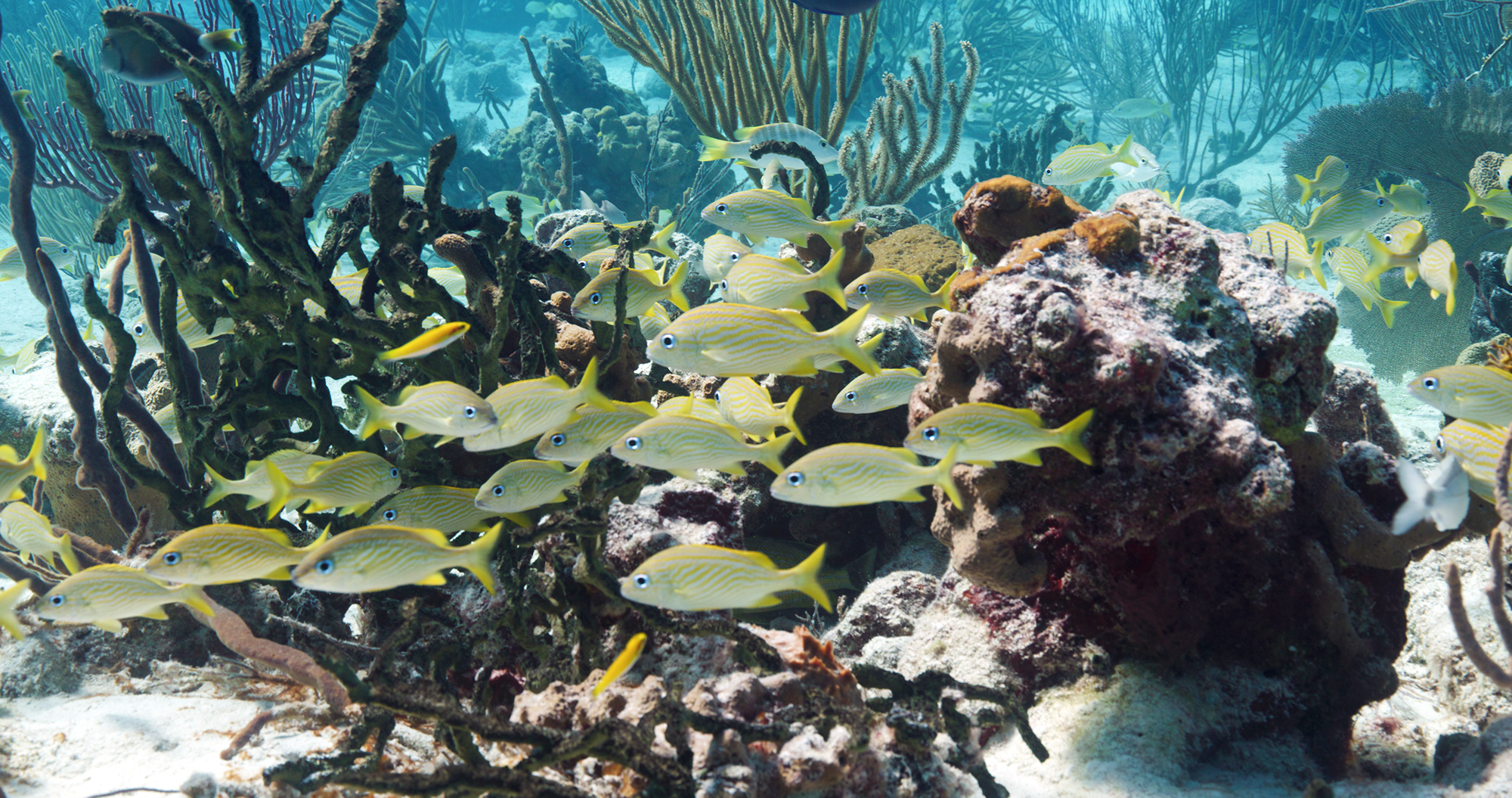
Save Exuma Alliance (SEA) — a coalition of Central Exuma business owners, tour operators and residents — has warned that the issue of dredging in the North Bay of Sampson Cay, Exuma, is not just about the number of acres being dredged – but what exists within the proposed dredge area. SEA describes the site as an ecological treasure trove filled with seagrass, coral, turtles and abundant marine life.
This comes after foreign developer Yntegra agreed to reduce the scope of its dredging following government warnings that it would impact The Bahamas carbon credit status, which shows the importance of the marine habitat.
“It is easy to point to other developments and say they are dredging more, but that is not comparing like with like,” SEA said in response to comparisons made by Yntegra. “If one area is largely sand with little marine life, that is very different from what we have in North Bay. Anyone who has spent time there can tell you it is filled with turtles, fish, and — critically — the seagrass and coral that provide essential habitat.”
Miami-based investment group Yntegra is seeking to construct a large-scale Rosewood-branded resort on Sampson Cay. Since its announcement, the project has generated environmental, social and economic concerns among residents and business operators in Central Exuma.
The proposed development includes dredging in North Bay, construction of a substantial seawall that would alter natural water flow, more than 100 structures, two mega yacht marinas, and an industrial dock serviced by fuel and supply ships in an area currently used by swimmers. Opponents argue that the scale and design of Yntegra’s Rosewood Exuma project are incompatible with the fragile ecosystem and cultural character of the Central Exumas.
SEA noted that the government’s Climate Change Unit has also raised concerns about the environmental cost of dredging associated with Yntegra’s Rosewood Exuma project.
“The government has acknowledged that this is an area of significant importance,” SEA said. “While the financial implications are serious, for us here in Exuma this is about more than money. It underscores how valuable this marine ecosystem is — the seagrass, coral and marine life that make Exuma exceptional. This is what attracts visitors from around the world. We should not minimize the concern by comparing this bay to areas that do not have the same remarkable underwater ecosystem. It is simply not the same.”
Experienced boat captain Tito Baldwin also questioned the feasibility of the marine infrastructure proposed as part of this plan. He warned that the dredging currently outlined would not be sufficient to accommodate the vessels required to service the project.
“It’s going to have to be at least four times larger than what has been proposed,” Baldwin said. “As designed, it is beyond possibility.”
He explained that vessels supplying fuel, construction materials and provisions for a projected 300-person workforce would require significantly greater depth and maneuvering space.
“For supply vessels delivering hundreds of thousands of gallons of diesel, you’re looking at ships with a 10-foot draft,” Baldwin said. “To operate safely, you would need at least 13 feet of depth. That means dredging far deeper than what has been proposed. With currents running east and west in that area, you would also need a much wider turning basin to maneuver safely. As it stands, it would be extremely difficult, if not impossible.”
SEA is urging individuals concerned about the environmental impact of dredging connected to Yntegra’s Rosewood Exuma project to visit www.saveexumaalliance.org for more information. A petition calling for a halt to approvals is also available on the site, with more than 7,100 signatures collected to date.
PM: Project delivers on promise and invests in youth, sports and national development
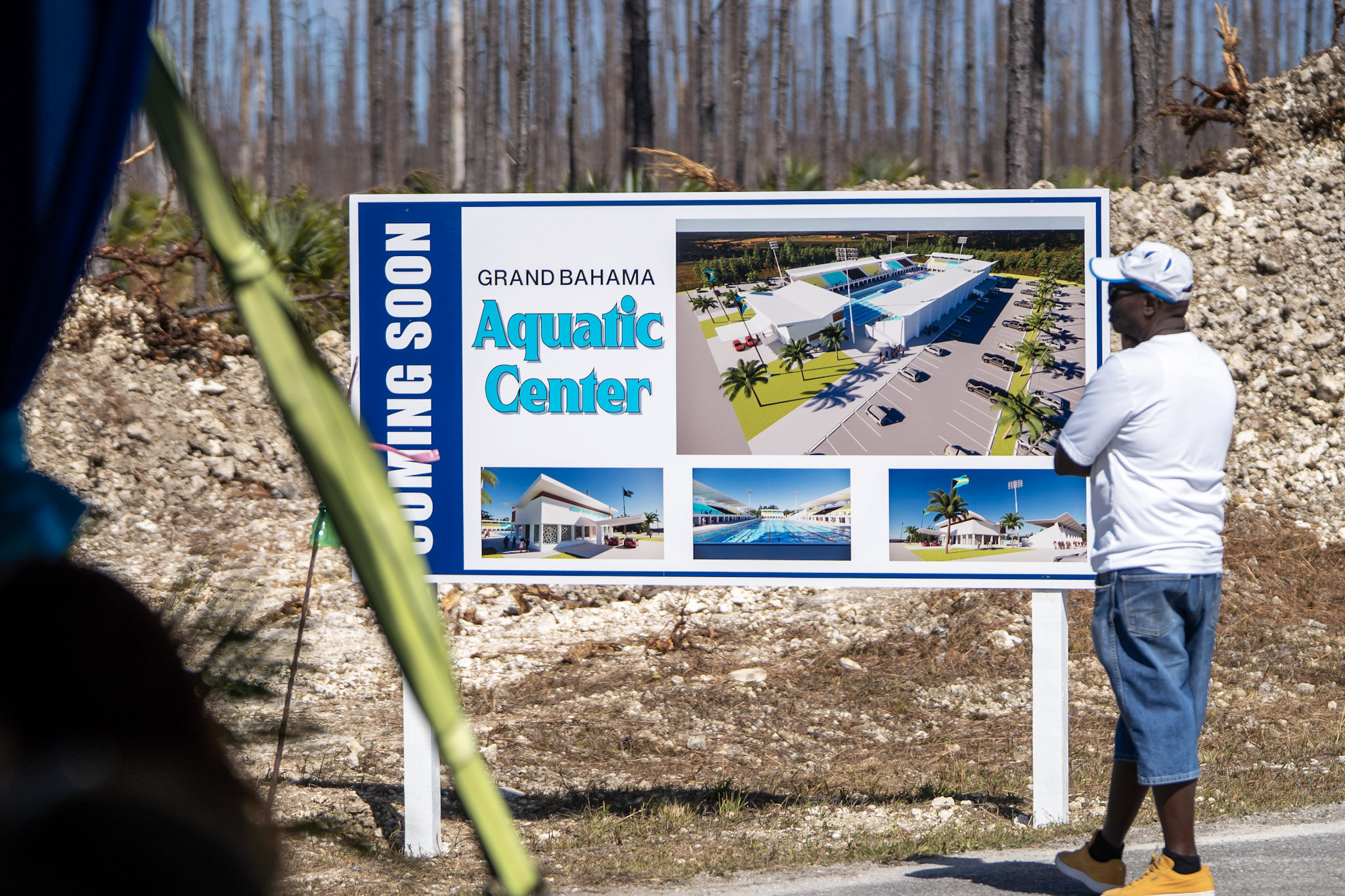
GRAND BAHAMA, The Bahamas — Calling it the fulfillment of a major commitment to the island, Prime Minister Philip Davis led the official groundbreaking for the Grand Bahama Aquatic Centre, a facility the government says will transform sports development and create new opportunities for young athletes.
Speaking at the Grand Bahama Sports Complex on February 12, the Prime Minister said the project represents more than bricks and mortar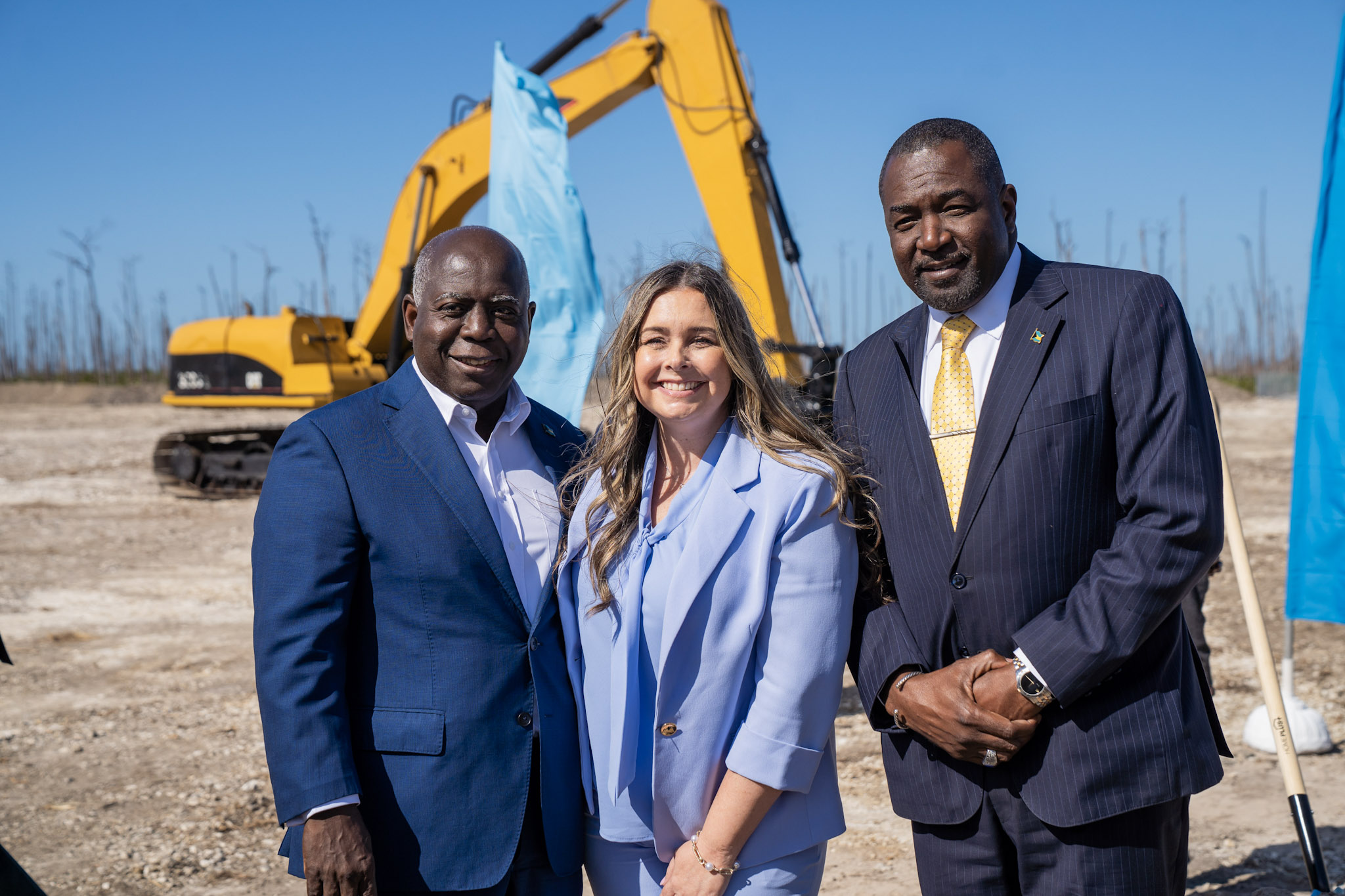 — it is an investment in people, national pride and long-term economic activity. The planned complex will feature a modern 50-metre competition pool, designed to meet international standards for training and regional and global swim meets. Davis said the facility will give Bahamian swimmers a home capable of producing world-class performance while also providing a space for community recreation, learn-to-swim programmes and water safety training.
He noted that Grand Bahama has long produced outstanding athletes despite limited infrastructure and said the new centre is intended to correct that imbalance, positioning the island as a hub for aquatic sports and sports tourism.
The Prime Minister also linked the development to the broader national recovery and revitalisation of Grand Bahama, describing the project as part of a strategy to expand opportunities for young people, create jobs during construction and stimulate activity for small businesses once operational.
The Aquatic Centre, he said, stands as proof that promises made to Grand Bahama are being delivered.
The project is expected to support athlete development, attract competitions, and provide a safe, modern environment for residents to access swimming and water-based programmes for generations to come.
Angle by Deandrea Hamilton. Built with ChatGPT (AI). Magnetic Media — CAPTURING LIFE.

The Bahamas, February 15, 2026 – For the better part of three years, Bahamians have been told that major Afreximbank financing would help transform access to capital, rebuild infrastructure and unlock economic growth across the islands. The headline figures are large. The signing ceremonies are high profile. The language is ambitious. What remains far harder to see is the measurable impact in the daily lives of the people those announcements are meant to serve.
The Government’s push to secure up to $100 million from Afreximbank for roughly 200 miles of Family Island roads dates back to 2025. In its February 11 disclosure, the bank outlined a receivables-discounting facility — a structure that allows a contractor to be paid early once work is completed, certified and invoiced, with the Government settling the bill later. It is not cash placed into the economy upfront. It does not, by itself, build a single mile of road. Every dollar depends on work first being delivered and approved.
The wider framework has been described as support for “climate-resilient and trade-enhancing infrastructure,” a phrase that, in practical terms, should mean projects that lower the cost of doing business, move people and goods faster, and keep the economy functioning. But for communities, that promise becomes real only when the projects are named, the standards are defined and a clear timeline is given for when work will begin — and when it will be finished.
Bahamians have seen this moment before.
In 2023, a $30 million Afreximbank facility for the Bahamas Development Bank was hailed as a breakthrough that would expand access to financing for local enterprise. It worked in one immediate and measurable way: it encouraged businesses to apply. Established, revenue-generating Bahamian companies responded to the call, prepared plans, and entered a process they believed had been capitalised to support growth. The unanswered question is how much of that capital has reached the private sector in a form that allowed those businesses to expand, hire and generate new economic activity.
Because development is not measured in the size of announcements.
It is measured in loans disbursed, projects completed and businesses expanded.
The pattern is becoming difficult to ignore. In June 2024, when Afreximbank held its inaugural Caribbean Annual Meetings in Nassau, Grand Bahama was presented as the future home of an Afro-Caribbean marketplace said to carry tens of millions of dollars in investment. What was confirmed at that stage was a $1.86 million project-preparation facility — funding for studies and planning to make the development bankable, not construction financing. The larger build-out remains dependent on additional approvals, land acquisition and further capital.
This distinction — between financing announced and financing that produces visible, measurable outcomes — is now at the centre of the national conversation.
Because while the numbers grow larger on paper, entrepreneurs still describe access to capital as out of reach, and communities across the Family Islands are still waiting to see where the work will start.
And in an economy where stalled growth translates into lost opportunity, rising frustration and real social consequences, the gap between promise and delivery is no longer a communications issue.
It is an inability to convert announcements into outcomes.
Angle by Deandrea Hamilton. Built with ChatGPT (AI). Magnetic Media — CAPTURING LIFE.





-
 Health1 week ago
Chile becomes the first country in the Americas to be verified by WHO for the elimination of leprosy
-

 Caribbean News3 days ago
Jamaica Joins Afreximbank Agreement, Strengthening Africa–Caribbean Partnership
-

 News1 week ago
Police Commissioner Honoured with Distinguished Civic Service Award at TCHTA Star Awards
-
 Bahamas News1 week ago
Dredging Is Not Just About Size — It Is About What Is Being Destroyed, Warns Save Exuma Alliance Regarding Yntegra’s Proposed Rosewood Resort
-

 News7 days ago
Flow TCI powers Inter-High Track and Field Championships
-

 Health1 week ago
TCI Hospital Celebrates Successful “Heart Strong TCI” Initiative During Heart Month
-

 Education6 days ago
Message from Hon. Rachel M. Taylor, Minister of Education, Youth, Sports & Culture
-

 News2 days ago
Rights Without Justice: How Weak Enforcement Fails Women and Girls