
Caribbean News
Millions around the World are getting set to Celebrate Haitian Flag Day in a Monumental way


Deandrea Hamilton
Editor
May 15, 2025 – While there is no official global count of participants, it’s estimated that over 3.5 million Haitians living outside Haiti will commemorate Haitian Flag Day on May 18, 2025, alongside the nearly 12 million residents of Haiti itself, according to online sources.
Haitian Flag Day, observed annually on May 18, celebrates the creation of the Haitian flag in 1804 during the Haitian Revolution. The day is marked by parades, cultural festivals, and community gatherings both in Haiti and across the global Haitian diaspora.
In the United States, cities with significant Haitian populations host major celebrations. Brooklyn’s Haitian Culture Day Parade and Festival attracts over 10,000 attendees annually, featuring music, dance, and Haitian cuisine. Similarly, Miami’s Little Haiti Cultural Complex hosts events showcasing Haitian music, dance, and art.
In London, celebrations are listed for Sunday, May 18, 2025 at Pavilion Hall, located at 25 Avenue Road, South Norwood Lakes, London, SE25 4DX, starting at 3:00 PM. Organized by the Haitian Heritage Group UK, this gathering aims to honor Haiti’s Flag Day—a significant occasion commemorating the creation of the Haitian flag in 1803 during the nation’s fight for independence from France. The event will feature cultural performances, music, and community activities celebrating Haitian heritage and pride.
Tickets are priced at £8.00 and must be purchased in advance. These events not only honor Haitian heritage but also strengthen community bonds and cultural pride among Haitians worldwide.
Not to be outdone, Paris, France is set to host a significant Haitian Flag Day celebration on Sunday, May 18, 2025. The event, known as the Caribbean Flag Festival, is expected to draw over 1,000 attendees, highlighting the vibrant Haitian community in the city.
Haitian Flag Day Celebrations in Canada are many. We begin in Montreal, Quebec which is home to one of the largest Haitian communities in Canada, will host multiple events including Haitian Flag Day Fest Montreal which is organized by Natyf TV; it’s to be held on Saturday.
There are also cultural displays like the one in Alberta to commemorate the 222nd Haitian Flag Day with a celebration on Saturday, May 17, 2025, at the Hellenic Banquet Hall. The event will feature cultural performances, music, and community engagement. It’s hosted by the Haiti Association of Calgary.
Canada will also colour the Falls. In a symbolic tribute, Niagara Falls will be illuminated in red and blue, the colors of the Haitian flag, on May 18, 2025, from 10:15 AM to 10:30 PM. This gesture honors Haitian Flag Day and the contributions of the Haitian community in Canada.
Some of Haiti’s most famous people are: Toussaint Louverture – Leader of the Haitian Revolution, instrumental in Haiti becoming the first Black republic and the first country to abolish slavery; Jean-Jacques Dessalines – Founding father of Haiti; declared the country’s independence in 1804 and became its first ruler; Henri Christophe – Key general in the revolution and later King of northern Haiti and Catherine Flon – Credited with sewing the first Haitian flag in 1803. On the music and art scenes: Wyclef Jean – Grammy-winning musician, producer, and former member of The Fugees. A strong advocate for Haiti; Michaëlle Jean – Former Governor General of Canada (2005–2010), born in Haiti; Emeline Michel – Acclaimed Haitian singer known as the “Queen of Haitian Song”; T-Vice – Popular Haitian band known for their impact on compas music and unforgettable, the iconic sound that helped catapult Salt-N-Pepa to fame—especially their breakout hit “Push It”—was significantly shaped by Haitian-American Hurby “Luv Bug” Azor.
Actors and Entertainers from Haiti include: Jimmy Jean-Louis – Haitian actor known for roles in Heroes, Fat Girls, and international films and Garcelle Beauvais – Actress, model, and TV personality, known for The Jamie Foxx Show and The Real Housewives of Beverly Hills.
Haiti is also proud of these Intellectuals and Writers: Edwidge Danticat – Renowned Haitian-American author of Breath, Eyes, Memory and The Dew Breaker and Frankétienne – Influential writer, poet, and playwright; pioneer of the spiralisme literary movement. On the list of most notable athletes with Haitian roots are: Naomi Osaka – While primarily identifying as Japanese-Haitian, the tennis star often acknowledges her Haitian roots and Jeff Louis – Haitian footballer who played for several European clubs and the national team.
An honourable mention in the sports category has to be NBA superstar Stephen Curry, who has won multiple championships as leader of the Golden State Warriors. Curry’s mother is Haitian-born.
A recent famous addition to the long list of accomplished people from Haiti, is the newly elected Roman Catholic pontiff, Pope Leo XIV whose Haitian-American heritage is making social media rounds.
Haiti has long been an influence on the world, and though the republic has many times fallen into disarray, there is no denying its impact and indomitability.
It is the world’s first successful slave revolt, leading to the first independent Black republic. Haiti, which shares the island of Hispaniola with the Dominican Republic in the Caribbean region, is also credited with inspired liberation movements across Latin America and the Caribbean and is the first country to permanently abolish slavery.
It is home to the largest fortress in the Western Hemisphere: Citadelle Laferrière and we are so in love with its music, Kompa and its food including Griot.
We wish the people of Haiti well as the nation of millions pushes past the current darkness, and it is very dark, to embrace the steady light of a new life that can be crafted with faith, focus and help from family and friends.
Happy Haitian Flag Day – “Lavi se pa blanch — men li toujou bèl” – which means life isn’t perfect, but life is beautiful!

By Deandrea Hamilton | Editor
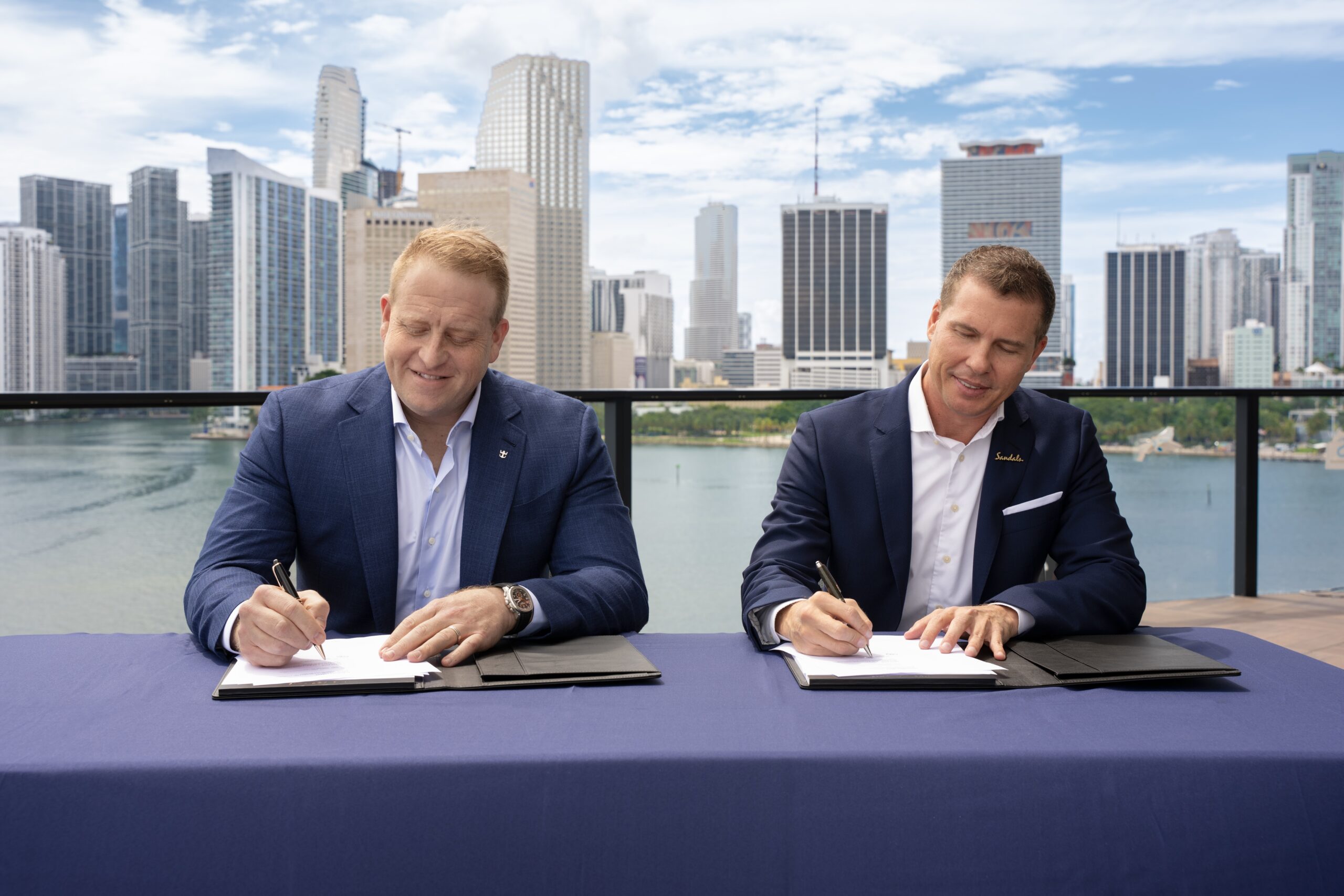
September 28, 2026 – Wall Street initially flinched at the $3-billion handshake. But in a matter of days, it was smoother sailing.
Perhaps the bigger Caribbean business story is not what Sandals Resorts International is getting from the deal. It is who is writing the cheque — and what that says about what Gordon “Butch” Stewart built.
As reports of Royal Caribbean Group’s Sandals deal circulated Tuesday, RCL shares plunged 6.14 percent from Monday’s $250.25 close to $234.89, on sharply elevated trading.
When the agreement became official Wednesday — approximately $3 billion for a 50 percent equity interest in Sandals and Beaches Resorts — shares slipped another 1.95 percent to $230.30 and touched $222.22 intraday. Investors were digesting both the size of the investment and committed debt financing secured through Morgan Stanley.
But by Thursday, RCL rebounded 3.77 percent, with shares continuing their recovery Friday to finish the week around $243. Analysts were also looking ahead: JPMorgan reportedly raised its RCL price target from $345 to $394, while Citi placed the company on a 90-day positive catalyst watch.
And just who is RCL?
Royal Caribbean Group is a global vacation giant, publicly traded on the New York Stock Exchange with a market value of roughly $65 billion. Its portfolio includes Royal Caribbean International, Celebrity Cruises and Silversea, alongside private destinations and an expanding vacation platform.
So when a company of that scale commits $3 billion for only half of Sandals and Beaches Resorts, the transaction puts a striking financial marker on one of the Caribbean’s greatest home-grown hospitality success stories.
The deal, expected to close in early 2027, creates a 50-50 partnership with the Stewart family and takes Royal Caribbean deeper into the all-inclusive resort business.
Butch Stewart started Sandals in Jamaica in 1981 believing a Caribbean company could compete with the world’s best.
Forty-five years later, one of the world’s biggest vacation companies is prepared to pay $3 billion just to own half of what he built.
Now that’s the handshake that does more than seal a deal — it cements a legacy.
Caribbean News
Royal Caribbean Group and Sandals Resorts Announce Landmark Partnership to Accelerate Their Leading Vacation Experiences
Royal Caribbean Group Investment to Advance Sandals and Beaches’ Growth and Broaden the Group’s Vacation Portfolio
Montego Bay, Jamaica and Miami, September 24, 2026 – Royal Caribbean Group (NYSE: RCL) and Sandals Resorts today announced the signing of an agreement to form a partnership in the all-inclusive resort space with a 50% investment from Royal Caribbean Group. Building on Sandals and Beaches Resorts’ more than four decades of leadership in Caribbean hospitality, the joint venture will create new opportunities for continued resort growth while broadening the experiences across Royal Caribbean Group’s vacation platform.
The partnership brings together two of the travel industry’s most celebrated vacation companies, pairing Sandals and Beaches’ all-inclusive resort expertise with Royal Caribbean Group’s vacation platform, including industry-leading brands – Royal Caribbean, Celebrity Cruises and Silversea – a portfolio of private destinations, new river cruising offering, and an industry-first loyalty program. United in a shared history in the Caribbean and connected by a love for their communities, the companies will offer travelers an unparalleled collection of cruise, private destination and resort experiences, serving guests across more vacation occasions and establishing their undisputed leadership in Caribbean vacations.
The joint venture expands Royal Caribbean Group into an adjacent vacation category, growing its participation in the approximately $2 trillion global vacation market, and meets the growing global demand for Sandals and Beaches Resorts by accelerating their expansion. The partnership will include Sandals and Beaches’ collection of premier all-inclusive properties across the Caribbean, and the companies will explore opportunities to broaden distribution, deepen guest engagement, and make it easier for travelers to discover vacation experiences offered across both portfolios.
“For nearly 60 years, we’ve reimagined what a vacation can be, constantly expanding the ways we inspire our guests to explore, connect and create lifelong memories,” said Jason Liberty, Chairman and CEO, Royal Caribbean Group. “We have been building a vacation platform that brings joy to millions of people around the world and creates meaningful relationships that last with our guests. Our partnership with Sandals and Beaches Resorts is an important next step on that journey – bringing together two iconic leading vacation companies to further strengthen and grow one of the most admired resort portfolios in the world. The Stewart family has created powerful and beloved brands, and we are honored to build on that legacy. Together, we see tremendous opportunity to expand the reach of Sandals and Beaches Resorts and continue turning the vacation of a lifetime into a lifetime of vacations.”
“My father, Gordon ‘Butch’ Stewart, founded Sandals Resorts with the belief that a company built in the Caribbean could stand on the world stage alongside the most respected names in hospitality. Today is proof of how far that vision can go,” said Adam Stewart, Executive Chairman of Sandals Resorts and Beaches Resorts. “This partnership is the natural next step in building on that conviction. It gives us the ability to grow faster with a partner that shares our values of exceptional hospitality, long-term investment, and the power of enduring brands. Together, we will introduce more guests to Sandals and Beaches Resorts while creating even more extraordinary experiences for those who have made our resorts part of their lives for decades.” Stewart added, “As we continue to grow, we will remain true to what has always defined us: delivering authentic vacations that exceed expectations while creating opportunities for our team members, travel advisor partners and the communities we call home. The future has never been brighter, and I know this moment would make my father incredibly proud.”
The joint venture will be governed by a board under the shared leadership of Stewart and Liberty. Stewart will maintain a leadership role in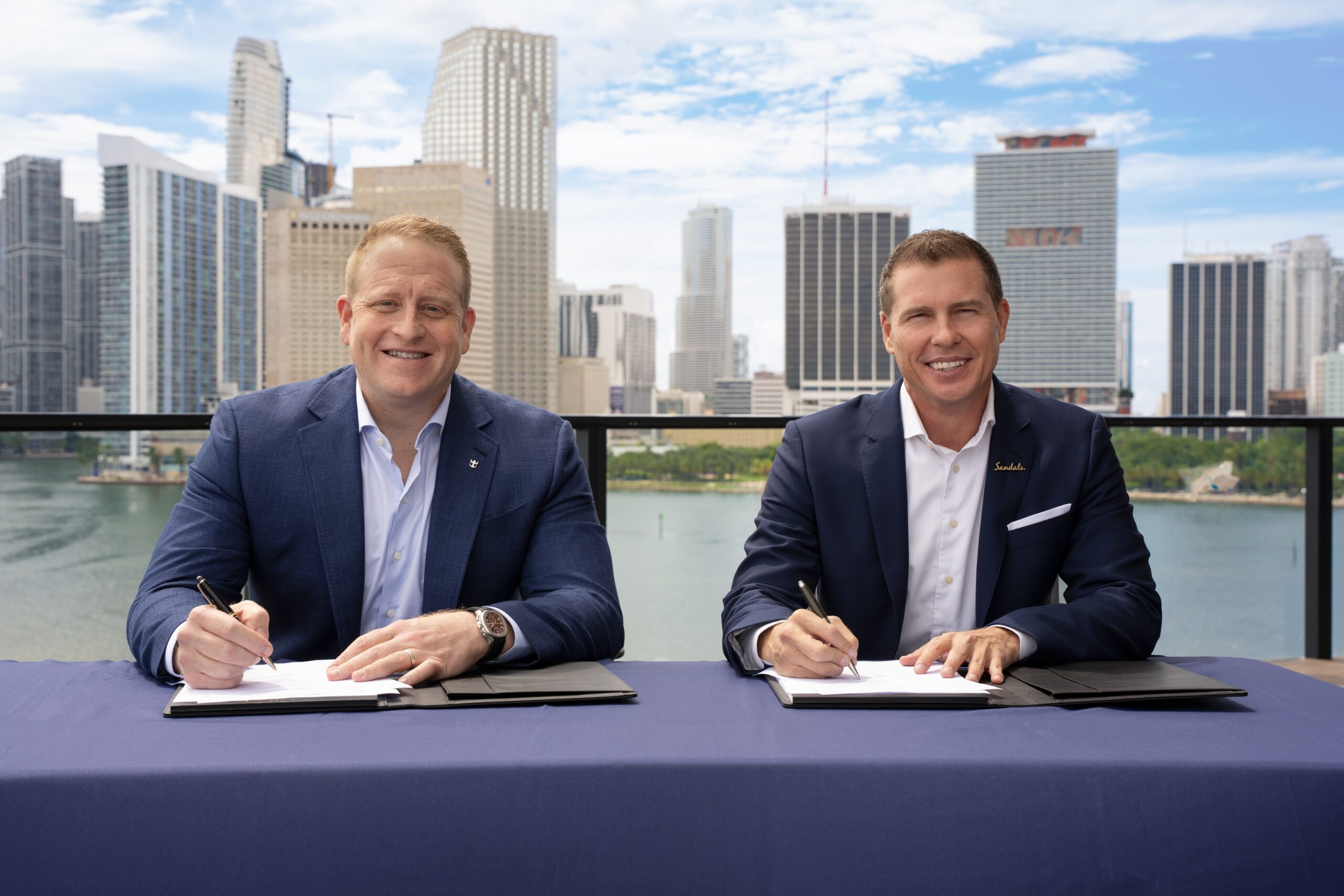 guiding the company’s long-term strategic growth as Executive Chairman of Sandals and Beaches Resorts. Existing reservations, loyalty programs, resort operations and cruise operations will continue as usual, with the partnership bringing additional resources to support future opportunities.
Under the terms of the agreement, Royal Caribbean Group will acquire a 50% equity interest in Sandals and Beaches Resorts for approximately $3 billion, representing a forward EBITDA multiple of approximately 10x. Royal Caribbean Group has secured committed debt financing from Morgan Stanley to fund the investment. The transaction is expected to close in early 2027, subject to customary approvals and closing conditions, and is expected to be accretive to earnings next year.
BofA Securities and PJT Partners acted as financial advisors, and Latham & Watkins and Jones Day acted as legal advisors to the Sandals Group. Perella Weinberg Partners and Morgan Stanley acted as financial advisors and Kirkland & Ellis LLP acted as legal advisor to Royal Caribbean Group.
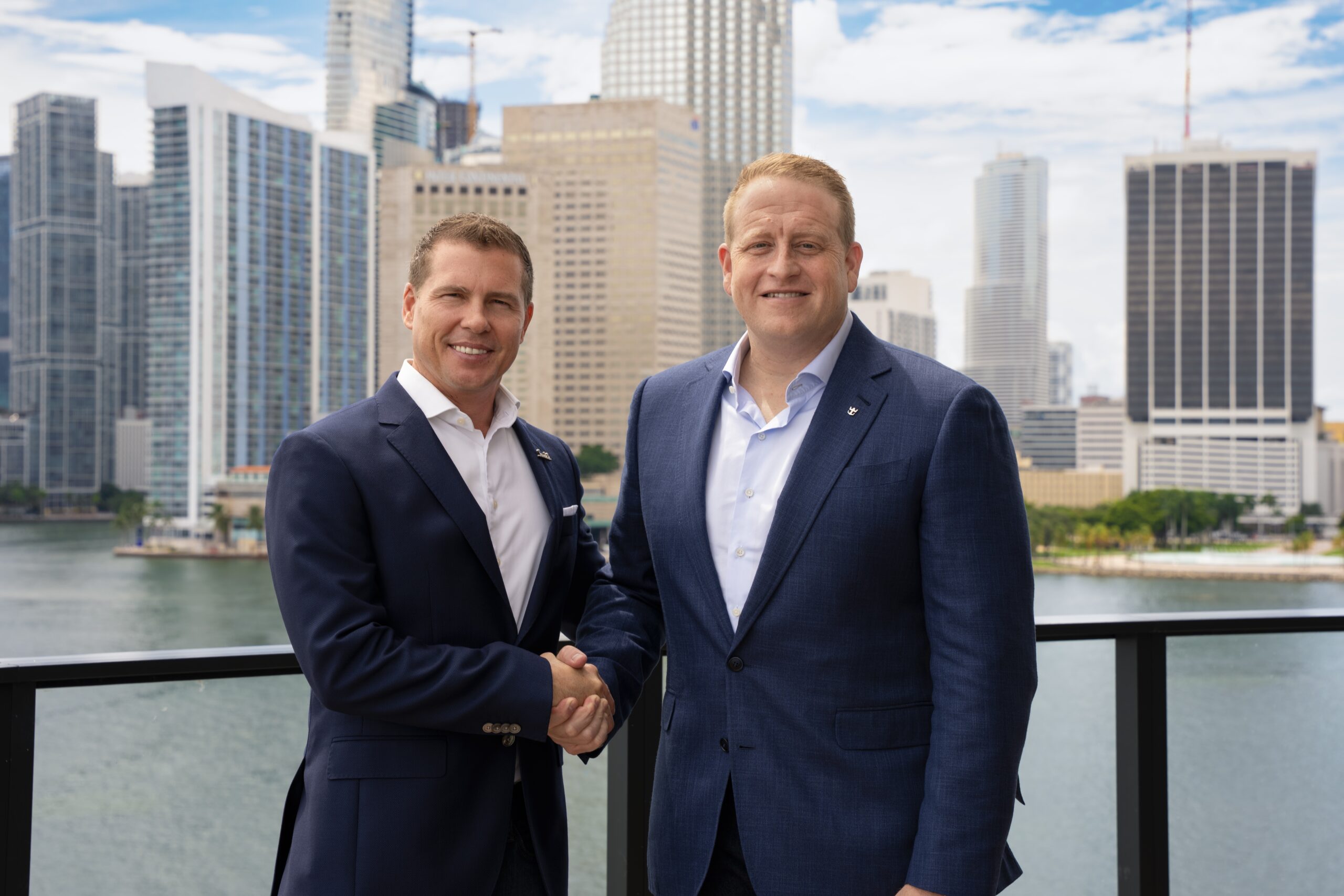
PHOTO CAPTION: Jason Liberty, Chairman and CEO of Royal Caribbean Group, and Adam Stewart, Executive Chairman of Sandals Resorts, mark the signing of an agreement to form a landmark partnership that expands Royal Caribbean Group into the all-inclusive resort space and supports the future growth of Sandals and Beaches Resorts. The signing took place at Royal Caribbean Group’s new headquarters in Miami, with the city’s skyline in the background.
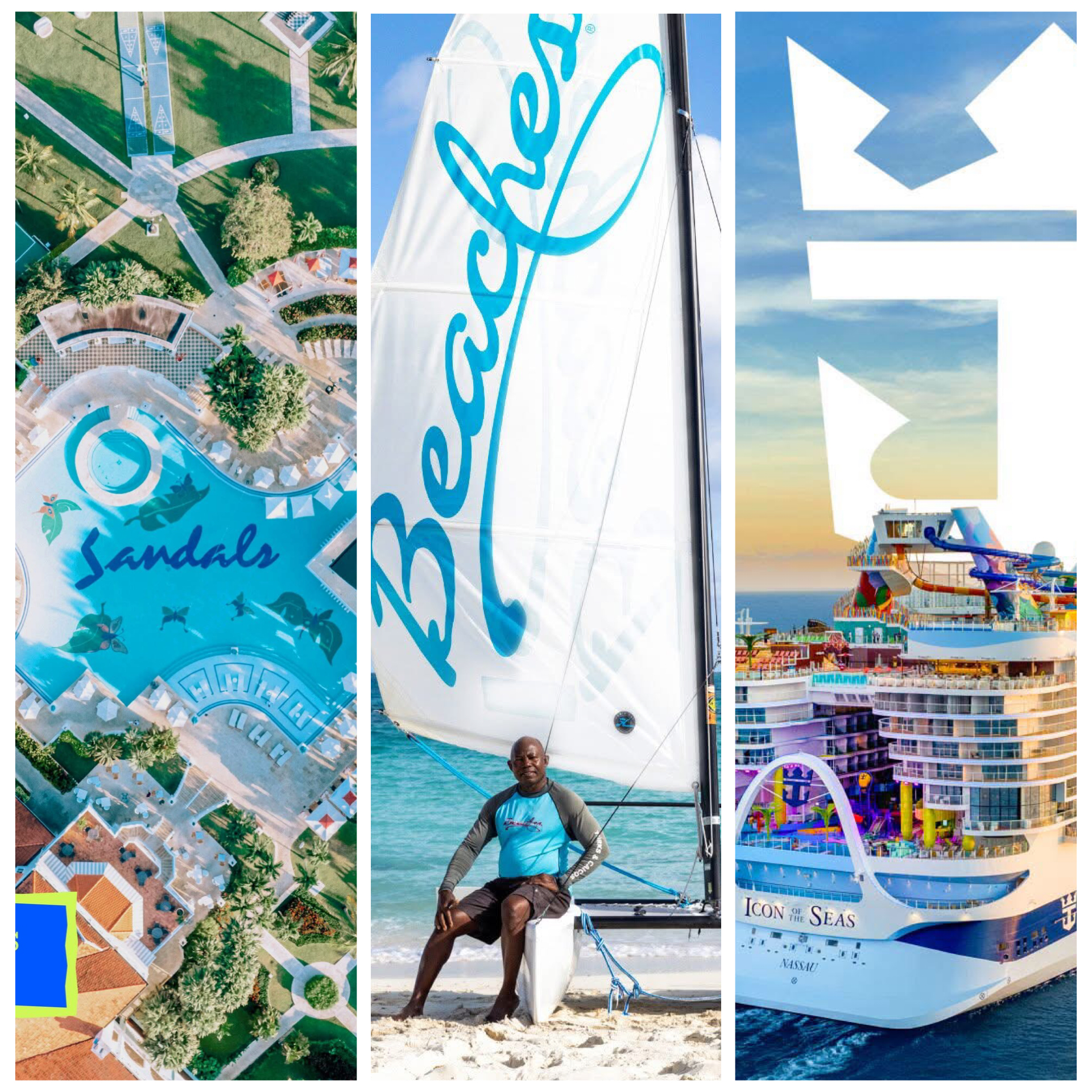
The Caribbean tourism deal first reported as a possibility on Tuesday is now a signed agreement. Royal Caribbean Group plans to pay approximately US$3 billion for a 50% stake in Sandals and Beaches Resorts, putting the value of the business at about US$6 billion. The purchase is expected to close in early 2027, subject to approvals.
Founded in Jamaica by the late Gordon “Butch” Stewart in 1981, the resort business has a presence across nine Caribbean destinations, including Jamaica, The Bahamas and Turks and Caicos. Sandals has described its workforce as nearly 20,000 people, most of them Caribbean nationals.
“My father, Gordon ‘Butch’ Stewart, founded Sandals Resorts with the belief that a company built in the Caribbean could stand on the world stage alongside the most respected names in hospitality,” said Adam Stewart in the announcement carried by PR Newswire. He will remain executive chairman, while the Stewart family retains a stake. The companies say existing reservations and resort operations will continue as usual.





-
 Bahamas News1 week ago
The Bahamas Reaffirms Support for Ukraine at International Conference in Toronto
-
 Bahamas News1 week ago
Walk for the Cure Every Saturday This October
-
 News1 week ago
Invest Turks and Caicos Officially Opened Caya Hico Collective, Grand Turk MSME Storefront
-

 Health1 week ago
TCI Hospital Marks Breast Cancer Awareness Month 2026 with “Know. Check. Act. Support.” Campaign
-

 Health5 days ago
Cleveland Clinic First in Ohio to Perform Robotic Nipple-Sparing Mastectomy