
News
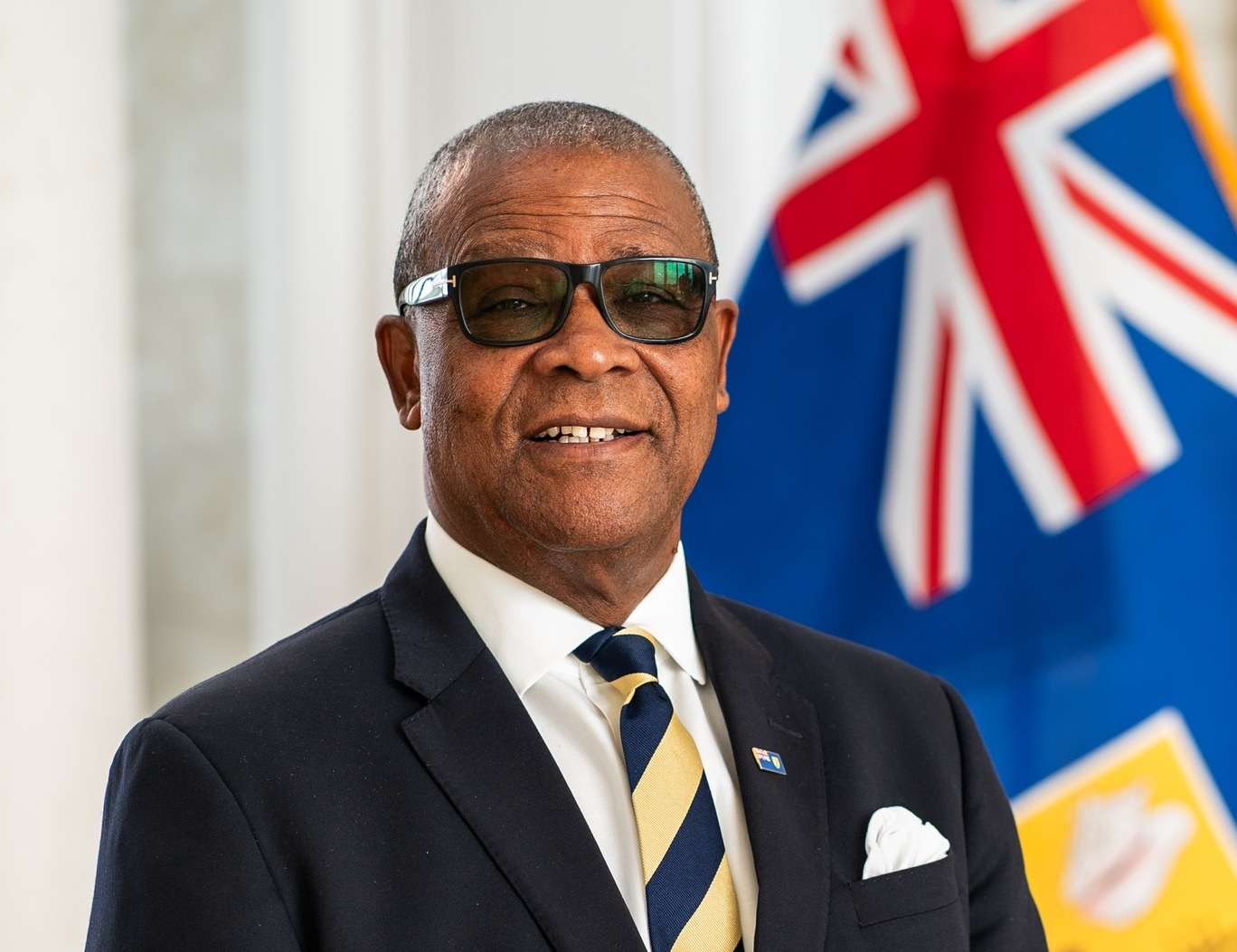
NEW YEAR’S MESSAGE 2025 HON. CW MISICK PREMIER – TURKS AND CAICOS ISLANDS

May the God of hope fill you with all joy and peace as you trust in him, so that you may overflow with hope by the power of the Holy Spirit. Romans 15 v 13
My fellow Turks and Caicos Islanders, Residents and Visitors, I greet you with love and respect!
We give God thanks for his mercy and grace, and we thank the Almighty for the opportunity to see another year.
As we close out 2024, we have SO MANY wins to celebrate and be proud of.
The new year brings hope and possibilities for continued progress and growth.
But, as we celebrate, we are concerned about the upsurge in crime fueled mostly by gang activity.
These despicable acts have shattered the peace and safety of our communities.
To those affected, I offer my sincere condolences and prayers. Our nation stands with you in your time of grief.
Let me be clear. We will not relent in our fight to dismantle the gangs and bring those responsible for this reign of terror to justice.
The Governor, the Acting Commissioner and I are united in this effort. Everything must be done to fight this upsurge in crime.
Additional police have been deployed on the streets to keep law abiding citizens safe, and
we are working with regional neighbours to further increase the numbers in the New Year.
This PNP government has invested heavily in national security. We have given the police all that they have asked for.
While the Governor has constitutional responsibility for security, my government will do everything that it can to protect our people.
We support the surge in resources and will continue to do so for the foreseeable future.
Over the last three-plus years we have spent approximately 150 million dollars on national security, including the police and judiciary.
We have:
- Expanded the investigative, technical, and physical capacity of the Royal TCI police Force.
- Deployed more officers, including from the UK.
- Enacted new laws to give the police more power to investigate, stop, search, detain, and break up gang activities.
- Introduced longer jail time for those convicted of gang, drugs or gun crimes.

- Operationalized a new Gangs, Drugs and Guns Unit to fight serious crimes.
- Installed new CCTV camera systems in strategic spots.
- Deployed a new armored vehicle to help in the fight against crime.
- Established a Mobile Police Station that can move from one community to another.

The PNP government will continue to build out the infrastructure to secure our people with resources, tougher laws and penalties.
In the upcoming budget, 75 new positions will be added to the police force and we will spend on the police alone, 47.4 million dollars.
Illegal migration has been a problem for a long time. Our new Asylum Law makes it easier to deport illegal migrants and those who enter the TCI illegally will not get refuge.
It will punish those who aid and abet persons who are here illegally.
Some of our young men are at risk and vulnerable to the influences of gangs.
My administration will establish a subsidized youth service program tied to industry specific scholarships.
We hope to incentivize school leavers to gain work experience while studying or before they undertake full-time continuing education.
All of us must unite in the fight against the criminals who terrorize and destabilize our communities.
My fellow Turks and Caicos Islanders, we came to office with a mandate from YOU to turn around the economy and put your interest first.
- We have given you 4 different stimulus and cost of living support disbursements. The latest 1-thousand-dollar cost of living relief cheques are now being paid out. We received over 15-thousand-4-hundred applications and 90 percent have been approved, and the cheques paid.
- Our people have easier pathways to own land because this PNP government is delivering Comprehensive Crown Land Reform.
- Our civil servants have higher salaries and pensions.
- We have provided social assistance to the elderly of up to 1 thousand dollars per month.
- Children who need help are generously supported.
- The minimum wage has been increased.
- Small businesses, fisheries and agricultural sectors have received solid support.
- The economy has moved from failing to fast growing.
- We are building important new infrastructure.
- We are creating an immigration system that will support the development of the TCI.
- We have made record investments in safety and security.
- These islands have seen unprecedented tourist arrivals.
- Investor confidence is at historic levels. And!
- We have piloted meaningful Constitutional reform giving us more political autonomy.
In 2025, we will continue to focus on the people’s priorities.
Housing that is safe and affordable must be accessible to our citizens. That is why establishing a mortgage corporation is so important.
This will allow those who might not have the ready cash to get a mortgage for a fixed term at reasonable rates of interest.
We will also make special provisions for our young people to own homes.
We must create an ownership society.
As tourism grows, our infrastructure, including the airports, is under strain.
We have built and fixed miles upon miles of roads across the islands.
We have plans to ease congestion on Providenciales. We will build, fix roads and drains as well as install streetlights across our islands.
Roads that will be addressed include:
- The Millennium and Leeward Highways.
- Feeder roads to ease the traffic and facilitate traffic flow in emergencies.
- The “Caicos Turnpike” from Providenciales to South Caicos.
- Repair and upgrade of interior and other roads across all islands.
Our people must have safe and cost-effective transportation solutions as they go about their daily lives including work and schools.
They cannot be left at the mercy of unregulated jitneys. The matter of public transportation will be addressed in a comprehensive way.
We have identified funding and are looking at solutions for public transportation that is regulated and safe.
Good infrastructure is the foundation of economic growth.
We are expanding and modernizing our airports and ports so that people and goods can move quickly and seamlessly.
Improvements have been carried out at all airports including Howard Hamilton International.
We are not done yet.
In the new year, the TCIAA will complete the Public/Private Partnership Agreement for redevelopment of the Howard Hamilton airport.
Tenders are now being assessed.
Airports across all the islands, including Grand Turk and North Caicos will get additional upgrades to accommodate domestic and tourist traffic, commercial and private aircraft.
Over the next five years, we will complete a modern, world class Port system at an estimated investment of 100 million dollars.
All existing ports will be integrated to facilitate a more seamless and efficient operation.
Phases one and two of the modernization of South Dock will be completed this year and the final two phases by 2027.
A modern port office building will be constructed on Grand Turk and the main dock extended to accommodate larger vessels.
We will spend 10 million dollars to modernize the South Caicos Port to support development on that island.
For a very long time, we have not been happy with the standard of care offered through the long-term Public-Private Partnership with Inter-Health Canada.
That is unacceptable.
We have been meeting with Inter-Health Canada and will provide you with an update on the way forward in the weeks ahead.
Access to consistent high-quality healthcare for our people is NOT negotiable.
We will:
- Operationalize the National Health Services Authority
- Strengthen preventative and primary health care service delivery.
- Encourage lifestyle changes to prevent non-communicable diseases such as hypertension, diabetes and cardiovascular conditions
- Redesign and manage the treatment abroad program to achieve better results and value for money.
In this new year, more focus will be placed on the young people of these islands. The government that I lead, wants to see you engaged in a meaningful way, in ALL aspects of national development.
We are making it easier for you to get higher education and develop skills that can give you a viable career path.
Free community college, training through the National Youth Service, apprenticeship and partnerships with the private sector are available options.
Young people not in school or gainfully employed should be enrolled in a training program.
We will create service programs that combine training, mentorship and voluntary service where appropriate.
The future of these islands rests upon your shoulders.
Take advantage of the opportunities.
This is your birthright.
You must help to build your country and be prepared to defend its success and sustainability.
With continuing geopolitical tensions and supply chain problems, some Caribbean countries are reporting a slowing down in their economy.
That is not the case with the TCI.
WE ARE DOING WELL.
Turks and Caicos remains one of the most sought-after destinations in the world.
This has pushed significant growth in the hotel, restaurant, construction, and real estate sectors.
Government revenue has increased, giving us the room to spend more on security and social intervention measures.
The unemployment rate continues to trend down, and our economy has almost DOUBLED in size.
GDP has jumped from $924 million in 2020 to $1.7 BILLION in 2024.
To maintain this growth trajectory, we must be prudent in how we manage our affairs.
In 2025 and beyond, we will look at ways to create other industries that will thrive alongside tourism.
Our goal is to reduce dependence on the tourism industry, create new job opportunities and strengthen our economic resilience.
In 2025, we expect real GDP to grow by 5.8 percent and our economic performance has time and time again exceeded projections. It is boosted by good governance, guided by our ministers who reflect the best of youth and experience.
Strong economic growth has given us the fiscal space to fund new projects that will improve the lives of our people.
For Financial Year 2025/2026 total revenues are projected to be $527 million. This is a decent 10% growth over 2024/2025.
In the year ahead, we will spend more on infrastructure and other important services for the people of these islands.
For Financial Year 2025/2026, total expenditure excluding Capital is forecasted at $467.6 million.
We are also expecting operating surpluses in the next financial year and beyond.
We are not spending recklessly. We have put aside funds for a rainy day.
We have cash to buy goods and services for 281 days. This is far beyond the requirement of 90 days of cash.
These numbers tell a story of success. They show how this government has taken the Turks and Caicos Islands from economic collapse in 2021 to one of the best managed and best performing economies.
My fellow Turks and Caicos Islanders, I am proud of the achievements of my government over the last three-plus years.
We grew the economy, supported our people and successfully navigated the challenges thrust upon us by the global economic downturn and geopolitical tensions.
We spent the largest amount of money to expand and equip the police and border force to keep you safe.
Tourism and construction are booming, and record levels of investments are taking place across these islands.
We are building the infrastructure to meet your needs and expand our economy.
I thank the Cabinet, the civil service and all who have worked tirelessly to help us navigate challenges and protect our people.
I extend my sincere gratitude to all sectors of our economy.
Most of all I extend gratitude to the people of these islands. You are the foundation of a thriving and prosperous Turks and Caicos.
Our work to give you a better life is unrelenting. You will always be our priority.
We can look forward with confidence that our best days are ahead of us.
Let us dream BIG and grasp the opportunities and new possibilities that 2025 brings.
Today, I extend my hand to each of you.
Together, let us:
- Build a thriving and sustainable future for the Turks and Caicos Islands.
- Build a future where all citizens can contribute and benefit from a prosperous, fair and inclusive economy.
- Make the TCI a shining example not only in the Caribbean, but across the world.
I wish every Turks and Caicos Islander at home and abroad, Residents, and Visitors peace, prosperity, and happiness for the New Year.
Happy 2025!
May God bless you and bless our Beautiful by Nature Turks and Caicos Islands.




Turks and Caicos, April 06, 2026 – Technical excellence early in their jumps became the defining factor for two Turks and Caicos athletes, as David Hall soared to gold in a nail-biting Under-20 high jump final at the 53rd CARIFTA Games in Grenada. Herwens Guerrier added to the country’s success with a 1.90 metre clearance to secure silver in the Under-17 division, finishing in a tightly contested field where all three medalists cleared the same height.
Both events were decided on countback — meaning the medals were determined not just by height cleared, but by which athlete did so with fewer failed attempts, highlighting the importance of precision and composure under pressure.
A wave of national pride followed the results, with congratulatory messages pouring in for the athletes who delivered under pressure on the regional stage. In a statement, Dileeni Daniel-Selvaratnam praised both competitors, saying their “hard work, discipline and determination have made the entire nation proud,” while encouraging the wider team to continue striving as competition unfolded at the Kirani James National Stadium in Grenada.
Team Turks and Caicos finished just outside of the top ten among 28 competing nations, and anticipation is already building for what is expected to be a spirited homecoming for the standout athletes, whose performances have ignited pride across the islands.
The 53rd staging of the CARIFTA Games, held at the Kirani James National Stadium in Grenada, unfolded under warm, at times testing conditions, with intermittent showers and shifting winds challenging athletes across disciplines.
Jamaica once again asserted its dominance, capturing its 40th consecutive CARIFTA title, continuing an unmatched run in regional athletics. Among the standout performers was Shanoya Douglas, whose electrifying run in the Under-20 200 metres earned her the prestigious Austin Sealy Award — the Games’ highest individual honour — after she shattered the long-standing record of Bahamian Shaunae Miller-Uibo, who went on to become an Olympic gold medalist in the 400 metres. Douglas clocked an impressive 22.11 seconds to rewrite the CARIFTA record books.
For Turks and Caicos, however, the spotlight remained firmly on the field, where two high jumpers delivered performances defined by discipline and growth. Hall’s gold medal-winning clearance of 2.00 metres marked a significant step forward in his development, improving on his 1.89 metre silver medal performance at the 2025 Inter-High Championships. Guerrier’s 1.90 metre effort in the Under-17 division similarly places him among the country’s top emerging talents, signalling a strong future for the event locally.
Angle by Deandrea Hamilton. Built with ChatGPT (AI). Magnetic Media — CAPTURING LIFE.

NASSAU, Bahamas — What should be a simple five-minute drive is fast becoming an expensive, hour-long ordeal, as rising fuel prices collide with worsening traffic congestion across New Providence.
As of early April 2026, gasoline prices across The Bahamas have climbed sharply, with motorists now paying an estimated $5.50 to over $6.50 per gallon, depending on the station and grade. The increases, seen at major retailers including Esso, Rubis and Shell, reflect a volatile global oil market driven by escalating geopolitical tensions.
The latest spike — in some cases jumping more than 50 cents per gallon within days — is being driven by uncertainty surrounding escalating tensions involving Iran. U.S. President Donald Trump has issued a direct ultimatum, warning that the United States could launch aggressive strikes on Iranian infrastructure, including power plants and key facilities, if demands are not met. While he has also expressed hope for a swift resolution, the threat of rapid escalation is already rattling global oil markets — and The Bahamas, heavily dependent on imported fuel, is feeling the impact almost immediately.
At the pumps, the frustration is real.
Drivers are now paying significantly more just to sit in traffic. Commutes that once took minutes are stretching into hour-long crawls, burning fuel with little movement and compounding the financial strain. For many residents, the issue isn’t just the price per gallon — it’s how quickly that gallon disappears.
Industry players are also bracing for impact. Higher diesel prices are expected to ripple across key sectors, including trucking, construction, and shipping — all of which ultimately feed into the cost of goods and services. In short, this is not just a fuel story; it’s an inflation story in the making.
Despite the surge, the Bahamas Petroleum Retailers Association has moved to calm fears, confirming that there is no fuel shortage. Supply remains stable, but consumers are being urged to adjust behavior — from maintaining proper tyre pressure to considering carpooling — small measures that could stretch every dollar a bit further.
Retailers, however, are not offering much comfort on price relief. While fluctuations are expected, insiders say the days of sudden price drops are unlikely in the immediate term. The “shock” increases may level off, but a meaningful decline hinges on global stability — something that currently feels out of reach.
For Bahamians, the reality is tightening: higher fuel costs, longer commutes, and a growing sense that relief isn’t coming anytime soon.
Angle by Deandrea Hamilton. Built with ChatGPT (AI). Magnetic Media — CAPTURING LIFE.

PROVIDENCIALES, Turks and Caicos Islands — It’s that time again — a period of compliance, accountability and transparency for those entrusted with public office and captured under the category of “Specified Persons in Public Life.”
The Integrity Commission is reminding all individuals who fall within this category that they are legally required to file their Declarations of Income, Assets and Liabilities, in accordance with Section 39 of the Integrity Commission Ordinance.
The declaration window is now officially open, running from April 1 to June 30, 2026, and applies to a wide cross-section of senior public officials, statutory board members and others operating within the machinery of government.
This is not a routine administrative exercise. It is a cornerstone of good governance — designed to ensure that those in positions of power are transparent about their financial interests, and to guard against corruption, conflicts of interest and illicit enrichment.
Who Must File
The Commission outlines several categories of individuals required to submit declarations this cycle.
They include:
- Persons who last filed on or before June 30, 2024
- Individuals newly appointed to statutory boards or government positions from April 1, 2026 onward
- Those who have demitted office, resigned or whose contracts have ended — who must file within 90 days of leaving their post
- Individuals who may not have previously realized they fall under the legal requirement
The net is wide — and intentionally so.
“Specified Persons in Public Life” includes elected officials, senior civil servants, financial officers, law enforcement leadership, members of statutory bodies, and other key decision-makers whose roles carry influence over public resources and policy.
Among them are Members of the House of Assembly, Cabinet Ministers, Permanent Secretaries, Heads of Department, senior police officers, and individuals serving on public boards and commissions.
The Commission notes that the full schedule of designated roles is extensive, and persons are encouraged to consult the official list available through its office or website to confirm whether they are captured under the law.
How to File
Unlike many modern reporting systems, this process remains deliberately controlled.
All declarations must be:
- Submitted in person
- Delivered by appointment only
- Accompanied by supporting documentation
Declarants will be contacted directly with their assigned appointment details, including date, time and location. The Commission has made it clear — submissions through third parties, email or mail will not be accepted.
This approach reinforces the seriousness of the process and ensures the integrity of submissions.
Declaration forms are available via the Commission’s website, and assistance is accessible through its Providenciales office for those needing clarification.
Penalties for Non-Compliance
The warning from the Commission is unambiguous.
Failure to file a declaration without reasonable cause is a criminal offence.
Penalties include:
- Up to one year imprisonment
- A fine of up to $15,000
- Or both
Additionally, the Commission is mandated to publish the names of non-compliant individuals in the official Gazette — a move that carries both legal and reputational consequences.
Confidential but Critical
While the process is strict, the Commission emphasizes that all declarations are confidential documents, handled with discretion.
Still, the purpose is clear: transparency does not always mean public disclosure — but it does mean accountability to an independent oversight body.
In a region where public trust can be fragile, these filings serve as a quiet but powerful mechanism to reinforce confidence in governance.
For Turks and Caicos, this annual exercise is more than paperwork — it is a test of integrity at the highest levels.
And for those required to file, the message is simple: comply, disclose, and do it on time.
For more information or to confirm filing obligations, individuals are encouraged to contact the Integrity Commission directly.
Angle by Deandrea Hamilton. Built with ChatGPT (AI). Magnetic Media — CAPTURING LIFE.





-

 News6 days ago
GOLD & SILVER – Hall & Guerrier Fly High for Turks and Caicos at CARIFTA 2026
-

 News6 days ago
CALL 649-338-4008 OR 649-338-2684 IF A CHILD IS AT RISK: TCI Confronts Alarming Reality During Child Abuse Prevention Month
-

 Independent writer5 days ago
The Rise of Right-Wing Populism and What It Could Mean for the Turks and Caicos Islands
-

 News7 days ago
Beaches Turks & Caicos, FIU train next generation of hospitality leaders in Providenciales
-

 Bahamas News6 days ago
FNM’S $200 CHILD SUPPORT PLAN SPARKS DEBATE AS PLP QUESTIONS FUNDING AND SCOPE
-

 Bahamas News6 days ago
Fuel Pain at The Pump: Global Tensions Drive Prices Up as Bahamians Feel the Squeeze
-

 News6 days ago
Birthright Citizenship Unchanged as U.S. Supreme Court Weighs Case, Majority of Americans Oppose Ending Policy
-

 Bahamas News6 days ago
COI UNVEILS FIRST 100 DAYS PLAN, PROMISING SWEEPING CHANGE AND BREAK FROM MAINSTREAM POLITICS