
Government
NIB Amnesty begins December 1, not a political ploy says Leeward and Long Bay Member


Deandrea Hamilton
Editor
Turks and Caicos, December 2, 2024 – The Premier of the Turks and Caicos Islands, as the country’s Minister of Finance tabled a Bill, which he said is designed to press the “reset button” for those falling behind on their National Insurance Board payments. In a House of Assembly meeting on November 14, Hon Washington Misick announced a plan to give contributors six months to catch up on arrears.
Eight days later, on November 22, 2024 the NATIONAL INSURANCE (ADDITIONAL CHARGES) (AMNESTY) ORDINANCE 2024 Bill came into force, after having been placed in the Gazette.
“The bill Mr. Speaker, is really geared toward assisting businesses, but especially MSME entities whether they be corporate or sole traders (particularly MSME’s) . It seeks to provide for the waiver for additional charge of late payment of National Insurance contributions by employees or self employed persons, additional charge is what we refer to as penalties and then of course the interest as well.”
The premier says Employers and the Self-Employed now have until May 31, 2025 to settle their balances in order to be compliant with the requirements of the National Insurance Ordinance.
By way of explanation, Premier Misick added, “The contribution is what is owed or what would be payable on every payroll, every person who is earning a salary or a wage. That is the contribution. The additional charges are penalties which arise as a result of not making those payments on time. And then of course there is the interest aspect and then there is a penalty which is compounded as time goes forward.”
The amnesty will run six months; it begins on December 1, 2024.
“What we are advising you to do is to pay the contribution portions of those outstanding bills and then you have until the end of May to pay the penalties, meaning the additional charge; the interest and penalties.”
In her contribution on the Bill, Akierra Missick, the Member for Leeward and Long Bay electoral district offered the PNP Administration’s motive for the amnesty.
“Mr. Speaker it’s just another notch on the path in finding measures to mitigate the cost of living in these islands. National Insurance is very important, and we might not see its importance today because the idea of the national insurance program is that it provides a social security safety net for the people who work and live in these islands,” said Hon Missick.
“There have been times where persons who are employing themselves, self employed persons may not have had the revenue that they should have had and/or decided that they would pay a Fortis bill instead of national insurance, and as a result when missed payments are made…”
The Member shared that this has led to civil claims in the Magistrate’s Court against those in default in order to force those payments.
“National Insurance is the most important institution we have in the islands, because National Insurance provides us an opportunity to make decisions today for our future selves. That is our pension, our retirement, our NIB cheque when they reach the age 60 or 65.”
The member explained that workers who are injured can claim disability, all women contributors and fathers can access maternity leave benefits and in recent years, an unemployment benefit was added to the list of advantages.
“This Bill gives an opportunity to give persons time to catch up on the arrears, the penalties that they owe the national insurance, it also provides them an opportunity to come forward.
As a practicing attorney, Akierra Missick cautioned those who are meant to benefit from the amnesty not to take the offer for granted or underestimate the need to maintain payments into the plan.
“These are measures we are seeking to put in place to assist persons who are finding the burden of their debt, their penalties – those concerns – on top of their normal day to day operations and/or bills,” said Missick who added, “This administration has continuously, continuously over the last three and a half, almost four years done right by the people.
Grand Turk got the COVID $10,000 fund, that was a million dollars Cruise Grant. It’s not about money,I know a lot of people are saying that you think you can buy us off. It’s not about that in any way, shape or form – you’re a taxpayer, so your government is giving you back some of your tax money. That is literally what it is.”
The member for Leeward and Long Bay swatted away charges by the Opposition PDM that her party was manipulating the public purse. She described the National Insurance Additional Charges Amnesty Bill as “good,” and in keeping with the PNP Administration’s regular consideration of the impact of inflation on the local population; “it is not a political ploy.”
The outstanding contributions can be paid to the NIB in full or installments during the amnesty period. No civil litigation will take place against a contributor who owes the NIB during this time, explained the Premier.

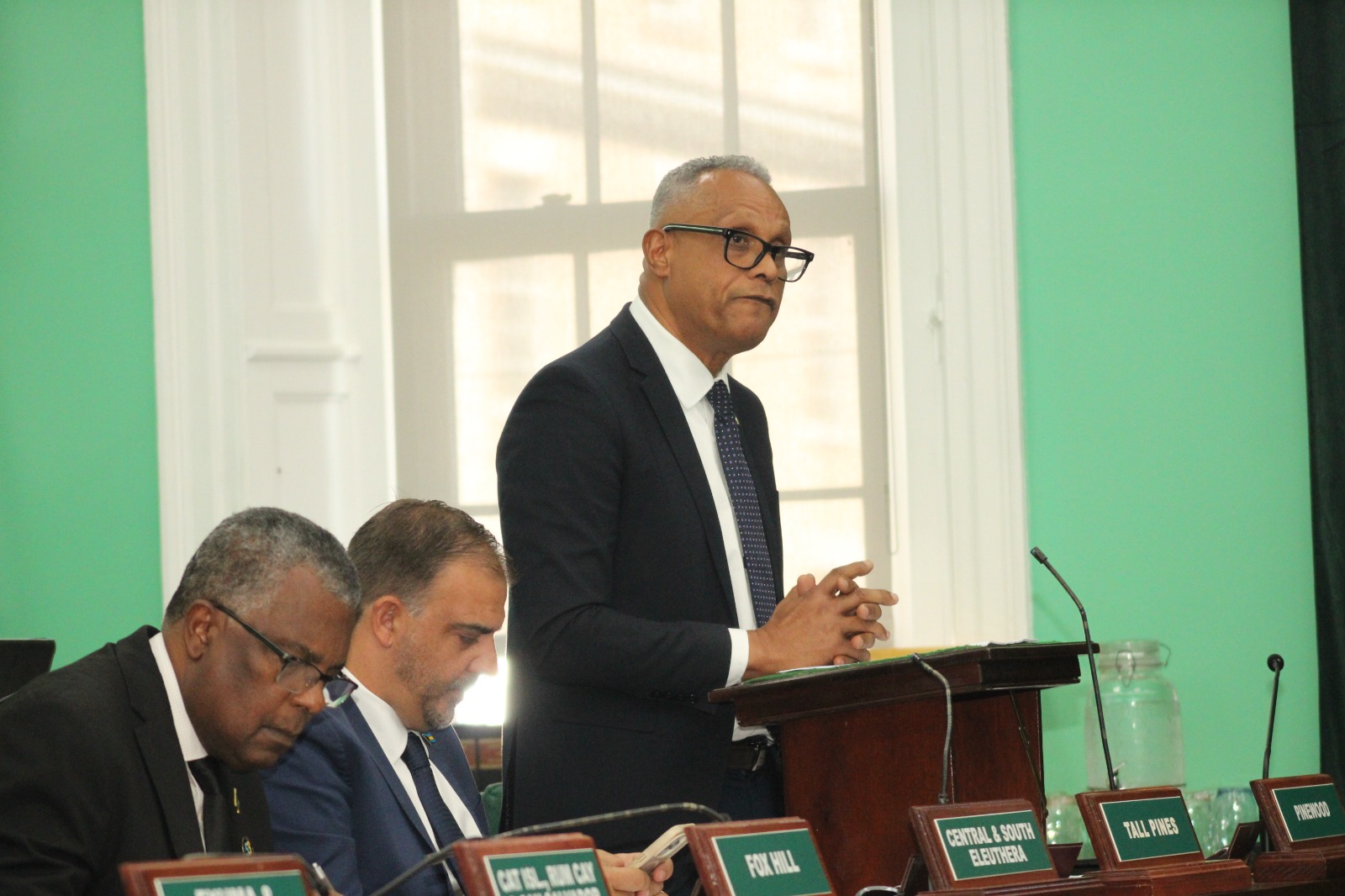
NASSAU, The Bahamas — The Government is moving to protect the rights, privacy, independence, and dignity of older persons throughout the Commonwealth of The Bahamas.
The Hon. Dr. Michael Darville, Minister of Health and Wellness tabled The Older Persons Rights, Protections, Care and Support Bill (2026), in the House of Assembly on Wednesday, September 16, 2026.
“This is legislation whose time has come. It is rooted in a very simple thought that growing older must never mean becoming less valued, less visible, less protected or less entitled to dignity.
“Ageing is not somebody else’s issue. It is one of the few public policy matters that, if we are blessed with longevity, will eventually touch every one of us,” Dr. Darville said.
He noted that The Bahamas, like the world, is experiencing a clear demographic shift. According to the 2022 Census, the number of persons aged 65 years and older rose by 28.2 percent since 2010.
In The Government’s Blueprint for Progress, it made a commitment to strengthening protections for older persons. And, this Bill gives practical expression to that commitment. But there is also a wider context.
Furthermore, in 2025, the United Nations Human Rights Council established an Intergovernmental Working Group charged with developing a legally binding international instrument on the human rights of older persons. Its first substantive negotiating session was held in Geneva in July of this year.
In this vein, Dr. Darville said that The Bahamas brings this Bill at an important moment.
“While the international community is negotiating what a future global legal instrument should contain, The Bahamas is moving now with legislation that goes beyond a declaration of principles,” he said.
“This Bill recognizes older persons as rights-holders. But it also recognizes that rights written on paper mean little if there is no machinery to make them real.”
Provisions under the Bill establish in law the rights of older persons, including dignity, equality, privacy, autonomy, participation, financial self-management and access to healthcare and public services.
Secondly, it confronts abuse and abandonment, physical abuse, sexual abuse, psychological and emotional abuse, neglect and abandonment.
“These are expressly prohibited. For far too long older persons have been abandoned at hospitals with no recourse. This ends today,” Dr. Darville stated.
The Bill also permits anonymous reporting of suspected abuse and protects persons who make reports in good faith. Certain healthcare, social service, law enforcement and other professionals will have a statutory duty to report where
they reasonably suspect that an older person requires care and protection.
And thirdly, this Bill confronts an abuse that can sometimes remain hidden behind family relationships — financial exploitation, Dr. Darville said.
He added, “Taking an older person’s pension. Misusing their bankcard. Coercing them to transfer property. Manipulating a will. Using their National Insurance benefit for purposes other than their welfare. Preventing them from accessing their own money. These matters are specifically addressed in this legislation, with financial exploitation attracting serious penalties.”
The Bill is about support, by providing for the development of a National Older Persons Policy within 12 months, with priority given to a National Dementia Strategy.
“It promotes community nursing, home-based care and older persons’ day-care services, because where it is safe and appropriate, we should help our older persons remain independent, connected to their communities and supported in familiar surroundings,” Dr. Darville said.
The Bill further recognizes the tremendous responsibility carried by caregivers and provides for caregiver training and support, among other things. “It incorporates the needs of older persons into disaster preparedness, response, relief and recovery. And importantly, it rejects the idea that retirement means irrelevance,” Dr. Darville said.
By Lindsay Thompson
Bahamas Information Services
(BIS Photo/Ulric Woodside)
By Magnetic Media Newsroom
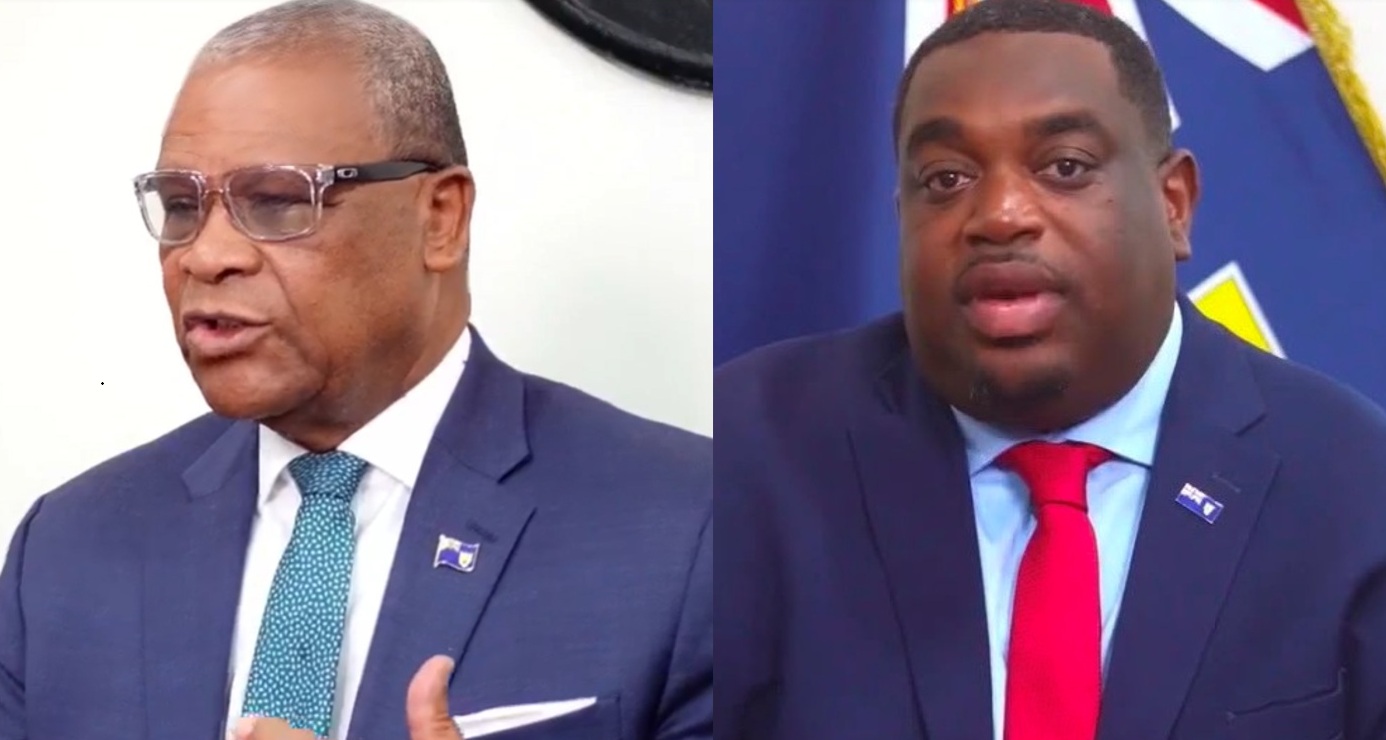
PROVIDENCIALES, Turks and Caicos Islands — The Turks and Caicos Islands Government says the breakdown of its relationship with InterHealth Canada presents an opportunity to reshape healthcare delivery, with plans to expand local medical services, strengthen primary care and reduce dependence on overseas treatment.
During a national briefing following InterHealth Canada’s notice terminating its hospital contract, Premier Charles Washington Misick acknowledged publicly for the first time that Government and InterHealth had been negotiating an exit from the arrangement for more than a year after what he described as an “irretrievably broken down” relationship.
Despite the contractual dispute, Misick and Health Minister Kyle Knowles stressed that healthcare services will continue uninterrupted during the transition.
“Allow us to do our job,” Knowles appealed, assuring residents that Government is actively managing the transition and safeguarding patient care.
The Premier outlined what amounts to a broader healthcare transformation built around four connected levels of care: strengthened community-based primary healthcare; expanded polyclinic services; enhanced hospital-based secondary care with greater specialist capacity; and overseas tertiary treatment only for cases that cannot be managed locally.
Among the proposals are the long-discussed establishment of intensive care units, expanded use of currently unfinished hospital space, recruitment of more resident specialist physicians and stronger contract management to oversee future healthcare agreements.
Knowles said the new polyclinic model will broaden services available outside the hospitals, including dentistry, ophthalmology, laboratory services, diagnostic imaging, gynaecology and preventative screening, helping to reduce pressure on emergency departments while improving early intervention.
Misick also acknowledged that while the hospital system significantly improved healthcare access after opening in 2010, Government believes further reform is necessary to improve affordability, sustainability and the range of services available within the Turks and Caicos Islands.
The briefing marked the Government’s most comprehensive explanation to date of its plans beyond the InterHealth contract, signalling that officials now see the transition as an opportunity to redesign healthcare delivery rather than simply replace one operator with another.
Government
Parnell Urges Premier to Step Aside, Proposes Bipartisan Board to Guide Healthcare Transition
By Magnetic Media Newsroom
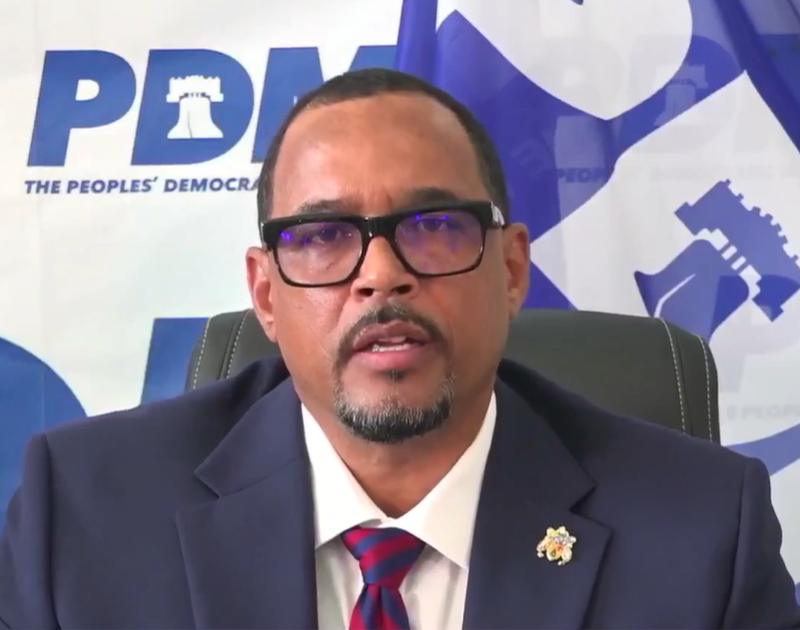
PROVIDENCIALES, Turks and Caicos Islands — Opposition Leader Douglas Parnell is calling on Premier Charles Washington Misick to step aside, arguing that the Government has failed to provide the leadership, transparency and public engagement needed as the Turks and Caicos Islands prepares for one of the most significant changes in its healthcare system.
Responding to Government statements following InterHealth Canada’s contract termination notice, Parnell said residents were only now learning officially that negotiations with the hospital operator had been underway for more than a year, despite several previous opportunities for Government to inform the public.
He questioned why no detailed explanation was provided during the State of the State Address, Budget Debate or recent healthcare announcements, including the opening of the new polyclinic.
Parnell argued that while the PDM supports reforming or replacing the existing hospital arrangement, the process must be transparent and centred on the public interest.
The Opposition Leader reminded residents that the PDM had challenged the InterHealth agreement while in government, pursuing arbitration and preparing further legal action over concerns about the contract before leaving office following the General Election.
To guide the next phase, Parnell proposed establishing a bipartisan Health Transition Board comprising Government and Opposition representatives to oversee the transition, monitor public accountability and manage the procurement process for any future healthcare provider.
He also outlined what the PDM believes should form the foundation of the next healthcare system, including guaranteed continuity of care, automatic employment protection for hospital workers, recruitment incentives for specialist physicians, expanded intensive care services, comprehensive mental health care, enhanced geriatric services and accelerated efforts to attract qualified Turks and Caicos Islanders in the medical profession back home.
Parnell also presented ten questions for Government covering outstanding payments, borrowing plans, legal implications, transition arrangements and the future structure of healthcare delivery.
He said the changes now unfolding require decisive leadership, openness and a carefully managed transition that places patients, healthcare workers and the long-term interests of the Turks and Caicos Islands first.





-

 Independent writer1 week ago
Born Here, Raised Here, but Still Unable to Vote: Is this a Conundrum for TCI Electorate?
-

 Bahamas News4 days ago
Rosewood Exuma: A precedent-setting case for environmental law and future development in The Bahamas
-

 News3 days ago
Invest TCI Strengthens Regional Investment Connections at Caribbean Investment Forum 2026 in Barbados
-

 Bahamas News1 week ago
Monument Supports Hands for Hunger With Paradise Plates Debut
-

 Bahamas News1 week ago
Schweppes ‘the Art of Mixology’ Dazzles at Paradise Plates with Nemiroff Vodka
-
 Bahamas News4 days ago
Energy Minister Delivers Electrifying Keynote Opening Address at CAREC 2026
-

 News1 day ago
Crown Land Unit Leads Multi-Agency Enforcement Exercise in Five Cays
-

 Bahamas News2 hours ago
Bahamas Issues Cybersecurity Alert Over Akira Ransomware Threat