
News
Hurricane Season is Over but not before Record-setting storms Killed Hundreds and Cost Billions


Garfield Ekon
Staff Writer
December 3, 2024 – The 2024 Atlantic hurricane season came to a close on Saturday, bringing to an end a season that saw 11 hurricanes compared to the average seven, and death and destruction hundreds of miles from where storms came ashore on the United States (U.S.) Gulf Coast.
Meteorologists called it a “crazy busy” season, due in part to unusually warm ocean temperatures. Eight hurricanes made landfall, in the U.S., Bermuda, Cuba, the Dominican Republic and Grenada.
Hurricane Beryl became the first Category 4 hurricane on record to form in the month of June, slamming into the island of Carriacou in Grenada. In Jamaica it went on to destroy crops and houses and left two dead. The last time the island was scraped by a Category 4 hurricane was Dean in 2007, making it “pretty rare,” said Brian McNoldy, a hurricane researcher at the University of Miami.
The storm then intensified into the earliest Category 5 hurricane ever in the Atlantic on July 1. Major hurricanes — Category 3 and above — are not usually seen until September 1, according to the National Hurricane Center.
In September, Hurricane Helene caused catastrophic damage across the southeastern U.S. and was the deadliest storm to hit the U.S. mainland since Katrina in 2005. More than 200 people died. North Carolina estimates the storm caused at least $48.8 billion in direct or indirect damages with houses, drinking water systems and farms and forests destroyed. Florida, Georgia, South Carolina, Tennessee and Virginia also sustained extensive damage.
In October, Hurricane Milton rapidly intensified and the storm’s maximum wind speeds hit a screaming 180 mph, making it one of the strongest hurricanes by wind speed ever recorded in the Gulf of Mexico. The only one stronger by that measure was Hurricane Rita in 2005.
The areas where Helene and Milton struck saw as much as three times their usual rainfall for September and October, the heart of the Atlantic hurricane season. For Asheville, Tampa and Orlando, the two-month period was the wettest on record.
In November, Hurricane Rafael reached 120 miles per hour (MPH), and was nearly the strongest November hurricane on record in the Gulf of Mexico, tying with Hurricane Kate in 1985. Rafael made landfall in Cuba and battered the island as it was trying to recover from widespread blackouts caused by Hurricane Oscar in October.
Planet-warming gases like carbon dioxide and methane released by transportation and industry are causing oceans to rapidly warm. Several factors contribute to the formation of hurricanes, but unusually warm oceans allow hurricanes to form and intensify in places and times we don’t normally anticipate, McNoldy said.
“In other words, we never had a storm as strong as Beryl so early in the season anywhere in the Atlantic and we never had a storm as strong as Milton so late in the season in the Gulf of Mexico,” he said.





PHOTO BY SIXERS NATION
Bahamian pride is already on full display in South Florida, with fans arriving in strong numbers ahead of tonight’s highly anticipated NBA matchup featuring VJ Edgecombe and the Philadelphia 76ers.
Helping to power that movement was Bahamasair, which rolled out a strategic promotion to facilitate travel, turning the game into a full-scale national showing.
And the celebration started early.
A “Bahamas Invades Florida” pre-party over the weekend set the tone, with Bahamian fans, DJs and supporters converging in Fort Lauderdale to build momentum ahead of the game. The event, marketed as a major cultural gathering, has spilled into Miami, where a strong Bahamian presence is expected inside the arena tonight.
This is no ordinary road game.
The Sixers enter the matchup healthy and are favoured to win, adding to the anticipation surrounding what many expect to be a standout performance by the Biminite guard.
Edgecombe, the third overall pick in the 2025 NBA Draft, has been electric in his rookie season — delivering high-scoring performances and quickly establishing himself as one of the league’s most exciting young talents.
But beyond the stats, it’s the moment that matters.
With South Florida just a short flight away, Bahamians have seized the opportunity to show up in force — flags, energy and all — transforming the game into something far bigger than basketball.
A national turnout.
A rising star.
And a night where the Bahamas is expected to be felt — from tip-off to final buzzer.
Angle by Deandrea Hamilton. Built with ChatGPT (AI). Magnetic Media — CAPTURING LIFE.
News
Password to Paradise Radio Remotes at Beaches Turks & Caicos continue to highlight the TCI as the preferred Caribbean destination
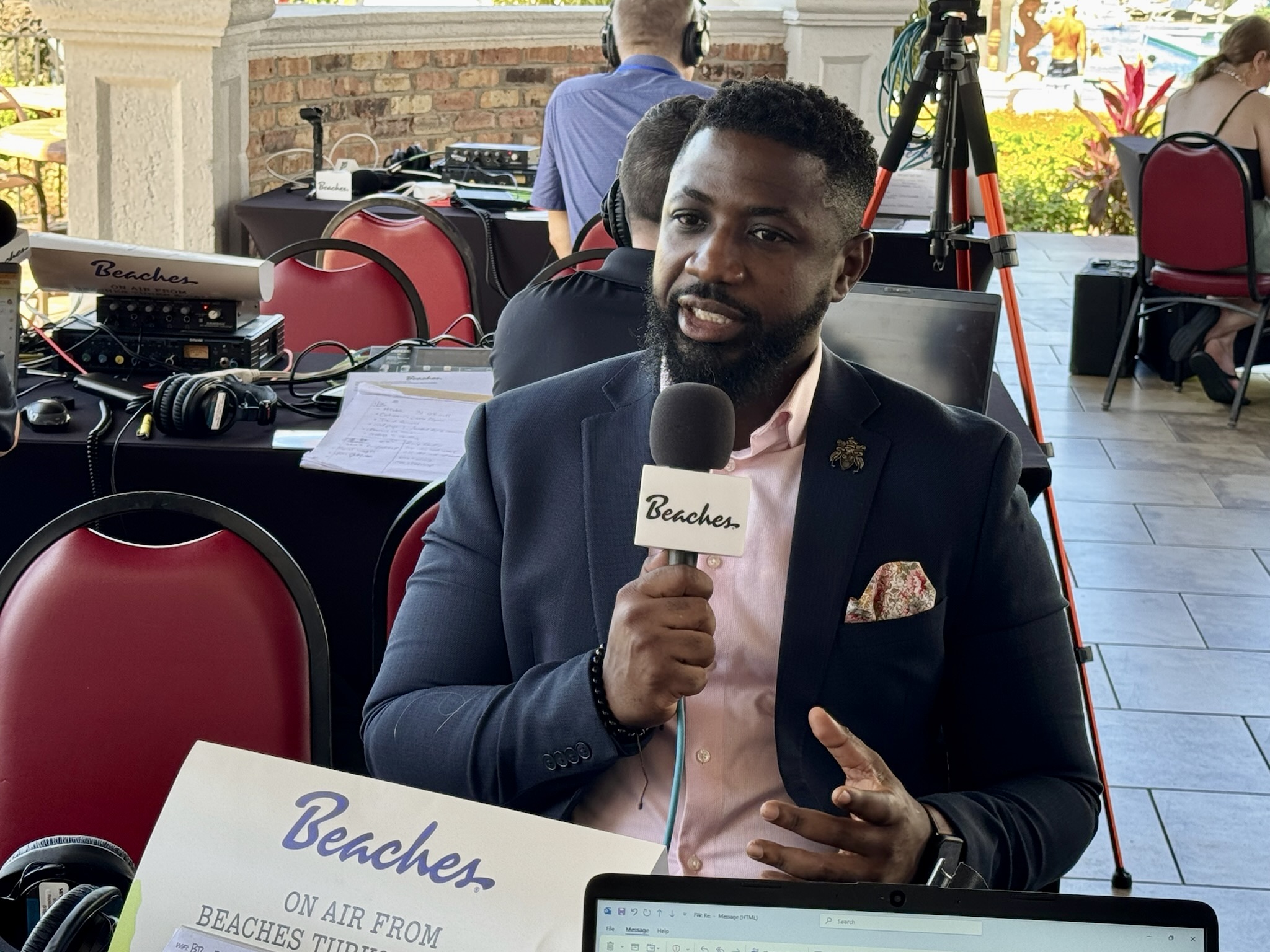
PROVIDENCIALES, Turks & Caicos Islands: — For two consecutive weeks, popular on‑air personalities set up remote studios on the sands of Grace Bay, turning Beaches Turks & Caicos into a live broadcast hub for North American listeners. Morning shows and drive‑time programmes all streamed directly from the resort, with hosts sharing first‑hand impressions of the islands’ beaches, culinary scene, and signature warm hospitality.
The broadcasts formed part of the “Password to Paradise” promotion, a multi‑station campaign that invited listeners to tune in for special on‑air codes for the chance to win all‑inclusive vacations to Beaches Turks and Caicos resort. Stations in major markets across the U.S. and Canada used the resort as their backdrop while encouraging audiences to “trade the cold for Turks and Caicos,” painting vivid pictures of turquoise waters and white‑sand shores with every break.
The “Password to Paradise” mission, already a proven radio promotion format in Canada and the U.S., took on new resonance when paired with live reports from the resort itself. Contest teasers, winner announcements, and social media reels featuring guests arriving in Turks and Caicos amplified the islands’ profile well beyond traditional print or digital advertising.
Tourism officials have welcomed the radio initiative as a timely boost to an already buoyant sector. Minister of Tourism, Agriculture, Fisheries and Environment, Hon. Zhavargo Jolly, emphasized the importance of partnerships that not only grow arrivals but also ensure that Turks and Caicos Islanders remain the primary beneficiaries of tourism’s success.
In commenting on the recent wave of live broadcasts and contests, Minister Jolly noted, “these visiting broadcasters have showcased the islands to millions of listeners across North America and underscored the “value added” to an economy that continues to expand on the strength of tourism.” He continued, “ sustained, experience‑driven campaigns like “Password to Paradise” align with the government’s broader strategy of attracting high‑value visitors while protecting the country’s natural assets and cultural heritage.”
The Turks and Caicos tourism product is widely described as a cornerstone of the national economy, as this sector continues to grow from strength to strength it will increase the number job creation for islanders.
Additionally, tourism leaders point to the long‑tail impact of being featured repeatedly across multiple radio brands, social channels and contest sites. Each on‑air mention, online clip and contest entry serves as an invitation to discover Turks and Caicos, reinforcing the islands’ reputation as a premier Caribbean destination at a time when global competition for tourists is intense.
For Beaches Turks and Caicos, the broadcasts were another opportunity to highlight its position as one of the region’s leading family‑friendly all‑inclusive resorts. DJs and hosts shared experiences from the resort’s multiple villages, expansive pools, waterpark attractions, and dining venues, giving listeners an authentic taste of the “Luxury Included” vacation concept from a guest’s point of view.
General Manager, Deryk Meany highlighted the resort’s partnership with the radio stations as he complemented a wider pattern of media collaborations that Turks and Caicos has pursued in recent years, from television features in major U.S. markets to digital campaigns showcasing the archipelago’s diverse islands. With the success of the latest “Password to Paradise” mission, industry insiders say the stage is set for more creative broadcast partnerships that leverage the power of storytelling to keep Turks and Caicos Islands firmly on the map.
News
Beaches Turks & Caicos adds four new PADI Dive Instructors to the cadre of professionals in the watersports department
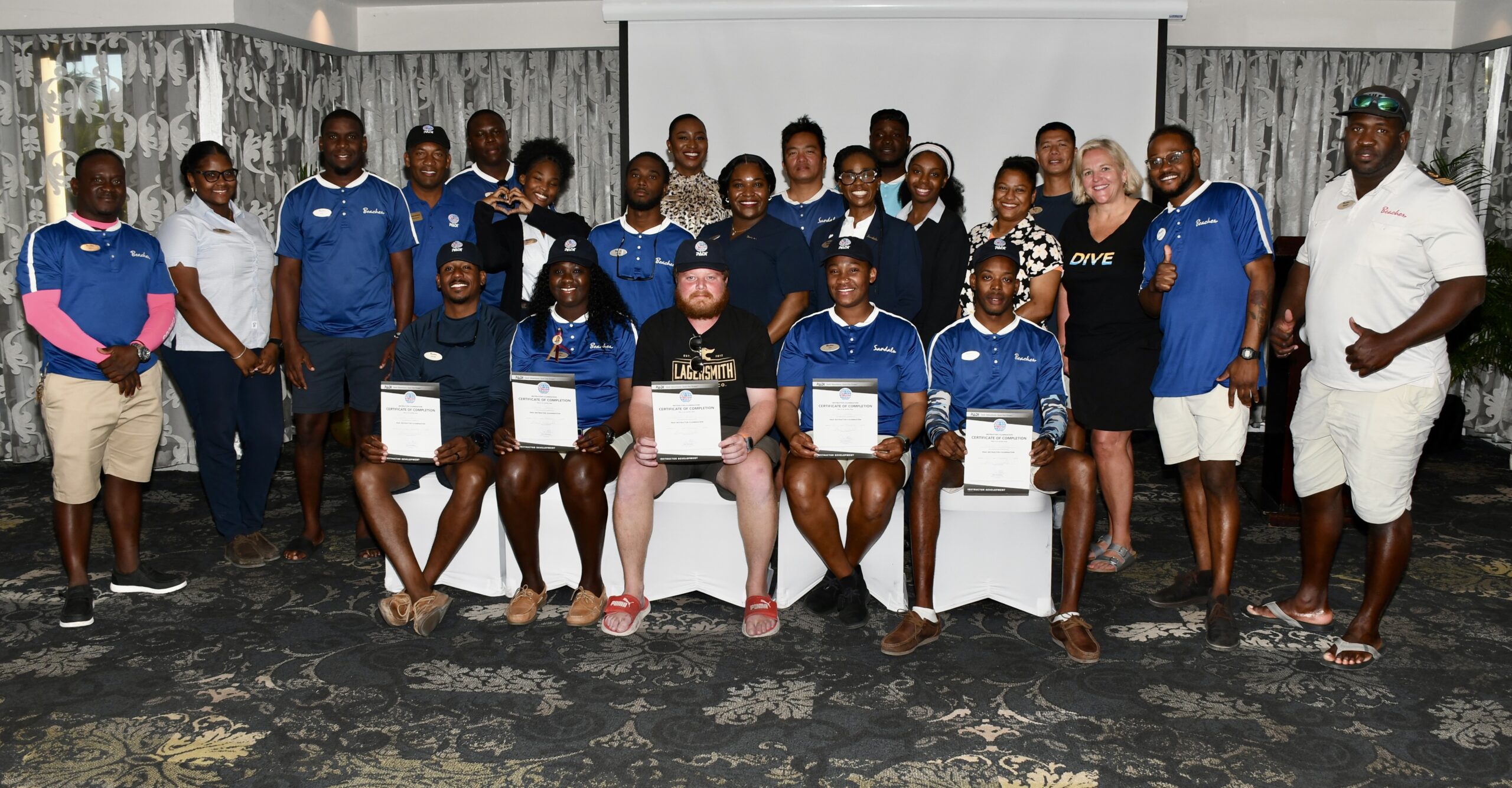
PROVIDENCIALES, Turks & Caicos Islands: — Beaches Turks & Caicos, a PADI-certified dive resort in Providenciales, continues to invest in its watersports team by training and certifying four team members to become qualified dive instructors to its operation. The resort operates one of the most comprehensive resort diving programmes in the region, offering on-site PADI courses and daily dives for guests of varying experience levels.
These latest certifications were conducted under the supervision of PADI Course Director and Dive Shop Manager Leonard Suckrajh, who is among an elite group of PADI professionals in the Caribbean. His role as course director allows the resort to deliver instructor-level training on property, further elevating the standard of safety, education and guest experience at the resort’s dive centre.
Suckrajh expressed his satisfaction with the commitment and professionalism demonstrated by the four new instructors, Almina Browne, Cicely Clarke, Andrew Dunkley and Boat Captain Tryston Sang throughout their training and assessment. “I am extremely proud of them,” he said. “They have invested significant time and effort in developing their technical competence and instructional skills and their achievement reflects a deep commitment to delivering safe, high-quality dive experiences for our guests.”
He noted that their performance reflects a strong culture of excellence within the watersports department and aligns with the resort’s long-standing emphasis on safety and training. “At Beaches Turks and Caicos, our objective is not only to train divers, but to develop highly responsible professionals who understand that every dive is grounded in safety, teamwork and respect for the marine environment,” he added. Suckrajh, whose own progression to course director spans more than two decades in watersports and diving within the Sandals and Beaches brands, said the new instructors represent “the next generation of leaders within our dive operation.”
General Manager, Deryk Meany, commended the level of collaboration required to guide four new instructors through the rigorous PADI process. “Attaining PADI instructor status is a demanding accomplishment that cannot be realized in isolation,” Meany said. “It requires the coordinated support of the dive shop, the wider watersports team, and the broader resort operation to ensure candidates have the necessary resources, time and mentorship to succeed.”
He emphasized that strengthening the cadre of certified instructors supports the resort’s commitment to excellence in guest service. “Each additional instructor enhances our capacity to offer guests a greater range of options, a higher degree of personal attention and consistently high safety standards,” Meany continued. “This milestone reinforces our position as a leading provider of family-friendly diving experiences in the Caribbean.”
Beaches Turks and Caicos is recognized for providing a wide spectrum of PADI courses on site, from Discover Scuba Diving and Open Water certification to advanced and specialty programmes. Previous training initiatives at the resort have resulted in many team members achieving PADI instructor status, significantly increasing both certification capacity and in-water safety oversight.





-

 News1 week ago
CARICOM – A Regional Club With Benefits; Turks & Caicos Wants In
-

 News1 day ago
Password to Paradise Radio Remotes at Beaches Turks & Caicos continue to highlight the TCI as the preferred Caribbean destination
-
 Health1 week ago
Turks and Caicos Islands Hospital Celebrates Patient Safety Awareness Month: “Team Up for Patient Safety”
-

 News2 days ago
Beaches Turks & Caicos adds four new PADI Dive Instructors to the cadre of professionals in the watersports department
-
 Health1 week ago
Turks and Caicos Islands Medical Association (TCIMA) Elects New Executive
-
 News2 days ago
Beaches Turks & Caicos shares fine dining experiences to high school students in Providenciales
-

 News5 days ago
Flow TCI supports ‘Stars of Tomorrow’ at Inter-Primary Track and Field Championships
-

 News5 days ago
ISU Community Caravan Delivers Essential Services to Granny Hill North