
Education
Years in the Making, Turks & Caicos Opens Special Needs Department

Dana Malcolm
Staff Writer
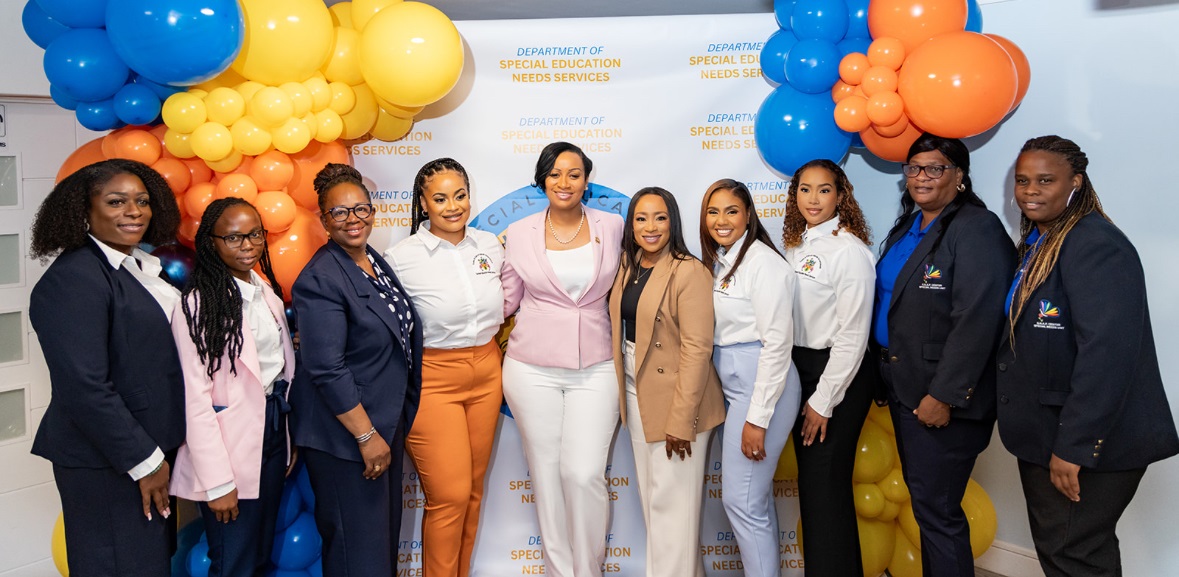
#TurksandCaicos, March 3, 2024 – For years the curation of special needs services has been a community wide effort in the Turks and Caicos Islands, now the hard work has culminated in the launch of the Department of Special Education Needs Services (DSENS).
The department, entirely dedicated to special needs and headed by a Turks and Caicos Islander, was officially launched on February 27. Attending the event were Anya Williams, Acting Governor; Washington Misick, TCI Premier; Rachel Taylor, Minister of Education, and dozens of residents, special needs students and teachers.
Minister Taylor described what the new department meant for residents.
“This Department stands as a beacon of hope and opportunity for individuals with special needs signaling a new empowerment and inclusion,” she said.
The minister maintained that it was her passion as a trained educator to make sure all students had access to education. Taylor admitted though that students with special needs have been underserved and overlooked for far too long.
The Turks and Caicos has struggled repeatedly with sufficient expert care for special needs and a special needs institution has been in the works for years without completion.
“We anticipate the opening of the Special Needs Centre, a long-awaited development that will provide our children abroad with the opportunity to return home and receive the specialized education and support they need,” Taylor updated during the event, but did not provide a date for the opening.
For her part, Anya Williams, Acting Governor with responsibility for the public service, revealed that the process of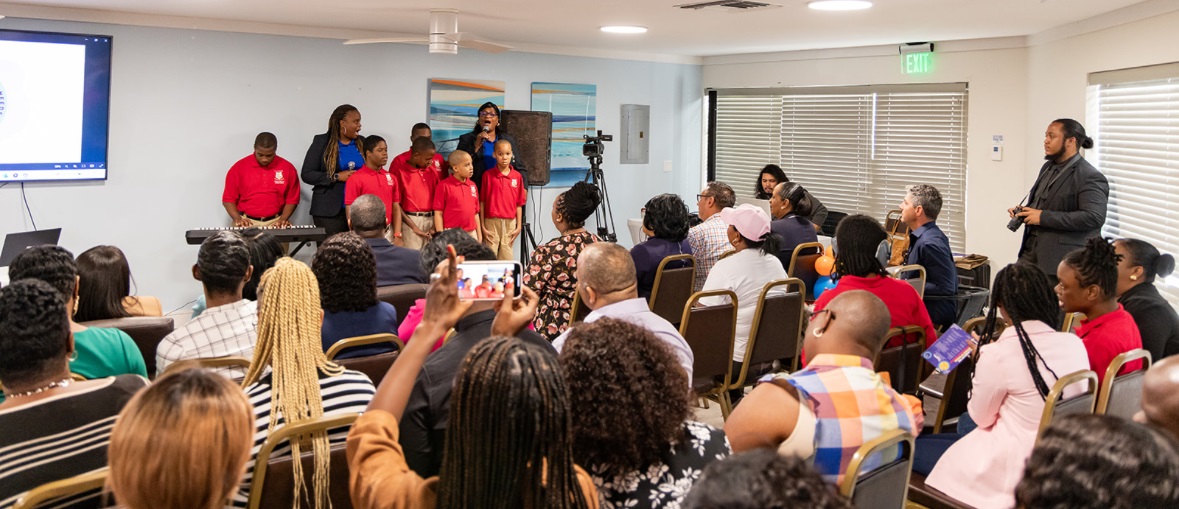 hiring a sufficient complement of staff to serve the country was extremely difficult. With this in mind she had strict words for local students studying in special needs care and treatment areas overseas.
“It is your duty to return to the Turks and Caicos because often we provide the scholarships and the means for persons to qualify themselves and when they complete they advise us that they’re not returning,” she continued “I’m calling you out and saying that it is your duty to return home and I will ask the Ministry of Education to enforce your bond. That is necessary.”
Washington Misick, TCI Premier, promised that the government was focused on creating an accessible Turks and Caicos for everyone.
“The focus of the government is no one left behind so it doesn’t matter who you are— what is the degree of your infirmity or special needs.”
Newly hired Department Head, Dr. Anya Malcolm Gibbs, highlighted the history of special needs care locally.
“The roots of special needs development in the Turks and Caicos can be traced back to the 1980’s where the work needs was a program in the welfare department introduced by Paul Crooks from the United Kingdom,” she explained.
That work was followed by support from the British Development Division in 1992 via a special needs coordinator. By 1993 the local government took control of the area.
The late Marion Williams was acknowledged by Taylor as a key player in the special needs industry. Thanked for their service also, were Leo Selver, Jas Walkin, Earl Fulford the One World Foundation, Therapy Abroad and others.
Currently there are 17 special needs teachers, a specialist classrooms at the Eliza Simons Primary and a Special Needs Resource Centre at the Adelaide Oemler Primary.







Providenciales, Turks and Caicos Islands – Friday, 9 October 2026: The Turks and Caicos Islands Community College (TCICC) has earned international recognition after receiving the 2026 Educational Engagement Firebrand Award at the Ignition Community Conference (ICC) 2026.
The College was represented by Dr. P. Vijay Daniel, Lecturer in the Faculty of Computing, Engineering and Mathematics, who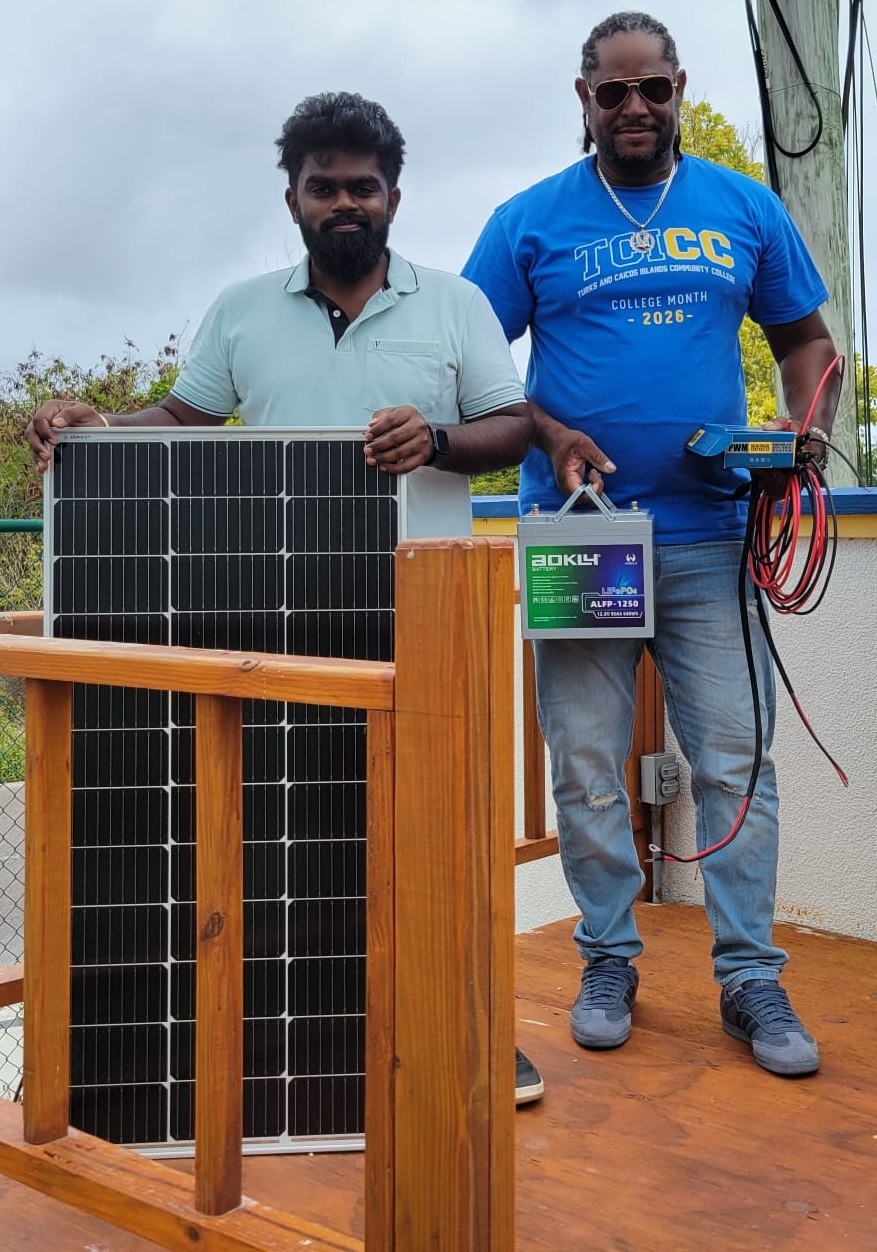 presented TCICC’s Island Smart Utility Platform project before an international audience of industry professionals, system integrators, educators, researchers and technology experts.
Organised by Inductive Automation, ICC is an international conference focused on industrial automation, technology, system integration and innovative applications developed using the Ignition platform.
TCICC’s award-winning project integrates Ignition with affordable ESP32 microcontrollers to support sustainable agriculture while providing students with hands-on experience in Internet of Things (IoT), Supervisory Control and Data Acquisition (SCADA) and automation.
The project was also featured in the conference’s Discover Gallery, providing TCICC with an opportunity to showcase its work to approximately 1,900 attendees from across the international industrial automation and technology sectors.
Speaking to the significance of the achievement for education and innovation in the Turks and Caicos Islands, the Honourable Rachel Marshall Taylor, Minister of Education, Youth, Sports and Culture, remarked:
“I congratulate Dr. P. Vijay Daniel and the Turks and Caicos Islands Community College on this outstanding achievement. Recognition on an international platform demonstrates the talent, innovation and potential that exist within our education system. Initiatives such as the Island Smart Utility Platform show how education, technology and practical learning can work together to prepare our students for the opportunities of the future.”
The recognition also reflects TCICC’s continued commitment to strengthening applied, innovative and technology-driven education while preparing students for an increasingly digital workforce.
Reflecting on what the achievement represents for the College and its students, Dr. Candice Williams, President/CEO of the Turks and Caicos Islands Community College, stated:
“This recognition is a significant achievement for TCICC and reflects our commitment to providing students with meaningful opportunities to apply what they learn in the classroom. We are extremely proud of Dr. Daniel and the work being undertaken within the Faculty of Computing, Engineering and Mathematics. This award demonstrates that innovation taking place at TCICC can achieve international recognition and contribute to the continued development of the Turks and Caicos Islands.”
For Dr. Daniel, the conference provided an important opportunity to share TCICC’s work internationally while engaging with professionals and experts from around the world.
Sharing his experience of representing the College on the international stage, Dr. Daniel said:
“Representing the Turks and Caicos Islands Community College at ICC 2026 was a proud and meaningful experience. Presenting our project in the Discover Gallery and receiving the Firebrand Award for Educational Engagement was especially rewarding because it recognised the work we have been doing with our students.
To see TCICC and the Turks and Caicos Islands represented on such a major international platform was truly special.”
Dr. Daniel also expressed appreciation to the Management of TCICC for its continued support and for providing him with the opportunity to represent the College internationally.
PHOTO CAPTION:
Insert: Dr. P. Vijay Daniel and Mr. Menelik Astwood (Chair of Faculty for Computing, Engineering and Mathematics).
Bahamas News
Two Months On, The Bahamas Academy of Sciences Turns Fifty Years of Research into Action
First peer-reviewed paper published, policy brief delivered to Minister Lightbourne, a seat at Climate Week, and a growing public audience for Bahamian science
NASSAU, The Bahamas, 7 October 2026 — Two months after putting fifty years of research on The Bahamas “on the record” at its first public event in July, The Bahamas Academy of Sciences (BAS) has been turning that evidence into action.
Since July, the Academy has published its first peer-reviewed paper, presented its findings to Government through a policy brief, taken Bahamian science to Climate Week in Nassau and New York, and launched a growing public conversation in which Bahamians can ask scientists questions and get answers. The Academy’s new policy brief, “Prioritising National Research Needs for The Bahamas,” is attached to this release.
“In July we said the record was open. Since then, we have been working to put it to use,” said BAS President Dr. Krista Sherman. “Fifty years of research revealed where The Bahamas is strong and where the gaps are: water, food, energy, long-term monitoring. Our job as the national academy is to share that evidence with the decision-makers and the public they serve, and to build the Bahamian research capacity to fill those gaps.”
THE RECORD, NOW PEER-REVIEWED AND PUBLIC
The Academy’s first publication, “Fifty Years of Research in The Commonwealth of The Bahamas: A Quantitative Thematic Analysis of Scholarly Output,” is now published in the international journal Gulf and Caribbean Research. Led by Dr. Amina Moss (University of Stirling) with BAS members Dr.
Krista Sherman, Dr. Williamson Gustave, Dr. Kathleen Sullivan Sealey, Dr. Charlotte Dunn, Dr. Nicola Smith, Lindy Knowles and Dr. Christy Gibson, the study analyses 12,113 scholarly records published about The Bahamas between 1975 and 2025.
It shows a rich scientific legacy, particularly in geology, fisheries, oceanography and conservation, while also highlighting persistent gaps in areas of direct national importance: groundwater resources, food systems, renewable energy, social-ecological governance and locally led, long-term monitoring. The full paper is free to read at https://doi.org/10.18785/gcr.3701.15.
FROM THE RECORD TO POLICY
Building on this research, BAS has prepared a policy brief, “Prioritising National Research Needs for The Bahamas,” which translates the findings into a set of ten strategic priorities.
The policy brief calls for greater investment in locally led, policy-aligned and climate-ready research, including:
- a national research agenda aligned with Vision 2040;
- stronger local scientific capacity, laboratories and field stations;
- rebuilt long-term monitoring of reefs, fisheries, coasts and mangroves;
- targeted research on groundwater, food systems and renewable energy;
- a national environmental and health data repository; and public health research on the risks facing small island states.
In September, Dr. Sherman presented the brief to the Hon. Zane Lightbourne, Minister of the Environment and Natural Resources, during a courtesy call. The visit is the first in a series of introductory meetings with Government ministries over the coming months. Through these meetings, the Academy will introduce its work and explore opportunities for collaboration in science, the environment, sustainability, conservation and climate resilience. The policy brief also maps research priorities to relevant national legislation and policies, from the Environmental Planning and Protection Act to the National Health Strategy 2026–2030.
BAHAMIAN SCIENCE AT CLIMATE WEEK, FROM NASSAU TO NEW YORK
BAS also brought Bahamian scientific expertise to Climate Week 2026.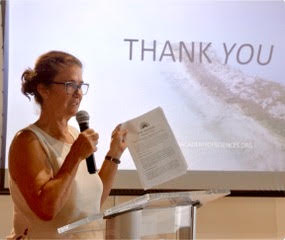
On Monday, 21 September, BAS Board member Dr. Kathleen Sullivan Sealey, Professor Emerita at the University of Miami, presented “Coasts and Climate Change” at the opening day of Climate Week in The Bahamas, hosted by the Baha Mar Resort Foundation at ECCHO, under the theme “At the Edge of the Water.” Dr. Sullivan Sealey explained why The Bahamas’ low-lying carbonate islands face growing risk from sea-level rise and storms, and how historical losses of coral reefs, seagrass, mangroves and dunes have weakened the islands’ natural defences. More importantly, she highlighted actions communities can take to reduce these risks.
During Climate Week, the Academy also released a science statement, “Climate Change and Ocean Warming Impacts on The Bahamas: What Does the Science Tell Us?”, a synthesis of the environmental, ecological, social and economic impacts facing the archipelago.
In New York, BAS Vice President Dr. Adelle Thomas, Vice-Chair of Working Group II of the Intergovernmental Panel on Climate Change (IPCC), brought the realities of vulnerable small island states to Climate Week NYC.
A GROWING PUBLIC AUDIENCE FOR BAHAMIAN SCIENCE
The Academy’s public campaign, 242 #ForTheRecord, has also been building a presence across its five platforms since launching in mid-July. Its most successful format has been the simplest: Bahamians ask a question and a BAS scientist answers it. So far, the “You Ask/Science Responds” series has tackled questions on how climate change will affect Bahamian farming (Dr. Williamson Gustave) and the science of blue holes (Dr. Krista Sherman). An upcoming episode will examine the effects of high temperatures on public health. Question-led content is reaching roughly twice the audience of the Academy’s institutional posts. During its first month, the campaign generated more than 18,500 views and over 200 shares across its platforms.
To extend the conversations to more Bahamians, beyond the traditional science-curious audiences,
BAS has also formalised collaborations with two local content creators, Kaché Knowles (“I is a Bahamian Bey”) and Stephen Hanna (“Schin Nguyen”). Their first joint pieces will appear before the campaign closes on 30 November.
WHAT COMES NEXT
For BAS, putting the record to work is only the beginning. Over the coming months, the Academy will:
- continue introductory meetings with Government ministries and agencies;
- host its Future Scientists classroom event with Bahamian students in early November;
- launch its YouTube channel with a video-podcast series on Bahamian scientists in November;
- begin work on its second peer-reviewed publication, “A Horizon Scan on Emerging Environmental Issues in The Bahamas Over the Next Decade”; and
- offer “Introduction to Statistics using Excel,” a short, practical course in early 2027 that will give early-career scientists and resource managers in The Bahamas hands-on skills in organising, analysing and summarising their own data.
“Research is most valuable when it can be used,” said Dr. Sherman. “The Bahamas has an extraordinary scientific record. Now we need to ensure that record informs the questions we ask, the decisions we make, and the science we build here at home.”
See BAS Climate Statement and BAS Policy Briefing 50 Years of Bahamian Research here: BAS Climate Statement,
BAS Policy Briefing_50 Years of Bahamian Research
PHOTO CAPTIONS:
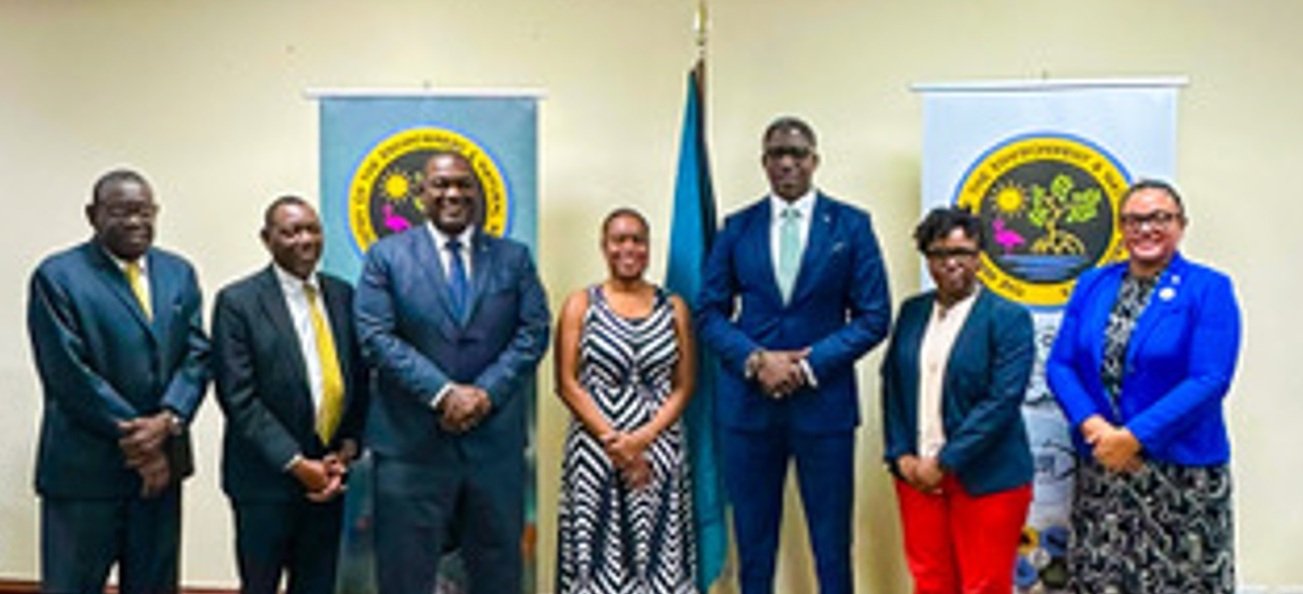
Header: BAS President Dr. Krista Sherman met the Minister of the Environment and Natural Resources and his team on 17 September 2026. L–R: Mr. David Davis, Permanent Secretary; Mr. Ricardo Deveaux, Acting Under Secretary; The Hon. S. Obie Roberts, Parliamentary Secretary; Dr. Krista Sherman, BAS President; The Hon. Zane Lightbourne, Minister; Dr. Rhianna Neely-Murphy, Director, Department of Environmental Planning and Protection; Ms. Danielle Hanek, Acting Director, Forestry Unit.
Credit: Ministry of Environment and Natural Resources.
Insert: Kathleen Sullivan Sealey, BAS Board member, presents the Academy’s science statement at Climate Week in The Bahamas, ECCHO, 21 September 2026.
Credit: Amaeleo Carey.
PRESS RELEASE: BAS
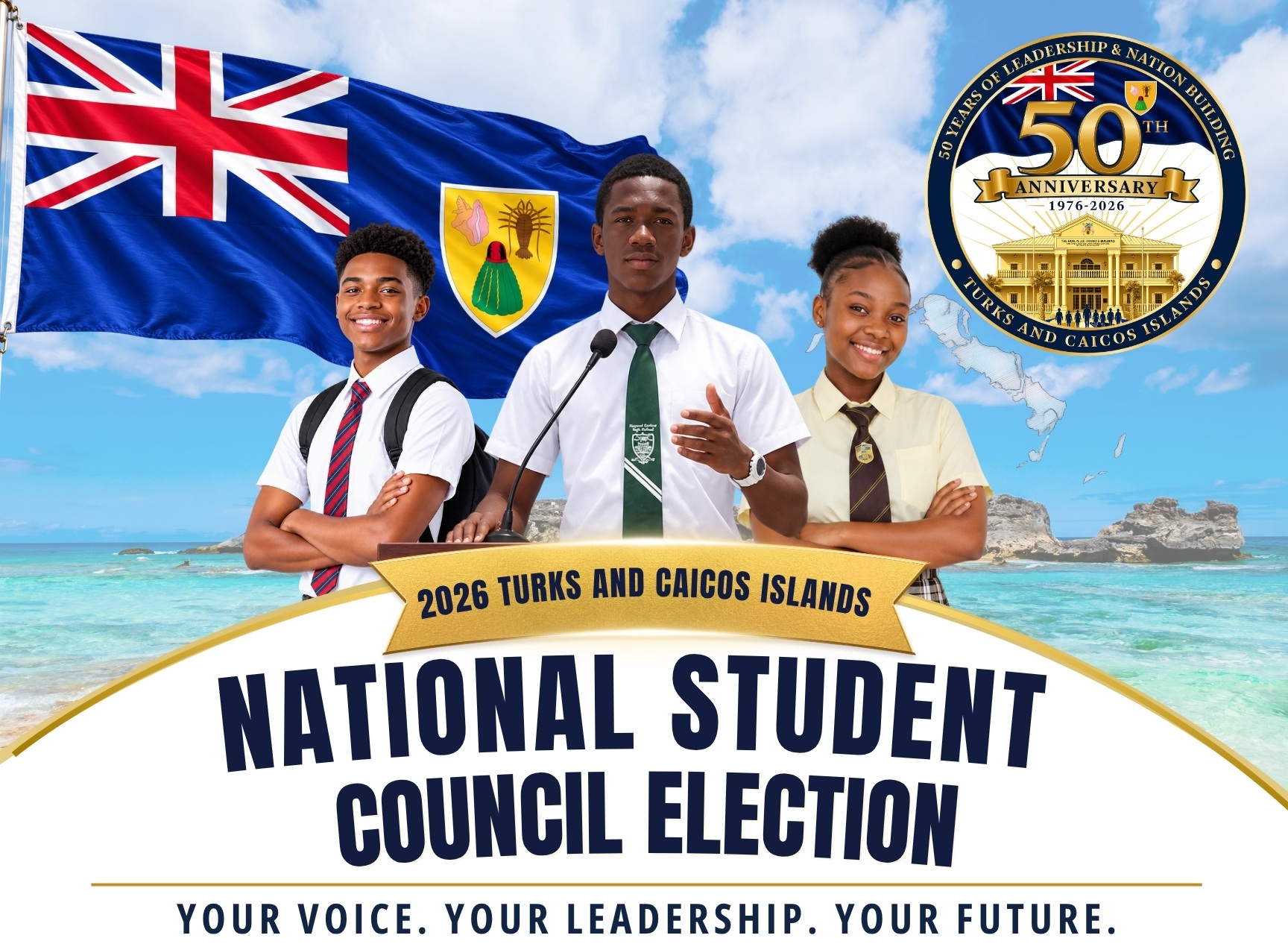
Providenciales, Turks and Caicos Islands – Thursday, 17 September 2026: The Ministry of Education, Youth, Sports and Culture has partnered with the Turks and Caicos Islands Elections Department to bring an exciting national election experience directly to high school students across the country with the launch of the 2026 National Student Council (NSC) Election.
Held under the theme “Your Voice. Your Country. Your Future.”, the initiative will give students from all 14 public and private high schools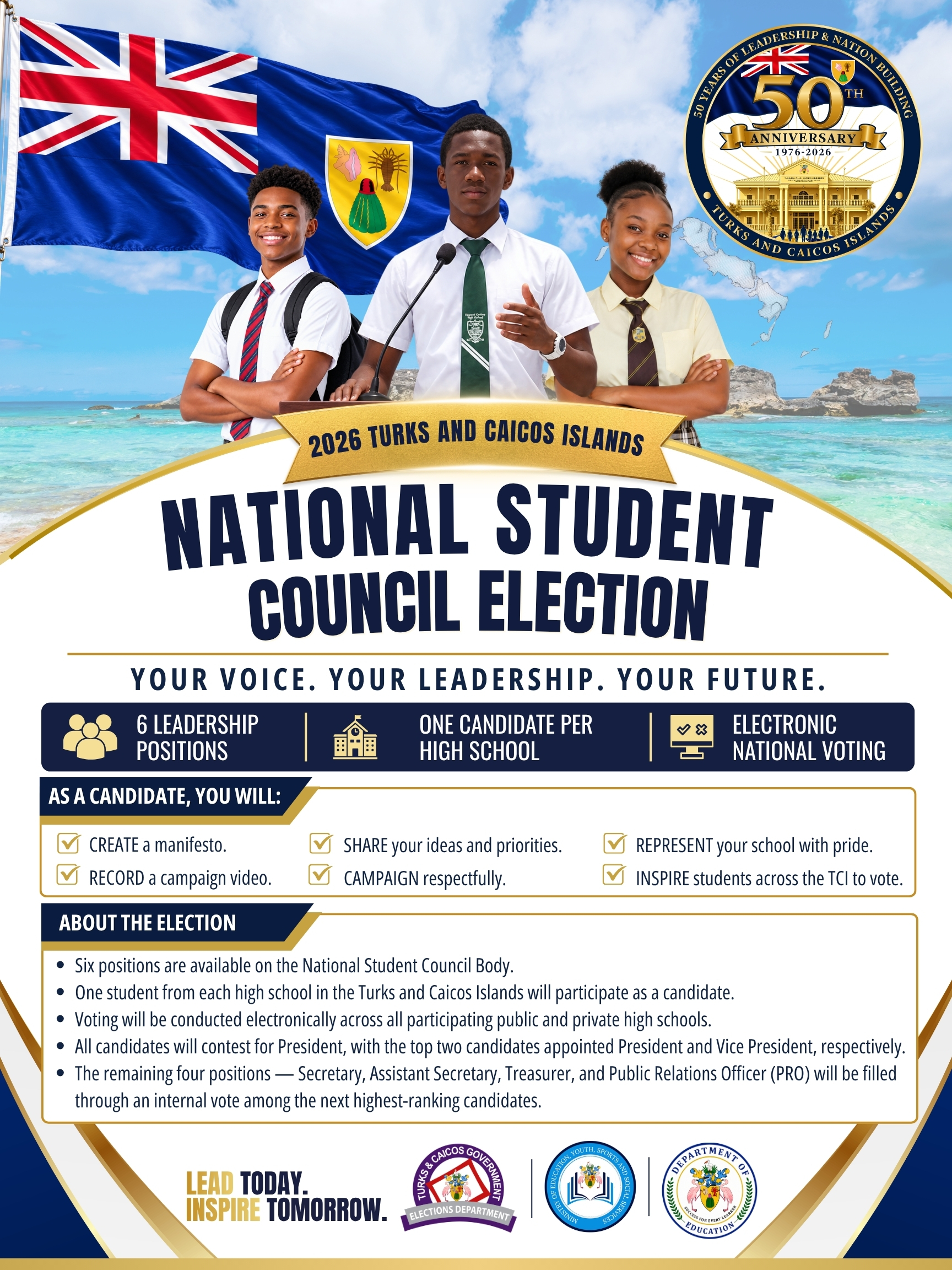 the chance to campaign, vote and compete for national student leadership positions, while gaining first-hand experience of the electoral process.
Minister of Education, Hon. Rachel Taylor, said the initiative gives young people a national platform to share their ideas and develop their leadership skills.
“Our young people have ideas, opinions and perspectives that deserve to be heard, and this election gives them a national platform to use their voices in a meaningful way. We want our students to step forward with confidence, share the issues that matter to them and experience what it means to lead and represent others.” She continued, “I am particularly excited to see students from schools across the Turks and Caicos Islands getting involved, supporting their candidates and participating in the voting process. I encourage every school to embrace this opportunity and help us create an experience that our students will learn from and enjoy.”
Each high school will nominate one student candidate to represent their school at the national level. Candidates will campaign for the positions of President and Vice President, sharing their ideas, priorities and plans with student voters across the Turks and Caicos Islands. Both positions will be decided by electronic vote among high school students across the country.
The remaining four positions on the six-member National Student Council: Secretary, Assistant Secretary, Treasurer and Public Relations Officer. will be determined through an internal vote among the top candidates following the national election.
The election will mirror several elements of the Turks and Caicos Islands’ electoral process. Candidates will choose a party name, colour and symbol, develop a manifesto and campaign slogan, and make their case to student voters. Their names, party information and symbols will appear on an electronic ballot, giving students the opportunity to experience the process as both candidates and voters.
Acting Elections Supervisor Willette Pratt stated that the timing of the initiative is particularly significant as the country continues its focus on civic awareness and youth participation.
“Coming on the heels of Constitution Day and as we prepare to celebrate National Youth Week this September, this is a timely opportunity to put civic education into practice. We want young people to understand that democracy is not only about casting a vote; it is about being informed, participating and understanding that their voice matters. We are excited to see our schools and students embrace the experience.”
Once students are selected and endorsed by their school, candidates must submit a completed Candidate Information Form, a Student Manifesto of no more than 250 words, and a 45- to 60-second Campaign Video PSA introducing themselves and outlining the issues and priorities they hope to champion.
Candidates are expected to campaign fairly and respectfully, focusing on ideas, student issues and their plans as aspiring student leaders. Personal attacks, bullying, false or misleading information, and offering gifts or incentives in exchange for votes are prohibited. Breaches of the campaign code of conduct may result in the loss of campaign privileges or disqualification.
For candidates, it is a chance to share their ideas and test their leadership skills on a national platform. For student voters, it is an opportunity to have a say in who represents them and experience the electoral process first-hand.
With candidate selection underway, the Elections Department and Ministry of Education are looking forward to seeing students step forward, bring their ideas to the campaign and, ultimately, seeing young voters across the country make their choice at the ballot.
The 2026 National Student Council Election is an opportunity for young people to do more than learn about leadership and democracy — it gives them the chance to take part. Your Voice. Your Country. Your Future.





-
 News5 days ago
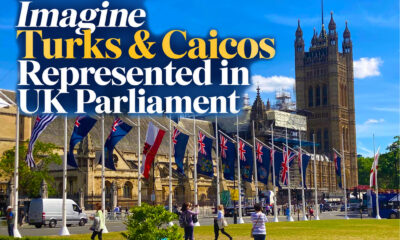
Imagine Turks & Caicos Represented in UK Parliament; New Report Favours It
-
 News1 week ago
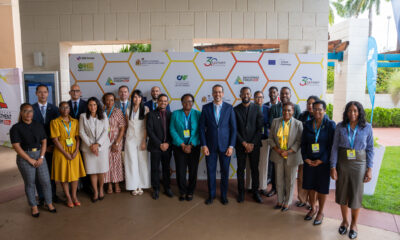
Invest TCI Strengthens Regional Investment Connections at Caribbean Investment Forum 2026 in Barbados
-
 Bahamas News5 days ago
Bahamas Issues Cybersecurity Alert Over Akira Ransomware Threat
-
 Bahamas News1 week ago
Rosewood Exuma: A precedent-setting case for environmental law and future development in The Bahamas
-
 Bahamas News1 week ago
Energy Minister Delivers Electrifying Keynote Opening Address at CAREC 2026
-
 News5 days ago
BermudAir Launches Service to the Turks and Caicos Islands on October 26th, Expanding Air Connectivity Ahead of Winter Season
-
 News6 days ago
Crown Land Unit Leads Multi-Agency Enforcement Exercise in Five Cays
-
 News2 days ago
Multi-Agency Enforcement Exercise Targets Illegal Occupation of Crown Land in Five Cays